Taxonomy & Classification
- Kingdom
- Animalia
- Phylum
- Chordata
- Class
- Reptilia
- Order
- Squamata
- Family
- Viperidae
- Genus
- Agkistrodon
- Species
- Agkistrodon contortrix

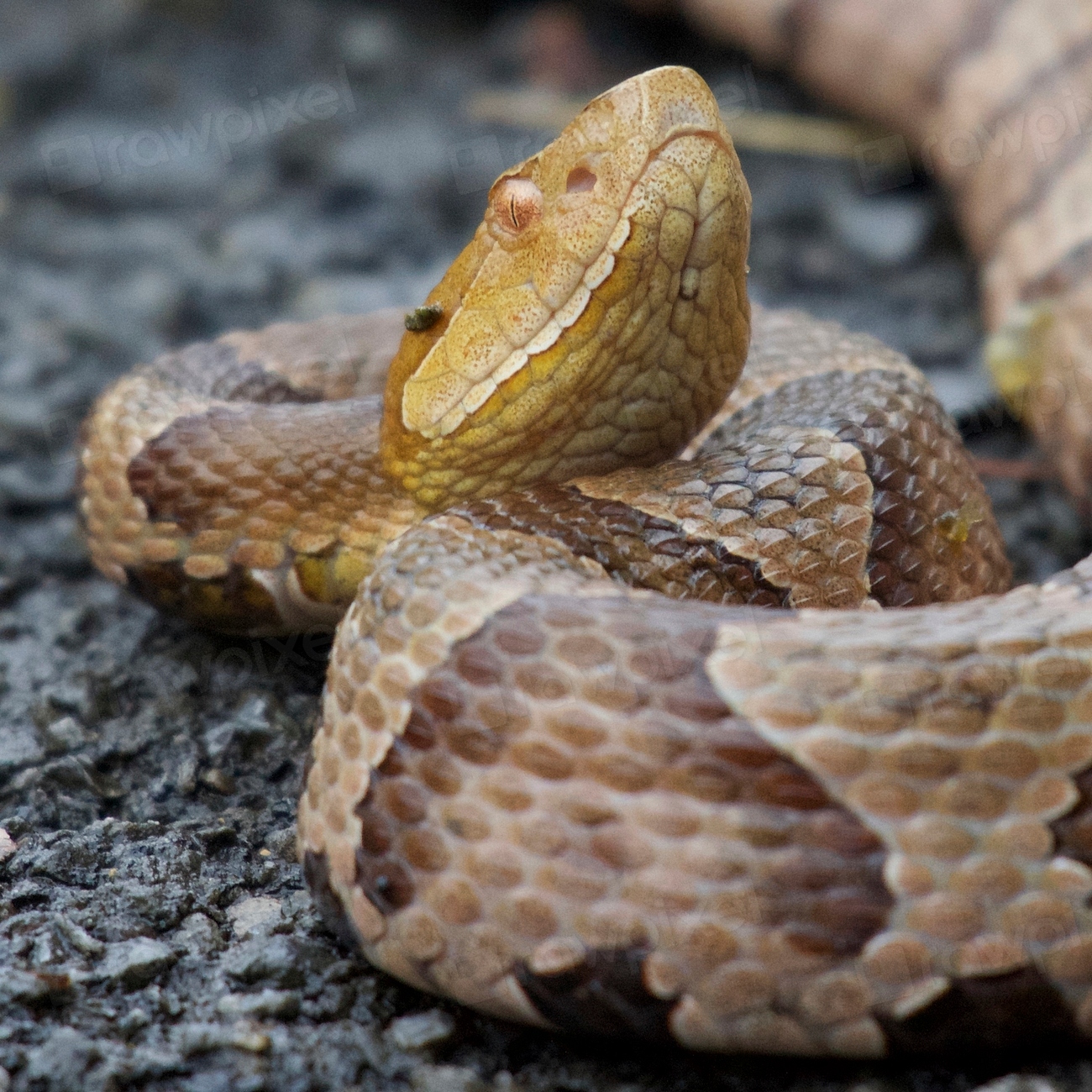 Photo Credit: U.S. Fish and Wildlife Service / Rawpixel
In the heart of North America’s woodlands, the Copperhead snake, scientifically known as Agkistrodon contortrix, glides silently through the underbrush. With its stunning coppery-brown scales, this snake is a master of camouflage, blending seamlessly into the fallen leaves and sun-dappled forest floor. As the sun filters through the trees, the Copperhead basks on a warm rock, its body coiled in a graceful arc, ready to spring into action at a moment’s notice. This striking reptile is not just a beautiful sight; it captivates scientists and nature lovers alike with its unique adaptations and behaviors.
What makes the Copperhead particularly intriguing is its role in the ecosystem. As a predator, it helps maintain the balance of small mammal populations, while also serving as prey for larger animals. Its venom, though not deadly to humans, is a fascinating tool for hunting, allowing it to immobilize its meals with precision. The Copperhead’s life is a delicate dance of survival, where stealth and strategy are key. Observing this snake in its natural habitat offers a glimpse into the intricate web of life that thrives in our forests, reminding us of the wonders of nature and the importance of every creature within it.
The Copperhead, a striking snake known for its distinctive coppery hue, occupies a special place in the tree of life. Taxonomically, it belongs to the Kingdom Animalia, which includes all animals, and is classified under the Phylum Chordata, meaning it has a backbone. As a member of the Class Reptilia, it shares traits with other reptiles like lizards and turtles. The Copperhead is part of the Order Squamata, which encompasses all snakes and lizards, and it falls within the Family Viperidae, known for its venomous members. Its scientific name, Agkistrodon, highlights its unique characteristics, particularly its ability to blend into its environment, making it a master of camouflage.
| Taxonomic Rank | Scientific Name | Meaning & Significance |
|---|---|---|
| Kingdom | Animalia | This name signifies all animals, highlighting the Copperhead’s place among living organisms that share certain biological characteristics. |
| Phylum | Chordata | Meaning “having a cord,” this term refers to the presence of a notochord, or backbone, which is a key feature of the Copperhead and its relatives. |
| Class | Reptilia | This classification indicates that the Copperhead is a reptile, characterized by scaly skin and a cold-blooded metabolism. |
| Order | Squamata | Derived from the Latin word for “scaly,” this term reflects the Copperhead’s scaly skin, a common trait among snakes and lizards. |
| Family | Viperidae | This name refers to the family of vipers, which are known for their long, hinged fangs and potent venom, traits that the Copperhead possesses. |
| Genus | Agkistrodon | Meaning “hook-tooth,” this name refers to the distinctive fangs of the Copperhead, which are adapted for delivering venom to its prey. |
The classification of the Copperhead reveals much about its evolutionary journey. As a member of the Viperidae family, it shares a common ancestor with other venomous snakes, showcasing adaptations that have allowed it to thrive in various environments. Its unique coloration and behavior not only help it evade predators but also play a crucial role in its hunting strategy. Understanding where the Copperhead fits in the tree of life helps us appreciate the intricate connections between species and the evolutionary processes that shape the natural world.
The evolutionary journey of the Copperhead snake, scientifically known as Agkistrodon contortrix, stretches back millions of years. This fascinating species is part of the Viperidae family, which includes many venomous snakes. The Copperhead’s ancestors roamed the Earth during the late Eocene epoch, around 34 to 56 million years ago, when the climate was warmer and the landscape was vastly different from today. Over time, these early serpents adapted to their environments, leading to the emergence of the Copperhead we recognize now.
The ancestors of the Copperhead were likely similar to other primitive snakes, possessing basic adaptations for survival. As they evolved, they developed specialized features that allowed them to thrive in diverse habitats. One major transition was the development of heat-sensing pits, which are sensitive to infrared radiation. This adaptation enables the Copperhead to detect warm-blooded prey even in complete darkness. Additionally, the evolution of their distinctive coloration, a blend of browns and copper tones, provides excellent camouflage among the leaf litter and forest floor, helping them avoid predators and ambush unsuspecting prey.
These evolutionary adaptations have played a crucial role in the Copperhead’s survival. The ability to sense heat allows them to hunt effectively, while their camouflage keeps them safe from larger predators. Their venom not only aids in capturing prey but also helps them compete with other predators in their habitat. By giving birth to live young, they ensure that their offspring are ready to face the challenges of their environment right from the start. Together, these traits have helped the Copperhead thrive in a variety of ecosystems across North America.
The Copperhead snake is a captivating sight, with a body that seems to blend seamlessly into its surroundings. Its slender form is both graceful and powerful, allowing it to navigate through the underbrush with ease. The snake’s head is slightly wider than its neck, giving it a distinctive triangular shape that is characteristic of many venomous snakes. This shape, combined with its smooth, scaled skin, creates an impression of both elegance and danger, making the Copperhead a creature that commands respect in the wild.
| Feature | Description |
|---|---|
| Size | Typically ranges from 2 to 3 feet long, with some individuals reaching up to 4 feet. |
| Color | Features a beautiful blend of copper, brown, and tan, with darker hourglass patterns along its back. |
| Skin Type | Covered in smooth, overlapping scales that help with movement and camouflage. |
| Eyes | Has vertical slit pupils, which enhance its ability to see in low light conditions. |
| Tail | Short and tapered, often used for signaling and communication. |
The Copperhead’s striking coloration and body structure serve vital roles in its survival. The earthy tones and patterns allow it to blend into the leaf litter and forest floor, making it less visible to both predators and prey. Its smooth scales reduce friction as it moves, enabling it to glide silently through its habitat. The triangular head not only signifies its venomous nature but also aids in capturing prey, as it can strike quickly and accurately. Together, these features create a perfect balance of beauty and functionality, allowing the Copperhead to thrive in its environment.
The Copperhead snake thrives in a variety of habitats that paint a picture of natural beauty and diversity. You can often find these snakes in deciduous forests, where the trees shed their leaves in autumn, creating a rich tapestry of colors. They also enjoy the edges of woodlands, where sunlight filters through the leaves, and in rocky hillsides that provide both shelter and hunting grounds. These environments are filled with the sounds of rustling leaves and chirping birds, making them vibrant places for the Copperhead to call home.
Copperheads prefer climates that offer a mix of warmth and moisture. They thrive in areas with a temperate climate, which means they experience four distinct seasons: warm summers, cool autumns, cold winters, and mild springs. These snakes are often found in regions where the humidity is moderate, as it helps them stay hydrated. They enjoy environments that provide plenty of cover, such as leaf litter and underbrush, which help them regulate their body temperature and stay hidden from predators.
Adaptation is key to the Copperhead’s survival in these habitats. Their beautiful coloration, which ranges from coppery-brown to tan, allows them to blend seamlessly into the forest floor, making them nearly invisible to both prey and predators. This camouflage is a clever trick that helps them ambush small mammals and birds. Additionally, their preference for rocky areas provides them with crevices to hide in, protecting them from harsh weather and potential threats. By evolving to fit perfectly into their surroundings, Copperheads have become masters of their environment.
The daily life of a Copperhead snake is a blend of stealth and strategy. As the sun rises, these snakes emerge from their hiding spots, often nestled among rocks or in leaf litter. They bask in the warmth of the sun, soaking up heat to regulate their body temperature. This behavior is crucial because Copperheads are ectothermic, meaning they rely on external sources to warm their bodies. Throughout the day, they hunt for small mammals, birds, and amphibians, using their keen sense of smell and heat-sensing pits to locate prey. As dusk approaches, they become more active, slithering through their territory in search of food.
Socially, Copperheads are generally solitary creatures, but they do exhibit interesting group dynamics during certain times of the year. In the spring and fall, you might find them basking together in small groups, especially in areas where the sun is limited. This behavior helps them conserve heat and may also play a role in mating. While they are not known for complex social interactions, they communicate through body language and scent marking, signaling their presence to others in the area. This subtle communication is vital for avoiding confrontations and establishing territory.
| Behavior Type | Description |
|---|---|
| Activity Patterns | Copperheads are primarily crepuscular, meaning they are most active during dawn and dusk. They bask in the sun during the day to regulate their body temperature and hunt for food in the cooler hours. |
| Social Structure | While generally solitary, Copperheads may gather in small groups during basking or mating seasons. This temporary grouping helps them share warmth and find mates. |
| Communication Methods | Copperheads communicate through body language, such as posturing and movement, as well as through scent marking to establish territory and avoid conflicts. |
These behaviors are essential for the Copperhead’s survival in the wild. By basking together, they maximize their exposure to heat, which is vital for their hunting efficiency. Their solitary nature allows them to avoid competition for food, while their communication methods help them navigate their environment safely. Each aspect of their daily life is finely tuned to ensure they thrive in their natural habitat, showcasing the intricate balance of life in the wild.
The Copperhead snake is a carnivore, meaning it primarily eats other animals. This snake has a diverse diet that includes a variety of small creatures. It uses a combination of stealth and ambush tactics to catch its prey, often waiting patiently for the right moment to strike. With its excellent camouflage, the Copperhead blends into its surroundings, making it easier to surprise unsuspecting animals that wander too close.
| Dietary Aspect | Details |
|---|---|
| Diet Type | Carnivore |
| Favorite Foods | Insects, small mammals, amphibians, and birds |
| Prey Items | Mice, voles, shrews, lizards, small turtles, frogs, baby squirrels, rabbits, opossums, chipmunks, bats, moles, and carrion |
| Hunting Strategies | Ambush predator; relies on camouflage and patience to catch prey |
The Copperhead’s diet plays a crucial role in its ecosystem. By preying on small mammals and insects, it helps control their populations, which can prevent overgrazing and maintain a balanced environment. This snake’s feeding habits also influence its daily routine, as it must spend time hunting and basking to regulate its body temperature, ensuring it remains an effective predator. The Copperhead’s role in the food web highlights the interconnectedness of life in its habitat, showcasing the delicate balance of nature.
When it comes to mating, Copperhead snakes have a fascinating courtship ritual that takes place in the spring. During this time, males engage in a competitive display, often wrestling with one another to attract females. Once a male successfully impresses a female, they will mate, and this union can last for several hours. After mating, the female will store the male’s sperm until she is ready to fertilize her eggs, a process known as delayed fertilization. This clever strategy allows her to time the birth of her young for optimal conditions.
| Reproductive Aspect | Details |
|---|---|
| Gestation Period | 2 to 3 months |
| Litter Size | 5 to 15 young |
| Age of Maturity | 2 to 3 years |
| Name of Young | Neonates |
After the gestation period, the female Copperhead gives birth to live young, known as neonates. These tiny snakes are fully formed and ready to fend for themselves right from the start. Unlike some other species, Copperheads do not provide parental care after birth. Instead, the young must quickly learn to navigate their environment, find food, and avoid predators. As they grow, they will shed their skin several times, a process called molting, which helps them grow and develop into the striking adults they are destined to become. With their natural instincts and adaptability, these young Copperheads will soon blend into their surroundings, continuing the cycle of life in the wild.
The Copperhead snake plays a crucial role in its ecosystem, sitting comfortably in the middle of the food web. As a predator, it helps control populations of small mammals and insects, while also serving as prey for larger animals. This balance is essential for maintaining the health of its habitat, ensuring that no single species overwhelms the environment.
To survive against these threats, Copperheads have developed several clever defensive behaviors. When threatened, they often rely on their excellent camouflage to blend into their surroundings, making it difficult for predators to spot them. If they are discovered, they may freeze in place or even vibrate their tails to mimic a rattlesnake, which can deter potential attackers. Additionally, their venom, while not lethal to humans, can deliver a painful bite that serves as a warning to would-be predators. These strategies help the Copperhead navigate the dangers of its environment, allowing it to thrive in the wild.
A keystone species is an organism that has a disproportionately large impact on its environment relative to its abundance. This means that if it were removed, the ecosystem would change dramatically. The Copperhead snake, known scientifically as Agkistrodon contortrix, qualifies as a keystone species due to its significant role in maintaining the balance of its ecosystem.
Copperheads are important predators in their habitats, primarily feeding on small mammals, birds, and insects. By controlling the populations of these animals, they help prevent overgrazing and maintain plant diversity. For example, if Copperheads keep the population of rodents in check, it allows various plant species to thrive, which in turn supports other wildlife. This predator-prey relationship is crucial for the health of the ecosystem, as it promotes a balanced food web.
Additionally, Copperheads serve as prey for larger animals, such as hawks and foxes. This means they contribute to the diets of these predators, linking different levels of the food chain. Their presence helps sustain a variety of species, creating a rich tapestry of life in their environment. Furthermore, the Copperhead’s role in nutrient cycling is vital; as they consume and decompose their prey, they return nutrients to the soil, promoting plant growth.
If Copperheads were to disappear from their ecosystems, the consequences could be severe. Without these snakes to regulate small mammal populations, there could be an explosion of rodents, leading to overgrazing of vegetation. This would not only affect plant life but also the animals that depend on those plants for food and shelter. The entire food web could become unbalanced, resulting in a decline in biodiversity and the health of the ecosystem. In essence, the absence of Copperheads would ripple through the environment, demonstrating just how vital they are to the natural world.
The Copperhead snake, known scientifically as Agkistrodon contortrix, plays a vital role in its ecosystem, acting as both predator and prey. This fascinating reptile occupies a unique ecological niche, primarily in deciduous forests and rocky hillsides. By hunting small mammals and insects, the Copperhead helps maintain a balance in the populations of these creatures, ensuring that no single species overwhelms the environment. Its presence is a key indicator of a healthy ecosystem, as it thrives in areas rich in biodiversity.
| Ecosystem Service | Impact |
|---|---|
| Population Control | Regulates numbers of small mammals and insects, preventing overpopulation. |
| Food Source | Serves as prey for larger predators, contributing to the food web. |
| Soil Health | Helps aerate the soil through its movements, promoting plant growth. |
| Indicator Species | Reflects the health of the ecosystem, signaling changes in environmental conditions. |
The Copperhead’s influence extends beyond its immediate hunting habits. For instance, by preying on rodents, it helps control the populations of these animals, which can otherwise damage crops and spread disease. Additionally, the Copperhead itself becomes a food source for larger predators, such as hawks and foxes, creating a dynamic balance within the food web. Its presence can also indicate the overall health of its habitat; a decline in Copperhead populations may signal environmental issues that could affect many other species.
In the grand tapestry of nature, the Copperhead snake is a keystone species, meaning its role is crucial for maintaining the structure of its ecosystem. Without it, the delicate balance of predator and prey would be disrupted, leading to potential overpopulation of certain species and a decline in others. By understanding the Copperhead’s ecological importance, we can appreciate the intricate connections that sustain life in our forests and fields, reminding us of the wonders of the natural world.
In the intricate web of life, symbiosis refers to the close interactions between different species, which can take many forms. These relationships can be mutualistic, where both species benefit; parasitic, where one benefits at the expense of the other; or commensal, where one benefits while the other is neither helped nor harmed. Understanding these connections helps us appreciate the delicate balance of ecosystems and the roles that various species play within them.
| Species/Type | Relationship Type | Description |
|---|---|---|
| Small mammals (e.g., mice) | Mutualistic | Copperheads help control the population of small mammals, which can lead to healthier ecosystems. In return, these mammals provide a food source for the Copperhead. |
| Ticks | Parasitic | Ticks can attach to Copperheads, feeding on their blood. This relationship can weaken the snake, making it more vulnerable to disease. |
| Birds of prey (e.g., hawks) | Commensal | While hunting, birds of prey may inadvertently help Copperheads by flushing out small mammals. The birds benefit from their hunting success, while the Copperhead gains access to potential meals. |
These relationships have evolved over time, shaped by the needs and behaviors of the species involved. The mutualistic interactions, like those with small mammals, highlight how interconnected life can be, with each species relying on the other for survival. Parasitic relationships, such as those with ticks, remind us that not all interactions are beneficial, but they also play a role in the natural balance. Commensal relationships illustrate how species can coexist and indirectly support one another. Together, these connections enrich the ecosystem, demonstrating the complexity and beauty of nature’s partnerships.
The Copperhead snake, with its beautiful coppery tones and intriguing behaviors, is a creature that sparks curiosity among nature enthusiasts. Here are some surprising facts that reveal just how extraordinary this snake truly is.
The relationship between Copperhead snakes and humanity has evolved over centuries, marked by both fear and fascination. Historically, these snakes have been part of folklore and cultural narratives, often depicted as symbols of danger due to their venomous bite. Native American tribes revered them, weaving their presence into stories and teachings about nature. In contrast, early European settlers viewed them with suspicion, leading to a legacy of misunderstanding that still lingers today. This complex history highlights how our perceptions of Copperheads have been shaped by both admiration and caution.
In modern times, interactions between Copperheads and humans have become more nuanced. As urban areas expand into natural habitats, encounters are increasingly common. While some people fear these snakes and see them as threats, others recognize their ecological importance. Copperheads help control rodent populations, making them valuable allies in maintaining a balanced ecosystem. Conservation efforts are underway to educate the public about the role of Copperheads in nature, aiming to reduce conflict and promote coexistence. However, habitat destruction and climate change pose significant challenges to their survival, prompting ongoing discussions about how best to protect these fascinating reptiles.
As we look to the future, the relationship between Copperheads and humanity holds both promise and challenges. With increased awareness and education, there is potential for a more harmonious coexistence. By understanding the vital role these snakes play in our ecosystems, we can foster respect and appreciation rather than fear. As we navigate the complexities of urban expansion and environmental change, it is crucial to find ways to protect Copperheads and their habitats, ensuring that future generations can appreciate these remarkable snakes in the wild.
The Copperhead snake, known scientifically as Agkistrodon contortrix, currently holds a conservation status of “Least Concern” according to the International Union for Conservation of Nature (IUCN). This means that, overall, the species is not facing immediate extinction threats. However, population trends can vary by region, with some areas experiencing declines due to habitat loss and human activities. While the overall population is stable, localized threats can impact specific groups of Copperheads.
| Conservation Factor | Status/Details |
|---|---|
| IUCN Status | Least Concern |
| Population Estimates | Stable, but varies by region |
| Trend Direction | Generally stable, with localized declines |
Despite their stable status, Copperhead snakes face several significant threats. Habitat destruction is one of the primary concerns, as urban development and agriculture encroach on their natural environments. Additionally, road mortality poses a danger, as these snakes often cross roads and can be struck by vehicles. Human fear and misunderstanding also lead to unnecessary killings, as people may mistakenly believe that all snakes are dangerous. These factors can contribute to localized population declines, even if the species as a whole remains secure.
Conservation efforts for Copperhead snakes focus on habitat preservation and public education. By protecting their natural environments, we can help ensure that these snakes continue to thrive. Educational programs aim to dispel myths about snakes, highlighting their ecological importance and the benefits they provide, such as controlling rodent populations. With ongoing efforts to safeguard their habitats and promote understanding, the outlook for Copperhead snakes remains hopeful, allowing future generations to appreciate these fascinating reptiles.
| Question | Answer |
|---|---|
| What is a Copperhead's habitat? | Copperheads are commonly found in wooded areas, rocky hillsides, and near water sources. They prefer habitats that provide plenty of cover, such as leaf litter and dense vegetation, which helps them stay hidden from predators and prey. |
| What do Copperheads eat? | Copperheads are carnivores, meaning they primarily eat other animals. Their diet mainly consists of small mammals, birds, and amphibians, which they hunt using their excellent camouflage and ambush tactics. |
| How do Copperheads behave? | Copperheads are generally solitary creatures, preferring to live alone except during mating season. They are known for their calm demeanor and will often freeze in place when they sense danger, relying on their camouflage to avoid detection. |
| How do Copperheads reproduce? | Copperheads are ovoviviparous, which means they give birth to live young rather than laying eggs. Mating typically occurs in the spring, and females can give birth to 5 to 15 baby snakes in late summer or early fall. |
| What are the threats to Copperheads? | Copperheads face several threats, including habitat destruction and road mortality. They are often killed by humans out of fear or misunderstanding, despite their important role in controlling rodent populations. |
| What are some interesting characteristics of Copperheads? | Copperheads have a distinctive copper-colored head and hourglass patterns on their bodies, which help them blend into their surroundings. They also have a unique way of hunting, using heat-sensing pits located between their eyes and nostrils to detect warm-blooded prey. |
| Are Copperheads venomous? | Yes, Copperheads are venomous, but their bites are rarely fatal to humans. Their venom is primarily used to subdue prey, and they tend to be more defensive than aggressive, often giving a warning before striking. |