Taxonomy & Classification
- Kingdom
- Animalia
- Phylum
- Chordata
- Class
- Aves
- Order
- Apodiformes
- Family
- Trochilidae
- Genus
- Calypte
- Species
- Calypte costae

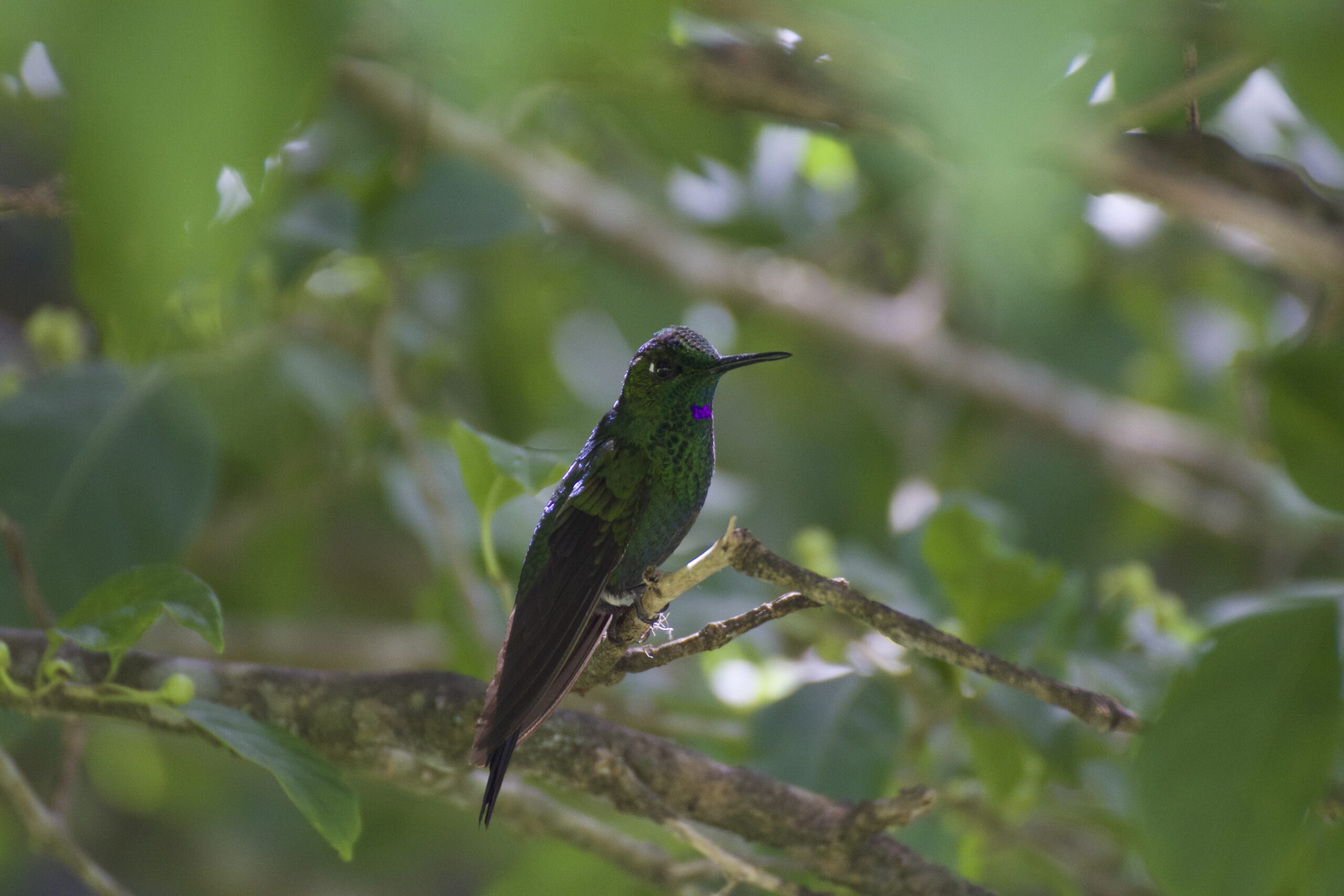 Photo Credit: Hanna5ilva / Wikimedia
In the sun-drenched deserts of the southwestern United States and Mexico, Costa’s Hummingbird, scientifically known as Calypte costae, flits gracefully among vibrant wildflowers and spiky cacti. This tiny avian marvel, weighing no more than a few grams, dazzles onlookers with its iridescent plumage that shimmers in shades of emerald and ruby. As it hovers in mid-air, its wings beating at an astonishing rate of up to 80 times per second, it creates a soft humming sound that gives this bird its name. With its long, specialized bill, Costa’s Hummingbird expertly sips nectar from deep within flowers, playing a crucial role in pollination and the health of its desert ecosystem.
What makes Costa’s Hummingbird particularly captivating to scientists and nature enthusiasts alike is not just its stunning appearance but also its remarkable behaviors. During the breeding season, male Costa’s Hummingbirds engage in spectacular aerial displays, darting and hovering to attract females. These displays are not only a testament to their agility but also a vital part of their courtship rituals. As they navigate their arid habitat, these birds embody the spirit of resilience and adaptability, thriving in an environment that can be both beautiful and harsh. Join us as we explore the fascinating world of Costa’s Hummingbird, uncovering the secrets of its life, diet, and the vital role it plays in the delicate balance of nature.
Costa’s Hummingbird, a dazzling gem of the avian world, occupies a special place in the tree of life. This small bird belongs to the family Trochilidae, which is known for its incredible diversity and vibrant colors. What sets Costa’s Hummingbird apart is not just its iridescent plumage, but also its remarkable flying abilities, including hovering in mid-air and rapid, agile maneuvers. These adaptations make it a true marvel of nature, showcasing the wonders of evolution and the intricate relationships within the animal kingdom.
| Taxonomic Rank | Scientific Name | Meaning & Significance |
|---|---|---|
| Kingdom | Animalia | This name signifies that Costa’s Hummingbird is part of the vast group of multicellular organisms that are primarily heterotrophic, meaning they consume organic material for energy. |
| Phylum | Chordata | Chordata refers to animals that have a notochord, a flexible rod that supports the body. In birds, this structure is replaced by a backbone, which is crucial for their flight. |
| Class | Aves | Aves is the class that includes all birds. This classification highlights their unique features, such as feathers, beaks, and the ability to lay eggs. |
| Order | Apodiformes | Apodiformes means “without feet,” a nod to the fact that many birds in this order, including hummingbirds, have very small feet that are not used for walking. |
| Family | Trochilidae | This family name comes from the Greek word “trochilos,” meaning “small bird.” It emphasizes the tiny size and energetic nature of hummingbirds. |
| Genus | Calypte | Calypte is derived from the Greek word “kaluptein,” meaning “to cover.” This name reflects the bird’s beautiful, shimmering feathers that seem to change color in the light. |
Understanding Costa’s Hummingbird’s classification reveals much about its evolutionary journey. As a member of the Trochilidae family, it shares a lineage with other hummingbirds, showcasing adaptations that have allowed these birds to thrive in diverse environments. Their specialized feeding habits, particularly their ability to extract nectar from flowers, highlight a co-evolution with flowering plants. This relationship not only illustrates the interconnectedness of life but also emphasizes the importance of biodiversity in maintaining healthy ecosystems. Costa’s Hummingbird is not just a beautiful sight; it is a living testament to the wonders of evolution and the intricate web of life on our planet.
The evolutionary journey of Costa’s Hummingbird, a vibrant member of the Trochilidae family, stretches back millions of years. Hummingbirds as a whole are believed to have evolved around 22 million years ago in the Americas. This timeline places Costa’s Hummingbird within a rich tapestry of avian evolution, where adaptations to diverse environments have shaped their survival and success.
The ancestors of modern hummingbirds were likely small, insect-eating birds that began to develop specialized traits for nectar feeding. Over time, these early birds transitioned from a diet focused solely on insects to one that included the sweet nectar of flowers. This shift was crucial, as it allowed them to exploit a new food source. As they evolved, their bodies became lighter and more agile, enabling them to hover in mid-air while feeding. The development of long, slender bills was another significant change, allowing them to reach deep into flowers for nectar.
These adaptations have been vital for Costa’s Hummingbird’s survival in its arid desert and scrubland habitats. The ability to hover and access nectar-rich flowers allows it to thrive where food sources may be scarce. Its dazzling colors not only help in attracting mates but also provide a level of protection against predators. As a result, Costa’s Hummingbird stands as a testament to the power of evolution, showcasing how specialized traits can lead to success in a challenging environment.
Costa’s Hummingbird is a dazzling spectacle of nature, captivating anyone lucky enough to catch a glimpse. This tiny bird, weighing in at just up to 3 grams, boasts a compact body that measures about 3 to 4 inches in length. Its slender form is perfectly designed for agile flight, allowing it to hover effortlessly in mid-air as it sips nectar from flowers. The male Costa’s Hummingbird is particularly striking, adorned with iridescent purple feathers that shimmer in the sunlight, creating a visual feast that is hard to forget.
| Feature | Description |
|---|---|
| Size | 3 to 4 inches in length |
| Weight | Up to 3 grams |
| Skin Type | Feathers |
| Most Distinctive Feature | Purple feathers on male Costa’s Hummingbirds |
The combination of its lightweight body and vibrant plumage serves multiple purposes in the wild. The small size allows Costa’s Hummingbird to navigate through dense foliage and access nectar from a variety of flowers, which is essential for its energy needs. Meanwhile, the brilliant purple feathers not only attract potential mates but also help it stand out in its natural habitat, making it a true jewel of the desert landscapes it calls home. Together, these features create a perfect blend of beauty and functionality, ensuring the survival of this enchanting bird.
Costa’s Hummingbird thrives in a warm, desert climate that feels like a sun-drenched paradise. Picture a landscape dotted with vibrant wildflowers and spiky cacti, where the air shimmers with heat. This little bird flits among the blossoms, sipping nectar with its specialized long bill. The habitat is often characterized by arid conditions, where the sun shines brightly and the temperatures can soar. It’s a place where life has adapted to the challenges of limited water and intense sunlight, creating a unique ecosystem that supports a variety of plants and animals.
In these regions, the climate is typically dry and warm, with long, hot summers and mild winters. Costa’s Hummingbird prefers areas where flowers bloom, providing a steady source of nectar. These birds are often found in open spaces, such as gardens, scrublands, and even urban areas where colorful plants are cultivated. The environmental conditions they thrive in include plenty of sunshine and minimal rainfall, which helps maintain the flowering plants they depend on for food.
To survive in such a challenging habitat, Costa’s Hummingbird has developed several clever adaptations. Its ability to hover in mid-air allows it to access nectar from flowers that other birds might find difficult to reach. Additionally, its vibrant plumage not only attracts mates but also helps it blend into the colorful surroundings, providing some camouflage from predators. These adaptations enable Costa’s Hummingbird to flourish in the warm, desert landscapes it calls home, showcasing the incredible resilience of life in even the harshest environments.
Costa’s Hummingbird leads a lively and energetic daily life, filled with activities that showcase its remarkable agility and vibrant personality. Each day begins with a flurry of activity as these tiny birds dart from flower to flower, sipping nectar with their specialized long bills. Their high metabolism requires them to feed frequently, often visiting hundreds of flowers in a single day. Between meals, they engage in acrobatic displays, zipping through the air with rapid wing beats that can reach up to 80 beats per second. This constant movement not only fuels their energy needs but also helps them establish their territory.
While Costa’s Hummingbird is primarily solitary, it does exhibit interesting social behaviors during the breeding season. Males are known for their dazzling aerial displays, which they perform to attract females. These displays can include rapid dives and intricate flight patterns, showcasing their strength and agility. Although they prefer to be alone, males may occasionally tolerate the presence of other hummingbirds in their territory, especially if it means competing for a mate. Communication is key during these interactions, with chirps and whistles serving as signals to convey dominance or interest.
| Behavior Type | Description |
|---|---|
| Feeding | Costa’s Hummingbird feeds on nectar from flowers, using its long bill to reach deep into blossoms. This activity is essential for their high-energy lifestyle. |
| Territorial Displays | Males perform aerial displays to establish territory and attract females, showcasing their agility and strength through rapid dives and intricate flight patterns. |
| Social Interactions | While generally solitary, males may tolerate other hummingbirds during the breeding season, using chirps and whistles to communicate dominance or interest. |
The behaviors of Costa’s Hummingbird are finely tuned to ensure their survival in a challenging environment. Their solitary nature allows them to efficiently manage their energy and resources, while their dazzling displays and communication methods help them attract mates and defend their territory. By mastering the art of flight and feeding, these tiny birds thrive in their sun-drenched habitats, embodying the spirit of resilience and adaptability in the wild.
Costa’s Hummingbird has a diverse diet that primarily consists of nectar from flowers, making it an omnivore. These tiny birds are expert foragers, using their long, specialized bills to reach deep into blossoms for sweet nectar. This sugary liquid provides them with the energy they need to fuel their rapid wing beats and energetic lifestyle. In addition to nectar, Costa’s Hummingbird also consumes small insects, which are rich in protein and essential for their growth and health. By feeding on both plant and animal sources, these birds maintain a balanced diet that supports their active way of life.
| Dietary Aspect | Details |
|---|---|
| Diet Type | Omnivore |
| Favorite Foods | Nectar from flowers |
| Prey Items | Small insects |
| Hunting/Foraging Strategies | Using long bills to extract nectar and catching insects in mid-air |
The diet of Costa’s Hummingbird plays a crucial role in its ecology and daily routine. By pollinating flowers while feeding on nectar, these birds help plants reproduce, creating a vibrant ecosystem. Their need for high-energy food means they must visit numerous flowers each day, leading to a busy lifestyle filled with constant movement. This not only keeps them agile but also ensures that they contribute to the health of their environment, making them vital players in their desert habitat.
During the breeding season, which typically occurs in the spring and summer, Costa’s Hummingbird engages in a captivating courtship display. Males perform aerial acrobatics, darting and hovering in mid-air to impress potential mates. Their vibrant plumage glistens in the sunlight, creating a dazzling show that attracts females. Once a female selects a mate, the pair will bond briefly before the female takes on the primary responsibility for nesting and raising the young.
| Reproductive Aspect | Details |
|---|---|
| Gestation Period | About 14 to 23 days |
| Litter Size | Typically 2 eggs |
| Age of Maturity | About 1 year |
| Name of Young | Chicks |
After the eggs hatch, the female Costa’s Hummingbird takes on the role of a dedicated caregiver. She feeds her tiny chicks a mixture of nectar and insects, providing them with the essential nutrients they need to grow strong. The chicks develop rapidly, and within a few weeks, they begin to grow feathers and learn to fly. Once they are ready to leave the nest, they will venture out into the world, equipped with the skills they need to thrive. This nurturing process highlights the incredible bond between the mother and her young, showcasing the beauty of life in the wild.
Costa’s Hummingbird plays a vital role in its ecosystem, acting as both a pollinator and a prey species. These tiny birds flit from flower to flower, sipping nectar and helping plants reproduce. However, they are not at the top of the food chain. Instead, they find themselves in the middle, where they face various dangers from predators and environmental changes.
To survive these threats, Costa’s Hummingbird has developed several clever strategies. They are incredibly agile flyers, able to dart and hover with precision, which helps them evade predators. Their small size allows them to hide in dense foliage, making it harder for larger animals to spot them. Additionally, they are quick to adapt to changes in their environment, seeking out new feeding grounds when their habitats are threatened. These behaviors are essential for their survival in a world filled with challenges.
A keystone species is an organism that has a disproportionately large impact on its environment relative to its abundance. This means that if it were removed, the ecosystem would change dramatically. Costa’s Hummingbird, with its vibrant presence in the warm desert climate, qualifies as a keystone species due to its crucial role in pollination and its influence on plant diversity.
Costa’s Hummingbird is a master pollinator, flitting from flower to flower in search of nectar. As it sips this sweet liquid, it inadvertently transfers pollen from one bloom to another, allowing plants to reproduce. This process is vital for many flowering plants, which rely on these tiny birds to ensure their survival. Without the hummingbird’s pollination efforts, many plants would struggle to produce seeds, leading to a decline in plant diversity and affecting the entire food web.
Additionally, Costa’s Hummingbird’s diet is not limited to nectar; it also consumes small insects and spiders. This means that it helps control insect populations, contributing to the balance of the ecosystem. By keeping these populations in check, the hummingbird supports the health of the plants it pollinates, creating a thriving environment for other species as well.
If Costa’s Hummingbird were to disappear, the consequences would ripple through the ecosystem. Many plants that depend on its pollination would struggle to reproduce, leading to fewer flowers and, consequently, less food for other animals. This decline in plant life would affect herbivores that rely on these plants for sustenance, ultimately impacting the entire food chain. The vibrant desert landscape would become less colorful and diverse, illustrating just how vital this tiny bird is to its environment.
Costa’s Hummingbird plays a vital role in its ecosystem, acting as a key player in the delicate balance of life in its warm, desert habitat. This tiny bird, with its dazzling plumage and energetic behavior, is not just a beautiful sight; it is also an essential part of the environment. By feeding on nectar from various flowers, Costa’s Hummingbird helps to pollinate plants, ensuring their reproduction and the continuation of the plant species that provide food and shelter for many other organisms.
| Ecosystem Service | Impact |
|---|---|
| Pollination | Helps plants reproduce by transferring pollen, which is crucial for fruit and seed production. |
| Food Source | Serves as prey for larger birds and other predators, contributing to the food web. |
| Seed Dispersal | Assists in spreading seeds through its feeding habits, promoting plant diversity. |
| Habitat Maintenance | Encourages the growth of flowering plants, which provide habitat for other wildlife. |
The influence of Costa’s Hummingbird extends beyond its immediate actions. For instance, as it flits from flower to flower, it not only gathers nectar but also transfers pollen, which is essential for the plants to produce fruits and seeds. This process supports a variety of plant species, creating a vibrant ecosystem that attracts other wildlife. Additionally, the presence of these hummingbirds can indicate a healthy environment, as they thrive in areas rich in flowering plants. Their feeding habits also help maintain the balance of plant life, ensuring that the desert landscape remains lush and diverse.
The broader ecological importance of Costa’s Hummingbird cannot be overstated. As a keystone species, its role in pollination and seed dispersal is crucial for maintaining the health of its ecosystem. Without these tiny birds, many plants would struggle to reproduce, leading to a decline in plant diversity and affecting the entire food web. By supporting the growth of flowering plants, Costa’s Hummingbird indirectly sustains a wide range of other species, from insects to larger mammals. In this way, the hummingbird is not just a beautiful creature to observe; it is a vital thread in the intricate tapestry of life in its desert home.
In the intricate web of life, symbiosis refers to the close and often long-term interactions between different species. These relationships can take many forms, including mutualism, where both species benefit, parasitism, where one benefits at the expense of the other, and commensalism, where one benefits while the other is neither helped nor harmed. Costa’s Hummingbird, with its vibrant colors and energetic nature, engages in various ecological partnerships that highlight the beauty and complexity of nature.
| Species/Type | Relationship Type | Description |
|---|---|---|
| Flowering Plants | Mutualistic | Costa’s Hummingbird feeds on nectar, helping to pollinate flowers in return. |
| Insects (like aphids) | Parasitic | Some insects may feed on the same plants, competing for resources, which can harm the plants. |
| Other Birds | Commensal | While Costa’s Hummingbird may share feeding areas with other birds, it does not significantly affect them. |
These relationships have evolved over time, shaped by the needs and behaviors of the species involved. The mutualistic bond between Costa’s Hummingbird and flowering plants is particularly fascinating, as it allows both to thrive. The hummingbird gets a vital food source, while the plants benefit from the pollination that helps them reproduce. Understanding these connections not only deepens our appreciation for Costa’s Hummingbird but also highlights the delicate balance of ecosystems where every species plays a role.
Costa’s Hummingbird is a dazzling little bird that captures the imagination of nature lovers everywhere. With its vibrant colors and energetic behavior, this tiny avian marvel has some surprising traits that make it truly special.
Costa’s Hummingbird has long enchanted humans with its vibrant colors and remarkable agility. Historically, these tiny birds have held cultural significance in various societies, often symbolizing love, joy, and beauty. Indigenous peoples of the Americas revered hummingbirds, incorporating them into their folklore and art. The Aztecs, for instance, believed that the souls of fallen warriors transformed into hummingbirds, soaring through the skies. This deep connection highlights how Costa’s Hummingbird has inspired creativity and spirituality, weaving itself into the fabric of human culture.
In modern times, the relationship between Costa’s Hummingbird and humanity has evolved, reflecting both cooperation and conflict. As urban areas expand, these birds often find themselves in gardens and parks, where people cultivate flowers to attract them. This interaction can be beneficial, as it provides food sources for the hummingbirds while allowing people to enjoy their beauty. However, habitat loss due to development poses a significant threat to their populations. Conservation efforts are underway to protect their natural habitats and educate the public about the importance of these pollinators. Additionally, some people have taken to creating hummingbird feeders, which can help sustain these birds, but it’s essential to use the right sugar-water mixture to ensure their health.
Looking ahead, the future of the relationship between Costa’s Hummingbird and humanity hinges on our commitment to conservation and coexistence. As we learn more about these remarkable birds and their ecological importance, we can foster a deeper appreciation for their role in our ecosystems. By creating environments that support their needs and advocating for their protection, we can ensure that future generations will continue to marvel at the beauty and grace of Costa’s Hummingbird. Together, we can nurture a bond that celebrates both nature and humanity.
Costa’s Hummingbird currently holds a conservation status of “Least Concern,” indicating that it is not facing immediate threats to its survival. With an estimated population size of around 3.4 million individuals, this vibrant bird appears to be thriving in its natural habitat. While the overall population trend is stable, ongoing monitoring is essential to ensure that it remains healthy and resilient in the face of environmental changes.
| Conservation Factor | Status/Details |
|---|---|
| IUCN Status | Least Concern |
| Estimated Population Size | Around 3.4 million |
| Population Trend | Stable |
Despite its stable status, Costa’s Hummingbird faces several threats that could impact its future. Habitat loss is a significant concern, primarily due to urban development and agricultural expansion. As humans build cities and cultivate land, the natural environments that these birds rely on for food and nesting sites are diminished. Additionally, climate change poses a risk by altering the availability of flowers and other resources that are crucial for their survival.
Conservation efforts are underway to protect Costa’s Hummingbird and its habitat. Organizations are working to preserve natural areas and promote sustainable practices that benefit both wildlife and people. By raising awareness about the importance of these tiny pollinators, conservationists hope to inspire communities to take action. With continued efforts, the outlook for Costa’s Hummingbird remains positive, ensuring that future generations can enjoy the beauty and wonder of this remarkable species.
| Question | Answer |
|---|---|
| What is the habitat of Costa's Hummingbird? | Costa's Hummingbird thrives in warm, desert climates. They are often found in areas with plenty of flowering plants, which provide them with food and nesting materials. |
| What do Costa's Hummingbirds eat? | These tiny birds are omnivores, meaning they eat both plants and insects. Their diet mainly consists of nectar from flowers, but they also consume small insects and spiders for protein. |
| How do Costa's Hummingbirds behave? | Costa's Hummingbirds are known for their energetic and acrobatic flight. They can hover in place, fly backward, and even dart quickly from flower to flower, showcasing their agility and speed. |
| How do Costa's Hummingbirds reproduce? | During mating season, male Costa's Hummingbirds perform elaborate displays to attract females. After mating, the female builds a small nest, usually in a shrub, where she lays two eggs and raises the chicks alone. |
| What threats do Costa's Hummingbirds face? | While Costa's Hummingbirds are currently listed as Least Concern, they still face threats from habitat loss and climate change. Urban development can reduce their natural habitats, making it harder for them to find food and nesting sites. |
| What is a distinctive feature of Costa's Hummingbird? | The male Costa's Hummingbird is easily recognized by its striking purple feathers. This vibrant coloration is not just beautiful; it also plays a role in attracting mates during the breeding season. |
| How do Costa's Hummingbirds adapt to their environment? | Costa's Hummingbirds have adapted to their desert environment by being able to find food sources in arid conditions. They can also enter a state of torpor, which is like a deep sleep, to conserve energy during extremely hot or cold nights. |