Taxonomy & Classification
- Kingdom
- Animalia
- Class
- Dipleurozoa
- Family
- Dickinsoniidae

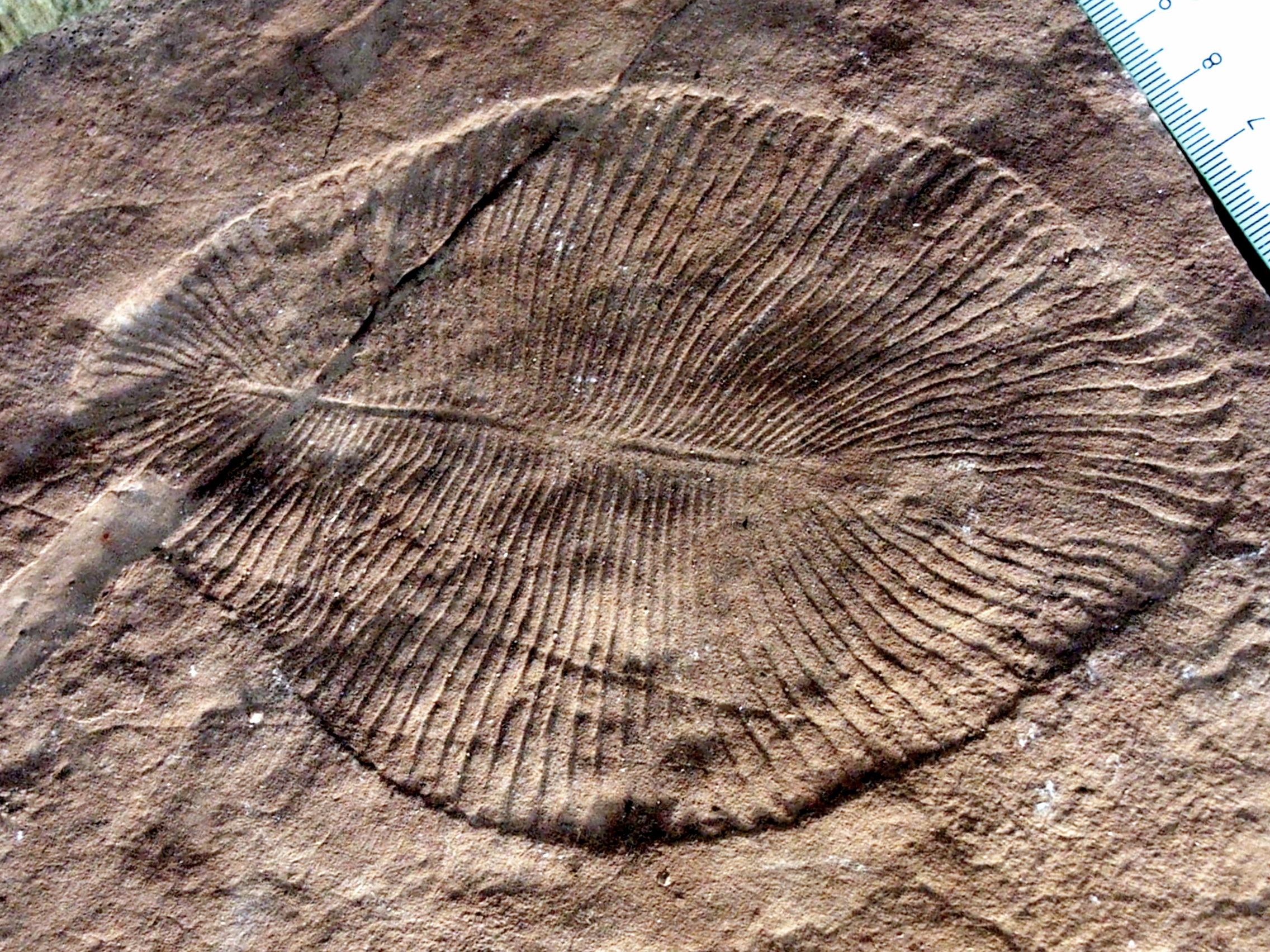 Photo Credit: Πβ / Wikimedia Commons
In the ancient seas of the Ediacaran Period, around 558 million years ago, a remarkable organism named Dickinsonia glided gracefully through the shallow waters. This flat, oval creature, resembling a giant, living pancake, was a pioneer of its time, showcasing a body adorned with distinctive rib-like structures that radiated from its center. These features not only made Dickinsonia visually striking but also sparked the curiosity of scientists and nature enthusiasts alike, as they ponder the mysteries of its existence and its role in the early history of life on Earth.
Imagine a vibrant seafloor, where sunlight filters through the water, illuminating a world teeming with life. Dickinsonia thrived in this environment, feeding on organic matter like algae and microbial mats that flourished in the nutrient-rich sediments. As it floated along, it played a crucial role in its ecosystem, helping to shape the delicate balance of life in these ancient oceans. The study of Dickinsonia offers a fascinating glimpse into the evolution of multicellular organisms, making it a key piece in the puzzle of how life developed on our planet. With each discovery, scientists inch closer to understanding not just Dickinsonia itself, but the very foundations of life as we know it.
Dickinsonia is a captivating organism that occupies a unique position in the tree of life. Classified within the kingdom Animalia, it belongs to the class Dipleurozoa and the family Dickinsoniidae. What sets Dickinsonia apart is its ancient lineage, dating back to the Ediacaran period, around 600 million years ago. Unlike most modern animals, Dickinsonia exhibits characteristics that blur the lines between plants and animals, making it a subject of great interest for scientists studying the evolution of life on Earth. Its soft, flat body and distinctive rib-like structures challenge our understanding of what it means to be an animal.
| Taxonomic Rank | Scientific Name | Meaning & Significance |
|---|---|---|
| Kingdom | Animalia | The name means “animals” in Latin, representing a vast group of multicellular organisms that are typically motile and consume organic material. |
| Class | Dipleurozoa | This name comes from Greek roots meaning “two-sided,” referring to the organism’s bilateral symmetry, which is a key feature in many animals. |
| Family | Dickinsoniidae | Named after the genus Dickinsonia, this family highlights the significance of these ancient organisms in understanding early animal evolution. |
The classification of Dickinsonia reveals much about its evolutionary history and the early stages of life on our planet. Its placement within the broader categories of Cnidaria and Eumetazoa suggests that it shares a common ancestor with modern jellyfish and corals, hinting at a time when the lines between different life forms were still being drawn. By studying Dickinsonia, scientists can gain insights into the transition from simple, single-celled organisms to the complex, multicellular life we see today. This ancient organism serves as a window into the past, helping us understand the intricate tapestry of life that has evolved over millions of years.
Around 558 million years ago, during the late Ediacaran Period, life on Earth was beginning to take on new forms. This was a time when multicellular organisms were emerging, paving the way for the complex ecosystems we see today. Among these early life forms was Dickinsonia, a fascinating organism that has intrigued scientists for decades. Its evolutionary journey offers a glimpse into the origins of animal life and the transitions that shaped the planet’s biological landscape.
Dickinsonia is believed to have evolved from simpler, single-celled ancestors. These early life forms were likely similar to modern-day protists, which are tiny organisms that can be either plant-like or animal-like. As multicellularity developed, Dickinsonia emerged with a unique body plan that set it apart from its predecessors. It had a flattened, oval shape and was covered in rib-like structures, which may have helped it absorb nutrients from the ocean floor. This adaptation was crucial for survival in a world where food sources were limited and competition was fierce.
These evolutionary adaptations were vital for Dickinsonia’s survival in a rapidly changing world. By developing a flat body and segmented structure, it could efficiently gather nutrients and navigate its environment. Its multicellular nature allowed for specialization, which is a key feature of more complex life forms. As it thrived in low-oxygen waters, Dickinsonia not only survived but also laid the groundwork for future animal evolution, influencing the rich tapestry of life that would follow.
Imagine a creature that glides through the ancient seas, its body a flat, oval shape that resembles a giant, living pancake. Dickinsonia, a fascinating organism from the distant past, boasts a unique structure that sets it apart from many other life forms. Its body is segmented, with a series of ridges and grooves that create a pattern reminiscent of a leaf or a delicate fan. This design not only gives it a striking appearance but also hints at its evolutionary adaptations to life in a world teeming with other early organisms.
| Feature | Description |
|---|---|
| Size | Typically ranges from 10 to 1 meter in length |
| Color | Likely varied, possibly including shades of brown and green |
| Skin Type | Covered in plate-like scales that provide protection |
| Body Shape | Flat and oval, with a segmented appearance |
The features of Dickinsonia work together in a remarkable way to enhance its survival. The plate-like scales serve as armor, shielding it from potential predators in the ancient ocean. Its flat body allows it to rest on the seafloor, where it can absorb nutrients from the surrounding water. The segmented design may have helped it move more efficiently, gliding along the ocean floor in search of food. Together, these characteristics paint a picture of an organism perfectly adapted to its environment, thriving in a time when life was just beginning to explore the possibilities of complexity.
In the ancient world, Dickinsonia thrived in shallow marine environments, where the sun’s rays danced upon the water’s surface. Picture a vibrant seafloor, teeming with life, where soft sediments provided a perfect canvas for this enigmatic organism. These habitats were often rich in nutrients, allowing Dickinsonia to flourish in the warm, shallow waters of the oceans that once covered vast areas of the Earth.
The climate of Dickinsonia’s habitat was generally warm, with conditions that favored the growth of various marine life. These ancient seas were often calm, allowing for the accumulation of fine sediments that provided a stable environment. The waters were likely nutrient-rich, supporting a diverse ecosystem where Dickinsonia could thrive alongside other early life forms.
To adapt to these specific habitats, Dickinsonia developed a flat, flexible body that allowed it to efficiently absorb nutrients from the surrounding water. This shape not only helped it stay anchored in the soft sediments but also maximized its surface area for feeding. By evolving in such a way, Dickinsonia was able to make the most of its environment, showcasing the incredible ways life can adapt to the conditions around it.
In the ancient seas of the Ediacaran Period, Dickinsonia led a life that was both simple and intriguing. Each day began with the gentle currents of the ocean, as this flat, oval organism floated just above the seafloor. It spent its time absorbing nutrients from the surrounding water, a process known as filter feeding. By using its body to capture tiny particles, Dickinsonia ensured it had enough energy to thrive. As the sun rose and set, this organism would slowly move across the soft sediments, leaving behind a trace of its journey.
Socially, Dickinsonia exhibited fascinating group dynamics. These organisms often gathered in clusters, creating a community that likely provided benefits such as protection from predators and increased feeding efficiency. While they did not communicate in the way we think of animals today, their close proximity suggests a form of social behavior that helped them navigate their environment. By living together, they could share resources and perhaps even respond collectively to changes in their surroundings.
| Behavior Type | Description |
|---|---|
| Feeding | Filter feeding by absorbing nutrients from the water, using its body to capture tiny particles. |
| Movement | Slowly gliding across the seafloor, leaving traces in the soft sediments as it searched for food. |
| Social Structure | Often found in clusters, suggesting a community that provided protection and resource sharing. |
| Communication | While lacking complex communication, their close living arrangements indicate a form of social interaction. |
These behaviors were crucial for the survival of Dickinsonia in its ancient world. By efficiently feeding and forming social groups, it maximized its chances of thriving in a dynamic environment. The ability to adapt to the changing conditions of the ocean floor allowed Dickinsonia to flourish during a pivotal time in Earth’s history, paving the way for the diverse life forms that would follow.
Dickinsonia primarily fed on the organic matter found in its environment, making it a herbivore. This means it primarily consumed plant-like substances, including algae and microbial mats that flourished in the shallow marine waters of its time. With its flat, pancake-like body, Dickinsonia likely used a feeding strategy that involved absorbing nutrients directly from the seafloor, where these organic materials were abundant.
| Dietary Aspect | Details |
|---|---|
| Diet Type | Herbivore |
| Favorite Foods | Algae and microbial mats |
| Prey Items | Organic matter from the seafloor |
| Hunting/Foraging Strategies | Absorbing nutrients directly from the substrate |
This diet played a crucial role in shaping Dickinsonia’s ecology and daily routine. By feeding on the abundant organic materials in its environment, it contributed to the recycling of nutrients in the ecosystem. This not only supported its own survival but also helped maintain the balance of life in the ancient seas. As Dickinsonia drifted along the seafloor, it engaged in a simple yet effective lifestyle, ensuring it thrived in the vibrant, nutrient-rich waters of the Ediacaran Period.
Mating behavior in Dickinsonia is still a bit of a mystery, but scientists believe that these ancient organisms had a fascinating way of reproducing. During the breeding season, which likely coincided with favorable environmental conditions, Dickinsonia would engage in a form of sexual reproduction. This means that two individuals would come together to exchange genetic material, ensuring that the next generation would inherit traits from both parents. The exact details of their mating rituals remain unclear, but the idea of Dickinsonia finding a partner in the vast, ancient oceans is certainly captivating.
| Reproductive Aspect | Details |
|---|---|
| Gestation Period | Unknown, but likely short due to environmental conditions |
| Litter Size | Typically small, possibly one to a few offspring |
| Age of Maturity | Estimated to be within a few months |
| Name of Young | Juveniles |
Once the young Dickinsonia, known as juveniles, are born, they begin their journey of growth and development. These tiny organisms would likely have relied on the rich organic matter in their environment for nourishment, just like their parents. Parental care in Dickinsonia is not well-documented, but it is believed that the young were somewhat independent soon after birth. As they matured, they would gradually adapt to their surroundings, eventually becoming adults capable of thriving in the ancient marine ecosystems. The cycle of life for Dickinsonia, from mating to raising young, paints a picture of resilience and adaptation in a world that was just beginning to teem with life.
Dickinsonia, a fascinating organism from the Ediacaran Period, occupies a crucial role in its ancient marine food web. As a herbivore, it primarily fed on organic matter, including algae and microbial mats. This diet placed it in a delicate balance, where it served as a food source for various predators while also contributing to the ecosystem’s health by recycling nutrients.
To survive these threats, Dickinsonia likely employed several defensive strategies. Its flat, pancake-like shape may have helped it blend into the seafloor, making it less visible to hungry predators. Additionally, its ability to thrive in soft sediments could have provided a refuge from larger, more mobile threats. By adapting to its environment and using clever camouflage, Dickinsonia managed to navigate the challenges of its ancient world.
A keystone species is an organism that plays a critical role in maintaining the structure of its ecosystem. This means that its presence or absence can significantly impact the environment and the other species living there. Dickinsonia, an ancient organism from the Ediacaran Period, is often considered a potential keystone species due to its unique feeding habits and ecological interactions. By consuming organic matter, it likely influenced the availability of resources for other marine life.
Dickinsonia primarily fed on organic material, such as algae and microbial mats, which were abundant in its shallow marine habitat. By grazing on these resources, it helped regulate the growth of these organisms, preventing any one type from dominating the ecosystem. This balance is essential for maintaining biodiversity, as it allows various species to thrive. Additionally, Dickinsonia’s feeding behavior may have contributed to nutrient cycling in the sediment, enriching the environment for other organisms.
Moreover, Dickinsonia’s presence would have provided a food source for other marine animals. While it is not known to have had many predators, its role as a herbivore means it was part of the food web, supporting the survival of other species. The interactions between Dickinsonia and its environment highlight its importance in the ancient marine ecosystem, showcasing how interconnected life can be.
If Dickinsonia were to disappear from its ecosystem, the consequences could be significant. Without this organism to graze on algae and microbial mats, these resources might grow unchecked, leading to imbalances in the ecosystem. This could result in reduced biodiversity, as some species may outcompete others for space and resources. Additionally, the loss of Dickinsonia would disrupt nutrient cycling, potentially harming the overall health of the marine environment. In essence, the absence of this ancient organism could ripple through the ecosystem, affecting many forms of life that depend on a balanced and thriving habitat.
Dickinsonia, an ancient organism from the Ediacaran Period, played a vital role in shaping its ecosystem. As a herbivore, it thrived in shallow marine environments, feeding on organic matter like algae and microbial mats. This feeding behavior not only provided nourishment for Dickinsonia but also influenced the distribution and abundance of other organisms in its habitat. By consuming these primary producers, Dickinsonia helped regulate the growth of algae, ensuring a balanced ecosystem where various life forms could flourish.
| Ecosystem Service | Impact |
|---|---|
| Nutrient Cycling | Facilitates the breakdown of organic matter, enriching the sediment with nutrients. |
| Habitat Formation | Creates microhabitats for other organisms by altering the seafloor environment. |
| Food Source | Serves as a food source for other marine life, contributing to the food web. |
| Algal Control | Regulates algal populations, preventing overgrowth and promoting biodiversity. |
The influence of Dickinsonia on its ecosystem can be seen in various ways. For instance, by feeding on algae, it not only kept algal blooms in check but also allowed other organisms to thrive. This balance was crucial for maintaining a diverse community of life in the ancient seas. Additionally, as Dickinsonia moved across the seafloor, it disturbed the sediment, which helped aerate the ground and made it more hospitable for other marine creatures. This interaction created a dynamic environment where life could adapt and evolve.
The broader ecological importance of Dickinsonia cannot be overstated. As a keystone species, its presence had a ripple effect throughout the ecosystem, influencing everything from nutrient availability to species diversity. By shaping the environment in which it lived, Dickinsonia contributed to the foundation of complex marine ecosystems that would eventually lead to the rich biodiversity we see today. Understanding its role helps us appreciate the intricate connections that exist in nature, reminding us that even the smallest organisms can have a profound impact on the world around us.
In the intricate web of life, symbiosis refers to the close and often long-term interactions between different species. These relationships can take many forms, including mutualism, where both species benefit, parasitism, where one benefits at the expense of the other, and commensalism, where one benefits while the other is neither helped nor harmed. Understanding these connections helps us appreciate how organisms like Dickinsonia interacted with their environment and other species during the Ediacaran Period.
| Species/Type | Relationship Type | Description |
|---|---|---|
| Microbial Mats | Mutualistic | Dickinsonia likely fed on organic matter produced by microbial mats, benefiting from the nutrients while helping to recycle materials in the ecosystem. |
| Algae | Mutualistic | As a herbivore, Dickinsonia consumed algae, which thrived in the same shallow marine environments, creating a balance that supported both species. |
| Predatory Organisms | Parasitic | While not a direct relationship, Dickinsonia faced threats from larger predatory organisms that may have preyed on it, impacting its survival. |
These relationships evolved over millions of years, shaping the dynamics of ancient ecosystems. Mutualistic interactions, like those with microbial mats and algae, allowed Dickinsonia to thrive by providing essential nutrients. Meanwhile, the presence of predators likely drove adaptations in Dickinsonia, influencing its behavior and habitat choices. Such interconnectedness illustrates the delicate balance of life, where each species plays a role in the survival and evolution of others, creating a rich tapestry of life that continues to inspire curiosity today.
Dickinsonia is an extraordinary organism that lived over half a billion years ago, during a time when life on Earth was just beginning to diversify. This ancient creature offers a glimpse into the early evolution of multicellular life, and its unique characteristics continue to intrigue scientists and nature enthusiasts alike.
The relationship between Dickinsonia and humanity is a tale that stretches back to the dawn of scientific discovery. Although Dickinsonia itself is an ancient organism that lived over 558 million years ago, its significance has grown in modern times as scientists uncover its role in the history of life on Earth. Early paleontologists, fascinated by the fossilized remains of this enigmatic creature, have often drawn parallels between Dickinsonia and the evolution of complex life forms. This connection has sparked cultural interest, inspiring art, literature, and even philosophical discussions about the origins of life and our place within it.
Today, our interactions with Dickinsonia are primarily through the lens of research and conservation. As scientists study its fossils, they gain insights into the early stages of multicellular life, which can inform our understanding of evolution and biodiversity. While Dickinsonia itself is long extinct, the lessons learned from its existence can help us address current environmental challenges. For instance, understanding ancient ecosystems can guide conservation efforts aimed at protecting modern marine habitats. However, there is also a conflict between scientific exploration and the preservation of fossil sites, as human activities can threaten these invaluable records of our planet’s history.
Looking ahead, the future of our relationship with Dickinsonia and similar ancient organisms holds great promise. As we continue to explore the depths of our planet’s history, we may uncover more about the intricate web of life that has shaped our world. This knowledge not only enriches our understanding of evolution but also emphasizes the importance of preserving our natural heritage. By fostering a deeper connection with the past, we can inspire future generations to protect the biodiversity that remains, ensuring that the lessons of ancient life continue to resonate in our modern world.
The conservation status of Dickinsonia is classified as extinct. This ancient organism, which thrived over 558 million years ago, has not been seen for millions of years. As a result, there are no current population estimates or trends to report. The extinction of Dickinsonia marks a significant chapter in the history of life on Earth, as it was one of the earliest multicellular organisms, providing valuable insights into the evolution of complex life.
| Conservation Factor | Status/Details |
|---|---|
| IUCN Status | Extinct |
| Population Estimates | Not applicable |
| Trend Direction | N/A |
The main threats to Dickinsonia were likely environmental changes that occurred during the late Ediacaran Period. As the Earth transitioned into the Cambrian Period, dramatic shifts in climate and ocean chemistry may have altered the habitats where Dickinsonia thrived. These changes could have led to the decline of the soft-bodied organisms that were unable to adapt to the new conditions, ultimately resulting in their extinction.
Despite Dickinsonia being long gone, its legacy continues to inspire scientists and researchers. Ongoing studies of Ediacaran fossils help us understand the evolutionary processes that shaped life on Earth. By examining these ancient organisms, conservationists can gain insights into how current species might respond to environmental changes. While Dickinsonia itself cannot be saved, its story serves as a reminder of the importance of preserving biodiversity and the delicate balance of ecosystems today.
| Question | Answer |
|---|---|
| What is Dickinsonia? | Dickinsonia is an ancient organism that lived during the late Ediacaran period, around 558 million years ago. It is one of the earliest known multicellular life forms and is often considered a precursor to more complex animals. |
| What was the habitat of Dickinsonia? | Dickinsonia thrived in shallow marine environments, often found on the ocean floor. Fossils have been discovered in various locations, including Australia and Russia, indicating it lived in warm, nutrient-rich waters. |
| What did Dickinsonia eat? | Dickinsonia was a herbivore, meaning it primarily fed on organic material, likely including algae and microbial mats. Its flat, pancake-like body may have allowed it to absorb nutrients directly from the ocean floor. |
| How did Dickinsonia reproduce? | While the exact reproduction method of Dickinsonia is still a mystery, scientists believe it may have reproduced asexually. This means it could have created copies of itself without needing a mate, possibly by splitting into two or budding off new individuals. |
| What were the threats to Dickinsonia? | As an extinct organism, Dickinsonia faced threats from environmental changes, such as shifts in ocean chemistry and temperature. These changes could have affected its food sources and habitat, leading to its eventual extinction. |
| What are some interesting characteristics of Dickinsonia? | Dickinsonia had a unique, segmented body that resembled a large, flat oval or pancake. Its body structure is unlike any modern animal, making it a fascinating subject for scientists studying the evolution of life on Earth. |
| Why is Dickinsonia important to science? | Dickinsonia provides valuable insights into the early evolution of multicellular life. Studying its fossils helps scientists understand how complex organisms developed and adapted to their environments over millions of years. |