Taxonomy & Classification
- Kingdom
- Animalia
- Phylum
- Chordata
- Class
- Actinopterygii
- Order
- Perciformes
- Family
- Cichlidae
- Genus
- Symphysodon

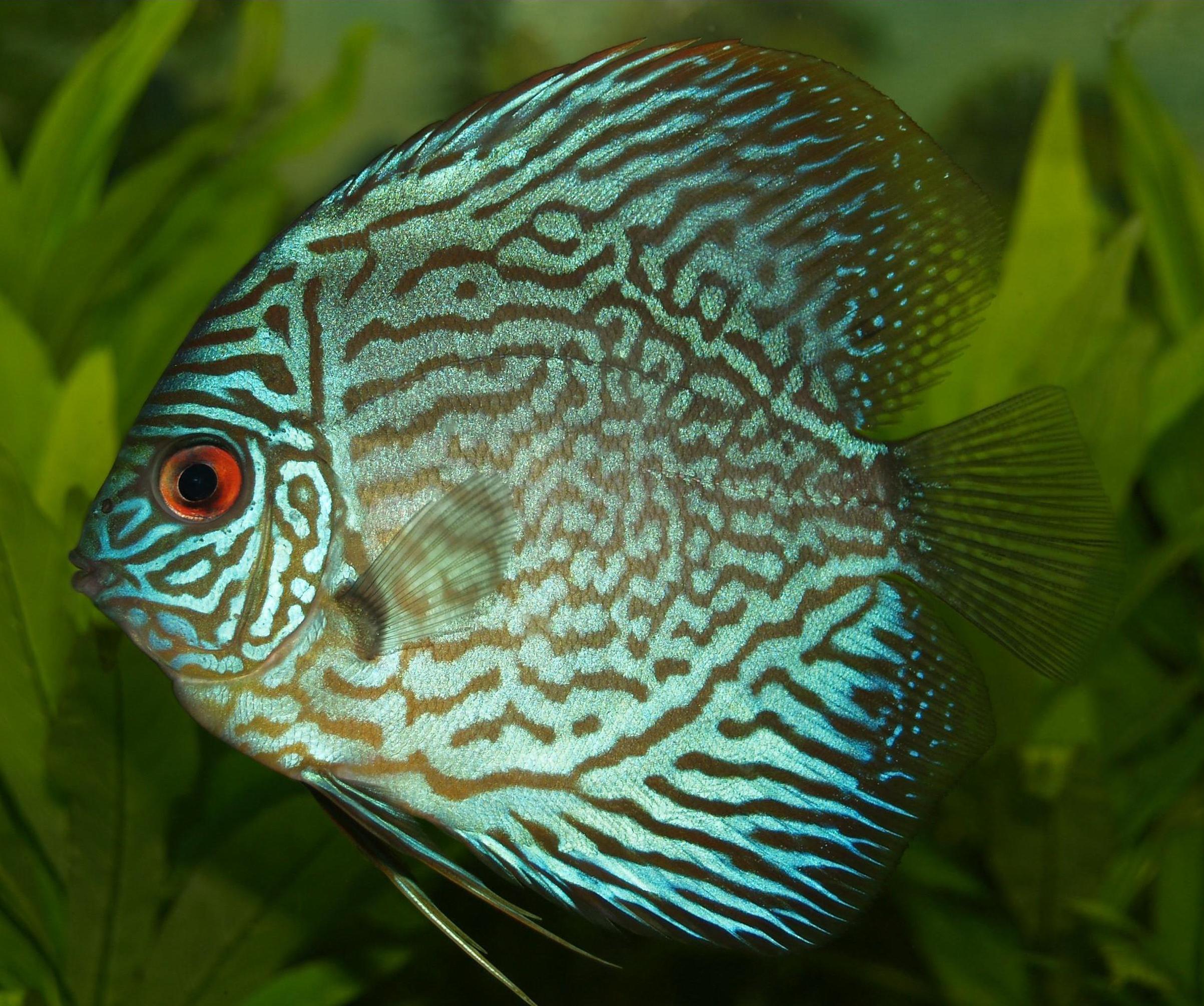 Photo Credit: Gladstone~commonswiki / Wikimedia Commons
In the shimmering waters of the Amazon Basin, the discus fish, known scientifically as Symphysodon, glides gracefully through its lush aquatic home. With its striking, round body resembling a colorful disc, this fish captivates anyone lucky enough to catch a glimpse. Its vibrant hues, ranging from deep blues to fiery reds, create a dazzling display that dances in the sunlight filtering through the water’s surface. This enchanting appearance is not just for show; it plays a crucial role in communication and mating, making the discus a subject of fascination for scientists and nature lovers alike.
As the discus swims among the submerged plants and gentle currents, it reveals a world teeming with life. These fish thrive in slow-moving waters, where they find shelter and food, showcasing their omnivorous diet that includes both plant matter and tiny aquatic creatures. Their social behavior is equally intriguing, as they often form tight-knit groups, displaying a sense of community that adds to their charm. With their unique adaptations and vital role in the ecosystem, discus fish are not only beautiful but also essential players in the delicate balance of their underwater world. Join us as we dive deeper into the life of the discus, exploring its habitat, behavior, and the challenges it faces in the wild.
The discus fish, known scientifically as Symphysodon, occupies a fascinating niche in the tree of life. This vibrant freshwater fish belongs to the kingdom Animalia, which includes all animals, and is part of the phylum Chordata, characterized by having a backbone. What sets discus apart is its strikingly flat, disc-like shape and vivid colors, which make it a favorite among aquarium enthusiasts. These fish are not just beautiful; they also exhibit complex social behaviors and are known for their caring nature, especially when it comes to parenting their young.
| Taxonomic Rank | Scientific Name | Meaning & Significance |
|---|---|---|
| Kingdom | Animalia | This name signifies the broadest category of multicellular organisms that are heterotrophic, meaning they consume organic material for energy. |
| Phylum | Chordata | Derived from the Latin word “chorda,” meaning “string,” this classification highlights the presence of a notochord, a flexible rod that supports the body during development. |
| Class | Actinopterygii | This term means “ray-finned fishes,” referring to the bony spines that support their fins, a key feature that distinguishes them from other fish classes. |
| Order | Perciformes | Meaning “perch-like,” this order includes a vast array of fish known for their diverse shapes and habitats, showcasing the adaptability of aquatic life. |
| Family | Cichlidae | This family name comes from the Greek word “kichlos,” which refers to a type of fish, emphasizing the unique evolutionary traits shared among cichlids, including their complex behaviors. |
| Genus | Symphysodon | From the Greek words “symphysis,” meaning “growing together,” and “odon,” meaning “tooth,” this name reflects the unique dental structure of these fish, which aids in their feeding habits. |
Understanding the taxonomic classification of the discus fish reveals much about its evolutionary journey. As part of the cichlid family, discus share a lineage with many other species that have adapted to various environments, showcasing the incredible diversity of life in freshwater ecosystems. Their unique physical characteristics and social behaviors have evolved over millions of years, allowing them to thrive in the complex habitats of the Amazon River basin. This classification not only highlights their biological traits but also underscores the intricate connections between species in the natural world.
The evolutionary journey of the discus fish, scientifically known as Symphysodon, stretches back millions of years, weaving through the lush waters of the Amazon Basin. This vibrant fish is a member of the Cichlidae family, which is known for its diverse and adaptive species. The discus has evolved in a dynamic environment, adapting to the challenges of freshwater habitats, and its story is one of survival and transformation.
The ancestors of the discus fish were likely more generalized cichlids, which began to diversify around 30 million years ago. As these fish adapted to their surroundings, they developed distinct body shapes and behaviors. The transition from a more elongated body to the iconic disc shape we see today allowed discus fish to navigate the dense aquatic vegetation of their habitat more effectively. This change not only improved their swimming efficiency but also helped them evade predators and catch prey.
These adaptations have been crucial for the discus fish’s survival in the competitive and often perilous waters of the Amazon. Their unique body shape and vibrant colors not only help them evade predators but also play a vital role in their social interactions and reproductive success. By evolving these traits, discus fish have thrived in their environment, showcasing the incredible power of adaptation in the natural world.
The discus fish is a stunning spectacle of nature, captivating anyone who gazes upon it. With its round, disc-like body, this fish glides gracefully through the water, resembling a living jewel. Its shape is not just for show; it allows for agile movements in the dense underwater vegetation of its Amazonian home. The discus is adorned with a kaleidoscope of bright colors, which can range from deep blues and greens to fiery reds and yellows, making it a true marvel of aquatic beauty.
| Feature | Description |
|---|---|
| Weight | 150g – 250g |
| Skin Type | Scales |
| Most Distinctive Feature | Bright colors |
These vibrant colors serve multiple purposes in the life of the discus fish. Firstly, they play a crucial role in communication, helping individuals signal to one another during mating rituals or when establishing territory. Additionally, the bright hues can act as a warning to potential predators, indicating that the discus is not an easy meal. The combination of its unique shape and dazzling colors not only enhances its beauty but also equips it with the tools necessary for survival in the rich and competitive waters of the Amazon.
The discus fish thrives in the tranquil embrace of deep, slow-moving waters, where sunlight filters gently through the surface, creating a serene underwater world. These habitats are often adorned with lush aquatic plants and submerged logs, providing both shelter and a rich environment for feeding. The water is typically warm and clear, allowing the discus to showcase its vibrant colors as it glides gracefully among the greenery.
To flourish, discus fish require specific climate and environmental conditions. They prefer warm waters, usually ranging from 82 to 86 degrees Fahrenheit (28 to 30 degrees Celsius). The water is often soft and slightly acidic, with a pH level between 6.0 and 7.0. These conditions help maintain the health of the fish and support the growth of the plants and microorganisms they rely on for food.
Over time, discus fish have developed remarkable adaptations to thrive in their unique habitats. Their flattened bodies allow them to maneuver easily among the dense vegetation, while their vibrant colors help them blend in with the colorful surroundings, providing camouflage from predators. Additionally, their social behavior encourages them to live in groups, which offers protection and enhances their chances of finding food in the rich, biodiverse waters of the Amazon Basin.
The discus fish leads a vibrant and active daily life, primarily during the day, as it is diurnal, meaning it is most active when the sun is shining. As the morning light filters into its freshwater home, the discus begins to swim gracefully through the water, exploring its surroundings. It spends much of its time foraging for food, which includes small insects, crustaceans, and plant matter. This daily routine is not just about finding food; it also involves maintaining a healthy environment by keeping the water clean and free of debris.
Socially, discus fish are known for their strong group dynamics. They thrive in schools, which are groups of fish that swim together for safety and companionship. This social behavior is crucial for their well-being, as being part of a school helps them avoid predators and reduces stress. Within these groups, discus fish communicate through body language and subtle color changes, signaling their mood and intentions to one another. This interaction fosters a sense of community and cooperation, making their underwater world a lively and engaging place.
| Behavior Type | Description |
|---|---|
| Activity Patterns | Diurnal, meaning they are most active during the day, swimming and foraging for food. |
| Social Structure | Live in schools, which provide safety and social interaction, enhancing their overall health. |
| Communication Methods | Use body language and color changes to express emotions and intentions to other fish. |
The behaviors of discus fish are not just fascinating; they are essential for survival. By living in schools, they can better protect themselves from predators, while their diurnal lifestyle allows them to take advantage of the abundant food available during the day. Their ability to communicate effectively within their groups fosters strong social bonds, which are vital for their emotional health. Together, these behaviors create a harmonious existence in the vibrant ecosystems of their Amazonian home.
The discus fish, known for its stunning colors and graceful movements, has a diverse diet that reflects its omnivorous nature. This means it enjoys a mix of both plant and animal foods. In the wild, discus fish primarily feed on small invertebrates, which are tiny animals without backbones, as well as various types of plant matter. Their feeding behavior is quite interesting; they often forage in groups, using their keen eyesight to spot food in the water.
| Dietary Aspect | Details |
|---|---|
| Diet Type | Omnivore |
| Favorite Foods | Small invertebrates and plant matter |
| Prey Items | Tiny worms, crustaceans, and algae |
| Hunting/Foraging Strategies | Foraging in groups, using keen eyesight to locate food |
This varied diet plays a crucial role in the discus fish’s ecology and daily routine. By consuming both plant and animal matter, they help maintain a balanced ecosystem in their freshwater habitats. Their foraging behavior not only supports their own health but also influences the distribution of nutrients in the water, promoting a thriving environment for other aquatic life. As they swim gracefully through their watery world, the discus fish exemplifies the interconnectedness of life in the Amazon Basin.
When it comes to reproduction, discus fish exhibit intriguing behaviors that are both captivating and essential for their survival. The breeding season typically occurs during the warmer months when water temperatures rise. During this time, males engage in elaborate courtship displays, showcasing their vibrant colors and swimming patterns to attract females. Once a pair has formed, they will select a suitable flat surface, like a leaf or a rock, to lay their eggs, ensuring a safe environment for their future offspring.
| Reproductive Aspect | Details |
|---|---|
| Gestation Period | 3 to 4 days |
| Litter Size | Up to 300 eggs |
| Age of Sexual Maturity | 1 – 3 years |
| Name of Young | Fry |
After the eggs hatch, the fry, which are tiny and vulnerable, rely heavily on their parents for protection and nourishment. The adult discus fish are known for their exceptional parental care. They not only guard the fry from potential predators but also secrete a special mucus on their bodies that the young fish feed on. This nurturing behavior helps the fry grow stronger and more independent. As they develop, the fry gradually learn to swim and forage for food on their own, eventually transforming into the stunning adults that glide gracefully through their aquatic home.
The discus fish, a vibrant inhabitant of the Amazon Basin, plays a crucial role in its aquatic food web. As both prey and predator, it helps maintain the balance of its ecosystem. While it feeds on small invertebrates and plant matter, it also finds itself on the menu for various larger fish and other predators. This delicate balance is essential for the health of the underwater community.
To survive these threats, discus fish have developed several defensive behaviors. They often seek refuge among dense vegetation, where their colors can blend in with the surroundings, making them harder to spot. Additionally, they can school together in groups, which provides safety in numbers. When feeling threatened, discus fish may also dart quickly to escape danger, showcasing their agility in the water. These strategies help them navigate the challenges of their environment and continue to thrive in their vibrant habitat.
A keystone species is a vital part of its ecosystem, meaning its presence has a significant impact on the environment and other organisms within it. The discus fish, known scientifically as Symphysodon, can indeed be considered a keystone species in its habitat. This colorful fish plays a crucial role in maintaining the balance of its ecosystem, particularly in the freshwater environments of the Amazon Basin.
Discus fish contribute to their ecosystem in several important ways. First, their omnivorous diet allows them to help control algae growth and maintain water quality. By feeding on both plant matter and small invertebrates, they prevent any one species from dominating the environment. Additionally, discus fish are social creatures that often school together. This group behavior not only provides safety in numbers but also influences the distribution of nutrients in the water as they move and feed together. Their presence can attract other species, creating a diverse community of aquatic life.
If discus fish were to disappear from their ecosystem, the consequences could be severe. Without these vibrant fish, algae could overgrow, leading to poor water quality and affecting other aquatic life. The balance of the food web would be disrupted, as larger predators would lose a key food source. This could result in a decline in those predator populations, further destabilizing the ecosystem. In essence, the absence of discus fish would ripple through the entire aquatic community, highlighting their essential role in maintaining ecological harmony.
The discus fish, known scientifically as Symphysodon, plays a vital role in shaping its ecosystem within the lush waters of the Amazon Basin. This vibrant fish occupies a unique ecological niche, thriving in deep, slow-moving waters where it interacts with various aquatic plants and organisms. As an omnivore, the discus contributes to the balance of its environment by feeding on both plant matter and small invertebrates, helping to regulate populations of these organisms and promoting a healthy aquatic community.
| Ecosystem Service | Impact |
|---|---|
| Food Source | Provides nourishment for larger predators, maintaining the food web. |
| Plant Regulation | Helps control aquatic plant growth through grazing, promoting biodiversity. |
| Nutrient Cycling | Contributes to nutrient distribution in the water, supporting other life forms. |
| Habitat Structure | Creates microhabitats by interacting with plants and substrate, benefiting other species. |
The discus fish influences its ecosystem in several specific ways. By feeding on algae and detritus, it helps keep the water clean and clear, which is essential for the health of aquatic plants. These plants, in turn, provide shelter and breeding grounds for various fish and invertebrates. Additionally, the discus’s presence attracts larger predators, such as pike and catfish, which rely on it as a food source. This dynamic interaction illustrates how the discus fish is not just a beautiful inhabitant of the Amazon but also a key player in maintaining the balance of life in its watery home.
The broader ecological importance of the discus fish cannot be overstated. As a keystone species, its activities influence the entire aquatic community, from the smallest microorganisms to the largest predators. By supporting biodiversity and contributing to nutrient cycling, the discus fish helps ensure the resilience of its ecosystem. Protecting this vibrant species and its habitat is crucial for the health of the Amazon Basin, reminding us of the interconnectedness of all life forms in our natural world.
In the intricate web of life, symbiosis refers to the close and often long-term interactions between different species. These relationships can take many forms, including mutualism, where both species benefit, parasitism, where one benefits at the expense of the other, and commensalism, where one benefits while the other is neither helped nor harmed. The discus fish, known for its vibrant colors and graceful movements, engages in various ecological partnerships that enhance its survival and well-being in the rich waters of the Amazon Basin.
| Species/Type | Relationship Type | Description |
|---|---|---|
| Cleaner Fish | Mutualistic | Discus fish often interact with cleaner fish, which remove parasites and dead skin from their bodies. In return, the cleaner fish get a meal, benefiting both parties. |
| Plants (e.g., aquatic vegetation) | Commensal | Discus fish find shelter among aquatic plants. While the plants are not affected, the discus benefit from protection and a place to hide from predators. |
| Predatory Fish | Parasitic | In some cases, larger predatory fish may prey on juvenile discus. This relationship is harmful to the discus, as it reduces their population. |
These relationships have evolved over time, shaped by the needs and behaviors of the species involved. The mutualistic interactions, like those with cleaner fish, highlight how cooperation can lead to healthier individuals and a more balanced ecosystem. Meanwhile, the presence of predatory fish serves as a reminder of the challenges that discus face in their environment. Understanding these connections not only enriches our knowledge of the discus fish but also emphasizes the importance of preserving their habitats to maintain the delicate balance of life in the Amazon Basin.
The discus fish, with its stunning colors and graceful movements, is a true marvel of the aquatic world. Here are some surprising facts that reveal just how extraordinary this fish really is.
The relationship between discus fish and humanity is rich and varied, stretching back centuries. Indigenous peoples of the Amazon have long revered these vibrant fish, often incorporating them into their cultural practices and folklore. The discus, with its striking colors and unique shape, has captured the imagination of many, symbolizing beauty and harmony in aquatic life. As explorers and naturalists ventured into the Amazon, they brought tales of the discus back to Europe, where it became a sought-after species for aquariums, further embedding it into human culture.
Today, interactions between discus fish and humans have evolved significantly. While many people keep discus in home aquariums, there are also ongoing efforts to conserve their natural habitats. Unfortunately, the discus faces threats from habitat destruction and pollution, leading to conflicts between conservation efforts and human activities. Some enthusiasts have even taken to breeding discus in captivity, creating a variety of colors and patterns that are popular in the aquarium trade. This domestication has allowed for a deeper appreciation of the species while raising awareness about the importance of protecting their wild counterparts.
Looking ahead, the future of the relationship between discus fish and humanity holds promise and challenges. As awareness of environmental issues grows, there is hope that more people will advocate for the protection of the Amazon and its inhabitants. By fostering a deeper understanding of these beautiful fish and their role in the ecosystem, we can ensure that future generations will continue to marvel at the discus, both in the wild and in our homes. Together, we can create a world where humans and discus fish thrive side by side, celebrating the wonders of nature.
The conservation status of the discus fish, scientifically known as Symphysodon, is currently classified as Near Threatened. This means that while the species is not yet endangered, it faces significant risks that could lead to a decline in its population if protective measures are not taken. The exact population size remains unknown, but trends suggest that their numbers are not stable, indicating a need for ongoing monitoring and conservation efforts.
| Conservation Factor | Status/Details |
|---|---|
| IUCN Status | Near Threatened |
| Population Estimates | Unknown |
| Trend Direction | Declining |
The main threats to the discus fish stem from habitat loss and overfishing. As human activities expand, the lush environments of the Amazon Basin, where these fish thrive, are increasingly disturbed. Deforestation, pollution, and the construction of dams disrupt their natural habitats, making it harder for them to find food and reproduce. Additionally, the popularity of discus fish in the aquarium trade has led to overharvesting, further stressing their populations.
Conservation efforts are underway to protect the discus fish and its habitat. Organizations are working to raise awareness about the importance of preserving the Amazon’s delicate ecosystems. Sustainable fishing practices and habitat restoration projects are being implemented to help stabilize their populations. With continued commitment and action, there is hope that the discus fish can thrive once again in its vibrant, watery home.
| Question | Answer |
|---|---|
| What is the natural habitat of the Discus? | Discus fish are found in deep, slow-moving waters of the Amazon River basin in South America. They prefer areas with plenty of plants and hiding spots, which provide safety from predators. |
| What do Discus fish eat? | Discus are omnivores, meaning they eat both plants and animals. In the wild, their diet includes small insects, crustaceans, and various types of aquatic plants. |
| How do Discus fish behave in their environment? | Discus are known for their social behavior and often swim in groups. They communicate with each other through body language and color changes, which can indicate mood or health. |
| How do Discus reproduce? | Discus fish are known to be caring parents. They lay eggs on flat surfaces, and both parents take turns guarding and fanning the eggs to keep them clean and oxygenated until they hatch. |
| What threats do Discus face in the wild? | Discus fish are considered Near Threatened due to habitat loss and overfishing. Pollution and changes in water quality also pose significant risks to their populations. |
| What are some interesting characteristics of Discus? | One of the most distinctive features of Discus is their bright colors, which can range from blue to red and yellow. They are also known for their unique, disc-shaped bodies, which help them navigate through their aquatic environment. |
| Can Discus be kept in aquariums? | Yes, Discus are popular in the aquarium trade, but they require specific care. They thrive in warm, clean water and need a well-maintained environment to stay healthy and vibrant. |