Taxonomy & Classification
- Kingdom
- Animalia
- Phylum
- Chordata
- Class
- Mammalia
- Order
- Lagomorpha
- Family
- Leporidae
- Genus
- Sylvilagus
- Species
- Sylvilagus floridanus

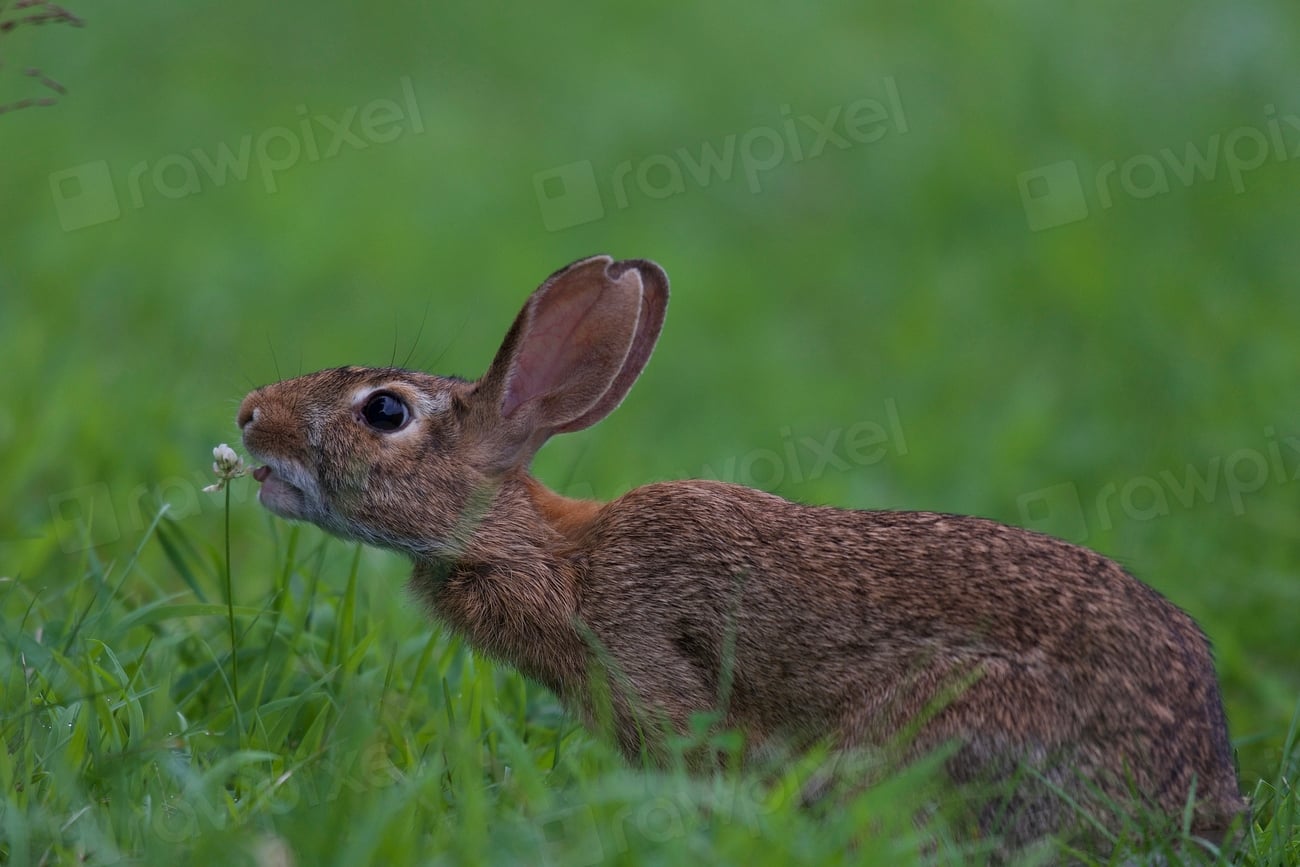 Photo Credit: U.S. Fish and Wildlife Service / Rawpixel
In the soft glow of dawn, the Eastern Cottontail, or Sylvilagus floridanus, emerges from its cozy nest, ready to greet the day. With its round, fluffy body and signature cotton-like tail, this small rabbit is a delightful sight against the backdrop of dew-kissed grass and wildflowers. Its large, expressive eyes and long ears, which can swivel independently to catch every sound, make it a master of its environment. This charming creature is not just a pretty face; it plays a vital role in the ecosystem, serving as both a herbivore and a key food source for many predators.
As the sun rises higher, the Eastern Cottontail hops through meadows and fields, nibbling on tender clover and fresh greens. Its agile movements and quick reflexes are essential for evading hungry hawks and sly foxes. Scientists and nature enthusiasts alike are captivated by this little rabbit’s adaptability and social behavior. With a life cycle that includes energetic courtship displays and nurturing young, the Eastern Cottontail embodies the beauty of nature’s rhythms. Join us as we explore the fascinating world of Sylvilagus floridanus, uncovering the secrets of its habitat, diet, and the important role it plays in the wild.
The Eastern Cottontail, scientifically known as Sylvilagus floridanus, occupies a special place in the animal kingdom. This small mammal is a member of the order Lagomorpha, which includes rabbits and hares. What sets the Eastern Cottontail apart is its adaptability to various habitats, from forests to urban areas, making it a common sight across much of North America. With its long ears, fluffy tail, and powerful hind legs, this rabbit is not just a charming addition to the landscape; it plays a vital role in its ecosystem as both a herbivore and a prey species for many predators.
| Taxonomic Rank | Scientific Name | Meaning & Significance |
|---|---|---|
| Kingdom | Animalia | This rank includes all animals, highlighting the Eastern Cottontail’s status as a living organism that moves and interacts with its environment. |
| Phylum | Chordata | Chordates are animals with a backbone. The Eastern Cottontail has a spine that supports its agile movements and helps it escape from predators. |
| Class | Mammalia | Mammals are warm-blooded animals that nurse their young with milk. The Eastern Cottontail is a mammal, which means it has fur and gives birth to live young. |
| Order | Lagomorpha | This order includes rabbits and hares, characterized by their two pairs of upper incisors. The Eastern Cottontail’s unique dental structure helps it efficiently chew tough plant material. |
| Family | Leporidae | This family encompasses all rabbits and hares. The name comes from the Latin word “lepus,” meaning hare, reflecting the Eastern Cottontail’s close relatives. |
| Genus | Sylvilagus | This genus name means “forest hare” in Latin, which is fitting as the Eastern Cottontail often inhabits wooded areas and fields. |
| Species | floridanus | This species name indicates its origin in Florida, where it was first described, although it now ranges far beyond that state. |
Understanding the Eastern Cottontail’s classification reveals much about its evolutionary journey. As a member of the Lagomorpha order, it shares a common ancestor with other rabbits and hares, showcasing adaptations that have allowed it to thrive in diverse environments. Its classification not only highlights its physical traits but also its ecological role, emphasizing the interconnectedness of life on Earth. The Eastern Cottontail is a testament to the wonders of evolution, demonstrating how species adapt and survive in a constantly changing world.
The evolutionary journey of the Eastern Cottontail, or Sylvilagus floridanus, stretches back millions of years, weaving through the rich tapestry of life on Earth. This small mammal belongs to the family Leporidae, which includes all rabbits and hares. The story of the Eastern Cottontail is one of adaptation and survival, shaped by changing environments and the challenges of predators.
The ancestors of modern rabbits first appeared around 40 million years ago during the Eocene epoch. These early lagomorphs were quite different from the Eastern Cottontail we know today. Over time, they evolved into various forms, adapting to diverse habitats across North America. One significant transition occurred as they developed longer hind legs, which allowed for powerful leaps, helping them escape from predators. Additionally, their teeth evolved to better process the tough, fibrous plants that make up their diet, showcasing a shift towards herbivory, or plant-eating.
The adaptations of the Eastern Cottontail have been crucial for its survival in a world filled with challenges. The combination of speed, keen senses, and effective camouflage allows it to thrive in various environments, from forests to fields. With a remarkable ability to reproduce quickly, this resilient rabbit continues to flourish, embodying the spirit of adaptability that has defined its evolutionary path.
The Eastern Cottontail is a delightful sight in the wild, embodying the charm of a classic rabbit. With a compact body that can weigh up to 4.4 pounds, this little mammal is built for agility and speed. Its fur is soft and dense, providing warmth and protection, while its most distinctive feature—a fluffy white tail—adds a playful touch to its appearance. The overall impression is one of a nimble creature, perfectly adapted to its grassy and brushy habitats.
| Feature | Description |
|---|---|
| Size | Up to 4.4 pounds |
| Color | Brownish-gray fur with a lighter underbelly |
| Skin Type | Soft, dense fur |
| Distinctive Feature | Fluffy white tail |
The Eastern Cottontail’s physical features work together beautifully for survival. Its soft, brownish-gray fur provides excellent camouflage against the forest floor, helping it blend in with the surroundings and evade predators. The fluffy white tail serves a clever purpose too; when the cottontail darts away, the tail flashes like a warning signal to other rabbits, alerting them to danger. This combination of color, size, and agility makes the Eastern Cottontail a master of its environment, thriving in the wild while captivating the hearts of those who catch a glimpse.
The Eastern Cottontail thrives in a variety of habitats that paint a picturesque scene of nature’s beauty. Imagine wide-open fields dotted with wildflowers, lush meadows swaying gently in the breeze, and serene wetlands where water glistens under the sun. These rabbits also find comfort in the dappled light of woods, where they can hide among the underbrush. This blend of open spaces and sheltered areas provides the perfect backdrop for their lively antics and playful nature.
To flourish, Eastern Cottontails prefer environments that offer a mix of cover and food sources. They thrive in areas with moderate climates, where temperatures are neither too hot nor too cold. These rabbits are often found in regions that experience distinct seasons, allowing them to adapt to changing conditions. They enjoy habitats with plenty of grasses, herbs, and shrubs, which provide both nourishment and hiding spots from predators.
Adaptation is key to the Eastern Cottontail’s success in its diverse habitats. Their keen sense of hearing and excellent eyesight help them detect danger, while their powerful hind legs allow for quick escapes. The ability to blend into their surroundings with their brownish fur also aids in evading predators. By choosing habitats that offer both food and shelter, these rabbits have become well-suited to life in the wild, showcasing nature’s incredible ability to adapt and thrive.
The Eastern Cottontail leads a lively and active life, primarily during the early morning and late afternoon hours, a behavior known as being crepuscular. This means they are most active during twilight, when the world is waking up or winding down. During these times, they hop through their grassy habitats, nibbling on tender shoots, clover, and other delicious greens. Their daily routine is a mix of foraging for food, grooming their soft fur, and keeping a watchful eye out for predators.
Socially, Eastern Cottontails are quite engaging. They often live in small groups, which helps them stay alert to dangers. These rabbits communicate with each other through a variety of sounds and body language. For instance, they may thump their hind legs on the ground to warn others of an approaching threat. This social structure not only fosters a sense of community but also enhances their chances of survival, as they can rely on one another to spot potential dangers.
| Behavior Type | Description |
|---|---|
| Activity Patterns | Active during dawn and dusk, Eastern Cottontails forage for food and socialize in the cooler parts of the day. |
| Social Structure | They live in small groups, which helps them stay safe from predators and fosters social interactions. |
| Communication Methods | They use thumping sounds and body language to alert others of danger, creating a network of awareness among the group. |
The behaviors of Eastern Cottontails are finely tuned to ensure their survival in the wild. By being crepuscular, they avoid the heat of the day and reduce the risk of encountering predators. Their social nature allows them to share information and stay vigilant, making it easier to spot threats. Together, these daily activities and group dynamics create a robust strategy for thriving in their natural environment.
The Eastern Cottontail is a dedicated herbivore, which means it primarily eats plants. This little rabbit has a varied diet that includes grasses, clover, and a range of leafy greens. It uses its strong front teeth to nibble on these tasty plants, often foraging in the early morning or late afternoon when it feels safest from predators. With its keen sense of smell and sharp eyesight, the Eastern Cottontail can locate food quickly, making it well-adapted to its environment.
| Dietary Aspect | Details |
|---|---|
| Diet Type | Herbivore |
| Favorite Foods | Grasses, clover, dandelions, and leafy greens |
| Prey Items | None, as it is a plant-eater |
| Hunting/Foraging Strategies | Forages during early morning and late afternoon; uses keen senses to locate food |
The diet of the Eastern Cottontail plays a crucial role in its daily life and the ecosystem it inhabits. By consuming a variety of plants, it helps to control vegetation growth, which can benefit other animals and plants in the area. Additionally, its foraging habits make it a key food source for predators like foxes and hawks, creating a balance in the food web. This interconnectedness highlights how the Eastern Cottontail’s eating habits shape not only its own routine but also the broader environment around it.
As spring arrives, the Eastern Cottontail begins its lively mating season, which typically runs from February to September. During this time, male rabbits, known as bucks, engage in energetic courtship displays to attract females, or does. They may thump their hind legs and perform quick hops to show off their agility. Once a doe is ready to mate, she will signal her interest, and the pair will engage in a brief but intense mating ritual. This process is not just about reproduction; it’s a vital part of their social behavior, helping to ensure the survival of the species.
| Reproductive Aspect | Details |
|---|---|
| Gestation Period | 25-35 days |
| Average Litter Size | 5 |
| Age of Sexual Maturity | 2-3 months |
| Name of Young | Kit |
After the gestation period, the doe gives birth to a litter of kits, which are born hairless and blind, making them completely dependent on their mother. The doe creates a cozy nest lined with fur and grass to keep her young warm and safe. She is a dedicated parent, nursing her kits for about four to six weeks. As they grow, the kits develop fur and begin to open their eyes, slowly becoming more independent. By the time they reach two to three months old, they are ready to venture out on their own, equipped with the skills they need to thrive in the wild. This nurturing phase is crucial, as it helps ensure that the next generation of Eastern Cottontails can continue to hop through fields and meadows for years to come.
The Eastern Cottontail plays a crucial role in the food web, serving as both a herbivore and a prey species. This small mammal munches on plants, helping to keep vegetation in check, while also providing a vital food source for various predators. Its presence supports a balance in the ecosystem, demonstrating how interconnected all living things are.
To survive against these threats, the Eastern Cottontail has developed several clever defensive behaviors. When danger approaches, it often freezes in place, blending into its surroundings to avoid detection. If spotted, it can make quick, zigzagging jumps to escape, a tactic that confuses predators. Additionally, these rabbits are known to create burrows or use dense vegetation for shelter, providing them with safe havens from their many foes. Through these strategies, the Eastern Cottontail continues to thrive in the wild, despite the challenges it faces.
A keystone species is an organism that has a disproportionately large impact on its environment relative to its abundance. In simpler terms, if you remove a keystone species, the entire ecosystem can change dramatically. The Eastern Cottontail, or Sylvilagus floridanus, qualifies as a keystone species due to its significant role in the habitats it occupies, such as fields, meadows, and wetlands.
The Eastern Cottontail is a vital herbivore, meaning it primarily eats plants. By munching on grasses, clover, and leafy greens, these rabbits help control plant growth. This grazing behavior prevents any one species from dominating the landscape, allowing a variety of plants to thrive. This diversity is crucial for other animals that depend on these plants for food and shelter.
Moreover, the Eastern Cottontail serves as a key food source for many predators, including foxes, hawks, and owls. By being part of the food web, they help maintain the balance of predator and prey populations. If cottontails were to disappear, these predators would struggle to find enough food, which could lead to their decline as well.
Additionally, the social behavior of Eastern Cottontails contributes to their ecological impact. They often live in groups, which can help them avoid predators through collective vigilance. Their presence in an area can also indicate a healthy ecosystem, as they thrive in environments rich in vegetation and biodiversity.
If the Eastern Cottontail were to vanish, the ripple effects would be profound. Without these rabbits, plant overgrowth could occur, leading to a decline in plant diversity. This change would affect other herbivores that rely on a variety of plants for food. Additionally, predators that depend on cottontails for sustenance would face food shortages, potentially leading to their decline as well. The entire ecosystem could shift, demonstrating just how crucial the Eastern Cottontail is to its environment.
The Eastern Cottontail, known scientifically as Sylvilagus floridanus, plays a vital role in its ecosystem, acting as both a herbivore and a prey species. This small mammal thrives in diverse habitats, including fields, meadows, wetlands, and woods. By feeding on a variety of plants, the Eastern Cottontail helps maintain the balance of vegetation in its environment. Its presence supports a web of life, influencing not just the plants it consumes but also the animals that rely on it for food.
| Ecosystem Service | Impact |
|---|---|
| Vegetation Control | Helps maintain plant diversity by grazing on various species. |
| Food Source | Serves as a primary food source for many predators, including foxes and hawks. |
| Soil Aeration | Burrowing activities improve soil structure and aeration. |
| Seed Dispersal | Contributes to plant reproduction by spreading seeds through its droppings. |
The Eastern Cottontail’s influence can be seen in many ways. For instance, by munching on grasses and clover, it prevents any one plant species from dominating the landscape. This grazing behavior encourages a rich variety of plants to flourish, which in turn supports a diverse array of insects and other wildlife. Additionally, as it digs burrows, the cottontail aerates the soil, allowing water and nutrients to reach plant roots more effectively. This process is essential for healthy plant growth and contributes to the overall health of the ecosystem.
The broader ecological importance of the Eastern Cottontail cannot be overstated. As a keystone species, its presence is crucial for maintaining the balance of its habitat. If Eastern Cottontails were to disappear, the effects would ripple through the ecosystem, potentially leading to overgrown vegetation and a decline in the populations of their predators. By understanding the role of the Eastern Cottontail, we gain insight into the intricate connections that sustain life in our natural world, reminding us of the delicate balance that exists in every ecosystem.
In the intricate web of life, the Eastern Cottontail rabbit engages in various ecological relationships that highlight the beauty of symbiosis. Symbiosis refers to the close interactions between different species, which can be beneficial, harmful, or neutral. These relationships are essential for the survival and thriving of many organisms, including the Eastern Cottontail. By understanding these connections, we can appreciate how species coexist and support one another in their habitats.
| Species/Type | Relationship Type | Description |
|---|---|---|
| Ticks | Parasitic | Ticks attach to the Eastern Cottontail to feed on its blood, which can weaken the rabbit and transmit diseases. |
| Foxes | Predatory | Foxes hunt Eastern Cottontails for food, impacting their population dynamics. |
| Wildflowers | Mutualistic | As Eastern Cottontails feed on wildflowers, they help in pollination, promoting plant reproduction. |
| Burrowing Owls | Commensal | Burrowing owls may use abandoned rabbit burrows for nesting, benefiting from the shelter without affecting the rabbits. |
The relationships that the Eastern Cottontail has developed with other species have evolved over time, shaped by the need for survival and adaptation. These interactions not only help the cottontail navigate its environment but also contribute to the health of the ecosystem. For instance, while ticks may harm the rabbits, their presence also indicates a rich habitat where various species thrive. Meanwhile, the mutualistic relationship with wildflowers showcases how interconnected life can be, with each species playing a role in the larger story of nature. Understanding these dynamics helps us appreciate the delicate balance of life in the wild.
The Eastern Cottontail is a charming little rabbit that captures the hearts of nature lovers everywhere. With its fluffy white tail and lively personality, this small mammal has some surprising traits that make it even more interesting.
The Eastern Cottontail, or Sylvilagus floridanus, has long been a companion to humanity, weaving its way through our history and culture. Native to North America, these rabbits have been featured in folklore, art, and even literature, symbolizing fertility and renewal. From the tales of Br’er Rabbit to the whimsical illustrations of Beatrix Potter, the Eastern Cottontail has captured our imagination. Historically, they have also been a source of food and fur for many communities, highlighting a relationship that is both practical and symbolic.
In modern times, our interactions with the Eastern Cottontail have evolved. While they still face threats from habitat loss and urban development, many conservation efforts aim to protect their populations. In suburban areas, these rabbits often find themselves in conflict with gardeners, as they nibble on flowers and vegetables. Interestingly, some people have taken to domesticating them, creating a bond that transforms wild instincts into playful companions. This blend of conservation, conflict, and companionship illustrates the complex relationship we share with these charming creatures.
As we look to the future, the relationship between Eastern Cottontails and humanity will likely continue to evolve. With increasing awareness of wildlife conservation, more people are recognizing the importance of protecting these rabbits and their habitats. By fostering coexistence, we can ensure that future generations will not only enjoy the sight of these delightful animals in the wild but also appreciate their role in our shared ecosystem. Together, we can create a world where both humans and Eastern Cottontails thrive.
The Eastern Cottontail, known scientifically as Sylvilagus floridanus, currently holds a conservation status of “Least Concern.” This means that, overall, the species is not facing immediate threats of extinction. In fact, their population is estimated to be in the millions, showcasing a healthy presence across their range. While some local populations may experience fluctuations, the overall trend for Eastern Cottontails remains stable, allowing them to thrive in various habitats.
| Conservation Factor | Status/Details |
|---|---|
| IUCN Status | Least Concern |
| Estimated Population Size | Millions |
| Population Trend | Stable |
Despite their stable status, Eastern Cottontails face several threats that can impact local populations. Habitat loss is a significant concern, as urban development and agricultural expansion reduce the open spaces they rely on for food and shelter. Additionally, predation from animals like foxes, hawks, and domestic pets can take a toll on their numbers. Climate change also poses a risk, altering the ecosystems where these rabbits thrive and potentially affecting their food sources.
Conservation efforts for the Eastern Cottontail focus on habitat preservation and restoration. By protecting natural areas and promoting sustainable land use, we can help ensure that these charming rabbits continue to flourish. Community awareness and education about the importance of maintaining healthy ecosystems are also vital. With ongoing efforts, the outlook for the Eastern Cottontail remains positive, allowing future generations to enjoy the sight of these delightful rabbits hopping through fields and meadows.
| Question | Answer |
|---|---|
| What is the habitat of the Eastern Cottontail? | The Eastern Cottontail thrives in a variety of habitats, including fields, meadows, wetlands, marshes, and woods. They prefer areas with plenty of cover, such as tall grasses and shrubs, which help them hide from predators. |
| What do Eastern Cottontails eat? | As herbivores, Eastern Cottontails primarily eat a diet of grasses, clover, and other leafy plants. They also enjoy fruits and vegetables, making gardens a tempting treat for them! |
| What are some behaviors of the Eastern Cottontail? | Eastern Cottontails are crepuscular, meaning they are most active during dawn and dusk. They are known for their quick, zigzagging movements when they sense danger, which helps them evade predators. |
| How do Eastern Cottontails reproduce? | Eastern Cottontails have a fascinating breeding cycle. A female can have several litters each year, with each litter containing about three to eight baby rabbits, called kits. The kits are born blind and hairless but grow quickly! |
| What threats do Eastern Cottontails face? | While Eastern Cottontails are currently classified as Least Concern, they face threats from predators like foxes, hawks, and domestic cats. Habitat loss due to urban development also poses a significant risk to their populations. |
| What is a distinctive feature of the Eastern Cottontail? | One of the most recognizable features of the Eastern Cottontail is its fluffy white tail, which is often seen as it hops away. This tail not only adds to their charm but also serves as a signal to other rabbits when they are fleeing from danger. |
| How long do Eastern Cottontails live? | In the wild, Eastern Cottontails typically live for about one to two years due to various threats. However, in protected environments, they can live up to three years or more. |