Taxonomy & Classification
- Kingdom
- Animalia
- Phylum
- Chordata
- Class
- Amphibia
- Order
- Urodela
- Family
- Salamandridae
- Genus
- Salamandra

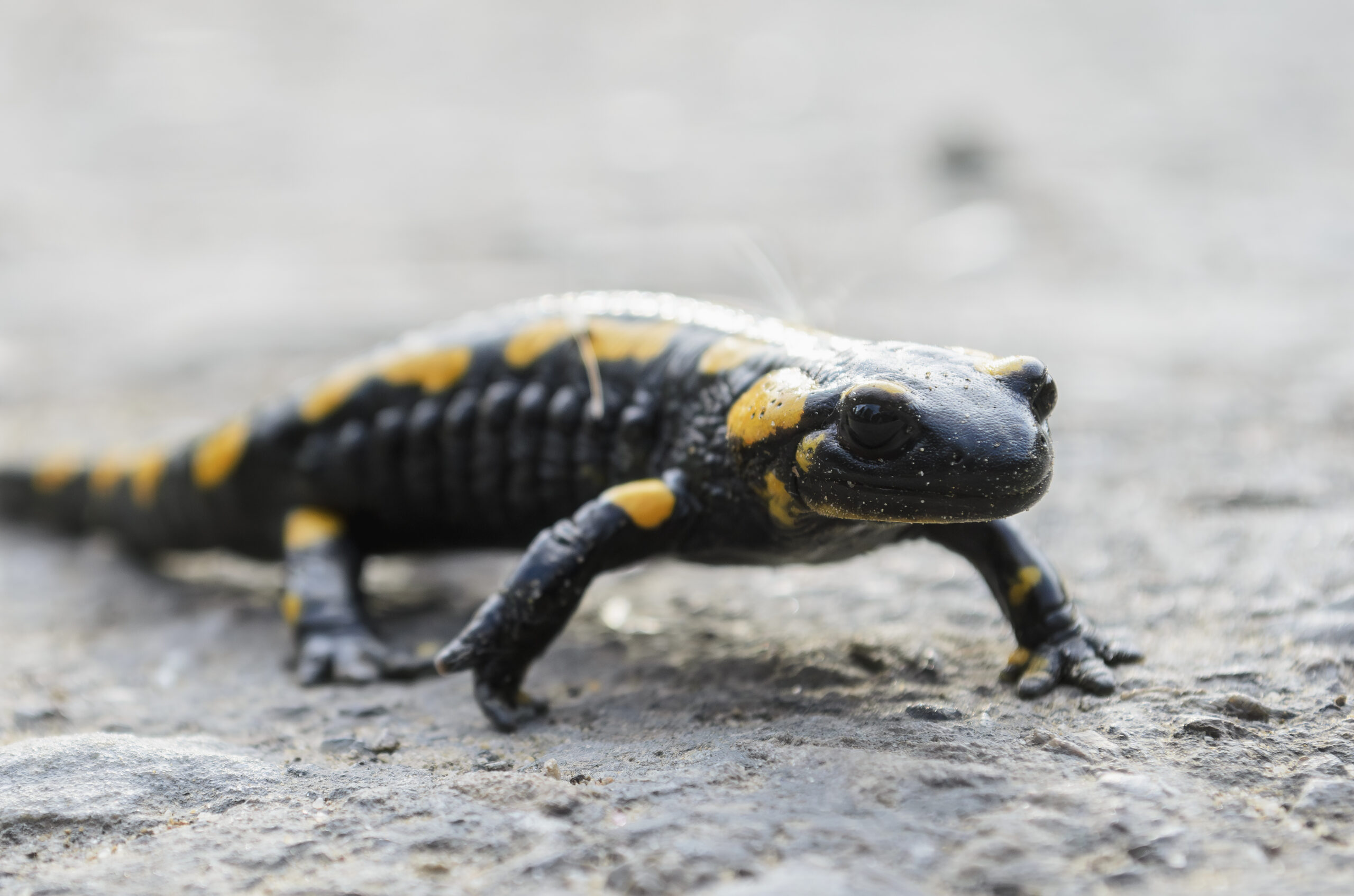 Photo Credit: Almanahe~ukwiki / Wikimedia Commons
In the heart of lush, temperate forests, the fire salamander, or Salamandra salamandra, emerges as a living jewel of the woodland floor. With its striking black body adorned with bright yellow spots and stripes, this amphibian captures the imagination of anyone lucky enough to spot it. As dusk falls, the fire salamander comes to life, leaving its cozy hiding spots beneath logs and rocks to explore the damp underbrush. The vibrant colors of its skin are not just for show; they serve as a warning to potential predators about the toxic secretions it can produce. This fascinating adaptation makes the fire salamander a subject of intrigue for scientists and nature enthusiasts alike.
As you wander through its habitat, you might hear the soft rustle of leaves or the gentle trickle of a nearby stream, both of which create a perfect backdrop for the fire salamander’s nocturnal adventures. These creatures thrive in environments rich with moisture, where they play a vital role in the ecosystem as both predator and prey. Their diet mainly consists of small invertebrates, such as insects and worms, showcasing their importance in controlling these populations. The fire salamander’s life cycle, marked by captivating courtship rituals and a unique reproductive strategy, adds another layer of wonder to its already enchanting existence. Join us as we delve deeper into the world of the fire salamander, exploring its behaviors, habitat, and the vital role it plays in the forest ecosystem.
The fire salamander, a striking amphibian known for its vibrant black and yellow coloration, occupies a special place in the tree of life. Taxonomically, it belongs to the Kingdom Animalia, Phylum Chordata, Class Amphibia, Order Urodela, Family Salamandridae, and Genus Salamandra. This classification highlights its evolutionary ties to other amphibians and its unique adaptations for life both in water and on land. Fire salamanders are particularly interesting because they possess a remarkable ability to secrete toxins through their skin, a defense mechanism that deters predators. This feature not only makes them stand out in the animal kingdom but also showcases the diverse strategies life has developed to survive.
| Taxonomic Rank | Scientific Name | Meaning & Significance |
|---|---|---|
| Kingdom | Animalia | This name comes from the Latin word “animalis,” meaning “having breath” or “living.” It signifies all living organisms that are not plants or fungi. |
| Phylum | Chordata | Derived from the Greek word “chordē,” meaning “string,” this name refers to animals that have a notochord, a flexible rod that supports the body, at some stage of development. |
| Class | Amphibia | This term comes from the Greek “amphibios,” meaning “both lives,” highlighting the dual life of amphibians, which thrive in both aquatic and terrestrial environments. |
| Order | Urodela | From the Greek “oura,” meaning “tail,” and “delos,” meaning “visible,” this name refers to the presence of tails in these amphibians, which includes salamanders and newts. |
| Family | Salamandridae | This name is derived from the Latin “salamandra,” which refers to the salamander itself, emphasizing the family of these fascinating amphibians. |
| Genus | Salamandra | Also from the Latin word for salamander, this genus name highlights the characteristics shared by these species, including their distinctive skin and habitat preferences. |
The classification of the fire salamander reveals much about its evolutionary history. As a member of the amphibians, it shares a common ancestor with frogs and toads, showcasing the transition from water to land. The unique adaptations of the fire salamander, such as its toxic skin and vibrant coloration, reflect millions of years of evolution, allowing it to thrive in various environments. Understanding its place in the tree of life not only deepens our appreciation for this remarkable species but also illustrates the intricate web of relationships that connect all living organisms.
The evolutionary journey of the fire salamander stretches back millions of years, tracing its roots to the early amphibians that emerged during the late Devonian period, around 360 million years ago. These ancient ancestors were among the first vertebrates to venture onto land, adapting to a new world filled with both opportunities and challenges. Over time, amphibians diversified, leading to the emergence of various groups, including the fire salamander, which belongs to the family Salamandridae.
The fire salamander, scientifically known as Salamandra, showcases a fascinating evolutionary history marked by significant transitions. Its ancestors were likely more aquatic, resembling modern-day salamanders that thrive in water. As these creatures adapted to life on land, they developed features that allowed them to navigate both terrestrial and aquatic environments. One major transition was the development of a more robust body structure, which provided better support for movement on land. Additionally, the evolution of skin that can retain moisture was crucial, enabling them to survive in drier habitats while still needing to return to water for reproduction.
These adaptations have been vital for the fire salamander’s survival in a world filled with predators and changing environments. The ability to warn off threats with bright colors, retain moisture, and produce toxins has allowed this amphibian to thrive in diverse habitats across Europe. As they continue to navigate the challenges of their ecosystems, the fire salamander stands as a testament to the power of evolution in shaping life on Earth.
The fire salamander is a captivating sight, with its bold black body adorned with bright yellow spots and stripes. This striking coloration not only makes it stand out in the forest but also serves as a warning to potential predators. With a compact body structure, it typically measures around 20 to 25 centimeters in length, making it a small yet eye-catching amphibian. Its limbs are short and sturdy, perfect for navigating the damp, leaf-littered forest floor where it often resides.
| Feature | Description |
|---|---|
| Weight | 40g (0.09lbs) |
| Skin Type | Permeable, allowing for moisture absorption |
| Most Distinctive Feature | Striking colors of black and yellow |
The fire salamander’s vivid colors serve a dual purpose. While they are visually stunning, they also signal danger to predators, indicating that the salamander may be toxic if eaten. Its permeable skin is another fascinating adaptation, allowing it to absorb moisture from its environment, which is crucial for its survival in humid habitats. Together, these features not only enhance its beauty but also play vital roles in its defense and overall well-being in the wild.
The fire salamander thrives in lush, temperate forests, where dappled sunlight filters through the canopy of leaves. These enchanting woodlands are often rich with moisture, providing the perfect environment for this amphibian. The ground is typically covered with a thick layer of leaf litter, creating a soft, damp habitat that is ideal for hiding and hunting. Streams and small ponds can often be found nearby, offering essential water sources for breeding and hydration.
Fire salamanders prefer a climate that is cool and humid, which is why they are often found in regions with mild temperatures and ample rainfall. They thrive in areas where the air is moist, as this helps keep their skin hydrated. Since amphibians like the fire salamander breathe through their skin, a damp environment is crucial for their survival. These conditions also support a rich diversity of insects and other small invertebrates, which make up their diet.
To adapt to their specific habitats, fire salamanders have developed several interesting traits. Their dark skin helps them absorb heat from the sun, while their bright coloration serves as a warning to potential predators about their toxicity. This clever combination of features allows them to navigate their forest homes effectively, finding food and shelter while avoiding danger. By staying close to water sources and remaining hidden in the leaf litter, they can thrive in the enchanting world of the forest.
The fire salamander leads a life that is both intriguing and methodical. As a nocturnal creature, it typically begins its day at dusk, emerging from its hiding spots under logs or rocks. This amphibian is most active during the cooler, damp evenings, when it hunts for food and explores its forest habitat. Fire salamanders primarily feed on insects, worms, and other small invertebrates, using their keen sense of smell to locate meals. Their daily activities revolve around foraging, resting, and occasionally basking in the moist environment, which helps keep their skin hydrated.
While fire salamanders are generally solitary animals, they do exhibit interesting social behaviors during the breeding season. Males and females come together to mate, often engaging in a courtship display that involves gentle nudging and body movements. After mating, females lay their eggs in water or moist areas, where they will develop into larvae. Outside of this breeding period, fire salamanders prefer to keep to themselves, each occupying its own territory. This solitary lifestyle helps reduce competition for food and resources, allowing them to thrive in their chosen habitats.
| Behavior Type | Description |
|---|---|
| Activity Patterns | Nocturnal foraging for insects and worms, primarily active during cooler evenings. |
| Social Structure | Generally solitary, with social interactions mainly occurring during the breeding season. |
| Communication Methods | Uses body movements and nudging during courtship; relies on chemical signals to find mates. |
The behaviors of the fire salamander are finely tuned to ensure its survival in the wild. By being active at night, it avoids the heat of the day and reduces the risk of dehydration. Its solitary nature allows it to maintain a stable food supply without competing with others. During the breeding season, the brief social interactions are crucial for reproduction, ensuring the continuation of the species. Each of these behaviors plays a vital role in helping fire salamanders navigate their environment and thrive in the lush forests they call home.
The fire salamander is a carnivore, which means it primarily eats other animals. This amphibian has a diet that consists mainly of small invertebrates, such as insects and worms. With its keen sense of smell and excellent night vision, the fire salamander is well-equipped to hunt for food in the dark, often venturing out at night to find its next meal. It uses its sticky tongue to catch prey, flicking it out with impressive speed to snatch up unsuspecting insects.
| Dietary Aspect | Details |
|---|---|
| Diet Type | Carnivore |
| Favorite Foods | Insects, worms, and other small invertebrates |
| Prey Items | Ants, beetles, slugs, and spiders |
| Hunting/Foraging Strategies | Uses keen sense of smell and sticky tongue to catch prey at night |
The fire salamander’s diet plays a crucial role in its ecosystem. By feeding on various invertebrates, it helps control their populations, contributing to the balance of its forest habitat. This diet also influences the salamander’s daily routine, as it must actively search for food during the cooler, darker hours when its prey is most active. In this way, the fire salamander is not just a fascinating creature but also an important player in the web of life in its woodland home.
The fire salamander’s mating rituals are as vibrant as its striking appearance. During the breeding season, which typically occurs in late winter to early spring, males engage in a captivating courtship dance. They often perform elaborate displays, showcasing their bright colors to attract females. Once a female is enticed, she will choose a mate, and the pair will engage in a unique form of mating called “amplexus.” This is when the male grasps the female, and they remain in this position for several hours, allowing for successful fertilization.
| Reproductive Aspect | Details |
|---|---|
| Gestation Period | 60-150 days (2-5 months) |
| Litter Size | Varies, typically 20-30 eggs |
| Age of Maturity | 4-6 years |
| Name of Young | Salamander nymphs, metamorphs |
After the eggs are fertilized, the female fire salamander lays them in moist environments, often in water or damp soil. The young, known as salamander nymphs, hatch from the eggs and begin their journey in life. Unlike many amphibians that undergo a dramatic transformation from tadpole to adult, fire salamander nymphs develop directly into small versions of their parents. This means they skip the aquatic stage and remain in a terrestrial habitat. Parental care is minimal, but the young are equipped with the instincts they need to thrive. As they grow, they will eventually mature into adults, continuing the cycle of life in the enchanting world of the forest.
The fire salamander plays a vital role in its ecosystem, acting as both predator and prey within the intricate web of life. As a carnivore, it helps control populations of small invertebrates, such as insects and worms, while also serving as a food source for various predators. This delicate balance is crucial for maintaining the health of its forest habitat.
To defend itself against these dangers, the fire salamander has developed several fascinating survival strategies. Its bright coloration serves as a warning to potential predators, signaling that it may be toxic if consumed. Additionally, when threatened, it can secrete a milky substance from its skin that contains toxins, making it unappetizing to would-be attackers. By using these clever tactics, the fire salamander enhances its chances of survival in a world filled with dangers.
A keystone species is an organism that has a disproportionately large impact on its environment relative to its abundance. This means that if it were removed, the ecosystem would change dramatically. The fire salamander qualifies as a keystone species due to its role in controlling insect populations and serving as both predator and prey in its forest habitat.
Fire salamanders are carnivorous, primarily feeding on small invertebrates like insects and worms. By keeping these populations in check, they help maintain a balance in the ecosystem. For example, if fire salamanders were to disappear, the number of insects could explode, leading to overgrazing of plants and disrupting the entire food web. Additionally, their presence supports a variety of other species that rely on them for food, including birds and small mammals.
The fire salamander also contributes to soil health. As it hunts for food, it helps aerate the soil, allowing nutrients to circulate more freely. This process benefits plant life, which in turn supports a diverse range of other organisms. Furthermore, the fire salamander’s skin secretes toxins that deter predators, which can influence the behavior of other species in the ecosystem, creating a ripple effect throughout the food chain.
If fire salamanders were to vanish from their habitats, the consequences would be significant. Insect populations would likely surge, leading to increased competition for resources among plants. This could result in a decline in plant diversity, which would further affect the animals that depend on those plants for food and shelter. The entire forest ecosystem could become unbalanced, demonstrating just how crucial the fire salamander is to its environment.
The fire salamander plays a crucial role in its forest habitat, acting as both a predator and prey within the ecosystem. This amphibian thrives in moist, temperate woodlands, where it contributes to the balance of life. By controlling the populations of small invertebrates, it helps maintain a healthy environment for various plant and animal species. Its presence indicates a thriving ecosystem, as these salamanders are sensitive to environmental changes, making them important indicators of forest health.
| Ecosystem Service | Impact |
|---|---|
| Population Control | Regulates the numbers of insects and other small invertebrates, preventing overpopulation. |
| Soil Aeration | As they burrow and move through the soil, they help aerate it, promoting healthy plant growth. |
| Food Source | Serves as prey for larger animals, contributing to the food web and supporting biodiversity. |
| Indicator Species | Reflects the health of the ecosystem, signaling changes in environmental conditions. |
The fire salamander’s influence extends beyond its immediate actions. For instance, by preying on insects, it helps control pest populations that could otherwise damage plants. This, in turn, supports the growth of diverse vegetation, which provides habitat and food for other wildlife. Additionally, as these salamanders move through their environment, they help aerate the soil, allowing water and nutrients to reach plant roots more effectively. Their presence in the ecosystem is a sign of a balanced environment, as they thrive in areas with clean water and rich biodiversity.
In a broader ecological context, the fire salamander is a keystone species, meaning its role is vital for the stability of its ecosystem. If this amphibian were to disappear, the effects would ripple through the food web, leading to imbalances that could harm many other species. By maintaining insect populations and supporting plant health, fire salamanders help ensure that their forest homes remain vibrant and full of life. Their existence is a reminder of the interconnectedness of all living things and the importance of preserving natural habitats for future generations.
In the intricate tapestry of nature, symbiosis refers to the close and often long-term interactions between different species. These relationships can take many forms, including mutualism, where both species benefit, parasitism, where one benefits at the expense of the other, and commensalism, where one benefits while the other is neither helped nor harmed. The fire salamander, with its striking appearance and unique lifestyle, engages in various ecological relationships that highlight the interconnectedness of life in its forest habitat.
| Species/Type | Relationship Type | Description |
|---|---|---|
| Fungi (Mycorrhizal fungi) | Mutualistic | Fire salamanders benefit from mycorrhizal fungi, which help break down organic matter in the soil, making nutrients more accessible. In return, the fungi receive organic compounds from the salamanders. |
| Insects (e.g., ants) | Commensal | Some insects may use the moist environment created by the fire salamander’s presence, benefiting from the humidity without affecting the salamander. |
| Predatory birds | Parasitic | While not a direct relationship, predatory birds can pose a threat to fire salamanders, feeding on them and impacting their populations. |
These relationships have evolved over time, shaped by the needs and adaptations of the species involved. The mutualistic bond with fungi, for instance, enhances the fire salamander’s ability to thrive in nutrient-poor soils, while the presence of insects highlights the importance of moisture in their environment. Understanding these connections not only reveals the complexity of ecosystems but also emphasizes the delicate balance that sustains life in the forests where fire salamanders reside. Each interaction plays a role in maintaining the health of their habitat, showcasing the beauty of nature’s interdependence.
The fire salamander is a captivating amphibian that not only enchants with its vibrant colors but also boasts some surprising traits that make it truly special. Here are a few intriguing facts that showcase the wonders of this remarkable creature.
The fire salamander has long captured the imagination of humans, weaving its way into folklore and cultural narratives across Europe. In ancient times, these striking amphibians were often associated with fire due to their vivid coloration, leading to myths that they could extinguish flames or even emerge from fire itself. This mystical connection has made the fire salamander a symbol of transformation and resilience in various cultures. From ancient alchemists to modern storytellers, the fire salamander has inspired countless tales, reflecting humanity’s fascination with the natural world and its wonders.
Today, the relationship between fire salamanders and humans is more complex, marked by both conservation efforts and challenges. As urbanization and habitat destruction threaten their populations, many organizations are working tirelessly to protect these amphibians and their habitats. However, conflicts can arise, particularly in areas where human activities encroach on their natural environments. Additionally, some people have attempted to domesticate fire salamanders, drawn by their striking appearance and unique behaviors, but this practice raises ethical questions about the impact on wild populations and ecosystems.
Looking ahead, the future of the fire salamander and its relationship with humanity hinges on our ability to balance development with conservation. As awareness grows about the importance of biodiversity, there is hope that more people will advocate for the protection of these enchanting creatures. By fostering a deeper understanding of their ecological roles and cultural significance, we can ensure that fire salamanders continue to thrive alongside us in the vibrant tapestry of life on Earth.
The fire salamander currently holds a conservation status of “Least Concern,” according to the International Union for Conservation of Nature (IUCN). This means that, at present, the species is not facing an immediate threat of extinction. However, while the overall population size is classified as unknown, there are indications that local populations may be experiencing fluctuations. This suggests that while the species is not endangered globally, certain areas may require closer monitoring to ensure their health and stability.
| Conservation Factor | Status/Details |
|---|---|
| IUCN Status | Least Concern |
| Estimated Population Size | Unknown |
| Population Trend | Fluctuating in some areas |
The fire salamander faces several significant threats that could impact its populations in the future. Habitat loss is a major concern, as urban development and agricultural expansion encroach on its forested homes. Additionally, pollution from pesticides and chemicals can contaminate the moist environments these amphibians rely on for survival. Another pressing issue is the spread of chytridiomycosis, a deadly fungal disease that has devastated amphibian populations worldwide. These factors combined create a challenging landscape for the fire salamander, making it essential to keep a watchful eye on their habitats.
Conservation efforts are underway to protect the fire salamander and its habitats. Various organizations are working to raise awareness about the importance of preserving temperate forests and the delicate ecosystems they support. Habitat restoration projects aim to rehabilitate areas that have been degraded, ensuring that fire salamanders have safe places to thrive. With continued efforts and public support, there is hope that this vibrant amphibian will continue to flourish in its natural environment, maintaining its role in the ecosystem for generations to come.
| Question | Answer |
|---|---|
| What is the natural habitat of the Fire salamander? | Fire salamanders are typically found in forests, especially in areas with plenty of moisture. They prefer damp environments like woodlands, where they can hide under leaves and logs, which helps them stay cool and hydrated. |
| What do Fire salamanders eat? | As carnivores, Fire salamanders primarily feed on insects and other small invertebrates. Their diet includes worms, slugs, and various types of bugs, which they hunt for in their forest homes. |
| How do Fire salamanders behave in the wild? | Fire salamanders are mostly nocturnal, meaning they are active at night. During the day, they often hide under rocks or in burrows to avoid the heat and predators, making them quite secretive creatures. |
| How do Fire salamanders reproduce? | Fire salamanders have a unique reproductive strategy; they give birth to live young instead of laying eggs. The female typically gives birth to around 20 to 30 tiny salamanders, which are fully formed and ready to start their lives in the forest. |
| What threats do Fire salamanders face? | While Fire salamanders are currently classified as Least Concern, they still face threats from habitat loss and pollution. Changes in their forest environments, such as deforestation and climate change, can impact their populations. |
| What is a distinctive feature of Fire salamanders? | One of the most striking characteristics of Fire salamanders is their bright coloration, which usually includes bold yellow or orange spots against a black background. This vivid coloring serves as a warning to predators that they are toxic. |
| Can Fire salamanders regenerate lost limbs? | Like many amphibians, Fire salamanders have the ability to regenerate lost limbs, although this process can take time. This remarkable ability helps them survive in the wild, as they can recover from injuries that might otherwise be fatal. |