Taxonomy & Classification
- Kingdom
- Animalia
- Phylum
- Chordata
- Class
- Aves
- Order
- Pelecaniformes
- Family
- Fregatidae
- Genus
- Fregata
- Species
- Fregata

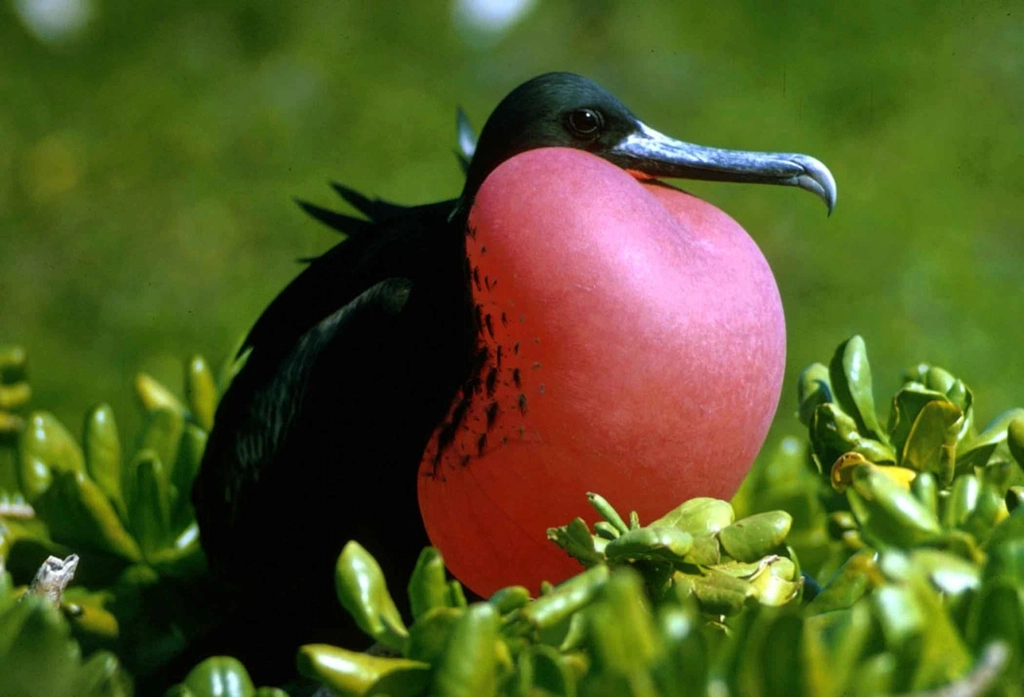 Photo Credit: Rawpixel
In the sun-drenched skies above tropical islands, the magnificent Frigatebird, known scientifically as Fregata magnificens, commands attention with its striking silhouette. With wings that stretch up to 7.5 feet, this bird is a master of the air, gliding effortlessly over the shimmering ocean waves. Its glossy black feathers contrast sharply with the vibrant red throat pouch of the males, which they inflate during courtship displays, creating a spectacle that captivates both potential mates and onlookers alike. This dramatic display, combined with their impressive aerial skills, makes the Frigatebird a favorite among birdwatchers and nature enthusiasts.
As these birds soar high above the coastlines, they are not just beautiful; they play a vital role in their ecosystem. Frigatebirds are expert hunters, primarily feeding on fish, crabs, and squid, which they snatch from the water’s surface with remarkable precision. Their unique feeding habits and behaviors have intrigued scientists for years, as they navigate the skies with grace and agility, often engaging in aerial acrobatics that showcase their strength and skill. Join us as we explore the fascinating world of the magnificent Frigatebird, uncovering its life cycle, habitat, and the critical role it plays in the delicate balance of marine ecosystems.
The magnificent Frigatebird holds a special place in the tree of life, showcasing a unique blend of characteristics that set it apart from other birds. Belonging to the class Aves, which includes all birds, the Frigatebird is part of the order Pelecaniformes, a group that also encompasses pelicans and cormorants. What makes the Frigatebird particularly intriguing is its incredible ability to soar for hours without flapping its wings, thanks to its long wingspan and lightweight body. This adaptation allows it to glide effortlessly over the ocean, searching for food and displaying its striking red throat pouch during mating rituals.
| Taxonomic Rank | Scientific Name | Meaning & Significance |
|---|---|---|
| Kingdom | Animalia | This name signifies that Frigatebirds are part of the vast group of multicellular organisms that are primarily heterotrophic, meaning they consume other organisms for energy. |
| Phylum | Chordata | Chordata refers to animals that have a notochord, a flexible rod that supports the body. In Frigatebirds, this structure is present during their development, showcasing their evolutionary link to other vertebrates. |
| Class | Aves | Aves is the class that includes all birds, characterized by feathers, beaks, and the ability to lay eggs. Frigatebirds exemplify these traits with their striking plumage and unique reproductive behaviors. |
| Order | Pelecaniformes | This order includes birds that often have webbed feet and a strong connection to aquatic environments. Frigatebirds are adept at hunting over the ocean, reflecting their evolutionary adaptations. |
| Family | Fregatidae | The family name Fregatidae is derived from the Latin word “fregata,” which means “pirate.” This name highlights their behavior of stealing food from other birds, a clever survival strategy. |
| Genus | Fregata | The genus name Fregata is linked to the bird’s impressive flight capabilities and its striking appearance, which often captures the attention of those who observe it soaring above the sea. |
The classification of the Frigatebird reveals much about its evolutionary history and adaptations. As a member of the Pelecaniformes order, it shares common ancestors with other aquatic birds, indicating a long-standing relationship with marine environments. Its unique adaptations, such as the ability to soar for extended periods and its distinctive mating displays, highlight the evolutionary pressures that have shaped its lifestyle. Understanding where the Frigatebird fits in the animal kingdom not only enriches our knowledge of this extraordinary bird but also illustrates the intricate web of life that connects all living beings.
The evolutionary journey of the Frigatebird spans millions of years, tracing back to the late Cretaceous period, around 70 million years ago. This time frame marks the emergence of modern birds, which evolved from theropod dinosaurs. As these early birds took to the skies, they began to adapt to various ecological niches, leading to the diverse avian species we see today, including the striking Frigatebird.
Ancestral forms of the Frigatebird likely resembled other seabirds, with adaptations for life over the ocean. Over time, these birds developed long wings and a lightweight body, allowing them to soar effortlessly for hours without flapping. This ability to glide is a significant evolutionary transition, as it enables them to cover vast distances in search of food. The Frigatebird’s distinctive forked tail evolved to enhance maneuverability in the air, making it easier to navigate the winds and currents of the open sea. Additionally, their unique breeding behavior, where males inflate their bright red throat pouches to attract females, showcases a fascinating adaptation for reproduction.
These adaptations have been vital for the Frigatebird’s survival in the challenging marine environment. Their long wings and lightweight bodies allow them to travel vast distances in search of food, while their forked tails provide the agility needed to navigate the skies. The striking red throat pouch not only plays a key role in attracting mates but also highlights the importance of visual signals in their social interactions. By being able to scavenge effectively, Frigatebirds have carved out a niche that allows them to thrive in the competitive world of oceanic birds.
The Frigatebird is a striking sight, soaring gracefully above the ocean waves. With its long, slender wings that can stretch up to 2.3 meters (7.5 feet) from tip to tip, this bird is built for aerial mastery. Its body is sleek and streamlined, allowing it to glide effortlessly on ocean breezes. The Frigatebird’s distinctive silhouette, with a deeply forked tail and a sharp, pointed beak, gives it an air of elegance and power. When in flight, it often appears almost like a living kite, effortlessly riding the thermals high above the sea.
| Feature | Description |
|---|---|
| Height | 65cm – 100cm (25in – 39in) |
| Weight | 0.9kg – 1.9kg (1.9lbs – 4.2lbs) |
| Skin Type | Feathers |
The Frigatebird’s impressive wingspan and lightweight body are essential for its survival. These features allow it to stay aloft for hours without flapping its wings, conserving energy as it searches for food. Its feathers, while beautiful, also play a crucial role in waterproofing and insulation, helping the bird stay dry and warm during its long flights over the ocean. Together, these physical traits make the Frigatebird not just a marvel of nature, but a master of the skies, perfectly adapted to its life above the waves.
The magnificent Frigatebird calls the tropical coasts and islands its home, where the sun shines brightly and the ocean sparkles like a thousand diamonds. These birds are often seen gliding effortlessly above the warm waters, their impressive wingspan allowing them to soar for hours without flapping. The lush greenery of the islands provides nesting sites, while the surrounding sea offers a rich buffet of fish and other marine life. This vibrant habitat is a perfect playground for these aerial acrobats, where they can showcase their incredible flying skills.
Frigatebirds thrive in warm, tropical climates, where the temperatures are generally mild and the weather is often sunny. They prefer areas with little rainfall, as heavy storms can disrupt their nesting and feeding habits. The gentle breezes that sweep across the ocean are ideal for their long flights, allowing them to search for food without expending too much energy. These birds are also sensitive to environmental changes, which can affect their food supply and nesting success.
To adapt to their coastal and island habitats, Frigatebirds have developed several remarkable traits. Their long wings and lightweight bodies make them expert gliders, allowing them to cover vast distances in search of food. They can also dive from the air to snatch fish just below the surface, showcasing their agility. Additionally, their ability to go for long periods without landing helps them avoid predators and find the best feeding spots. These adaptations make the Frigatebird a true master of the skies, perfectly suited to its tropical home.
The magnificent Frigatebird leads a life filled with adventure and aerial acrobatics. Each day begins with the sun rising over the ocean, casting a golden glow on the waves. As the day unfolds, these birds take to the skies, using their impressive wingspan to soar effortlessly on ocean breezes. They spend hours gliding, searching for food, and engaging in playful displays. Their diet mainly consists of fish, which they catch by snatching them from the water’s surface. Unlike many birds, Frigatebirds do not dive; instead, they rely on their keen eyesight to spot their meals from high above.
Social interactions are a vital part of Frigatebird life. These birds are highly social and often gather in large colonies on remote islands. Within these groups, they establish a complex social structure, where each bird has its place. Males are known for their dramatic courtship displays, puffing out their bright red throat pouches to attract females. This vibrant display is not just for show; it plays a crucial role in mate selection. Communication among Frigatebirds is lively, with a range of calls and body movements that help them convey messages to one another, whether it’s a warning about predators or an invitation to join in a feeding frenzy.
| Behavior Type | Description |
|---|---|
| Activity Patterns | Frigatebirds spend their days soaring and searching for food, often flying for hours without flapping their wings. |
| Social Structure | They live in large colonies, where males display to attract females and establish dominance. |
| Communication Methods | Frigatebirds use a variety of calls and visual signals, including puffing their throat pouches, to communicate with each other. |
The behaviors of Frigatebirds are finely tuned to ensure their survival in the wild. Their ability to soar for long periods without flapping their wings allows them to conserve energy while searching for food. The social dynamics within their colonies help them find mates and protect against predators. By working together and communicating effectively, Frigatebirds thrive in their tropical habitats, showcasing the beauty of nature’s intricate web of life.
The magnificent Frigatebird is a carnivore, which means it primarily eats meat. Its diet mainly consists of fish, crabs, and squid. These birds are expert fliers, using their impressive wingspan to soar high above the ocean in search of food. They have a unique feeding behavior; instead of diving into the water like some seabirds, Frigatebirds often snatch their meals from the surface or steal food from other birds. This clever strategy allows them to conserve energy while still enjoying a delicious meal.
| Dietary Aspect | Details |
|---|---|
| Diet Type | Carnivore |
| Favorite Foods | Fish, crabs, squid |
| Prey Items | Small fish, crustaceans, and cephalopods |
| Hunting/Foraging Strategies | Snatching food from the surface and kleptoparasitism (stealing from other birds) |
This diet plays a crucial role in the Frigatebird’s ecology and daily routine. By feeding on fish and other marine life, these birds help maintain the balance of their oceanic environment. Their foraging habits also influence the behavior of other seabirds, as they often follow Frigatebirds to find food. This interconnectedness highlights the importance of the Frigatebird in its ecosystem, showcasing how one species can impact the lives of many others in the vibrant tapestry of nature.
During the breeding season, which typically occurs from late winter to early summer, Frigatebirds engage in elaborate courtship displays. Males puff out their bright red throat pouches, creating a striking balloon-like appearance that can attract females from afar. This display is not just for show; it signals health and vitality, crucial traits for potential mates. Once a female is impressed, she will choose a male based on his performance and the quality of his pouch. After mating, the pair will work together to build a nest, often located on remote islands or cliffs, where they can raise their young away from predators.
| Reproductive Aspect | Details |
|---|---|
| Gestation Period | Approximately 55 days |
| Litter Size | One egg |
| Age of Maturity | 3 to 5 years |
| Name of Young | Chick |
After the chick hatches, both parents share the responsibility of caring for their young. They take turns feeding the chick regurgitated fish, which is rich in nutrients and helps it grow strong. The young Frigatebird remains in the nest for about three months, during which it develops its feathers and learns essential survival skills. As it matures, the chick will practice flying and eventually take to the skies, joining its parents in the vast oceanic expanse. This nurturing process is vital, as it ensures that the next generation of Frigatebirds is well-prepared for the challenges of life in the wild.
The magnificent Frigatebird occupies a crucial role in the marine food web, primarily as a predator of fish and other small sea creatures. With its impressive wingspan and soaring abilities, it glides effortlessly above the ocean, searching for its next meal. However, this aerial master is not at the top of the food chain. It faces various threats from both natural predators and human activities that can impact its survival.
To defend themselves against these dangers, Frigatebirds have developed several survival strategies. They often nest in high, inaccessible places to keep their young safe from ground predators. When threatened, they can take to the skies, using their incredible flying skills to evade danger. Additionally, their ability to soar for long periods without flapping their wings allows them to conserve energy while keeping a watchful eye on their surroundings. These adaptations help ensure that the magnificent Frigatebird continues to thrive in its oceanic realm.
A keystone species is an organism that plays a critical role in maintaining the structure of its ecosystem. Its presence and activities significantly influence the types and numbers of other species in that environment. The magnificent Frigatebird qualifies as a keystone species due to its unique feeding habits and its impact on the marine food web. By preying on fish and other small sea creatures, it helps regulate their populations, ensuring a balanced ecosystem.
Frigatebirds are expert hunters, often seen soaring high above the ocean, scanning the water for their next meal. Their diet primarily consists of fish, crabs, and squid, which they catch by diving or stealing from other birds. This behavior not only affects the populations of these prey species but also influences the foraging strategies of other seabirds. For instance, when Frigatebirds are present, smaller birds may alter their feeding patterns to avoid competition. This dynamic interaction showcases how the Frigatebird’s hunting habits ripple through the food web, affecting various species and their behaviors.
Moreover, Frigatebirds contribute to nutrient cycling in their habitats. When they feed, they often drop fish remains on land or in the water, which provides essential nutrients for other organisms. This process supports the growth of plants and algae, which are vital for the health of coastal ecosystems. Additionally, their nesting sites on tropical islands can create unique microhabitats that support diverse plant and animal life, further emphasizing their ecological importance.
If the magnificent Frigatebird were to disappear, the effects would be profound. Fish populations could surge unchecked, leading to overpopulation and eventual depletion of resources. This imbalance would not only affect the fish but also the seabirds that rely on them for food. The loss of Frigatebirds would disrupt the nutrient cycling process, diminishing the health of coastal ecosystems. Ultimately, the absence of this remarkable bird would create a ripple effect, altering the entire marine environment and threatening the delicate balance of life that depends on it.
The magnificent Frigatebird occupies a vital ecological niche in tropical coastal and island ecosystems. As a skilled aerial predator, it plays a significant role in regulating fish populations and maintaining the balance of marine life. By soaring high above the ocean, these birds can spot schools of fish from great distances, showcasing their keen eyesight and hunting prowess. Their presence not only influences the species they prey upon but also affects the overall health of the marine environment.
| Ecosystem Service | Impact |
|---|---|
| Predation | Controls fish populations, preventing overpopulation and promoting biodiversity. |
| Scavenging | Helps clean up the environment by consuming dead fish and other marine debris. |
| Seed Dispersal | Contributes to plant diversity by transporting seeds from one location to another. |
| Indicator Species | Reflects the health of marine ecosystems, signaling changes in environmental conditions. |
Frigatebirds are not just impressive hunters; they also contribute to their ecosystems in other ways. For instance, when they scavenge on dead fish, they help keep the ocean clean, reducing the buildup of organic waste. Additionally, as they fly from one island to another, they may inadvertently carry seeds in their feathers or digestive systems, aiding in the growth of new plants. This seed dispersal is crucial for maintaining the lush vegetation that supports various other species in their habitats.
The broader ecological importance of the Frigatebird cannot be overstated. As a keystone species, its activities help shape the structure of its ecosystem, influencing the abundance and diversity of both marine and terrestrial life. By maintaining the balance of fish populations and contributing to plant growth, Frigatebirds ensure that their tropical environments remain vibrant and healthy. Their presence is a reminder of the interconnectedness of life and the delicate balance that sustains our planet’s ecosystems.
In the intricate web of life, symbiosis refers to the close relationships between different species, where they interact in various ways. These ecological partnerships can be mutualistic, where both species benefit, parasitic, where one benefits at the expense of the other, or commensal, where one benefits while the other is neither helped nor harmed. The magnificent Frigatebird, with its impressive aerial skills and striking appearance, engages in several of these relationships, showcasing the interconnectedness of nature.
| Species/Type | Relationship Type | Description |
|---|---|---|
| Brown Booby | Mutualistic | Frigatebirds often follow Brown Boobies to locate schools of fish. The Boobies dive to catch fish, and Frigatebirds take advantage of this by stealing some of the fish that escape. |
| Sea Turtles | Commensal | Frigatebirds can be seen resting on the backs of sea turtles. While the turtles are unaffected, the birds gain a perch to rest and survey their surroundings. |
| Other seabirds | Parasitic | Frigatebirds sometimes steal food from other seabirds, such as gulls and terns, which can be stressful for the preyed-upon birds. |
These relationships have evolved over time, shaped by the needs and behaviors of the species involved. The mutualistic bond with Brown Boobies highlights how cooperation can lead to shared benefits, while the commensal relationship with sea turtles shows how some species can thrive without impacting others. On the other hand, the parasitic interactions remind us that nature can be competitive and harsh. Each of these connections plays a role in the delicate balance of ecosystems, illustrating how the magnificent Frigatebird is not just a solitary hunter but a participant in a larger community of life.
The magnificent Frigatebird is a true marvel of the skies, captivating birdwatchers and nature enthusiasts alike with its extraordinary adaptations and behaviors. Here are some surprising facts that reveal just how remarkable this bird really is.
The relationship between Frigatebirds and humanity has deep historical roots, woven into the fabric of various cultures. Indigenous peoples of the Caribbean and Pacific Islands have long revered these magnificent birds, often incorporating them into their myths and legends. The Frigatebird’s striking appearance and impressive aerial skills have made it a symbol of freedom and adventure. Early explorers and sailors also noted their presence, using them as indicators of nearby land, as these birds are often seen soaring above coastal areas. This connection has fostered a sense of wonder and respect for the Frigatebird, highlighting its significance in human culture.
In modern times, the interactions between Frigatebirds and humans have evolved, reflecting both conservation efforts and challenges. As coastal habitats face threats from development and pollution, conservationists are working tirelessly to protect these birds and their nesting sites. However, conflicts can arise, particularly in areas where fishing practices overlap with the birds’ hunting grounds. While Frigatebirds are not domesticated, their presence in coastal ecosystems is vital, and understanding their needs is crucial for maintaining healthy environments. Efforts to educate the public about the importance of these birds are essential in fostering a harmonious relationship.
Looking ahead, the future of the relationship between Frigatebirds and humanity hinges on our ability to balance development with conservation. As we continue to learn more about these incredible birds and their role in the ecosystem, it is vital to promote awareness and protection efforts. By fostering a deeper understanding of the Frigatebird’s needs and the challenges it faces, we can ensure that future generations will also marvel at their beauty and grace in the skies. Together, we can create a world where both humans and Frigatebirds thrive.
The conservation status of the magnificent Frigatebird is currently classified as “Least Concern” by the International Union for Conservation of Nature (IUCN). This means that, at present, the species is not facing an immediate threat of extinction. Population estimates suggest that there are several hundred thousand Frigatebirds across their range, and while some local populations may experience fluctuations, the overall trend appears stable.
| Conservation Factor | Status/Details |
|---|---|
| IUCN Status | Least Concern |
| Population Estimates | Several hundred thousand |
| Trend Direction | Stable |
Despite their current stable status, Frigatebirds face several significant threats. One of the main challenges is habitat loss, particularly due to human activities such as coastal development and pollution. These birds rely on specific nesting sites on islands, and as these areas are altered or destroyed, their breeding success can decline. Additionally, climate change poses a growing risk, affecting food availability and nesting conditions.
Conservation efforts are underway to protect the magnificent Frigatebird and its habitats. Organizations are working to monitor populations and safeguard critical nesting sites from development and pollution. Public awareness campaigns aim to educate communities about the importance of these birds and their role in the ecosystem. With continued efforts, the outlook for the Frigatebird remains hopeful, as conservationists strive to ensure that future generations can enjoy the sight of these majestic birds soaring through the skies.
| Question | Answer |
|---|---|
| Where do Frigatebirds live? | Frigatebirds are found along tropical coasts and islands. They prefer warm, open waters where they can easily find food and nest on cliffs or trees. |
| What do Frigatebirds eat? | Frigatebirds are carnivores, meaning they primarily eat fish and squid. They are skilled at catching their prey while flying, often snatching fish from the surface of the water. |
| How do Frigatebirds behave? | Frigatebirds are known for their impressive flying skills. They can soar for hours without flapping their wings, using thermal updrafts to stay aloft while searching for food. |
| How do Frigatebirds reproduce? | Frigatebirds typically mate for life and return to the same nesting sites each year. The female lays a single egg, which both parents take turns incubating until it hatches. |
| What threats do Frigatebirds face? | While Frigatebirds are currently listed as Least Concern, they face threats from habitat loss and climate change. Pollution and fishing practices can also impact their food supply. |
| What are some interesting characteristics of Frigatebirds? | One of the most striking features of Frigatebirds is their large wingspan, which can reach up to 7.5 feet! Males also have a bright red throat pouch that they inflate during mating displays to attract females. |
| Can Frigatebirds swim? | No, Frigatebirds cannot swim. They are adapted for life in the air and rely on their ability to fly long distances to find food, rather than diving into the water. |