Taxonomy & Classification
- Kingdom
- Animalia
- Phylum
- Arthropoda
- Class
- Insecta
- Order
- Diptera
- Family
- Drosophilidae
- Genus
- Drosophila
- Species
- Drosophila melanogaster

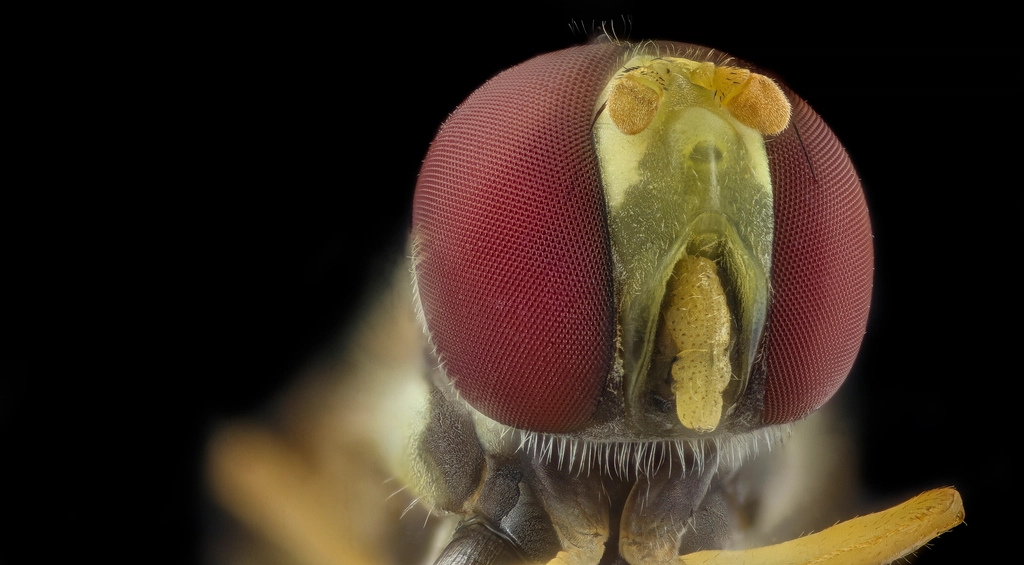 Photo Credit: usgsbee / Rawpixel
In the warm embrace of a sunlit orchard, the fruit fly, known scientifically as Drosophila, flits about with a lively energy that captures the eye. These tiny insects, measuring just a few millimeters in length, are often seen hovering around ripe fruits, their delicate wings shimmering in the light. With their bright, red eyes and a body that can range from yellow to brown, fruit flies are not just ordinary insects; they are remarkable little creatures that play a big role in our ecosystems. Their presence signals the ripeness of fruit, making them essential players in the cycle of life.
What makes Drosophila particularly intriguing to scientists and nature enthusiasts alike is its incredible adaptability and rapid life cycle. In just a matter of days, these flies can go from egg to adult, making them perfect subjects for research in genetics and evolution. Their ability to thrive in diverse environments—from bustling kitchens to lush gardens—demonstrates their resilience and resourcefulness. As we explore the world of fruit flies, we will uncover their fascinating behaviors, their vital role in the ecosystem, and the surprising ways they connect with humans. Join us on this adventure to discover the wonders of Drosophila, a tiny insect with a huge impact!
The fruit fly, scientifically known as Drosophila, holds a special place in the tree of life. This tiny insect belongs to the kingdom Animalia, which includes all animals, and is part of the phylum Arthropoda, known for its jointed limbs and exoskeletons. What sets fruit flies apart is their incredible adaptability and rapid life cycle, making them a favorite among scientists for genetic research. Their ability to reproduce quickly and their simple genetic structure have provided invaluable insights into the fundamentals of biology, genetics, and even human diseases.
| Taxonomic Rank | Scientific Name | Meaning & Significance |
|---|---|---|
| Kingdom | Animalia | The name means “animals” in Latin, highlighting that fruit flies are part of the vast group of multicellular organisms that consume organic material. |
| Phylum | Arthropoda | This term translates to “jointed feet,” referring to the segmented bodies and jointed appendages that characterize insects, spiders, and crustaceans. |
| Class | Insecta | Derived from the Latin word for “cut,” this name reflects the segmented body structure of insects, which is divided into three main parts: head, thorax, and abdomen. |
| Order | Diptera | Meaning “two wings” in Greek, this order includes all flies, which are distinguished by having only one pair of functional wings, while the second pair is reduced to tiny structures called halteres that help with balance. |
| Family | Drosophilidae | This family name comes from the Greek word “drosos,” meaning “dew,” and “philos,” meaning “loving,” which refers to the fruit flies’ attraction to moist environments, often found on rotting fruit. |
| Genus | Drosophila | Similar to the family name, Drosophila combines “drosos” and “philos,” emphasizing their affinity for damp habitats where they thrive. |
Understanding the fruit fly’s classification reveals much about its evolutionary journey. As a member of the arthropods, it shares a common ancestor with a vast array of other species, showcasing the incredible diversity of life on Earth. The fruit fly’s unique adaptations, such as its rapid reproduction and genetic simplicity, have made it a powerful model organism in scientific research. This classification not only highlights its biological significance but also underscores the interconnectedness of all living things, reminding us that even the smallest creatures can have a profound impact on our understanding of life itself.
The evolutionary journey of the fruit fly, known scientifically as Drosophila, stretches back millions of years. These tiny insects first appeared around 40 million years ago, during the Eocene epoch, a time when the Earth was warming and flowering plants were becoming more diverse. As they evolved, fruit flies adapted to their environments, becoming one of the most studied organisms in genetics and evolution.
The ancestors of modern fruit flies were likely small, winged insects that thrived in lush, plant-rich environments. Over time, they underwent significant changes, including the development of specialized mouthparts for feeding on decaying fruit. This adaptation allowed them to exploit a new food source, which was abundant in their habitats. As flowering plants evolved, so did the fruit flies, leading to a close relationship where they became important pollinators. Their ability to reproduce quickly and adapt to various environments has made them a successful group of insects.
These adaptations have been crucial for the survival of fruit flies. Their rapid reproduction and short life cycle mean they can quickly respond to environmental changes, whether it’s a new food source or a shift in climate. The genetic diversity within their populations allows them to thrive in various habitats, making them resilient to challenges. This combination of traits not only ensures their survival but also makes them invaluable to scientists studying evolution and genetics.
The fruit fly, or Drosophila, is a small yet captivating insect that often goes unnoticed in the grand tapestry of nature. With a body length of just a few millimeters, it presents a delicate form that is both agile and efficient. Its exoskeleton, a hard outer layer that protects its soft body, glistens under the light, showcasing a blend of earthy tones. The most striking feature of the fruit fly is its vibrant red eyes, which stand out against its otherwise subtle coloration. These eyes not only add to its charm but also play a crucial role in its survival.
| Feature | Description |
|---|---|
| Weight | 1-5 mg |
| Skin Type | Exoskeleton |
| Most Distinctive Feature | Red eyes |
The combination of these features equips the fruit fly for a life filled with challenges and opportunities. Its lightweight body allows for quick movements, making it adept at evading predators. The exoskeleton provides essential protection while also allowing flexibility during flight. Meanwhile, those bright red eyes are not just for show; they enhance the fly’s ability to detect movement and navigate its environment, helping it find food and mates. Together, these characteristics create a well-adapted insect that thrives in various habitats, from orchards to kitchens, showcasing the wonders of evolution in action.
The fruit fly, or Drosophila, thrives in a variety of environments, often found buzzing around ripe fruits and decaying organic matter. Picture a sunny orchard or a bustling kitchen where overripe bananas sit on the counter. These tiny insects are drawn to the sweet scent of fermentation, making them common companions in gardens and homes alike. Their habitats are rich in sugars and nutrients, providing the perfect setting for their life cycle to unfold.
Fruit flies prefer warm, humid climates, which help them thrive and reproduce quickly. They are most active in temperatures ranging from 20 to 30 degrees Celsius (68 to 86 degrees Fahrenheit). This warmth encourages the fermentation process in fruits, creating the sugary environment they love. Additionally, they flourish in areas with plenty of organic material, as this provides both food and breeding grounds.
Over time, fruit flies have developed impressive adaptations to their habitats. Their keen sense of smell allows them to detect ripe fruits from a distance, guiding them to their next meal. They can reproduce rapidly, laying hundreds of eggs on fermenting food sources, ensuring that their offspring have plenty to eat. This ability to thrive in diverse environments, from bustling kitchens to wild gardens, showcases their resilience and adaptability in the ever-changing world around them.
The daily life of a fruit fly, or Drosophila, is a whirlwind of activity, filled with buzzing energy and quick movements. These tiny insects typically spend their days flitting around, searching for food and mates. They are most active during the warmer parts of the day, often seen hovering near ripe fruits or decaying organic matter, where they feast on the sugars and yeasts that thrive in these environments. Their life is a constant cycle of feeding, mating, and laying eggs, all of which happen in a matter of days.
While fruit flies are primarily solitary creatures, they do exhibit interesting social behaviors when it comes to mating. Males often engage in elaborate courtship displays to attract females, which can include wing vibrations and specific movements. When a male spots a female, he approaches her with a series of rhythmic wing beats, creating a soft buzzing sound. This behavior not only showcases his fitness but also helps establish a connection between the two flies. Although they may not form tight-knit communities, their interactions during mating season highlight the importance of social dynamics in their life cycle.
| Behavior Type | Description |
|---|---|
| Feeding | Fruit flies feed on sugars and yeasts found in overripe fruits and decaying organic matter, which provide essential nutrients for their survival. |
| Mating Rituals | Males perform courtship displays, including wing vibrations and movements, to attract females, showcasing their fitness and readiness to mate. |
| Communication | Fruit flies communicate primarily through sound produced by wing beats and pheromones, which are chemical signals that convey information about their reproductive status. |
The behaviors of fruit flies are finely tuned to ensure their survival in a world filled with challenges. Their feeding habits allow them to thrive in environments rich in organic material, while their mating rituals help them find partners quickly, ensuring the continuation of their species. By understanding their daily activities and social interactions, we gain insight into how these small insects play a significant role in the ecosystem, contributing to the cycle of life in ways that are often overlooked.
The diet of the fruit fly, scientifically known as Drosophila, is quite diverse, making it an omnivore. These tiny insects primarily feast on ripe fruits, which provide them with essential sugars and nutrients. However, they are not picky eaters; they also enjoy leaves, meats, and various types of organic matter. Their feeding behavior is fascinating, as they often gather in groups around decaying fruits or other decomposing materials, where they can easily access their favorite foods.
| Dietary Aspect | Details |
|---|---|
| Diet Type | Omnivore |
| Favorite Foods | Ripe fruits, leaves, and decaying organic matter |
| Prey Items | Fruits, meats, and other organic materials |
| Hunting/Foraging Strategies | Gather in groups around food sources, using their keen sense of smell to locate ripe fruits |
This varied diet plays a crucial role in the fruit fly’s ecology and daily routine. By feeding on decomposing organic matter, they help break down and recycle nutrients back into the ecosystem. This not only supports their survival but also contributes to the health of their environment. Their ability to thrive in diverse habitats and their role in nutrient cycling make them important players in the natural world, showcasing how even the smallest creatures can have a big impact.
When it comes to reproduction, fruit flies are quite the busy little insects! Their mating behavior is a fascinating dance of attraction and courtship. During the breeding season, which often coincides with warmer months when food is plentiful, male fruit flies perform elaborate displays to woo females. They emit specific pheromones, which are chemical signals that attract potential mates. Once a female is interested, the pair engages in a brief courtship ritual before mating, ensuring the continuation of their species.
| Reproductive Aspect | Details |
|---|---|
| Gestation Period | 1-2 days |
| Litter Size | Varies, but typically dozens of eggs |
| Age of Maturity | 1-2 weeks |
| Name of Young | Larvae |
After mating, the female fruit fly lays her eggs, often in clusters on the surface of ripe or decaying fruit. Within just a day or two, the eggs hatch into larvae, which are small, worm-like creatures that feed on the surrounding organic material. This feeding frenzy helps them grow quickly, and within a week or two, they undergo a transformation into pupae, a stage where they prepare for adulthood. While fruit flies do not provide parental care in the traditional sense, their rapid development ensures that the next generation is ready to take flight and continue the cycle of life in no time.
The fruit fly, or Drosophila, plays a crucial role in the food web, serving as both a consumer and a prey species. These tiny insects are often found buzzing around ripe fruits, where they feast on sugars and help in the decomposition process. However, their small size makes them vulnerable to a variety of predators, which rely on them as a food source. This delicate balance highlights the fruit fly’s importance in maintaining ecological harmony.
To survive these threats, fruit flies have developed several clever strategies. They are quick and agile fliers, allowing them to dart away from predators in the blink of an eye. Additionally, their small size helps them hide in tiny crevices or blend in with their surroundings, making it harder for predators to spot them. When faced with danger, fruit flies can also exhibit erratic flight patterns, which can confuse their attackers. These adaptations are vital for their survival in a world filled with hungry eyes.
A keystone species is an organism that has a disproportionately large impact on its environment relative to its abundance. This means that if it were removed, the ecosystem would change dramatically. The fruit fly, known scientifically as Drosophila, may be small, but it plays a significant role in its ecosystem, particularly in the decomposition process and as a food source for other animals.
Fruit flies are essential in breaking down organic matter, especially decaying fruits. As they feed on these fruits, they help to decompose them, returning nutrients to the soil. This process is vital for plant growth, as healthy soil is rich in nutrients. Additionally, fruit flies are a food source for various predators, including birds and other insects. Their presence supports a diverse range of species, contributing to the overall health of the ecosystem.
Moreover, fruit flies are important for scientific research, particularly in genetics and developmental biology. They have been used in countless studies that help us understand fundamental biological processes. This research can lead to discoveries that benefit agriculture and medicine, showcasing how a tiny insect can have far-reaching effects beyond its immediate environment.
If fruit flies were to disappear, the consequences could be severe. Without them, the decomposition of organic matter would slow down, leading to nutrient-poor soil. This would affect plant growth, which in turn would impact the animals that rely on those plants for food. The entire food web could be disrupted, demonstrating just how crucial these tiny insects are to maintaining the balance of their ecosystem.
The fruit fly, known scientifically as Drosophila, occupies a vital ecological niche that influences various aspects of its environment. These tiny insects are often found in habitats rich in decaying organic matter, such as overripe fruits and vegetables. By feeding on these materials, fruit flies help break down and recycle nutrients back into the ecosystem. This process not only aids in decomposition but also supports the growth of new plants, making fruit flies essential players in their ecosystems.
| Ecosystem Service | Impact |
|---|---|
| Nutrient Recycling | Break down organic matter, returning nutrients to the soil. |
| Pollination | Contribute to the pollination of certain plants while feeding. |
| Food Source | Serve as prey for various predators, including birds and spiders. |
| Research Model | Provide insights into genetics and behavior, influencing scientific understanding. |
Fruit flies are not just scavengers; they play a significant role in the life cycles of many organisms. For instance, their presence attracts birds and other predators, creating a dynamic food web. Additionally, as they feed on fruits, they inadvertently assist in pollination, helping plants reproduce. This interaction is crucial for maintaining plant diversity and health in their habitats. Moreover, fruit flies are widely used in scientific research, particularly in genetics, where their rapid life cycle and simple genetic structure allow scientists to study inheritance and evolution.
The broader ecological importance of fruit flies cannot be overstated. As a keystone species, their activities help maintain the balance of their ecosystems. If fruit flies were to disappear, the effects would ripple through the food web, impacting everything from plant growth to the populations of their predators. By understanding the role of fruit flies, we gain insight into the intricate connections that sustain life on Earth, reminding us that even the smallest creatures can have a profound impact on the world around us.
In the intricate web of life, symbiosis plays a crucial role in shaping ecosystems. Symbiosis refers to the close and often long-term interactions between different species. These relationships can be mutualistic, where both species benefit, parasitic, where one benefits at the expense of the other, or commensal, where one benefits while the other is neither helped nor harmed. The fruit fly, or Drosophila, engages in various ecological partnerships that highlight the complexity and interdependence of life on Earth.
| Species/Type | Relationship Type | Description |
|---|---|---|
| Yeast | Mutualistic | Fruit flies feed on yeast found on decaying fruits, which provides them with essential nutrients. In return, the flies help disperse yeast spores, aiding in their reproduction. |
| Parasitic Wasps | Parasitic | Some wasps lay their eggs inside fruit fly larvae. The wasp larvae consume the fruit fly from the inside, ultimately leading to the fly’s death. |
| Fungi | Commensal | Fruit flies often inhabit areas where fungi grow. While the fungi benefit from the flies’ presence by spreading their spores, the flies are not significantly affected. |
These relationships have evolved over millions of years, showcasing the dynamic nature of life. The mutualistic bond between fruit flies and yeast is a prime example of how species can work together for mutual benefit. Meanwhile, the parasitic relationship with wasps illustrates the darker side of nature, where survival often comes at a cost. Understanding these interactions not only highlights the fruit fly’s role in its ecosystem but also emphasizes the delicate balance that sustains life on our planet.
The fruit fly, or Drosophila, may be small, but it is packed with surprises that can intrigue nature lovers of all ages. These tiny insects have fascinating traits and behaviors that reveal the wonders of the natural world.
The fruit fly, known scientifically as Drosophila, has been a part of human history for centuries, often fluttering around our kitchens and gardens. These tiny insects have not only captured our attention but have also woven themselves into our cultural fabric. In many societies, fruit flies symbolize the fleeting nature of life, as they appear and disappear with the ripening and rotting of fruit. Their presence in literature and art highlights their significance, reminding us of the delicate balance between life and decay.
Today, our interactions with fruit flies are more complex and multifaceted. While they are often seen as pests in homes and orchards, they also play a crucial role in scientific research. Drosophila has become a model organism in genetics and developmental biology, helping scientists unlock the mysteries of heredity and evolution. This tiny insect’s rapid life cycle and simple genetic structure make it an ideal subject for experiments. However, fruit flies can also be a nuisance, as they invade our kitchens, drawn to overripe fruits and sugary substances, leading to conflicts between humans and these persistent little visitors.
As we look to the future, the relationship between fruit flies and humanity is likely to evolve further. With advancements in genetic research, these tiny insects may continue to provide valuable insights into human biology and disease. At the same time, as urban environments expand, our encounters with fruit flies may increase, prompting new strategies for coexistence. Understanding and appreciating the role of Drosophila in both our lives and the ecosystem can lead to a more harmonious relationship, where we recognize their importance beyond mere pests.
The conservation status of the fruit fly, scientifically known as Drosophila, is currently classified as “Least Concern” by the International Union for Conservation of Nature (IUCN). This means that, overall, fruit flies are not facing significant threats to their populations at this time. In fact, their numbers are stable, and they are widely distributed across various habitats. These tiny insects thrive in environments rich in decaying organic matter, which provides them with ample food sources and breeding grounds.
| Conservation Factor | Status/Details |
|---|---|
| IUCN Status | Least Concern |
| Population Estimates | Stable and widespread |
| Trend Direction | Stable |
Despite their current stable status, fruit flies face several threats that could impact their populations in the future. One of the main challenges is habitat loss due to urbanization and agricultural practices. As cities expand and farmland is developed, the natural environments where fruit flies thrive can be destroyed or altered. Additionally, the use of pesticides in agriculture can harm not only fruit flies but also the delicate balance of the ecosystems they inhabit. These chemicals can reduce food sources and disrupt their breeding cycles.
Conservation efforts for fruit flies are not as prominent as those for larger or more endangered species, but their ecological role is increasingly recognized. Scientists and conservationists emphasize the importance of maintaining healthy ecosystems, which indirectly supports fruit fly populations. By promoting sustainable agricultural practices and protecting natural habitats, we can help ensure that these tiny insects continue to thrive. The outlook for fruit flies remains positive, as they adapt well to various environments, but ongoing awareness and action are essential to safeguard their future.
| Question | Answer |
|---|---|
| What is the habitat of fruit flies? | Fruit flies are commonly found in areas where ripe or rotting fruit is present. They thrive in warm environments, often in homes, gardens, and orchards, where they can easily access their food sources. |
| What do fruit flies eat? | Fruit flies are omnivores, meaning they eat a variety of foods. Their diet mainly consists of fermenting fruits, vegetables, and other organic materials, which provide the sugars they love. |
| How do fruit flies behave? | Fruit flies are known for their quick and erratic flying patterns. They are attracted to sweet smells and can often be seen buzzing around fruit bowls or garbage cans. |
| How do fruit flies reproduce? | Fruit flies reproduce rapidly, with females laying hundreds of eggs on fermenting fruit. The eggs hatch into larvae within a day, and they can develop into adults in just about a week under ideal conditions. |
| What are the threats to fruit flies? | While fruit flies are currently classified as Least Concern in terms of conservation status, they can face threats from pesticides and habitat destruction. However, their adaptability helps them survive in various environments. |
| What is an interesting characteristic of fruit flies? | One of the most distinctive features of fruit flies is their bright red eyes. This unique trait not only makes them easy to identify but also plays a role in their mating rituals. |
| How long do fruit flies live? | Fruit flies have a short lifespan, typically living for about 30 days. However, their rapid reproduction means that their populations can grow quickly, even in a short time. |