Taxonomy & Classification
- Kingdom
- Animalia
- Phylum
- Arthropoda
- Class
- Malacostraca
- Order
- Decapoda
- Family
- Ocypodidae
- Genus
- Ocypode

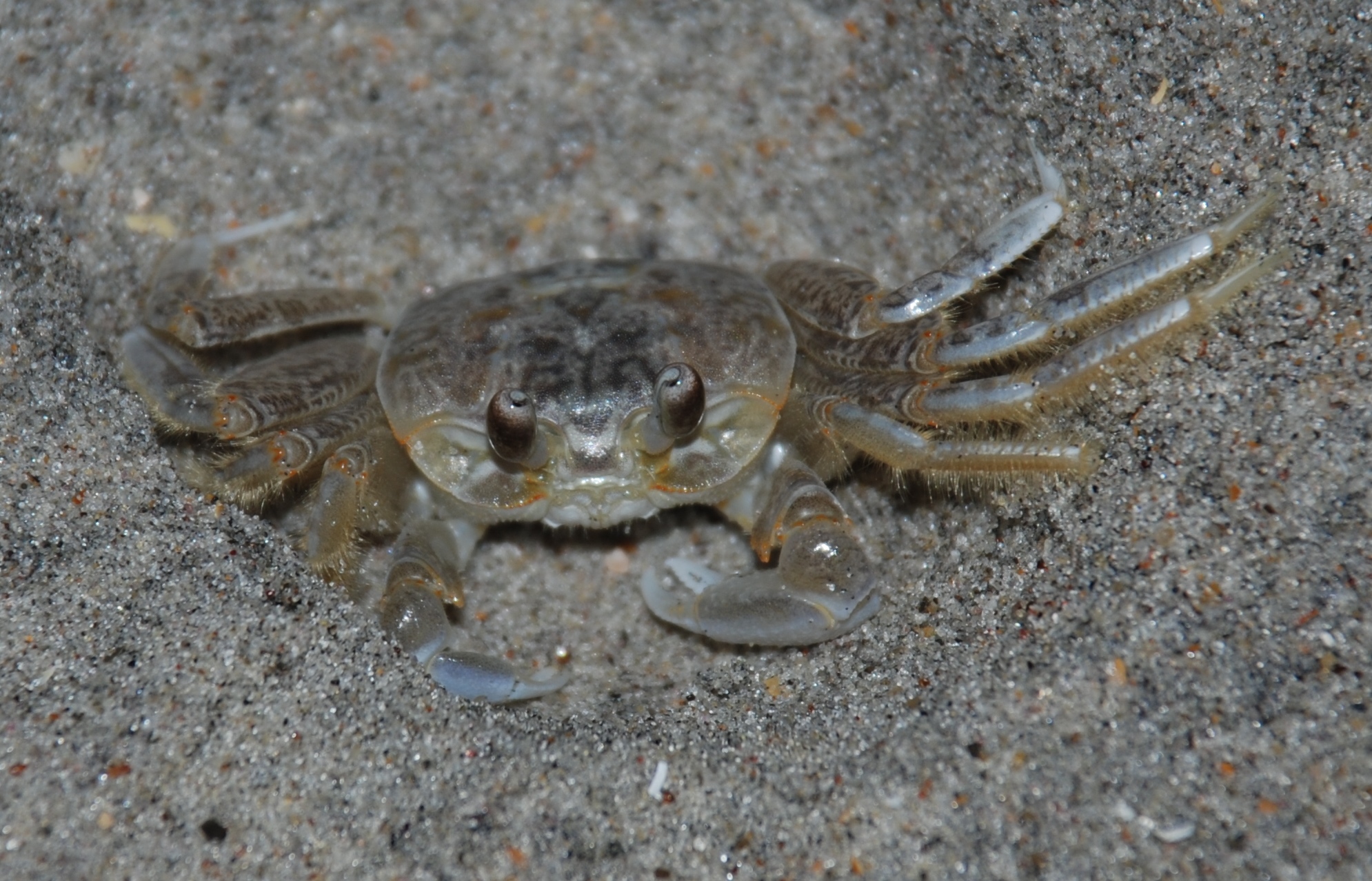 Photo Credit: Jarekt / Wikimedia Commons
On the sun-kissed shores of coastal beaches, the Ghost Crab, scientifically known as Ocypode quadrata, scuttles with a lively grace that captures the imagination of both scientists and beachgoers alike. With its slender body and long, spindly legs, this little crustacean is a master of camouflage, blending seamlessly into the sandy landscape. Its pale, almost translucent shell allows it to vanish against the backdrop of golden grains, making it a true ghost of the shore. As the sun dips below the horizon, these crabs come alive, darting across the beach in search of food, their quick movements a blur against the twilight sky.
What makes the Ghost Crab particularly intriguing is not just its ability to disappear into its surroundings, but also its vital role in the coastal ecosystem. These crabs are omnivores, meaning they feast on a mix of plant and animal matter, helping to recycle nutrients in their sandy habitat. Their presence is essential for maintaining the health of the beach environment, as they aerate the sand and contribute to the food web. As we explore the world of the Ghost Crab, we will uncover the secrets of its behavior, diet, and the fascinating adaptations that allow it to thrive in such a dynamic and challenging habitat. Join us on this adventure to learn more about this remarkable little creature that dances along the edge of land and sea.
The Ghost Crab, a captivating inhabitant of sandy shores, holds a special place in the animal kingdom. Taxonomically, it belongs to the Kingdom Animalia, which includes all animals, and is classified under the Phylum Arthropoda, known for its jointed limbs and exoskeletons. Within this phylum, Ghost Crabs are part of the Class Malacostraca, which encompasses a wide variety of crustaceans, including lobsters and shrimp. They are further categorized in the Order Decapoda, meaning “ten-footed,” a nod to their ten limbs. The Ghost Crab’s family, Ocypodidae, is characterized by its swift, agile members, and the genus Ocypode highlights their unique adaptations for life on land and in the surf. What sets Ghost Crabs apart is their ability to thrive in both terrestrial and marine environments, showcasing their remarkable adaptability.
| Taxonomic Rank | Scientific Name | Meaning & Significance |
|---|---|---|
| Kingdom | Animalia | This name signifies the broad category of multicellular organisms that are heterotrophic, meaning they consume organic material for energy. |
| Phylum | Arthropoda | Derived from Greek, meaning “jointed feet,” this name reflects the jointed appendages that are a hallmark of this diverse group. |
| Class | Malacostraca | This term comes from Greek, meaning “soft shell,” which describes the flexible exoskeletons of these crustaceans. |
| Order | Decapoda | Meaning “ten-footed,” this name refers to the ten limbs that are characteristic of crabs, lobsters, and shrimp. |
| Family | Ocypodidae | This name is derived from the Greek word “ocypos,” meaning “swift foot,” highlighting the speed and agility of these crabs. |
| Genus | Ocypode | This name also comes from Greek, meaning “swift foot,” emphasizing the quick movements of Ghost Crabs as they scurry across the sand. |
Understanding the Ghost Crab’s classification reveals much about its evolutionary journey. As a member of the Ocypodidae family, it showcases adaptations that have allowed it to conquer both land and sea. This dual existence is a testament to the evolutionary pressures that have shaped its ancestors, enabling them to exploit diverse habitats. The Ghost Crab’s unique adaptations, such as its ability to burrow and its specialized eyes for detecting predators, highlight the intricate relationship between form and function in the natural world. Through its taxonomic position, we can appreciate the Ghost Crab not just as a solitary species, but as a link in the vast web of life that has evolved over millions of years.
The evolutionary journey of the Ghost Crab, belonging to the family Ocypodidae and the genus Ocypode, stretches back millions of years. These crabs have adapted to life on sandy beaches, where they scuttle about, blending into their surroundings. Their ancestors roamed the oceans long before the first land-dwelling creatures emerged, marking a significant transition in the history of life on Earth.
The story begins with ancient crustaceans that thrived in marine environments. Over time, some of these ancestors ventured onto land, adapting to a new lifestyle. This transition was not easy; it required significant changes in their physiology and behavior. As they adapted to life on the shore, they developed specialized limbs for digging and running, allowing them to navigate the sandy terrain with ease. Their eyes, perched high on stalks, evolved to spot predators and prey from a distance, enhancing their survival in a challenging environment.
These adaptations have been vital for the Ghost Crab’s survival in a dynamic and often harsh coastal environment. By mastering the art of camouflage, developing the ability to breathe air, and becoming swift runners, they have thrived where few other creatures can. Their burrowing habits not only protect them from the elements but also create a safe haven from predators. This remarkable evolutionary journey showcases the resilience and ingenuity of life as it adapts to ever-changing surroundings.
The Ghost Crab is a striking figure on the sandy shores, instantly recognizable by its slender body and long, spindly legs. With a carapace that can reach up to 4 inches wide, this crab is built for speed and agility. Its pale, almost translucent skin allows it to blend seamlessly into its beach environment, making it a master of camouflage. The most eye-catching feature is its long eyestalks, which give it an elevated view of its surroundings, perfect for spotting predators or potential prey.
| Feature | Description |
|---|---|
| Weight | 0.53 – 2.5 ounces |
| Skin Type | Shell |
| Most Distinctive Feature | Long eyestalks |
These physical traits work together to enhance the Ghost Crab’s survival in its coastal habitat. The lightweight body allows for quick movements, enabling it to dart away from threats or chase after food. Its shell provides protection from predators, while the long eyestalks not only improve its field of vision but also help it gauge distances accurately. This combination of features makes the Ghost Crab a fascinating example of adaptation, perfectly suited to life on the ever-shifting sands of the beach.
The Ghost Crab thrives in the sun-drenched realms of sandy beaches, where the land meets the sea. Picture a stretch of golden sand, glistening under the warm sun, with gentle waves lapping at the shore. These crabs are often seen scuttling across the surface, their pale bodies blending seamlessly with the sand, making them look almost invisible. They dig intricate burrows in the soft sand, creating cozy homes that protect them from predators and the elements.
Ghost Crabs prefer warm, coastal environments where the climate is typically dry and sunny. They thrive in areas with minimal vegetation, allowing them to easily spot predators and prey. The sandy substrate is crucial for their burrowing habits, as it provides both shelter and a place to store food. These crabs are also quite sensitive to moisture levels, often retreating to their burrows during high tides or heavy rains to stay safe and dry.
Over time, Ghost Crabs have developed fascinating adaptations to their sandy habitats. Their long legs allow them to move swiftly across the beach, while their ability to dig deep burrows helps them escape the heat of the day and the chill of the night. Their pale coloration not only camouflages them against the sand but also reflects sunlight, helping to keep their bodies cool. These clever adaptations ensure that Ghost Crabs can thrive in their coastal homes, making them a vital part of the beach ecosystem.
As the sun rises over the sandy shores, the Ghost Crab begins its daily routine. These lively crustaceans are most active during the twilight hours, scuttling across the beach in search of food. With their keen eyesight, they spot tiny morsels like insects and detritus, which they quickly grab with their powerful pincers. During the day, they often retreat to their burrows, which provide shelter from the sun and predators. This behavior helps them conserve moisture and energy, making them well-adapted to their coastal environment.
While Ghost Crabs are primarily solitary creatures, they do exhibit interesting social behaviors, especially during mating season. Males will perform elaborate displays to attract females, showcasing their strength and vitality. These displays often involve waving their claws and moving in intricate patterns. Although they prefer to live alone, they can be seen in close proximity to one another, especially when foraging for food. This occasional gathering allows them to communicate through body language and subtle movements, helping them navigate their sandy world.
| Behavior Type | Description |
|---|---|
| Activity Patterns | Ghost Crabs are most active during twilight, foraging for food and engaging in mating displays. |
| Social Structure | Primarily solitary, but males may gather during mating season to attract females. |
| Communication Methods | They communicate through body language, using movements and displays to convey messages. |
The behaviors of Ghost Crabs are finely tuned to ensure their survival in a challenging environment. By being active during cooler hours, they avoid the harsh heat of the day, while their solitary nature helps them reduce competition for food. Their ability to communicate during mating season ensures the continuation of their species, while their burrows provide essential protection. Each aspect of their daily life is a testament to their adaptability and resilience, allowing them to thrive along the ever-changing shoreline.
The Ghost Crab is an omnivore, which means it enjoys a varied diet that includes both plant and animal matter. These crabs are opportunistic feeders, meaning they will eat whatever is available and easy to catch. Their diet primarily consists of small creatures found on the beach, such as baby turtles, mole crabs, and other small arthropods. They also munch on mollusks and insects, making them quite versatile in their feeding habits.
| Dietary Aspect | Details |
|---|---|
| Diet Type | Omnivore |
| Favorite Foods | Baby turtles, mole crabs, small arthropods, mollusks, insects |
| Prey Items | Small marine and terrestrial organisms |
| Hunting/Foraging Strategies | Scavenging and opportunistic feeding, using quick movements to catch prey |
This diverse diet plays a crucial role in the Ghost Crab’s ecology and daily routine. By feeding on a variety of organisms, these crabs help maintain the balance of their sandy habitat. Their scavenging behavior not only aids in cleaning up the beach but also supports the food web, as they serve as both predator and prey. As they scuttle along the shore, their foraging activities contribute to the dynamic ecosystem of the coastal environment, showcasing the interconnectedness of life in these vibrant habitats.
As the warm sun sets over sandy beaches, Ghost Crabs engage in a lively courtship dance. Mating typically occurs during the warmer months, when the tides are just right. Male Ghost Crabs display their strength and vigor by waving their large claws to attract females. Once a female is ready to mate, she will signal her interest, and the pair will engage in a fascinating ritual that can last for hours. After mating, the female carries fertilized eggs in a special pouch under her abdomen, where they will develop until they are ready to hatch.
| Reproductive Aspect | Details |
|---|---|
| Gestation Period | About 2 to 3 weeks |
| Litter Size | Up to 100,000 eggs |
| Age of Maturity | Approximately 1 year |
| Name of Young | Larvae or zoea |
After the eggs hatch, the young Ghost Crabs, known as zoea, are released into the ocean. These tiny larvae drift in the water, where they undergo several molts, gradually transforming into juvenile crabs. During this time, they are vulnerable to predators, but they also learn to navigate their environment. Once they reach the sandy shores, they begin to dig burrows and adapt to life on land. While Ghost Crabs do not provide direct parental care after the eggs hatch, the early stages of their life are crucial for their survival and development into the agile adults that scuttle along the beach.
The Ghost Crab plays a vital role in the coastal food web, serving as both predator and prey. These agile crustaceans feast on small invertebrates and organic matter, helping to recycle nutrients in their sandy habitats. However, they are also a target for various predators, making their survival a delicate balance in the ecosystem.
To defend themselves against these threats, Ghost Crabs have developed several clever survival strategies. Their pale coloration allows them to blend seamlessly into the sandy environment, making it harder for predators to spot them. When danger approaches, they can quickly burrow into the sand, disappearing from sight in mere seconds. Additionally, their speed and agility enable them to scuttle away from threats, ensuring they can evade capture and continue their important role in the coastal ecosystem.
A keystone species is an organism that has a disproportionately large impact on its environment relative to its abundance. In other words, if a keystone species were to disappear, the entire ecosystem could change dramatically. The Ghost Crab, with its unique behaviors and ecological roles, qualifies as a keystone species in its sandy beach habitat. Its presence influences many other organisms and the overall health of the coastal ecosystem.
Ghost Crabs play a crucial role in maintaining the balance of their environment. As omnivores, they consume a variety of food sources, including small invertebrates and decaying organic matter. By doing so, they help control populations of these organisms, preventing any one species from becoming too dominant. This feeding behavior also aids in nutrient recycling, as the crabs break down organic material, returning essential nutrients to the sandy soil.
Moreover, Ghost Crabs serve as a food source for various predators, including birds and larger marine animals. Their burrowing activities aerate the sand, which is beneficial for plant growth and helps maintain the structure of the beach ecosystem. This interaction between the crabs and their environment creates a dynamic system where many species depend on one another for survival.
If Ghost Crabs were to vanish from their sandy homes, the consequences would ripple through the ecosystem. Without these crabs, the populations of small invertebrates could explode, leading to imbalances that might harm other species. The loss of nutrient recycling would degrade soil quality, affecting plant life and, in turn, the animals that rely on those plants. The entire coastal food web could be disrupted, showcasing just how vital the Ghost Crab is to its environment.
The Ghost Crab occupies a crucial ecological niche along sandy coastlines, where it plays a significant role in shaping its environment. As an omnivore, this agile crustacean feeds on a variety of organic materials, including detritus, small invertebrates, and even plant matter. By doing so, it helps to break down and recycle nutrients, contributing to the health of the beach ecosystem. Its burrowing behavior also aerates the sand, allowing for better water infiltration and promoting the growth of beach vegetation.
| Ecosystem Service | Impact |
|---|---|
| Nutrient Recycling | Breaks down organic matter, enriching the sand and promoting plant growth. |
| Soil Aeration | Burrowing helps to aerate the sand, improving water drainage and root penetration. |
| Prey for Predators | Serves as a food source for various birds and other coastal animals. |
| Habitat Modification | Creates burrows that can provide shelter for other small organisms. |
The Ghost Crab’s influence extends beyond its immediate actions. For instance, its burrows not only serve as homes for the crabs themselves but also provide refuge for other small creatures, such as insects and even other crustaceans. By digging into the sand, Ghost Crabs help to create a more diverse habitat, which can support a wider range of species. Additionally, their feeding habits contribute to the overall health of the beach ecosystem by controlling populations of smaller invertebrates and facilitating the breakdown of organic materials.
The broader ecological importance of the Ghost Crab cannot be overstated. As a keystone species, its presence is vital for maintaining the balance of coastal ecosystems. If Ghost Crabs were to disappear, the effects would ripple through the food web, potentially leading to overpopulation of certain species and a decline in beach health. By understanding the role of the Ghost Crab, we gain insight into the intricate connections that sustain life along our shores, reminding us of the delicate balance that exists in nature.
In the intricate web of life along sandy shores, symbiosis plays a vital role in shaping ecosystems. Symbiosis refers to the close interactions between different species, which can be beneficial, harmful, or neutral. These relationships can take many forms, such as mutualism, where both species gain advantages, parasitism, where one benefits at the other’s expense, and commensalism, where one species benefits while the other is neither helped nor harmed. The Ghost Crab, with its lively presence on the beach, engages in various ecological partnerships that highlight the interconnectedness of life.
| Species/Type | Relationship Type | Description |
|---|---|---|
| Sandpipers | Mutualistic | Ghost Crabs and sandpipers often share the beach. As crabs dig for food, they disturb the sand, making it easier for sandpipers to find insects and small invertebrates. |
| Sea Turtles | Commensal | Ghost Crabs may scavenge on the remains of sea turtle nests. While the turtles benefit from laying their eggs, the crabs take advantage of the leftover nutrients without affecting the turtles. |
| Parasitic Worms | Parasitic | Some Ghost Crabs can host parasitic worms that live in their bodies. These worms benefit by feeding on the crab’s nutrients, which can weaken the crab over time. |
The evolution of these relationships showcases the adaptability of species in their environments. Over time, Ghost Crabs have developed partnerships that enhance their survival and that of their neighbors. Mutualistic relationships, like those with sandpipers, demonstrate how cooperation can lead to greater success in finding food. Meanwhile, the presence of parasites highlights the darker side of nature, where some species exploit others. Understanding these connections helps us appreciate the delicate balance of coastal ecosystems and the roles each species plays in maintaining that balance.
The Ghost Crab is a fascinating inhabitant of sandy beaches, known for its quick movements and unique adaptations. Here are some surprising facts that showcase just how remarkable this little creature truly is.
The Ghost Crab has danced through the sands of human history, leaving behind a trail of cultural significance and curiosity. For centuries, these lively crabs have been a part of coastal folklore and local traditions. In many cultures, they symbolize resilience and adaptability, reflecting the way they thrive in harsh environments. Ancient coastal communities often viewed them as a source of food, while their unique behaviors and appearances have inspired stories and art. From the bustling beaches of the Caribbean to the serene shores of the Pacific, Ghost Crabs have captured the imagination of those who encounter them.
Today, the relationship between Ghost Crabs and humanity is a complex tapestry woven with threads of conservation, conflict, and coexistence. As coastal development expands, these crabs face habitat loss, which threatens their populations. However, many communities are stepping up to protect their sandy homes. Conservation efforts focus on preserving beach ecosystems, recognizing the vital role Ghost Crabs play in maintaining the health of coastal environments. Yet, conflicts arise as people seek to enjoy the beach, sometimes disrupting the crabs’ natural behaviors. Interestingly, some researchers are exploring the potential for domestication, studying how these crabs might adapt to life alongside humans in controlled environments.
As we look to the future, the relationship between Ghost Crabs and humanity holds both challenges and opportunities. With increasing awareness of environmental issues, there is hope that more people will recognize the importance of these crabs in coastal ecosystems. By fostering a sense of stewardship, we can ensure that future generations will not only enjoy the beauty of sandy shores but also appreciate the vital role Ghost Crabs play in the delicate balance of nature. Together, we can create a harmonious coexistence that benefits both humans and these remarkable crustaceans.
The Ghost Crab, a lively inhabitant of sandy beaches, currently holds a conservation status of “Least Concern” according to the International Union for Conservation of Nature (IUCN). This means that, for now, the species is not facing immediate threats of extinction. With an estimated population size in the hundreds of thousands, Ghost Crabs are thriving in their coastal habitats. However, while their numbers are stable, ongoing monitoring is essential to ensure they remain abundant in the future.
| Conservation Factor | Status/Details |
|---|---|
| IUCN Status | Least Concern |
| Estimated Population Size | Hundreds of thousands, at least |
| Population Trend | Stable |
Despite their current stable status, Ghost Crabs face several threats that could impact their populations. Coastal development, such as the construction of homes and resorts, can destroy their natural habitats. Pollution from plastics and chemicals can also harm these crabs, as they often ingest harmful materials while foraging. Additionally, climate change poses a significant risk, as rising sea levels and increased storm intensity can erode the sandy beaches they call home.
Conservation efforts are underway to protect the habitats of Ghost Crabs and ensure their continued survival. Organizations are working to raise awareness about the importance of coastal ecosystems and the role these crabs play within them. By promoting responsible beach practices and reducing pollution, communities can help safeguard the environments where Ghost Crabs thrive. With ongoing efforts and public support, the outlook for this spirited species remains hopeful, allowing future generations to enjoy the sight of these agile crabs scuttling along the shore.
| Question | Answer |
|---|---|
| What is the habitat of the Ghost Crab? | Ghost Crabs are typically found along sandy beaches and coastal areas. They dig burrows in the sand, which provide shelter from predators and harsh weather. |
| What do Ghost Crabs eat? | Ghost Crabs are omnivores, meaning they eat both plants and animals. Their diet includes algae, detritus (decaying organic matter), and small invertebrates like insects and mollusks. |
| How do Ghost Crabs behave? | These crabs are known for their quick movements and ability to scuttle sideways. They are most active at night, using their keen eyesight to hunt for food and avoid predators. |
| How do Ghost Crabs reproduce? | During mating season, male Ghost Crabs perform elaborate courtship displays to attract females. After mating, females lay eggs in their burrows, which hatch into tiny larvae that eventually make their way to the ocean. |
| What threats do Ghost Crabs face? | Ghost Crabs face threats from habitat loss due to coastal development and pollution. They are also preyed upon by birds, fish, and other predators, which can impact their populations. |
| What is an interesting characteristic of Ghost Crabs? | One of the most distinctive features of Ghost Crabs is their eyestalks, which allow them to see in almost all directions. This adaptation helps them spot predators and food while remaining hidden in their sandy homes. |
| Are Ghost Crabs endangered? | Ghost Crabs are currently classified as Least Concern, meaning they are not at immediate risk of extinction. However, ongoing environmental changes could affect their populations in the future. |