Taxonomy & Classification
- Kingdom
- Animalia
- Phylum
- Arthropoda
- Class
- Insecta
- Order
- Lepidoptera
- Family
- Erebidae
- Genus
- Arctiinae
- Species
- Hypercompe

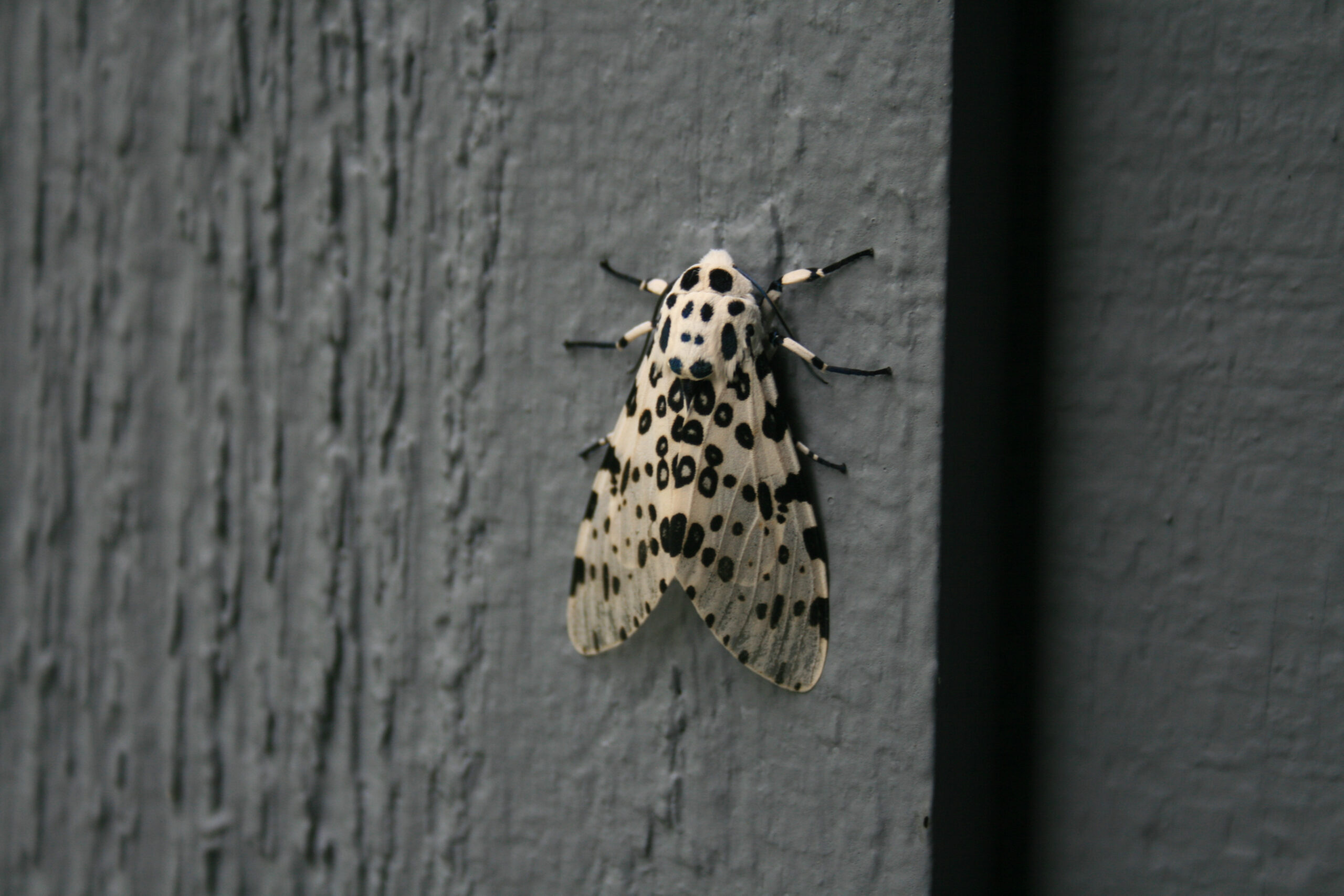 Photo Credit: Ser Amantio di Nicolao / Wikimedia Commons
In the enchanting world of the Giant Leopard Moth, or Hypercompe scribonia, nature showcases a dazzling display of color and pattern. Imagine wandering through a sun-dappled meadow at dusk, where the air is filled with the sweet scent of blooming flowers. Suddenly, a large moth flutters by, its wings a striking white canvas adorned with bold black spots that resemble the rosettes of a leopard. This stunning insect, with a wingspan that can stretch as wide as a human palm, captures the attention of both curious children and seasoned scientists alike.
The Giant Leopard Moth is not just a pretty face; it plays an important role in its ecosystem. As a nocturnal creature, it comes alive at night, flitting gracefully among the plants and flowers, where it helps pollinate various species. This fascinating behavior, combined with its unique appearance, makes it a subject of interest for researchers studying the delicate balance of life in meadows and forests. With its captivating beauty and vital ecological contributions, the Giant Leopard Moth invites us to explore the wonders of the natural world, reminding us that even the smallest creatures can have a big impact.
The Giant Leopard Moth, scientifically known as Hypercompe scribonia, occupies a fascinating niche in the tree of life. This striking insect belongs to the kingdom Animalia, which includes all animals, and is part of the phylum Arthropoda, home to creatures with exoskeletons, segmented bodies, and jointed legs. What sets the Giant Leopard Moth apart is its stunning appearance, featuring bold black and white patterns that resemble the spots of a leopard. This eye-catching coloration serves as a warning to predators, signaling that it may not be a tasty meal.
| Taxonomic Rank | Scientific Name | Meaning & Significance |
|---|---|---|
| Kingdom | Animalia | This name means “animals” in Latin, highlighting the diverse group of living organisms that share characteristics like mobility and complex behaviors. |
| Phylum | Arthropoda | Derived from Greek, meaning “jointed feet,” this term refers to the jointed limbs and segmented bodies of insects, spiders, and crustaceans. |
| Class | Insecta | This classification comes from the Latin word for “cut,” referring to the segmented body structure of insects, which is divided into three main parts: head, thorax, and abdomen. |
| Order | Lepidoptera | This name means “scale wings” in Greek, which describes the tiny scales that cover the wings of butterflies and moths, giving them their vibrant colors and patterns. |
| Family | Erebidae | The name Erebidae is derived from “Erebus,” a figure in Greek mythology associated with darkness, reflecting the nocturnal habits of many moths in this family. |
| Genus | Arctiinae | This term refers to a subfamily of moths known for their bright colors and patterns, often associated with the “tiger moths,” which are known for their striking appearances. |
Understanding the Giant Leopard Moth’s classification reveals much about its evolutionary journey. As a member of the Lepidoptera order, it shares a lineage with butterflies and other moths, showcasing the incredible diversity of adaptations these insects have developed over millions of years. Its unique patterns and behaviors not only help it survive in the wild but also illustrate the intricate relationships between species and their environments. The Giant Leopard Moth is a vivid reminder of the beauty and complexity of life on Earth, connecting us to the vast tapestry of the animal kingdom.
The evolutionary journey of the Giant Leopard Moth, or Hypercompe scribonia, stretches back millions of years, intertwining with the rich tapestry of life on Earth. This moth belongs to the family Erebidae, a diverse group that has adapted to various environments. The story of the Giant Leopard Moth is one of transformation, showcasing how species evolve over time to thrive in their habitats.
The ancestors of the Giant Leopard Moth were likely small, drab moths that roamed the Earth during the late Cretaceous period, around 100 million years ago. As the climate changed and new ecosystems emerged, these early moths began to diversify. Over time, they developed striking patterns and colors, which helped them blend into their surroundings or ward off predators. The transition from these plain ancestors to the vibrant Giant Leopard Moth involved significant changes in both behavior and physiology, including the development of a more robust body and larger wings.
These adaptations have been crucial for the survival of the Giant Leopard Moth. The striking coloration not only helps it avoid being eaten but also attracts mates, ensuring the continuation of its lineage. Its size and adaptability allow it to occupy various ecological niches, making it a resilient species in the face of environmental changes. Through millions of years of evolution, the Giant Leopard Moth has become a symbol of nature’s creativity and the intricate dance of life.
The Giant Leopard Moth is a stunning sight to behold, with a body that can stretch as wide as a human palm. Its large, rounded wings are a canvas of white, adorned with bold black spots that resemble a leopard’s rosettes. This striking pattern not only captivates the eye but also serves a purpose in the wild. The moth’s body is robust and furry, giving it a soft, velvety appearance that adds to its charm. When it flutters through the air, it creates a mesmerizing display, making it hard to forget.
| Feature | Description |
|---|---|
| Size | As large as a human palm |
| Color | White wings with bold black spots |
| Skin Type | Furry, giving a velvety appearance |
| Wingspan | Approximately 3 to 4 inches |
The combination of its size, striking coloration, and furry texture plays a vital role in the Giant Leopard Moth’s survival. The bold black spots can confuse predators, making it harder for them to spot the moth against the dappled light of its natural habitat. Additionally, the soft fur helps to insulate the moth, keeping it warm during cooler nights. Together, these features not only make the Giant Leopard Moth a beautiful creature but also a well-adapted one, thriving in its environment while captivating the hearts of those lucky enough to encounter it.
The Giant Leopard Moth thrives in a variety of habitats that paint a picture of lush greenery and vibrant ecosystems. You might find it fluttering through open fields, meadows, and even the edges of forests. These areas are often filled with wildflowers and grasses, providing both beauty and a rich source of food for the moth’s caterpillars. The moth’s striking appearance stands out against the backdrop of its home, making it a delightful sight for anyone lucky enough to spot it.
The climate where the Giant Leopard Moth resides is typically warm and temperate. It enjoys areas with plenty of sunlight, which helps the plants it depends on for food to thrive. These moths are most active during the warmer months, especially in late spring and summer when temperatures rise. They prefer environments that are not too dry, as moisture in the air supports the growth of the plants that their caterpillars munch on.
To survive in these specific habitats, the Giant Leopard Moth has developed some clever adaptations. Its striking black and white pattern not only makes it a beautiful sight but also helps it blend into the dappled light of its surroundings, providing camouflage from predators. Additionally, the moth’s life cycle is synchronized with the seasons, allowing it to take advantage of the abundant food sources available during the warmer months. This clever timing ensures that both the adult moths and their caterpillars can thrive in their chosen homes.
As night falls, the Giant Leopard Moth begins its daily activities, emerging from its hiding spots to explore the world around it. This nocturnal insect is most active after sunset, fluttering gracefully through the air in search of food and mates. With its striking black and white patterned wings, it navigates the dark, using its keen senses to detect the scents of flowers and other moths. The Giant Leopard Moth spends its evenings feeding on nectar, which provides the energy it needs for its nightly adventures.
Socially, the Giant Leopard Moth is a solitary creature, but it does engage in some interesting interactions during mating season. Males often use their sense of smell to locate females, who release pheromones—chemical signals that attract potential mates. While they may not form large groups, these moths do communicate through their unique wing patterns and movements, which can signal readiness to mate or deter rivals. This subtle form of social behavior is crucial for their reproduction, ensuring that they can pass on their genes to the next generation.
| Behavior Type | Description |
|---|---|
| Activity Patterns | Nocturnal foraging for nectar and mates, primarily active at night. |
| Social Structure | Generally solitary, with interactions mainly during mating season. |
| Communication Methods | Use of pheromones for attracting mates and wing patterns for signaling. |
In the grand scheme of survival, these behaviors are essential for the Giant Leopard Moth. By being active at night, it avoids many daytime predators, while its solitary nature allows it to conserve energy. The ability to communicate through pheromones and visual signals ensures that it can find mates effectively, helping to sustain its population. Each night is a new opportunity for adventure, feeding, and reproduction, all of which are vital for the continuation of this beautiful species.
The Giant Leopard Moth has a diverse diet that reflects its omnivorous nature, meaning it enjoys a mix of both plant and animal matter. This moth primarily feeds on the leaves of various plants, but it also consumes nectar from flowers. By sipping nectar, it not only nourishes itself but also plays a role in pollination, helping plants reproduce. The moth’s feeding behavior is quite interesting; it uses its long, straw-like mouthpart, called a proboscis, to reach deep into flowers and extract the sweet liquid.
| Dietary Aspect | Details |
|---|---|
| Diet Type | Omnivore |
| Favorite Foods | Leaves of various plants and flower nectar |
| Prey Items | Primarily plant-based, with occasional consumption of small insects |
| Hunting/Foraging Strategies | Uses proboscis to sip nectar and munch on leaves; forages at night |
This varied diet not only sustains the Giant Leopard Moth but also influences its role in the ecosystem. By feeding on plants, it helps control vegetation growth, while its nectar-feeding habits support the pollination of flowers. This interaction with plants and other insects shapes its daily routine, as it must balance foraging for food with avoiding predators. The Giant Leopard Moth’s diet is a vital part of its life, connecting it to the broader web of life in its habitat.
The mating behavior of the Giant Leopard Moth is a captivating spectacle that unfolds during the warm summer months. Males are particularly active at night, using their keen sense of smell to locate females. Once a male finds a female, he performs a series of aerial displays, fluttering around her to attract her attention. If she is receptive, they will mate, and the female will soon begin the process of laying her eggs. This breeding season is crucial for the continuation of their species, as it ensures the next generation will emerge when conditions are favorable.
| Reproductive Aspect | Details |
|---|---|
| Gestation Period | Approximately 10 days |
| Litter Size | Up to 200 eggs |
| Age of Maturity | About 2 months |
| Name of Young | Caterpillars |
After the female lays her eggs, they hatch into tiny caterpillars, which are the larval stage of the Giant Leopard Moth. These caterpillars are voracious eaters, munching on leaves and growing rapidly. As they feed, they undergo several molts, shedding their skin to accommodate their growing bodies. This stage lasts for about two months, during which they develop into larger, more mature caterpillars. Once they are ready, they will find a safe place to pupate, transforming into the beautiful moths we admire. While the adult moths do not provide direct care for their young, the caterpillars are equipped with instincts that guide them through their early life stages, ensuring they are ready to take flight as adults when the time comes.
The Giant Leopard Moth plays a crucial role in its ecosystem, serving as both a pollinator and a food source for various predators. Positioned in the food web, it helps maintain the balance of nature by supporting the diets of other animals while also contributing to plant reproduction through its feeding habits. However, this beautiful moth faces numerous dangers that threaten its survival.
To defend itself against these threats, the Giant Leopard Moth has developed several clever survival strategies. One of its most effective tactics is its striking coloration, which can confuse predators. The bold black and white patterns on its wings can mimic the appearance of other, more dangerous creatures, making potential attackers think twice. Additionally, when threatened, the moth can drop to the ground and remain still, blending in with its surroundings. This combination of camouflage and mimicry helps the Giant Leopard Moth navigate the challenges of its environment, allowing it to thrive despite the dangers lurking nearby.
A keystone species is an organism that has a disproportionately large impact on its environment relative to its abundance. These species play critical roles in maintaining the structure of an ecosystem. The Giant Leopard Moth, known scientifically as Hypercompe scribonia, does not fit the traditional definition of a keystone species. However, it does contribute to its ecosystem in meaningful ways, particularly through its interactions with plants and other animals.
The Giant Leopard Moth is an omnivore, which means it feeds on both plant and animal matter. By consuming various plant leaves, it helps control plant populations, ensuring that no single species dominates the landscape. This balance is essential for maintaining biodiversity, which is the variety of life in a particular habitat. Additionally, the moth serves as a food source for a range of predators, including birds and bats. These predators rely on the moth for nutrition, making it an important link in the food web.
Moreover, the Giant Leopard Moth plays a role in pollination. While it may not be as famous as bees or butterflies, it visits flowers in search of nectar, inadvertently transferring pollen from one bloom to another. This process is vital for the reproduction of many plants, allowing them to produce seeds and continue their life cycles. The moth’s nocturnal activities also contribute to the nighttime ecosystem, providing sustenance for other creatures that thrive in the dark.
If the Giant Leopard Moth were to disappear, the effects could ripple through its ecosystem. Without this moth, plant populations might become unbalanced, leading to overgrowth of certain species and a decline in biodiversity. Predators that rely on the moth for food would face challenges, potentially leading to their decline as well. The loss of this moth could disrupt the delicate web of life, highlighting how even the smallest creatures can have significant impacts on their surroundings.
The Giant Leopard Moth, known scientifically as Hypercompe scribonia, plays a vital role in shaping its ecosystem. As a nocturnal insect, it contributes to the balance of life in its environment, influencing both plant and animal communities. By feeding on a variety of plants and serving as a food source for predators, this moth helps maintain the intricate web of life that supports many species. Its presence is a reminder of how even the smallest creatures can have a significant impact on their surroundings.
| Ecosystem Service | Impact |
|---|---|
| Pollination | Helps plants reproduce by transferring pollen between flowers. |
| Food Source | Provides nourishment for birds, bats, and other predators. |
| Leaf Consumption | Controls plant growth by feeding on leaves, promoting biodiversity. |
| Soil Enrichment | Contributes to nutrient cycling through its waste products. |
The Giant Leopard Moth’s influence can be seen in various ways. For instance, as it feeds on leaves, it helps regulate plant populations, ensuring that no single species dominates the landscape. This feeding behavior encourages a diverse array of plants to thrive, which in turn supports a variety of other organisms. Additionally, by acting as a pollinator, the moth aids in the reproduction of flowering plants, which are essential for many animals, including humans. Its role as a food source for birds and bats further highlights its importance in the food web, linking different levels of the ecosystem together.
In a broader sense, the Giant Leopard Moth exemplifies the interconnectedness of life. By fulfilling multiple roles within its ecosystem, it helps maintain balance and promotes biodiversity. The health of ecosystems relies on such species, as they contribute to the stability and resilience of their environments. Understanding the impact of the Giant Leopard Moth encourages us to appreciate the intricate relationships that exist in nature and the importance of protecting these remarkable creatures and their habitats.
In the intricate web of life, symbiosis refers to the close interactions between different species, which can take on various forms. These relationships can be mutualistic, where both species benefit, parasitic, where one benefits at the expense of the other, or commensal, where one benefits while the other is neither helped nor harmed. The Giant Leopard Moth, with its striking appearance and diverse habits, engages in several ecological partnerships that highlight the interconnectedness of nature.
| Species/Type | Relationship Type | Description |
|---|---|---|
| Plants (various species) | Mutualistic | The Giant Leopard Moth helps pollinate flowers while feeding on nectar, benefiting both the moth and the plants. |
| Predators (birds, bats) | Parasitic | While the moth serves as a food source for these predators, it faces the risk of being eaten, highlighting the predator-prey dynamic. |
| Fungi (mycorrhizal fungi) | Commensal | The moth’s larvae may feed on decaying plant matter that is also broken down by fungi, benefiting from the nutrients without affecting the fungi. |
These relationships have evolved over time, shaped by the needs and adaptations of each species involved. The Giant Leopard Moth’s role as a pollinator not only aids in the reproduction of plants but also ensures a food source for itself. Meanwhile, its position in the food web illustrates the delicate balance of life, where every interaction plays a part in maintaining the health of ecosystems. Understanding these connections deepens our appreciation for the natural world and the myriad ways species coexist and thrive together.
The Giant Leopard Moth is a captivating insect that not only dazzles with its appearance but also boasts some surprising traits that make it truly special.
The Giant Leopard Moth, known scientifically as Hypercompe scribonia, has a rich history of encounters with humanity that stretches back through the ages. In various cultures, this striking moth has been admired for its beauty and unique patterns. Native American tribes often viewed the Giant Leopard Moth as a symbol of transformation and change, reflecting its life cycle from caterpillar to moth. Its bold black and white markings have inspired artists and storytellers, making it a part of folklore and cultural narratives. This connection to human creativity highlights how nature can influence our imagination and beliefs.
Today, the relationship between the Giant Leopard Moth and humans is multifaceted. While these moths are not typically seen as pests, they can sometimes be found in gardens and agricultural areas, where their larvae may munch on plants. This can lead to conflicts with gardeners and farmers who want to protect their crops. However, the Giant Leopard Moth also plays a vital role in the ecosystem, acting as a pollinator and serving as food for various birds and other wildlife. Conservation efforts are increasingly recognizing the importance of preserving habitats where these moths thrive, ensuring that they continue to contribute to biodiversity.
As we look to the future, the relationship between the Giant Leopard Moth and humanity holds promise. With growing awareness of environmental issues, more people are becoming interested in protecting the habitats that support these beautiful insects. By fostering a deeper understanding of their role in the ecosystem, we can ensure that the Giant Leopard Moth continues to inspire future generations. Together, we can celebrate the wonders of nature and work towards a harmonious coexistence with all its inhabitants.
The conservation status of the Giant Leopard Moth, or Hypercompe scribonia, is currently not classified as endangered or threatened. This means that, for now, the population appears stable across its range. However, like many species, it faces challenges that could impact its future. While specific population estimates are hard to pin down, the Giant Leopard Moth is generally considered to be widespread in North America, particularly in areas with suitable habitats.
| Conservation Factor | Status/Details |
|---|---|
| IUCN Status | Not Evaluated |
| Population Estimates | Widespread but not quantified |
| Trend Direction | Stable |
The main threats to the Giant Leopard Moth include habitat loss and pesticide use. As urban areas expand and natural habitats are converted for agriculture or development, the places where these moths thrive can disappear. Pesticides, which are chemicals used to kill pests, can also harm the Giant Leopard Moth directly or reduce the availability of its food sources. These factors can disrupt the delicate balance of ecosystems where the moth plays a role.
Conservation efforts for the Giant Leopard Moth are not currently widespread, but awareness of its ecological importance is growing. Protecting its habitats and promoting organic farming practices can help ensure that this beautiful moth continues to thrive. As we learn more about the interconnectedness of species, the outlook for the Giant Leopard Moth remains hopeful, provided that we take steps to safeguard its environment. By fostering a healthy ecosystem, we can help ensure that future generations will enjoy the sight of this striking insect fluttering through the night.
| Question | Answer |
|---|---|
| What is the habitat of the Giant Leopard Moth? | Giant Leopard Moths are commonly found in wooded areas, gardens, and fields across North America. They prefer places with plenty of vegetation where they can hide and find food. |
| What do Giant Leopard Moths eat? | These moths are omnivores, meaning they eat a variety of foods. Their diet includes nectar from flowers, as well as leaves and other plant materials. |
| What are the behaviors of Giant Leopard Moths? | Giant Leopard Moths are mostly nocturnal, which means they are active at night. They are known for their unique flight patterns, often fluttering around lights, which can make them seem quite playful. |
| How do Giant Leopard Moths reproduce? | During mating season, female Giant Leopard Moths release pheromones, which are special chemicals that attract males. After mating, females lay eggs on the underside of leaves, where the caterpillars will later hatch and feed. |
| What threats do Giant Leopard Moths face? | Giant Leopard Moths face threats from habitat loss due to urban development and pesticide use. Additionally, they are preyed upon by birds and other predators, which can impact their populations. |
| What is an interesting characteristic of the Giant Leopard Moth? | One of the most distinctive features of the Giant Leopard Moth is its size; it can be as large as a human palm! Its striking black and white spotted wings also make it stand out in the night. |
| How long do Giant Leopard Moths live? | Giant Leopard Moths typically have a short lifespan, living only a few weeks as adults. However, their caterpillar stage can last several months, depending on environmental conditions. |