Taxonomy & Classification
- Kingdom
- Animalia
- Phylum
- Chordata
- Class
- Amphibia
- Order
- Anura
- Family
- Centrolenidae
- Genus
- Hyalinobatrachium

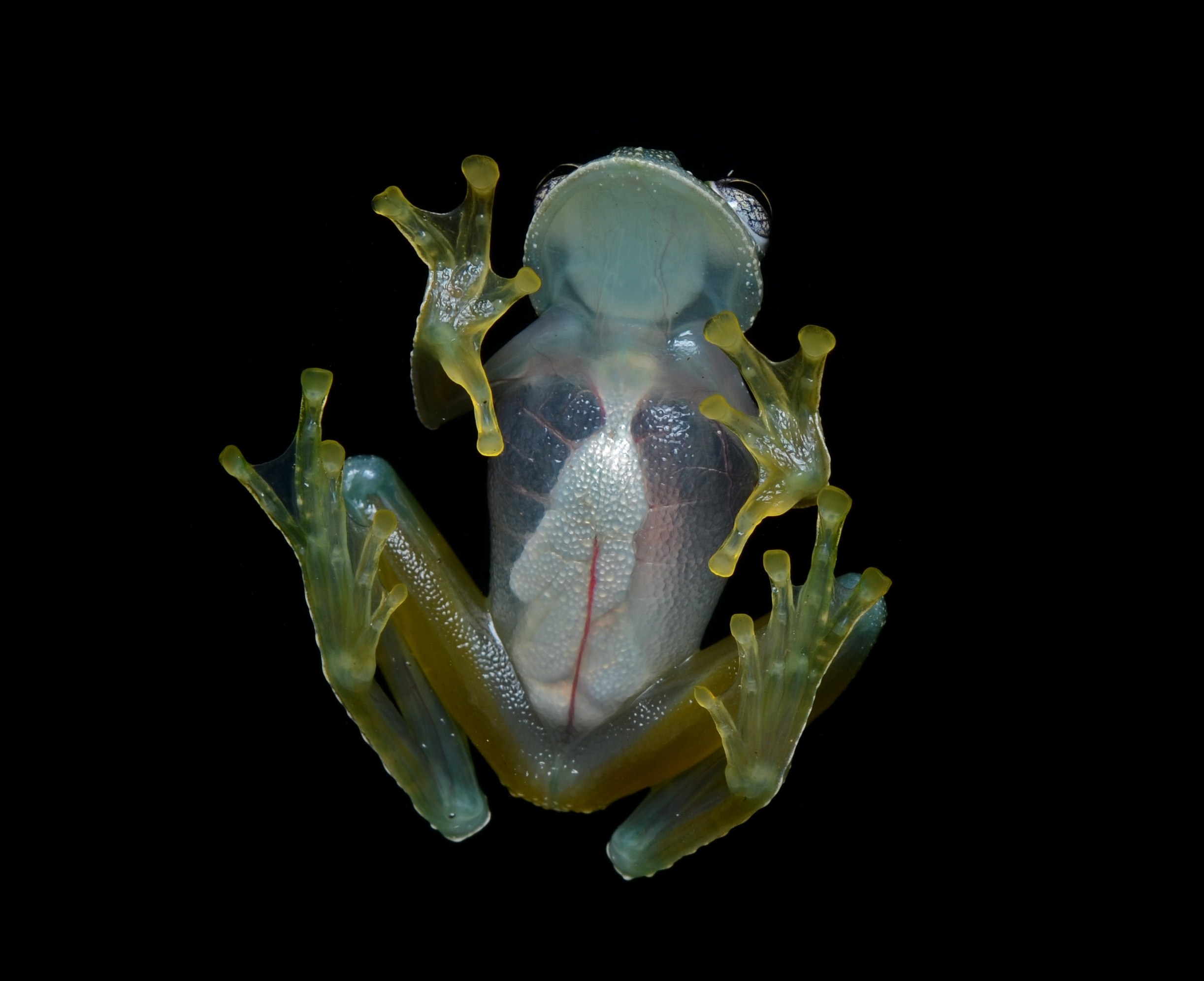 Photo Credit: B kimmel / Wikimedia Commons
In the lush, verdant canopies of Central and South America, the Glass Frog, scientifically known as Hyalinobatrachium, reveals its enchanting world. Imagine a tiny creature, no larger than a marble, perched delicately on a leaf, its translucent skin shimmering like a jewel in the dappled sunlight. This remarkable amphibian is not just a visual wonder; it offers a glimpse into the intricate web of life that thrives in its tropical rainforest habitat. With its strikingly clear skin, you can see its internal organs, a feature that has captivated scientists and nature enthusiasts alike, sparking curiosity about its evolutionary adaptations and ecological role.
As night falls, the Glass Frog comes alive, its soft croaks echoing through the humid air, calling out to potential mates. These small yet vibrant frogs play a crucial role in their ecosystem, acting as both predator and prey. They feast on tiny insects, using their keen eyesight to hunt in the shadows of the forest. But their delicate existence is intertwined with the health of their environment, making them vital indicators of ecological balance. Join us as we dive deeper into the fascinating life of the Glass Frog, exploring its behaviors, habitat, and the challenges it faces in a rapidly changing world.
The Glass Frog, belonging to the genus Hyalinobatrachium, is a captivating amphibian that sits within the rich tapestry of life in the animal kingdom. This extraordinary frog is known for its translucent skin, which allows us to glimpse its internal organs, a feature that sets it apart from many other species. Found primarily in the lush rainforests of Central and South America, Glass Frogs are not just visually striking; they also play a vital role in their ecosystems as both predators and prey. Their unique adaptations and behaviors make them a fascinating subject of study for scientists and nature enthusiasts alike.
| Taxonomic Rank | Scientific Name | Meaning & Significance |
|---|---|---|
| Kingdom | Animalia | This term means “animals” in Latin, highlighting that Glass Frogs are part of the vast group of multicellular organisms that are typically motile and consume organic material. |
| Phylum | Chordata | Derived from the Greek word “chordē,” meaning “string,” this classification indicates that Glass Frogs possess a notochord, a flexible rod that supports their bodies during development. |
| Class | Amphibia | This name comes from the Greek word “amphibios,” meaning “both lives,” referring to the dual life stages of amphibians—living both in water and on land. |
| Order | Anura | From the Greek “anourus,” meaning “without a tail,” this order includes frogs and toads, which typically lose their tails during metamorphosis. |
| Family | Centrolenidae | This family name is derived from the Latin “centrum,” meaning “center,” and “lenis,” meaning “soft,” referring to the soft, transparent skin of these frogs. |
| Genus | Hyalinobatrachium | This name combines the Greek “hyalos,” meaning “glass,” and “batrakhion,” meaning “frog,” perfectly describing the glass-like appearance of these amphibians. |
Understanding the taxonomic position of the Glass Frog reveals much about its evolutionary journey. As a member of the Amphibia class, it shares a common ancestry with other amphibians, showcasing adaptations that have allowed it to thrive in specific environments. The unique characteristics of the Glass Frog, such as its transparent skin, not only serve as a defense mechanism but also highlight the diverse evolutionary paths that species can take in response to their habitats. This classification underscores the intricate connections within the tree of life, illustrating how each branch contributes to the rich biodiversity we see today.
The evolutionary journey of the Glass Frog, belonging to the genus Hyalinobatrachium, stretches back millions of years, intertwining with the rich history of amphibians. These enchanting creatures emerged during the late Cretaceous period, around 100 million years ago, a time when dinosaurs roamed the Earth. As the climate shifted and forests flourished, the ancestors of modern frogs began to adapt to their environments, leading to the diverse array of species we see today.
The early ancestors of Glass Frogs were likely similar to other amphibians, possessing moist skin and a reliance on water for reproduction. Over time, they underwent significant changes, adapting to life in the humid, tropical forests of Central and South America. One major transition was the development of their distinctive transparent skin, which allows us to see their internal organs. This adaptation likely evolved as a form of camouflage, helping them blend into their leafy surroundings and evade predators. Additionally, their unique reproductive strategy, where females lay eggs on leaves above water, showcases a clever adaptation to avoid aquatic predators that threaten their young.
These evolutionary adaptations have been vital for the survival of Glass Frogs in their lush habitats. The ability to remain hidden from predators while ensuring the safety of their eggs has allowed them to thrive in the competitive world of the rainforest. As they continue to navigate the challenges of their environment, the Glass Frog stands as a testament to the wonders of evolution, showcasing how life can adapt and flourish in even the most intricate ecosystems.
The Glass Frog is a tiny marvel of nature, measuring just 1 to 2 centimeters in height, which is about the size of a small marble. Its body is slender and delicate, allowing it to navigate the lush foliage of its rainforest home with ease. The most striking aspect of this amphibian is its translucent skin, which reveals a glimpse of its internal organs, creating a mesmerizing effect. This unique feature not only captivates the eye but also plays a crucial role in its survival.
| Feature | Description |
|---|---|
| Height | 1 to 2 cm (0.4 to 0.8 inches) |
| Weight | 5 to 14 grams (0.2 to 0.5 ounces) |
| Skin Type | Permeable, allowing for gas exchange and moisture absorption |
| Most Distinctive Feature | Moves by saltation, which means it jumps on its hind legs |
These features work together in a remarkable way. The Glass Frog’s small size and lightweight body enable it to leap swiftly from leaf to leaf, evading predators and catching insects. Its permeable skin is not just a visual wonder; it helps the frog absorb moisture from the humid air, which is vital for its survival in the rainforest. The combination of its unique physical traits and behaviors makes the Glass Frog a true testament to the wonders of evolution and adaptation in the natural world.
In the heart of Central and South America, the Glass Frog finds its home in lush, tropical mountainous regions. Picture a vibrant landscape filled with towering trees, thick foliage, and the gentle sound of flowing streams. These frogs thrive in the cool, misty air of high montane areas, where the sunlight filters through the leaves, creating a dappled effect on the forest floor. The environment is alive with the sounds of chirping insects and rustling leaves, making it a perfect sanctuary for these delicate amphibians.
The climate in these regions is typically warm and humid, with plenty of rainfall throughout the year. Glass Frogs prefer areas near high montane streams, where the water is clean and cool. This moisture-rich environment is essential for their survival, as it helps keep their skin hydrated. Since amphibians like the Glass Frog breathe through their skin, they need a damp habitat to thrive. The combination of warm temperatures and high humidity creates an ideal setting for their life cycle, which includes laying eggs in the water.
Adaptation is key for the Glass Frog in these specific habitats. Their translucent skin not only provides a stunning view of their internal organs but also helps them blend into their surroundings, making it harder for predators to spot them. This clever camouflage is a vital survival strategy in the dense foliage of their mountainous homes. Additionally, their arboreal lifestyle allows them to navigate the trees with ease, using their sticky pads to cling to branches and leaves. This way, they can stay close to water sources while remaining hidden from potential threats.
As dawn breaks in the tropical forests of Central and South America, the Glass Frog begins its day. These small amphibians are most active during the night, but as the sun rises, they often find a cozy spot on a leaf or branch to rest. Their translucent skin, which reveals their internal organs, helps them blend into the lush greenery, making them less visible to predators. Throughout the day, they may occasionally stir, basking in the warmth of the sun or sipping dew from leaves. As evening approaches, they become more lively, hopping around in search of food, primarily small insects, and preparing for their nightly chorus of calls.
Glass Frogs exhibit interesting social behaviors, often seen alone or in small groups. While they are generally solitary, they can gather in small numbers during the breeding season. Males are known for their vocalizations, which serve as a way to attract females and establish territory. These calls can be heard echoing through the forest, creating a symphony of sounds that fills the night air. When they do come together, their interactions are typically peaceful, with little aggression. Instead, they focus on finding mates and ensuring the survival of their species.
| Behavior Type | Description |
|---|---|
| Activity Patterns | Active primarily at night, resting during the day on leaves to avoid predators. |
| Social Structure | Generally solitary, but may gather in small groups during breeding season. |
| Communication Methods | Males use vocal calls to attract females and establish territory, creating a nighttime chorus. |
As the Glass Frog navigates its world, these behaviors play a crucial role in its survival. By resting during the day, it minimizes the risk of being spotted by predators. The ability to communicate through calls not only helps in finding mates but also reinforces their presence in the area, ensuring that they can successfully reproduce. This blend of solitary and social behaviors allows the Glass Frog to thrive in its vibrant, yet challenging, rainforest habitat.
The Glass Frog has a diet that primarily consists of small insects and occasionally other smaller frogs. As a carnivore, it relies on its keen eyesight and agile movements to hunt for food, often waiting patiently on leaves or branches until an unsuspecting insect comes into view. This feeding behavior is crucial for its survival, as it provides the necessary nutrients to thrive in its vibrant rainforest habitat.
| Dietary Aspect | Details |
|---|---|
| Diet Type | Carnivore |
| Favorite Foods | Small insects, such as flies and ants, and occasionally smaller frogs |
| Prey Items | Insects and small amphibians |
| Hunting/Foraging Strategies | Uses camouflage and patience to ambush prey, often waiting on leaves or branches |
This diet plays a significant role in the Glass Frog’s ecology and daily routine. By consuming insects, it helps control their populations, contributing to the balance of its ecosystem. Additionally, its nocturnal hunting habits align with the rhythms of the rainforest, allowing it to avoid daytime predators while maximizing its foraging success. This delicate interplay of feeding and survival showcases the intricate connections within the natural world.
During the breeding season, which typically occurs in the rainy months, Glass Frogs engage in a captivating courtship ritual. Males call out with soft, melodic croaks to attract females, creating a symphony of sounds that fills the humid air. Once a female is drawn in, she chooses a mate based on his vocal performance and the quality of his territory. After mating, the female lays her eggs on the undersides of leaves, often above water, ensuring that the developing young will have a safe place to hatch.
| Reproductive Aspect | Details |
|---|---|
| Gestation Period | Two weeks |
| Litter Size | Varies, typically dozens of eggs |
| Age of Maturity | One year |
| Name of Young | Tadpoles |
After the eggs hatch, the young emerge as tadpoles, swimming in the water below. These tadpoles are not just tiny versions of their parents; they undergo a fascinating transformation as they grow. Over the course of several months, they develop legs, lose their tails, and gradually change into adult Glass Frogs. Interestingly, the adult frogs often return to the same area where they were born, continuing the cycle of life in their vibrant rainforest home. Parental care is minimal, but the strategic placement of eggs helps ensure that the young have the best chance of survival in their lush environment.
The Glass Frog occupies a delicate position in the food web of its tropical rainforest habitat. As both predator and prey, it plays a vital role in maintaining the balance of its ecosystem. These small amphibians feast on insects, helping to control their populations. However, they are also vulnerable to a variety of predators that see them as a tasty snack.
To survive against these dangers, Glass Frogs have developed some clever defensive behaviors. Their translucent skin allows them to blend in with the leaves and branches of their surroundings, making it harder for predators to spot them. When threatened, they may also freeze in place, relying on their camouflage to avoid detection. Additionally, their small size and agility help them make quick escapes when danger approaches. These strategies are essential for their survival in a world filled with hungry eyes.
A keystone species is an organism that has a disproportionately large impact on its environment relative to its abundance. This means that if a keystone species were to disappear, the entire ecosystem could change dramatically. The Glass Frog, with its unique role in the tropical forests of Central and South America, qualifies as a keystone species. Its presence helps maintain the balance of its ecosystem, influencing both the plant and animal life around it.
The Glass Frog plays a crucial role in controlling insect populations. By feeding on small insects, it helps keep these populations in check, preventing them from overwhelming the vegetation. This is important because a healthy plant community supports a variety of other species, from birds to mammals. Additionally, the Glass Frog serves as a food source for larger predators, such as snakes and birds of prey. This connection highlights its role in the food web, where it contributes to the energy flow within the ecosystem.
Moreover, the Glass Frog’s reproductive habits also impact its environment. During the breeding season, males call out to attract females, creating a chorus that can be heard throughout the forest. This activity not only helps ensure the continuation of their species but also signals to other animals that the rainy season is underway, which can influence their behaviors as well. The presence of these frogs can indicate the health of their habitat, as they are sensitive to environmental changes.
If the Glass Frog were to vanish from its habitat, the consequences could be severe. Insect populations might explode, leading to overgrazing of plants and a decline in plant diversity. This, in turn, would affect the animals that rely on those plants for food and shelter. The loss of this small but mighty amphibian could ripple through the ecosystem, demonstrating just how interconnected life is in the tropical forests. The disappearance of the Glass Frog would not only diminish the beauty of these vibrant habitats but also disrupt the delicate balance that sustains them.
The Glass Frog, a small yet significant inhabitant of tropical mountainous regions, plays a vital role in its ecosystem. This amphibian thrives in arboreal habitats, often found near high montane streams. Its translucent skin not only captivates observers but also serves a purpose in its ecological niche. By blending into the lush foliage, the Glass Frog avoids predators while contributing to the intricate web of life in its environment.
| Ecosystem Service | Impact |
|---|---|
| Insect Population Control | Helps regulate the number of insects, maintaining balance in the ecosystem. |
| Prey for Larger Animals | Serves as a food source for birds and other predators, supporting the food web. |
| Indicator of Environmental Health | Reflects the health of its habitat, as amphibians are sensitive to changes in the environment. |
| Soil Aeration | Contributes to soil health by burrowing and moving through the ground. |
The influence of the Glass Frog extends beyond its immediate surroundings. By preying on small insects, it helps control their populations, preventing overpopulation that could lead to crop damage or the spread of disease. Additionally, as a food source for larger animals, such as birds and snakes, the Glass Frog is an integral part of the food web. Its presence supports a diverse range of wildlife, ensuring that energy flows through the ecosystem efficiently. Furthermore, the Glass Frog serves as an important indicator of environmental health. Because amphibians are sensitive to pollution and habitat changes, their decline can signal larger ecological issues that may affect other species.
The broader ecological importance of the Glass Frog cannot be overstated. As a keystone species, its role in maintaining the balance of its ecosystem is crucial. The health of the tropical forests where it resides is interconnected with the well-being of countless other organisms. By supporting insect populations, providing sustenance for predators, and indicating environmental changes, the Glass Frog helps sustain the rich biodiversity of its habitat. Protecting this enchanting amphibian is essential not only for its survival but also for the health of the entire ecosystem it inhabits.
In the intricate web of life, symbiosis plays a crucial role in shaping ecosystems. This term refers to the close interactions between different species, which can be beneficial, harmful, or neutral. These relationships can take many forms, such as mutualism, where both species gain advantages, parasitism, where one benefits at the other’s expense, and commensalism, where one species benefits while the other is neither helped nor harmed. The Glass Frog, with its delicate beauty and unique adaptations, engages in various ecological partnerships that highlight the interconnectedness of life in its tropical mountainous habitat.
| Species/Type | Relationship Type | Description |
|---|---|---|
| Algae | Mutualistic | Glass Frogs often have algae growing on their skin, which can provide camouflage and protection from predators while benefiting from the moisture and nutrients from the frog’s skin. |
| Insects | Mutualistic | While Glass Frogs primarily eat insects, they also help control insect populations, which can benefit the overall health of their ecosystem. |
| Fungi | Commensal | Some fungi may grow on the moist surfaces of Glass Frogs, gaining a habitat without affecting the frog’s health. |
These relationships have evolved over time, shaped by the needs and adaptations of the species involved. The Glass Frog’s ability to thrive in its environment is enhanced by these partnerships, allowing it to navigate the challenges of its habitat more effectively. By forming connections with algae, insects, and fungi, the Glass Frog not only secures its own survival but also contributes to the health and balance of its ecosystem. This beautiful dance of life illustrates how interconnected all species are, reminding us that every organism plays a part in the grand story of nature.
The Glass Frog is a true marvel of nature, captivating both scientists and nature lovers alike with its unique features and behaviors. These tiny amphibians, with their translucent skin, offer a glimpse into the wonders of evolution and adaptation.
The relationship between Glass Frogs and humanity has a rich history, steeped in cultural significance and fascination. Indigenous peoples of Central and South America have long regarded these enchanting amphibians as symbols of purity and transformation. Their translucent skin, which reveals internal organs, has inspired stories and myths, often representing the connection between the physical and spiritual worlds. As people have encountered these frogs in their lush habitats, they have marveled at their unique beauty and the role they play in the ecosystem, often associating them with the health of their environment.
In contemporary times, interactions between Glass Frogs and humans have evolved, particularly in the realms of conservation and environmental awareness. As deforestation and climate change threaten their habitats, conservationists are working tirelessly to protect these delicate creatures and their ecosystems. Communities are increasingly recognizing the importance of preserving biodiversity, understanding that the health of Glass Frog populations can indicate the overall well-being of their rainforest homes. However, conflicts can arise when human activities encroach on these habitats, leading to habitat loss and pollution, which can endanger the frogs and disrupt their natural behaviors.
As we look to the future, the relationship between Glass Frogs and humanity holds both challenges and opportunities. With increased awareness of environmental issues, there is hope that more people will advocate for the protection of these remarkable amphibians and their habitats. By fostering a deeper understanding of the interconnectedness of all life, we can work together to ensure that Glass Frogs continue to thrive in the wild. This partnership between humans and nature can lead to a healthier planet, where both people and wildlife flourish side by side.
The Glass Frog, a captivating amphibian known for its translucent skin, currently holds a conservation status of “Least Concern” according to the International Union for Conservation of Nature (IUCN). This means that, at present, the species is not facing an immediate threat of extinction. However, while the overall population is estimated to be in the thousands, precise numbers remain elusive, making it difficult to assess trends accurately.
| Conservation Factor | Status/Details |
|---|---|
| IUCN Status | Least Concern |
| Estimated Population Size | Unknown number of thousands |
| Population Trend | Stable |
Despite its current stable status, the Glass Frog faces several significant threats that could impact its future. Habitat loss is one of the primary concerns, as deforestation and land conversion for agriculture reduce the lush environments these frogs depend on. Additionally, climate change poses a risk by altering rainfall patterns and temperatures, which can disrupt their breeding cycles and food availability. Pollution from pesticides and other chemicals can also harm their delicate skin and overall health.
Conservation efforts are underway to protect the Glass Frog and its habitat. Organizations are working to preserve tropical forests and promote sustainable land-use practices. Education and awareness campaigns help local communities understand the importance of these amphibians in their ecosystems. With continued efforts, there is hope that the Glass Frog will thrive in its natural habitat for generations to come, maintaining its role in the vibrant tapestry of life in Central and South America.
| Question | Answer |
|---|---|
| Where do Glass Frogs live? | Glass Frogs are found in tropical mountainous regions, particularly near high montane streams. They prefer humid environments where they can easily find food and shelter among the trees. |
| What do Glass Frogs eat? | Glass Frogs are carnivores, which means they eat other animals. Their diet mainly consists of small insects like flies and moths, which they catch using their quick reflexes. |
| How do Glass Frogs behave? | These frogs are known for their unique way of moving called saltation, which is a fancy term for bipedal jumping. They are mostly active at night, using their excellent camouflage to avoid predators. |
| How do Glass Frogs reproduce? | During the breeding season, male Glass Frogs call out to attract females. After mating, the female lays her eggs on leaves above water, and the tadpoles drop into the water once they hatch. |
| What threats do Glass Frogs face? | While Glass Frogs are currently listed as Least Concern, they still face threats from habitat loss due to deforestation and climate change. Pollution in their aquatic environments can also harm their populations. |
| What is an interesting characteristic of Glass Frogs? | One of the most distinctive features of Glass Frogs is their translucent skin, which allows you to see their internal organs. This unique trait helps them blend into their surroundings, making it harder for predators to spot them. |
| Are Glass Frogs social animals? | Glass Frogs are generally solitary creatures, but during the breeding season, males can be found calling in groups to attract females. Outside of this time, they prefer to keep to themselves in their arboreal habitats. |