Taxonomy & Classification
- Kingdom
- Animalia
- Phylum
- Chordata
- Class
- Reptilia
- Order
- Squamata
- Family
- Colubridae
- Genus
- Pituophis
- Species
- Pituophis catenifer

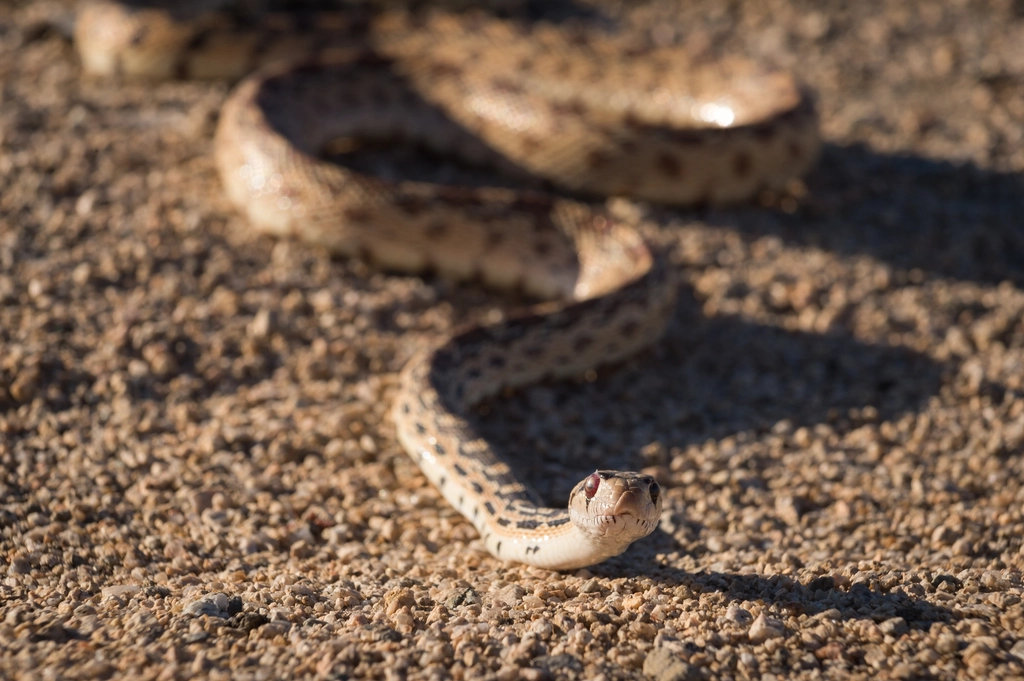 Photo Credit: National Park Service / Rawpixel
In the sun-drenched landscapes of North America, the Gopher Snake, scientifically known as Pituophis catenifer, slithers gracefully through its diverse habitats. Imagine a warm afternoon where the golden rays illuminate the rolling hills and sandy deserts, creating a perfect stage for this striking reptile. With its long, slender body that can reach up to six feet, the Gopher Snake is adorned with smooth, glossy scales that shimmer in the light, showcasing a beautiful pattern of yellows, browns, and blacks. This captivating coloration not only makes it a visual delight but also serves as excellent camouflage, allowing it to blend seamlessly into its surroundings.
What makes the Gopher Snake particularly intriguing to scientists and nature enthusiasts alike is its remarkable adaptability and behavior. As a non-venomous snake, it plays a vital role in its ecosystem, helping to control populations of small mammals and birds. Its keen sense of smell and impressive hunting skills allow it to thrive in various environments, from rocky outcrops to open grasslands. Observing a Gopher Snake in action is a reminder of the intricate balance of nature, where each creature, no matter how small, contributes to the larger story of life on Earth. As we delve deeper into the world of the Gopher Snake, we will uncover its fascinating life cycle, diet, and the essential role it plays in maintaining the health of its ecosystem.
The Gopher Snake, a captivating member of the animal kingdom, holds a special place in the tree of life. Scientifically classified within the family Colubridae, which includes many non-venomous snakes, the Gopher Snake is known for its impressive adaptability and striking appearance. With its long, slender body and distinctive patterns, it can often be mistaken for a rattlesnake, a clever form of mimicry that helps it avoid predators. This fascinating reptile is not just a survivor; it plays a vital role in its ecosystem, helping to control rodent populations and maintain the balance of its habitat.
| Taxonomic Rank | Scientific Name | Meaning & Significance |
|---|---|---|
| Kingdom | Animalia | This name signifies that Gopher Snakes are part of the vast group of multicellular organisms that are primarily heterotrophic, meaning they consume other organisms for energy. |
| Phylum | Chordata | Chordata refers to animals that have a notochord, a flexible rod that supports the body. In Gopher Snakes, this structure is present during their development, showcasing their evolutionary link to vertebrates. |
| Class | Reptilia | Reptilia indicates that Gopher Snakes are reptiles, characterized by their scaly skin and cold-blooded nature, meaning they rely on external sources to regulate their body temperature. |
| Order | Squamata | Squamata, which includes lizards and snakes, is derived from the Latin word for “scaly.” This highlights the Gopher Snake’s distinctive scales that protect its body and aid in locomotion. |
| Family | Colubridae | Colubridae is the largest family of snakes, known for their diverse range of non-venomous species. The Gopher Snake’s inclusion here emphasizes its role as a harmless yet effective predator. |
| Genus | Pituophis | Pituophis comes from Greek roots meaning “to puff,” which relates to the Gopher Snake’s ability to inflate its body when threatened, mimicking the behavior of more dangerous snakes. |
Understanding the Gopher Snake’s classification reveals much about its evolutionary journey. As a member of the Colubridae family, it shares a lineage with a variety of other snakes, showcasing the incredible adaptability and diversity of reptiles. Its unique adaptations, such as mimicry and its role in the ecosystem, highlight how this species has evolved to thrive in various environments. By studying the Gopher Snake, we gain insights into the broader story of life on Earth, illustrating the intricate connections that bind all living organisms together.
The evolutionary journey of the Gopher Snake stretches back millions of years, weaving through the complex tapestry of life on Earth. This snake, belonging to the family Colubridae, has adapted and thrived in various environments, showcasing the remarkable power of evolution. Its ancestors roamed the planet during the late Cretaceous period, around 100 million years ago, when the world was a very different place, filled with dinosaurs and lush vegetation.
The Gopher Snake’s lineage can be traced to early serpentine forms that emerged from lizard-like ancestors. These early reptiles began to lose their limbs, a significant transition that allowed them to navigate through dense underbrush and burrow into the ground. Over time, these adaptations led to the development of specialized features, such as elongated bodies and flexible jaws, enabling them to consume prey much larger than their heads. As they evolved, Gopher Snakes developed a keen sense of smell, using their forked tongues to detect scents in the air, a skill that would prove essential for hunting and survival.
The adaptations of the Gopher Snake have been crucial for its survival in a world filled with challenges. Their camouflage allows them to evade predators, while their constriction technique ensures they can effectively hunt and consume prey. The ability to sense heat gives them an edge in locating food, and their adaptability means they can thrive in diverse habitats. Together, these traits illustrate the incredible journey of the Gopher Snake, a testament to the power of evolution in shaping life on our planet.
The Gopher Snake is a striking sight, with a long, slender body that can stretch up to six feet in length. Its smooth, glossy scales glisten in the sunlight, showcasing a beautiful pattern of yellows, browns, and blacks. This coloration not only makes it visually appealing but also serves as excellent camouflage in its natural habitat of grasslands and deserts. The Gopher Snake’s head is slightly wider than its neck, giving it a distinctive look, and its eyes are large and round, providing keen vision to spot prey and potential threats.
| Feature | Description |
|---|---|
| Size | Typically ranges from 3 to 6 feet long |
| Color | Patterned with shades of yellow, brown, and black |
| Skin Type | Smooth, glossy scales that reflect light |
| Head Shape | Wider than the neck, giving a distinctive appearance |
| Eyes | Large and round, enhancing vision |
These physical features work together to create a snake that is not only beautiful but also highly functional. The Gopher Snake’s coloration allows it to blend seamlessly into its surroundings, making it harder for predators to spot. Its long, agile body enables it to navigate through tight spaces and burrows, where it often hunts for small mammals and birds. The smooth scales help it glide effortlessly over various terrains, while its keen eyesight ensures it can detect movement from a distance. All these traits combine to make the Gopher Snake a master of survival in its environment.
The Gopher Snake thrives in a variety of habitats that paint a vivid picture of the American landscape. Picture wide-open spaces filled with rolling hills, sandy deserts, and rocky outcrops. These snakes are often found in grasslands and scrublands, where they can blend seamlessly into their surroundings. Their natural homes are not just beautiful; they are also rich in the small mammals and birds that make up their diet.
Gopher Snakes prefer areas with a warm climate, as they are ectothermic, meaning they rely on external heat sources to regulate their body temperature. They thrive in regions that experience hot summers and mild winters. These snakes are often found in places with plenty of sunshine, which helps them stay warm and active. They also enjoy environments with loose soil or sandy areas, which make it easier for them to burrow and hide from predators.
Adaptation is key to the Gopher Snake’s survival in these diverse habitats. Their coloration allows them to camouflage effectively, blending in with the grasses and rocks around them. This helps them avoid detection by both prey and predators. Additionally, their ability to burrow into the ground provides shelter from extreme temperatures and a safe place to lay eggs. These clever adaptations ensure that Gopher Snakes can thrive in the wild, no matter where they call home.
The Gopher Snake leads a life filled with activity and purpose, primarily during the warm hours of the day. As a diurnal species, it is most active when the sun is shining bright. Each day begins with a search for food, which often includes small mammals, birds, and even the occasional lizard. The Gopher Snake uses its keen sense of smell, aided by its forked tongue, to detect prey. After a successful hunt, it may bask in the sun to regulate its body temperature, a behavior known as thermoregulation. This snake is also known to explore its surroundings, slithering through grasslands and rocky terrains, always on the lookout for potential threats or new hiding spots.
Socially, Gopher Snakes are generally solitary creatures, but they do exhibit interesting interactions, especially during the breeding season. Males may engage in combat rituals, where they wrestle each other to win the attention of a female. These encounters are not harmful; rather, they are a way to display strength and fitness. Outside of breeding, Gopher Snakes may occasionally be found in loose groups, particularly in areas with abundant food sources. They communicate through body language, such as flattening their bodies to appear larger when threatened, or by hissing to warn off potential predators.
| Behavior Type | Description |
|---|---|
| Hunting | Gopher Snakes actively search for small mammals and birds, using their keen sense of smell to locate prey. |
| Thermoregulation | They bask in the sun to maintain their body temperature, essential for their metabolism and activity levels. |
| Social Interactions | During breeding season, males may engage in combat to attract females, showcasing their strength. |
| Communication | They use body language and hissing to communicate, especially when feeling threatened or during confrontations. |
The behaviors of the Gopher Snake are finely tuned to ensure its survival in the wild. By being active during the day, it maximizes its chances of finding food while avoiding nocturnal predators. Its ability to communicate and engage in social interactions, particularly during mating, helps maintain the species’ population. Each action, from hunting to basking, plays a crucial role in the delicate balance of life in its habitat, showcasing the intricate connections that define the natural world.
The Gopher Snake has a diverse diet that reflects its adaptability and hunting skills. This non-venomous snake primarily feeds on small mammals, birds, and even insects. With a keen sense of smell and excellent vision, the Gopher Snake is a skilled hunter, using its stealth and speed to capture prey. It often relies on ambush tactics, waiting patiently for the right moment to strike. This method allows it to surprise unsuspecting animals, making it an effective predator in its environment.
| Dietary Aspect | Details |
|---|---|
| Diet Type | Carnivorous |
| Favorite Foods | Small mammals, birds, bird eggs, lizards, insects, and occasionally bats |
| Prey Items | Pocket gophers, mice, and various small birds |
| Hunting/Foraging Strategies | Ambush tactics, using stealth and speed to capture prey |
The Gopher Snake’s diet plays a crucial role in its ecological niche. By preying on small mammals and birds, it helps control their populations, contributing to a balanced ecosystem. This dietary habit also influences the snake’s daily routine, as it must spend time hunting and foraging during the day. The Gopher Snake’s ability to adapt its diet based on availability ensures its survival in various habitats, making it a vital part of the natural world.
As the warm days of spring arrive, Gopher Snakes begin their courtship rituals. Mating typically occurs between March and June, when the temperatures rise and the snakes become more active. During this time, males engage in a fascinating dance, often wrestling with one another to impress potential mates. Once a female selects a partner, they will mate multiple times over several days, ensuring a successful fertilization of her eggs.
| Reproductive Aspect | Details |
|---|---|
| Gestation Period | Approximately 60 to 70 days |
| Litter Size | Typically 5 to 20 eggs |
| Age of Maturity | About 2 to 3 years |
| Name of Young | Hatchlings |
After laying her eggs, the female Gopher Snake leaves them to develop on their own, showing little to no parental care. The eggs are often hidden in warm, moist environments, such as under rocks or in burrows, where they can incubate safely. After about two months, the hatchlings emerge, ready to face the world. These young snakes are miniature versions of their parents, equipped with the instincts they need to hunt and survive. As they grow, they will shed their skin several times, a process called molting, allowing them to grow into the impressive adults they are destined to become.
The Gopher Snake plays a vital role in its ecosystem, acting as both predator and prey. As a skilled hunter, it helps control populations of small mammals and birds, contributing to the balance of its environment. However, this snake is not without its challenges. It faces various threats that can impact its survival, making it an important part of the food web.
To defend itself against these dangers, the Gopher Snake has developed several clever survival strategies. When threatened, it may mimic the behavior of rattlesnakes by coiling up and shaking its tail, creating a rattling sound against dry leaves. This clever trick can scare off potential predators. Additionally, Gopher Snakes are excellent at blending into their surroundings, using their coloration to camouflage themselves among rocks and grasses. These adaptations help them evade danger and thrive in their natural habitats.
A keystone species is an organism that has a disproportionately large impact on its environment relative to its abundance. In simpler terms, if you remove a keystone species from an ecosystem, it can cause significant changes, often leading to the collapse of that ecosystem. The Gopher Snake qualifies as a keystone species due to its crucial role in maintaining the balance of its habitat.
Gopher Snakes are skilled predators, primarily feeding on small mammals, birds, and insects. By keeping these populations in check, they help prevent overgrazing and overpopulation, which can lead to habitat degradation. For example, when Gopher Snakes hunt rodents like gophers and mice, they help control the numbers of these animals, which in turn allows vegetation to thrive. Healthy plant life is essential for many other species, creating a ripple effect throughout the ecosystem.
Additionally, Gopher Snakes serve as prey for larger animals, such as hawks and coyotes. This means they are an important food source that supports the survival of these predators. Without Gopher Snakes, these larger animals might struggle to find enough food, which could lead to a decline in their populations. This interconnectedness highlights the Gopher Snake’s role in the food web, where each species relies on others for survival.
If Gopher Snakes were to disappear, the consequences could be severe. Rodent populations would likely explode, leading to overgrazing of vegetation. This could result in habitat loss for many other species, including birds and insects that rely on plants for food and shelter. The absence of Gopher Snakes would disrupt the delicate balance of the ecosystem, potentially leading to a decline in biodiversity and the overall health of the environment. In essence, the Gopher Snake is not just a fascinating reptile; it is a vital player in the intricate web of life.
The Gopher Snake occupies a crucial ecological niche, acting as both a predator and prey within its environment. By controlling the populations of small mammals and birds, it helps maintain a balanced ecosystem. This non-venomous snake is often found in grasslands, deserts, and scrublands, where it plays a significant role in the food web. Its presence indicates a healthy habitat, as it thrives in areas rich in biodiversity.
| Ecosystem Service | Impact |
|---|---|
| Population Control | Regulates numbers of small mammals and birds, preventing overpopulation. |
| Soil Aeration | Burrowing behavior helps aerate the soil, promoting plant growth. |
| Prey for Other Species | Serves as a food source for larger predators, contributing to the food chain. |
| Seed Dispersal | Indirectly aids in plant reproduction by moving seeds in its habitat. |
The Gopher Snake’s influence can be seen in various ways. For instance, by preying on rodents, it helps keep their populations in check, which in turn protects crops and vegetation from being overgrazed. Additionally, when Gopher Snakes burrow into the ground, they create spaces that allow air and water to penetrate the soil more effectively. This aeration is vital for plant roots, helping them access nutrients and grow strong.
In the grand scheme of things, the Gopher Snake is a key player in its ecosystem. Its role as a predator helps maintain the balance of species, while its burrowing activities enhance soil health. By supporting a diverse range of life, the Gopher Snake contributes to the resilience of its habitat. When we protect these snakes, we are also safeguarding the intricate web of life that depends on them, ensuring that ecosystems remain vibrant and thriving for generations to come.
In the intricate web of life, symbiosis plays a vital role in shaping ecosystems. This term refers to the close interactions between different species, which can be beneficial, harmful, or neutral. These relationships can take many forms, such as mutualism, where both species gain advantages, parasitism, where one benefits at the other’s expense, and commensalism, where one species benefits while the other is neither helped nor harmed. The Gopher Snake, a fascinating inhabitant of North American landscapes, engages in various ecological partnerships that highlight the interconnectedness of life.
| Species/Type | Relationship Type | Description |
|---|---|---|
| Burrowing Owls | Mutualistic | Gopher Snakes and Burrowing Owls often share habitats. The owls benefit from the snake’s presence, as it helps control rodent populations, which are a food source for the owls. |
| Small Mammals (e.g., rodents) | Predator-Prey | Gopher Snakes prey on small mammals, helping to regulate their populations. This relationship is crucial for maintaining balance in the ecosystem. |
| Ticks | Parasitic | Ticks can attach to Gopher Snakes, feeding on their blood. This relationship is harmful to the snake, as it can lead to health issues. |
Through the ages, these relationships have evolved, showcasing the dynamic nature of ecosystems. The Gopher Snake’s interactions with other species illustrate how life forms adapt to one another, creating a balance that benefits all involved. By controlling rodent populations, Gopher Snakes not only support their own survival but also aid other predators like Burrowing Owls. Meanwhile, the presence of parasites like ticks reminds us that not all relationships are beneficial. Understanding these connections helps us appreciate the delicate dance of life in which every species plays a part.
The Gopher Snake is a fascinating reptile that captures the imagination of nature lovers everywhere. With its impressive adaptations and intriguing behaviors, this snake is more than just a common sight in the American landscape.
Throughout history, the Gopher Snake has woven itself into the fabric of human culture and folklore. Native American tribes often regarded this snake as a symbol of transformation and renewal, reflecting its ability to thrive in diverse environments. In many cultures, the Gopher Snake has been seen as a protector of crops, helping to control rodent populations that threaten agricultural fields. This long-standing relationship highlights the deep connections humans have formed with the natural world, where the Gopher Snake has been both revered and misunderstood.
In modern times, interactions between Gopher Snakes and humans have evolved significantly. While some people still fear snakes, many have come to appreciate the Gopher Snake’s role in maintaining ecological balance. Conservation efforts are underway to protect their habitats, especially as urban development encroaches on their natural environments. However, conflicts can arise when these snakes venture into residential areas, leading to misunderstandings. Unlike venomous snakes, Gopher Snakes are non-threatening and often mimic rattlesnakes to deter predators, which can sometimes lead to unnecessary fear among people.
Looking ahead, the future of the relationship between Gopher Snakes and humanity holds promise. As awareness grows about the importance of biodiversity and the roles different species play in our ecosystems, more people are likely to embrace these fascinating reptiles. By fostering a sense of respect and understanding, we can ensure that Gopher Snakes continue to thrive alongside us, enriching our natural world for generations to come.
The Gopher Snake is currently classified as a species of “Least Concern” by the International Union for Conservation of Nature (IUCN). This means that, overall, the population is stable and not facing immediate threats of extinction. However, local populations can vary, and some areas may experience declines due to habitat loss and other factors. Understanding these trends is crucial for ensuring the long-term survival of this adaptable snake.
| Conservation Factor | Status/Details |
|---|---|
| IUCN Status | Least Concern |
| Population Estimates | Stable, but varies by region |
| Trend Direction | Stable overall |
Despite its overall stable status, the Gopher Snake faces several threats that can impact local populations. Habitat destruction is one of the most significant challenges, as urban development, agriculture, and land conversion reduce the natural spaces where these snakes thrive. Additionally, road mortality poses a danger, as many Gopher Snakes are struck by vehicles while crossing roads. Climate change also plays a role, potentially altering their habitats and food availability.
Conservation efforts are underway to protect the Gopher Snake and its habitats. Organizations and wildlife agencies are working to preserve natural areas and promote awareness about the importance of this species in the ecosystem. By educating the public and implementing protective measures, there is hope for the Gopher Snake to continue thriving in its environment. With ongoing efforts, the outlook for this adaptable snake remains positive, ensuring that future generations can appreciate its role in the wild.
| Question | Answer |
|---|---|
| What is the habitat of the Gopher Snake? | Gopher snakes are found in a variety of habitats, including grasslands, deserts, and scrublands. They prefer areas with plenty of cover, such as rocks and bushes, where they can hide from predators and hunt for food. |
| What do Gopher Snakes eat? | Gopher snakes are carnivorous, meaning they eat other animals. Their diet mainly consists of small mammals, birds, and sometimes lizards, which they catch using their excellent sense of smell and quick reflexes. |
| How do Gopher Snakes behave? | Gopher snakes are known for their calm demeanor, but they can be defensive if threatened. They often mimic rattlesnakes by coiling and shaking their tails to scare off predators, even though they are non-venomous. |
| How do Gopher Snakes reproduce? | Gopher snakes are oviparous, which means they lay eggs. A female can lay between 5 to 20 eggs in a hidden location, and the eggs will hatch after about two months, producing baby snakes that are independent from birth. |
| What are the main threats to Gopher Snakes? | Gopher snakes face threats from habitat destruction, road traffic, and human persecution. Many people mistakenly kill them, thinking they are dangerous, when in fact they play a vital role in controlling rodent populations. |
| What are some interesting characteristics of Gopher Snakes? | Gopher snakes can grow quite large, reaching lengths of up to 8 feet! They have beautiful patterns on their scales that help them blend into their surroundings, making them excellent ambush predators. |
| Are Gopher Snakes good pets? | Gopher snakes can make good pets for experienced snake owners. They are generally docile and easy to care for, but they require a proper habitat and diet to thrive in captivity. |