Taxonomy & Classification
- Kingdom
- Animalia
- Phylum
- Chordata
- Class
- Aves
- Order
- Galliformes
- Family
- Numididae
- Genus
- Numida

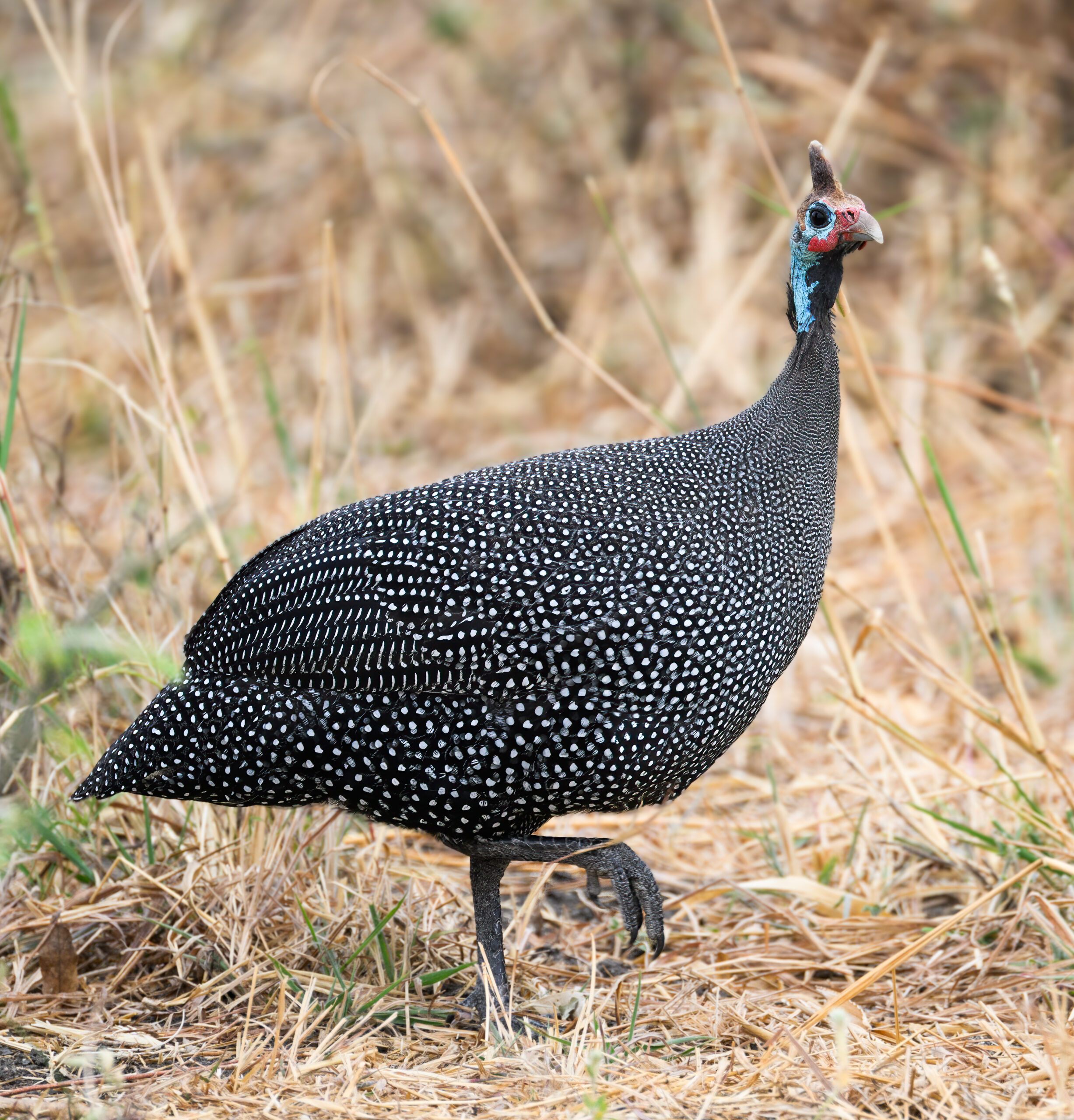 Photo Credit: Юрий Д.К. / Wikimedia Commons
In the sun-drenched savannas of Africa, the Guinea Fowl, known scientifically as Numida meleagris, struts with a unique flair that captures the imagination of both scientists and nature lovers alike. With its striking plumage, dotted with white spots against a deep blue-gray background, this bird is hard to miss. Its rounded body and short, stout legs give it a charmingly awkward appearance, while its bare head and neck, adorned with a colorful wattle, add to its distinctive character. These features not only make the Guinea Fowl visually captivating but also serve practical purposes, such as regulating body temperature and attracting mates.
As the sun rises, the Guinea Fowl emerges from its roost, often high in the branches of acacia trees, ready to embark on a day filled with foraging and socializing. These birds are omnivores, meaning they enjoy a varied diet that includes seeds, insects, and even small reptiles. Their sharp eyesight and keen hearing help them navigate the grasslands, where they often travel in lively flocks. This social behavior is not just for fun; it plays a crucial role in their survival, as they work together to spot potential predators. With their fascinating adaptations and vibrant personalities, Guinea Fowl are more than just birds; they are a vital part of the African ecosystem, showcasing the intricate connections that bind all living things together.
Guinea fowl hold a special place in the tree of life, showcasing a blend of characteristics that make them stand out in the avian world. Classified within the Kingdom Animalia, these birds belong to the Phylum Chordata, which includes all animals with a backbone. They are part of the Class Aves, the group that encompasses all birds. What makes guinea fowl particularly intriguing is their position in the Order Galliformes, which includes game birds like chickens and turkeys. Their family, Numididae, is unique to Africa, highlighting their evolutionary journey and adaptation to diverse habitats. With their striking plumage and social behavior, guinea fowl are not just another bird; they are a testament to the wonders of evolution.
| Taxonomic Rank | Scientific Name | Meaning & Significance |
|---|---|---|
| Kingdom | Animalia | This name means “animals” in Latin, representing all multicellular organisms that are not plants, fungi, or bacteria. |
| Phylum | Chordata | Derived from the Greek word “chordē,” meaning “string,” this term refers to animals with a notochord, a flexible rod that supports the body. |
| Class | Aves | From the Latin word for “bird,” this classification includes all feathered creatures, emphasizing their unique adaptations for flight. |
| Order | Galliformes | This name comes from the Latin “gallus,” meaning “rooster,” and includes ground-feeding birds known for their stout bodies and strong legs. |
| Family | Numididae | Named after the ancient kingdom of Numidia in North Africa, this family highlights the guinea fowl’s African origins and its distinct evolutionary path. |
| Genus | Numida | This name is derived from the same ancient kingdom, emphasizing the bird’s connection to its native habitat and its unique characteristics. |
The classification of guinea fowl reveals much about their evolutionary history and ecological niche. As members of the Galliformes order, they share traits with other ground-dwelling birds, such as strong legs for running and a preference for foraging on the forest floor. Their family, Numididae, indicates a lineage that has adapted specifically to the African environment, showcasing a rich diversity of species that have evolved over time. Understanding their taxonomic position not only highlights their unique features but also connects them to the broader tapestry of life on Earth, illustrating how species adapt and thrive in their habitats.
The evolutionary journey of the Guinea Fowl stretches back millions of years, tracing its roots to the ancient ancestors of birds. These birds are believed to have diverged from other avian lineages around 30 million years ago, during the late Eocene epoch. As they adapted to their environments, Guinea Fowl evolved distinct traits that helped them thrive in various habitats across Africa and beyond.
The ancestors of Guinea Fowl were likely small, ground-dwelling birds that roamed the forests and savannas of prehistoric Africa. Over time, they developed several key adaptations that set them apart from their relatives. One major transition was the development of their unique plumage, which features a spotted pattern that provides excellent camouflage against predators. This ability to blend into their surroundings was crucial for survival in the wild. Additionally, their social behavior evolved, leading to the formation of flocks that work together to forage for food and protect each other from threats.
These adaptations have played a vital role in the survival of Guinea Fowl throughout their evolutionary history. Their ability to camouflage, socialize, and communicate effectively has allowed them to navigate the challenges of their environments. As they continue to thrive in diverse habitats, Guinea Fowl remind us of the intricate connections between evolution and survival in the natural world.
The Guinea Fowl is a striking bird that captures attention with its distinctive appearance. With a compact body and a rounded shape, it stands out in the grasslands and savannas of Africa. These birds are relatively small, weighing between 0.7 kg and 1.6 kg, which is about the size of a small cat. Their feathers are a beautiful mix of gray and black, often adorned with white spots that create a dappled effect, making them look like they are wearing a stylish coat. The Guinea Fowl’s head is bare, showcasing a smooth, colorful skin that contrasts with its feathery body, giving it a unique and somewhat regal look.
| Feature | Description |
|---|---|
| Weight | 0.7 kg – 1.6 kg (1.5 lbs – 3.5 lbs) |
| Skin Type | Feathers |
| Color | Gray and black with white spots |
| Body Shape | Compact and rounded |
| Head | Bare skin, colorful |
The combination of their lightweight body and striking plumage serves several important purposes. The Guinea Fowl’s feathers provide insulation and protection, while their spotted coloration helps them blend into their surroundings, making it harder for predators to spot them. Their bare heads allow for better heat regulation, which is essential in the warm climates they inhabit. Together, these features not only enhance their survival but also make them a delightful sight for anyone lucky enough to encounter them in the wild.
The Guinea Fowl thrives in a variety of habitats that paint a vibrant picture of the African landscape. Picture vast grasslands dotted with acacia trees, where the sun casts long shadows and the air is filled with the sounds of nature. These birds are also found in dense forests, where the underbrush provides cover and a rich tapestry of life flourishes. In some regions, they even adapt to arid desert areas, showcasing their remarkable versatility. Whether in open fields or shaded woodlands, Guinea Fowl are well-suited to their surroundings.
Guinea Fowl prefer climates that offer a mix of warmth and moisture, which is essential for their survival. They thrive in areas where the temperature is generally mild to hot, allowing them to forage for food easily. These birds are often found in regions that receive seasonal rains, which help to sustain the grasses and seeds they love to eat. The combination of sun and shade in their habitats creates a perfect environment for them to nest and raise their young.
Adaptation is key to the Guinea Fowl’s success in diverse environments. Their ability to camouflage with their surroundings helps them evade predators, while their strong legs allow for quick escapes when danger approaches. They have also developed social behaviors, often foraging in groups, which enhances their safety and increases their chances of finding food. This adaptability not only showcases their resilience but also highlights the intricate balance between species and their habitats in the wild.
Guinea fowl lead lively and structured daily lives, filled with a mix of foraging, socializing, and resting. As the sun rises, these birds emerge from their roosts, often high in trees or shrubs, to begin their day. They spend much of their time searching for food, pecking at the ground for seeds, insects, and small plants. Their keen eyesight helps them spot potential meals, while their strong legs allow them to move quickly across the terrain. As the day progresses, they take breaks to preen their feathers, ensuring they stay clean and healthy.
Social behavior is a cornerstone of Guinea fowl life. These birds are highly social and prefer to live in flocks, which can range from a few individuals to over a hundred. Within these groups, they establish a hierarchy, with dominant birds leading the way during foraging and alerting others to danger. Communication is vital in these flocks; Guinea fowl use a variety of vocalizations to convey messages. Their distinctive calls can signal everything from the presence of food to warnings about predators. This social structure not only strengthens their bonds but also enhances their chances of survival.
| Behavior Type | Description |
|---|---|
| Foraging | Guinea fowl search for seeds, insects, and plants, using their sharp eyesight and strong legs to find food. |
| Social Structure | They live in flocks with a clear hierarchy, where dominant birds lead and protect the group. |
| Communication | Vocalizations are used to share information about food and alert others to danger, fostering group cohesion. |
The behaviors of Guinea fowl are finely tuned to ensure their survival in the wild. By foraging in groups, they can cover more ground and find food more efficiently. Their social structure provides safety in numbers, as there are more eyes to spot predators. Additionally, their communication skills help them stay connected and alert, making it easier to respond to threats. Together, these behaviors create a dynamic and resilient lifestyle that allows Guinea fowl to thrive in their natural habitats.
Guinea fowl are omnivores, which means they enjoy a varied diet that includes both plants and animals. These birds are skilled foragers, using their sharp eyesight and keen sense of hearing to locate food. They often scurry through grasslands and underbrush, pecking at the ground to uncover tasty treats. Their diet is not only diverse but also adaptable, allowing them to thrive in different environments.
| Dietary Aspect | Details |
|---|---|
| Diet Type | Omnivore |
| Favorite Foods | Insects, worms, and berries |
| Prey Items | Small insects and worms |
| Hunting/Foraging Strategies | Scurrying through grasslands, pecking at the ground |
This varied diet plays a crucial role in the ecology of Guinea fowl. By consuming insects and worms, they help control pest populations, contributing to a balanced ecosystem. Their foraging habits also influence their daily routine, as they spend a significant part of their day searching for food. This not only keeps them healthy but also supports the intricate web of life in their habitats, showcasing the interconnectedness of nature.
When it comes to mating, Guinea fowl are quite social and often engage in elaborate courtship displays. During the breeding season, which typically occurs in the warmer months, males will strut around, puffing out their feathers and making a series of distinctive calls to attract females. This lively behavior not only showcases their health and vitality but also helps establish their territory. Once a female selects a mate, they will form a bond, and together they will prepare for the arrival of their young.
| Reproductive Aspect | Details |
|---|---|
| Gestation Period | Approximately 26 to 28 days |
| Litter Size | Typically 6 to 12 eggs |
| Age of Maturity | About 5 to 6 months |
| Name of Young | Keets |
After the eggs hatch, the devoted parents take on the important role of caring for their young, known as keets. These tiny, fluffy chicks are precocial, meaning they are relatively mature and mobile shortly after hatching. The parents lead their keets to food and water, teaching them how to forage for insects and seeds. As the keets grow, they develop their adult plumage and learn essential survival skills. With attentive care from their parents, these young birds will reach maturity in just a few months, ready to join the lively ranks of Guinea fowl in their vibrant habitats.
Guinea fowl play an important role in the food web, serving as both prey and foragers. These birds are often found in the grasslands and savannas of Africa, where they contribute to the ecosystem by controlling insect populations and dispersing seeds. However, their position also makes them vulnerable to a variety of predators, as they are a tasty meal for many animals in their habitat.
To survive these threats, Guinea fowl have developed several clever defensive behaviors. They are known for their alertness and strong social bonds, often foraging in groups to keep an eye out for danger. When a predator approaches, they emit loud alarm calls to warn their flock. Additionally, their mottled feathers help them blend into the grass, making it harder for predators to spot them. By using these strategies, Guinea fowl can navigate the challenges of their environment and continue to thrive in the wild.
A keystone species is an organism that has a disproportionately large impact on its environment relative to its abundance. In simpler terms, if you remove a keystone species from an ecosystem, it can cause significant changes, often leading to the collapse of that ecosystem. Guinea fowl, with their unique behaviors and ecological roles, can indeed be considered a keystone species in their habitats, particularly in the grasslands and forests of Africa.
Guinea fowl are omnivores, meaning they eat both plants and animals. This diverse diet allows them to play a crucial role in controlling insect populations, especially pests that can harm crops. By foraging for insects, they help maintain a balance in the ecosystem, preventing any one species from overwhelming the environment. Additionally, their foraging habits contribute to seed dispersal. As they move through their habitats, they consume seeds and then excrete them in different locations, promoting plant growth and diversity.
Moreover, Guinea fowl serve as a food source for various predators, including birds of prey and mammals. Their presence supports the food web, providing sustenance for these animals. When Guinea fowl are abundant, they help sustain the populations of their predators, which in turn keeps the ecosystem balanced. Their social behavior also fosters a sense of community among other species, as they often forage in groups, which can alert other animals to potential dangers.
If Guinea fowl were to disappear from their ecosystems, the consequences could be severe. Without these birds, insect populations could surge, leading to increased crop damage and a decline in plant health. The loss of seed dispersal would hinder plant diversity, making it harder for various species to thrive. Additionally, predators that rely on Guinea fowl for food would struggle to find alternative sources, potentially leading to their decline as well. In essence, the absence of Guinea fowl would disrupt the delicate balance of their ecosystems, illustrating just how vital they are to the health of their environments.
Guinea fowl occupy a vital ecological niche in their habitats, which range from grasslands to forests and even deserts. As social birds that often travel in flocks, they play a significant role in their ecosystems. Their foraging habits help control insect populations and disperse seeds, contributing to the health of their environment. By scratching the ground for food, they also aerate the soil, promoting better water absorption and nutrient cycling. This makes them not just residents of their ecosystems, but active participants in maintaining ecological balance.
| Ecosystem Service | Impact |
|---|---|
| Insect Control | Reduces pest populations, benefiting plants and other animals. |
| Seed Dispersal | Helps in the growth of new plants, promoting biodiversity. |
| Soil Aeration | Improves soil health and water retention through foraging behavior. |
| Food Source | Serves as prey for various predators, supporting the food web. |
One striking example of the Guinea fowl’s influence is their role in controlling insect populations. By feasting on insects like grasshoppers and beetles, they help keep these pests in check, which is especially important for the health of local vegetation. Additionally, as they move through their habitats, they inadvertently spread seeds from the fruits and plants they consume. This not only aids in plant reproduction but also fosters a diverse array of flora, which in turn supports various other species in the ecosystem. Their foraging behavior also loosens the soil, allowing water and nutrients to penetrate deeper, which is crucial for plant growth.
The broader ecological importance of Guinea fowl cannot be overstated. As a keystone species, their presence significantly influences the structure and function of their ecosystems. By maintaining insect populations, aiding in plant growth, and serving as a food source for predators, they help create a balanced environment where many other species can thrive. In essence, Guinea fowl are not just birds; they are essential players in the intricate web of life, showcasing how interconnected all living things truly are.
In the intricate web of life, symbiosis plays a crucial role in shaping the relationships between different species. Symbiosis refers to the close interactions between organisms, which can be beneficial, harmful, or neutral. These relationships can be mutualistic, where both species gain advantages; parasitic, where one benefits at the other’s expense; or commensal, where one benefits while the other is neither helped nor harmed. Guinea fowl, with their lively personalities and diverse habitats, engage in various symbiotic relationships that highlight the interconnectedness of nature.
| Species/Type | Relationship Type | Description |
|---|---|---|
| Oxpeckers | Mutualistic | Oxpeckers are small birds that perch on the backs of larger mammals, like buffalo or giraffes, feeding on ticks and parasites. Guinea fowl benefit from this relationship by having fewer parasites, while the oxpeckers get a meal. |
| Termites | Commensal | Guinea fowl often forage near termite mounds. While the termites are unaffected, the birds find a rich source of insects and seeds, making it easier to find food without disturbing the mound. |
| Predators (e.g., snakes) | Parasitic | While not a direct relationship, Guinea fowl can fall prey to snakes and other predators. This relationship is harmful to the fowl, as it can lead to loss of life, but it supports the predator’s survival. |
These relationships have evolved over time, shaped by the needs and behaviors of the species involved. Mutualistic partnerships, like that with oxpeckers, enhance the health of Guinea fowl, allowing them to thrive in their environments. Commensal relationships, such as foraging near termite mounds, provide easy access to food without any cost to the termites. Even the parasitic interactions with predators play a role in the balance of the ecosystem, reminding us that every species, including the Guinea fowl, is part of a larger story of survival and adaptation. Through these connections, Guinea fowl not only navigate their world but also contribute to the rich tapestry of life around them.
Guinea fowl are not just ordinary birds; they are full of surprises that make them truly captivating. From their unique social behaviors to their fascinating adaptations, these birds have much to teach us about the natural world.
Guinea fowl have a long and storied relationship with humanity that dates back thousands of years. These birds were domesticated in Africa, where they became a vital source of food and protection. Their unique calls and social behaviors have made them a part of various cultural traditions, from folklore to culinary practices. In many African communities, guinea fowl are not just livestock; they symbolize prosperity and are often featured in celebrations and rituals. Their striking appearance and lively nature have also captured the interest of people around the world, leading to their introduction in various regions beyond Africa.
Today, the interactions between guinea fowl and humans continue to evolve. In some areas, these birds are raised for their meat and eggs, which are considered delicacies. However, their presence can sometimes lead to conflict, especially in agricultural settings where they may forage on crops. Conservation efforts are also underway to protect wild populations, as habitat loss and hunting pose significant threats. Interestingly, guinea fowl are known for their pest control abilities, as they consume insects and small rodents, making them valuable allies for farmers looking to reduce pesticide use.
As we look to the future, the relationship between guinea fowl and humanity holds promise. With increasing awareness of sustainable farming practices, these birds may play an even larger role in agriculture, helping to maintain ecological balance. As conservation efforts gain momentum, we can hope to see wild populations thrive alongside human communities. By fostering a deeper understanding of guinea fowl and their ecological importance, we can ensure that this vibrant connection continues to flourish for generations to come.
The conservation status of Guinea fowl is currently classified as “Least Concern” by the International Union for Conservation of Nature (IUCN). This means that, overall, they are not facing immediate threats of extinction. Their populations are stable in many areas, although some local populations may experience fluctuations. As these birds continue to thrive in various habitats across Africa, they remain an important part of the ecosystem.
| Conservation Factor | Status/Details |
|---|---|
| IUCN Status | Least Concern |
| Population Estimates | Stable in many regions |
| Trend Direction | Stable |
Despite their overall stable status, Guinea fowl face several threats that can impact local populations. Habitat loss due to agricultural expansion and urban development is a significant concern. As humans convert natural landscapes into farmland or cities, these birds lose their homes and food sources. Additionally, hunting and poaching for meat can also reduce their numbers in certain areas. These pressures can lead to localized declines, even if the species as a whole remains secure.
Conservation efforts are underway to ensure that Guinea fowl continue to thrive in their natural habitats. Protected areas and wildlife reserves play a crucial role in safeguarding these birds from habitat destruction and hunting. Education and awareness programs help local communities understand the importance of preserving Guinea fowl and their ecosystems. With ongoing efforts, the outlook for Guinea fowl remains positive, allowing future generations to enjoy the sight of these lively birds in the wild.
| Question | Answer |
|---|---|
| What is the natural habitat of Guinea Fowl? | Guinea Fowl are quite adaptable and can be found in a variety of habitats, including forests, deserts, and grasslands. They thrive in areas where they can find cover and food, often preferring regions with plenty of shrubs and grasses. |
| What do Guinea Fowl eat? | Guinea Fowl are omnivores, which means they eat both plants and animals. Their diet typically includes seeds, fruits, insects, and small invertebrates, making them important for controlling insect populations in their environment. |
| How do Guinea Fowl behave in the wild? | Guinea Fowl are social birds that often live in flocks, which helps them stay safe from predators. They are known for their loud calls and can be quite vocal, using different sounds to communicate with each other. |
| How do Guinea Fowl reproduce? | During the breeding season, female Guinea Fowl lay eggs in nests on the ground, often hidden among grass or leaves. After about 26 to 28 days of incubation, the chicks hatch and are able to walk and forage for food almost immediately. |
| What are the main threats to Guinea Fowl? | While Guinea Fowl are currently classified as Least Concern, they face threats from habitat loss and hunting. Predators such as foxes and birds of prey also pose risks, especially to young chicks. |
| What are some interesting characteristics of Guinea Fowl? | Guinea Fowl are known for their striking appearance, with spotted feathers that help them blend into their surroundings. They also have a unique social structure and are often seen foraging together, showcasing their teamwork in finding food. |
| Can Guinea Fowl be kept as pets? | Yes, Guinea Fowl can be kept as pets and are often raised for their meat and eggs. They are relatively low-maintenance but require space to roam and forage, as well as protection from predators. |