Taxonomy & Classification
- Kingdom
- Animalia
- Phylum
- Chordata
- Class
- Aves
- Order
- Accipitriformes
- Family
- Accipitridae
- Genus
- Harpia
- Species
- Harpia harpyja

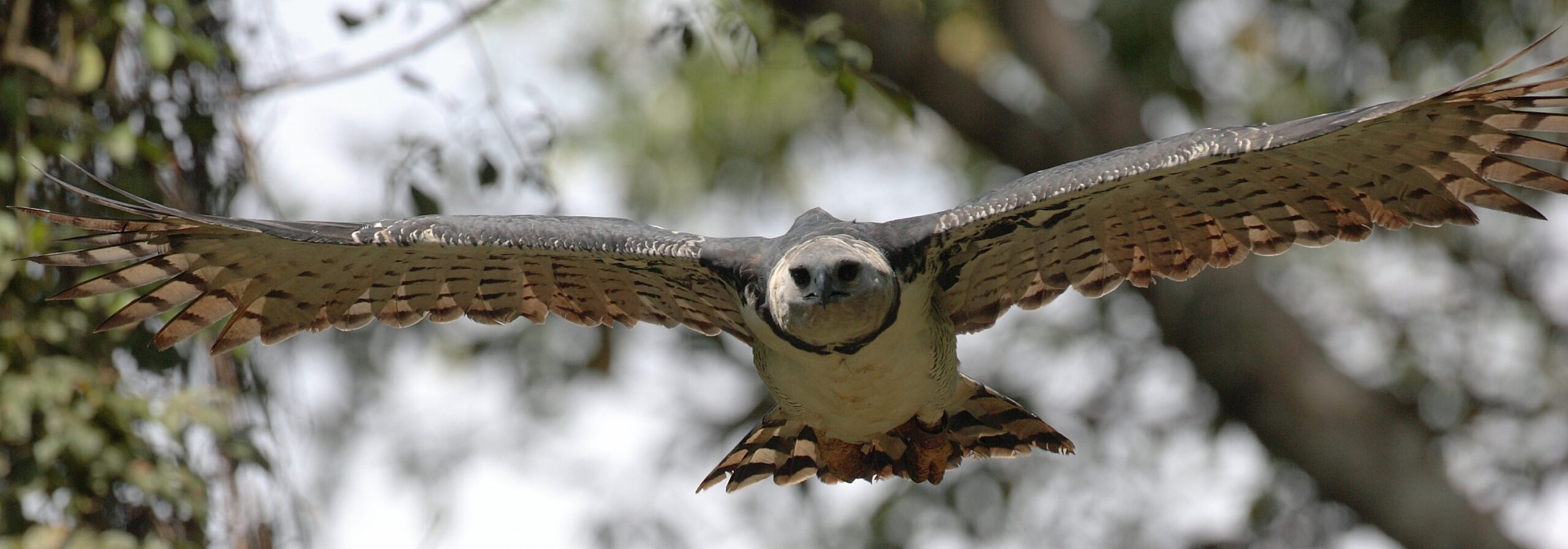 Photo Credit: Mdf / Wikimedia Commons
In the heart of the lush lowland rainforests of Central and South America, the Harpy Eagle, scientifically known as Harpia harpyja, reigns as one of the most powerful birds of prey on the planet. With a wingspan that can stretch up to seven feet, this magnificent eagle glides effortlessly through the dense canopy, its striking black and white plumage contrasting beautifully with the vibrant greens of its surroundings. The Harpy Eagle’s fierce yellow eyes and formidable talons, which can be as large as a grizzly bear’s claws, make it a masterful hunter, capable of capturing prey as large as monkeys and sloths.
Scientists and nature enthusiasts alike are captivated by the Harpy Eagle not just for its impressive size and strength, but also for its role as a keystone species in its ecosystem. This means that the eagle plays a crucial part in maintaining the balance of its rainforest home. As it soars above the treetops, it surveys its territory with keen precision, embodying both grace and power. The Harpy Eagle’s life is a blend of hunting, nurturing its young, and navigating the intricate web of life in the rainforest, making it a fascinating subject for study and admiration. As we delve deeper into the world of this extraordinary bird, we will explore its behavior, diet, and the challenges it faces in a rapidly changing environment.
The Harpy Eagle, a majestic bird of prey, holds a special place in the tree of life. It belongs to the kingdom Animalia, which includes all animals, and is classified under the phylum Chordata, meaning it has a backbone. This powerful raptor is part of the class Aves, which encompasses all birds. What sets the Harpy Eagle apart is its impressive size and striking appearance, with a wingspan that can reach up to seven feet and striking feathered crests that give it a regal look. As a member of the order Accipitriformes, which includes other birds of prey like hawks and kites, the Harpy Eagle is known for its keen eyesight and formidable hunting skills.
| Taxonomic Rank | Scientific Name | Meaning & Significance |
|---|---|---|
| Kingdom | Animalia | This name comes from the Latin word for “animal,” highlighting that the Harpy Eagle is part of the vast group of living organisms that are not plants or fungi. |
| Phylum | Chordata | Derived from the Greek word “chordē,” meaning “string,” this term refers to the presence of a notochord, a flexible rod that supports the body, which all vertebrates, including the Harpy Eagle, possess during some stage of development. |
| Class | Aves | This Latin term simply means “birds,” indicating that the Harpy Eagle shares characteristics common to all birds, such as feathers and the ability to lay eggs. |
| Order | Accipitriformes | From the Latin “accipiter,” meaning “hawk,” this classification groups the Harpy Eagle with other birds of prey known for their sharp talons and strong beaks, perfect for hunting. |
| Family | Accipitridae | This name comes from the Latin word “accipiter,” again referring to hawks and eagles, emphasizing the Harpy Eagle’s predatory nature and its role in the ecosystem as a top predator. |
| Genus | Harpia | Derived from the Greek word “harpyia,” which refers to a mythological creature with the body of a bird and the face of a woman, this name reflects the eagle’s powerful and somewhat fearsome presence in the wild. |
Understanding the Harpy Eagle’s classification reveals much about its evolutionary history. As a member of the Accipitridae family, it shares a lineage with other formidable birds of prey, showcasing adaptations that have allowed it to thrive in the dense tropical forests of Central and South America. Its powerful build and hunting prowess are the results of millions of years of evolution, making it a key player in its ecosystem. The Harpy Eagle’s unique traits not only highlight its role as a predator but also remind us of the intricate connections that bind all living things in the web of life.
The Harpy Eagle, a stunning symbol of power and grace, has a rich evolutionary history that stretches back millions of years. This magnificent bird belongs to the family Accipitridae, which includes other raptors like hawks and kites. Its ancestors roamed the Earth during the late Eocene epoch, around 34 to 56 million years ago, when the world was a very different place. As forests expanded and diversified, so too did the birds that inhabited them, leading to the emergence of the Harpy Eagle’s lineage.
The evolutionary journey of the Harpy Eagle is marked by significant transitions that shaped its current form. Early ancestors of the Harpy Eagle adapted to life in dense tropical forests, developing traits that would help them thrive in this environment. Over time, these birds evolved larger bodies and powerful talons, allowing them to hunt larger prey. Their keen eyesight and strong wings enabled them to navigate through the thick canopy of trees, making them formidable hunters.
These adaptations have been vital for the Harpy Eagle’s survival in the wild. By developing powerful talons and an impressive wingspan, it can hunt effectively in the challenging environment of tropical forests. Its exceptional eyesight allows it to detect movement among the leaves, ensuring it can catch its next meal. Together, these traits make the Harpy Eagle not just a survivor, but a true apex predator in its ecosystem, showcasing the wonders of evolution in action.
The Harpy Eagle is a breathtaking sight, embodying both strength and elegance. With a wingspan that can reach up to seven feet, this bird commands attention as it soars through the canopy of tropical rainforests. Its powerful body is built for hunting, featuring strong talons and a robust frame that allows it to tackle prey much larger than itself. The most striking aspect of the Harpy Eagle is its impressive crown of feathers, which gives it a regal appearance, almost like a feathered crown atop its head.
| Feature | Description |
|---|---|
| Weight | 5 kg – 9 kg (11 lb – 20 lb) |
| Skin Type | Feathers |
| Most Distinctive Feature | Crown of feathers |
The combination of these features not only makes the Harpy Eagle visually stunning but also plays a crucial role in its survival. The feathers provide insulation and help with flight, while the powerful build and sharp talons are essential for capturing prey like monkeys and sloths. The crown of feathers may also serve as a display during courtship or territorial displays, showcasing the eagle’s dominance in its lush habitat. Together, these characteristics create a bird that is not just a master of the skies but also a vital part of its ecosystem.
The Harpy Eagle calls the lush lowland rainforests of Central and South America its home. These vibrant ecosystems are alive with the sounds of chirping birds, rustling leaves, and the distant calls of monkeys. Towering trees stretch high into the sky, creating a dense canopy that filters sunlight and provides a rich habitat for countless species. The undergrowth is thick with ferns and flowering plants, making it a perfect hunting ground for this powerful bird of prey.
The climate in these rainforests is typically warm and humid, with temperatures averaging between 75°F and 90°F (24°C to 32°C). Rainfall is abundant, often exceeding 100 inches (254 cm) annually, creating a lush environment that supports a diverse array of wildlife. The combination of high humidity and consistent warmth allows for a rich tapestry of flora and fauna, making it an ideal setting for the Harpy Eagle to thrive.
To adapt to its rainforest habitat, the Harpy Eagle has developed impressive hunting skills and physical traits. Its powerful talons, which can be as large as a grizzly bear’s claws, allow it to grasp and carry off prey like monkeys and sloths. The eagle’s keen eyesight helps it spot movement from high above the treetops, while its strong wings enable it to navigate through the dense foliage with ease. These adaptations not only make it a formidable predator but also allow it to maintain its position at the top of the food chain in its vibrant rainforest home.
The Harpy Eagle’s daily life is a blend of hunting, resting, and caring for its young. As the sun rises, this powerful bird begins its day by surveying its territory from a high perch in the treetops. With keen eyesight, it scans the forest floor for movement, ready to swoop down on unsuspecting prey. These eagles are known for their impressive hunting skills, often targeting sloths and monkeys, which they capture with their strong talons. After a successful hunt, they may spend time feeding, resting, or grooming their feathers to keep them in top condition for flight.
Socially, Harpy Eagles are quite family-oriented. They typically form small family units, consisting of a mated pair and their offspring. These eagles are known to work together to raise their young, sharing the responsibilities of hunting and protecting their nest. Communication is key in these family dynamics, and they use a variety of calls and body language to convey messages to one another. This close-knit social structure helps ensure that the young eagles learn essential survival skills from their parents.
| Behavior Type | Description |
|---|---|
| Hunting | Harpy Eagles hunt primarily in the morning and late afternoon, using their sharp eyesight to spot prey from high perches. |
| Resting | After hunting, they often rest on branches, allowing them to conserve energy and keep a lookout for potential threats. |
| Grooming | Regular grooming helps maintain their feathers, ensuring they remain waterproof and aerodynamic for efficient flight. |
| Family Care | Both parents participate in raising their chicks, teaching them how to hunt and defend themselves. |
| Communication | They use a range of vocalizations and body movements to communicate with each other, especially during nesting season. |
The behaviors of the Harpy Eagle are finely tuned to ensure their survival in the wild. By working together as a family, they enhance their chances of successfully raising their young and maintaining their territory. Their impressive hunting skills, combined with strong social bonds, allow them to thrive in the lush rainforests they call home. Each day is a testament to their adaptability and strength, showcasing the intricate balance of life in the wild.
The Harpy Eagle is a carnivore, meaning it primarily eats meat. This powerful bird has a diet that mainly consists of medium-sized mammals and birds. Its impressive hunting skills allow it to capture prey with remarkable precision. The Harpy Eagle often hunts from a perch high in the trees, scanning the forest floor for movement. When it spots potential prey, it swoops down with incredible speed and agility, using its strong talons to grasp and secure its meal.
| Dietary Aspect | Details |
|---|---|
| Diet Type | Carnivore |
| Favorite Foods | Sloths, monkeys, and large birds |
| Prey Items | Capuchin monkeys, opossums, and iguanas |
| Hunting Strategies | Perches high in trees to spot prey, then dives swiftly to capture |
The Harpy Eagle’s diet plays a crucial role in its ecosystem. By preying on various mammals and birds, it helps maintain the balance of animal populations in its rainforest home. This majestic eagle’s hunting habits also influence its daily routine, as it spends a significant amount of time searching for food to sustain itself and its young. The Harpy Eagle’s impressive skills and dietary choices make it a key player in the vibrant tapestry of life in the rainforest.
The Harpy Eagle’s mating behavior is as captivating as its appearance. During the breeding season, which typically occurs between January and March, these magnificent birds engage in elaborate courtship displays. Males perform aerial acrobatics, showcasing their strength and agility to attract a mate. Once a pair forms, they often remain together for life, returning to the same nesting site year after year. This strong bond helps ensure the survival of their young in the wild.
| Reproductive Aspect | Details |
|---|---|
| Gestation Period | Approximately 35 days |
| Litter Size | 1 to 2 eggs |
| Age of Maturity | 4 to 5 years |
| Name of Young | Chicks or hatchlings |
Once the eggs hatch, the parents take on the vital role of caregivers. The chicks are born helpless and rely entirely on their parents for food and protection. Both the male and female share the responsibility of hunting and bringing food back to the nest. As the young eagles grow, they develop their feathers and strength, preparing for their first flights. This nurturing environment is crucial, as it helps the chicks learn essential survival skills before they eventually leave the nest and venture into the world on their own.
The Harpy Eagle is a top predator in its rainforest habitat, sitting high in the food web. This powerful bird preys on a variety of animals, including monkeys and sloths, making it a crucial part of the ecosystem. However, being at the top of the food chain does not mean it is free from dangers. Various threats loom over the Harpy Eagle, challenging its survival in the wild.
To defend itself against these threats, the Harpy Eagle employs several survival strategies. Its impressive size and powerful talons make it a formidable opponent for most animals. When faced with danger, it can quickly take flight, using its agility to escape. Additionally, the Harpy Eagle is known for its keen eyesight, allowing it to spot potential threats from great distances. By nesting high in the treetops, it also keeps its young safe from ground predators, ensuring the continuation of its lineage in the wild.
A keystone species is an organism that plays a critical role in maintaining the structure of its ecosystem. The Harpy Eagle certainly qualifies as a keystone species due to its position as a top predator in the lowland rainforests of Central and South America. By controlling the populations of its prey, this magnificent bird helps to maintain the balance of its habitat, ensuring that no single species dominates the ecosystem.
The ecological impact of the Harpy Eagle is profound. As a carnivore, it primarily hunts medium-sized mammals and birds, such as monkeys and sloths. By preying on these animals, the Harpy Eagle helps regulate their populations. If these prey species were to become too numerous, they could overgraze or overpopulate, leading to a decline in vegetation and other animal species. This balance is essential for the health of the rainforest, which relies on a diverse array of plants and animals to thrive.
Moreover, the Harpy Eagle’s hunting behavior influences the behavior of its prey. For instance, monkeys may alter their foraging patterns to avoid areas where the eagle is known to hunt. This change in behavior can lead to a more even distribution of plant life, as the monkeys are less likely to overexploit certain areas. The presence of the Harpy Eagle thus encourages a dynamic and healthy ecosystem where various species can coexist.
If the Harpy Eagle were to disappear from its ecosystem, the consequences could be dire. Without this top predator, the populations of its prey could explode, leading to overpopulation and depletion of vegetation. This imbalance would not only affect the plants but also the myriad of other species that depend on those plants for food and shelter. The entire rainforest ecosystem could suffer, leading to a decline in biodiversity and the overall health of the environment. The Harpy Eagle is not just a magnificent bird; it is a vital player in the intricate web of life that sustains the rainforest.
The Harpy Eagle occupies a vital ecological niche in the lowland rainforests of Central and South America. As a top predator, it plays a crucial role in maintaining the balance of its ecosystem. By preying on medium-sized mammals and birds, such as monkeys and sloths, the Harpy Eagle helps regulate their populations. This ensures that no single species dominates the environment, allowing for a diverse array of plants and animals to thrive. In this way, the Harpy Eagle is not just a magnificent bird; it is a key player in the intricate web of life that makes up its rainforest home.
| Ecosystem Service | Impact |
|---|---|
| Population Control | Regulates the numbers of prey species, preventing overpopulation. |
| Habitat Maintenance | Encourages biodiversity by keeping prey populations in check. |
| Food Source for Scavengers | Provides carrion that supports scavenger species when it hunts. |
| Indicator of Ecosystem Health | Reflects the overall health of the rainforest environment. |
The influence of the Harpy Eagle extends beyond its immediate hunting activities. For instance, when it preys on monkeys, it helps maintain the balance of tree-dwelling species, which in turn affects the growth and health of the forest canopy. This canopy is essential for many other animals and plants, creating a rich habitat for countless species. Additionally, the Harpy Eagle’s presence can indicate the health of the rainforest itself. A thriving population of these eagles suggests a robust ecosystem, while a decline may signal environmental issues that could affect many other species.
The broader ecological importance of the Harpy Eagle cannot be overstated. As a keystone species, its role in the rainforest ecosystem is critical for maintaining biodiversity. By controlling prey populations and supporting the health of the forest, the Harpy Eagle helps ensure that the rainforest remains a vibrant and dynamic environment. This majestic bird not only captivates our imagination but also serves as a reminder of the interconnectedness of all life within its lush habitat. Protecting the Harpy Eagle means safeguarding the intricate balance of the ecosystems it inhabits, which is essential for the survival of many other species, including our own.
In the intricate web of life, symbiosis refers to the close interactions between different species, which can take many forms. These relationships can be mutualistic, where both species benefit, parasitic, where one benefits at the other’s expense, or commensal, where one benefits while the other is neither helped nor harmed. The Harpy Eagle, a powerful predator of the lowland rainforests, engages in various ecological relationships that highlight the complexity of its environment and the interconnectedness of life.
| Species/Type | Relationship Type | Description |
|---|---|---|
| Sloths | Mutualistic | Sloths provide a habitat for algae, which can benefit from the eagle’s presence by attracting insects that feed on the sloths, while the eagle preys on the sloths, helping to control their population. |
| Monkeys | Commensal | Monkeys often share the same habitat as Harpy Eagles. While the monkeys forage for food, they may inadvertently flush out prey for the eagle, benefiting the eagle without affecting the monkeys. |
| Ticks | Parasitic | Ticks can infest Harpy Eagles, feeding on their blood. This relationship is harmful to the eagle, as it can lead to health issues and weakened conditions. |
The evolution of these relationships showcases the dynamic nature of ecosystems. Over time, species like the Harpy Eagle have adapted to their surroundings, forming connections that enhance their survival. Mutualistic relationships, such as those with sloths, help maintain balance in the ecosystem, while parasitic interactions remind us of the challenges that come with being at the top of the food chain. Understanding these connections not only enriches our knowledge of the Harpy Eagle but also highlights the importance of preserving the delicate balance of rainforest ecosystems.
The Harpy Eagle is not just a bird; it’s a symbol of power and majesty in the rainforest. With its striking appearance and impressive hunting skills, this eagle captivates the hearts of nature enthusiasts around the world. Here are some surprising facts that showcase the incredible life of the Harpy Eagle.
The Harpy Eagle has long captured the imagination of humans, appearing in various cultural narratives and folklore throughout Central and South America. Ancient civilizations revered this magnificent bird, often associating it with strength and power. In some cultures, the Harpy Eagle was seen as a messenger between the heavens and the earth, symbolizing the connection between the divine and the natural world. Its striking appearance and formidable hunting skills made it a subject of admiration and respect, leading to its depiction in art and mythology.
Today, the relationship between the Harpy Eagle and humanity is complex and multifaceted. While conservation efforts are underway to protect this majestic bird and its rainforest habitat, challenges remain. Deforestation and habitat loss threaten the eagle’s survival, as these birds rely on large territories filled with trees for nesting and hunting. In some regions, conflicts arise when local communities perceive the Harpy Eagle as a threat to livestock or game animals. However, many conservationists are working to educate communities about the ecological importance of the Harpy Eagle, emphasizing its role in maintaining the balance of the rainforest ecosystem.
As we look to the future, the relationship between the Harpy Eagle and humanity holds both promise and challenges. With increased awareness and concerted conservation efforts, there is hope for a more harmonious coexistence. By valuing the Harpy Eagle not just as a symbol of power but as a vital part of the rainforest ecosystem, we can work together to ensure its survival for generations to come. The journey ahead will require collaboration, understanding, and a shared commitment to protecting the natural world we all depend on.
The Harpy Eagle, a magnificent bird of prey, currently holds a conservation status of Near Threatened according to the International Union for Conservation of Nature (IUCN). This means that while the species is not yet endangered, it faces significant risks that could lead to a decline in its population if protective measures are not taken. The exact number of Harpy Eagles in the wild is unknown, but their populations are believed to be decreasing due to various environmental pressures.
| Conservation Factor | Status/Details |
|---|---|
| IUCN Status | Near Threatened |
| Estimated Population Size | Unknown |
| Population Trend | Decreasing |
The main threats to the Harpy Eagle stem from habitat loss and degradation, primarily due to deforestation for agriculture and logging. As rainforests are cleared, these majestic birds lose their homes and hunting grounds. Additionally, hunting and poaching pose serious risks, as some people may target them for their impressive feathers or simply out of fear. These pressures not only threaten individual eagles but also disrupt the delicate balance of their rainforest ecosystems.
Conservation efforts are underway to protect the Harpy Eagle and its habitat. Organizations are working to preserve large tracts of rainforest, ensuring that these birds have the space they need to thrive. Education programs are also being implemented to raise awareness about the importance of the Harpy Eagle in its ecosystem. With continued support and effective conservation strategies, there is hope that this powerful bird will not only survive but flourish in the wild for generations to come.
| Question | Answer |
|---|---|
| What is the habitat of the Harpy Eagle? | The Harpy Eagle primarily lives in lowland rainforests. These dense, tropical forests provide the perfect environment for hunting and nesting, as they are rich in biodiversity. |
| What does the Harpy Eagle eat? | This magnificent bird is a carnivore, meaning it primarily eats meat. Its diet mainly consists of medium-sized mammals like monkeys and sloths, which it captures with powerful talons. |
| How does the Harpy Eagle behave in the wild? | Harpy Eagles are known for their solitary nature, often hunting alone. They are also incredibly strong and agile, capable of flying through dense forest canopies to catch their prey. |
| How do Harpy Eagles reproduce? | During mating season, Harpy Eagles perform elaborate courtship displays, including aerial acrobatics. They typically build large nests high in trees, where the female lays one or two eggs that both parents help to incubate. |
| What threats do Harpy Eagles face? | Harpy Eagles are classified as Near Threatened due to habitat loss and hunting. Deforestation for agriculture and logging reduces their living space, making it harder for them to find food and raise their young. |
| What is a unique characteristic of the Harpy Eagle? | One of the most distinctive features of the Harpy Eagle is its impressive crown of feathers. This striking crest can be raised or lowered, adding to its majestic appearance and helping it communicate with other eagles. |
| How large can a Harpy Eagle get? | Harpy Eagles are among the largest and most powerful eagles in the world. They can weigh between 6 to 10 kilograms (13 to 22 pounds) and have a wingspan of about 2 meters (6.5 feet), making them truly awe-inspiring birds. |