Taxonomy & Classification
- Kingdom
- Animalia
- Phylum
- Chordata
- Class
- Mammalia
- Order
- Chiroptera
- Family
- Vespertilionidae
- Genus
- Lasiurus
- Species
- Lasiurus cinereus

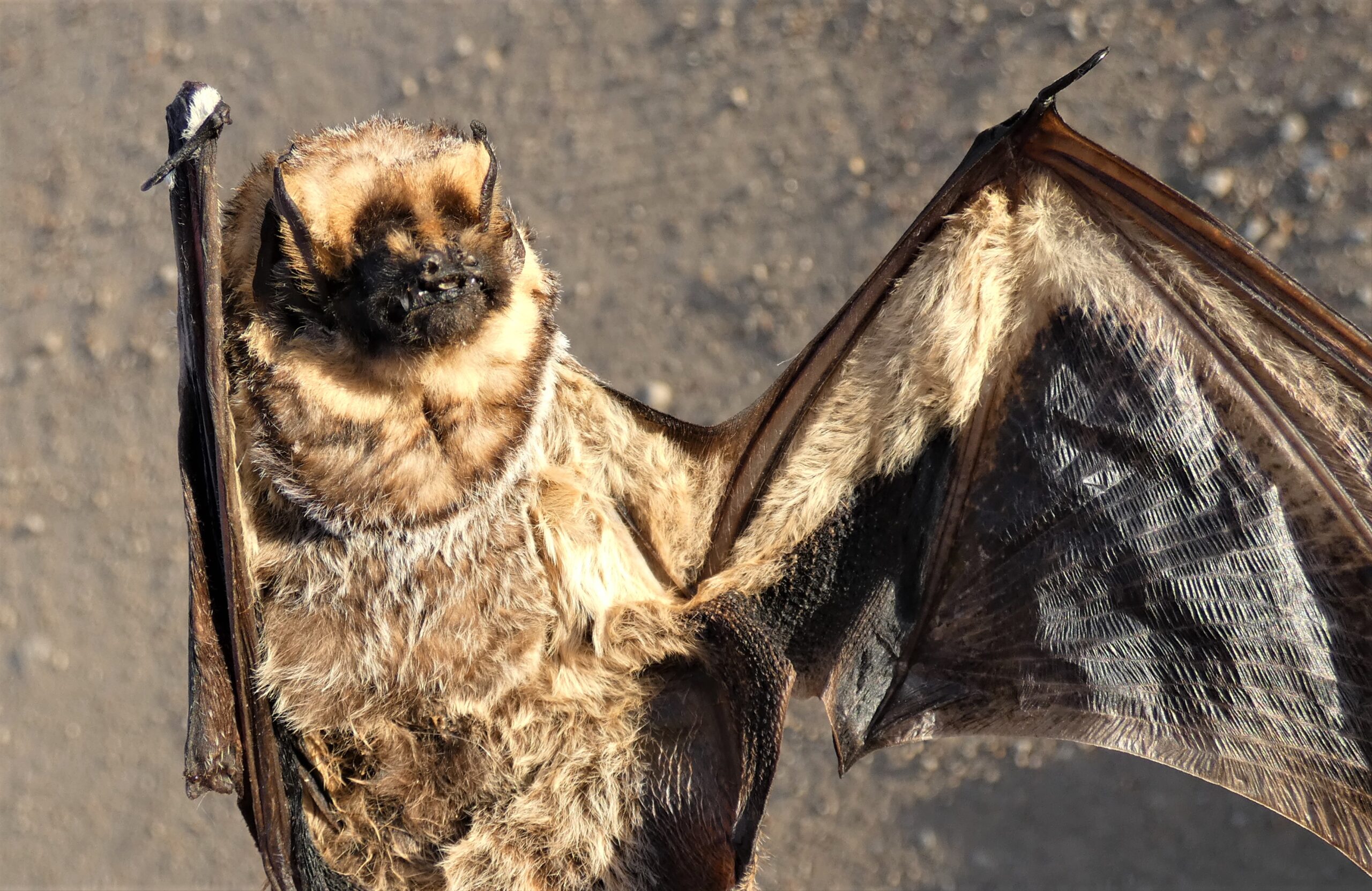 Photo Credit: FColman (WDU) / Wikimedia Commons
In the heart of a sun-dappled forest, the Hoary Bat, or Lasiurus cinereus, flits gracefully through the twilight sky. With its thick, frosted fur that shimmers in the fading light, this bat is a striking sight against the backdrop of towering trees. Its large, rounded ears and broad wings allow it to navigate effortlessly through the dense foliage, hunting for insects that dance in the evening air. As night falls, the forest transforms into a bustling world of sounds and scents, and the Hoary Bat emerges as one of its most agile predators.
What makes the Hoary Bat particularly captivating to scientists and nature enthusiasts alike is not just its beauty, but its vital role in the ecosystem. These bats are nocturnal insectivores, meaning they primarily feast on insects, helping to keep populations in check. Imagine the Hoary Bat swooping down to catch a moth mid-flight, its keen eyesight and echolocation skills guiding it through the dark. This remarkable ability to navigate and hunt in the night sky showcases the bat’s evolutionary adaptations, making it a fascinating subject of study for those eager to understand the delicate balance of nature. As we delve deeper into the world of the Hoary Bat, we will explore its habitat, behavior, and the important role it plays in our environment.
The Hoary Bat, scientifically known as Lasiurus cinereus, occupies a special place in the animal kingdom. As a member of the order Chiroptera, which includes all bats, this species is particularly notable for its striking fur, which is frosted with white tips, giving it a hoary appearance. This unique coloration not only helps it blend into its surroundings but also plays a role in its social interactions and mating displays. The Hoary Bat is a true marvel of evolution, showcasing the incredible adaptations that allow mammals to thrive in diverse environments.
| Taxonomic Rank | Scientific Name | Meaning & Significance |
|---|---|---|
| Kingdom | Animalia | This name signifies that the Hoary Bat belongs to the broad group of multicellular organisms that are heterotrophic, meaning they consume organic material for energy. |
| Phylum | Chordata | Chordata refers to animals that have a notochord, a flexible rod that supports the body. In the case of the Hoary Bat, this structure is present during its early development. |
| Class | Mammalia | Mammalia indicates that this bat is a mammal, characterized by having fur and the ability to nurse its young with milk. |
| Order | Chiroptera | Chiroptera means “hand wing,” highlighting the bat’s unique wing structure, where the skin is stretched between elongated fingers, allowing for flight. |
| Family | Vespertilionidae | This family name translates to “evening bats,” which reflects the nocturnal habits of many species within this group, including the Hoary Bat. |
| Genus | Lasiurus | Lasiurus comes from Greek, meaning “woolly tail,” which describes the bat’s distinctive fur and tail structure that aids in its flight and insulation. |
| Species | cinereus | Cinereus is derived from Latin, meaning “ash-colored,” a nod to the bat’s beautiful, frosted fur that helps it camouflage in its environment. |
The classification of the Hoary Bat reveals much about its evolutionary journey. As a member of the Chiroptera order, it shares a common ancestor with all bats, showcasing the remarkable adaptations that have allowed these mammals to conquer the skies. The specific traits that define the Hoary Bat, from its unique fur to its nocturnal lifestyle, highlight the intricate relationship between its physical characteristics and the ecological niches it occupies. Understanding its taxonomic position not only enriches our knowledge of this species but also sheds light on the broader evolutionary patterns that shape the animal kingdom.
The evolutionary journey of the Hoary Bat, or Lasiurus cinereus, stretches back millions of years, intertwining with the history of mammals. Bats first appeared around 50 million years ago, during the Eocene epoch, a time when the Earth was warming and forests were expanding. As these early mammals took to the skies, they began to adapt to a life of flight, leading to the diverse array of bat species we see today, including the Hoary Bat.
The ancestors of modern bats were small, tree-dwelling mammals that gradually developed the ability to glide and then fly. This transition involved significant changes in their skeletal structure, including elongated fingers that support their wings. Over time, these adaptations allowed bats to exploit new ecological niches, such as hunting insects in the air. The Hoary Bat, specifically, evolved to thrive in open habitats, developing a thick fur coat that helps insulate it against the cold and a unique coloration that provides camouflage among the leaves.
The adaptations of the Hoary Bat have been crucial for its survival in a changing world. Its ability to fly and hunt at night allows it to avoid many predators while taking advantage of abundant insect populations. The insulating fur keeps it warm in cooler climates, while its echolocation skills ensure it can find food even in total darkness. Together, these traits have helped the Hoary Bat thrive in diverse environments, showcasing the incredible power of evolution in shaping life on Earth.
The Hoary Bat is a striking sight, with a body that combines elegance and strength. Its size is modest, measuring about 13 to 15 centimeters long, which is roughly the length of a small smartphone. Weighing between 20 to 35 grams, this bat is light enough to flit through the night sky with ease. Its fur is a beautiful blend of colors, primarily a rich brown that transitions into a silvery-gray, giving it a frosted appearance. This unique coloration is complemented by the distinctive white tips on its fur, which shimmer in the moonlight, making it a captivating figure as it swoops through the air.
| Feature | Description |
|---|---|
| Height | 13-15 cm (5-6 in) |
| Weight | 20-35 g (1 oz) |
| Skin Type | Hair |
| Most Distinctive Feature | White-tipped fur |
The combination of its size, weight, and striking fur not only makes the Hoary Bat visually appealing but also serves important survival functions. The lightweight body allows for agile flight, enabling it to navigate through dense forests and catch insects mid-air. The white-tipped fur helps with camouflage against the moonlit sky, making it harder for predators to spot. Together, these features create a perfect blend of beauty and practicality, allowing the Hoary Bat to thrive in its natural habitat.
The Hoary Bat thrives in lush forests and wooded areas, where tall trees provide both shelter and hunting grounds. Imagine a sun-dappled forest, with leaves rustling gently in the breeze and the sweet scent of pine in the air. This bat loves to roost in the dense foliage of trees, often choosing coniferous trees, which are evergreens that keep their leaves year-round. The combination of open spaces for flying and the cover of trees makes these habitats perfect for the Hoary Bat’s lifestyle.
The Hoary Bat prefers climates that offer a mix of warm summers and cooler winters. It is often found in areas where temperatures can fluctuate, allowing it to take advantage of the abundant insect populations during the warmer months. These bats are known to migrate to find the best conditions, seeking out places where food is plentiful and the weather is just right for their active lifestyle.
To thrive in its chosen habitats, the Hoary Bat has developed several clever adaptations. Its thick fur helps insulate it against cooler temperatures, while its strong wings allow for agile flight through the trees. This bat is also an expert at echolocation, a skill that enables it to navigate and hunt in the dark. By emitting high-pitched sounds and listening for the echoes, it can locate insects even in dense foliage. These adaptations make the Hoary Bat a master of its forested domain, perfectly suited to life among the trees.
The Hoary Bat leads a life that is both active and intriguing, especially during the twilight hours. As night falls, these bats emerge from their roosts, often found in the dense foliage of trees. Their nightly activities revolve around hunting for insects, which they skillfully catch in mid-air using their echolocation abilities. This means they send out high-pitched sounds that bounce off objects, helping them navigate and locate their prey in the dark. As they flit through the night sky, they can cover vast distances, sometimes traveling up to 30 miles in search of food.
Socially, Hoary Bats exhibit a mix of solitary and group behaviors. While they are often seen alone, they can also gather in small groups, especially during the breeding season. These gatherings allow them to find mates and share information about food sources. Communication among Hoary Bats is primarily through vocalizations, which can include a variety of chirps and calls. These sounds help them maintain social bonds and coordinate their activities, especially when foraging together.
| Behavior Type | Description |
|---|---|
| Activity Patterns | Active primarily at night, hunting insects using echolocation. |
| Social Structure | Primarily solitary but can form small groups during breeding season. |
| Communication Methods | Vocalizations including chirps and calls to maintain social bonds. |
The behaviors of the Hoary Bat are finely tuned to ensure their survival in the wild. By being active at night, they avoid many daytime predators and can take advantage of the abundance of insects that emerge after sunset. Their ability to communicate and sometimes work together enhances their foraging success, allowing them to thrive in their forested habitats. Each aspect of their daily life, from hunting to social interactions, plays a crucial role in their overall well-being and survival in the natural world.
The Hoary Bat is a carnivore, which means it primarily eats meat—in this case, insects. These agile flyers are particularly fond of moths, beetles, and other flying insects. As night falls, the Hoary Bat takes to the skies, using its keen eyesight and echolocation—an ability to use sound waves to locate objects—to hunt for its favorite foods. This bat is known for its impressive flying skills, allowing it to swoop and dive to catch its prey mid-air, making it a master of the night.
| Dietary Aspect | Details |
|---|---|
| Diet Type | Carnivore |
| Favorite Foods | Moths, beetles, and other flying insects |
| Prey Items | Various nocturnal insects |
| Hunting/Foraging Strategies | Uses echolocation to detect and catch insects while flying |
The diet of the Hoary Bat plays a crucial role in its ecology and daily routine. By consuming large quantities of insects, these bats help control insect populations, which can be beneficial for both agriculture and human health. Their nocturnal hunting habits also mean they are active when many other predators are not, allowing them to thrive in their forested habitats. This unique feeding behavior not only shapes their lifestyle but also contributes to the balance of the ecosystems they inhabit.
As the warm days of late spring and early summer arrive, the Hoary Bat begins its mating season. During this time, males engage in a captivating courtship display, often flying in loops and producing a series of high-pitched calls to attract females. Once a pair has formed, they will mate, and the female will prepare for the exciting journey of motherhood. This breeding season is crucial, as it sets the stage for the next generation of these remarkable bats.
| Reproductive Aspect | Details |
|---|---|
| Gestation Period | Unknown |
| Litter Size | 1 pup |
| Age of Maturity | About 1 year |
| Name of Young | Pups |
After giving birth, the female Hoary Bat provides attentive care to her pup. These young bats are born blind and helpless, relying entirely on their mother for warmth and nourishment. As they grow, the pups develop quickly, gaining strength and fur. Within a few weeks, they begin to explore their surroundings, learning to fly and hunt alongside their mother. By the time they reach maturity at about one year old, they are ready to embark on their own adventures, continuing the cycle of life in the enchanting world of bats.
The Hoary Bat plays a vital role in its ecosystem, serving as both predator and prey. As a nocturnal insect-eater, it helps control insect populations, which can benefit plants and other animals. However, this bat is not at the top of the food web; it faces various dangers that threaten its survival.
To defend itself against these threats, the Hoary Bat employs several clever strategies. Its thick fur provides insulation and camouflage, helping it blend into the trees where it roosts. When threatened, it can quickly change direction in flight, making it harder for predators to catch it. Additionally, by roosting in remote areas and choosing high, dense foliage, the Hoary Bat minimizes its chances of being spotted. These adaptations are crucial for its survival in a world filled with challenges.
A keystone species is an organism that has a disproportionately large impact on its environment relative to its abundance. This means that if it were removed, the ecosystem would change dramatically. The Hoary Bat, known scientifically as Lasiurus cinereus, plays a significant role in its habitat, particularly in forested areas. While it may not be the largest or most visible animal in the ecosystem, its presence is crucial for maintaining the balance of insect populations.
The Hoary Bat primarily feeds on insects, including moths and beetles, which makes it an important predator in its ecosystem. By consuming these insects, the bat helps regulate their populations, preventing outbreaks that could harm plants and other wildlife. For example, a sudden increase in moth numbers could lead to defoliation of trees, affecting not only the trees themselves but also the many species that rely on them for shelter and food.
Additionally, the Hoary Bat’s foraging habits contribute to the health of the forest. As it hunts, it disperses seeds and nutrients through its droppings, which can help promote plant growth. This process supports a diverse range of flora, which in turn provides habitat for various other animals. The bat’s role in pollination, although less direct, can also be significant, as some insects it preys upon are vital for pollinating plants.
If the Hoary Bat were to disappear, the consequences could be severe. Insect populations would likely surge, leading to increased damage to vegetation and disrupting the balance of the ecosystem. This could result in a decline in plant health, affecting not only the trees but also the animals that depend on them for food and shelter. The ripple effects would extend throughout the food web, demonstrating just how vital this seemingly small bat is to the health of its environment.
The Hoary Bat, known scientifically as Lasiurus cinereus, plays a crucial role in its ecosystem, particularly in forested areas. As a nocturnal insectivore, this bat helps maintain the balance of insect populations, which can otherwise explode and lead to overgrazing of plants. By keeping these populations in check, the Hoary Bat ensures that the delicate web of life in its habitat remains intact. Its presence is a testament to the interconnectedness of species, where each one contributes to the health of the environment.
| Ecosystem Service | Impact |
|---|---|
| Insect Control | Reduces populations of harmful insects, benefiting plants and other wildlife. |
| Pollination | While primarily insectivorous, some bats can aid in pollination, indirectly supporting plant reproduction. |
| Food Source | Serves as prey for larger predators, contributing to the food web. |
The influence of the Hoary Bat extends beyond just eating insects. For instance, by consuming large quantities of moths and beetles, these bats help protect crops and gardens from potential pest damage. This natural pest control is especially important in agricultural areas, where farmers rely on healthy plants for their livelihoods. Additionally, the Hoary Bat’s role as a food source for larger predators, such as owls and hawks, highlights its importance in the food web, ensuring that energy flows through the ecosystem.
The broader ecological importance of the Hoary Bat cannot be overstated. As a keystone species, its presence supports a variety of other organisms, creating a balanced environment. If the Hoary Bat were to disappear, the ripple effects would be felt throughout the ecosystem, leading to increased insect populations and potential declines in plant health. By understanding and protecting the Hoary Bat, we not only safeguard this remarkable species but also the intricate web of life that depends on it.
In the intricate web of life, symbiosis refers to the close interactions between different species, which can take on various forms. These relationships can be mutualistic, where both species benefit, parasitic, where one benefits at the other’s expense, or commensal, where one benefits while the other is neither helped nor harmed. The Hoary Bat, with its unique lifestyle and ecological role, engages in several fascinating partnerships that illustrate the complexity of nature.
| Species/Type | Relationship Type | Description |
|---|---|---|
| Insects (various species) | Mutualistic | The Hoary Bat feeds on insects, helping to control their populations. In return, the bat benefits from a reliable food source, creating a balance in the ecosystem. |
| Trees (various species) | Commensal | Hoary Bats roost in the foliage of trees, which provides them shelter and safety from predators. The trees are not harmed by this relationship. |
| Parasites (like mites) | Parasitic | Some mites may live on Hoary Bats, feeding on their skin or blood. This relationship can weaken the bat, but it does not usually lead to death. |
These relationships have evolved over time, shaped by the needs and behaviors of the species involved. The mutualistic bond between the Hoary Bat and insects highlights the bat’s role as a natural pest controller, benefiting both the bat and the ecosystem. Meanwhile, the commensal relationship with trees offers the bats a safe haven, allowing them to thrive in their forest habitats. On the other hand, parasitic relationships, while detrimental to the bats, are a natural part of the ecosystem’s balance. Understanding these connections helps us appreciate the delicate interplay of life in the wild, reminding us that every species, no matter how small, plays a vital role in the grand tapestry of nature.
The Hoary Bat is a captivating creature that often surprises those who take the time to learn about it. With its striking appearance and intriguing behaviors, this bat is more than just a flying mammal; it’s a vital part of its ecosystem.
Throughout history, the Hoary Bat has danced through the shadows of human culture, often shrouded in mystery and folklore. In many Native American traditions, bats symbolize transformation and intuition, embodying the spirit of the night. These nocturnal creatures have been both feared and revered, with their silent flight inspiring tales of magic and the unknown. As humans began to understand the natural world, the Hoary Bat emerged as a symbol of the delicate balance between nature and civilization, reminding us of the wonders that thrive in the dark.
Today, our interactions with the Hoary Bat are complex and multifaceted. As urban areas expand, these bats face challenges from habitat loss and environmental changes. Conservation efforts are underway to protect their roosting sites and ensure that they have safe places to thrive. However, conflicts can arise, especially when bats roost in buildings, leading to concerns about health and property damage. While domestication is not a part of the Hoary Bat’s story, their role in pest control makes them valuable allies in agriculture, as they help keep insect populations in check.
As we look to the future, the relationship between humans and the Hoary Bat holds promise and challenges. With increased awareness and conservation efforts, we can foster a more harmonious coexistence. By protecting their habitats and understanding their ecological importance, we can ensure that these remarkable bats continue to soar through our skies, enriching our world with their presence. Together, we can create a future where both humans and Hoary Bats thrive, celebrating the beauty of nature in all its forms.
The Hoary Bat, known scientifically as Lasiurus cinereus, currently holds a conservation status of “Least Concern” according to the International Union for Conservation of Nature (IUCN). This means that, at present, the species is not facing an immediate threat of extinction. However, the exact population size remains unknown, which makes it challenging to assess trends accurately. While the overall status is stable, ongoing monitoring is essential to ensure that this bat continues to thrive in its natural habitats.
| Conservation Factor | Status/Details |
|---|---|
| IUCN Status | Least Concern |
| Estimated Population Size | Unknown |
| Population Trend | Stable |
Despite its current stable status, the Hoary Bat faces several threats that could impact its future. Habitat loss is a significant concern, as forests are cleared for agriculture and urban development. Additionally, these bats are vulnerable to collisions with wind turbines, which can be deadly. Climate change also poses a risk, altering the ecosystems that support their food sources and roosting sites. As these challenges grow, the need for awareness and action becomes increasingly important.
Conservation efforts are underway to protect the Hoary Bat and its habitats. Organizations are working to raise awareness about the importance of preserving forest ecosystems and minimizing the impact of wind energy on bat populations. By promoting responsible land use and supporting research, conservationists aim to ensure that the Hoary Bat continues to soar through the night skies. With ongoing efforts, there is hope that this species will remain a vibrant part of our natural world for generations to come.
| Question | Answer |
|---|---|
| What is the habitat of the Hoary Bat? | Hoary Bats are typically found in forests and areas with plenty of trees. They prefer habitats that provide both shelter and food, allowing them to roost during the day and hunt at night. |
| What do Hoary Bats eat? | Hoary Bats are carnivores, which means they primarily eat insects. Their diet includes moths, beetles, and other flying insects, which they catch in mid-air using their agile flying skills. |
| How do Hoary Bats behave? | These bats are known for their solitary behavior, often roosting alone or in small groups. They are also migratory, meaning they travel long distances to find warmer climates during the winter months. |
| How do Hoary Bats reproduce? | Hoary Bats typically mate in the fall, but the females store the sperm until spring. After a gestation period of about two months, they give birth to one pup, which they care for until it can fly and hunt on its own. |
| What threats do Hoary Bats face? | While Hoary Bats are currently listed as Least Concern, they face threats from habitat loss and climate change. Additionally, they are vulnerable to wind turbines, which can pose a danger during their migratory flights. |
| What is a distinctive feature of the Hoary Bat? | The most distinctive feature of the Hoary Bat is its beautiful white-tipped fur. This unique coloration helps them blend into their surroundings, providing camouflage from predators. |
| Are Hoary Bats social animals? | Hoary Bats are generally not very social and prefer to live alone or in small groups. They are more active at night, which is when they hunt and forage for food, making them less likely to be seen in large gatherings. |