Taxonomy & Classification
- Kingdom
- Animalia
- Phylum
- Chordata
- Class
- Mammalia
- Order
- Carnivora
- Family
- Mustelidae
- Genus
- Mellivora
- Species
- Mellivora Capensis

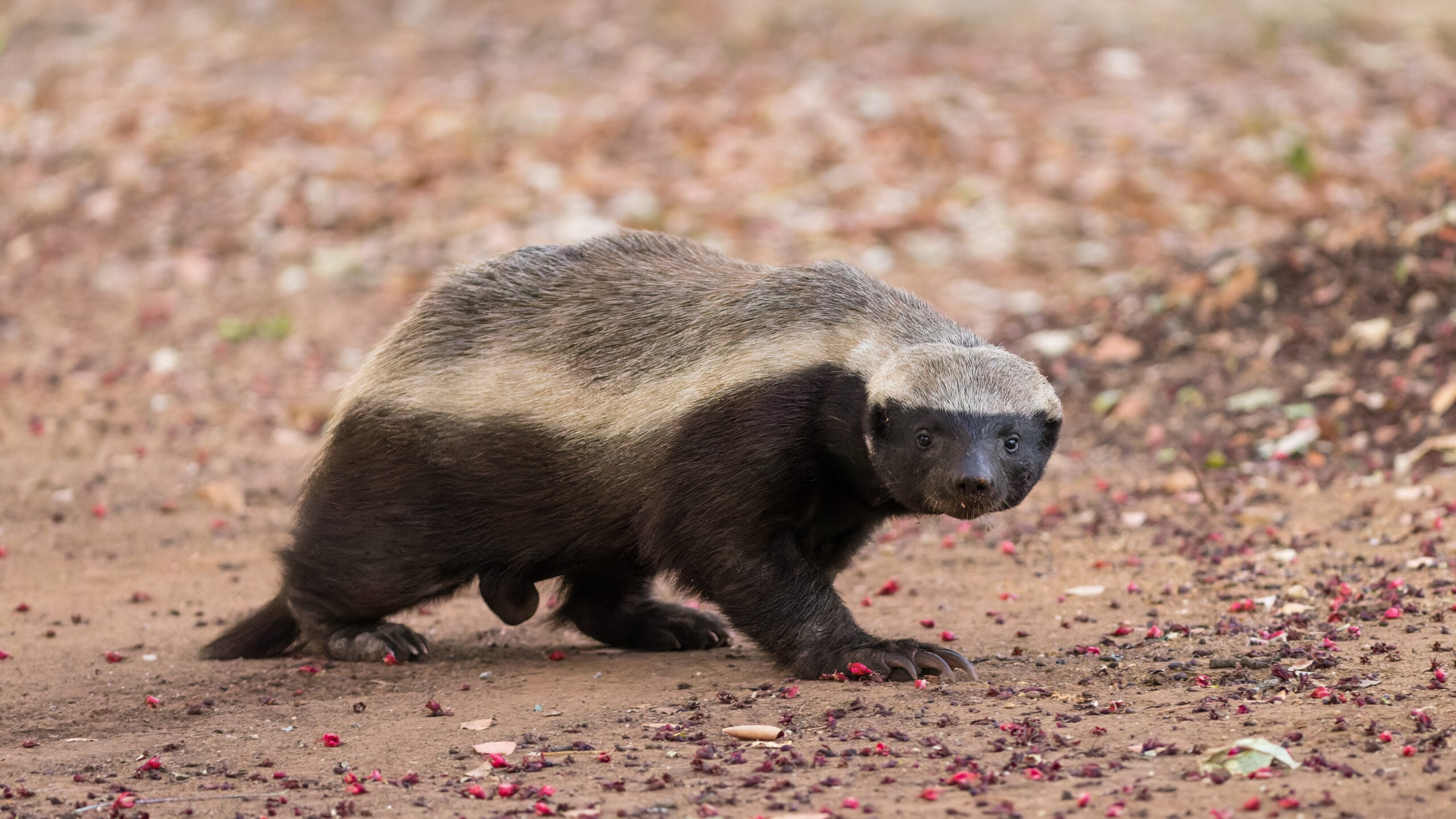 Photo Credit: Sumeetmoghe / Wikimedia Commons
In the sun-drenched savannas and rugged scrublands of Africa and parts of Asia, the honey badger, or Mellivora capensis, roams with an air of fearless determination. This small but mighty mammal, often no taller than a foot at the shoulder, is easily recognized by its stocky body, thick skin, and striking black-and-white coloration. With a reputation for being one of the most fearless animals on the planet, the honey badger has earned its place in the hearts of wildlife enthusiasts and scientists alike. Its bold nature and remarkable adaptability make it a fascinating subject of study, revealing the intricate balance of life in its diverse habitats.
Imagine a honey badger scurrying across the landscape, its sharp claws digging into the earth as it searches for food. This omnivorous forager is not picky; it will tackle everything from insects and small mammals to fruits and roots. What truly sets the honey badger apart is its tenacity. Known to confront much larger predators, it embodies a spirit of resilience that captivates anyone lucky enough to witness its antics. As we delve deeper into the world of Mellivora capensis, we will explore its unique behaviors, ecological role, and the fascinating relationships it forms within its environment, all while uncovering the secrets of this remarkable creature.
The honey badger, known scientifically as Mellivora capensis, occupies a distinctive place in the tree of life. This tenacious animal belongs to the family Mustelidae, which includes weasels, otters, and ferrets. What sets the honey badger apart is its fearless nature and remarkable adaptability. Often dubbed the “most fearless animal in the world,” it has a reputation for taking on creatures much larger than itself, including lions and snakes. Its unique combination of traits makes it a standout in the animal kingdom, showcasing the incredible diversity of life on our planet.
| Taxonomic Rank | Scientific Name | Meaning & Significance |
|---|---|---|
| Kingdom | Animalia | This name signifies that honey badgers are part of the vast group of multicellular organisms that are primarily heterotrophic, meaning they consume other organisms for energy. |
| Phylum | Chordata | Chordata refers to animals that have a notochord, a flexible rod that supports the body. In honey badgers, this is evident in their well-developed spine. |
| Class | Mammalia | Mammalia indicates that honey badgers are warm-blooded animals with fur and mammary glands, which allow females to nurse their young. |
| Order | Carnivora | Carnivora is the order that includes meat-eating mammals. Honey badgers are opportunistic feeders, known for their diverse diet that includes insects, small mammals, and even fruits. |
| Family | Mustelidae | Mustelidae is the family of weasels and their relatives. The name reflects their elongated bodies and sharp claws, which are perfect for digging and hunting. |
| Genus | Mellivora | Mellivora comes from the Latin word for “honey eater,” highlighting the honey badger’s love for honey and its daring raids on beehives. |
| Species | capensis | Capensis refers to the Cape of Good Hope in South Africa, where this species was first described, linking it to its geographical origins. |
Understanding the honey badger’s classification reveals much about its evolutionary history. As a member of the Mustelidae family, it shares a common ancestor with other small carnivores, which adapted to various ecological niches over millions of years. The honey badger’s unique adaptations, such as its thick skin and fearless behavior, illustrate how evolution shapes species to thrive in their environments. This classification not only highlights its biological connections but also emphasizes the incredible journey of life that has led to the diverse array of animals we see today.
The evolutionary journey of the honey badger, or Mellivora capensis, stretches back millions of years, weaving through the complex tapestry of life on Earth. This resilient mammal is part of the Mustelidae family, which includes weasels, otters, and ferrets. The honey badger’s ancestors roamed the planet during the late Eocene epoch, around 35 million years ago, when the world was a very different place. Over time, these ancestors adapted to various environments, leading to the emergence of the honey badger we know today.
The honey badger’s lineage can be traced to early carnivorous mammals that developed traits suited for survival in diverse habitats. As these ancestors evolved, they became more specialized hunters, honing their skills to thrive in the African savannas and woodlands. One major transition was the development of a robust body and powerful limbs, allowing them to dig and burrow for food. This adaptation was crucial for accessing underground prey and escaping predators. Additionally, their thick skin evolved to provide protection against bites and stings, making them formidable opponents in the wild.
The adaptations of the honey badger have played a vital role in its survival. With strong claws for digging and a fearless attitude, this animal can tackle challenges that would deter many others. Its thick skin provides a layer of defense against predators and venomous creatures, while its diverse diet ensures it can find nourishment in various habitats. Together, these traits make the honey badger a true survivor, thriving in the wild despite the many dangers it faces.
The honey badger is a small but mighty mammal that packs a punch in the animal kingdom. With a sturdy body that stands about 9.1 to 11 inches tall at the shoulder, it has a stocky build that gives it a powerful presence. Its short legs are muscular, allowing for impressive digging and climbing abilities. The honey badger’s skin is covered in coarse hair, which can range from a dark brown to a grayish hue, often with a striking white stripe running down its back. This bold coloration not only makes it visually striking but also serves as a warning to potential predators.
| Feature | Description |
|---|---|
| Height | 9.1 to 11 inches |
| Weight | 11 to 35 pounds |
| Skin Type | Hair |
| Most Distinctive Feature | Large, sharp claws |
The honey badger’s physical features are not just for show; they play crucial roles in its survival. Those large, sharp claws are perfect for digging into the ground to find food, such as insects and small mammals. The honey badger’s tough skin and coarse fur provide protection against bites and stings, allowing it to take on even the most dangerous of foes, like snakes and scorpions. Together, these characteristics make the honey badger a formidable survivor in its environment, showcasing nature’s incredible ability to adapt and thrive.
The honey badger thrives in a variety of habitats that reflect its adaptable nature. Picture vast grasslands where the sun beats down, dry areas with sparse vegetation, and even forests that provide a mix of cover and open space. These environments are not just random; they offer the honey badger the perfect blend of resources to hunt, dig, and explore. Whether it’s the open savannas of Africa or the dense thickets of Asia, this animal is a true survivor, making its home in places that many other creatures might find challenging.
The climate in these regions can vary widely, but honey badgers are particularly fond of areas that experience warm temperatures. They are often found in places with low rainfall, which means they can easily dig for food and create burrows. These mammals are also known to be quite resourceful, often seeking out shelter in rocky crevices or under bushes to escape the heat of the day. The combination of dry conditions and occasional rainfall creates a dynamic environment where honey badgers can thrive.
Adaptation is key to the honey badger’s success in these habitats. With their strong claws, they can dig deep into the ground to find food like insects, small mammals, and even honey, which is how they got their name. Their thick skin protects them from bites and stings, allowing them to take on even the most dangerous of prey. This resilience and versatility enable honey badgers to not only survive but also flourish in a range of environments, showcasing their incredible ability to adapt to the world around them.
The honey badger leads a life filled with adventure and determination. As a diurnal animal, it is most active during the day, scouring its environment for food and exploring its territory. These fearless foragers spend their mornings digging through the earth in search of tasty treats like insects, small mammals, and even honey. With a keen sense of smell, they can sniff out a meal from quite a distance. As the sun rises higher in the sky, honey badgers continue their quest, often climbing trees or burrowing into the ground to find hidden snacks. Their day is a blend of foraging, exploring, and occasionally engaging in playful antics that showcase their curious nature.
Socially, honey badgers are known for their independent spirit. While they can be solitary, they sometimes come together in small groups, especially when it comes to raising young or sharing a bountiful food source. Their interactions are marked by a mix of vocalizations and body language, allowing them to communicate effectively with one another. When they encounter a potential threat, honey badgers are not shy about showing their fierce side, using growls and hisses to ward off intruders. This blend of independence and occasional social behavior helps them navigate their world with confidence.
| Behavior Type | Description |
|---|---|
| Activity Patterns | Active during the day, honey badgers spend their time foraging for food, exploring their territory, and engaging in playful behavior. |
| Social Structure | Primarily solitary, but may form small groups for raising young or sharing food. They exhibit both independence and occasional social interactions. |
| Communication Methods | Use vocalizations like growls and hisses, along with body language, to communicate with each other and deter threats. |
The behaviors of honey badgers are finely tuned to ensure their survival in the wild. Their fearless nature and adaptability allow them to tackle challenges head-on, whether it’s digging for food or defending themselves against predators. By balancing independence with social interactions, they can thrive in diverse environments, making the most of their resourceful and tenacious spirit. This combination of traits not only helps them find food but also fosters a sense of community when needed, ensuring that honey badgers continue to flourish in their habitats.
The honey badger is an omnivorous forager, meaning it enjoys a varied diet that includes both plants and animals. This fearless creature is known for its bold approach to obtaining food, often taking on prey much larger than itself. With a keen sense of smell and impressive digging skills, the honey badger can uncover hidden treasures like insects, small mammals, and even the nests of bees. Its resourcefulness and tenacity make it a formidable hunter in its environment.
| Dietary Aspect | Details |
|---|---|
| Diet Type | Omnivore |
| Favorite Foods | Bees, insects, small animals, bulbs, roots, bird eggs |
| Prey Items | Insects, small mammals, bird eggs |
| Hunting/Foraging Strategies | Uses keen sense of smell, digs for food, raids bee nests |
This diverse diet plays a crucial role in the honey badger’s ecology and daily routine. By consuming a wide range of foods, it helps control insect populations and contributes to the balance of its ecosystem. Its fearless nature allows it to explore various habitats in search of sustenance, making it a vital player in the food web. The honey badger’s adaptability not only ensures its survival but also enriches the environments it inhabits.
When it comes to mating, honey badgers are quite the intriguing animals. Their breeding season can vary depending on their location, but generally, it peaks during the rainy season when food is more abundant. Males will often engage in fierce competition for the attention of females, showcasing their strength and stamina. Once a female is ready to mate, she will signal her interest, and the pair will come together for a brief but intense courtship.
| Reproductive Aspect | Details |
|---|---|
| Gestation Period | 6 Months |
| Average Litter Size | 2 |
| Age of Sexual Maturity | 1 to 2 Years |
| Name of Young | Kit |
After the six-month gestation period, the female honey badger gives birth to a litter of kits, usually numbering around two. These tiny, helpless young are born blind and rely entirely on their mother for warmth and nourishment. As they grow, the kits begin to explore their surroundings, learning essential survival skills through play and observation. The mother is fiercely protective, teaching her young how to hunt and forage, ensuring they are well-prepared for life on their own. By the time they reach sexual maturity at one to two years, these young honey badgers are ready to embark on their own adventures in the wild.
The honey badger, a fierce and fearless animal, plays a vital role in its ecosystem. As a predator, it sits near the top of the food web, hunting various small animals and insects. However, despite its tough reputation, the honey badger faces several dangers that threaten its survival.
To defend itself against these threats, the honey badger employs a range of impressive survival strategies. Its thick skin and loose fur allow it to withstand bites and stings, while its sharp claws help it dig and escape quickly. When confronted, this tenacious animal is known for its fearless attitude, often standing its ground and even attacking larger foes. With its keen sense of smell and intelligence, the honey badger navigates its environment with agility, ensuring it remains a formidable presence in the wild.
A keystone species is an organism that has a disproportionately large impact on its environment relative to its abundance. In simpler terms, if you remove a keystone species from an ecosystem, it can cause significant changes, often leading to the collapse of that ecosystem. The honey badger, or Mellivora capensis, qualifies as a keystone species due to its unique role in maintaining the balance of its habitat.
Honey badgers are known for their fearless nature and diverse diet, which includes small mammals, insects, and even plants. By preying on various species, they help control populations of these animals, preventing any one group from becoming too dominant. For example, when honey badgers hunt rodents, they keep their numbers in check, which in turn allows vegetation to thrive. This balance is crucial for the health of grasslands and forests where they live.
Moreover, honey badgers are also known to dig up and consume honey from beehives. This not only provides them with a rich food source but also benefits the plants that rely on bees for pollination. By disturbing the hives, honey badgers help to spread bees across the landscape, promoting biodiversity. Their foraging behavior can also aerate the soil, which is beneficial for plant growth.
If honey badgers were to disappear from their ecosystems, the consequences could be dire. Without these tenacious foragers, populations of small mammals and insects could explode, leading to overgrazing and depletion of vegetation. This imbalance would not only affect the plants but also the larger animals that depend on them for food and shelter. In essence, the absence of honey badgers could trigger a chain reaction, destabilizing the entire ecosystem and diminishing its biodiversity.
The honey badger, or Mellivora capensis, plays a crucial role in shaping its ecosystem. As an omnivorous forager, it influences the populations of various species and contributes to the balance of its habitat. Found in dry areas, grasslands, and forests, this resilient mammal is not just a fierce predator but also a scavenger, helping to recycle nutrients back into the environment. Its fearless nature allows it to tackle a wide range of prey, from insects to small mammals, making it a key player in the food web.
| Ecosystem Service | Impact |
|---|---|
| Predation | Controls populations of small mammals and insects, preventing overpopulation. |
| Scavenging | Helps break down and recycle nutrients from dead animals, enriching the soil. |
| Soil Aeration | Burrowing behavior loosens soil, improving water infiltration and plant growth. |
| Seed Dispersal | Contributes to plant diversity by spreading seeds through its diet. |
Honey badgers are not just tough; they are also incredibly resourceful. For example, when they hunt for food, they dig into the ground to find insects like termites and beetles. This digging not only provides them with a meal but also aerates the soil, allowing water and nutrients to reach plant roots more easily. Additionally, by consuming small mammals, they help keep those populations in check, which is vital for maintaining a balanced ecosystem. Their scavenging habits mean they often feed on carrion, or dead animals, which helps to clean up the environment and return nutrients to the soil.
The broader ecological importance of honey badgers cannot be overstated. As a keystone species, their presence significantly impacts the health of their ecosystems. By controlling prey populations and recycling nutrients, they help maintain the delicate balance of life in their habitats. Without honey badgers, the dynamics of their ecosystems could shift dramatically, leading to overpopulation of certain species and a decline in plant health. In this way, the honey badger is not just a survivor; it is a vital contributor to the intricate web of life that sustains its environment.
In the intricate web of life, symbiosis refers to the close interactions between different species, which can take on various forms. These relationships can be mutualistic, where both species benefit, parasitic, where one benefits at the expense of the other, or commensal, where one benefits while the other is neither helped nor harmed. The honey badger, known for its fearless nature and adaptability, engages in several fascinating ecological relationships that highlight the interconnectedness of life in its habitat.
| Species/Type | Relationship Type | Description |
|---|---|---|
| Oxpeckers | Mutualistic | These birds perch on the honey badger, feeding on ticks and parasites found on its skin. In return, the honey badger enjoys a cleaner coat and reduced irritation from pests. |
| Burrowing Animals | Commensal | Honey badgers often take over burrows made by other animals, such as aardvarks. While the original builders are unaffected, the badger gains a safe place to rest and raise its young. |
| Bees | Parasitic | While honey badgers are known for raiding beehives for honey, the bees can suffer significant losses. The badger benefits from the sweet treat, but the bees lose their hard-earned food source. |
These relationships have evolved over time, shaped by the needs and behaviors of the species involved. The honey badger’s interactions with oxpeckers illustrate a classic mutualistic bond, where both parties gain advantages that enhance their survival. Meanwhile, its use of burrows created by other animals showcases a clever adaptation to its environment, allowing it to thrive without harming the original builders. However, the parasitic relationship with bees highlights the balance of nature, where one species can benefit at the cost of another. Understanding these connections helps us appreciate the complexity of ecosystems and the roles each species plays in maintaining the delicate balance of life.
The honey badger, known for its fierce reputation and fearless nature, is a small mammal that surprises many with its extraordinary traits and behaviors. Here are some intriguing facts that showcase just how remarkable this animal truly is.
The honey badger, or Mellivora capensis, has long captured the imagination of people around the world. Historical encounters with this tenacious animal have woven it into various cultural narratives. In some African cultures, the honey badger is celebrated for its bravery and resilience, often depicted in folklore as a symbol of fearlessness. Ancient texts and stories highlight its ability to confront much larger predators, making it a figure of admiration and respect. This cultural significance has helped shape humanity’s perception of the honey badger, turning it into a creature of both fascination and reverence.
Today, the relationship between honey badgers and humans is complex and multifaceted. While these animals are often admired for their boldness, they can also come into conflict with farmers and livestock owners. Honey badgers are known to raid beehives, which can lead to tensions with beekeepers. Conservation efforts are underway to protect their habitats and ensure their survival, as they play a vital role in maintaining ecological balance. Interestingly, some people have even attempted to domesticate honey badgers, drawn by their unique personalities and intelligence, although this is a challenging endeavor due to their wild nature.
Looking ahead, the future of the honey badger and its relationship with humanity will depend on our ability to coexist harmoniously. As awareness of their ecological importance grows, more people are likely to advocate for their protection. Balancing agricultural needs with wildlife conservation will be crucial in ensuring that honey badgers continue to thrive in their natural habitats. By fostering a deeper understanding of these remarkable animals, we can help secure a future where honey badgers are celebrated not just for their fierce reputation, but also for their vital role in the ecosystems they inhabit.
The honey badger, scientifically known as Mellivora capensis, currently holds a conservation status of “Least Concern” according to the International Union for Conservation of Nature (IUCN). This means that, at present, the species is not facing an immediate threat of extinction. However, specific population estimates remain elusive, as researchers have not been able to determine exact numbers. While the overall trend appears stable, ongoing monitoring is essential to ensure that this resilient animal continues to thrive in its diverse habitats.
| Conservation Factor | Status/Details |
|---|---|
| IUCN Status | Least Concern |
| Estimated Population Size | Unknown |
| Population Trend | Stable |
Despite its current stable status, the honey badger faces several threats that could impact its future. Habitat loss due to agricultural expansion and urban development poses a significant risk, as these activities can fragment the environments where honey badgers live. Additionally, human-wildlife conflict often arises when honey badgers raid crops or beehives, leading to retaliatory actions from farmers. Poaching and illegal hunting also contribute to the challenges faced by this tenacious species.
Conservation efforts are underway to ensure the honey badger’s continued survival. Organizations are working to raise awareness about the importance of this species and its role in the ecosystem. By promoting coexistence strategies, such as using protective measures for crops, communities can reduce conflicts with honey badgers. With ongoing research and conservation initiatives, there is hope that this fearless mammal will continue to roam the landscapes of Africa and beyond, maintaining its vital place in the natural world.
| Question | Answer |
|---|---|
| What is the habitat of the honey badger? | Honey badgers are found in a variety of habitats, including dry areas, grasslands, and forests. They are adaptable creatures, which means they can thrive in different environments as long as there is food and shelter available. |
| What do honey badgers eat? | Honey badgers are omnivores, meaning they eat both plants and animals. Their diet includes insects, small mammals, birds, fruits, and even honey, which they are famous for raiding from beehives. |
| How do honey badgers behave? | Honey badgers are known for their fearless and tenacious behavior. They are solitary animals, often roaming alone, and they are not afraid to confront larger predators if they feel threatened. |
| How do honey badgers reproduce? | Honey badgers typically mate in the spring, and after a gestation period of about six months, the female gives birth to one to four cubs. The young are born blind and rely on their mother for care and protection during their early months. |
| What threats do honey badgers face? | While honey badgers are currently listed as Least Concern in terms of conservation status, they still face threats from habitat loss and human-wildlife conflict. They can also be hunted for their skin or killed by farmers who see them as pests. |
| What is a unique characteristic of honey badgers? | One of the most distinctive features of honey badgers is their large, sharp claws. These claws are perfect for digging into the ground to find food or to create burrows for shelter. |
| Are honey badgers social animals? | Honey badgers are generally solitary, but they can sometimes be seen in small groups, especially when a mother is raising her young. They communicate with each other through a variety of sounds and scents. |