Taxonomy & Classification
- Kingdom
- Animalia
- Phylum
- Chordata
- Class
- Chondrichthyes
- Order
- Heterodontiformes
- Family
- Heterodontidae
- Genus
- Heterodontus
- Species
- Heterodontus francisci

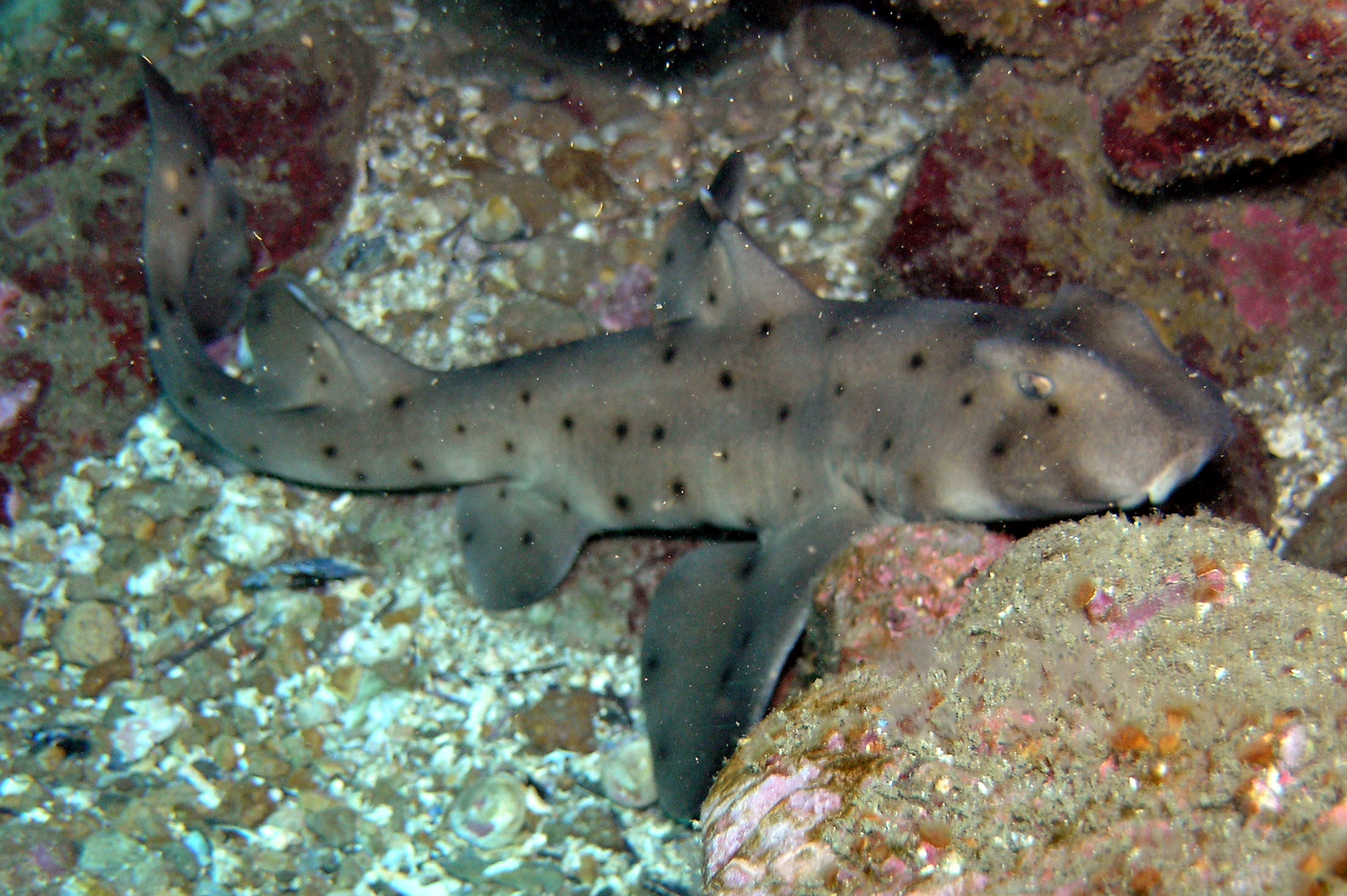 Photo Credit: Yzx / Wikimedia Commons
In the sun-dappled waters of the Pacific Ocean, the Horn Shark, or Heterodontus francisci, glides gracefully through its vibrant underwater realm. With its stout, compact body and distinctive, spiny dorsal fins, this remarkable shark is a true marvel of evolution. Measuring up to four feet long, the Horn Shark is often found nestled among rocky crevices and lush kelp beds, where it blends seamlessly into its surroundings. Its unique appearance, with a flattened head and a mouth that seems almost designed for grazing, captures the attention of scientists and nature enthusiasts alike.
As night falls, the Horn Shark comes to life, emerging from its daytime hideouts to hunt for food. This nocturnal lifestyle adds an air of mystery to its behavior, as it prowls the ocean floor in search of fish and invertebrates, like crabs and sea urchins. The Horn Shark’s role in the ecosystem is vital, helping to maintain the balance of life in its habitat. With its fascinating adaptations and intriguing habits, the Horn Shark invites us to explore the wonders of marine life and understand the delicate connections that sustain our oceans.
The Horn Shark, scientifically known as Heterodontus francisci, occupies a fascinating niche in the tree of life. This species belongs to the class Chondrichthyes, which includes all cartilaginous fish like sharks and rays. What sets the Horn Shark apart is its distinctive appearance, featuring a stout body and a unique horn-like structure on its head. This adaptation not only gives it its name but also helps it blend into rocky environments, making it a master of camouflage. With its ability to thrive in shallow waters along the Pacific coast, the Horn Shark showcases the incredible diversity of life forms that have evolved in our oceans.
| Taxonomic Rank | Scientific Name | Meaning & Significance |
|---|---|---|
| Kingdom | Animalia | This name signifies that the Horn Shark is part of the vast group of multicellular organisms that are primarily heterotrophic, meaning they consume other organisms for energy. |
| Phylum | Chordata | Chordata refers to animals that have a notochord, a flexible rod that supports the body. In sharks, this structure is replaced by a backbone made of cartilage. |
| Class | Chondrichthyes | This class includes all cartilaginous fish, highlighting the Horn Shark’s unique skeletal structure, which is made of cartilage rather than bone. |
| Order | Heterodontiformes | The name means “different teeth,” which is fitting because Horn Sharks have a mix of teeth types, including flat ones for crushing prey and sharp ones for gripping. |
| Family | Heterodontidae | This family name also reflects the “different teeth” characteristic, emphasizing the Horn Shark’s specialized feeding adaptations. |
| Genus | Heterodontus | Derived from the same root as the order and family, this genus name underscores the Horn Shark’s unique dental structure, which aids in its diet of hard-shelled prey. |
The classification of the Horn Shark reveals much about its evolutionary journey. As a member of the Chondrichthyes class, it shares a common ancestry with other sharks and rays, tracing back hundreds of millions of years. Its unique adaptations, such as the horn-like structure and specialized teeth, illustrate how this species has evolved to thrive in its specific environment. By studying the Horn Shark’s place in the animal kingdom, we gain insights into the complex web of life and the remarkable ways organisms adapt to their surroundings over time.
The evolutionary journey of the Horn Shark, or Heterodontus francisci, stretches back millions of years, tracing its lineage to ancient ancestors that swam the oceans long before dinosaurs roamed the Earth. This species belongs to the family Heterodontidae, which emerged around 200 million years ago during the Mesozoic Era. As the oceans changed, so did the Horn Shark, adapting to survive in a world filled with challenges and opportunities.
The Horn Shark’s ancestors were among the first to develop a cartilaginous skeleton, a lighter and more flexible structure than bone. This adaptation allowed them to thrive in various marine environments. Over time, these early sharks evolved unique features, such as the ability to dwell in shallow waters, which provided safety from larger predators. The Horn Shark’s distinctive flattened body shape and spiny dorsal fin are adaptations that help it navigate rocky reefs and avoid detection by both prey and predators.
These evolutionary adaptations have been crucial for the Horn Shark’s survival in a dynamic marine ecosystem. By developing features that enhance its ability to hide, defend itself, and find food, the Horn Shark has carved out a successful niche in the ocean. As it continues to thrive in its environment, this ancient species reminds us of the incredible power of evolution and the ongoing story of life in our oceans.
The Horn Shark is a captivating sight in the underwater world, with a body that seems almost sculpted for its environment. This shark has a stout, compact form, measuring up to 4 feet long, which gives it a robust appearance. Its head is broad and flat, adorned with distinctive ridges that run along its eyes, adding a touch of character to its face. The overall impression is one of strength and adaptability, perfectly suited for life among rocky reefs and kelp forests.
| Feature | Description |
|---|---|
| Weight | 20 pounds |
| Skin Type | Smooth |
| Most Distinctive Feature | Ridges along the eyes |
These physical traits work together to enhance the Horn Shark’s survival in its coastal habitat. The smooth skin allows for easy movement through water, reducing drag as it swims. The ridges above its eyes not only give it a unique look but may also help in sensing its surroundings, making it easier to navigate through rocky crevices. With its stout body and specialized features, the Horn Shark is well-equipped to thrive in the diverse ecosystems of the ocean floor, showcasing the beauty of evolution in action.
The Horn Shark thrives in the vibrant underwater world of kelp beds and rocky shorelines. Picture a sun-drenched coast where the waves gently lap against the rocks, creating a perfect playground for this intriguing species. The kelp forests sway gracefully in the currents, providing shelter and hunting grounds for the Horn Shark. These underwater jungles are teeming with life, from colorful fish darting between the fronds to crustaceans scuttling along the ocean floor.
The Horn Shark prefers warm, shallow waters, typically found at depths of up to 30 meters (about 100 feet). These areas are often rich in nutrients, which support a diverse array of marine life. The climate in these regions is generally mild, with water temperatures ranging from 15 to 25 degrees Celsius (59 to 77 degrees Fahrenheit). The rocky substrates and kelp forests provide not only food but also protection from larger predators, making these habitats ideal for the Horn Shark’s lifestyle.
Adapted to its coastal environment, the Horn Shark has developed several clever strategies for survival. Its stout body allows it to navigate through rocky crevices and kelp beds with ease. The shark’s ability to camouflage itself among the rocks and seaweed helps it avoid detection by both prey and predators. Additionally, its unique feeding habits, which include using its strong jaws to crush hard-shelled prey like crabs and mollusks, make it well-suited for life in these bustling underwater neighborhoods.
The Horn Shark leads a life that is both intriguing and methodical. As night falls, these sharks emerge from their daytime hiding spots among rocks and kelp beds. They are primarily nocturnal, meaning they are most active at night. During this time, they hunt for food, which mainly consists of small fish, crustaceans, and mollusks. With their keen sense of smell, they navigate the underwater landscape, using their specialized teeth to crush hard-shelled prey. This daily routine is essential for their survival, allowing them to find nourishment while avoiding larger predators.
In terms of social behavior, Horn Sharks are generally solitary creatures. Unlike some species that thrive in groups, these sharks prefer to roam alone, which helps them avoid competition for food. They are not known for forming social bonds or schools, but they do share their habitat with other marine life. When they encounter fellow Horn Sharks, they may exhibit a brief curiosity, but they typically maintain their distance. This solitary lifestyle allows them to be stealthy hunters, quietly gliding through their environment without drawing too much attention.
| Behavior Type | Description |
|---|---|
| Activity Patterns | Nocturnal foraging for food, primarily at night. |
| Social Structure | Solitary; does not form groups or schools. |
| Communication Methods | Limited interaction with other sharks; primarily relies on body language and scent. |
The behaviors of the Horn Shark are finely tuned to ensure its survival in a dynamic underwater world. By being nocturnal, it can hunt effectively while minimizing the risk of being preyed upon. Its solitary nature allows it to be a stealthy predator, reducing competition for food. Each aspect of its daily life, from its hunting techniques to its social interactions, plays a crucial role in thriving within its coastal habitat. This balance of behavior and environment is what makes the Horn Shark a successful inhabitant of the ocean’s depths.
The Horn Shark is a carnivore, which means it primarily eats meat. This fascinating shark has a diet that mainly consists of fish and invertebrates, which are animals without backbones, like crabs and sea urchins. To find its food, the Horn Shark uses a clever strategy. It often hunts at night, when it emerges from its daytime hiding spots among rocks and kelp beds. With its keen sense of smell and ability to navigate through its environment, the Horn Shark skillfully locates its prey, making it an adept nighttime predator.
| Dietary Aspect | Details |
|---|---|
| Diet Type | Carnivore |
| Favorite Foods | Fish and invertebrates |
| Prey Items | Crabs, sea urchins, and small fish |
| Hunting/Foraging Strategies | Nocturnal hunting, using keen sense of smell |
The Horn Shark’s diet plays a crucial role in its ecology and daily routine. By feeding on various fish and invertebrates, it helps maintain the balance of marine life in its habitat. This shark’s nocturnal feeding habits also allow it to avoid competition with other predators that hunt during the day. As it prowls through the kelp forests and rocky crevices, the Horn Shark not only sustains itself but also contributes to the vibrant ecosystem of the ocean floor.
The mating behavior of the Horn Shark is as intriguing as its appearance. During the breeding season, which typically occurs in the warmer months, males engage in a courtship ritual that involves gentle biting and nudging of the females. This playful interaction helps establish a bond between the two sharks. Once the female is receptive, the pair will mate, and the male will use his claspers—specialized organs that help transfer sperm—to fertilize the eggs internally.
| Reproductive Aspect | Details |
|---|---|
| Gestation Period | 6-9 months |
| Average Litter Size | 20 |
| Age of Maturity | 3-4 years |
| Name of Young | Pups |
After a gestation period of six to nine months, the female Horn Shark gives birth to a litter of about 20 pups. These young sharks are born fully formed and ready to swim away, but they are still quite small, measuring only about 6 inches long. Parental care is minimal; once the pups are born, they must fend for themselves. As they grow, they will find shelter in rocky crevices and kelp beds, where they can hide from predators. Over the next few years, these pups will mature into adults, eventually reaching lengths of up to 4 feet. The journey from pup to adult is filled with challenges, but it is also a time of discovery as they learn to navigate their underwater world.
The Horn Shark plays a vital role in its marine ecosystem, sitting comfortably within the food web. As a carnivore, it helps control the populations of smaller fish and invertebrates, ensuring a balanced environment. However, like many species, it faces various dangers that threaten its survival.
To defend itself against these threats, the Horn Shark has developed some clever survival strategies. When faced with danger, it can use its spiny dorsal fins to deter predators, making it less appealing as a meal. Additionally, its ability to blend into rocky environments helps it avoid detection. By staying hidden during the day and being active at night, the Horn Shark cleverly navigates the challenges of its underwater world, ensuring its place in the ocean’s delicate balance.
A keystone species is an organism that has a disproportionately large impact on its environment relative to its abundance. These species help maintain the structure of an ecosystem, influencing the types and numbers of other species present. The Horn Shark, or Heterodontus francisci, qualifies as a keystone species in its habitat, particularly in kelp beds and rocky shorelines. By controlling the populations of smaller fish and invertebrates, it plays a crucial role in maintaining the balance of its marine ecosystem.
The Horn Shark’s diet primarily consists of fish and invertebrates, which means it helps regulate these populations. For example, by preying on crabs and other small creatures, the Horn Shark prevents any one species from becoming too dominant. This predation allows for a diverse array of species to thrive in the kelp forests, creating a rich tapestry of life. Additionally, the Horn Shark’s presence can influence the behavior of other marine animals, as they may alter their feeding habits or habitats to avoid becoming prey.
Moreover, the Horn Shark contributes to the health of its ecosystem through its role in nutrient cycling. As it consumes prey, it helps break down organic matter, which in turn supports the growth of algae and other plants in the kelp beds. This process is vital for the overall productivity of the ecosystem, as it ensures that energy flows through the food web effectively. The Horn Shark’s nocturnal hunting habits also mean that it interacts with various species that are active at night, further enriching the ecological dynamics of its environment.
If the Horn Shark were to disappear from its ecosystem, the consequences could be significant. Without this predator, populations of smaller fish and invertebrates could explode, leading to overgrazing of algae and other plants. This imbalance could result in a decline in biodiversity, as certain species would outcompete others for resources. Ultimately, the health of the entire kelp forest ecosystem could be jeopardized, demonstrating just how vital the Horn Shark is to its underwater world.
The Horn Shark, known scientifically as Heterodontus francisci, plays a crucial role in its marine ecosystem, particularly in the kelp beds and rocky shorelines it calls home. This fascinating species occupies an ecological niche as a carnivore, meaning it primarily feeds on other animals. By preying on smaller fish and invertebrates, the Horn Shark helps maintain a balance in the population of these species, ensuring that no single group dominates the ecosystem. This balance is essential for the health of the underwater community, allowing various organisms to thrive.
| Ecosystem Service | Impact |
|---|---|
| Population Control | Regulates the numbers of smaller fish and invertebrates, preventing overpopulation. |
| Habitat Maintenance | Contributes to the health of kelp forests by influencing the species composition. |
| Food Source | Serves as prey for larger predators, supporting the food web. |
| Nutrient Cycling | Helps recycle nutrients through its feeding habits, promoting ecosystem productivity. |
The Horn Shark’s influence extends beyond just its role as a predator. For instance, by keeping the populations of its prey in check, it allows for a diverse array of species to flourish in the kelp forests. This diversity is vital, as it supports various marine life, from colorful fish to delicate invertebrates. Additionally, the Horn Shark’s feeding habits can help maintain the health of the kelp itself, as overgrazing by certain species can lead to declines in these important underwater plants.
In a broader sense, the Horn Shark is a keystone species, meaning its presence is essential for the stability of its ecosystem. By regulating prey populations and contributing to the overall health of the kelp forest, the Horn Shark helps create a vibrant underwater world that supports countless other species. This interconnectedness highlights the importance of every creature in the ecosystem, reminding us that even the smallest players can have a significant impact on the health of our planet’s oceans.
In the intricate web of life beneath the waves, symbiosis plays a vital role in shaping the relationships between different species. Symbiosis refers to the close interactions between organisms of different species, which can be beneficial, harmful, or neutral. These ecological relationships can take many forms, such as mutualism, where both species benefit, parasitism, where one benefits at the expense of the other, and commensalism, where one benefits while the other is neither helped nor harmed. The Horn Shark, with its unique lifestyle and habitat, engages in various partnerships that highlight the complexity of marine ecosystems.
| Species/Type | Relationship Type | Description |
|---|---|---|
| Cleaner Wrasse | Mutualistic | The Horn Shark allows cleaner wrasses to remove parasites and dead skin from its body, benefiting from improved health while providing food for the wrasses. |
| Sea Urchins | Commensal | Horn Sharks may rest near sea urchins, which provide shelter. The urchins are unaffected, while the sharks gain protection from predators. |
| Small Fish | Parasitic | Some small fish may attach themselves to the Horn Shark, feeding on its skin or mucus. This relationship can harm the shark, as it loses nutrients. |
These relationships have evolved over time, shaped by the needs and behaviors of the species involved. The mutualistic bond with cleaner wrasses, for example, showcases how cooperation can lead to healthier individuals and a more balanced ecosystem. Meanwhile, the commensal relationship with sea urchins highlights the importance of shelter in the marine environment. Even the parasitic interactions remind us that not all relationships are beneficial, yet they play a role in the natural balance. Understanding these connections helps us appreciate the delicate dance of life in the ocean, where every species, big or small, has its part to play.
The Horn Shark is a captivating marine animal that often surprises those who take the time to learn about it. With its unique adaptations and behaviors, this shark is more than just a creature of the sea; it’s a fascinating part of the underwater ecosystem.
The Horn Shark, known scientifically as Heterodontus francisci, has a rich history of encounters with humans that dates back centuries. Indigenous peoples along the Pacific coast of North America have long recognized this unique shark, often incorporating it into their cultural narratives and local lore. The Horn Shark’s distinctive appearance, with its blunt snout and spiny dorsal fins, has made it a subject of curiosity and fascination. In some cultures, it symbolizes resilience and adaptability, reflecting the shark’s ability to thrive in rocky coastal habitats.
Today, the relationship between Horn Sharks and humans is evolving, particularly as awareness of marine conservation grows. While these sharks are not typically targeted for fishing due to their small size and relatively low meat yield, they can still face threats from habitat destruction and pollution. Conservation efforts are underway to protect their natural environments, especially in areas where coastal development is encroaching on their habitats. Additionally, some aquariums have begun to feature Horn Sharks in their exhibits, helping to educate the public about their ecological importance and the need for marine conservation.
As we look to the future, the relationship between Horn Sharks and humanity holds promise. With increased awareness and proactive conservation measures, we can ensure that these remarkable sharks continue to thrive in their natural habitats. By fostering a deeper understanding of their role in the marine ecosystem, we can inspire future generations to appreciate and protect the delicate balance of life beneath the waves. Together, we can create a world where Horn Sharks and humans coexist harmoniously, benefiting from the rich biodiversity that our oceans offer.
The Horn Shark, or Heterodontus francisci, currently faces a conservation status classified as “Data Deficient.” This means that there isn’t enough information available to make a clear assessment of its population trends. While the exact number of Horn Sharks in the wild remains unknown, their elusive nature and specific habitat preferences make it challenging for scientists to gather comprehensive data. As a result, understanding their population dynamics is crucial for future conservation efforts.
| Conservation Factor | Status/Details |
|---|---|
| IUCN Status | Data Deficient |
| Estimated Population Size | Unknown |
| Population Trend | Unknown |
The main threats to the Horn Shark include habitat degradation and fishing pressures. As coastal development continues to expand, the kelp beds and rocky shorelines that provide essential shelter and food for these sharks are increasingly at risk. Additionally, while Horn Sharks are not typically targeted by commercial fisheries, they can become bycatch, meaning they are unintentionally caught in fishing gear meant for other species. This unintentional capture can have a significant impact on their populations, especially if they are not able to return to their natural habitat.
Conservation efforts for the Horn Shark are still in their early stages, primarily due to the lack of data on their population and habitat needs. However, raising awareness about the importance of preserving their coastal environments is vital. Marine protected areas, where fishing and development are restricted, can help safeguard the habitats that Horn Sharks rely on. As researchers continue to study these fascinating sharks, there is hope that more information will lead to effective conservation strategies, ensuring that future generations can appreciate the Horn Shark and its role in the marine ecosystem.
| Question | Answer |
|---|---|
| Where do Horn Sharks live? | Horn Sharks are typically found in kelp beds and rocky areas close to the shore. They prefer shallow waters, usually at depths of about 10 to 30 meters, where they can hide among the rocks and seaweed. |
| What do Horn Sharks eat? | As carnivores, Horn Sharks primarily feed on small fish, crustaceans, and mollusks. They use their strong jaws and sharp teeth to crush the hard shells of their prey, making them effective hunters in their rocky habitats. |
| How do Horn Sharks behave? | Horn Sharks are known for their unique behavior of resting on the ocean floor during the day and becoming more active at night. They are generally slow-moving and prefer to stay hidden, which helps them avoid predators. |
| How do Horn Sharks reproduce? | Horn Sharks are oviparous, meaning they lay eggs. The female lays her eggs in protective cases, often referred to as "mermaid's purses," which can be found attached to rocks or seaweed in their habitat. |
| What threats do Horn Sharks face? | While Horn Sharks are not currently considered endangered, they face threats from habitat destruction and pollution. Overfishing in their coastal environments can also impact their populations, although specific data on their numbers is limited. |
| What is a distinctive feature of Horn Sharks? | One of the most distinctive features of Horn Sharks is the ridges that run along their eyes. These unique structures help them blend into their rocky surroundings, providing camouflage from both predators and prey. |
| Are Horn Sharks dangerous to humans? | Horn Sharks are generally not dangerous to humans. They are small and shy, preferring to avoid contact. However, like all sharks, they can bite if provoked, so it's best to admire them from a distance. |