Taxonomy & Classification
- Kingdom
- Animalia
- Phylum
- Chordata
- Class
- Mammalia
- Order
- Primates
- Family
- Atelidae
- Genus
- Alouatta
- Species
- Alouatta

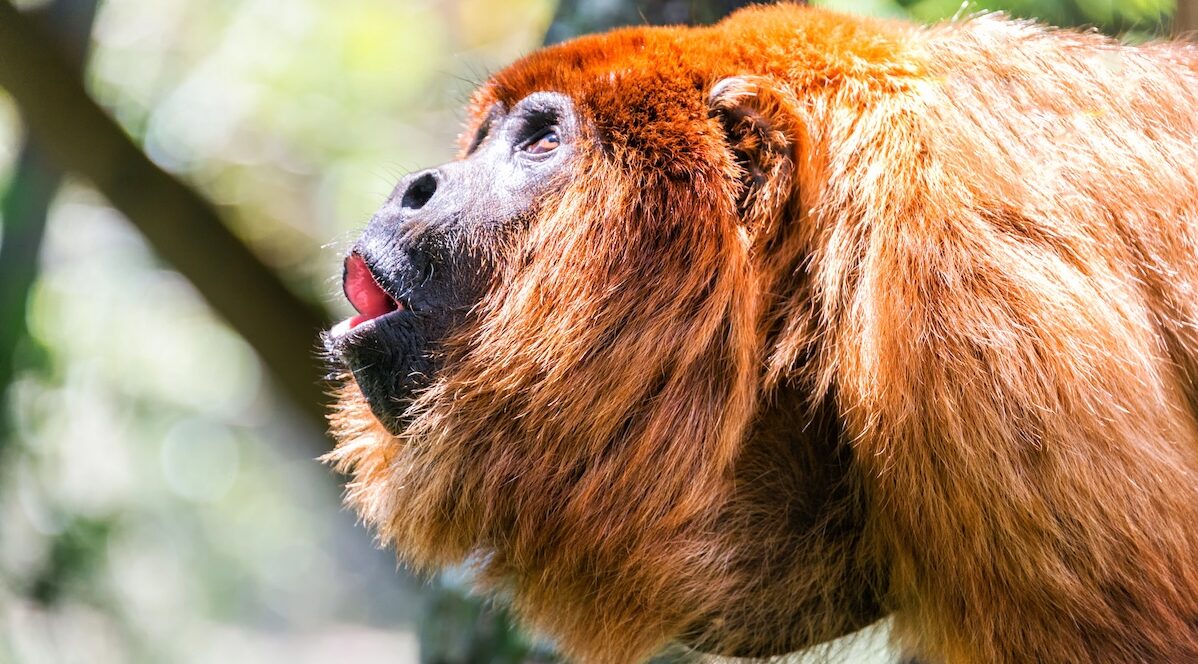 Photo Credit: jkraft5 on Deposit Photos
In the heart of Central and South American rainforests, the howler monkey, scientifically known as Alouatta, swings gracefully through the lush canopy. With its long limbs and prehensile tail, this agile primate navigates the treetops with ease, showcasing a striking blend of strength and elegance. What truly sets the howler monkey apart, however, is its remarkable vocal ability. Known for their deep, resonant howls that can be heard up to three miles away, these monkeys create a symphony of sound that echoes through the jungle, marking their territory and communicating with their troop.
As the sun filters through the vibrant green leaves, illuminating the howler monkey’s thick fur, you can’t help but be captivated by its expressive face and intelligent eyes. These monkeys are not just fascinating for their vocal prowess; they play a crucial role in their ecosystem as a keystone species. By munching on leaves, fruits, and flowers, they help maintain the health of the forest, ensuring that the delicate balance of life continues to thrive. Scientists and nature enthusiasts alike are drawn to the howler monkey, eager to learn more about its behaviors, social structures, and the vital role it plays in the rich tapestry of rainforest life. Join us as we explore the world of the howler monkey, uncovering the secrets of its life high above the forest floor.
The howler monkey holds a special place in the tree of life, showcasing a fascinating blend of characteristics that set it apart in the animal kingdom. Belonging to the order Primates, howler monkeys are known for their distinctive vocalizations, which can be heard echoing through the forests of Central and South America. These monkeys are part of the family Atelidae, which includes other large, tree-dwelling primates. Their unique adaptations, such as prehensile tails that act like an extra hand, allow them to navigate the treetops with ease, making them true masters of their arboreal domain.
| Taxonomic Rank | Scientific Name | Meaning & Significance |
|---|---|---|
| Kingdom | Animalia | This name signifies that howler monkeys are part of the vast group of multicellular organisms that are capable of movement and responsive to their environment. |
| Phylum | Chordata | Chordata means “having a notochord,” a flexible rod that supports the body. This feature is a key characteristic of all vertebrates, including howler monkeys. |
| Class | Mammalia | Mammalia refers to mammals, which are warm-blooded animals that have hair or fur and typically give live birth. Howler monkeys are warm-blooded, meaning they can regulate their body temperature. |
| Order | Primates | The term Primates comes from the Latin word for “first,” highlighting their advanced brain development and social behaviors compared to other animals. |
| Family | Atelidae | Atelidae means “imperfect,” which refers to the lack of a thumb in some members of this family, including howler monkeys, making their hands uniquely adapted for gripping branches. |
| Genus | Alouatta | Alouatta is derived from the Tupi-Guarani word for “howler,” perfectly capturing the loud, distinctive calls that these monkeys are famous for. |
Understanding the howler monkey’s classification reveals much about its evolutionary journey. As a member of the primate order, it shares a common ancestor with humans, apes, and other monkeys, highlighting the deep connections within the animal kingdom. The adaptations that define howler monkeys, from their vocal prowess to their specialized limbs, reflect millions of years of evolution, allowing them to thrive in their forest habitats. This rich tapestry of life illustrates not only their unique place in nature but also the intricate relationships that bind all living beings together.
The evolutionary journey of the howler monkey stretches back millions of years, tracing its roots to the early primates that roamed the Earth. These primates emerged around 65 million years ago, shortly after the dinosaurs disappeared. As the world transformed, so did the ancestors of howler monkeys, adapting to the lush, tropical forests of Central and South America.
The howler monkey belongs to the family Atelidae and the genus Alouatta. Its ancestors were small, tree-dwelling creatures that gradually evolved into larger, more specialized primates. One major transition occurred around 20 million years ago, when these monkeys developed a unique vocalization system. This adaptation allowed them to communicate over long distances in dense forests, helping them maintain social bonds and warn of potential dangers. Over time, howler monkeys also adapted to a herbivorous diet, developing specialized teeth and digestive systems to process leaves, fruits, and flowers.
These adaptations have been crucial for howler monkeys, enabling them to thrive in their forest habitats. Their powerful vocalizations help them establish territory and communicate with their troop members, while their prehensile tails provide the agility needed to move through the canopy. By forming social groups, they can work together to find food and defend against predators, ensuring their survival in a world full of challenges. The evolutionary story of the howler monkey is a testament to the power of adaptation and the intricate connections within the natural world.
The howler monkey is a striking figure in the treetops, known for its impressive size and distinctive features. With a body that can weigh anywhere from 6.6 to 32 pounds, these monkeys are robust and muscular, giving them a powerful presence. Their long limbs and prehensile tails allow them to swing gracefully from branch to branch, while their expressive faces, often framed by a mane of thick fur, add to their charismatic charm. The howler monkey’s body is built for life in the canopy, where agility and strength are essential for navigating the complex world of leaves and branches.
| Feature | Description |
|---|---|
| Size | Weight ranges from 6.6 to 32 pounds, depending on the species. |
| Color | Fur can vary from black to brown, with some species displaying striking red or golden hues. |
| Skin Type | Covered in thick, soft hair that provides insulation and camouflage. |
| Tail | Long and prehensile, acting like a fifth limb for grasping branches. |
| Face | Prominent, expressive features with a flat nose and large eyes, enhancing their social interactions. |
These physical traits work together to create a highly adapted animal for life in the trees. The howler monkey’s strong limbs and prehensile tail are perfect for climbing and swinging, allowing them to escape predators and reach food sources high above the ground. Their thick fur not only keeps them warm but also helps them blend into the leafy environment, making it harder for predators to spot them. With their expressive faces, howler monkeys communicate effectively with one another, using vocalizations that can be heard for miles, further enhancing their social bonds and survival in the wild.
The howler monkey thrives in the lush embrace of rainforests and dense jungles, where the canopy forms a vibrant green ceiling high above. These habitats are alive with the sounds of chirping birds, rustling leaves, and the distant calls of other wildlife. Sunlight filters through the thick foliage, creating a dappled effect on the forest floor, while vines and colorful flowers weave through the trees. This rich environment provides not only shelter but also a diverse menu of fruits, leaves, and flowers that howler monkeys love to munch on.
Howler monkeys prefer warm, humid climates that are typical of tropical rainforests. These areas experience high rainfall, often exceeding 100 inches a year, which keeps the vegetation lush and green. The temperature usually hovers between 70 and 90 degrees Fahrenheit, creating a cozy environment for these primates. The dense foliage not only provides food but also offers protection from predators and harsh weather conditions.
To thrive in these specific habitats, howler monkeys have developed several clever adaptations. Their strong limbs and prehensile tails allow them to swing gracefully from branch to branch, navigating the treetops with ease. Their vocal cords are uniquely adapted to produce their iconic howls, which can be heard over long distances, helping them communicate with others in their troop. This ability to call out not only strengthens social bonds but also marks their territory, ensuring they can live harmoniously in their vibrant jungle homes.
Howler monkeys lead a vibrant daily life filled with activity and social interaction. As the sun rises, these lively primates begin their day by foraging for food, primarily munching on leaves, fruits, and flowers. Their strong jaws and specialized teeth help them tackle tough plant material. Throughout the day, they swing gracefully from branch to branch, using their long limbs and prehensile tails to navigate the treetops. As the sun sets, howler monkeys settle down for the night, often resting in the safety of the canopy, where they can avoid predators.
Social behavior is a cornerstone of howler monkey life. They live in troops, which can consist of a few individuals to over a dozen. These groups are typically led by a dominant male, who plays a crucial role in maintaining order and protecting the troop. Communication is key in their social structure; howler monkeys are famous for their loud, distinctive calls that can be heard for miles. These vocalizations help them establish territory and keep in touch with other members of the troop. Grooming is another important social activity, strengthening bonds and promoting harmony within the group.
| Behavior Type | Description |
|---|---|
| Foraging | Howler monkeys search for leaves, fruits, and flowers, using their strong jaws to eat tough plant material. |
| Troop Structure | They live in groups led by a dominant male, which helps maintain order and protect the troop. |
| Communication | Howler monkeys use loud calls to establish territory and communicate with troop members. |
| Grooming | This activity helps strengthen social bonds and maintain peace within the group. |
These behaviors are not just interesting; they are vital for survival. By foraging in groups, howler monkeys can find food more efficiently and protect each other from predators. Their vocalizations help them defend their territory and keep their troop cohesive, ensuring that everyone stays connected. Grooming fosters strong relationships, which are essential for cooperation and support within the troop. Together, these activities create a dynamic social structure that enhances their chances of thriving in the wild.
Howler monkeys are primarily omnivores, which means they enjoy a varied diet that includes both plant and animal matter. Their favorite foods are fruits, nuts, and seeds, which they skillfully forage from the treetops. With their strong limbs and prehensile tails, howler monkeys navigate the branches with ease, using their keen sense of smell to locate ripe fruits and other tasty treats. They often feed in groups, sharing their discoveries and making the most of their time in the canopy.
| Dietary Aspect | Details |
|---|---|
| Diet Type | Omnivore |
| Favorite Foods | Fruits, nuts, seeds |
| Prey Items | Primarily plant-based, with occasional insects |
| Hunting/Foraging Strategies | Forage in groups, using strong limbs and prehensile tails to navigate trees |
The diet of howler monkeys plays a crucial role in their ecology and daily routine. By consuming a variety of fruits and seeds, they help in seed dispersal, which is vital for the health of their forest habitat. This not only supports the growth of new plants but also maintains the balance of the ecosystem. Their foraging habits influence their social structures, as they often work together to find food, strengthening bonds within their groups. Thus, the way howler monkeys eat shapes not just their lives, but also the vibrant world around them.
Howler monkeys have a fascinating mating behavior that is closely tied to their breeding season. Typically, these monkeys mate year-round, but there are peaks in activity during certain times of the year, often influenced by food availability and environmental conditions. Males will often vocalize loudly to attract females and establish their territory. This iconic howling is not just a call; it’s a way to communicate their readiness to mate and assert dominance over other males in the area.
| Reproductive Aspect | Details |
|---|---|
| Gestation Period | Approximately 6 months |
| Litter Size | 1 |
| Age of Maturity | 2 to 3 years |
| Name of Young | Infant |
Once the infant is born, parental care becomes a crucial part of its development. Howler monkeys are known for their strong family bonds, and both mothers and other group members play a role in raising the young. The mother carries her infant for several months, providing warmth and nourishment. As the infant grows, it learns essential skills by observing and mimicking the adults in its troop. By the time they reach maturity at around 2 to 3 years, these young howler monkeys are well-prepared to navigate the treetops and join in the vibrant social life of their group.
Howler monkeys play a vital role in their ecosystem, often found high in the treetops of Central and South American rainforests. As herbivores, they primarily feed on leaves, fruits, and flowers, which helps maintain the health of their habitat. However, despite their position in the food web, they face numerous dangers that threaten their survival.
To defend themselves against these threats, howler monkeys have developed several survival strategies. Their loud, distinctive calls serve as both a warning to other monkeys and a way to communicate their presence, which can deter potential predators. Additionally, their strong limbs and prehensile tails allow them to navigate the treetops with agility, making quick escapes possible. By staying in groups, they also benefit from the safety of numbers, as more eyes can spot danger and alert the rest of the troop. These clever adaptations help howler monkeys thrive in a world filled with challenges.
A keystone species is a vital part of its ecosystem, meaning its presence and activities have a significant impact on the environment and other living things. Howler monkeys qualify as a keystone species due to their unique role in the rainforest. Their activities help shape the ecosystem, influencing the health and diversity of the habitats they inhabit.
Howler monkeys are primarily herbivores, feeding on leaves, fruits, and flowers. By consuming these plants, they help control vegetation growth, which can prevent any one species from dominating the landscape. This balance allows for a variety of plants to thrive, supporting a rich diversity of life. Additionally, as they move through the trees, howler monkeys disperse seeds from the fruits they eat. This seed dispersal is crucial for the growth of new plants, ensuring that the forest remains vibrant and healthy.
Moreover, howler monkeys are known for their loud calls, which can be heard over long distances. These vocalizations not only communicate with other monkeys but also serve as a warning to potential predators. By establishing their presence through sound, they help maintain a balance in the food web, as their calls can deter some predators from venturing too close to their territory.
If howler monkeys were to disappear from their ecosystem, the consequences would be profound. Without their seed dispersal, many plant species could struggle to reproduce, leading to a decline in forest diversity. This loss would ripple through the ecosystem, affecting countless other species that rely on those plants for food and shelter. The balance of the rainforest would be disrupted, potentially leading to a less resilient environment, making it more vulnerable to diseases and climate change. In essence, the absence of howler monkeys would create a domino effect, altering the entire landscape of their habitat.
The howler monkey occupies a crucial ecological niche in the rainforests and dense jungles of Central and South America. As a keystone species, its activities significantly influence the environment and the other organisms that share its habitat. Howler monkeys are known for their loud, distinctive calls that can be heard over long distances, marking their territory and communicating with their troop. This vocalization not only plays a role in social interactions but also helps maintain the balance of their ecosystem.
| Ecosystem Service | Impact |
|---|---|
| Seed Dispersal | Howler monkeys help spread seeds through their droppings, promoting plant growth and diversity. |
| Vegetation Control | By feeding on leaves and fruits, they help regulate plant populations, preventing any one species from dominating. |
| Habitat for Other Species | Their presence creates a habitat for various insects and birds that rely on the same trees. |
| Soil Enrichment | Their waste adds nutrients to the soil, enhancing the health of the forest floor. |
Howler monkeys influence their environment in several specific ways. For instance, as they munch on leaves and fruits, they not only satisfy their hunger but also prune trees, which can encourage new growth. This behavior helps maintain a diverse range of plant species, ensuring that the forest remains vibrant and healthy. Additionally, when they move through the canopy, they create pathways that other animals can use, promoting biodiversity. Their role as seed dispersers is particularly important; when they eat fruits, they often travel long distances before excreting the seeds, allowing new plants to sprout far from the parent tree.
The broader ecological importance of howler monkeys cannot be overstated. By supporting plant diversity and contributing to the health of their rainforest habitat, they play a vital role in the overall balance of the ecosystem. Their interactions with other species, from plants to insects, create a web of life that sustains countless organisms. Protecting howler monkeys and their habitats is essential not only for their survival but also for the health of the entire rainforest ecosystem, which is a treasure trove of biodiversity.
In the intricate web of life, howler monkeys engage in various partnerships with other species, showcasing the beauty of symbiosis. Symbiosis refers to the close interactions between different species, which can be beneficial, harmful, or neutral. These relationships are essential for maintaining the balance of ecosystems, as they help species thrive and adapt to their environments. Howler monkeys, with their vibrant presence in the rainforest, exemplify how these connections can shape the lives of many organisms.
| Species/Type | Relationship Type | Description |
|---|---|---|
| Birds (e.g., Toucans) | Mutualistic | Howler monkeys and certain birds, like toucans, share a mutualistic relationship. The monkeys provide a source of food by dropping fruits and seeds, while the birds help disperse these seeds, promoting plant growth. |
| Fungi | Commensal | Howler monkeys often interact with fungi that grow on the trees they inhabit. The fungi benefit from the nutrients in the monkey’s waste, while the monkeys are largely unaffected by the fungi’s presence. |
| Parasites (e.g., ticks) | Parasitic | Howler monkeys can host parasites like ticks, which feed on their blood. This relationship is harmful to the monkeys, as it can lead to health issues, but it benefits the ticks by providing them with sustenance. |
These relationships have evolved over time, shaped by the needs and behaviors of the species involved. Mutualistic partnerships, like those with birds, enhance the survival of both parties, while commensal relationships allow some species to thrive without harming others. On the other hand, parasitic interactions highlight the challenges faced by howler monkeys, reminding us that not all relationships in nature are beneficial. Understanding these connections helps us appreciate the delicate balance of ecosystems and the roles each species plays in sustaining life in the rainforest.
Howler monkeys are not just known for their loud calls; they are full of surprises that make them truly captivating. Here are some intriguing facts that showcase their unique traits and behaviors.
Howler monkeys have long captured the imagination of humans, weaving their way into the cultural fabric of many Central and South American societies. Historically, these primates were revered by indigenous peoples, often seen as symbols of strength and connection to the natural world. Their loud, haunting calls echoing through the forests have inspired folklore and stories, making them a significant part of local traditions. As humans ventured into their habitats, encounters with howler monkeys became more common, leading to a complex relationship that has evolved over centuries.
In today’s world, the interaction between howler monkeys and humans is a mix of conservation efforts and challenges. As deforestation and habitat loss threaten their populations, many organizations are working tirelessly to protect these primates and their environments. However, conflicts can arise when howler monkeys venture into agricultural areas, leading to tensions with farmers. While some people may view them as pests, others recognize their ecological importance and advocate for coexistence. Domestication is not a viable option for howler monkeys, as they are wild animals that thrive in their natural habitats, but education and awareness can help foster a more harmonious relationship.
Looking ahead, the future of the relationship between howler monkeys and humanity hinges on our ability to balance development with conservation. As awareness grows about the ecological roles these monkeys play, there is hope for more collaborative efforts to protect their habitats. By fostering a sense of stewardship and respect for wildlife, we can ensure that howler monkeys continue to thrive alongside us, enriching our lives with their presence and calls for generations to come.
The howler monkey, a vibrant inhabitant of Central and South American rainforests, currently holds a conservation status of “Least Concern” according to the International Union for Conservation of Nature (IUCN). This means that, at present, howler monkeys are not facing an immediate threat of extinction. However, their populations are experiencing fluctuations, with some species showing signs of decline due to various environmental pressures. While they are still relatively abundant in certain areas, ongoing habitat loss and other challenges could impact their future.
| Conservation Factor | Status/Details |
|---|---|
| IUCN Status | Least Concern |
| Population Estimates | Varies by species; some populations are stable, while others are declining |
| Trend Direction | Some species are experiencing population declines |
Despite their current status, howler monkeys face significant threats that could jeopardize their long-term survival. The primary danger comes from habitat destruction, often caused by deforestation for agriculture, logging, and urban development. As trees are cut down, these monkeys lose their homes and food sources, making it harder for them to thrive. Additionally, hunting and the illegal pet trade pose further risks, as some individuals are captured for entertainment or as exotic pets, disrupting their social structures and populations.
Conservation efforts are underway to protect howler monkeys and their habitats. Organizations are working to promote sustainable land use practices and raise awareness about the importance of preserving these incredible primates. Protected areas and wildlife reserves are being established to safeguard their natural environments. The outlook for howler monkeys remains cautiously optimistic, as long as conservation initiatives continue to address the challenges they face. By fostering a deeper understanding of these remarkable animals, we can help ensure that future generations will still hear their iconic howls echoing through the forests.
| Question | Answer |
|---|---|
| Where do Howler Monkeys live? | Howler Monkeys are typically found in the lush rainforests and dense jungles of Central and South America. They prefer areas with plenty of trees, as they spend most of their time in the canopy, which is the upper layer of the forest. |
| What do Howler Monkeys eat? | These monkeys are omnivores, meaning they eat a variety of foods. Their diet mainly consists of leaves, fruits, and flowers, but they may also consume insects and small animals when the opportunity arises. |
| How do Howler Monkeys communicate? | Howler Monkeys are famous for their loud howls, which can be heard up to three miles away! They use these vocalizations to communicate with each other, especially to mark their territory and warn other groups to stay away. |
| How do Howler Monkeys reproduce? | Female Howler Monkeys usually give birth to a single baby after a gestation period of about six months. The young are cared for by their mothers and learn important skills from their family group as they grow. |
| What are the main threats to Howler Monkeys? | Howler Monkeys face several threats, including habitat loss due to deforestation and hunting. As their forest homes are cut down for agriculture and urban development, their populations can decline. |
| What makes Howler Monkeys unique? | One of the most interesting characteristics of Howler Monkeys is their prehensile tail, which acts like a fifth limb. This tail helps them grasp branches as they swing through the trees, making them agile climbers. |
| Are Howler Monkeys social animals? | Yes, Howler Monkeys are very social and live in groups called troops. These troops can consist of a few individuals to over a dozen, and they work together to find food and protect each other from predators. |