Taxonomy & Classification
- Kingdom
- Animalia
- Phylum
- Arthropoda
- Class
- Arachnida
- Order
- Araneae
- Family
- Sparassidae
- Genus
- Heteropoda

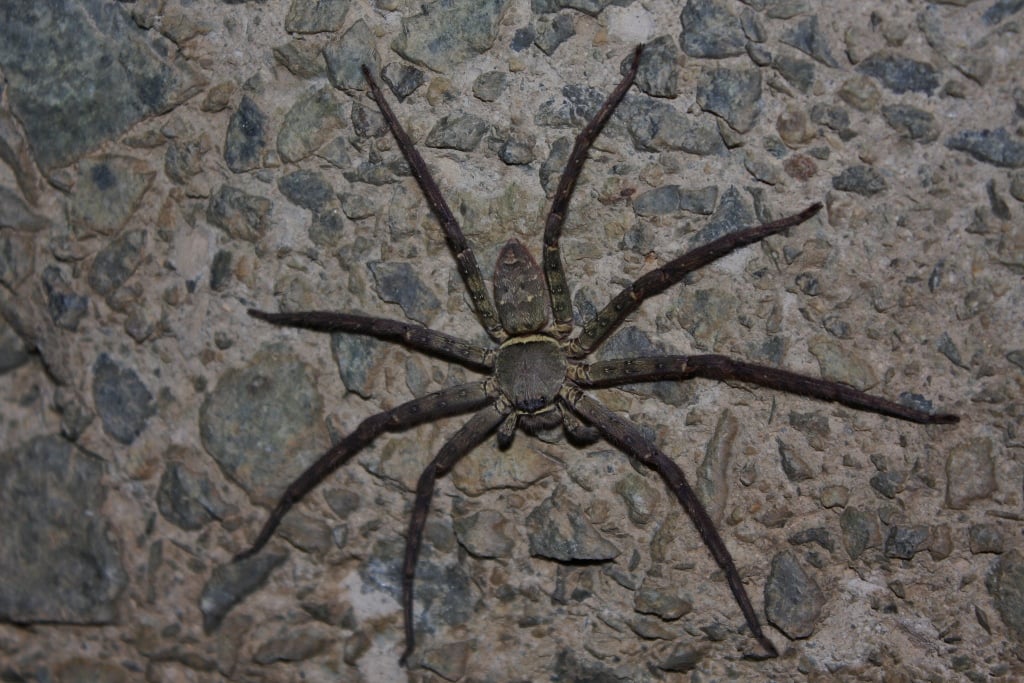 Photo Credit: File Upload Bot (Magnus Manske) / Wikimedia Commons
In the warm embrace of twilight, the Huntsman Spider, scientifically known as Sparassidae, emerges from its hidden lair, ready to explore the world around it. With long, spindly legs that can stretch up to a foot wide, this remarkable arachnid is a master of agility and speed. Its body, often adorned with earthy tones and intricate patterns, allows it to blend seamlessly into the sun-drenched gardens and shadowy corners of its habitat. As the sun dips below the horizon, the Huntsman Spider becomes a nocturnal hunter, scuttling across the ground in search of its next meal, which can include everything from insects to small lizards.
What makes the Huntsman Spider particularly captivating to scientists and nature enthusiasts alike is its unique combination of speed and hunting prowess. Unlike many of its spider relatives that spin webs to catch prey, the Huntsman relies on its quick reflexes and keen eyesight to ambush unsuspecting victims. This behavior not only showcases its adaptability but also highlights its important role in the ecosystem as a predator. As we delve deeper into the world of the Huntsman Spider, we will uncover its fascinating life cycle, its interactions with humans, and the vital part it plays in maintaining the balance of nature. Join us on this adventure to learn more about this extraordinary creature that inspires both awe and curiosity.
The Huntsman Spider, belonging to the family Sparassidae, is a captivating member of the animal kingdom. These spiders are known for their impressive speed and agility, which sets them apart from many of their eight-legged relatives. With their long legs and flattened bodies, Huntsman Spiders are perfectly adapted for life on the move, often scuttling quickly across surfaces in search of prey. Their unique hunting style, which involves chasing down their food rather than using webs, showcases their evolutionary adaptations that make them efficient predators.
| Taxonomic Rank | Scientific Name | Meaning & Significance |
|---|---|---|
| Kingdom | Animalia | This name signifies that Huntsman Spiders are part of the vast group of multicellular organisms that are typically motile and consume organic material for energy. |
| Phylum | Arthropoda | Meaning “jointed legs,” this classification highlights the Huntsman Spider’s segmented body and jointed appendages, which are key features of this diverse group. |
| Class | Arachnida | This term refers to arachnids, a class that includes spiders, scorpions, and ticks, characterized by having eight legs and no antennae. |
| Order | Araneae | Simply put, this is the order of spiders, which are known for their ability to produce silk and their predatory nature. |
| Family | Sparassidae | This family name comes from the Greek word “sparassos,” meaning “to seize,” reflecting the Huntsman Spider’s active hunting behavior. |
| Genus | Heteropoda | Translating to “different foot,” this name refers to the unique structure of the spider’s legs, which are adapted for speed and agility. |
Understanding the Huntsman Spider’s classification reveals much about its evolutionary journey. As a member of the Arachnida class, it shares common ancestry with other spiders, yet its distinct adaptations for hunting and movement set it apart. The name “Heteropoda” emphasizes its specialized limbs, showcasing how evolution has shaped its physical traits to thrive in various environments. This spider’s place in the tree of life illustrates the incredible diversity and adaptability found within the animal kingdom, reminding us of the intricate connections that bind all living organisms.
The evolutionary journey of the Huntsman Spider, part of the Sparassidae family, stretches back millions of years. These agile arachnids have adapted to their environments through a series of remarkable changes, allowing them to thrive in diverse habitats across the globe. Their lineage can be traced to ancient ancestors that roamed the Earth long before the rise of mammals, showcasing a fascinating tale of survival and adaptation.
The earliest ancestors of Huntsman Spiders were likely small, web-weaving spiders that lived in the shadows of prehistoric forests. Over time, as the environment changed, these spiders began to develop traits that would help them hunt more effectively. One major transition was the shift from web-building to active hunting. This change allowed them to pursue prey with speed and agility, making them formidable predators. As they evolved, their body structure became more streamlined, enhancing their ability to navigate through complex terrains, from leaf litter to rocky crevices.
These adaptations have been crucial for the Huntsman Spider’s survival. Their speed and agility allow them to hunt effectively, while their flat bodies and camouflage help them evade danger. With excellent vision, they can detect movement quickly, ensuring they are always one step ahead in the wild. Together, these traits have enabled Huntsman Spiders to thrive in various ecosystems, from tropical rainforests to arid deserts, showcasing the power of evolution in shaping life on Earth.
The Huntsman Spider is an awe-inspiring sight, often evoking a mix of fascination and fear. With long, spindly legs that can stretch out to impressive lengths, this spider can reach a leg span of up to 12 inches! Its body is flat and wide, allowing it to navigate through tight spaces with ease. The combination of its size and speed makes it a formidable predator, capable of surprising its prey in a flash. The Huntsman’s hairy skin adds texture and helps it blend into its surroundings, making it a master of camouflage.
| Feature | Description |
|---|---|
| Weight | 0.024 ounces to 0.37 pounds |
| Skin Type | Hairy |
| Most Distinctive Feature | Size |
These physical traits work together to enhance the Huntsman Spider’s survival skills. Its lightweight body allows for quick movements, while its long legs provide stability and reach, making it an efficient hunter. The hairy texture of its skin not only aids in camouflage but also helps it sense vibrations in the environment, alerting it to potential threats or prey. Together, these features create a spider that is not just a passive resident of its habitat but an active and agile predator, perfectly adapted to thrive in the wild.
The Huntsman Spider thrives in a variety of warm environments, often found in places that offer both shelter and hunting grounds. Picture a sun-drenched garden, where the air is filled with the buzz of insects, or a cozy nook in a forest, where leaves rustle gently in the breeze. These spiders are not picky; they can make their homes in crevices, under bark, or even inside human dwellings, always on the lookout for their next meal. Their ability to blend into their surroundings makes them masters of camouflage, allowing them to remain hidden from both predators and prey.
Huntsman Spiders prefer climates that are warm and humid, which helps them stay active and hunt effectively. They thrive in areas where temperatures are mild to hot, as these conditions support the abundance of insects they feed on. The moisture in the air is also crucial, as it helps keep their bodies hydrated. Whether in tropical rainforests or temperate regions, these spiders are adaptable, finding ways to survive in various environmental conditions.
Adaptation is key to the Huntsman Spider’s success in diverse habitats. Their long legs allow them to move quickly across surfaces, making them excellent hunters. They can also flatten their bodies to squeeze into tight spaces, which is perfect for hiding from larger predators. Additionally, their coloration often mimics the environment, providing effective camouflage. This combination of speed, agility, and stealth enables them to thrive in both natural and human-altered landscapes, showcasing their remarkable ability to adapt and survive.
The Huntsman Spider leads a life filled with activity and excitement, primarily during the night when it becomes most active. As a nocturnal hunter, it spends its evenings scuttling across the ground and climbing trees in search of food. With its keen eyesight, it spots potential prey like insects and small arthropods. The Huntsman is known for its remarkable speed, allowing it to chase down its meals with impressive agility. During the day, it often finds a cozy spot to rest, blending into its surroundings to avoid predators.
These spiders are not solitary creatures; they exhibit sociable behavior, often found in small groups. While they do not form complex social structures like some insects, they can share a space without much conflict. This group dynamic allows them to benefit from each other’s presence, especially when hunting. They communicate through subtle movements and vibrations, which help them stay aware of one another and coordinate their activities. This social aspect of their lives adds an interesting layer to their daily routines.
| Behavior Type | Description |
|---|---|
| Activity Patterns | Nocturnal hunters that are most active at night, using their speed to chase down prey. |
| Social Structure | Generally sociable, often found in small groups, sharing space without significant conflict. |
| Communication Methods | Utilize subtle movements and vibrations to communicate and coordinate with one another. |
The behaviors of the Huntsman Spider are finely tuned for survival. Their nocturnal lifestyle helps them avoid many predators while maximizing their hunting opportunities. By being sociable, they can benefit from the safety of numbers, making it easier to spot danger and share hunting grounds. This combination of speed, social interaction, and effective communication ensures that they thrive in their environments, showcasing the intricate balance of life in the wild.
The Huntsman Spider is a carnivore, meaning it primarily eats other animals. This spider has a diverse diet that includes insects, small mammals, other spiders, and even small lizards. With its incredible speed and keen hunting skills, the Huntsman Spider is a master at capturing its prey. It often relies on ambush tactics, waiting patiently for the right moment to pounce on unsuspecting victims.
| Dietary Aspect | Details |
|---|---|
| Diet Type | Carnivore |
| Favorite Foods | Insects, small mammals, other spiders, small lizards |
| Prey Items | Flies, crickets, beetles, and even small rodents |
| Hunting Strategies | Ambush and quick pursuit |
The diet of the Huntsman Spider plays a crucial role in its ecological niche. By preying on a variety of animals, it helps control insect populations, contributing to the balance of its ecosystem. This spider’s active hunting lifestyle also means it must be constantly on the move, making its daily routine a thrilling adventure filled with the excitement of the chase. Whether lurking in the shadows or darting across the ground, the Huntsman Spider’s feeding habits are a testament to its adaptability and skill in the wild.
When it comes to reproduction, Huntsman Spiders have some intriguing behaviors. Mating typically occurs in the warmer months, when the males are on the lookout for females. During this time, males perform a courtship dance, waving their long legs and tapping on the female’s web to get her attention. If she is receptive, they will mate, and the female will later lay her eggs in a silk sac, which she carefully guards until they hatch.
| Reproductive Aspect | Details |
|---|---|
| Gestation Period | About 2 to 3 weeks |
| Litter Size | Up to 200 eggs |
| Age of Maturity | About one year |
| Name of Young | Spiderlings or hatchlings |
Once the eggs hatch, the young Huntsman Spiders, known as spiderlings, emerge from the silk sac. These tiny creatures are independent from the start, meaning they do not rely on their mother for food or protection. As they grow, they will molt several times, shedding their exoskeletons to accommodate their increasing size. Over the course of about a year, these spiderlings will mature into adults, ready to embark on their own adventures in the wild. The journey from hatchling to adult is a remarkable transformation, showcasing the resilience and adaptability of these fascinating arachnids.
The Huntsman Spider plays a vital role in its ecosystem, acting as both predator and prey. As a skilled hunter, it helps control insect populations, which can benefit plants and other animals in its habitat. However, this agile arachnid is not without its dangers. It faces various threats that can impact its survival, making it an important part of the food web.
To defend itself against these threats, the Huntsman Spider employs several clever strategies. Its speed and agility allow it to escape quickly from predators, while its ability to blend into its surroundings helps it avoid detection. When cornered, it may also adopt a defensive posture, raising its legs to appear larger and more intimidating. These survival tactics, combined with its keen senses, help the Huntsman Spider navigate the challenges of its environment and continue to thrive.
A keystone species is an organism that has a disproportionately large impact on its environment relative to its abundance. This means that if it were removed, the ecosystem would change dramatically. The Huntsman Spider, with its role as a predator and its sociable nature, qualifies as a keystone species in its habitat. By controlling insect populations and serving as prey for larger animals, it helps maintain the balance of its ecosystem.
Huntsman Spiders are skilled hunters, primarily feeding on insects and small animals. By keeping insect populations in check, they prevent overpopulation, which can lead to plant damage and disrupt the food chain. For example, if there were too many insects, they could consume all the leaves on a tree, harming not just the tree but also the animals that rely on it for shelter and food. Additionally, these spiders are known to eat other spiders, which helps regulate spider populations and maintain diversity among arachnids.
Moreover, Huntsman Spiders are sociable creatures, often found in groups. This behavior can enhance their hunting efficiency, allowing them to tackle larger prey or defend against predators more effectively. Their presence in an ecosystem can also attract larger predators, such as birds and mammals, which rely on them as a food source. This interconnectedness illustrates how the Huntsman Spider contributes to the overall health of its environment.
If the Huntsman Spider were to disappear, the effects would ripple through the ecosystem. Insect populations could explode, leading to significant plant damage and a decline in plant diversity. This, in turn, would affect the animals that depend on those plants for food and shelter. Larger predators that rely on Huntsman Spiders as a food source would also struggle to find enough to eat, potentially leading to their decline. The loss of this spider would disrupt the delicate balance of its habitat, showcasing just how vital it is to the ecosystem.
The Huntsman Spider occupies a crucial ecological niche as a predator in warmer regions of the world. With its remarkable speed and agility, this spider plays a significant role in controlling insect populations. By keeping these populations in check, the Huntsman Spider helps maintain a balanced ecosystem, ensuring that no single species overwhelms the environment. This balance is essential for the health of various habitats, from lush gardens to dense forests.
| Ecosystem Service | Impact |
|---|---|
| Insect Population Control | Reduces the number of pests that can damage plants and spread disease. |
| Food Source for Other Animals | Serves as prey for birds, reptiles, and other predators, contributing to the food web. |
| Soil Health | By preying on insects that feed on plants, it helps maintain healthy vegetation, which supports soil stability. |
The influence of the Huntsman Spider extends beyond just its immediate hunting activities. For instance, by preying on various insects, it helps protect crops and gardens from potential damage. This is particularly important in agricultural areas where pests can wreak havoc on food supplies. Additionally, the spider’s presence can attract other wildlife, creating a more diverse ecosystem. Birds and small mammals that feed on Huntsman Spiders contribute to the intricate web of life, showcasing how interconnected these relationships are.
The broader ecological importance of the Huntsman Spider cannot be overstated. As a keystone species, its role in the ecosystem is vital; without it, the balance of predator and prey would be disrupted, leading to overpopulation of certain insects and a decline in plant health. This spider not only supports its immediate environment but also contributes to the overall health of the ecosystem. By understanding and appreciating the Huntsman Spider, we gain insight into the delicate balance of nature and the importance of every creature, no matter how small.
In the intricate web of life, symbiosis refers to the close and often long-term interactions between different species. These relationships can take many forms, including mutualism, where both species benefit, parasitism, where one benefits at the expense of the other, and commensalism, where one benefits while the other is neither helped nor harmed. The Huntsman Spider, known for its speed and agility, engages in various ecological relationships that highlight the interconnectedness of nature.
| Species/Type | Relationship Type | Description |
|---|---|---|
| Ants | Mutualistic | Huntsman Spiders may share their habitat with ants, which help protect them from larger predators. In return, the spiders may help control insect populations that could harm the ants’ food sources. |
| Small Birds | Commensal | Huntsman Spiders can sometimes be found in nests of small birds. The spiders benefit from the shelter, while the birds are generally unaffected by their presence. |
| Other Insects | Parasitic | While not a primary behavior, Huntsman Spiders may occasionally prey on insects that are already weakened or injured, taking advantage of their vulnerable state. |
Through the ages, these relationships have evolved, showcasing the delicate balance of ecosystems. The Huntsman Spider’s interactions with other species not only enhance its survival but also contribute to the health of its environment. By controlling insect populations and providing shelter for other creatures, these spiders play a vital role in maintaining the biodiversity of their habitats. Understanding these connections helps us appreciate the complexity of nature and the importance of every species within it.
The Huntsman Spider is a captivating arachnid that often surprises those who encounter it. With its impressive size and remarkable abilities, this spider has some intriguing traits that make it stand out in the animal kingdom.
The Huntsman Spider has woven itself into the fabric of human culture and history in intriguing ways. Found in many parts of the world, these spiders have often been viewed with a mix of awe and fear. In some cultures, they are seen as symbols of good luck, while in others, they evoke a sense of dread due to their size and speed. Historical encounters with these spiders have led to various myths and stories, often highlighting their impressive hunting skills and unique appearance. As people have come to understand more about these arachnids, the relationship has evolved from one of fear to a more nuanced appreciation of their role in the ecosystem.
Today, interactions between humans and Huntsman Spiders are complex and multifaceted. While many people still fear these spiders, they are increasingly recognized for their ecological importance. Huntsman Spiders help control pest populations, making them valuable allies in gardens and homes. However, conflicts can arise when these spiders venture too close to human dwellings, leading to attempts to remove or relocate them. In some regions, conservation efforts aim to protect their habitats, emphasizing the need for coexistence rather than eradication. Interestingly, there are even instances where people have developed a fascination with these spiders, keeping them as exotic pets, which reflects a growing interest in understanding and appreciating the natural world.
As we look to the future, the relationship between humans and Huntsman Spiders is likely to continue evolving. With increasing awareness of biodiversity and the importance of every species in our ecosystems, more people may come to appreciate these remarkable arachnids. Education and conservation efforts can help bridge the gap between fear and understanding, fostering a sense of respect for the Huntsman Spider and its vital role in nature. By embracing coexistence, we can ensure that these fascinating creatures remain a part of our world for generations to come.
The Huntsman Spider currently holds a conservation status of “Least Concern,” according to the International Union for Conservation of Nature (IUCN). This means that, for now, these fascinating arachnids are not facing immediate threats that could lead to their extinction. With an estimated population size of at least hundreds of thousands worldwide, Huntsman Spiders are thriving in various habitats across the globe. Their adaptability and resilience contribute to their stable population trends, allowing them to flourish in diverse environments.
| Conservation Factor | Status/Details |
|---|---|
| IUCN Status | Least Concern |
| Estimated Population Size | At least hundreds of thousands worldwide |
| Population Trend | Stable |
Despite their current stable status, Huntsman Spiders face several threats that could impact their populations in the future. Habitat loss due to urbanization and agricultural expansion poses a significant risk, as these activities can destroy the natural environments where these spiders thrive. Additionally, pesticide use can reduce their prey availability, making it harder for them to find food. Climate change also plays a role, as shifting temperatures and weather patterns can alter their habitats and affect their survival.
Conservation efforts for the Huntsman Spider primarily focus on habitat preservation and raising awareness about their ecological importance. By protecting natural areas and promoting sustainable practices, we can help ensure that these remarkable spiders continue to play their vital role in ecosystems. The outlook for the Huntsman Spider remains positive, as long as we remain vigilant in our efforts to safeguard their habitats and educate others about the importance of all species in maintaining a balanced environment.
| Question | Answer |
|---|---|
| Where do Huntsman Spiders live? | Huntsman Spiders are found in warmer areas of the world, including Australia, Africa, and parts of Asia. They prefer habitats like forests, gardens, and even homes, where they can easily find food and shelter. |
| What do Huntsman Spiders eat? | These spiders are carnivores, meaning they primarily eat other animals. Their diet mainly consists of insects, but they can also catch small vertebrates like lizards and frogs. |
| How do Huntsman Spiders behave? | Huntsman Spiders are known for their speed and agility. They are not web builders; instead, they actively hunt their prey, using their long legs to move quickly and stealthily. |
| How do Huntsman Spiders reproduce? | During mating, the male Huntsman Spider performs a courtship dance to attract a female. After mating, the female lays eggs in a silk sac, which she guards until the spiderlings hatch. |
| What threats do Huntsman Spiders face? | Huntsman Spiders are generally considered to be of least concern in terms of conservation. However, they can face threats from habitat loss and pesticides, which can reduce their food sources and living spaces. |
| What is the most distinctive feature of Huntsman Spiders? | The most distinctive feature of Huntsman Spiders is their size. They can have a leg span of up to 12 inches, making them one of the largest spider species in the world! |
| Are Huntsman Spiders dangerous to humans? | While Huntsman Spiders can bite if threatened, their venom is not considered dangerous to humans. Most bites result in mild pain and swelling, similar to a bee sting. |