Taxonomy & Classification
- Kingdom
- Animalia
- Phylum
- Chordata
- Class
- Mammalia
- Order
- Carnivora
- Family
- Hyaenidae
- Genus
- Crocuta
- Species
- Crocuta Crocuta

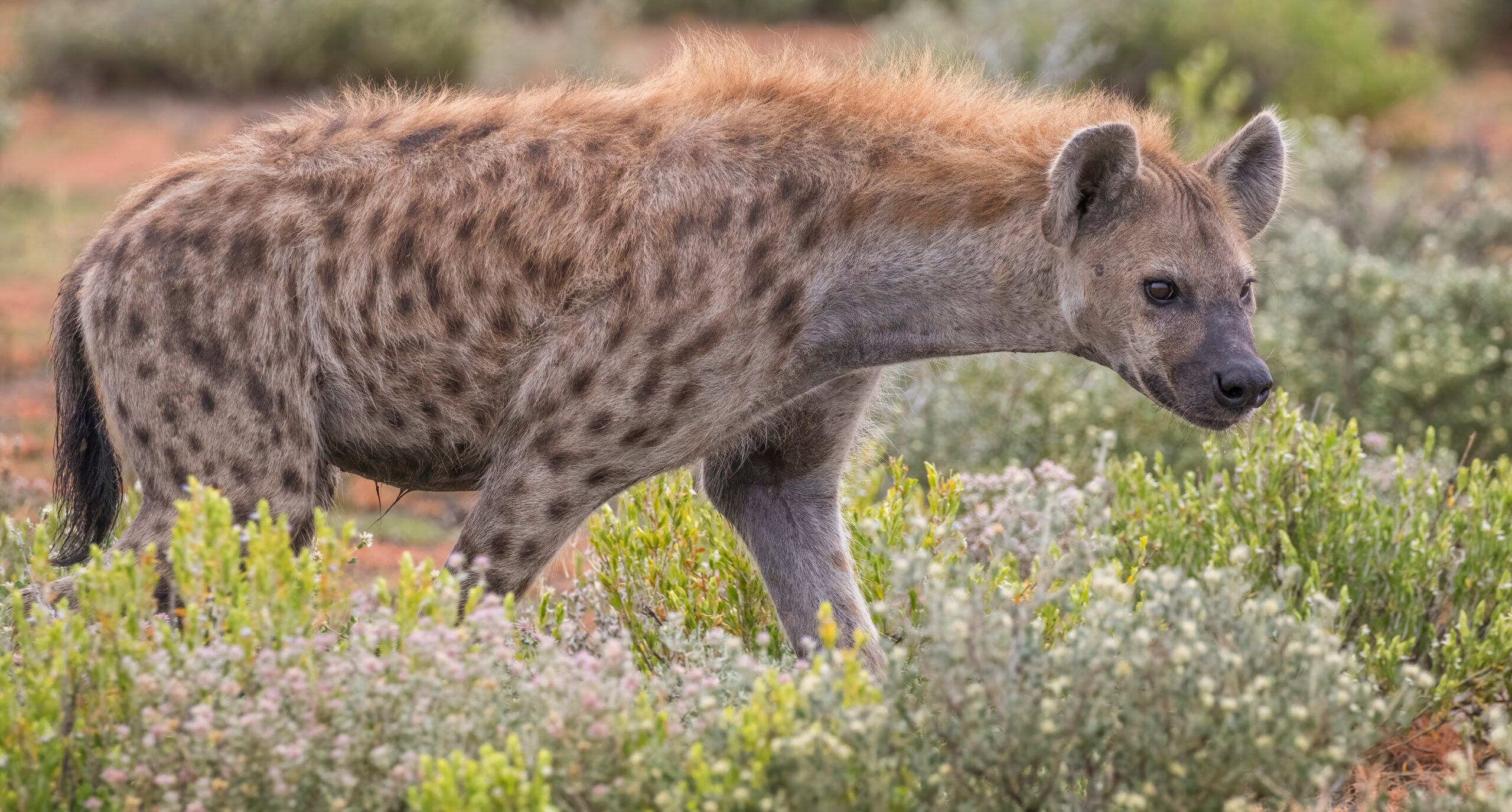 Photo Credit: Charlesjsharp / Wikimedia Commons
In the heart of Africa’s sun-drenched savanna, the spotted hyena, known scientifically as Crocuta crocuta, roams with a blend of grace and power. With its strong, muscular body and distinctive coat of mottled brown and black spots, this remarkable animal is often misunderstood. While many people picture hyenas as mere scavengers, they are actually skilled hunters and social creatures, living in complex family groups called clans. Their haunting laughter echoes across the plains, a sound that intrigues both scientists and nature lovers alike, hinting at the rich social lives these animals lead.
As the sun rises over the horizon, the savanna comes alive, and the hyena’s day begins. With keen eyesight and a sharp sense of smell, these clever animals set out to forage, often working together in their tight-knit packs. Their unique adaptations, such as powerful jaws capable of crushing bones, make them formidable players in the ecosystem. Hyenas are not just scavengers; they play a vital role in maintaining the balance of their environment, helping to control populations of other animals and cleaning up carcasses. This fascinating blend of hunting prowess and social behavior makes the spotted hyena a captivating subject for study, revealing the intricate connections that bind all life in the wild.
Hyenas are intriguing members of the animal kingdom, often misunderstood due to their reputation as scavengers. Taxonomically, they belong to the Kingdom Animalia, Phylum Chordata, Class Mammalia, Order Carnivora, and Family Hyaenidae. Within this family, the genus Crocuta includes the well-known spotted hyena. What sets hyenas apart is their unique social structure and vocal communication, which can sound eerily like laughter. This social behavior, combined with their powerful jaws and keen hunting skills, makes them a fascinating study in the animal world.
| Taxonomic Rank | Scientific Name | Meaning & Significance |
|---|---|---|
| Kingdom | Animalia | This name comes from the Latin word “animalis,” meaning “having breath” or “living.” It signifies all living organisms that breathe and move. |
| Phylum | Chordata | Derived from the Greek word “chordē,” meaning “string,” this name refers to animals with a notochord, a flexible rod that supports the body, which in vertebrates becomes the spine. |
| Class | Mammalia | This term comes from the Latin “mamma,” meaning “breast,” highlighting the defining feature of mammals: females possess mammary glands to nourish their young. |
| Order | Carnivora | From the Latin “carnivorus,” meaning “meat-eating,” this order includes animals that primarily consume flesh, showcasing their role as predators or scavengers in ecosystems. |
| Family | Hyaenidae | This name is derived from the Greek word “hyaina,” which means “hyena.” It reflects the family’s distinct characteristics and evolutionary lineage. |
| Genus | Crocuta | Originating from the Greek word “krokutis,” which refers to a type of hyena, this name emphasizes the specific traits and behaviors of the spotted hyena. |
Understanding where hyenas fit in the tree of life reveals much about their evolutionary journey. As members of the Carnivora order, they share a lineage with other meat-eating mammals, such as cats and dogs. However, their unique adaptations, like their social structures and vocalizations, set them apart from their relatives. This classification not only highlights their ecological role as both hunters and scavengers but also underscores the evolutionary paths that have shaped their behavior and physical traits over millions of years. Hyenas are not just survivors; they are a testament to the diverse strategies life has developed to thrive in various environments.
Hyenas have a captivating evolutionary story that stretches back millions of years. These fascinating animals belong to the family Hyaenidae, which first appeared around 20 million years ago during the Miocene epoch. This was a time when the Earth was undergoing significant changes, with new landscapes and ecosystems emerging. As they evolved, hyenas adapted to their environments in ways that would help them thrive in the wild.
The ancestors of modern hyenas were quite different from the ones we see today. Early members of the Hyaenidae family were more similar to small, dog-like creatures. Over time, they underwent major evolutionary transitions, developing traits that would set them apart. One significant change was the shift from a primarily scavenging lifestyle to a more versatile one that included hunting. This transition allowed hyenas to become more efficient predators, capable of taking down larger prey. Their powerful jaws and strong teeth evolved to crush bones, giving them access to nutrients that many other animals could not reach.
These adaptations have played a crucial role in the survival of hyenas. Their powerful jaws and adaptable diets enable them to thrive in diverse habitats, from savannas to deserts. The social structure of clans fosters cooperation, making them formidable hunters and protectors of their territory. With excellent stamina, they can outlast competitors and chase down prey, while their vocal communication strengthens their social bonds. Together, these traits have allowed hyenas to flourish in the wild, proving that they are much more than just scavengers.
Hyenas are striking animals that command attention with their robust and muscular bodies. Their powerful frames are built for endurance, allowing them to travel long distances in search of food. With a sloping back and strong legs, they exhibit a unique gait that combines both grace and strength. Their large heads are equipped with strong jaws, perfect for crushing bones, and their keen eyes shine with intelligence and curiosity. The overall impression of a hyena is one of resilience and adaptability, making them well-suited for their often harsh environments.
| Feature | Description |
|---|---|
| Weight | 41-86 kg (90-190 lbs) |
| Skin Type | Fur |
| Body Structure | Muscular and robust with a sloping back |
| Head | Large with strong jaws for crushing bones |
| Legs | Strong and built for endurance |
| Eyes | Keen and intelligent, reflecting curiosity |
These physical features work together to make hyenas exceptional survivors in the wild. Their powerful jaws allow them to access nutrients from bones that many other predators cannot, giving them an edge in scavenging. The muscular build and strong legs enable them to chase down prey or cover vast distances while foraging. Their keen eyesight helps them navigate their environment, especially during the twilight hours when they are most active. Together, these traits create a formidable predator and scavenger, perfectly adapted to thrive in diverse habitats.
Hyenas thrive in a variety of habitats, but they are most commonly found in open savanna plains and grasslands. Picture vast stretches of golden grass swaying gently in the breeze, dotted with acacia trees and the occasional rocky outcrop. These landscapes are alive with the sounds of chirping birds and rustling leaves, creating a vibrant backdrop for the social and often misunderstood lives of hyenas. Here, they roam in packs, their laughter-like calls echoing across the plains as they search for food and establish their territories.
Hyenas prefer climates that are warm and dry, which is why they are often found in regions with little rainfall. These areas can experience hot days and cooler nights, creating a comfortable environment for these animals. The open spaces of savannas and grasslands provide them with ample opportunities to hunt and scavenge, while the sparse vegetation allows them to spot potential prey from a distance. They are also adaptable to seasonal changes, moving to areas with more food during dry spells.
To thrive in these habitats, hyenas have developed several clever adaptations. Their strong social structures allow them to work together when hunting, increasing their chances of success. They have powerful jaws and teeth designed for crushing bones, which helps them make the most of their scavenged meals. Additionally, their keen sense of smell enables them to locate food from miles away, ensuring they can find sustenance even in the vast, open landscapes they call home. These adaptations make hyenas not just survivors, but skilled hunters and foragers in their unique environments.
Hyenas lead a dynamic daily life that revolves around their pack structure and hunting strategies. As the sun rises, these clever animals begin their day with a mix of socializing and foraging. They are primarily nocturnal, meaning they are most active at night, but they often engage in playful activities during the cooler hours of dawn and dusk. Their keen sense of smell guides them in search of food, which can include anything from small mammals to the remains of larger animals. This scavenging behavior is not just about survival; it’s also a way for them to bond and communicate with one another.
Social behavior is at the heart of hyena life. Living in packs, which can consist of up to 80 individuals, they exhibit complex group dynamics. Each pack has a strict hierarchy, with a dominant female leading the group. This social structure helps maintain order and ensures that resources are shared fairly. Hyenas communicate through a variety of vocalizations, including whoops, giggles, and growls, each serving a different purpose, from signaling danger to coordinating hunts. Their social interactions are filled with play, grooming, and even mock fighting, which strengthens their bonds and helps them work together effectively.
| Behavior Type | Description |
|---|---|
| Activity Patterns | Hyenas are primarily nocturnal, engaging in most of their hunting and social activities at night. They often rest during the day, conserving energy for their nighttime foraging. |
| Social Structure | Hyena packs are matriarchal, led by a dominant female. The hierarchy is crucial for maintaining order and ensuring that all members have access to food and resources. |
| Communication Methods | Hyenas use a range of vocalizations, including whoops and giggles, to communicate with each other. These sounds help coordinate hunts and alert the pack to potential threats. |
The behaviors of hyenas are finely tuned to ensure their survival in the wild. Their social structure allows them to work together effectively, increasing their chances of finding food and protecting their young. By communicating through various sounds and engaging in playful interactions, they strengthen their bonds, which is essential for a successful pack. In the vast savannas where they roam, these clever animals demonstrate that teamwork and social connections are key to thriving in a challenging environment.
Hyenas are primarily carnivorous, meaning they mainly eat meat. They are skilled hunters and scavengers, often working together in packs to take down larger prey. Their diet is diverse, including animals like wildebeests, monkeys, and various birds. While they are known for scavenging, they are also adept at hunting, using their keen senses and teamwork to locate and capture food. This combination of hunting and scavenging makes them versatile feeders in their ecosystems.
| Dietary Aspect | Details |
|---|---|
| Diet Type | Carnivore |
| Favorite Foods | Wildebeest, monkeys, birds |
| Prey Items | Large ungulates, small mammals, and birds |
| Hunting/Foraging Strategies | Pack hunting, scavenging, and opportunistic feeding |
The diet of hyenas plays a crucial role in their ecology and daily routines. By hunting and scavenging, they help control animal populations and clean up the environment by consuming carcasses. This not only benefits the hyenas but also supports the health of their habitat. Their feeding habits shape their social structures, as they often rely on teamwork to secure food, making their interactions within the pack essential for survival.
Hyenas have a fascinating mating behavior that is closely tied to their social structure. During the breeding season, which typically occurs once a year, females are the ones who take the lead. They emit specific scents to signal their readiness to mate, attracting males from nearby territories. Mating can be quite competitive, as males often engage in displays of strength and agility to win the attention of a female. This courtship can be intense, showcasing the complex social dynamics within hyena clans.
| Reproductive Aspect | Details |
|---|---|
| Gestation Period | Approximately 110 days |
| Litter Size | Average of 3 |
| Age of Maturity | About 2 years |
| Name of Young | Cubs |
Once the cubs are born, they enter a world filled with challenges and opportunities. Hyena mothers are incredibly attentive, often nursing their young for several months. The cubs are born with their eyes closed and rely heavily on their mother for warmth and food. As they grow, they begin to explore their surroundings, learning essential survival skills through play and interaction with their siblings. By the time they reach maturity at around two years old, these young hyenas are well-prepared to join the clan, contributing to the social structure and hunting prowess of their family group. The journey from cub to adult is a vital part of their life cycle, showcasing the resilience and adaptability of these remarkable animals.
Hyenas play a crucial role in the food web, acting as both predators and scavengers. They help maintain the balance of ecosystems by controlling populations of other animals and cleaning up carcasses. This dual role makes them essential for the health of their habitats. However, their position also places them in the crosshairs of various threats, both from other animals and human activities.
To survive these dangers, hyenas have developed impressive defensive behaviors. They are known for their strong social structures, often living in clans that work together to fend off threats. When faced with danger, hyenas can be quite vocal, using a range of sounds to communicate and warn each other. Their powerful jaws and sharp teeth also serve as effective tools for defense. Additionally, their intelligence allows them to adapt their strategies, whether it’s by outsmarting rivals or finding new food sources, ensuring their survival in a challenging world.
A keystone species is an organism that has a disproportionately large impact on its environment relative to its abundance. In simpler terms, these species play a crucial role in maintaining the structure of an ecosystem. Hyenas certainly qualify as a keystone species due to their unique position in the food web. Their behaviors and interactions with other animals help shape the dynamics of their habitats, particularly in the open savanna plains and grasslands where they thrive.
Hyenas are often seen as scavengers, but they are also skilled hunters. This dual role allows them to influence the populations of various animals. For instance, by preying on weaker or sick individuals, hyenas help keep herbivore populations healthy. This natural selection process ensures that only the fittest animals survive, which can lead to a more robust ecosystem. Additionally, when hyenas scavenge, they consume carcasses left by other predators, which helps prevent the spread of disease and recycles nutrients back into the soil.
Moreover, hyenas are social animals that live in packs, which enhances their hunting efficiency. Their cooperative hunting strategies can take down larger prey, such as wildebeests or zebras. This not only provides food for the pack but also influences the movement and behavior of these herbivores, which can affect plant life and the overall landscape. By controlling herbivore populations, hyenas indirectly support the growth of vegetation, which is vital for the entire ecosystem.
If hyenas were to disappear from their ecosystems, the consequences would be significant. Without these skilled hunters and scavengers, herbivore populations could explode, leading to overgrazing. This overconsumption of vegetation would not only harm plant life but also disrupt the entire food web. Other predators might struggle to find food, and the balance of the ecosystem would be thrown into chaos. In essence, the absence of hyenas would ripple through the environment, highlighting just how vital they are to the health of their habitats.
Hyenas occupy a vital ecological niche in their habitats, primarily the open savanna plains and grasslands of Africa. As both hunters and scavengers, they play a dual role in the ecosystem, helping to regulate animal populations and recycle nutrients. Their social structure, often organized in packs, allows them to work together effectively, whether they are hunting for food or defending their territory. This adaptability makes them essential players in the intricate web of life.
| Ecosystem Service | Impact |
|---|---|
| Population Control | Hyenas help keep the populations of herbivores in check, preventing overgrazing and promoting plant diversity. |
| Scavenging | By consuming carcasses, hyenas clean up the environment, reducing the spread of disease and returning nutrients to the soil. |
| Soil Aeration | Their digging behavior can aerate the soil, which benefits plant growth and improves water retention. |
| Food Source for Other Animals | Hyena kills and leftovers provide food for a variety of other scavengers, including birds and smaller mammals. |
Hyenas influence their ecosystems in several specific ways. For instance, when they hunt large herbivores, they not only provide food for themselves but also create opportunities for other scavengers to benefit from their leftovers. This behavior supports a diverse community of animals that rely on carrion, or dead animals, for survival. Additionally, by controlling herbivore populations, hyenas help maintain a balance that allows various plant species to thrive, which in turn supports other wildlife.
The broader ecological importance of hyenas cannot be overstated. As a keystone species, their presence or absence can significantly alter the structure of their ecosystem. By regulating prey populations and recycling nutrients, hyenas contribute to the health and stability of their environment. Their role ensures that the savanna remains a vibrant and dynamic habitat, supporting a rich tapestry of life. Understanding and protecting these remarkable animals is crucial for maintaining the delicate balance of nature.
In the intricate web of life, symbiosis refers to the close and often long-term interactions between different species. These relationships can take many forms, including mutualism, where both species benefit, parasitism, where one benefits at the expense of the other, and commensalism, where one benefits while the other is neither helped nor harmed. Hyenas, often seen as solitary scavengers, actually engage in various partnerships with other animals, showcasing the complexity of their ecological roles.
| Species/Type | Relationship Type | Description |
|---|---|---|
| Vultures | Mutualistic | Hyenas and vultures often work together during hunts. Vultures can spot carcasses from the sky, leading hyenas to food sources. In return, hyenas leave behind scraps that vultures can eat. |
| Jackals | Commensal | Jackals sometimes follow hyenas to benefit from their hunting success. While hyenas hunt larger prey, jackals can scavenge the leftovers without affecting the hyenas. |
| Ticks | Parasitic | Ticks are small parasites that can attach to hyenas, feeding on their blood. This relationship is harmful to hyenas, as it can lead to health issues, but it benefits the ticks. |
These relationships have evolved over time, shaped by the needs and behaviors of the species involved. Mutualistic partnerships, like that of hyenas and vultures, enhance survival for both parties, while commensal relationships allow smaller animals to thrive without disrupting their larger counterparts. On the other hand, parasitic relationships, such as those with ticks, highlight the challenges that hyenas face in their environment. Understanding these connections helps us appreciate the delicate balance of ecosystems and the roles that each species plays within them.
Hyenas are often misunderstood creatures, known for their scavenging habits and eerie laughter. However, there’s so much more to these fascinating animals than meets the eye. Here are some surprising facts that showcase their unique adaptations and behaviors.
Hyenas have long been woven into the fabric of human culture, appearing in folklore, art, and even ancient texts. Historically, these animals have been both feared and revered. In many African cultures, hyenas symbolize cunning and resilience, often depicted as tricksters in stories. Their distinctive calls, which can sound like laughter, have sparked curiosity and superstition, leading to a complex relationship with humanity. As scavengers, they have been seen as harbingers of death, yet their role in the ecosystem as cleaners of the savanna has also earned them respect.
In modern times, the interactions between hyenas and humans have evolved, reflecting both conflict and cooperation. As human populations expand into hyena habitats, encounters can lead to tension, especially when livestock is involved. Farmers may view hyenas as threats to their animals, leading to retaliatory actions. However, conservation efforts are underway to protect these misunderstood creatures. Some communities are learning to coexist with hyenas, recognizing their ecological importance and even promoting eco-tourism that highlights their unique behaviors and social structures.
As we look to the future, the relationship between hyenas and humanity holds promise for growth and understanding. With increased awareness of their ecological role and the importance of biodiversity, there is hope for a more harmonious coexistence. By fostering respect and appreciation for these remarkable animals, we can work towards a future where both hyenas and humans thrive together in the rich tapestry of life on Earth.
Hyenas, often seen as the misunderstood scavengers of the animal kingdom, currently hold a conservation status of Near Threatened according to the International Union for Conservation of Nature (IUCN). This classification indicates that their populations are declining, primarily due to habitat loss and human-wildlife conflict. While they are still relatively common in some areas, their numbers are not as robust as they once were, prompting concern among conservationists and wildlife enthusiasts alike.
| Conservation Factor | Status/Details |
|---|---|
| IUCN Status | Near Threatened |
| Population Estimates | Approximately 100,000 individuals |
| Trend Direction | Declining |
The main threats to hyenas stem from human activities that encroach on their natural habitats. As urban areas expand and agriculture takes over wild lands, hyenas lose the space they need to hunt and roam. Additionally, they often come into conflict with livestock farmers, leading to retaliatory killings. Poaching and illegal hunting also pose significant risks, as these practices can drastically reduce their numbers in certain regions.
Despite these challenges, there are ongoing conservation efforts aimed at protecting hyenas and their habitats. Organizations are working to create protected areas and promote coexistence strategies between humans and wildlife. Education programs are also being implemented to raise awareness about the ecological importance of hyenas, emphasizing their role in maintaining healthy ecosystems. With continued efforts and support, there is hope that hyena populations can stabilize and thrive in the wild once more.
| Question | Answer |
|---|---|
| What is the habitat of hyenas? | Hyenas primarily live in open savanna plains and grasslands. These environments provide them with plenty of space to hunt and roam, as well as access to water sources. |
| What do hyenas eat? | Hyenas are carnivores, meaning they primarily eat meat. They are known for their scavenging habits, often feeding on the remains of animals killed by other predators, but they also hunt for their own food. |
| How do hyenas behave in the wild? | Hyenas are social animals that live in groups called clans. These clans can consist of up to 80 individuals, and they communicate using a variety of sounds, including their famous laughter-like calls. |
| How do hyenas reproduce? | Hyenas have a unique reproductive system, where females are larger and more dominant than males. After a gestation period of about 110 days, females give birth to one to four cubs, which are cared for by the entire clan. |
| What threats do hyenas face? | Hyenas are currently classified as Near Threatened due to habitat loss and hunting. As human populations expand, their natural habitats are being destroyed, and they are often seen as pests by farmers. |
| What are some interesting characteristics of hyenas? | One fascinating fact about hyenas is that they have powerful jaws that can crush bones. They also have a unique social structure, where females are the leaders and have a matriarchal society. |
| Can hyenas be considered good hunters? | Yes, hyenas are skilled hunters, especially when they work together in packs. They can run at speeds of up to 40 miles per hour, allowing them to chase down prey effectively. |