Taxonomy & Classification
- Kingdom
- Animalia
- Phylum
- Chordata
- Class
- Mammalia
- Order
- Artiodactyla
- Family
- Bovidae
- Genus
- Capra

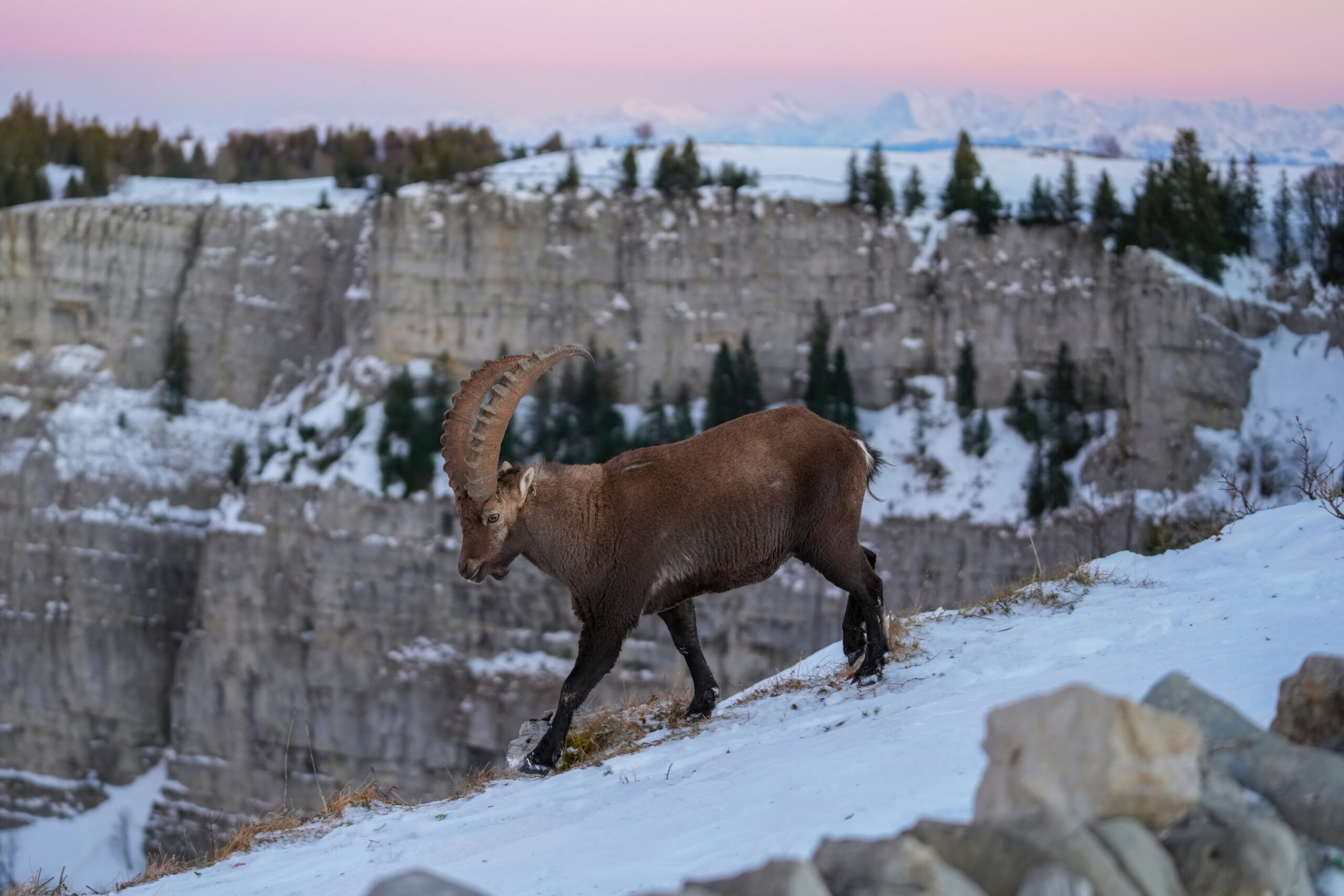 Photo Credit: Giles Laurent / Wikimedia Commons
In the heart of the rugged mountains, where the air is crisp and the cliffs rise dramatically against the sky, roams the ibex, scientifically known as Capra ibex. This magnificent animal is a true marvel of nature, boasting impressive curved horns that can reach lengths of up to three feet. With a sturdy body built for agility, the ibex is perfectly adapted to its steep, rocky habitat, where it navigates sheer cliffs with the grace of a dancer. Its tawny coat, often flecked with white, blends seamlessly into the rocky terrain, making it a master of camouflage.
As the sun rises over the jagged peaks, the ibex begins its day, foraging for tender grasses and shrubs that grow in the crevices of the rocks. This herbivore plays a vital role in its ecosystem, helping to maintain the balance of plant life in these harsh environments. Scientists and nature enthusiasts alike are captivated by the ibex not only for its striking appearance but also for its incredible climbing abilities and social behaviors. These animals often gather in groups, showcasing their playful interactions and complex social structures. Join us as we explore the fascinating world of the ibex, uncovering its behaviors, habitat, and the challenges it faces in a rapidly changing environment.
The ibex is a captivating member of the animal kingdom, known for its impressive climbing abilities and striking curved horns. Taxonomically, it belongs to the Kingdom Animalia, which includes all animals, and is classified under the Phylum Chordata, meaning it has a backbone. Within this phylum, the ibex is part of the Class Mammalia, indicating it is a mammal that gives birth to live young and typically has fur or hair. The ibex is further categorized in the Order Artiodactyla, which includes even-toed ungulates like deer and pigs. What sets the ibex apart is its remarkable adaptation to steep, rocky terrains, showcasing nature’s ingenuity in evolution.
| Taxonomic Rank | Scientific Name | Meaning & Significance |
|---|---|---|
| Kingdom | Animalia | From Latin, meaning “animal” or “living being,” highlighting its status as a living organism. |
| Phylum | Chordata | Derived from the Greek word “chordē,” meaning “string,” referring to the notochord, a flexible rod that supports the body. |
| Class | Mammalia | From Latin “mamma,” meaning “breast,” indicating that members of this class nurse their young with milk. |
| Order | Artiodactyla | From Latin “artius” (even) and “dactylus” (toes), referring to animals with an even number of toes, like the ibex. |
| Family | Bovidae | From Latin “bos,” meaning “cow,” this family includes animals like goats, sheep, and antelopes, all known for their grazing habits. |
| Genus | Capra | From Latin, meaning “goat,” which reflects the ibex’s close relation to domestic goats and its goat-like features. |
Understanding the ibex’s classification reveals much about its evolutionary journey. As a member of the Bovidae family, the ibex shares a common ancestor with other grazing animals, adapting over millions of years to thrive in rugged environments. Its unique physical traits, such as its powerful limbs and specialized hooves, are perfect for navigating steep cliffs, showcasing how evolution shapes species to fit their habitats. The ibex stands as a testament to the incredible diversity of life on Earth, illustrating the intricate connections that bind all living organisms together in the grand tapestry of nature.
The evolutionary journey of the ibex stretches back millions of years, weaving through the rugged terrains of Europe, Asia, and North Africa. These agile animals belong to the Capra genus, which emerged around 5 to 10 million years ago. As they adapted to their mountainous habitats, ibexes evolved distinct traits that helped them thrive in some of the most challenging environments on Earth.
The ancestors of modern ibexes were part of a larger group known as the Bovidae family, which includes animals like sheep and goats. Over time, these early ruminants, which are animals that digest their food in two steps, began to develop specialized adaptations. One major transition was the development of their impressive horns, which not only serve as a display during mating but also as a tool for defense against predators. Another significant change was their ability to navigate steep, rocky terrains, a skill that evolved as they adapted to escape from threats and find food in high altitudes.
These adaptations have been crucial for the ibex’s survival in their rugged habitats. The combination of their climbing prowess and social behavior allows them to escape predators and find food in places where few other animals can go. Their impressive horns not only help in defense but also play a vital role in their social interactions, ensuring that they can thrive in the competitive world of the mountains. Through millions of years of evolution, the ibex has become a symbol of resilience and adaptability in the wild.
The ibex is a stunning sight, embodying the rugged beauty of mountainous landscapes. With a sturdy body built for agility, it stands between 27 to 43 inches tall at the shoulder. Its powerful legs are designed for climbing steep, rocky terrains, allowing it to navigate its high-altitude home with grace. The most striking feature of the ibex is its large, curved horns, which can spiral impressively, adding to its majestic appearance. These horns not only enhance its beauty but also serve important functions in social interactions and defense.
| Feature | Description |
|---|---|
| Height | 0.69 – 1.09 m (27 – 43 inches) |
| Weight | 91 – 120 kg (200 – 270 lbs) |
| Skin Type | Hair |
| Most Distinctive Feature | Large, curved horns |
These physical traits work together to create a remarkable survival package. The ibex’s height and weight give it the strength needed to traverse rocky cliffs, while its hair provides insulation against the cold mountain air. The large horns are not just for show; they play a crucial role in establishing dominance among males and can be used to fend off predators. Together, these features make the ibex a master of its environment, perfectly adapted to thrive in some of the most challenging habitats on Earth.
The ibex thrives in some of the most breathtaking and rugged landscapes on Earth. Picture steep cliffs and rocky mountains, where the air is crisp and the views are nothing short of spectacular. These agile animals are perfectly at home in the high altitudes, often seen scaling sheer rock faces with ease. Their habitat is a dramatic mix of rocky outcrops, alpine meadows, and craggy slopes, where they can find both shelter and food.
The climate in these mountainous regions can be quite extreme. Ibex are found in areas that experience cold winters and mild summers, often at elevations ranging from 1,500 to 3,500 meters (about 5,000 to 11,500 feet). These environments can be harsh, with strong winds and sudden weather changes. However, the ibex is well-equipped to handle these conditions, as they prefer areas with plenty of sunlight and access to vegetation, which is crucial for their diet.
To survive in such challenging habitats, ibex have developed remarkable adaptations. Their specialized hooves are broad and cloven, allowing them to grip rocky surfaces securely. This unique feature helps them navigate steep cliffs and rocky terrain with agility. Additionally, their thick fur provides insulation against the cold, while their keen eyesight enables them to spot predators from a distance. These adaptations not only help them thrive in their mountainous homes but also make them one of nature’s most skilled climbers.
The daily life of an ibex is a blend of adventure and survival, shaped by the rugged environments they call home. As dawn breaks, these agile animals begin their day by foraging for food, nibbling on grasses, shrubs, and even the tough leaves of alpine plants. They are most active during the cooler parts of the day, often climbing steep slopes to find the best grazing spots. As the sun rises higher, ibex tend to rest in shaded areas, conserving energy until the evening when they resume their search for food.
Socially, ibex are known for their strong herd dynamics. They typically live in groups, which can range from small family units to larger herds. This social structure provides safety in numbers, as there is strength in a group when it comes to spotting predators. Within these herds, ibex communicate through a variety of vocalizations and body language, helping to maintain bonds and alert each other to potential dangers. Young ibex learn essential survival skills by observing and interacting with older members of the group, ensuring that knowledge is passed down through generations.
| Behavior Type | Description |
|---|---|
| Activity Patterns | Ibex are most active during the early morning and late afternoon, foraging for food and climbing steep terrains. |
| Social Structure | They live in herds, which provide safety and support, with strong bonds formed among members. |
| Communication Methods | Ibex use vocalizations and body language to communicate, alerting each other to danger and maintaining social ties. |
The behaviors of ibex are finely tuned to their environment, ensuring their survival in challenging habitats. By living in herds, they enhance their chances of spotting predators and finding food. Their active foraging habits and social interactions not only help them thrive but also strengthen the bonds within their groups, creating a resilient community that can withstand the trials of their mountainous homes.
The ibex is a herbivore, which means it primarily eats plants. These agile animals are well-adapted to their rocky habitats, where they graze on a variety of vegetation. Their diet mainly consists of grasses, leaves, and shrubs, which they skillfully find in the steep, rugged terrains they inhabit. With their keen sense of smell and excellent climbing abilities, ibex can reach high altitudes to access fresh and nutritious plant life, especially during the warmer months when food is abundant.
| Dietary Aspect | Details |
|---|---|
| Diet Type | Herbivore |
| Favorite Foods | Grasses, leaves, shrubs, and herbs |
| Prey Items | None (as herbivores, they do not hunt) |
| Hunting/Foraging Strategies | Grazing and browsing on vegetation, using their agility to reach high plants |
The ibex’s diet plays a crucial role in its ecology and daily routine. By feeding on various plants, they help maintain the balance of their mountainous ecosystems. Their foraging habits can influence plant growth and distribution, creating a dynamic relationship between the ibex and its environment. As they move through their rugged habitats, they not only sustain themselves but also contribute to the health of the landscapes they call home. This connection between diet and ecology highlights the importance of the ibex in its natural world.
During the breeding season, which typically occurs in late autumn, male ibex engage in a spectacular display of strength and agility to attract females. Males, known as billies, will often clash their impressive horns in dramatic battles to establish dominance and win the right to mate. This competition can be quite intense, as the strongest and most fit males are more likely to secure mating opportunities with females, or nannies. After a successful courtship, the female will carry her young for several months before giving birth.
| Reproductive Aspect | Details |
|---|---|
| Gestation Period | 168 days |
| Litter Size | 1 |
| Age of Maturity | 18 months |
| Name of Young | Kid |
Once the kid is born, it is a bundle of energy, quickly learning to navigate the rocky terrain that surrounds it. The mother ibex is highly attentive, providing warmth and protection while teaching her young how to find food and avoid predators. This nurturing phase is crucial, as the kid will rely on its mother for survival during its early months. As the young ibex matures, it will gradually gain independence, eventually reaching sexual maturity at around 18 months. With the skills learned from their mothers, these young ibex will soon be ready to face the challenges of life in the wild.
The ibex occupies a vital role in the food web of its mountainous habitat. As a herbivore, it primarily feeds on grasses, shrubs, and other vegetation, which helps maintain the balance of plant life in its ecosystem. However, the ibex is not at the top of the food chain; it faces various predators and threats that challenge its survival.
To defend itself against these dangers, the ibex has developed several clever survival strategies. Its incredible climbing skills allow it to navigate steep, rocky terrains where many predators cannot follow. When threatened, ibex can quickly escape to high altitudes, using their agility to leap between rocky outcrops. Additionally, they often stay in groups, which helps them keep a lookout for danger. This social behavior not only enhances their chances of spotting predators but also provides safety in numbers, making it harder for attackers to single out an individual.
A keystone species is an organism that plays a critical role in maintaining the structure of its ecosystem. This means that its presence or absence can significantly impact the environment and other species living there. The ibex, a remarkable herbivore found in the rugged mountains and cliffs of Europe, Asia, and North Africa, qualifies as a keystone species due to its unique ecological contributions.
Ibexes are not just beautiful animals; they are essential for the health of their mountainous habitats. By grazing on various plants, they help control vegetation growth. This grazing prevents certain plant species from dominating the landscape, allowing a diverse range of plants to thrive. This diversity is crucial because it supports a variety of other wildlife, from insects to larger mammals. Additionally, the ibex’s foraging habits can help aerate the soil, promoting better water absorption and nutrient cycling, which benefits the entire ecosystem.
Moreover, ibexes serve as prey for larger predators, such as wolves and eagles. Their presence supports these predator populations, creating a balanced food web. When ibexes are abundant, they help sustain the predators that rely on them for food, which in turn keeps herbivore populations in check. This balance is vital for maintaining the health of the ecosystem, as it prevents overgrazing by other herbivores.
If ibexes were to disappear from their habitats, the consequences would be significant. Without these animals, certain plant species could overgrow, leading to a decline in plant diversity. This change would ripple through the ecosystem, affecting not only the plants but also the many animals that depend on them for food and shelter. Predators that rely on ibexes for sustenance would struggle to find enough food, potentially leading to their decline as well. In essence, the loss of ibexes would disrupt the delicate balance of their mountainous ecosystems, highlighting just how vital they are to the natural world.
The ibex occupies a crucial ecological niche in its mountainous habitat, where it plays a significant role in shaping the environment around it. As a herbivore, the ibex primarily feeds on grasses, shrubs, and other vegetation found on steep cliffs and rocky terrains. This grazing behavior not only influences the types of plants that thrive in these areas but also helps maintain the balance of the ecosystem. By consuming certain plants, ibex prevent overgrowth, allowing a diverse range of species to flourish and creating a vibrant habitat for other wildlife.
| Ecosystem Service | Impact |
|---|---|
| Grazing | Controls plant growth and promotes biodiversity |
| Seed Dispersal | Helps in the spread of various plant species |
| Soil Aeration | Improves soil health through movement and foraging |
| Prey for Predators | Supports the food web by providing sustenance for carnivores |
The ibex’s influence on its ecosystem can be seen in various ways. For instance, as they graze, they help to keep certain plant species in check, preventing any one type from dominating the landscape. This grazing creates a mosaic of different plant communities, which in turn supports a variety of insects, birds, and other animals. Additionally, when ibex move through their rocky habitats, they inadvertently aerate the soil, allowing water and nutrients to penetrate deeper, which benefits the entire plant community. Their presence also provides a food source for predators like golden eagles and wolves, illustrating their integral role in the food web.
The broader ecological importance of the ibex cannot be overstated. As a keystone species, their activities help maintain the structure and health of their mountainous ecosystems. Without the ibex, the balance of plant life could shift dramatically, leading to a decline in biodiversity and altering the habitats of countless other species. By understanding the vital role of the ibex, we gain insight into the interconnectedness of life in these rugged landscapes, reminding us of the delicate balance that sustains our natural world.
In the intricate web of life, animals often form partnerships that benefit them in various ways. These relationships can be classified into three main types: mutualism, where both species gain; commensalism, where one benefits while the other is neither helped nor harmed; and parasitism, where one species benefits at the expense of another. Understanding these ecological relationships helps us appreciate the delicate balance of ecosystems and the roles different species play within them.
| Species/Type | Relationship Type | Description |
|---|---|---|
| Birds (e.g., choughs) | Mutualistic | Choughs often follow ibex herds, feeding on insects and parasites disturbed by the ibex as they graze. In return, the ibex benefit from reduced parasite loads. |
| Mountain goats | Commensal | Mountain goats may share the same rocky habitats as ibex, using the same trails and grazing areas. While the ibex are unaffected, the goats benefit from the established paths. |
| Ticks | Parasitic | Ticks attach to ibex to feed on their blood, which can weaken the ibex and transmit diseases. This relationship is harmful to the ibex, as it can lead to health issues. |
These relationships have evolved over time, shaped by the needs and behaviors of the species involved. Mutualistic partnerships, like that of the ibex and choughs, highlight how cooperation can enhance survival for both parties. Meanwhile, commensal relationships allow species to coexist without direct competition. On the other hand, parasitic relationships remind us of the challenges that can arise in nature, where one species may thrive at the expense of another. Understanding these dynamics not only enriches our knowledge of the ibex but also deepens our appreciation for the interconnectedness of all life on Earth.
The ibex is a fascinating mountain-dweller known for its incredible climbing skills and striking appearance. These agile animals have adapted to some of the most rugged terrains on Earth, making them a subject of intrigue for nature enthusiasts.
The relationship between ibex and humanity is steeped in history and cultural significance. For centuries, these majestic mountain goats have captured the imagination of people living in the rugged terrains they inhabit. Ancient civilizations revered ibex as symbols of strength and resilience, often depicting them in art and folklore. In many cultures, the ibex represents the spirit of the mountains, embodying the wild beauty and untamed nature of the highlands. Their impressive climbing abilities and striking horns have made them subjects of admiration and respect, weaving them into the fabric of human stories and traditions.
Today, the interactions between ibex and humans are complex and multifaceted. Conservation efforts are underway to protect these animals and their habitats, as many species of ibex face threats from habitat loss and climate change. However, conflicts can arise, particularly in agricultural areas where ibex may graze on crops, leading to tensions between farmers and wildlife. Interestingly, some communities have begun to embrace ibex as part of eco-tourism, allowing people to experience the thrill of observing these agile creatures in their natural environment. This shift towards coexistence highlights the potential for humans and ibex to share the landscape harmoniously.
Looking ahead, the future of the relationship between ibex and humanity holds promise. As awareness of environmental issues grows, more people are recognizing the importance of preserving the natural world, including the habitats of these remarkable animals. By fostering a spirit of cooperation and understanding, humans can work alongside ibex to ensure their survival while also benefiting from the beauty and inspiration they bring to our lives. Together, we can create a future where both ibex and humanity thrive in harmony, celebrating the wild wonders of our planet.
The conservation status of the ibex is currently classified as Vulnerable, indicating that these magnificent animals face significant threats that could lead to a decline in their populations. With an estimated population size of around 30,000 for the alpine ibex, there is a cautious optimism as some populations are stabilizing or even increasing in certain regions. However, the overall trend remains concerning, as habitat loss and other pressures continue to challenge their survival.
| Conservation Factor | Status/Details |
|---|---|
| IUCN Status | Vulnerable |
| Estimated Population Size | 30,000 for alpine ibex |
| Population Trend | Overall declining, but some populations stabilizing |
The main threats to ibex populations stem from habitat loss, poaching, and climate change. As human activities expand into mountainous regions, the natural habitats of ibex are increasingly fragmented. This means that the areas where they can roam and find food are shrinking. Additionally, illegal hunting poses a direct threat, as some people target ibex for their impressive horns or meat. Climate change also plays a role, altering the delicate ecosystems that ibex depend on for survival.
Conservation efforts are underway to protect the ibex and its habitat. Various organizations and governments are working together to establish protected areas and promote sustainable tourism that benefits both the local communities and the wildlife. Education and awareness campaigns are also crucial, helping people understand the importance of preserving these remarkable animals. With continued efforts, there is hope that the ibex will thrive in the wild, maintaining its vital role in the mountainous ecosystems it inhabits.
| Question | Answer |
|---|---|
| What is the natural habitat of the Ibex? | Ibex are typically found in steep, rocky cliffs and mountainous regions. These habitats provide them with safety from predators and easy access to their food sources. |
| What do Ibex eat? | Ibex are herbivores, which means they primarily eat plants. Their diet consists of grasses, leaves, and shrubs, which they can find in their rugged mountain homes. |
| How do Ibex behave in the wild? | Ibex are social animals that often live in groups called herds. They are known for their agility and can navigate steep terrains with ease, using their strong legs and hooves. |
| How do Ibex reproduce? | During the mating season, male Ibex compete for the attention of females through displays of strength and agility. After mating, females give birth to a single kid, usually in the spring when food is plentiful. |
| What threats do Ibex face? | Ibex are considered vulnerable due to habitat loss and hunting. As human activities expand into their mountainous habitats, their populations can decline, making conservation efforts important. |
| What is a distinctive feature of the Ibex? | One of the most striking features of the Ibex is its large, curved horns. These impressive horns can grow quite long and are used by males during fights for dominance and mating rights. |
| Are Ibex good climbers? | Yes, Ibex are exceptional climbers! Their specialized hooves and strong legs allow them to navigate steep and rocky surfaces, making them well-adapted to their mountainous environments. |