Taxonomy & Classification
- Kingdom
- Animalia
- Phylum
- Chordata
- Class
- Reptilia
- Order
- Ichthyosauria
- Family
- Ichthyosauridae
- Genus
- Ichthyosaurus
- Species
- Ichthyosaurus communis

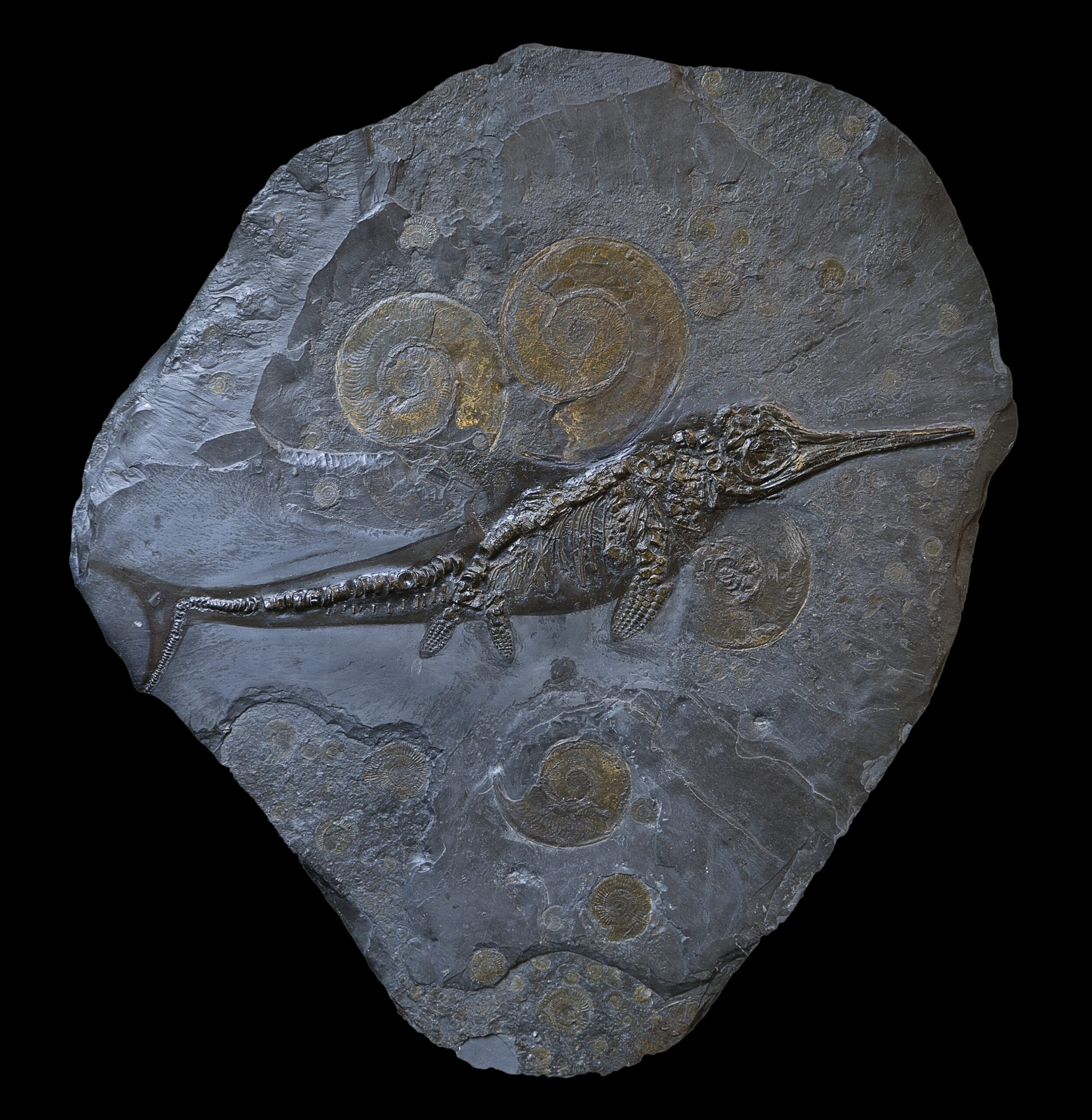 Photo Credit: Archaeodontosaurus / Wikimedia Commons
In the shimmering depths of the ancient oceans, the Ichthyosaurus, known scientifically as Ichthyosaurus communis, glided gracefully through the water, a true marvel of the Jurassic period. With its sleek, dolphin-like body and powerful flippers, this marine reptile was perfectly designed for life in the sea. Imagine a world where the sun sparkles on the surface, and schools of fish dart around, unaware of the agile predator lurking beneath. The Ichthyosaurus, with its large, striking eyes and elongated snout filled with sharp teeth, was a master of its domain, captivating scientists and nature enthusiasts alike with its unique adaptations and behaviors.
What makes the Ichthyosaurus so intriguing is not just its appearance but also its role in the ancient ecosystem. As a carnivore, it primarily feasted on fish and squid, showcasing its prowess as a swift hunter. This remarkable creature thrived in the vast oceans, where it played a crucial role in maintaining the balance of marine life. The Ichthyosaurus is a window into a time long gone, offering insights into evolution and the diversity of life on Earth. As we explore its fascinating history, physical traits, and ecological significance, we uncover the secrets of a creature that once ruled the waves, leaving a lasting legacy in the annals of paleontology.
Ichthyosaurus, a captivating marine reptile from the age of dinosaurs, holds a special place in the tree of life. This ancient creature belongs to the class Reptilia, which includes all reptiles, and is part of the order Ichthyosauria, a group known for their fish-like appearance. What sets Ichthyosaurus apart is its streamlined body, large eyes, and long snout, which made it an efficient predator in the oceans of the Mesozoic Era. With its adaptations for life in water, Ichthyosaurus showcases the incredible diversity of life that evolved during this time, bridging the gap between reptiles and the aquatic world.
| Taxonomic Rank | Scientific Name | Meaning & Significance |
|---|---|---|
| Kingdom | Animalia | This name signifies that Ichthyosaurus is part of the animal kingdom, which includes all multicellular organisms that are not plants, fungi, or bacteria. |
| Phylum | Chordata | Chordata means “having a notochord,” a flexible rod that supports the body. Ichthyosaurus had a backbone, placing it among vertebrates. |
| Class | Reptilia | Reptilia refers to reptiles, which are cold-blooded animals with scales. Ichthyosaurus, despite being aquatic, is classified as a reptile due to its evolutionary lineage. |
| Order | Ichthyosauria | This order name comes from the Greek words for “fish” (ichthys) and “lizard” (sauros), highlighting its fish-like shape and reptilian ancestry. |
| Family | Ichthyosauridae | Ichthyosauridae indicates a family of marine reptiles that share common features, such as a similar body structure and adaptations for swimming. |
| Genus | Ichthyosaurus | The genus name Ichthyosaurus translates to “fish lizard,” reflecting its resemblance to both fish and lizards, showcasing its unique evolutionary adaptations. |
The classification of Ichthyosaurus reveals much about its evolutionary history. As a member of the Ichthyosauria order, it illustrates how reptiles adapted to life in the ocean, developing features that allowed them to thrive in a watery environment. This lineage shows a fascinating example of convergent evolution, where different species evolve similar traits to adapt to similar environments. Ichthyosaurus not only helps us understand the diversity of life during the Mesozoic Era but also highlights the intricate connections between land and sea in the story of evolution.
During the Mesozoic Era, specifically in the Early Jurassic period, a remarkable group of marine reptiles known as ichthyosaurs emerged. These creatures swam the oceans around 250 million years ago, evolving from land-dwelling ancestors. As they adapted to life in the water, ichthyosaurs became some of the most efficient predators of their time, showcasing a fascinating evolutionary journey that highlights the power of adaptation.
Ichthyosaurs are believed to have descended from a group of reptiles that ventured back into the sea. Their ancestors were likely similar to modern-day lizards, but over millions of years, they underwent significant changes. One of the most notable transitions was the development of streamlined bodies, which allowed them to glide through the water with ease. Their limbs transformed into flippers, enhancing their swimming capabilities. Additionally, ichthyosaurs evolved large eyes, which were essential for hunting in the dimly lit depths of the ocean. These adaptations not only improved their ability to catch prey but also helped them navigate their aquatic environment.
The adaptations of ichthyosaurs were vital for their survival in a competitive ocean ecosystem. Their streamlined bodies and flipper-like limbs made them agile hunters, while their keen eyesight allowed them to spot prey from a distance. The ability to give birth to live young likely increased their chances of survival, as newborns could immediately swim and evade predators. Together, these evolutionary traits enabled ichthyosaurs to dominate the seas for millions of years, showcasing the incredible power of nature’s ability to adapt and thrive.
Imagine gliding through the ancient oceans of the Jurassic period, where the Ichthyosaurus ruled the waves. This marine reptile, resembling a sleek dolphin, had a streamlined body designed for speed and agility. Its long, slender shape allowed it to cut through the water effortlessly, while its powerful tail propelled it forward with grace. The Ichthyosaurus was built for life in the deep blue, with limbs that evolved into flippers, perfect for navigating the underwater world.
| Feature | Description |
|---|---|
| Size | Up to 10 feet long, making it a formidable predator in its environment. |
| Color | Likely a mix of dark shades, helping it blend into the ocean depths and avoid predators. |
| Skin Type | Smooth, similar to modern reptiles, which reduced drag while swimming. |
| Eyes | Giant eyes that provided excellent vision in dark and deep waters, crucial for hunting. |
The features of the Ichthyosaurus worked together like a finely tuned machine, enhancing its survival in a challenging environment. Its size and streamlined body made it an efficient swimmer, while the dark coloration offered camouflage against the ocean’s depths. The giant eyes were a standout characteristic, allowing this ancient predator to spot prey even in the murkiest waters. Together, these adaptations made the Ichthyosaurus a master of its aquatic domain, thriving in a world where speed and stealth were essential for survival.
The Ichthyosaurus thrived in the vast, open oceans of the Jurassic period, where it ruled the waves with grace and agility. Picture a world where the sun glimmers on the surface of the water, and beneath it, schools of fish dart through vibrant coral reefs. This marine reptile was perfectly at home in these expansive waters, where it could hunt and swim freely, navigating the depths with its streamlined body.
To flourish in its oceanic habitat, Ichthyosaurus required a warm climate, as it was an endothermic animal, meaning it generated its own body heat. The waters it inhabited were likely rich in nutrients, supporting a diverse array of marine life. Shallow coastal areas and deeper oceanic regions provided the perfect environment for hunting and breeding, allowing this agile predator to thrive.
Over time, Ichthyosaurus developed several adaptations to excel in its watery world. Its large, powerful flippers enabled swift movement through the water, while its elongated snout was perfect for catching slippery prey. With keen eyesight, it could spot fish from a distance, making it a formidable hunter. These adaptations not only helped it survive but also allowed it to dominate the oceans during its time.
As the sun rises over the ancient oceans, the Ichthyosaurus begins its day in a world teeming with life. This marine reptile, with its streamlined body and powerful flippers, is perfectly adapted for a life spent swimming. Each day, it embarks on a journey through the warm waters, hunting for fish and squid. With its keen eyesight, the Ichthyosaurus scans the depths, using its speed and agility to chase down prey. After a satisfying meal, it may spend time basking near the surface, soaking up the sun before diving back into the depths for more exploration.
Socially, Ichthyosaurs are believed to have been quite interactive, often swimming in groups. These pods likely consisted of family members or close companions, providing safety in numbers. When they are together, they may have communicated through a series of clicks and whistles, much like modern dolphins do today. This social behavior not only strengthens bonds within the group but also enhances their ability to hunt effectively. By working together, they can corner schools of fish, making it easier to catch their meals.
| Behavior Type | Description |
|---|---|
| Hunting | Ichthyosaurs actively pursue fish and squid, using their speed and agility to catch prey. |
| Social Structure | They likely swim in pods, consisting of family groups or close companions, enhancing safety and hunting efficiency. |
| Communication | Ichthyosaurs may have used clicks and whistles to communicate with one another, similar to modern dolphins. |
In this dynamic underwater world, the behaviors of the Ichthyosaurus are crucial for survival. By hunting in groups, they increase their chances of catching food, while their social interactions help them stay safe from larger predators. The combination of speed, teamwork, and communication not only ensures their daily success but also strengthens their bonds, making them a formidable presence in the ancient seas.
Ichthyosaurus was a carnivore, meaning it primarily ate meat. This ancient marine reptile had a diet that mainly consisted of fish and squid, which were abundant in the oceans of the Jurassic period. With its sharp teeth and agile body, Ichthyosaurus was a skilled hunter, using its speed and agility to catch its slippery prey. Imagine it darting through the water, eyes keenly focused on a school of fish, ready to strike with precision.
| Dietary Aspect | Details |
|---|---|
| Diet Type | Carnivore |
| Favorite Foods | Fish and squid |
| Prey Items | Various species of fish and cephalopods |
| Hunting/Foraging Strategies | Utilized speed and agility to chase and capture prey |
The diet of Ichthyosaurus played a crucial role in shaping its ecology and daily routine. By preying on fish and squid, it helped maintain the balance of marine life in its environment. This hunting behavior not only provided the energy needed for its active lifestyle but also influenced the population dynamics of its prey. As a top predator in the ancient oceans, Ichthyosaurus was an essential part of the marine ecosystem, showcasing the intricate connections between species and their habitats.
As the breeding season approached, Ichthyosaurus engaged in intriguing mating behaviors. These marine reptiles likely gathered in specific areas of the ocean to find mates, much like modern-day dolphins. During this time, males may have displayed their strength and agility to attract females, showcasing their fitness for reproduction. The exact details of their courtship rituals remain a mystery, but it is believed that these interactions were essential for successful mating.
| Reproductive Aspect | Details |
|---|---|
| Gestation Period | Approximately 11 months |
| Litter Size | 1 to 3 young |
| Age of Maturity | About 5 to 10 years |
| Name of Young | Calves |
After giving birth, the young Ichthyosaurus, known as calves, were likely independent from a young age. Unlike many reptiles that lay eggs, Ichthyosaurus gave live birth, which allowed the calves to swim immediately after entering the water. This adaptation was crucial for survival in the open ocean, where predators lurked. Parental care may have included guiding the calves to safe areas and teaching them essential survival skills. As they grew, these young reptiles developed into agile hunters, ready to navigate the vast seas just like their parents.
Ichthyosaurus, a swift and agile marine reptile, occupies a significant position in the Jurassic food web. As a carnivore, it primarily feasted on fish and squid, making it a formidable predator in its oceanic realm. However, like all creatures, it faced various dangers that threatened its survival in the ancient seas.
To defend itself against these threats, Ichthyosaurus relied on its remarkable speed and agility. With a streamlined body, it could swiftly navigate through the water, evading larger predators. Additionally, its keen eyesight helped it spot danger from afar, allowing it to make quick escapes. By staying in schools, these marine reptiles could also confuse potential attackers, increasing their chances of survival in a world filled with peril.
A keystone species is a vital part of its ecosystem, playing a crucial role in maintaining the structure and balance of that environment. The Ichthyosaurus, a marine reptile from the Jurassic period, qualifies as a keystone species due to its significant impact on the oceanic food web. By being a top predator, it helped regulate the populations of its prey, which included fish and squid, ensuring that no single species dominated the ecosystem.
Ichthyosaurus was not just a predator; it was a key player in the intricate dance of life beneath the waves. By preying on abundant fish and squid, it kept these populations in check. This balance allowed for a diverse range of marine life to thrive, as overpopulation of any one species could lead to a collapse of the ecosystem. For example, if fish populations grew unchecked, they could deplete the resources they relied on, leading to a decline in their numbers and affecting other species that depended on them for food.
Moreover, the hunting strategies of Ichthyosaurus likely influenced the behavior and evolution of its prey. Fish and squid would have developed adaptations to evade this swift predator, leading to a dynamic interplay of survival tactics. This evolutionary pressure can drive biodiversity, as species adapt to survive in a world where Ichthyosaurus is a constant presence.
If Ichthyosaurus were to disappear, the consequences would ripple through the ecosystem. Without this apex predator, fish and squid populations could explode, leading to overgrazing of their food sources. This imbalance could result in a decline of various marine species, ultimately destabilizing the entire oceanic environment. The loss of Ichthyosaurus would not only affect its immediate surroundings but could also lead to a less diverse and less resilient marine ecosystem overall.
The Ichthyosaurus played a vital role in its ancient ocean ecosystem, acting as both a predator and a keystone species. This marine reptile thrived in the vast waters of the Jurassic period, where it helped shape the balance of life beneath the waves. By preying on fish and squid, Ichthyosaurus influenced the population dynamics of these species, ensuring that no single group became too dominant. This balance allowed for a diverse array of marine life to flourish, creating a rich tapestry of interactions in the ocean.
| Ecosystem Service | Impact |
|---|---|
| Predation | Controls fish and squid populations, preventing overpopulation. |
| Nutrient Cycling | Contributes to nutrient distribution through its feeding habits. |
| Habitat Creation | Provides a food source for scavengers and smaller predators after death. |
| Ecological Balance | Maintains the health of the marine ecosystem by supporting biodiversity. |
Ichthyosaurus was not just a predator; it was a key player in the ocean’s food web. By hunting fish and squid, it kept these populations in check, which in turn allowed other marine species to thrive. For example, when Ichthyosaurus fed on abundant fish, it prevented those fish from overwhelming the ecosystem. This predation created opportunities for smaller fish and invertebrates to flourish, leading to a more diverse marine community. Additionally, when Ichthyosaurus died, its body provided nutrients to the ocean floor, supporting scavengers and enriching the ecosystem further.
The ecological importance of Ichthyosaurus extends beyond its immediate interactions. As a keystone species, it helped maintain the structure and balance of its environment, ensuring that various marine organisms could coexist. The health of the ocean ecosystem during the Jurassic period relied on the presence of Ichthyosaurus, demonstrating how interconnected life can be. By understanding the role of such ancient creatures, we gain insight into the delicate balance of ecosystems today, reminding us of the importance of every species in maintaining the health of our planet.
In the intricate web of life, symbiosis refers to the close interactions between different species, which can take on various forms. These relationships can be mutualistic, where both species benefit, parasitic, where one benefits at the expense of the other, or commensal, where one benefits while the other is neither helped nor harmed. Understanding these connections helps us appreciate how species like Ichthyosaurus interacted with their environment and other organisms in the ancient oceans.
| Species/Type | Relationship Type | Description |
|---|---|---|
| Small fish | Mutualistic | Ichthyosaurus may have provided protection to small fish, while these fish helped keep the marine reptile’s skin free of parasites. |
| Squid | Parasitic | While Ichthyosaurus preyed on squid, some species of squid may have had parasites that could affect the health of the marine reptile. |
| Remoras | Commensal | Remoras, or suckerfish, could attach themselves to Ichthyosaurus, gaining a free ride and access to food scraps without affecting the reptile. |
These relationships likely evolved over millions of years, shaped by the needs and behaviors of the species involved. Mutualistic partnerships, like that with small fish, would have provided benefits for both parties, enhancing survival in a competitive environment. Meanwhile, the presence of parasites in squid highlights the challenges Ichthyosaurus faced as a predator. Commensal relationships, such as those with remoras, illustrate how different species can coexist, each finding their niche in the vast ocean. Together, these interactions paint a vivid picture of life in the Jurassic seas, showcasing the dynamic balance of nature.
The Ichthyosaurus is a captivating marine reptile that swam the oceans during the Jurassic period, and it has some surprising traits that make it truly remarkable. Here are a few intriguing facts that showcase its unique adaptations and historical significance.
The Ichthyosaurus, a fascinating marine reptile that swam the oceans during the Jurassic period, has captured the imagination of humans for centuries. Historical encounters with its fossils have sparked curiosity and wonder, leading to its depiction in art and literature. As paleontologists unearthed these ancient remains, they revealed a glimpse into a world long gone, igniting a sense of adventure and exploration. The Ichthyosaurus has become a symbol of the mysteries of the past, reminding us of the incredible diversity of life that once thrived in our oceans.
Today, our interactions with the Ichthyosaurus are primarily through the lens of science and conservation. While this ancient creature is long extinct, its fossils continue to provide valuable insights into marine ecosystems and evolutionary biology. Museums and educational programs help foster a connection between people and the natural world, emphasizing the importance of preserving marine habitats. Although we cannot domesticate or directly interact with Ichthyosaurus, studying its life and environment encourages us to protect the oceans and the creatures that inhabit them today.
Looking ahead, the relationship between humanity and the legacy of the Ichthyosaurus holds great potential. As we continue to explore the depths of our oceans and uncover the secrets of the past, we can learn valuable lessons about biodiversity and the importance of conservation. By understanding the role of ancient species like the Ichthyosaurus, we can better appreciate the delicate balance of marine ecosystems today. This connection not only enriches our knowledge but also inspires future generations to protect the wonders of the natural world.
The Ichthyosaurus, a marine reptile that once dominated the oceans during the Jurassic period, is currently classified as extinct. This means that there are no living individuals of this species today. The last of the Ichthyosaurus disappeared millions of years ago, and while its fossils provide a glimpse into its life, there are no population trends to report. Instead, we can only marvel at the legacy it left behind in the fossil record.
| Conservation Factor | Status/Details |
|---|---|
| IUCN Status | Extinct |
| Population Estimates | None (extinct) |
| Trend Direction | N/A |
The main threats to the Ichthyosaurus were not human-related, as it lived long before our time. Instead, it faced challenges from natural events, such as climate changes and shifts in ocean ecosystems. These changes could have affected the availability of food sources like fish and squid, which were essential for its survival. Additionally, competition with other marine reptiles and predators may have played a role in its decline.
Today, conservation efforts for the Ichthyosaurus focus on understanding its life and environment through paleontological research. By studying its fossils, scientists can learn about the ancient ecosystems in which it thrived. While we cannot bring back the Ichthyosaurus, these efforts help us appreciate the importance of preserving the biodiversity we have today. Understanding the past can guide us in protecting modern marine life, ensuring that we do not lose more species to extinction.
| Question | Answer |
|---|---|
| What was the habitat of Ichthyosaurus? | Ichthyosaurus lived in the ocean during the Mesozoic Era, which was about 250 to 90 million years ago. These marine reptiles thrived in warm, shallow seas, where they could hunt for food and give birth to their young. |
| What did Ichthyosaurus eat? | Ichthyosaurus was a carnivore, meaning it primarily ate meat. Its diet likely included fish and squid, which it could catch with its sharp teeth and agile swimming abilities. |
| How did Ichthyosaurus behave? | Ichthyosaurus was an active predator, using its speed and agility to chase down prey. It is believed that these creatures were social animals, possibly hunting in groups to increase their chances of catching food. |
| How did Ichthyosaurus reproduce? | Ichthyosaurus gave birth to live young, rather than laying eggs like many reptiles today. This adaptation allowed them to thrive in marine environments, as the young could swim immediately after birth. |
| What were the threats to Ichthyosaurus? | As an extinct species, Ichthyosaurus faced threats from natural changes in its environment, such as climate shifts and changes in sea levels. Predation by larger marine reptiles and competition for food sources may have also contributed to its decline. |
| What is an interesting characteristic of Ichthyosaurus? | One of the most distinctive features of Ichthyosaurus was its giant eyes, which helped it see well in dark and deep ocean areas. This adaptation was crucial for hunting in the depths of the sea where light was limited. |
| How did Ichthyosaurus move in the water? | Ichthyosaurus was built for speed, with a streamlined body and long, powerful flippers. These adaptations allowed it to swim quickly and efficiently, making it a formidable predator in its ocean habitat. |