Taxonomy & Classification
- Kingdom
- Animalia
- Phylum
- Chordata
- Class
- Aves
- Order
- Piciformes
- Family
- Picidae
- Genus
- Campephilus
- Species
- Campephilus principalis

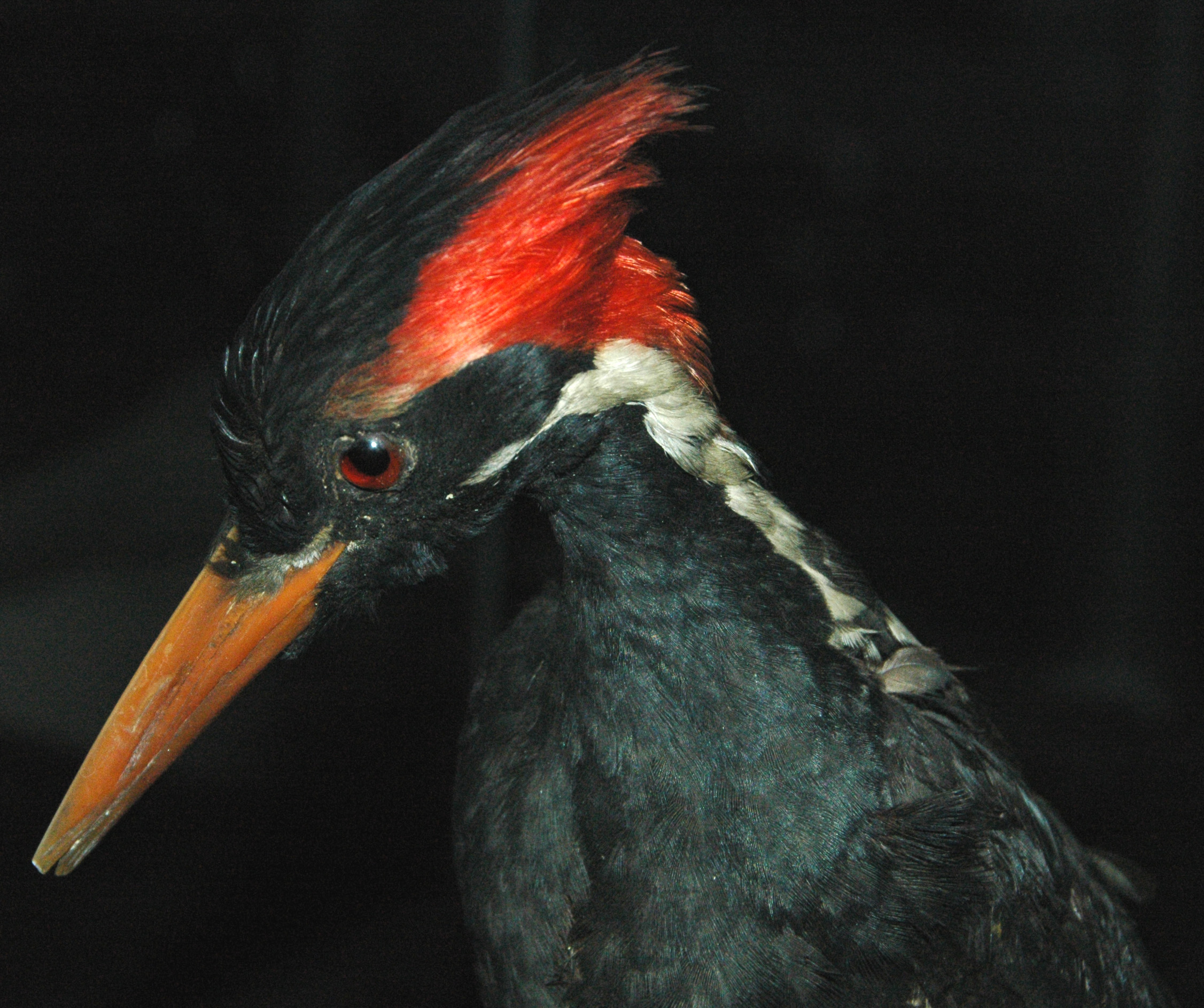 Photo Credit: Ser Amantio di Nicolao / Wikimedia Commons
In the heart of the lush, sprawling forests and swamps of the southeastern United States, the Ivory-billed Woodpecker, scientifically known as Campephilus principalis, once ruled the treetops. Imagine standing in a sun-dappled glade, where the air is thick with the sounds of rustling leaves and distant bird calls. Suddenly, a flash of striking black and white catches your eye as this magnificent bird flits between towering trees. With its impressive size, reaching up to 20 inches long, and a distinctive ivory-colored bill that gleams in the sunlight, the Ivory-billed Woodpecker is a true marvel of nature. Its bold, crested head and striking plumage make it one of the most recognizable woodpeckers in North America, captivating the hearts of birdwatchers and scientists alike.
The Ivory-billed Woodpecker is not just a beautiful sight; it plays a vital role in its ecosystem. As a keystone species, it helps maintain the health of its forest habitat by foraging for insects and creating nesting cavities that other animals can use. This bird has become a symbol of the wild, representing the untamed beauty of nature and the urgent need for conservation. Once thought to be extinct, the Ivory-billed Woodpecker’s story is one of hope and mystery, sparking curiosity and inspiring efforts to protect the delicate balance of its environment. As we delve deeper into the life of this extraordinary bird, we will explore its behavior, diet, and the challenges it faces in a rapidly changing world.
The Ivory-billed Woodpecker, a bird that has captured the imagination of many, holds a special place in the tree of life. Classified within the Kingdom Animalia, this extraordinary woodpecker belongs to the Phylum Chordata, which includes all animals with a backbone. It is part of the Class Aves, meaning it is a bird, and it falls under the Order Piciformes, a group known for their tree-climbing habits and strong beaks. The family Picidae encompasses all woodpeckers, and the genus Campephilus is where the Ivory-billed Woodpecker resides. What makes this bird particularly intriguing is its striking appearance, with a large size, bold black and white plumage, and a distinctive ivory-colored bill, which is not just beautiful but also functional for its lifestyle of foraging for insects in trees.
| Taxonomic Rank | Scientific Name | Meaning & Significance |
|---|---|---|
| Kingdom | Animalia | This name signifies that the Ivory-billed Woodpecker is part of the vast group of multicellular organisms known as animals. |
| Phylum | Chordata | Chordata means “having a notochord,” which is a flexible rod that supports the body. This feature is a key characteristic of all vertebrates, including this woodpecker. |
| Class | Aves | Aves is the Latin word for birds, highlighting the unique adaptations that allow these creatures to fly, such as feathers and hollow bones. |
| Order | Piciformes | This order includes woodpeckers and their relatives, known for their specialized feet and strong bills, perfect for pecking into wood. |
| Family | Picidae | Picidae comes from the Latin word for woodpecker, emphasizing the bird’s role in forest ecosystems as it helps control insect populations. |
| Genus | Campephilus | Derived from Greek, meaning “to eat grubs,” this name reflects the woodpecker’s diet, which primarily consists of insects found in trees. |
Understanding the taxonomic classification of the Ivory-billed Woodpecker reveals much about its evolutionary journey. As a member of the Picidae family, it shares a lineage with other woodpeckers, showcasing adaptations that have allowed these birds to thrive in forested environments. The unique features that define its genus, Campephilus, highlight its specialized feeding habits and ecological role. This classification not only connects the Ivory-billed Woodpecker to its relatives but also emphasizes the importance of preserving its habitat, as it plays a vital role in maintaining the health of the ecosystems it inhabits.
The evolutionary journey of the Ivory-billed Woodpecker stretches back millions of years, weaving through the dense forests of North America. This magnificent bird, belonging to the family Picidae and the genus Campephilus, has a history that reflects the changing landscapes and ecosystems of its time. As forests expanded and contracted, the Ivory-billed Woodpecker adapted, showcasing a remarkable ability to thrive in its environment.
The ancestors of the Ivory-billed Woodpecker were likely small, insect-eating birds that lived in the lush woodlands of the Eocene epoch, around 56 to 34 million years ago. Over time, these early woodpeckers evolved larger bodies and stronger beaks, allowing them to tap into the nutritious sap of trees and hunt for insects hidden beneath the bark. This transition marked a significant shift in their diet and behavior, paving the way for the Ivory-billed Woodpecker’s specialized feeding habits.
These adaptations were crucial for the survival of the Ivory-billed Woodpecker in its natural habitat. The combination of size, strength, and social behavior allowed it to navigate the complex ecosystems of ancient forests. As these environments changed, the woodpecker’s specialized traits enabled it to exploit new food sources and maintain its place in the food web. However, as human activity transformed these forests, the Ivory-billed Woodpecker faced unprecedented challenges, leading to its decline. Understanding its evolutionary story helps us appreciate the delicate balance of nature and the importance of preserving the habitats that support such extraordinary species.
The Ivory-billed Woodpecker is a striking sight, a true marvel of nature. With its impressive size, this bird can weigh between 450 to 570 grams, making it one of the largest woodpeckers in North America. Its body is robust and sturdy, designed for life among the towering trees of its forest habitat. The most eye-catching feature is its long, ivory-colored bill, which stands out against its dark plumage. This bill is not just for show; it is perfectly shaped for drilling into wood, searching for insects hidden beneath the bark.
| Feature | Description |
|---|---|
| Size | Large, weighing between 450-570 grams |
| Color | Dark plumage with striking white markings |
| Skin Type | Feathers, providing insulation and aiding in flight |
| Most Distinctive Feature | Ivory-colored bill, ideal for foraging |
The combination of its size, coloration, and specialized bill creates a bird that is not only beautiful but also highly adapted to its environment. The dark feathers help it blend into the shadows of the forest, while the ivory bill is a tool of precision, allowing it to extract food from the toughest of trees. Together, these features enhance its survival, making the Ivory-billed Woodpecker a master of its woodland domain.
The Ivory-billed Woodpecker thrives in lush, expansive forests and swamps, where towering trees stretch high into the sky. These habitats are often rich with old-growth timber, providing the perfect backdrop for this majestic bird. Imagine a serene landscape filled with the sounds of rustling leaves and the gentle trickle of water, where the sunlight filters through the dense canopy, creating a mosaic of light and shadow. This environment is not just beautiful; it is essential for the woodpecker’s survival.
The climate in these regions is typically warm and humid, which is ideal for the growth of the large trees that the Ivory-billed Woodpecker depends on. These birds prefer areas where the temperature remains mild, allowing for a rich diversity of insects and other food sources. The swamps and forests they inhabit often experience seasonal changes, with wet and dry periods that help maintain the health of the ecosystem. This balance is crucial, as it supports the intricate web of life that includes not only the woodpecker but also countless other species.
Adapted to their specific habitats, Ivory-billed Woodpeckers have developed remarkable skills that help them thrive in these environments. Their strong beaks are perfectly designed for drilling into the bark of trees, allowing them to extract insects hidden beneath the surface. Additionally, their keen eyesight helps them spot food from a distance, while their powerful wings enable them to navigate through the dense foliage with ease. These adaptations make them not just survivors, but also integral players in the health of their forest ecosystems.
The daily life of the Ivory-billed Woodpecker is a blend of activity and rest, filled with the sounds of nature. As dawn breaks, these magnificent birds begin their day by foraging for food, primarily searching for insects hidden beneath the bark of trees. They use their strong, chisel-like beaks to peck at the wood, creating a rhythmic drumming sound that echoes through the forest. Throughout the day, they engage in various activities, including preening their feathers to keep them clean and in top condition, and taking short flights from tree to tree, showcasing their impressive wingspan.
Socially, Ivory-billed Woodpeckers are known to be somewhat solitary, but they do form small groups, especially during the breeding season. These groups often consist of a mated pair and their young. Communication among them is vital, and they use a variety of calls and drumming patterns to convey messages. For instance, a series of sharp taps can signal alarm, while softer calls may indicate a relaxed state. This social structure helps them maintain bonds and coordinate activities, especially when it comes to raising their chicks.
| Behavior Type | Description |
|---|---|
| Foraging | Searching for insects under tree bark using their strong beaks. |
| Preening | Cleaning feathers to maintain insulation and flight efficiency. |
| Communication | Using calls and drumming to signal alarm or establish territory. |
| Social Structure | Forming small groups, especially during breeding, to raise young. |
The behaviors of the Ivory-billed Woodpecker are finely tuned to ensure their survival in the wild. By foraging effectively, they secure the nutrients needed for energy and health. Their social interactions foster cooperation, which is crucial for raising their young in a challenging environment. Through their unique communication methods, they can alert each other to dangers and maintain their territories, ensuring that they thrive in their lush forest homes. Each action they take is a testament to their adaptability and resilience in the face of nature’s challenges.
The Ivory-billed Woodpecker has a diverse diet that reflects its omnivorous nature, meaning it enjoys a variety of foods from both plants and animals. This woodpecker primarily feeds on berries, nuts, seeds, and insects, showcasing its adaptability in the wild. To obtain its meals, it employs a combination of foraging techniques, including pecking at tree bark to uncover hidden insects and searching for fruits and seeds among the branches. This feeding behavior not only sustains the bird but also plays a vital role in the ecosystem by helping to disperse seeds and control insect populations.
| Dietary Aspect | Details |
|---|---|
| Diet Type | Omnivore |
| Favorite Foods | Berries, nuts, seeds |
| Prey Items | Insects |
| Hunting/Foraging Strategies | Poking into tree bark, searching branches for fruits and seeds |
The diet of the Ivory-billed Woodpecker significantly shapes its role in the forest ecosystem. By feeding on a variety of foods, it helps maintain the balance of plant and insect populations. Its foraging habits also contribute to the health of the trees it inhabits, as the woodpecker’s pecking can create openings that allow other species to thrive. This daily routine of searching for food not only sustains the woodpecker but also weaves it into the intricate web of life in its forest home.
The mating behavior of the Ivory-billed Woodpecker is a captivating spectacle that unfolds during the spring breeding season. This time of year, typically from March to June, is marked by the male’s vibrant displays, which include drumming on trees and performing aerial acrobatics to attract a mate. Once a pair forms, they work together to find a suitable nesting site, often in a large, decaying tree, which provides safety and ample food sources nearby.
| Reproductive Aspect | Details |
|---|---|
| Gestation Period | About 14 days |
| Litter Size | 2 to 5 eggs |
| Age of Maturity | 1 to 2 years |
| Name of Young | Chicks |
Once the eggs hatch, both parents take an active role in raising their chicks. The young Ivory-billed Woodpeckers are born helpless and rely entirely on their parents for food and protection. The parents diligently feed them a diet of insects and other nutritious offerings, ensuring they grow strong and healthy. As the chicks develop, they begin to explore their surroundings, eventually learning to climb and forage for themselves. By the time they reach maturity, they are ready to take on the world, continuing the legacy of their magnificent species.
The Ivory-billed Woodpecker occupies a crucial role in its ecosystem, often seen as a keystone species. This means that its presence helps maintain the structure of the forest community. By foraging for insects and creating nesting cavities in trees, it supports other wildlife that relies on these habitats. However, this majestic bird faces significant dangers that threaten its survival.
To combat these threats, the Ivory-billed Woodpecker has developed several defensive behaviors. It often chooses remote, dense forest areas for nesting, making it harder for predators to spot them. Additionally, their strong, powerful beaks allow them to excavate deep into trees, creating safe nesting sites that are less accessible to competitors. By staying vigilant and using their keen senses, these woodpeckers can detect danger and evade potential threats, showcasing their resilience in a rapidly changing world.
A keystone species is an organism that plays a critical role in maintaining the structure of its ecosystem. The loss of such a species can lead to significant changes in the environment, often resulting in the decline of other species. The Ivory-billed Woodpecker, once a prominent inhabitant of North American forests and swamps, is considered a potential keystone species due to its unique ecological contributions.
The Ivory-billed Woodpecker impacts its ecosystem in several important ways. First, by foraging for insects and larvae hidden beneath the bark of trees, it helps control pest populations. This natural pest control is vital for the health of the forest, as unchecked insect populations can damage trees and disrupt the entire ecosystem. Additionally, the woodpecker’s nesting habits create cavities in trees, which serve as homes for various other species, including small mammals and birds. These cavities are especially important in old-growth forests, where the availability of suitable nesting sites can be limited.
Moreover, the Ivory-billed Woodpecker’s feeding behavior promotes the growth of certain tree species. By pecking at trees to find food, it can help stimulate the growth of new shoots and branches, allowing the forest to thrive. This interaction between the woodpecker and its environment highlights the interconnectedness of species within an ecosystem, where one organism’s actions can have far-reaching effects.
If the Ivory-billed Woodpecker were to disappear, the consequences could be profound. Without this woodpecker, pest populations might surge, leading to increased tree damage and a decline in forest health. The loss of nesting cavities would also affect many other species that rely on these spaces for shelter and reproduction. Ultimately, the disappearance of this woodpecker could disrupt the delicate balance of its ecosystem, illustrating just how vital keystone species are to the health and stability of their environments.
The Ivory-billed Woodpecker occupies a vital ecological niche within its forest and swamp habitats. As a keystone species, it plays a crucial role in maintaining the health and balance of these ecosystems. By foraging for insects and creating nesting cavities in large trees, this magnificent bird influences the lives of many other species. Its activities help shape the environment, making it a key player in the intricate web of life that thrives in its lush surroundings.
| Ecosystem Service | Impact |
|---|---|
| Tree Cavity Creation | Provides nesting sites for various birds and small mammals. |
| Pest Control | Helps regulate insect populations by feeding on them. |
| Seed Dispersal | Assists in the growth of new plants by spreading seeds through its diet. |
| Habitat Structuring | Influences the composition and structure of forest ecosystems. |
The Ivory-billed Woodpecker’s influence can be seen in the way it creates cavities in decaying trees. These hollows not only serve as homes for the woodpecker but also become vital nesting sites for other birds, such as owls and bluebirds. Additionally, by feeding on insects, the woodpecker helps keep pest populations in check, which is essential for the health of the forest. Its foraging habits also contribute to the dispersal of seeds, promoting plant diversity and growth in its habitat.
The broader ecological importance of the Ivory-billed Woodpecker cannot be overstated. As a keystone species, its presence supports a diverse array of life, from the smallest insects to larger mammals that rely on the forest for survival. The loss of this woodpecker would not only diminish the beauty of the forest but could also lead to significant changes in the ecosystem, affecting countless other species. By understanding and protecting the Ivory-billed Woodpecker, we help preserve the intricate balance of nature that sustains us all.
In the intricate web of life, symbiosis refers to the close relationships between different species that can benefit one or both parties involved. These ecological partnerships can take many forms, including mutualism, where both species gain advantages; commensalism, where one benefits while the other is neither helped nor harmed; and parasitism, where one species benefits at the expense of the other. The Ivory-billed Woodpecker, a majestic bird of the forests and swamps, engages in various relationships that highlight the interconnectedness of nature.
| Species/Type | Relationship Type | Description |
|---|---|---|
| Tree species (e.g., oak, cypress) | Mutualistic | The Ivory-billed Woodpecker helps these trees by creating nesting cavities, which can later be used by other birds and animals for shelter. |
| Insects (e.g., beetles, ants) | Mutualistic | As the woodpecker forages for food, it helps control insect populations, benefiting the overall health of the forest ecosystem. |
| Fungi | Commensal | Woodpeckers may inadvertently help fungi by creating holes in trees, allowing spores to spread more easily, while the fungi do not affect the woodpecker. |
The evolution of these relationships is a testament to the adaptability and resilience of species like the Ivory-billed Woodpecker. Over time, these partnerships have developed to enhance survival and reproduction, creating a balanced ecosystem. By interacting with trees, insects, and even fungi, the woodpecker not only secures its own needs but also contributes to the health of its environment. This interconnectedness illustrates how every species, no matter how large or small, plays a vital role in the grand tapestry of life.
The Ivory-billed Woodpecker is a bird shrouded in mystery and wonder, captivating the hearts of nature enthusiasts for generations. Once thought to be extinct, this magnificent creature has sparked countless expeditions and debates about its existence. Here are some surprising facts that showcase the extraordinary nature of this elusive woodpecker.
The Ivory-billed Woodpecker has long been a symbol of the wild, capturing the hearts and imaginations of people throughout history. First documented in the early 19th century, this majestic bird was celebrated in art and literature, often representing the untamed beauty of North America’s forests. Indigenous cultures revered the woodpecker, seeing it as a messenger or a symbol of strength. However, as human activities expanded, the Ivory-billed Woodpecker’s habitat began to shrink, leading to a complex relationship marked by both admiration and conflict.
Today, the interactions between the Ivory-billed Woodpecker and humanity are deeply intertwined with conservation efforts and ongoing debates about land use. As this bird teeters on the brink of extinction, many organizations and individuals are dedicated to protecting its remaining habitats. This has led to conflicts over land management, as some areas are prioritized for conservation while others are developed for agriculture or urban expansion. The quest to find and protect the Ivory-billed Woodpecker has sparked a renewed interest in preserving old-growth forests, which are crucial not only for this species but for countless other plants and animals that share its ecosystem.
As we look to the future, the relationship between the Ivory-billed Woodpecker and humanity hangs in a delicate balance. The ongoing efforts to protect this bird highlight a growing recognition of the importance of biodiversity and the need for sustainable practices. By fostering a deeper understanding of the natural world and our role within it, we can hope to ensure that the Ivory-billed Woodpecker not only survives but thrives, continuing to inspire generations to come.
The Ivory-billed Woodpecker is currently classified as Critically Endangered, a status that highlights the severe risk of extinction facing this magnificent bird. Once thought to be extinct, there have been sporadic reports of sightings, but the exact population size remains unknown. This uncertainty adds to the urgency of conservation efforts, as the species teeters on the brink of disappearing forever.
| Conservation Factor | Status/Details |
|---|---|
| IUCN Status | Critically Endangered |
| Estimated Population Size | Unknown |
| Population Trend | Uncertain |
The main threats to the Ivory-billed Woodpecker stem from habitat loss and degradation. As forests are cleared for agriculture, urban development, and logging, the woodpecker’s natural home is shrinking. This bird relies on old-growth forests, which are rich in the large trees it needs for nesting and foraging. Additionally, competition with other species for food and nesting sites can further challenge its survival.
Conservation efforts are underway to protect the Ivory-billed Woodpecker and its habitat. Organizations are working to restore and preserve the forests where these birds may still exist. Researchers are also conducting surveys to gather more information about their population and behavior. While the outlook remains uncertain, the dedication of conservationists and the hope of rediscovering this iconic bird keep the dream of its survival alive. With continued efforts, there is a glimmer of hope that the Ivory-billed Woodpecker may one day thrive again in the wild.
| Question | Answer |
|---|---|
| What is the habitat of the Ivory-billed woodpecker? | The Ivory-billed woodpecker primarily inhabits forests and swamps. These environments provide the tall trees and abundant food sources that this bird needs to thrive. |
| What does the Ivory-billed woodpecker eat? | This woodpecker is an omnivore, meaning it eats both plants and animals. Its diet includes insects, larvae, and the sap of certain trees, which it extracts using its long, ivory-colored bill. |
| What are some behaviors of the Ivory-billed woodpecker? | Ivory-billed woodpeckers are known for their distinctive drumming sounds, which they use to communicate and establish territory. They are also skilled climbers, often moving up and down tree trunks in search of food. |
| How does the Ivory-billed woodpecker reproduce? | During the breeding season, the female lays about 2 to 5 eggs in a tree cavity. Both parents take turns incubating the eggs and feeding the chicks once they hatch, showcasing their strong family bonds. |
| What are the main threats to the Ivory-billed woodpecker? | The Ivory-billed woodpecker is critically endangered, primarily due to habitat loss from logging and land development. Additionally, competition with other species for food and nesting sites poses a significant threat to their survival. |
| What is a unique characteristic of the Ivory-billed woodpecker? | One of the most distinctive features of the Ivory-billed woodpecker is its striking ivory-colored bill. This unique bill not only helps it forage for food but also makes it easily recognizable among other woodpecker species. |
| Is the Ivory-billed woodpecker still alive? | While many believe the Ivory-billed woodpecker is extinct, there have been unconfirmed sightings in recent years. Conservationists continue to search for evidence of its existence and work to protect its remaining habitat. |