Taxonomy & Classification
- Kingdom
- Animalia
- Phylum
- Chordata
- Class
- Mammalia
- Order
- Carnivora
- Family
- Felidae
- Genus
- Panthera
- Species
- Panthera onca

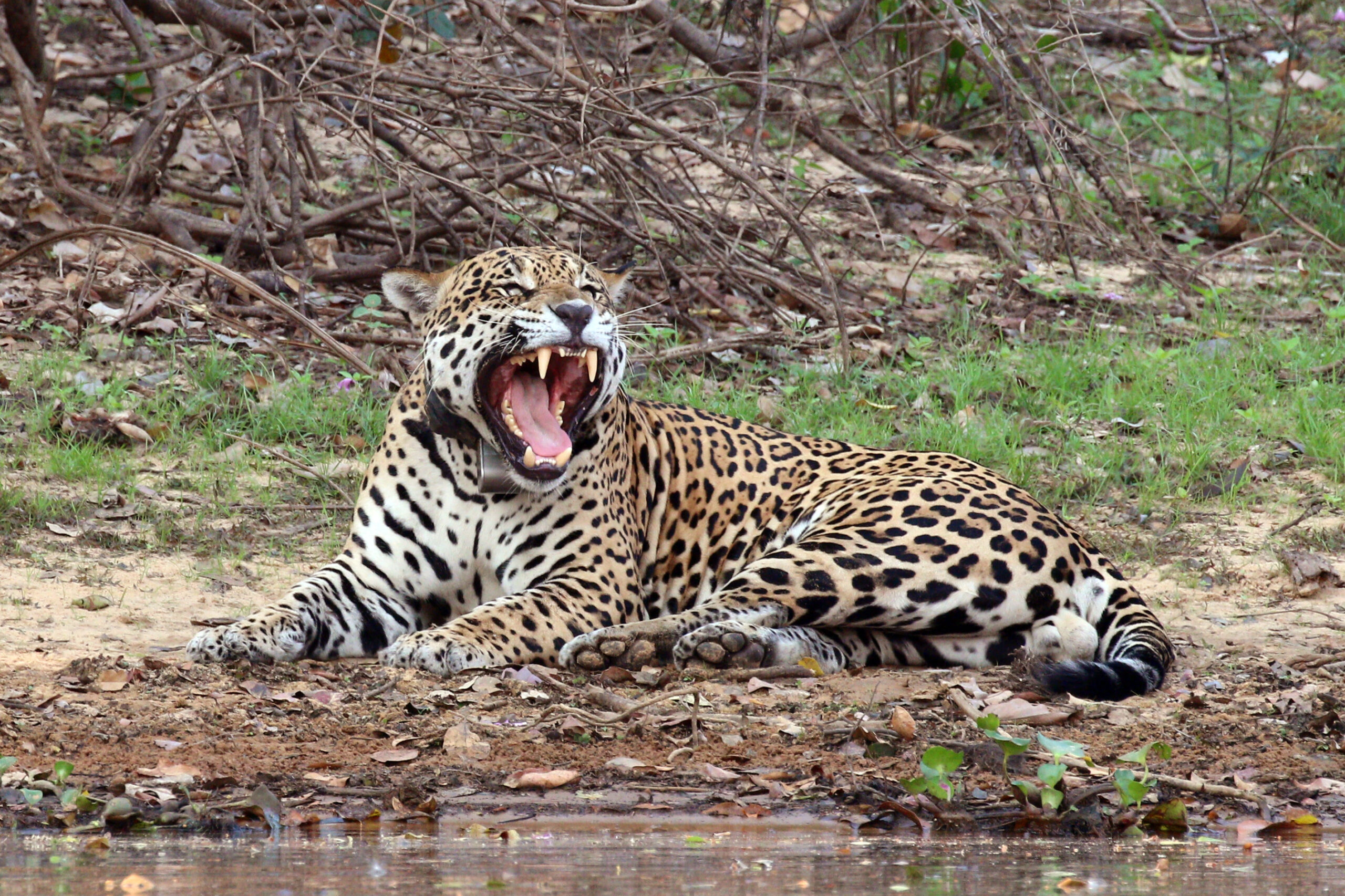 Photo Credit: Charles J. Sharp / Wikimedia
In the heart of the lush Amazon rainforest, the jaguar, known scientifically as Panthera onca, prowls with an air of quiet confidence. With its powerful body and striking coat adorned with rosettes, this magnificent big cat is a master of camouflage, blending seamlessly into the dappled shadows of its vibrant habitat. As the sun filters through the thick canopy, illuminating patches of emerald green, the jaguar moves silently, its keen senses attuned to the rustle of leaves and the distant calls of other wildlife. This solitary hunter is not just a symbol of strength; it plays a crucial role in maintaining the balance of its ecosystem.
What makes the jaguar so captivating to scientists and nature enthusiasts alike is its remarkable adaptability and hunting prowess. Unlike other big cats, jaguars are known for their unique ability to take down prey much larger than themselves, thanks to their powerful jaws and strong teeth. They are the only big cats that enjoy swimming, often diving into rivers to catch fish or even caimans. This versatility allows them to thrive in diverse environments, from dense rainforests to open savannas. As we explore the life of the jaguar, we will uncover the secrets of its behavior, diet, and the vital role it plays in the intricate web of life within its habitat. Join us on this adventure to learn more about one of nature’s most extraordinary creatures.
The jaguar, a magnificent big cat, holds a special place in the tree of life. Scientifically classified within the kingdom Animalia, it belongs to the phylum Chordata, which includes all animals with a backbone. As a member of the class Mammalia, jaguars are warm-blooded, furry creatures that nurse their young. They are part of the order Carnivora, which encompasses meat-eating animals, and the family Felidae, known for its agile and powerful members. The jaguar’s genus, Panthera, sets it apart from other cats, as it includes the largest felines, like lions and tigers. What makes the jaguar truly unique is its powerful build and striking coat, adorned with rosettes that help it blend into its rainforest habitat.
| Taxonomic Rank | Scientific Name | Meaning & Significance |
|---|---|---|
| Kingdom | Animalia | This name comes from the Latin word for “animal,” highlighting that jaguars are part of the vast world of living organisms. |
| Phylum | Chordata | Derived from the Greek word “chordē,” meaning “string,” this term refers to animals with a notochord, a flexible rod that supports the body, which all vertebrates, including jaguars, possess. |
| Class | Mammalia | This name comes from the Latin “mamma,” meaning “breast,” indicating that female mammals, like jaguars, produce milk to feed their young. |
| Order | Carnivora | From the Latin “carnivorus,” meaning “meat-eater,” this classification reflects the jaguar’s diet, which primarily consists of meat. |
| Family | Felidae | This name is derived from the Latin word “felis,” meaning “cat,” and it encompasses all true cats, including the jaguar. |
| Genus | Panthera | From the Greek word “panthera,” which refers to a large cat, this name signifies the jaguar’s status as one of the most powerful and iconic felines in the world. |
| Species | Panthera onca | The species name “onca” comes from the Tupi-Guarani word for jaguar, emphasizing its cultural significance in the regions where it roams. |
The jaguar’s classification reveals much about its evolutionary history. As a member of the Panthera genus, it shares a common ancestor with other big cats, suggesting that these majestic animals evolved from similar roots. The jaguar’s adaptations, such as its powerful jaws and unique hunting techniques, highlight its role as a top predator in its ecosystem. Understanding where the jaguar fits in the tree of life not only deepens our appreciation for this incredible animal but also underscores the importance of conserving its habitats and ensuring its survival for future generations.
The evolutionary journey of the jaguar stretches back millions of years, weaving through the tapestry of time and adaptation. This big cat, known scientifically as Panthera onca, is part of the Felidae family, which includes all modern cats. The jaguar’s ancestors roamed the Earth during the late Miocene epoch, around 10 million years ago, when the world was a very different place. As the climate and landscapes shifted, so too did the jaguar’s lineage, leading to the powerful predator we recognize today.
Jaguar ancestors were part of a larger group of cats that began to diversify as they adapted to various environments. The earliest members of the Panthera genus emerged around 6 million years ago. These early cats were smaller and less specialized than modern jaguars. Over time, as they spread across the Americas, they developed traits that suited their habitats, from dense rainforests to open savannas. The jaguar’s robust build and powerful jaws evolved to tackle larger prey, allowing it to become a top predator in its ecosystem.
These adaptations have been crucial for the jaguar’s survival in a variety of environments. Their powerful jaws allow them to take down prey that other predators might avoid, while their camouflaged coats provide the perfect disguise for stalking. Being strong swimmers opens up additional food sources, and their solitary nature helps them maintain control over their territory. Together, these traits have made the jaguar a resilient and formidable presence in the wild, capable of thriving in the face of changing landscapes and challenges.
The jaguar is a stunning embodiment of power and grace, with a body that exudes strength and agility. Its robust frame is built for both stealth and strength, allowing it to navigate the dense jungles and wetlands of its habitat with ease. With a muscular build, short legs, and a broad head, this big cat commands attention. Its striking appearance is not just for show; every aspect of its form is finely tuned for survival in the wild.
| Feature | Description |
|---|---|
| Weight | 36kg – 160kg (79lbs – 350lbs) |
| Skin Type | Fur |
| Most Distinctive Feature | Beautiful rosetted fur pattern |
The jaguar’s rosetted fur pattern is not just a beautiful design; it serves a crucial purpose. This unique coat helps the jaguar blend seamlessly into its surroundings, providing excellent camouflage in the dappled light of the forest. The thick fur also offers protection against the elements, while its powerful build allows the jaguar to take down prey much larger than itself. Together, these features make the jaguar a formidable predator, perfectly adapted to thrive in its environment.
The jaguar roams some of the most vibrant and lush environments on our planet. Picture a dense rainforest, where sunlight filters through a thick canopy of leaves, creating a mosaic of light and shadow on the forest floor. Here, the air is rich with the sounds of chirping birds and rustling leaves, while the scent of damp earth and blooming flowers fills the atmosphere. Jaguars thrive in these habitats, where they can easily blend into the dappled light, thanks to their beautiful spotted coats that mimic the patterns of sunlight filtering through the trees.
These big cats prefer warm, humid climates, often found in areas with plenty of rainfall. They are particularly drawn to regions like swamps and floodplains, where water is abundant. This environment not only provides them with ample drinking water but also supports a rich diversity of prey. Jaguars are skilled swimmers, and they often hunt in water, making these wet habitats ideal for their hunting strategies. The combination of warmth and moisture creates a thriving ecosystem that supports the jaguar’s needs.
Adaptation is key to the jaguar’s survival in these specific habitats. Their powerful limbs and muscular bodies allow them to navigate through thick underbrush and climb trees with ease. Their keen eyesight and acute hearing help them detect prey in the dense foliage. Additionally, their strong jaws and sharp teeth are perfectly designed for delivering a powerful bite, enabling them to take down animals much larger than themselves. This adaptability not only makes them effective hunters but also allows them to thrive in the diverse environments they call home.
The jaguar’s daily life is a blend of stealth, power, and adaptability. These magnificent cats are primarily crepuscular, meaning they are most active during the twilight hours of dawn and dusk. As the sun begins to rise or set, jaguars stealthily patrol their territories, using their keen senses to hunt for prey. Their diet is diverse, ranging from deer to fish, and they often rely on their exceptional swimming skills to catch aquatic animals. This adaptability allows them to thrive in various habitats, from dense rainforests to open savannas.
While jaguars are solitary animals, they do exhibit interesting social behaviors, especially during mating season. Typically, they prefer to live alone, marking their territories with scent markings and vocalizations. These markings communicate their presence to other jaguars, helping to avoid confrontations. When it comes to raising young, a female will care for her cubs alone, teaching them essential survival skills until they are ready to venture out on their own. This solitary lifestyle is crucial for their survival, as it reduces competition for resources.
| Behavior Type | Description |
|---|---|
| Activity Patterns | Jaguars are crepuscular, hunting primarily at dawn and dusk when their prey is most active. |
| Social Structure | Jaguars are solitary, preferring to live and hunt alone, except during mating or when a mother is raising her cubs. |
| Communication Methods | They communicate through vocalizations, scent markings, and visual signals to establish territory and attract mates. |
The behaviors of jaguars are finely tuned to ensure their survival in the wild. By being crepuscular, they take advantage of the cover of twilight to hunt effectively while minimizing the risk of encountering larger predators. Their solitary nature allows them to maintain control over their territory and resources, reducing competition. This combination of traits not only enhances their hunting success but also plays a vital role in the delicate balance of their ecosystems.
The jaguar is a true carnivore, meaning it primarily eats meat. This big cat has a diverse diet that includes a variety of prey, showcasing its adaptability as a hunter. Jaguars are known for their powerful jaws and sharp teeth, which allow them to take down animals much larger than themselves. They often hunt alone, using their stealth and strength to ambush unsuspecting prey in their lush, forested habitats.
| Dietary Aspect | Details |
|---|---|
| Diet Type | Carnivore |
| Favorite Foods | Deer, Capybara, Tapir |
| Prey Items | Large mammals, including rodents and reptiles |
| Hunting Strategies | Stealthy ambush, often stalking prey before pouncing |
The jaguar’s diet plays a crucial role in its ecology and daily routine. By preying on large herbivores like deer and tapirs, jaguars help maintain the balance of their ecosystem. Their hunting habits also influence the population dynamics of these species, ensuring that the forest remains healthy and vibrant. As solitary hunters, jaguars spend a significant amount of their time searching for food, which shapes their movements and territory within the dense jungles they call home.
When it comes to mating, jaguars are solitary animals, meaning they prefer to live alone except during the breeding season. This season typically occurs between late winter and early spring, although it can vary depending on the region. During this time, males will roam their territory, seeking out females. They communicate through vocalizations, scent markings, and even physical displays to attract a mate. Once a pair has formed, they will mate multiple times over a few days, ensuring the female has a good chance of becoming pregnant.
| Reproductive Aspect | Details |
|---|---|
| Gestation Period | 90 – 105 days |
| Average Litter Size | 3 |
| Age of Sexual Maturity | 3 – 4 years |
| Name of Young | Cub |
After the cubs are born, the mother takes on the role of a dedicated caregiver. She will find a secure den, often in dense vegetation or caves, to keep her young safe from predators. The cubs are born blind and helpless, relying entirely on their mother for warmth, food, and protection. As they grow, the mother teaches them essential survival skills, such as hunting and climbing. By the time they reach about two years old, the cubs are ready to venture out on their own, marking the beginning of their journey into adulthood. This nurturing phase is crucial, as it helps ensure that the next generation of jaguars can thrive in their wild habitats.
The jaguar stands as a powerful predator at the top of its food web, playing a crucial role in maintaining the balance of its ecosystem. As a keystone species, it helps control the populations of other animals, ensuring that no single species dominates the environment. However, despite its strength and prowess, the jaguar faces significant dangers that threaten its survival.
To defend itself against these threats, the jaguar employs a variety of survival strategies. Its powerful build and stealthy hunting techniques allow it to ambush prey effectively, while its solitary nature helps it avoid confrontations with larger predators. Additionally, jaguars are known for their adaptability, often changing their hunting grounds or prey types in response to environmental changes. These traits, combined with their elusive behavior, help them navigate the challenges posed by both nature and human activity.
A keystone species is an organism that has a disproportionately large impact on its environment relative to its abundance. In simpler terms, if you remove a keystone species from an ecosystem, it can cause significant changes, often leading to the collapse of that ecosystem. The jaguar, known scientifically as Panthera onca, certainly qualifies as a keystone species. As a top predator, it plays a vital role in maintaining the balance of its habitat, which includes rainforests, swamps, and floodplains.
Jaguars are powerful hunters that primarily feed on a variety of prey, including deer, capybaras, and even caimans. By controlling the populations of these animals, jaguars help prevent overgrazing and overpopulation, which can lead to habitat degradation. For instance, if deer populations were to explode without the jaguar’s predation, they could overconsume vegetation, leading to soil erosion and loss of plant diversity. This, in turn, affects other species that rely on those plants for food and shelter.
Moreover, jaguars are known to influence the behavior of their prey. The presence of a jaguar can cause herbivores to alter their grazing patterns, allowing vegetation to recover in certain areas. This dynamic creates a healthier ecosystem, promoting biodiversity. Additionally, as jaguars hunt and consume various animals, they help maintain the balance of species within their habitat, ensuring that no single species dominates the landscape.
If jaguars were to disappear from their ecosystems, the consequences would be dire. Without these apex predators, prey populations would likely surge, leading to overconsumption of vegetation. This could result in habitat destruction, soil erosion, and a decline in plant diversity. As plants disappear, so too would the animals that depend on them for food and shelter, creating a ripple effect that could destabilize the entire ecosystem. In essence, the loss of the jaguar would not only affect its immediate environment but could also lead to a cascading series of extinctions, highlighting the critical role this magnificent big cat plays in the natural world.
The jaguar occupies a vital ecological niche as a top predator in its habitat, which includes rainforests, swamps, and floodplains. This powerful feline plays a crucial role in maintaining the balance of its ecosystem. By controlling the populations of various prey species, the jaguar helps ensure that no single species dominates the environment. This balance is essential for the health of the entire ecosystem, allowing diverse plant and animal life to thrive.
| Ecosystem Service | Impact |
|---|---|
| Population Control | Regulates prey species, preventing overgrazing and promoting biodiversity. |
| Habitat Maintenance | Influences the distribution of other species, shaping the structure of the ecosystem. |
| Seed Dispersal | Through their diet, jaguars contribute to the dispersal of seeds, aiding plant regeneration. |
| Indicator Species | Reflects the health of the ecosystem, signaling changes in environmental conditions. |
Jaguars are not just fierce hunters; they also have a profound influence on their surroundings. For instance, by preying on herbivores like capybaras and deer, they help maintain a balanced population of these animals. If jaguars were to disappear, these herbivores could multiply unchecked, leading to overgrazing. This overgrazing can damage plant life, which in turn affects other species that rely on those plants for food and shelter. Additionally, as jaguars consume their prey, they often leave behind remains that provide nourishment for scavengers and enrich the soil, further supporting the ecosystem.
The broader ecological importance of the jaguar cannot be overstated. As a keystone species, its presence is essential for the health and stability of its environment. The intricate web of life in rainforests and wetlands relies on the jaguar to keep populations in check and promote biodiversity. Protecting this magnificent big cat is not just about saving a single species; it is about preserving the entire ecosystem that thrives around it. By ensuring the survival of the jaguar, we help safeguard the rich tapestry of life that depends on its existence.
In the intricate web of life, jaguars engage in various ecological relationships that highlight the beauty of symbiosis. Symbiosis refers to the close interactions between different species, which can be beneficial, harmful, or neutral. These relationships can take many forms, such as mutualism, where both species gain advantages, or parasitism, where one benefits at the expense of the other. Understanding these connections helps us appreciate how jaguars fit into their ecosystems and how they interact with other organisms.
| Species/Type | Relationship Type | Description |
|---|---|---|
| Oxpeckers | Mutualistic | These small birds often perch on jaguars, feeding on ticks and parasites found on their skin. In return, the jaguar benefits from a cleaner coat and reduced irritation. |
| Fleas | Parasitic | Fleas can infest jaguars, feeding on their blood. This relationship is harmful to the jaguar, as it can lead to discomfort and health issues. |
| Tree Canopy | Commensal | The dense tree canopy in the jaguar’s rainforest habitat provides shelter and hunting grounds. While the trees benefit from the jaguar’s presence by controlling prey populations, the jaguar does not rely on the trees for survival. |
These relationships have evolved over time, shaped by the needs and behaviors of the species involved. Mutualistic partnerships, like that with oxpeckers, showcase how cooperation can lead to benefits for both parties. On the other hand, parasitic relationships, such as those with fleas, remind us that not all interactions are positive. The jaguar’s role in its ecosystem is vital, as it helps maintain balance by controlling prey populations and influencing the health of its habitat. Understanding these connections enriches our knowledge of the natural world and highlights the importance of preserving these magnificent creatures and their environments.
Jaguars are not just beautiful big cats; they are also full of surprises that make them truly extraordinary. Here are some intriguing facts that showcase their unique traits and behaviors.
Throughout history, the jaguar has captivated human imagination and culture. Ancient civilizations, such as the Maya and Aztecs, revered this powerful feline, often associating it with strength, the underworld, and the divine. Jaguars adorned the art and mythology of these cultures, symbolizing power and ferocity. Their striking appearance and elusive nature made them subjects of awe and respect. As humans ventured into the jungles of Central and South America, encounters with jaguars were both thrilling and terrifying, shaping stories and beliefs that have persisted through generations.
In modern times, the relationship between jaguars and humanity has become more complex. As deforestation and habitat loss threaten their populations, conservation efforts have emerged to protect these majestic animals. Organizations work tirelessly to create wildlife corridors, allowing jaguars to roam safely between fragmented habitats. However, conflicts arise when jaguars prey on livestock, leading to tensions with local farmers. While domestication of jaguars is not feasible due to their wild nature, education and community engagement are essential in fostering coexistence. Understanding the ecological role of jaguars as apex predators helps highlight their importance in maintaining healthy ecosystems.
Looking ahead, the future of the jaguar and humanity hinges on our ability to adapt and collaborate. As awareness of environmental issues grows, more people are recognizing the importance of preserving jaguar habitats. By fostering a sense of stewardship and respect for these magnificent creatures, we can work towards a harmonious coexistence. The jaguar’s survival is not just about protecting a species; it is about maintaining the rich tapestry of life that sustains us all. Together, we can ensure that future generations will continue to marvel at the beauty and power of the jaguar in the wild.
The jaguar, a symbol of strength and beauty, currently holds a conservation status of Near Threatened according to the International Union for Conservation of Nature (IUCN). This means that while the species is not yet endangered, it faces significant risks that could lead to a decline in its population. Recent estimates suggest that there are about 15,000 jaguars left in the wild. However, their numbers are not stable; they are experiencing a downward trend due to various environmental pressures.
| Conservation Factor | Status/Details |
|---|---|
| IUCN Status | Near Threatened |
| Estimated Population Size | 15,000 |
| Population Trend | Decreasing |
The main threats to jaguars are habitat loss and fragmentation, primarily caused by deforestation for agriculture and urban development. As forests are cleared, jaguars lose their homes and hunting grounds, making it harder for them to find food and mates. Additionally, poaching poses a significant risk, as these big cats are sometimes hunted for their beautiful pelts or due to conflicts with livestock. Climate change also plays a role, altering the ecosystems that jaguars depend on for survival.
Conservation efforts are underway to protect these magnificent animals and their habitats. Organizations are working to establish protected areas and wildlife corridors that allow jaguars to roam freely between habitats. Education programs aim to raise awareness about the importance of jaguars in maintaining ecological balance. With continued efforts and support from local communities, there is hope that the jaguar population can stabilize and even recover in the future, ensuring that this iconic species remains a part of our planet’s rich biodiversity.
| Question | Answer |
|---|---|
| What is the natural habitat of a jaguar? | Jaguars primarily live in rainforests, swamps, and floodplains. These lush environments provide them with plenty of cover and access to water, which is essential for their hunting and daily activities. |
| What do jaguars eat? | Jaguars are carnivores, meaning they primarily eat meat. Their diet includes a variety of animals such as deer, capybaras, and even caimans, showcasing their powerful hunting skills. |
| How do jaguars behave in the wild? | Jaguars are solitary animals, preferring to live and hunt alone. They are also known for their stealth and strength, often stalking their prey before launching a powerful attack. |
| How do jaguars reproduce? | Jaguars typically mate during the rainy season, which helps ensure that their cubs have enough food. After a gestation period of about 93 to 105 days, a female jaguar usually gives birth to two to four cubs. |
| What threats do jaguars face? | Jaguars are currently classified as Near Threatened due to habitat loss and poaching. Deforestation for agriculture and urban development significantly reduces their living space and food sources. |
| What is a unique characteristic of jaguars? | One of the most distinctive features of jaguars is their beautiful rosetted fur pattern. These spots not only help them blend into their surroundings but also make them one of the most recognizable big cats in the world. |
| Can jaguars swim? | Yes, jaguars are excellent swimmers! They often hunt in water and can swim across rivers to reach new territories or find prey, showcasing their adaptability to different environments. |