Taxonomy & Classification
- Kingdom
- Animalia
- Phylum
- Arthropoda
- Class
- Insecta
- Order
- Coleoptera
- Family
- Scarabaeidae
- Genus
- Popillia
- Species
- Popillia japonica

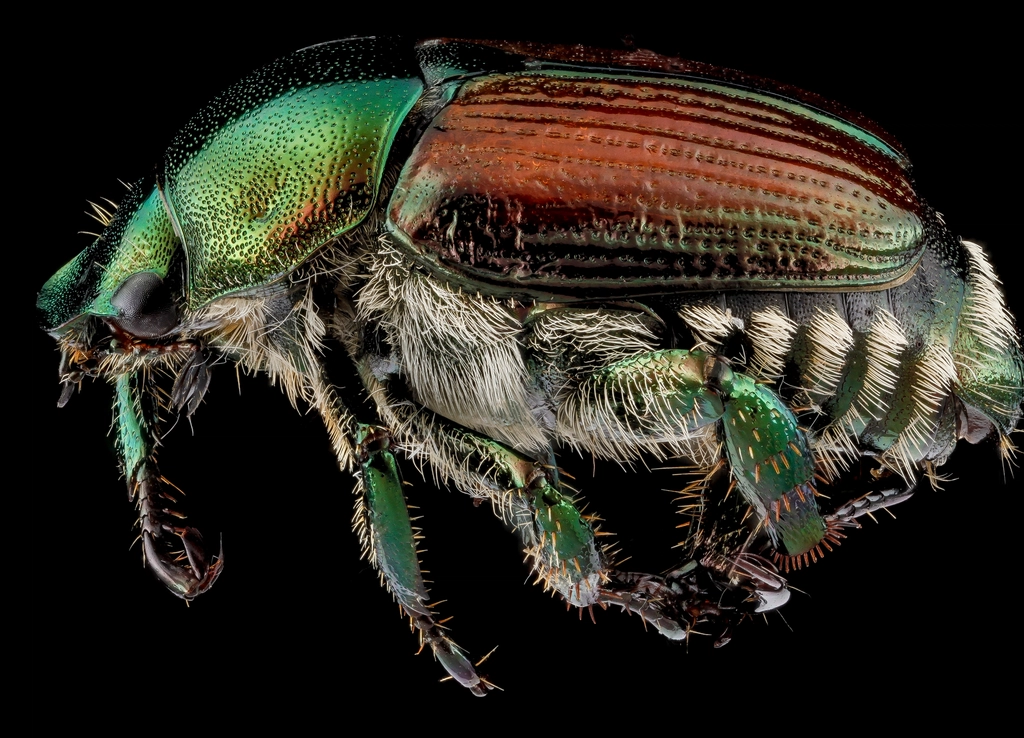 Photo Credit: usgsbee / Rawpixel
In the warm embrace of a summer afternoon, the Japanese beetle, or Popillia japonica, flits gracefully among the vibrant blooms of a garden. With its dazzling metallic green and copper body, this small insect catches the sunlight, creating a shimmering spectacle that draws the eyes of both curious children and seasoned entomologists alike. Measuring just about 0.4 inches long, the Japanese beetle is not only a feast for the eyes but also a fascinating subject for scientists who study its behaviors and ecological roles.
As it munches on the leaves and petals of various plants, the Japanese beetle plays a vital part in its ecosystem. This herbivorous insect, meaning it primarily feeds on plant material, is known for its voracious appetite, which can sometimes lead to challenges for gardeners. Yet, its presence is essential, as it serves as both a pollinator and a food source for other creatures. The Japanese beetle’s life cycle, filled with intriguing courtship rituals and transformations, adds another layer of wonder to its story. Join us as we explore the captivating world of Popillia japonica, uncovering the secrets of its life, its impact on the environment, and its complex relationship with humans.
The Japanese beetle, scientifically known as Popillia japonica, occupies a distinctive place in the tree of life. This vibrant insect belongs to the kingdom Animalia, which includes all animals, and is part of the phylum Arthropoda, the largest group of animals characterized by their jointed limbs and exoskeletons. What sets the Japanese beetle apart is its striking metallic green and copper coloration, which not only makes it visually appealing but also serves as a warning to potential predators about its unpalatable taste. As a member of the family Scarabaeidae, or scarab beetles, it shares a lineage with many other fascinating beetles that play crucial roles in ecosystems, such as decomposing organic matter and pollinating plants.
| Taxonomic Rank | Scientific Name | Meaning & Significance |
|---|---|---|
| Kingdom | Animalia | This term means “animals” in Latin, highlighting the beetle’s classification as a living organism that moves and feeds. |
| Phylum | Arthropoda | Derived from Greek, meaning “jointed feet,” this name reflects the beetle’s segmented body and jointed legs, which are key features of this group. |
| Class | Insecta | This name comes from the Latin word for “cut,” referring to the segmented body structure of insects, including the Japanese beetle. |
| Order | Coleoptera | Meaning “sheath-wing,” this term describes the hard forewings that protect the beetle’s delicate hind wings, allowing it to fly. |
| Family | Scarabaeidae | This name is derived from the Latin word for “scarab,” a type of beetle that was revered in ancient Egypt, symbolizing transformation and rebirth. |
| Genus | Popillia | From the Latin word for “little beetle,” this name emphasizes the small size of many beetles in this genus, including the Japanese beetle. |
| Species | japonica | This term means “of Japan,” indicating the beetle’s origin and its introduction to other regions, including North America. |
The classification of the Japanese beetle reveals much about its evolutionary journey. As a member of the Scarabaeidae family, it shares a common ancestor with other beetles that have adapted to various environments and ecological niches. Its unique physical traits, such as the colorful exoskeleton and specialized wings, have evolved to help it survive and thrive in diverse habitats. Understanding its taxonomic position not only highlights its biological significance but also underscores the intricate web of life that connects all living organisms. The Japanese beetle, with its rich history and ecological role, serves as a reminder of the wonders of evolution and the importance of biodiversity in our world.
The evolutionary journey of the Japanese beetle, or Popillia japonica, stretches back millions of years, tracing its roots to the ancient ancestors of the Scarabaeidae family, which includes many types of scarab beetles. These beetles first appeared during the late Cretaceous period, around 100 million years ago, a time when dinosaurs roamed the Earth. Over the eons, these beetles adapted to various environments, leading to the diverse forms we see today, including the striking Japanese beetle.
The ancestors of the Japanese beetle were likely small, dull-colored insects that thrived in leaf litter and decaying plant matter. As they evolved, they developed a range of adaptations that allowed them to exploit new habitats and food sources. One major transition was the shift from a diet of decomposing organic material to feeding on living plants. This change not only expanded their diet but also influenced their coloration and behavior, leading to the vibrant green and copper hues that make the Japanese beetle so recognizable today.
These adaptations have played a crucial role in the survival of the Japanese beetle. Their striking coloration not only aids in reproduction but also provides a level of protection against predators. The ability to fly long distances allows them to find new food sources and escape unfavorable conditions. Additionally, their diverse diet ensures they can thrive in different habitats, making them resilient in the face of environmental changes. This combination of traits has helped the Japanese beetle flourish, even as it continues to navigate the challenges of its ecosystem.
The Japanese beetle is a dazzling sight to behold, with its striking metallic green and copper body that glimmers in the sunlight. This small insect, measuring just about 0.4 inches long, has a compact and oval shape that makes it easily recognizable. Its exoskeleton, a hard outer shell, not only provides protection but also adds to its shiny appearance. With long, slender legs and delicate antennae, the Japanese beetle moves gracefully, often seen flitting from flower to flower in gardens and fields.
| Feature | Description |
|---|---|
| Weight | 0.0825 grams |
| Size | Approximately 0.4 inches long |
| Color | Metallic green and copper |
| Skin Type | Exoskeleton |
| Distinctive Feature | Shiny, reflective body |
These features work together to create a beetle that is not only beautiful but also well-adapted for survival. The metallic colors serve as a warning to potential predators, signaling that this beetle may not be a tasty snack. The hard exoskeleton protects it from physical harm, while its lightweight body allows for agile movement. Together, these characteristics help the Japanese beetle thrive in its environment, making it a captivating part of the ecosystem.
The Japanese beetle thrives in a variety of habitats, painting a picture of adaptability and resilience. You can find these colorful insects in lush forests, sprawling grasslands, and even in the heart of bustling cities. They are often spotted in gardens and farms, where they feast on a buffet of plants. Their vibrant presence adds a splash of color to the green landscapes they inhabit, making them a common sight during the warm months.
These beetles prefer climates that are warm and temperate, which means they thrive in areas with mild winters and hot summers. They are particularly fond of sunny spots where they can bask in the warmth. Moisture is also important for their survival, as it helps them find food and reproduce. The right balance of sunshine and humidity creates the perfect environment for these beetles to flourish.
Japanese beetles have developed several clever adaptations to thrive in their chosen habitats. Their ability to consume a wide range of plants allows them to find food almost anywhere, from wildflowers to cultivated crops. This dietary flexibility means they can easily adjust to different environments, whether in a rural farm or an urban garden. Their shiny exoskeleton not only makes them visually striking but also helps protect them from predators, allowing them to live and thrive in diverse settings.
As the sun rises, the Japanese beetle begins its daily routine, buzzing to life in the warm morning air. These beetles are most active during the day, especially in sunny weather. They spend their time foraging for food, primarily munching on the leaves of various plants and flowers. With their strong jaws, they can easily chew through foliage, leaving behind distinctive notches. As the day progresses, they often take short breaks to bask in the sun, soaking up warmth to fuel their activities.
Socially, Japanese beetles are quite the social butterflies—well, social beetles! They tend to gather in groups, especially when feeding. This swarming behavior not only helps them find food more efficiently but also offers some protection from predators. When they come together, they communicate through pheromones, which are chemical signals that help them attract mates and alert others to food sources. This social structure creates a lively atmosphere, where beetles can be seen flitting from leaf to leaf, sharing their discoveries with one another.
| Behavior Type | Description |
|---|---|
| Feeding | Japanese beetles feed on the leaves, flowers, and fruits of various plants, using their strong jaws to create notches in the foliage. |
| Swarming | They often gather in groups, which helps them find food more easily and provides safety in numbers from predators. |
| Communication | These beetles use pheromones to communicate, attracting mates and signaling the presence of food to others in the group. |
As the day winds down, the Japanese beetle’s behaviors play a crucial role in their survival. By foraging in groups, they not only increase their chances of finding food but also enhance their safety from hungry birds and other predators. Their ability to communicate effectively ensures that they can share vital information about resources and mates, making them a successful part of the ecosystem. With each day, these vibrant beetles continue to thrive, showcasing the beauty of nature’s interconnected web of life.
The Japanese beetle, or Popillia japonica, primarily follows a herbivorous diet, meaning it feeds on plants. These beetles are particularly fond of the leaves, flowers, and fruits of various plants. They use their strong mandibles, or jaws, to chew through the foliage, making them quite effective at foraging. As they munch away, they can cause significant damage to gardens and crops, which is why they are often considered pests. Their feeding behavior is not just about survival; it also plays a role in the ecosystem by influencing plant health and growth.
| Dietary Aspect | Details |
|---|---|
| Diet Type | Herbivore |
| Favorite Foods | Leaves, flowers, and fruits of various plants, including roses, grapes, and linden trees |
| Prey Items | None, as they do not consume other animals |
| Hunting/Foraging Strategies | Chewing through plant material using strong mandibles |
This herbivorous diet shapes the Japanese beetle’s ecology and daily routine in significant ways. By feeding on a variety of plants, they help control plant populations and contribute to the cycle of life in their habitats. However, their appetite can lead to conflicts with gardeners and farmers, as they can quickly strip a plant of its leaves. This balance between their role as consumers and their impact on the environment highlights the intricate connections within ecosystems, reminding us of the delicate dance of life that unfolds in our gardens and fields.
When it comes to romance in the insect world, the Japanese beetle has a captivating story. During the warm summer months, typically from June to August, male Japanese beetles engage in a lively courtship dance. They attract females by releasing pheromones, which are special chemicals that signal their readiness to mate. Once a female is interested, she will join the male in a fluttering display, and together they will mate. This breeding season is crucial for the continuation of their species, as it sets the stage for the next generation of these colorful beetles.
| Reproductive Aspect | Details |
|---|---|
| Gestation Period | 1-2 weeks (from laying eggs to hatching) |
| Litter Size | Approximately 20-60 eggs |
| Age of Maturity | 2 weeks after hatching |
| Name of Young | Larvae or grubs |
After mating, the female lays her eggs in the soil, usually in grassy areas. These eggs hatch into larvae, commonly known as grubs, within one to two weeks. The grubs spend their early life underground, feeding on organic matter and roots, which helps them grow. Interestingly, they reach sexual maturity just two weeks after emerging from their eggs. While the adult beetles do not provide direct care for their young, the grubs benefit from the rich environment of the soil, where they can thrive until they are ready to pupate and eventually emerge as adult beetles. This life cycle showcases the fascinating journey from egg to adult, highlighting the resilience and adaptability of the Japanese beetle.
The Japanese beetle plays a significant role in its ecosystem, serving as both a herbivore and a food source for various predators. As it munches on leaves and flowers, it contributes to the balance of plant life. However, this colorful insect is not without its challenges. It faces numerous threats that can impact its survival, making it a vital part of the food web.
To defend itself against these dangers, the Japanese beetle has developed several survival strategies. When threatened, it can play dead, dropping to the ground and remaining still to avoid detection. Additionally, its shiny, metallic exoskeleton can reflect light, making it harder for predators to spot. By blending into its surroundings and using these clever tactics, the Japanese beetle continues to thrive despite the many challenges it faces in the wild.
A keystone species is an organism that has a disproportionately large impact on its environment relative to its abundance. This means that if it were removed, the ecosystem would change dramatically. The Japanese beetle, or Popillia japonica, does not fit the classic definition of a keystone species. While it plays important roles in its habitat, its absence would not lead to the collapse of the ecosystem. However, it does influence its surroundings in several significant ways.
Japanese beetles are herbivores, meaning they primarily eat plants. They particularly enjoy munching on the leaves, flowers, and fruits of various plants, which can affect plant populations and health. For example, when these beetles swarm, they can strip entire trees or bushes of their foliage, leading to stress for the plants. This feeding behavior can create opportunities for other species, such as pests or diseases, to take hold, which can further alter the plant community.
Additionally, Japanese beetles serve as a food source for a variety of predators. Birds, small mammals, and even other insects rely on these beetles for nutrition. Their presence in the food web helps support these predators, contributing to the overall balance of the ecosystem. When beetles are abundant, they can help sustain populations of these animals, which in turn can influence the dynamics of their own communities.
Moreover, the Japanese beetle’s role in pollination cannot be overlooked. While they are not the primary pollinators, their movement from flower to flower can aid in the transfer of pollen, helping plants reproduce. This interaction is vital for maintaining plant diversity and health, which is essential for a thriving ecosystem.
If Japanese beetles were to disappear, the immediate effects might not be catastrophic, but the ripple effects could be significant. Without these beetles, certain plants might thrive without their herbivorous pressure, potentially leading to overgrowth and reduced biodiversity. Predators that rely on them for food would face challenges, possibly leading to declines in their populations. The balance of the ecosystem could shift, highlighting how even species that are not keystone in the traditional sense can still play vital roles in their environments.
The Japanese beetle, known scientifically as Popillia japonica, plays a vital role in its ecosystem, acting as both a herbivore and a food source for various predators. This colorful insect thrives in diverse habitats, from lush forests to urban gardens, where it feeds on the leaves, flowers, and fruits of many plants. By doing so, it helps shape plant communities and influences the overall health of its environment. Its presence can indicate the richness of an ecosystem, as these beetles are often found in areas with abundant vegetation.
| Ecosystem Service | Impact |
|---|---|
| Herbivory | Controls plant growth and diversity by feeding on leaves and flowers. |
| Food Source | Serves as a meal for birds, mammals, and other insects, supporting the food web. |
| Soil Aeration | Larvae burrow into the soil, helping to aerate it and improve water infiltration. |
| Pollination | While feeding, they may inadvertently assist in pollinating some plants. |
The influence of the Japanese beetle can be seen in various ways. For instance, as they munch on the leaves of plants, they can help maintain a balance in plant populations, preventing any single species from dominating an area. This feeding behavior can also create opportunities for other plants to thrive, promoting biodiversity. Additionally, the larvae of Japanese beetles, which live underground, contribute to soil health by aerating it. This process allows water and nutrients to reach plant roots more effectively, benefiting the entire ecosystem.
The broader ecological importance of the Japanese beetle extends beyond its immediate interactions. As a keystone species, its presence or absence can significantly alter the dynamics of its environment. When Japanese beetles are abundant, they support a variety of wildlife, from birds that rely on them for food to plants that benefit from their herbivory. Conversely, if their populations decline, it could lead to overgrowth of certain plants and a decrease in the diversity of species that depend on them. Thus, the Japanese beetle is not just a colorful insect; it is a crucial player in the intricate web of life that sustains its ecosystem.
Symbiosis is a captivating concept in nature, where different species interact in ways that can benefit one or both parties. These ecological relationships can take many forms, including mutualism, where both species gain advantages; parasitism, where one benefits at the expense of the other; and commensalism, where one species benefits while the other is neither helped nor harmed. The Japanese beetle, or Popillia japonica, engages in various partnerships that illustrate these fascinating dynamics in the natural world.
| Species/Type | Relationship Type | Description |
|---|---|---|
| Plants (various species) | Mutualistic | Japanese beetles feed on the leaves and flowers of plants, which can help with pollination as they move from one plant to another, benefiting the plants. |
| Parasitic wasps (e.g., Tiphia spp.) | Parasitic | These wasps lay their eggs inside Japanese beetle larvae, using them as a food source for their young, which can reduce beetle populations. |
| Birds (e.g., robins) | Commensal | Birds often feed on Japanese beetles, benefiting from a nutritious meal while the beetles do not gain or lose anything from this interaction. |
The evolution of these relationships showcases the intricate web of life that connects various species. Over time, the Japanese beetle has adapted to thrive in environments where it can find ample food sources, while also becoming a target for predators and parasites. These interactions not only shape the beetle’s life cycle but also influence the health of the ecosystems they inhabit. By understanding these partnerships, we gain insight into the balance of nature and the importance of each species in maintaining ecological harmony.
The Japanese beetle, known for its stunning metallic green and copper body, is more than just a pretty face. This small insect has a fascinating life filled with surprising behaviors and adaptations that make it a true marvel of nature.
The Japanese beetle, or Popillia japonica, has a long and storied relationship with humanity that dates back to its introduction to the United States in the early 1900s. Originally from Japan, these vibrant insects were first spotted in New Jersey in 1916. Their striking metallic green and copper bodies quickly captured the attention of gardeners and farmers alike. However, this beauty came with a cost, as the beetles began to feast on a wide variety of plants, leading to significant agricultural challenges. Over the years, they have become a symbol of both the allure and the potential peril of non-native species, reminding us of the delicate balance between nature and human activity.
Today, interactions between Japanese beetles and humans are complex and multifaceted. While some people appreciate their aesthetic appeal in gardens, many view them as pests due to their voracious appetite for crops and ornamental plants. Farmers and gardeners often find themselves in a battle against these beetles, employing various methods of pest control, from organic solutions to chemical treatments. Interestingly, some researchers are exploring ways to use the beetles’ natural behaviors to our advantage, such as developing traps that attract them away from valuable plants. This ongoing conflict highlights the need for sustainable practices that protect both agriculture and the environment.
As we look to the future, the relationship between Japanese beetles and humanity will likely continue to evolve. With increasing awareness of environmental issues, there is a growing push for more eco-friendly pest management strategies. This could lead to innovative solutions that allow us to coexist with these colorful insects while minimizing their impact on our gardens and farms. By fostering a deeper understanding of the Japanese beetle’s role in the ecosystem, we can work towards a balanced approach that respects both nature and human needs.
The Japanese beetle, or Popillia japonica, currently holds a conservation status of “Least Concern” according to the International Union for Conservation of Nature (IUCN). This means that, at present, the species is not facing immediate threats of extinction. In fact, their population is estimated to be in the millions, although exact numbers are difficult to pinpoint. While they are abundant in many areas, monitoring their population trends is essential to ensure they remain stable.
| Conservation Factor | Status/Details |
|---|---|
| IUCN Status | Least Concern |
| Estimated Population Size | Millions (unknown population) |
| Population Trend | Stable |
Despite their current stable status, Japanese beetles face several threats that could impact their populations in the future. One of the main challenges is habitat loss due to urban development and agricultural expansion. As humans continue to modify landscapes, the natural environments that support these beetles can diminish. Additionally, climate change poses a risk, as shifting weather patterns can affect their life cycles and food sources. Pesticides used in agriculture can also harm their populations, disrupting the delicate balance of ecosystems where they thrive.
Conservation efforts for the Japanese beetle focus on habitat preservation and sustainable agricultural practices. By promoting awareness of their ecological role and the importance of maintaining healthy environments, conservationists aim to ensure that these vibrant insects continue to flourish. The outlook for the Japanese beetle remains positive, but ongoing monitoring and responsible land management will be crucial in safeguarding their future. With the right actions, we can help maintain the balance of nature that allows these colorful beetles to thrive.
| Question | Answer |
|---|---|
| What is the habitat of the Japanese Beetle? | Japanese Beetles can be found in a variety of places, including forests, grasslands, farms, and even cities. They thrive in areas where they can easily find food, which makes them quite adaptable to different environments. |
| What do Japanese Beetles eat? | These beetles are herbivores, meaning they primarily eat plants. Their diet consists of leaves, flowers, and fruits, and they are particularly fond of roses, grapes, and linden trees. |
| How do Japanese Beetles behave? | Japanese Beetles are known for their distinctive flying patterns and can often be seen in groups. They are most active during warm, sunny days and tend to feed in the morning and late afternoon. |
| How do Japanese Beetles reproduce? | During the summer, female Japanese Beetles lay their eggs in the soil. After a few weeks, the eggs hatch into larvae, which then feed on plant roots before emerging as adults the following summer. |
| What are the threats to Japanese Beetles? | While Japanese Beetles are currently classified as "Least Concern" in terms of conservation status, they face threats from natural predators and environmental changes. Birds, parasitic wasps, and certain nematodes can help control their populations. |
| What is a unique characteristic of Japanese Beetles? | One of the most distinctive features of Japanese Beetles is their shiny metallic green and copper body. This striking coloration not only makes them easy to identify but also helps them blend into their leafy surroundings. |
| How do Japanese Beetles impact gardens? | Japanese Beetles can be quite destructive in gardens, as they feed on a wide range of plants. Their feeding can lead to significant damage, causing leaves to appear skeletonized and flowers to wilt, which can be frustrating for gardeners. |