Taxonomy & Classification
- Kingdom
- Animalia
- Phylum
- Cnidaria
- Class
- Scyphozoa
- Order
- Semaeostomeae
- Family
- Cyaneidae
- Genus
- Aurelia

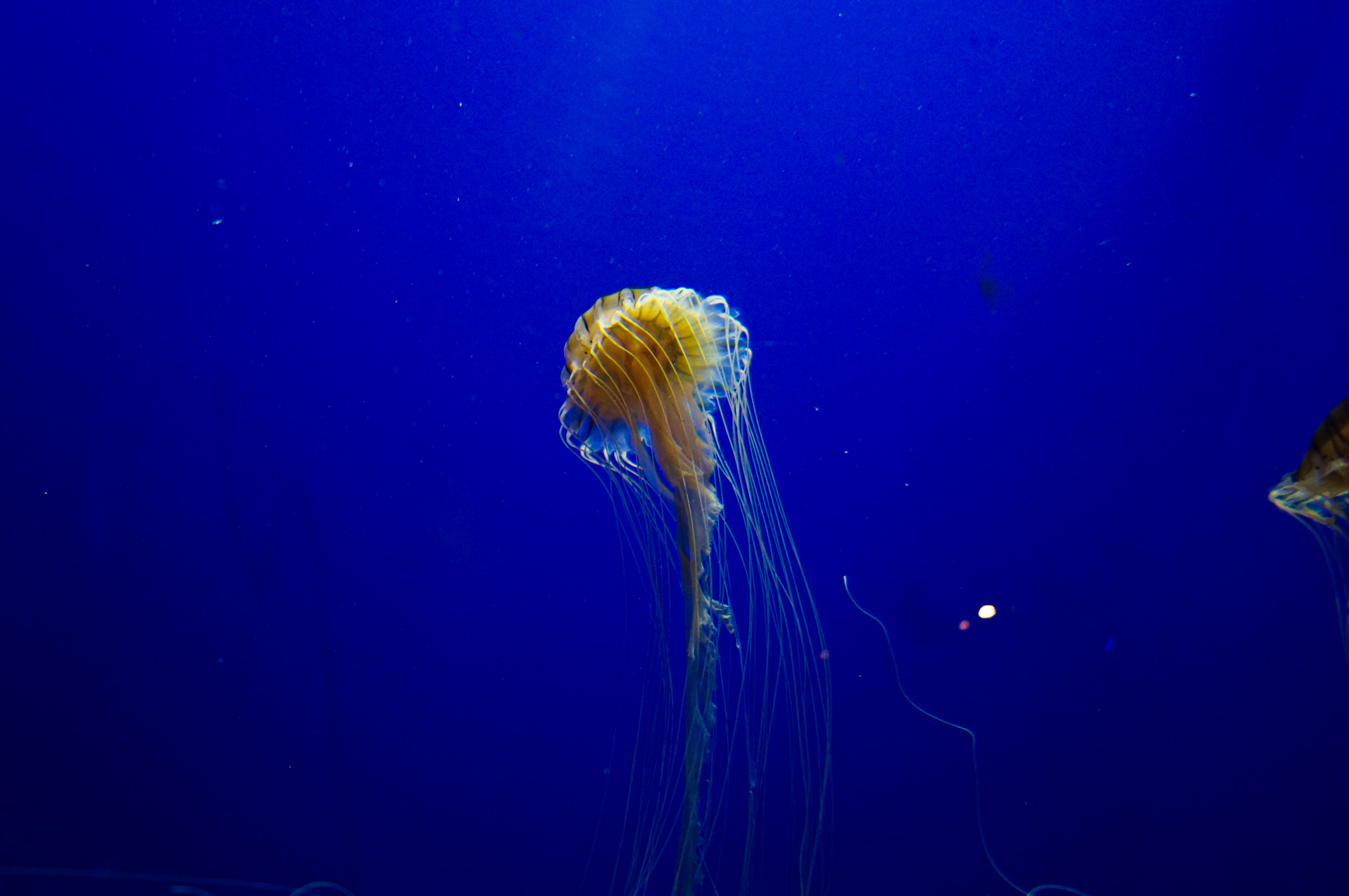 Photo Credit: BlueHarvest77 / Wikimedia Commons
In the shimmering depths of the world’s oceans, the jellyfish, known scientifically as Scyphozoa, drifts gracefully through the water, captivating all who encounter it. With its translucent, umbrella-shaped bell and long, trailing tentacles, this ethereal creature seems to float like a dream, pulsating rhythmically as it moves. Jellyfish are not just beautiful; they are ancient beings, having existed for over 500 million years, long before dinosaurs roamed the Earth. Their delicate forms and mesmerizing movements have fascinated scientists and nature lovers alike, sparking curiosity about their role in the marine ecosystem.
As jellyfish glide through the ocean currents, they play a vital part in the underwater world. These gelatinous wonders are both predators and prey, feasting on tiny fish and larvae while also serving as a food source for larger animals. Their simple yet intriguing lifestyle, combined with their unique reproductive strategies, makes them a subject of ongoing research. Scientists are eager to understand how these creatures thrive in various ocean environments and how they impact the delicate balance of marine life. With their enchanting presence and significant ecological role, jellyfish invite us to explore the mysteries of the ocean and the wonders of life beneath the waves.
Jellyfish are truly captivating organisms that occupy a special place in the tree of life. They belong to the Kingdom Animalia, which includes all animals, and are classified under the Phylum Cnidaria. This group is known for its stinging cells, called cnidocytes, which help jellyfish capture prey and defend against predators. What sets jellyfish apart is their simple body structure, which lacks a brain, heart, or bones. Instead, they have a gelatinous, umbrella-shaped bell and long, trailing tentacles. This unique design allows them to drift gracefully through the ocean, making them both beautiful and mysterious inhabitants of marine environments.
| Taxonomic Rank | Scientific Name | Meaning & Significance |
|---|---|---|
| Kingdom | Animalia | The name “Animalia” comes from the Latin word “animalis,” meaning “having breath” or “living.” This reflects the vital, breathing nature of all animals, including jellyfish. |
| Phylum | Cnidaria | “Cnidaria” is derived from the Greek word “knide,” meaning “nettle,” which refers to the stinging cells that are characteristic of this group. These cells are essential for their survival. |
| Class | Scyphozoa | The name “Scyphozoa” comes from the Greek word “skyphos,” meaning “cup.” This refers to the jellyfish’s cup-like shape, which is a defining feature of these animals. |
| Order | Semaeostomeae | “Semaeostomeae” is derived from Greek, where “sema” means “sign” and “stoma” means “mouth.” This name highlights the distinct mouth structure of jellyfish in this order. |
| Family | Cyaneidae | The name “Cyaneidae” comes from “Cyanea,” a genus of jellyfish, which is derived from the Greek word “kyanos,” meaning “dark blue.” This reflects the color of many jellyfish in this family. |
| Genus | Aurelia | “Aurelia” is derived from the Latin word for “golden,” which may refer to the golden hue some jellyfish exhibit, especially when illuminated by sunlight. |
The classification of jellyfish reveals much about their evolutionary history. As members of the Cnidaria phylum, they are among the oldest multicellular organisms on Earth, with a lineage that dates back over 500 million years. This ancient heritage highlights their resilience and adaptability in various marine environments. Their simple body plan has allowed them to thrive in oceans around the world, showcasing the incredible diversity of life forms that have evolved over time. Jellyfish remind us that complexity is not always necessary for survival, and their unique adaptations continue to intrigue scientists and nature lovers alike.
Jellyfish have been drifting through the oceans for an astonishing 500 million years, making them one of the oldest living creatures on Earth. Their evolutionary journey began long before dinosaurs roamed the planet, and they have adapted to survive in a variety of marine environments. As simple yet effective organisms, jellyfish have undergone significant changes over the eons, allowing them to thrive in the ever-changing seas.
The earliest ancestors of jellyfish were likely soft-bodied, simple organisms that floated in the water. Over time, these early forms evolved into more complex structures, developing a gelatinous body and tentacles equipped with specialized cells called cnidocytes. These cells contain tiny stinging structures called nematocysts, which help jellyfish capture prey and defend against predators. As they continued to evolve, jellyfish also developed a unique life cycle that includes both a polyp stage, which is attached to the ocean floor, and a medusa stage, which is the free-swimming form we commonly recognize today.
These evolutionary adaptations have been crucial for jellyfish survival. Their stinging cells not only help them catch food but also deter potential threats, making them formidable in their watery realm. The ability to thrive in various forms and environments has allowed jellyfish to endure through mass extinctions and changing climates. As they continue to float gracefully through the oceans, jellyfish remind us of the incredible resilience of life on Earth.
Jellyfish are mesmerizing beings that float gracefully through the ocean, their bodies resembling delicate, translucent umbrellas. With a soft, smooth texture, they pulse rhythmically as they move, creating a captivating dance in the water. Their bell-shaped bodies can vary in size, and they often have long, trailing tentacles that extend downward, giving them an ethereal appearance. These tentacles are not just for show; they play a crucial role in their survival, helping them capture prey and defend against predators.
| Feature | Description |
|---|---|
| Weight | 20-400g (0.7-14oz) |
| Skin Type | Smooth |
| Most Distinctive Feature | Tentacles hanging from the body that aid in stinging |
The combination of their lightweight bodies and smooth skin allows jellyfish to drift effortlessly with ocean currents. Their tentacles, equipped with specialized cells called nematocysts, can deliver a sting to unsuspecting prey, paralyzing them for easy consumption. This elegant design not only aids in hunting but also serves as a defense mechanism against larger predators. Together, these features create a perfect balance of beauty and survival in the vast underwater world.
Jellyfish are the ethereal wanderers of the ocean, gliding through the water with a grace that captivates anyone lucky enough to spot them. These gelatinous beings call all the world’s oceans their home, from the sunlit shallows of coastal waters to the mysterious depths of the open sea. Picture a vast expanse of blue, where sunlight dances on the surface, and beneath it, jellyfish drift like living lanterns, their bodies pulsating gently with the rhythm of the tides.
Jellyfish thrive in a variety of climates, but they prefer warm, temperate waters where food is plentiful. They are often found in areas with a stable salinity, which is the measure of salt in the water. These creatures can tolerate a range of temperatures, but they flourish in warmer waters, typically between 20 to 30 degrees Celsius (68 to 86 degrees Fahrenheit). The presence of nutrients, like plankton, is crucial for their survival, as these tiny organisms form the jellyfish’s primary diet.
To survive in their diverse habitats, jellyfish have developed some impressive adaptations. Their gelatinous bodies allow them to float effortlessly, conserving energy as they drift with ocean currents. This buoyancy helps them evade predators and find food. Additionally, jellyfish can reproduce rapidly, which is a clever strategy to ensure their survival in changing environments. With their ability to thrive in both coastal and deep-sea regions, jellyfish are true masters of the ocean, perfectly suited to their watery homes.
Jellyfish lead a life that is both simple and intriguing, drifting through the ocean currents in a mesmerizing dance. Their daily activities revolve around the rhythm of the tides and the availability of food. As they float, they use their tentacles to capture tiny prey like plankton and small fish, which they sting with specialized cells called nematocysts. These cells release toxins that immobilize their meals, allowing the jellyfish to absorb nutrients. While they may seem passive, jellyfish are constantly in motion, pulsating their bell-shaped bodies to propel themselves through the water.
Socially, jellyfish often gather in groups, creating stunning displays of color and movement. These groups, known as blooms, can consist of hundreds or even thousands of individuals. While jellyfish do not have complex social structures like some animals, their gatherings can provide advantages, such as increased protection from predators and improved foraging efficiency. When jellyfish are together, they can also communicate through the release of chemical signals, helping them coordinate their movements and respond to environmental changes.
| Behavior Type | Description |
|---|---|
| Feeding | Jellyfish use their tentacles to capture prey, employing stinging cells to immobilize small fish and plankton. |
| Group Dynamics | Jellyfish often form large groups called blooms, which can enhance their survival by confusing predators and improving foraging. |
| Communication | They communicate through chemical signals, allowing them to respond to changes in their environment and coordinate movements. |
The behaviors of jellyfish are finely tuned to ensure their survival in the vast ocean. By forming groups, they not only increase their chances of finding food but also create a safety net against predators. Their ability to communicate through chemical signals helps them adapt to their surroundings, making them resilient in the ever-changing marine environment. In this way, jellyfish continue to thrive, gracefully navigating the waters of our planet.
Jellyfish are carnivorous animals, meaning they primarily eat other living things. Their diet mainly consists of small fish, fish eggs, larvae, and various tiny marine creatures. To catch their food, jellyfish use their specialized tentacles, which are lined with stinging cells called nematocysts. When a jellyfish comes into contact with its prey, these cells release toxins that immobilize the victim, making it easier for the jellyfish to consume. This feeding strategy allows jellyfish to thrive in diverse marine environments, from shallow coastal waters to the deep sea.
| Dietary Aspect | Details |
|---|---|
| Diet Type | Carnivore |
| Favorite Foods | Small fish, fish eggs, larvae, and other small marine creatures |
| Prey Items | Small fish, fish eggs, and various larvae |
| Hunting/Foraging Strategies | Using stinging tentacles to capture and immobilize prey |
The diet of jellyfish plays a crucial role in their ecological niche. By feeding on small fish and larvae, they help regulate populations of these species, contributing to the balance of marine ecosystems. Their unique feeding habits also influence their daily routines, as they drift with ocean currents, constantly on the lookout for their next meal. This simple yet effective way of life allows jellyfish to thrive in a variety of ocean habitats, showcasing their adaptability and importance in the underwater world.
Jellyfish have a fascinating approach to reproduction that varies among species, but many share similar traits. During the breeding season, which often coincides with warmer months, adult jellyfish engage in a captivating mating ritual. Males release sperm into the water, and females take in the sperm through their bodies. This process can lead to the fertilization of eggs, which are then released into the ocean. The timing of this event is crucial, as it ensures that the young jellyfish, or larvae, have the best chance of survival in a world full of predators.
| Reproductive Aspect | Details |
|---|---|
| Gestation Period | Hatches within one day |
| Average Litter Size | 100 |
| Age of Maturity | Varies by species, typically a few months |
| Name of Young | Larvae or planulae |
Once the eggs hatch, the young jellyfish, known as planulae, begin their journey in the ocean. These tiny larvae are free-swimming and will eventually settle on the ocean floor, where they transform into polyps. This stage is quite different from the adult jellyfish form, as polyps are attached to surfaces and can reproduce asexually, creating more jellyfish. Over time, these polyps will develop into mature jellyfish, ready to continue the cycle of life. Interestingly, jellyfish do not provide parental care; instead, they rely on the vastness of the ocean to nurture their young, allowing them to grow and thrive in their own unique way.
Jellyfish play a crucial role in the ocean’s food web, serving as both predators and prey. These gelatinous animals feast on small fish, fish eggs, and tiny marine creatures, while also being a vital food source for larger animals. Their position in this intricate web highlights their importance in maintaining the balance of marine ecosystems. However, despite their fascinating role, jellyfish face numerous dangers in their watery world.
To survive against these threats, jellyfish have developed some clever defensive strategies. Their soft, transparent bodies make them difficult to spot in the water, allowing them to blend in with their surroundings. Additionally, many jellyfish possess stinging cells called nematocysts, which can deliver a painful sting to potential predators. This combination of camouflage and defense helps jellyfish navigate the challenges of their environment, ensuring they continue to drift gracefully through the ocean.
A keystone species is an organism that has a disproportionately large impact on its environment relative to its abundance. This means that even if a keystone species is not the most numerous, its presence is crucial for maintaining the structure and health of its ecosystem. Jellyfish, with their unique role in marine environments, can indeed be considered a keystone species. Their influence stretches across various levels of the food web, affecting both predator and prey populations.
Jellyfish play a significant role in the ocean’s food web. As carnivores, they consume a variety of small fish, fish eggs, and tiny marine creatures. This predation helps regulate the populations of these species, preventing any one group from overwhelming the ecosystem. For example, when jellyfish populations are healthy, they can keep the numbers of small fish in check, which in turn allows for a balanced environment where larger fish and marine mammals can thrive.
Moreover, jellyfish themselves are a vital food source for many marine animals, including sea turtles and some species of fish. When jellyfish bloom—meaning their populations increase dramatically—they provide an abundant food supply for these predators. This relationship highlights the interconnectedness of marine life, where the presence of jellyfish supports the survival of other species.
In addition to their role as predators and prey, jellyfish contribute to nutrient cycling in the ocean. When they die, their bodies decompose, releasing nutrients back into the water. This process supports the growth of phytoplankton, the microscopic plants that form the base of the marine food web. Healthy phytoplankton populations are essential for the overall health of the ocean, as they produce oxygen and serve as food for a variety of marine organisms.
If jellyfish were to disappear from their ecosystems, the consequences could be severe. Without jellyfish to control the populations of small fish, these species could explode in numbers, leading to overgrazing of phytoplankton. This imbalance would not only threaten the health of the ocean but could also disrupt the entire food web, affecting everything from tiny fish to large marine mammals. The loss of jellyfish would ripple through the ecosystem, demonstrating just how vital these gelatinous beings are to the health of our oceans.
Jellyfish are fascinating inhabitants of the ocean, playing a vital role in their ecosystems. As gelatinous drifters, they occupy a unique ecological niche, where they influence the balance of marine life. Their presence can affect everything from the population of small fish to the health of coral reefs. By serving as both predator and prey, jellyfish help maintain the delicate web of life beneath the waves.
| Ecosystem Service | Impact |
|---|---|
| Food Source | Provide nourishment for larger marine animals, including sea turtles and some fish species. |
| Predation | Control populations of small fish and zooplankton, helping to maintain balance in the food web. |
| Habitat Formation | Contribute to the structure of marine environments by forming blooms that can alter local habitats. |
| Nutrient Cycling | Assist in the recycling of nutrients in the ocean, which supports the growth of other marine life. |
Jellyfish blooms, which are large gatherings of these creatures, can have significant effects on their surroundings. For instance, when jellyfish populations surge, they can outcompete small fish for food, leading to declines in those fish populations. This can create a ripple effect, impacting species that rely on those fish for survival. Additionally, jellyfish can provide a feast for predators like sea turtles, which depend on them as a primary food source. In some cases, jellyfish blooms can even affect local fisheries, as they clog nets and disrupt fishing activities.
The broader ecological importance of jellyfish cannot be overstated. As keystone species, their presence or absence can dramatically alter marine ecosystems. By influencing the populations of other marine organisms, jellyfish help shape the biodiversity of their habitats. Their role in nutrient cycling also supports the health of ocean ecosystems, making them essential players in the intricate dance of life beneath the waves. Understanding jellyfish and their impact encourages us to appreciate the complexity of ocean life and the interconnectedness of all species.
Symbiosis is a captivating concept in nature, where different species interact in ways that can benefit one or both parties involved. These ecological relationships can take many forms, including mutualism, where both species gain advantages, parasitism, where one benefits at the other’s expense, and commensalism, where one benefits while the other is neither helped nor harmed. Jellyfish, with their ethereal presence in the oceans, engage in various symbiotic relationships that highlight the interconnectedness of marine life.
| Species/Type | Relationship Type | Description |
|---|---|---|
| Zooxanthellae (algae) | Mutualistic | Jellyfish can host these tiny algae in their tissues. The algae perform photosynthesis, providing nutrients to the jellyfish, while the jellyfish offer a safe home and access to sunlight. |
| Sea turtles | Commensal | Some jellyfish attach themselves to the shells of sea turtles. The jellyfish benefit by getting a free ride to new feeding areas, while the turtles are generally unaffected. |
| Fish (like clownfish) | Mutualistic | Certain fish species find refuge among jellyfish tentacles, gaining protection from predators. In return, the fish may help keep the jellyfish clean by eating parasites. |
These relationships have evolved over millions of years, showcasing the adaptability and resilience of jellyfish and their partners. By forming these connections, jellyfish not only enhance their own survival but also contribute to the health of their ecosystems. The intricate web of life in the ocean reminds us that every species, no matter how simple it may seem, plays a vital role in the grand tapestry of nature.
Jellyfish are some of the ocean’s most enchanting inhabitants, with a history and biology that can surprise even the most seasoned nature enthusiasts. These gelatinous wonders have a lot more going on beneath their delicate, umbrella-like bodies than meets the eye.
Jellyfish have danced through human history, captivating our imaginations and influencing cultures around the globe. Ancient civilizations, such as the Greeks and Romans, marveled at these ethereal beings, often depicting them in art and literature. In some cultures, jellyfish were seen as symbols of beauty and mystery, while in others, they were associated with danger due to their stinging tentacles. Today, jellyfish continue to inspire artists and storytellers, reminding us of the ocean’s wonders and the delicate balance of life beneath the waves.
In modern times, our interactions with jellyfish have become more complex. As coastal populations grow, so do encounters with these gelatinous creatures. Some species have thrived in warmer waters, leading to increased jellyfish blooms, which can disrupt fishing and tourism. Conservation efforts are underway to understand and protect jellyfish populations, as they play a crucial role in marine ecosystems. Interestingly, researchers are exploring the potential for domestication, looking at how jellyfish could be used in aquariums or even as bioindicators, helping us monitor ocean health.
As we look to the future, the relationship between jellyfish and humanity is likely to evolve further. With climate change affecting ocean temperatures and ecosystems, jellyfish populations may continue to fluctuate, prompting new challenges and opportunities for coexistence. By fostering a deeper understanding of these remarkable creatures, we can learn to appreciate their role in the ocean while finding ways to mitigate conflicts. Together, we can ensure that jellyfish remain a part of our shared marine heritage, inspiring wonder and curiosity for generations to come.
Jellyfish currently hold a conservation status of “Least Concern,” according to the International Union for Conservation of Nature (IUCN). This means that, overall, they are not considered at risk of extinction. With an estimated population size of around 900 million, as of 1990, jellyfish are thriving in many parts of the world’s oceans. However, population trends can vary significantly by region and species, with some areas experiencing fluctuations due to environmental changes.
| Conservation Factor | Status/Details |
|---|---|
| IUCN Status | Least Concern |
| Estimated Population Size | 900 million (as of 1990) |
| Population Trend | Varies by region; some areas see fluctuations |
Despite their overall stable status, jellyfish face several threats that can impact their populations. Climate change is a significant concern, as rising ocean temperatures can alter their habitats and food sources. Additionally, pollution, particularly plastic waste, can harm jellyfish directly or disrupt the ecosystems they inhabit. Overfishing can also affect the balance of marine life, leading to changes in jellyfish populations as their prey becomes scarce or abundant.
Conservation efforts for jellyfish are not as prominent as for other species, mainly because they are not currently endangered. However, raising awareness about the importance of healthy ocean ecosystems is crucial. Protecting marine environments from pollution and climate change will help ensure that jellyfish and other marine life continue to thrive. As we learn more about these fascinating creatures, we can appreciate their role in the ocean and work towards a sustainable future for all marine inhabitants.
| Question | Answer |
|---|---|
| Where do jellyfish live? | Jellyfish can be found in all oceans around the world, from the surface to the deep sea. They thrive in both warm and cold waters, making them one of the most widespread creatures in the ocean. |
| What do jellyfish eat? | Jellyfish are carnivores, meaning they eat other animals. Their diet mainly consists of small fish, plankton, and even other jellyfish, which they capture using their stinging tentacles. |
| How do jellyfish behave? | Jellyfish are mostly passive drifters, moving with ocean currents. They can also pulse their bodies to swim, but they are not strong swimmers. Some species can even exhibit bioluminescence, glowing in the dark waters. |
| How do jellyfish reproduce? | Jellyfish have a fascinating life cycle that includes both sexual and asexual reproduction. They can release eggs and sperm into the water, where fertilization occurs, or they can reproduce asexually by budding off new jellyfish from their bodies. |
| What threats do jellyfish face? | While jellyfish are currently classified as "Least Concern" in terms of conservation status, they can face threats from pollution and climate change. Changes in ocean temperature and acidity can affect their populations and habitats. |
| What is the most distinctive feature of jellyfish? | The most distinctive feature of jellyfish is their long, flowing tentacles that hang from their bodies. These tentacles are equipped with specialized cells that can sting, helping them capture prey and defend against predators. |
| Are jellyfish dangerous to humans? | Some jellyfish can be dangerous to humans due to their stinging cells, which can cause painful reactions. However, not all jellyfish are harmful, and many species are harmless to people. |