Taxonomy & Classification
- Kingdom
- Animalia
- Phylum
- Arthropoda
- Class
- Arachnida
- Order
- Araneae
- Family
- Salticidae
- Genus
- Phidippus

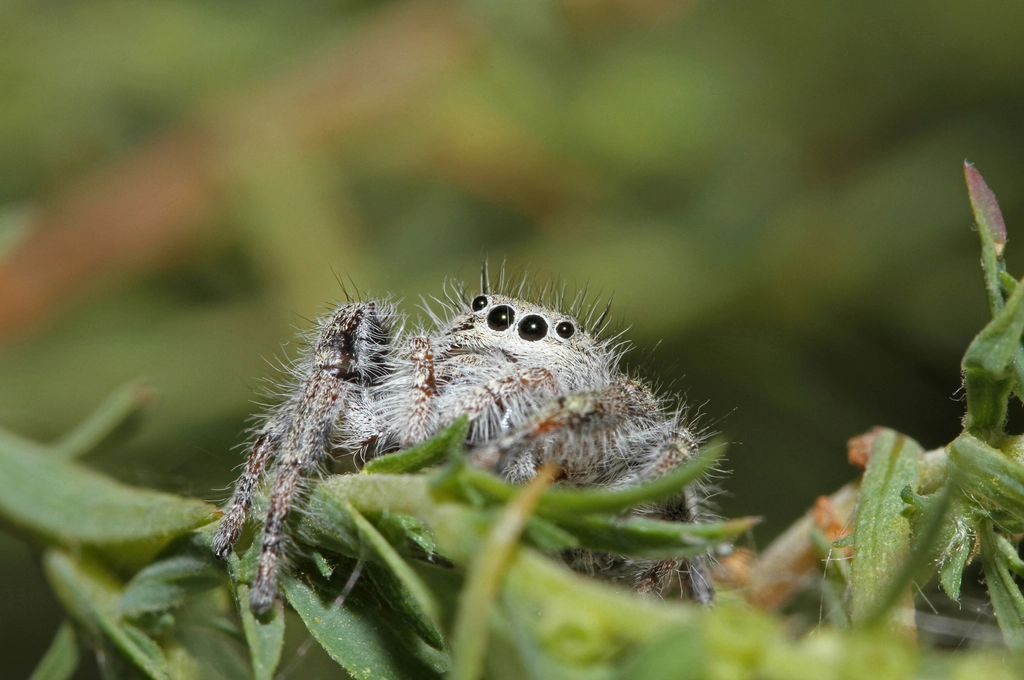 Photo Credit: insectsunlockedproject / Rawpixel
In the heart of a sun-dappled forest, the Jumping Spider, scientifically known as Salticidae, springs into action. With its compact body measuring just 1 to 2 centimeters, this tiny arachnid is a master of agility and precision. Its large, forward-facing eyes give it a curious and almost playful expression, allowing it to spot prey from a distance. The Jumping Spider’s vibrant colors, ranging from deep blacks to bright oranges and greens, make it a striking figure against the backdrop of leaves and bark. This little hunter is not just a pretty face; it has captivated scientists and nature enthusiasts alike with its remarkable leaping abilities and complex behaviors.
As the sun rises, the Jumping Spider begins its day, exploring the nooks and crannies of its environment. It can be found perched on a leaf or a twig, patiently waiting for unsuspecting insects to wander by. With a quick, calculated leap, it pounces on its prey, showcasing its incredible strength and coordination. This arachnid’s ability to jump up to 50 times its body length is not just for show; it plays a crucial role in its survival. The Jumping Spider’s keen eyesight and agile movements make it a formidable predator in the insect world. Join us as we delve deeper into the life of this fascinating creature, exploring its habitat, diet, and the vital role it plays in the ecosystem.
The Jumping Spider, belonging to the family Salticidae, is a captivating member of the animal kingdom. These tiny arachnids are known for their incredible leaping abilities, which they use to pounce on prey and navigate their surroundings. Unlike many other spiders that spin webs to catch food, Jumping Spiders actively hunt, showcasing a level of agility and intelligence that sets them apart. Their large, forward-facing eyes give them excellent vision, allowing them to spot movement from a distance. This combination of keen eyesight and remarkable jumping skills makes them one of the most intriguing groups of spiders.
| Taxonomic Rank | Scientific Name | Meaning & Significance |
|---|---|---|
| Kingdom | Animalia | This name means “animals” in Latin, highlighting that Jumping Spiders are multicellular organisms that can move and respond to their environment. |
| Phylum | Arthropoda | Derived from Greek, meaning “jointed legs,” this name reflects the characteristic jointed appendages that all arthropods, including Jumping Spiders, possess. |
| Class | Arachnida | This term comes from the Greek word for “spider,” indicating that Jumping Spiders are part of the spider family, which includes scorpions and ticks. |
| Order | Araneae | Also from Latin, this name simply means “spider,” further categorizing these creatures within the vast world of arachnids. |
| Family | Salticidae | This name is derived from the Latin word “saltare,” meaning “to jump,” which perfectly describes the remarkable leaping ability of these spiders. |
| Genus | Phidippus | Originating from Greek, this name means “horse,” possibly referring to the strength and agility of these spiders, akin to that of a horse. |
The classification of Jumping Spiders reveals a rich evolutionary history that connects them to a diverse group of organisms. As members of the phylum Arthropoda, they share a common ancestry with insects, crustaceans, and other arachnids. Their unique adaptations, such as their exceptional vision and hunting strategies, highlight the evolutionary pressures that have shaped their development over millions of years. By understanding their place in the tree of life, we gain insight into the intricate web of relationships that defines the natural world, showcasing the beauty and complexity of life on Earth.
The evolutionary journey of the Jumping Spider, part of the family Salticidae, stretches back over 300 million years. These agile arachnids have evolved through various stages, adapting to their environments and developing remarkable skills that set them apart from other spiders. Their ancestors were likely similar to primitive arachnids, but over time, they underwent significant changes that allowed them to thrive in diverse habitats.
The early ancestors of Jumping Spiders were small, ground-dwelling spiders that relied on webs for hunting. As they evolved, they began to develop better vision and more powerful legs, which enabled them to hunt actively rather than passively waiting for prey to get caught in their webs. This shift marked a major transition in their lifestyle, leading to the development of their signature leaping ability. Enhanced eyesight, particularly the ability to see in color, allowed them to spot prey from a distance, while their strong legs provided the necessary power to leap great distances.
The adaptations of Jumping Spiders have been crucial for their survival in a world filled with challenges. Their keen eyesight and powerful legs not only enhance their hunting prowess but also help them evade predators. The ability to camouflage and perform elaborate courtship rituals ensures they can find mates and reproduce successfully. These evolutionary traits have allowed Jumping Spiders to thrive in various environments, from lush forests to arid deserts, making them one of the most successful groups of spiders on the planet.
The Jumping Spider is a small but striking arachnid that captures attention with its bold appearance. With a compact body structure, these spiders typically measure between 1 to 2 centimeters in length. Their most distinctive feature is their large, expressive eyes, which give them a curious and almost playful look. These eyes are not just for show; they provide excellent vision, allowing the spider to spot prey and navigate its surroundings with remarkable precision. The body is often covered in fine hairs, which can create a velvety texture, and their coloration ranges from earthy browns to vibrant greens and blues, helping them blend into their environment.
| Feature | Description |
|---|---|
| Size | 1 to 2 centimeters long |
| Color | Varies from browns to greens and blues |
| Skin Type | Covered in fine hairs, giving a velvety texture |
| Eyes | Large and prominent, providing excellent vision |
These physical traits work together to enhance the Jumping Spider’s survival skills. The large eyes allow for keen sight, crucial for spotting both predators and prey. Their varied colors help them camouflage within their habitats, making it easier to ambush unsuspecting insects. The fine hairs on their bodies not only contribute to their unique texture but also help them sense vibrations in their environment, alerting them to potential dangers. Together, these features create a well-adapted hunter, perfectly equipped for life in the wild.
The Jumping Spider thrives in a variety of habitats, showcasing its adaptability and resourcefulness. Picture a vibrant tropical forest, where sunlight filters through the lush canopy, creating a warm and inviting environment. These spiders can also be found in temperate forests, where the changing seasons bring a mix of colors and textures. From the sandy shores of intertidal zones to the rugged heights of mountains, and even in the arid expanses of deserts, Jumping Spiders make their homes in diverse settings. They are equally at ease in scrublands and fields, and surprisingly, they often share spaces with humans, finding cozy nooks in gardens and homes.
Jumping Spiders prefer environments that offer a balance of warmth and moisture. They thrive in areas where they can find plenty of sunlight, which helps them stay active and hunt for food. These spiders are often found in places with rich vegetation, as the plants provide both shelter and hunting grounds. The climate can vary widely, from the humid heat of tropical regions to the cooler temperatures of temperate zones. However, they generally avoid extreme cold, as it can slow them down and make it harder to find prey.
To survive in such varied habitats, Jumping Spiders have developed impressive adaptations. Their excellent vision, thanks to large, forward-facing eyes, allows them to spot prey from a distance. This keen eyesight is crucial for hunting in environments filled with obstacles. Their ability to leap great distances helps them navigate through complex terrains, whether they are jumping from leaf to leaf in a forest or pouncing on unsuspecting insects in a garden. These adaptations not only enhance their survival but also make them fascinating inhabitants of the natural world.
The daily life of a Jumping Spider is a blend of agility, curiosity, and keen observation. As the sun rises, these small arachnids begin their day by exploring their surroundings, often found perched on leaves or walls, scanning for movement. Their large, forward-facing eyes give them excellent vision, allowing them to spot potential prey from a distance. Once they identify a target, they prepare for a spectacular leap, using their powerful leg muscles to spring into action. Throughout the day, they engage in various activities, including hunting, resting, and occasionally grooming their silky hairs to keep their vision sharp.
While Jumping Spiders are primarily solitary creatures, they do exhibit interesting social behaviors during mating season. Males often perform elaborate courtship dances to attract females, showcasing their agility and vibrant colors. These displays can involve intricate movements and even the use of silk to create a visual spectacle. Although they generally prefer to live alone, these spiders can communicate through subtle body language and vibrations, which help them navigate their interactions during these brief social encounters.
| Behavior Type | Description |
|---|---|
| Hunting | Jumping Spiders use their keen eyesight to stalk and pounce on prey, often jumping several times their body length. |
| Resting | They spend time resting in safe spots, conserving energy for their next hunt or leap. |
| Grooming | Regular grooming helps maintain their vision and mobility, ensuring they are always ready for action. |
| Courtship | Males perform dances and displays to attract females, using movements and silk to impress potential mates. |
| Communication | They communicate through body language and vibrations, especially during mating rituals. |
The behaviors of Jumping Spiders are finely tuned to ensure their survival in a world filled with predators and competition. Their ability to leap great distances not only aids in hunting but also helps them escape danger quickly. By mastering the art of observation and communication, they navigate their solitary lives while still finding opportunities to connect during mating. This combination of skills allows them to thrive in diverse environments, showcasing the wonders of adaptation in the natural world.
Jumping Spiders are carnivorous hunters, meaning they primarily eat other animals. Their diet mainly consists of insects, but they are also known to snack on other spiders and even baby lizards. These agile arachnids are not just passive sit-and-wait predators; they actively seek out their meals. With their excellent vision and remarkable jumping ability, they can stalk and pounce on unsuspecting prey with impressive precision.
| Dietary Aspect | Details |
|---|---|
| Diet Type | Carnivore |
| Favorite Foods | Insects, other spiders, baby lizards |
| Prey Items | Flies, ants, beetles, and even smaller spiders |
| Hunting/Foraging Strategies | Stalking and pouncing using keen eyesight and agility |
The diet of Jumping Spiders plays a crucial role in their ecology and daily activities. By preying on various insects and other small animals, they help control pest populations, contributing to the balance of their ecosystems. Their active hunting style means they spend a significant part of their day on the move, exploring their environment and honing their skills. This not only keeps them fit but also sharpens their instincts, making them effective predators in the wild.
When it comes to mating, Jumping Spiders put on quite a show! During the breeding season, which typically occurs in spring and summer, male Jumping Spiders engage in elaborate courtship displays. They perform intricate dances, waving their front legs and displaying vibrant colors to attract females. This colorful performance is not just for fun; it helps the female choose a mate based on the male’s fitness and attractiveness. Once a female accepts a male’s advances, they mate, and the female prepares to lay her eggs.
| Reproductive Aspect | Details |
|---|---|
| Gestation Period | Two to three weeks |
| Litter Size | Varies, often several dozen eggs |
| Age of Maturity | In the first spring and summer of life, or around the sixth to eighth molt |
| Name of Young | Spiderling |
After mating, the female Jumping Spider lays her eggs in a silk sac, which she carefully constructs to protect her future spiderlings. These tiny young emerge from the eggs as spiderlings, ready to begin their journey in the world. Interestingly, Jumping Spiders do not exhibit much parental care after laying their eggs. Instead, the spiderlings must fend for themselves almost immediately, using their natural instincts to hunt and survive. As they grow, they undergo a series of molts, shedding their exoskeletons to accommodate their increasing size. With each molt, they become more agile and skilled hunters, eventually maturing into the impressive Jumping Spiders we admire.
The Jumping Spider occupies a crucial role in the food web, acting as both predator and prey. These agile hunters feast on a variety of insects, helping to control their populations. However, they are also vulnerable to a range of threats that can impact their survival. Understanding these dangers is essential for appreciating the delicate balance of ecosystems where these fascinating arachnids live.
To defend themselves against these threats, Jumping Spiders have developed several clever survival strategies. Their exceptional jumping ability allows them to escape quickly from predators, often leaping several times their body length. They also rely on their excellent vision, which helps them spot danger from afar. When threatened, some species can even freeze in place, blending into their surroundings to avoid detection. These adaptations, combined with their agile movements, make Jumping Spiders resilient in the face of challenges in their environment.
A keystone species is an organism that plays a critical role in maintaining the structure of an ecosystem. Its presence or absence can significantly impact the environment and the other species living there. The Jumping Spider, with its unique hunting skills and adaptability, qualifies as a keystone species in many ecosystems. By controlling insect populations and serving as prey for larger animals, these small arachnids help maintain a balance in their habitats.
Jumping Spiders are expert hunters, primarily feeding on insects. By preying on various insect species, they help regulate their populations, preventing any one species from becoming too dominant. For example, if a Jumping Spider population thrives, it can keep the numbers of pests like aphids or flies in check. This natural pest control is vital for the health of plants and crops, as it reduces the need for chemical pesticides that can harm the environment.
Moreover, Jumping Spiders are also a food source for birds, lizards, and other predators. Their presence supports a diverse food web, ensuring that larger animals have enough to eat. In this way, they contribute to the overall biodiversity of their ecosystems. Additionally, their unique hunting techniques and behaviors can influence the behavior of other species, creating a dynamic interplay within their habitats.
If Jumping Spiders were to disappear, the effects could be profound. Insect populations could surge unchecked, leading to potential crop damage and a decline in plant health. This imbalance could ripple through the food web, affecting not only the predators that rely on Jumping Spiders for food but also the plants that depend on healthy insect populations for pollination and pest control. The loss of this small but mighty arachnid would disrupt the delicate balance of its ecosystem, highlighting just how important these tiny creatures are to the world around us.
The Jumping Spider occupies a vital ecological niche, acting as both a predator and prey within its environment. These small but agile arachnids are found in diverse habitats, from tropical forests to deserts and even urban areas. Their ability to leap great distances allows them to hunt effectively, capturing insects and other small creatures. This predatory behavior helps maintain the balance of insect populations, making Jumping Spiders essential players in their ecosystems.
| Ecosystem Service | Impact |
|---|---|
| Insect Population Control | Helps regulate the numbers of various insects, preventing overpopulation. |
| Food Source | Serves as prey for birds, lizards, and other predators, contributing to the food web. |
| Soil Health | By preying on insects that may harm plants, they indirectly support plant health and soil quality. |
| Pollination Support | While not primary pollinators, their presence in flowering areas can aid in the pollination process. |
Jumping Spiders influence their surroundings in several specific ways. For instance, by preying on pests like aphids and flies, they help protect plants from damage, which is especially important in gardens and agricultural settings. Their hunting techniques, which include stalking and pouncing, showcase their remarkable vision and agility. This not only makes them effective hunters but also allows them to thrive in various environments, from the dense foliage of forests to the open spaces of fields.
The broader ecological importance of Jumping Spiders cannot be overstated. As keystone species, their presence supports the health of their ecosystems. By controlling insect populations, they help maintain the balance necessary for other species to thrive. Additionally, their role as prey for larger animals ensures that energy flows through the food web, connecting various life forms. In this way, Jumping Spiders contribute to the intricate tapestry of life, reminding us of the interconnectedness of all living things.
In the intricate web of life, symbiosis plays a vital role in shaping the relationships between different species. Symbiosis refers to the close interactions between organisms, which can be beneficial, harmful, or neutral. These ecological relationships can take many forms, such as mutualism, where both species gain advantages, parasitism, where one benefits at the expense of the other, and commensalism, where one species benefits while the other is neither helped nor harmed. The Jumping Spider, with its agile movements and keen hunting skills, engages in various partnerships that highlight the complexity of nature.
| Species/Type | Relationship Type | Description |
|---|---|---|
| Ants | Mutualistic | Jumping Spiders may benefit from the protection ants provide against larger predators, while ants can enjoy the presence of spiders that help control pest populations. |
| Fungi | Commensal | Some Jumping Spiders may inhabit areas where fungi grow, gaining shelter without affecting the fungi’s growth or health. |
| Other Insects | Parasitic | While not a typical relationship, Jumping Spiders can sometimes prey on insects that are already weakened or infested, benefiting from their misfortune. |
These relationships have evolved over time, shaped by the needs and behaviors of the species involved. The mutualistic bond with ants, for instance, showcases how cooperation can enhance survival for both parties. As Jumping Spiders navigate their environments, they adapt to the presence of other organisms, finding ways to coexist and thrive. This dynamic interplay not only enriches their lives but also contributes to the overall health of the ecosystems they inhabit, demonstrating the interconnectedness of all living things.
Jumping spiders are not just your average arachnids; they are fascinating little hunters with some surprising traits that make them stand out in the animal kingdom. Here are some intriguing facts that will surely captivate nature enthusiasts of all ages.
Throughout history, Jumping Spiders have woven their way into human culture and folklore. These small arachnids, known for their impressive leaping skills and vibrant appearances, have often been symbols of agility and curiosity. In various cultures, they are seen as omens or messengers, embodying the idea of quick thinking and adaptability. Ancient stories sometimes depict them as wise creatures, capable of outsmarting larger foes. This cultural significance highlights how humans have long recognized the unique traits of Jumping Spiders, often attributing them with qualities that resonate with our own experiences.
In modern times, our interactions with Jumping Spiders have evolved, reflecting both admiration and conflict. Many people appreciate these spiders for their role in controlling insect populations, making them valuable allies in gardens and homes. However, some may view them with fear or disdain, often due to misconceptions about spiders in general. Conservation efforts are increasingly important as urbanization and habitat loss threaten their populations. Interestingly, some researchers are exploring the potential for domestication, studying how these spiders could be kept as pets or used in educational settings to teach about arachnids and ecosystems.
As we look to the future, the relationship between Jumping Spiders and humanity holds promise. With increased awareness of their ecological importance, more people may come to appreciate these tiny hunters. Education and conservation efforts can help dispel fears and foster a sense of wonder about these remarkable arachnids. By understanding and respecting their role in our ecosystems, we can ensure that Jumping Spiders continue to thrive alongside us, enriching our lives with their presence and unique behaviors.
The Jumping Spider, a captivating member of the arachnid family, currently holds a conservation status of Vulnerable. This means that while they are not yet endangered, their populations are facing challenges that could threaten their future. With an estimated population size in the billions, these agile hunters are still relatively abundant, but their numbers are not as stable as one might hope. As habitats change and human activities encroach on their environments, the trends in their populations could shift, making it essential to monitor their status closely.
| Conservation Factor | Status/Details |
|---|---|
| IUCN Status | Vulnerable |
| Estimated Population Size | Billions |
| Population Trend | Potential decline due to habitat loss |
The main threats to Jumping Spiders stem from habitat destruction and environmental changes. Urbanization, agriculture, and deforestation can lead to the loss of their natural habitats, making it harder for them to find food and shelter. Additionally, climate change poses a significant risk, as shifts in temperature and weather patterns can disrupt their life cycles and the ecosystems they depend on. These factors can create a ripple effect, impacting not just the Jumping Spider but also the many species that share their environment.
Conservation efforts are underway to help protect Jumping Spiders and their habitats. Awareness campaigns aim to educate the public about the importance of these small predators in maintaining ecological balance. By promoting sustainable land use and protecting natural areas, conservationists hope to ensure that Jumping Spiders can continue to thrive. With ongoing efforts and a commitment to preserving their environments, there is hope for a brighter future for these remarkable arachnids.
| Question | Answer |
|---|---|
| Where do Jumping Spiders live? | Jumping Spiders can be found in a variety of habitats, including tropical and temperate forests, mountains, deserts, and even human homes. They thrive in places where they can easily hunt for prey, such as fields and scrubland. |
| What do Jumping Spiders eat? | Jumping Spiders are carnivores, which means they primarily eat other animals. Their diet mainly consists of insects, and they are known for their impressive hunting skills, using their excellent vision to spot and pounce on their prey. |
| How do Jumping Spiders behave? | These spiders are known for their curious and active behavior. Unlike many other spiders that build webs to catch food, Jumping Spiders actively hunt and leap to catch their prey, showcasing their agility and keen eyesight. |
| How do Jumping Spiders reproduce? | During mating, male Jumping Spiders perform elaborate courtship dances to attract females. After mating, the female lays eggs in a silk sac, which she guards until the young spiders hatch. |
| What threats do Jumping Spiders face? | Jumping Spiders are considered vulnerable due to habitat loss and environmental changes. Pesticides and pollution can also pose significant threats to their populations, affecting their food sources and living conditions. |
| What is a unique characteristic of Jumping Spiders? | One of the most distinctive features of Jumping Spiders is their large, forward-facing eyes. This unique eye arrangement gives them excellent vision, allowing them to spot prey and navigate their environment with precision. |
| Can Jumping Spiders jump far? | Yes, Jumping Spiders are known for their incredible jumping ability. They can leap up to 50 times their body length, which helps them catch prey and escape from predators. |