Taxonomy & Classification
- Kingdom
- Animalia
- Phylum
- Chordata
- Class
- Aves
- Order
- Galliformes
- Family
- Phasianidae
- Genus
- Gallus

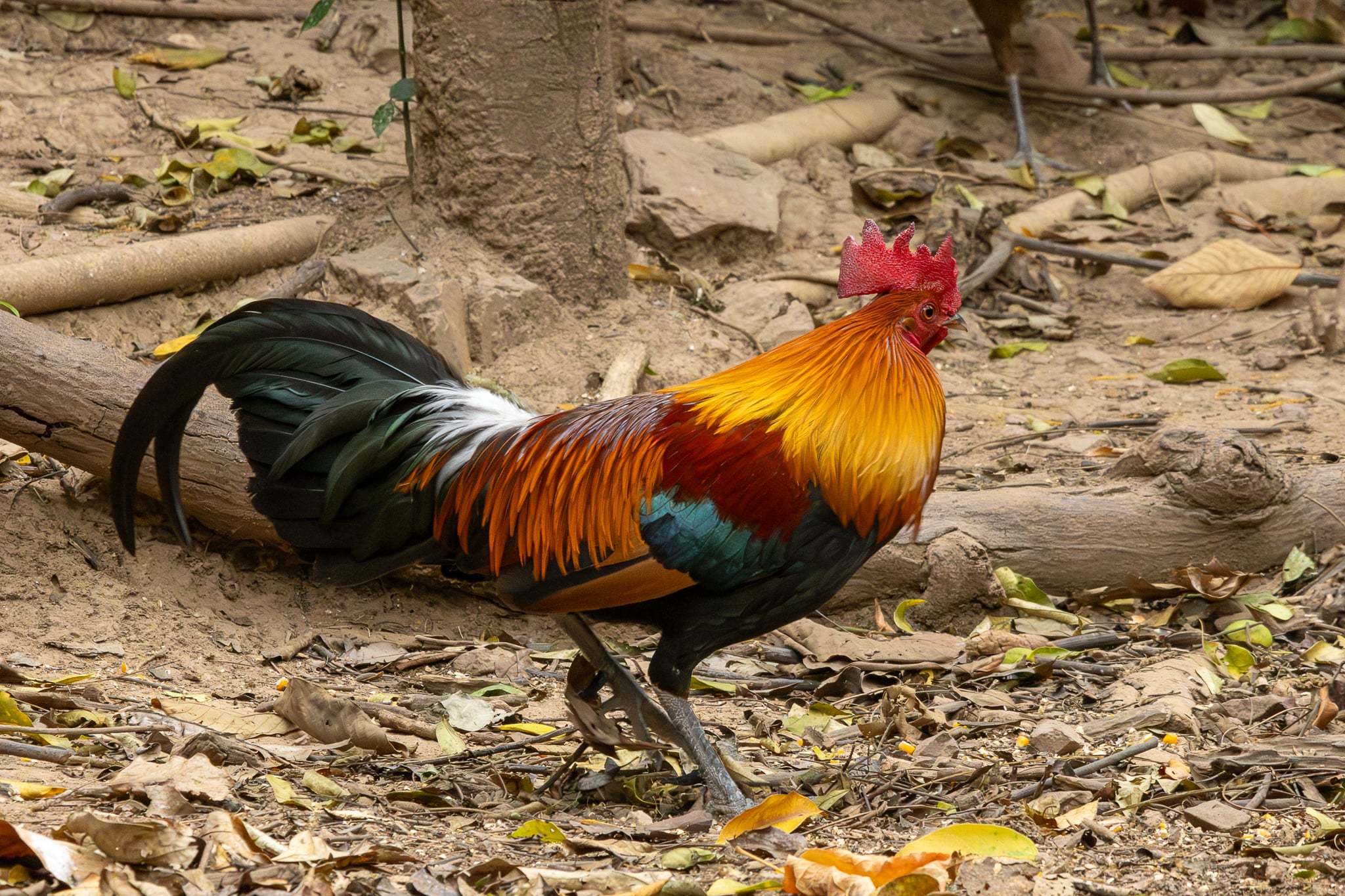 Photo Credit: Indonesiagood / Wikimedia Commons
In the heart of tropical forests, where sunlight filters through a lush canopy, the Junglefowl, known scientifically as Gallus gallus, struts with a vibrant flair. This captivating bird, with males measuring between 26 to 32 inches and females ranging from 14 to 25 inches, showcases a dazzling array of colors. The males are particularly striking, adorned with iridescent feathers that shimmer in shades of green, gold, and deep red, while the females sport more muted tones, perfect for blending into the underbrush. Their distinctive features, including a prominent comb on the males’ heads and long, elegant tails, make them a favorite among birdwatchers and scientists alike.
As dawn breaks, the Junglefowl fills the air with a chorus of calls, echoing through the trees and signaling the start of a new day. These birds are not just beautiful; they play a crucial role in their ecosystem, foraging for seeds, insects, and small plants. Their adaptability and vibrant presence have fascinated researchers, who study their behaviors and relationships within the complex web of life in the jungle. With their rich evolutionary history and importance in the food web, Junglefowl are more than just a colorful sight; they are a vital part of the natural world, inviting us to explore the wonders of their habitat and the intricate connections that sustain it.
The Junglefowl holds a special place in the animal kingdom, nestled within the intricate web of life as a member of the bird family. Scientifically classified under the genus Gallus, these birds are not just any ordinary fowl; they are the wild ancestors of the domestic chicken. This connection to domestication makes them particularly interesting, as they bridge the gap between wild and tame, showcasing the diversity of avian life. With their vibrant plumage and distinctive calls, Junglefowl are a testament to the beauty and complexity of evolution.
| Taxonomic Rank | Scientific Name | Meaning & Significance |
|---|---|---|
| Kingdom | Animalia | This name signifies that Junglefowl are part of the vast group of multicellular organisms that are heterotrophic, meaning they consume organic material for energy. |
| Phylum | Chordata | Chordata refers to animals that have a notochord, a flexible rod that supports the body. In Junglefowl, this structure is present during their early development. |
| Class | Aves | Aves is the class that includes all birds, characterized by feathers, beaks, and the ability to lay eggs. Junglefowl exemplify these traits with their colorful feathers and unique nesting behaviors. |
| Order | Galliformes | This order includes heavy-bodied ground-feeding birds. The name comes from the Latin word “gallus,” meaning rooster, highlighting the Junglefowl’s connection to domesticated chickens. |
| Family | Phasianidae | Phasianidae is the family that encompasses pheasants and their relatives. The name is derived from “Phasianus,” a genus of birds known for their striking colors and elaborate courtship displays, traits seen in Junglefowl. |
| Genus | Gallus | Gallus, meaning “rooster” in Latin, reflects the Junglefowl’s prominent role in avian culture and its significance in agriculture as the ancestor of domestic chickens. |
Understanding the Junglefowl’s classification reveals much about its evolutionary journey. As a member of the Galliformes order, it shares traits with other ground-dwelling birds, showcasing adaptations that have allowed it to thrive in diverse habitats. Its lineage connects to the domestication of chickens, illustrating how humans have interacted with wildlife over thousands of years. This relationship not only highlights the Junglefowl’s importance in agriculture but also serves as a reminder of the intricate connections that bind all living beings in the tapestry of life.
The evolutionary journey of Junglefowl stretches back millions of years, intertwining with the rich tapestry of avian history. These birds, belonging to the genus Gallus, are thought to have diverged from their ancestors around 10 million years ago. This timeline places them in the midst of significant changes in the environment and the emergence of new species, setting the stage for their unique adaptations.
The ancestors of Junglefowl were likely small, ground-dwelling birds that roamed the dense forests of Southeast Asia. Over time, they adapted to their surroundings, developing traits that would help them thrive in the underbrush. One major transition was the evolution of their plumage, which became more vibrant and varied, aiding in mating displays and camouflage. As they evolved, their diet shifted as well, allowing them to exploit a range of food sources, from seeds to insects. This adaptability was crucial for survival in the competitive ecosystems they inhabited.
These adaptations have been vital for the Junglefowl’s survival in the wild. Their colorful plumage not only plays a role in attracting mates but also helps them hide from predators, while their strong legs allow for quick escapes. The ability to communicate through vocalizations strengthens social bonds and aids in territory establishment. With a flexible diet, they can thrive in diverse habitats, ensuring they find food no matter the season. Together, these traits have allowed Junglefowl to flourish in their natural environments, showcasing the wonders of evolution in action.
The Junglefowl is a striking bird that captures attention with its vibrant colors and distinctive features. With a sturdy body structure, it stands out in the underbrush of its tropical habitat. Males are particularly eye-catching, showcasing a brilliant array of hues that shimmer in the sunlight. Their robust build, combined with a long tail, gives them an air of elegance and strength. Females, while less flamboyant, possess their own charm with more muted tones that help them blend into their surroundings.
| Feature | Description |
|---|---|
| Weight | 24-51 oz for males; 17-40 oz for females |
| Skin Type | Feathers |
| Most Distinctive Feature | Bright colors and a red crest in males |
The Junglefowl’s vivid plumage serves multiple purposes in its survival. The bright colors of the males not only attract potential mates but also play a role in establishing dominance among rivals. Meanwhile, the more subdued tones of the females provide excellent camouflage, allowing them to hide from predators while nesting. Together, these features create a balance that enhances their chances of survival in the wild, showcasing the beauty and complexity of nature’s design.
The Junglefowl thrives in a vibrant tapestry of habitats, where the lush greenery of forests meets the open spaces of field edges and scrubland. Picture a sun-dappled forest, where shafts of light filter through the leaves, illuminating the rich undergrowth. These birds are often found in mountainous regions, where the terrain offers a mix of dense foliage and open areas, perfect for foraging. They also inhabit islands, where the unique ecosystems provide a safe haven for their diverse lifestyles.
Junglefowl prefer warm climates, typically found in regions that experience tropical weather. They thrive in areas with high humidity and moderate rainfall, which support the lush vegetation they rely on for food and shelter. The temperature in these habitats usually remains mild, allowing the Junglefowl to remain active throughout the year. These birds are well-suited to environments that offer a mix of sun and shade, as they need both to regulate their body temperature and find food.
Adaptation is key to the Junglefowl’s survival in these diverse habitats. Their plumage, which blends seamlessly with the forest floor, provides excellent camouflage from predators. This ability to remain hidden is crucial, especially in the dense underbrush where they forage for seeds, fruits, and insects. Additionally, their strong legs allow them to navigate through rugged terrain, while their social behavior helps them thrive in groups, enhancing their chances of finding food and avoiding danger.
As dawn breaks in the jungle, the Junglefowl begins its day with a chorus of calls that echo through the trees. These birds are most active during the early morning and late afternoon, when they forage for food. Their diet consists of seeds, fruits, and insects, which they scratch up from the forest floor. Throughout the day, they engage in a variety of activities, from preening their feathers to taking dust baths, which help keep their plumage clean and free of parasites. As the sun sets, they find a safe perch in the trees to roost for the night, ensuring they are out of reach from ground predators.
Socially, Junglefowl are quite engaging and live in flocks, which can range from a few individuals to larger groups. This social structure provides safety in numbers, as they can watch for predators together. Within the flock, there is a clear hierarchy, often led by a dominant male. This pecking order helps maintain order and reduces conflicts over resources. Communication is key in these groups; they use a variety of calls and body language to convey messages, whether it’s alerting others to danger or signaling the presence of food.
| Behavior Type | Description |
|---|---|
| Activity Patterns | Active during early morning and late afternoon, foraging for seeds, fruits, and insects. |
| Social Structure | Live in flocks with a clear hierarchy, often led by a dominant male. |
| Communication Methods | Use a variety of calls and body language to signal danger or food availability. |
The behaviors of Junglefowl are finely tuned to their environment, ensuring their survival in the wild. By foraging in groups, they increase their chances of finding food while also keeping an eye out for predators. Their social structure not only helps them maintain order but also fosters cooperation, which is vital for their safety. Through their daily activities and interactions, Junglefowl exemplify the intricate balance of life in the jungle, where every call and movement plays a role in the dance of survival.
The Junglefowl is an omnivore, which means it enjoys a varied diet that includes both plants and animals. This adaptability allows it to thrive in its lush forest environment. Junglefowl forage on the ground, using their sharp beaks to scratch through the leaf litter and uncover tasty morsels. They are particularly active during the early morning and late afternoon, when they search for food among the underbrush, making the most of their keen eyesight and agile movements.
| Dietary Aspect | Details |
|---|---|
| Diet Type | Omnivore |
| Favorite Foods | Seeds, fruits, and various insects |
| Prey Items | Worms, slugs, insects, mice, small lizards, and frogs |
| Hunting/Foraging Strategies | Scratching the ground and pecking at the leaf litter |
This diverse diet not only supports the Junglefowl’s health but also plays a crucial role in its ecosystem. By consuming a variety of foods, these birds help control insect populations and disperse seeds, contributing to the growth of plants in their habitat. Their daily routine of foraging and feeding is essential for their survival, allowing them to maintain energy levels and thrive in the vibrant world of the jungle.
As the sun rises over the dense foliage of the jungle, the mating rituals of Junglefowl come to life. During the breeding season, which typically occurs in the warmer months, males engage in a captivating display to attract females. They puff out their colorful feathers, strut around, and emit loud calls that resonate through the trees. This courtship behavior is not just for show; it helps females choose the strongest and healthiest mates, ensuring that their offspring have the best chance of survival.
| Reproductive Aspect | Details |
|---|---|
| Gestation Period | 21 days |
| Litter Size | 5 to 12 eggs |
| Age of Maturity | 5 to 6 months |
| Name of Young | Chicks |
Once the eggs are laid, the female takes on the role of protector and nurturer. She carefully incubates the eggs, keeping them warm and safe from predators. After about three weeks, the eggs hatch, revealing fluffy chicks that are already quite independent. These little ones can walk and forage for food almost immediately, but they still rely on their mother for guidance and protection. As they grow, the chicks learn essential survival skills, such as finding food and avoiding danger. Within just a few months, they develop into young adults, ready to join the vibrant chorus of the jungle and perhaps even start their own families.
The Junglefowl occupies a crucial role in the food web of its tropical habitat. As both prey and a forager, it contributes to the balance of its ecosystem. These birds are a food source for various predators while also helping to control insect populations and disperse seeds through their diet. This interconnectedness highlights the importance of Junglefowl in maintaining the health of their environment.
To survive these threats, Junglefowl have developed several clever defensive behaviors. They are masters of camouflage, blending seamlessly into their surroundings with their earthy plumage. When danger approaches, they often freeze in place, relying on their natural colors to avoid detection. Additionally, they are quick runners and can take flight if necessary, darting into the safety of dense foliage. These strategies, combined with their keen senses, help them navigate the challenges of their environment and evade potential predators.
A keystone species is a vital part of its ecosystem, meaning its presence and activities have a significant impact on the environment and other living things. The Junglefowl, a member of the Gallus genus, qualifies as a keystone species due to its role in maintaining the balance of its tropical habitat. By influencing the populations of other species and contributing to the health of the ecosystem, the Junglefowl plays a crucial part in the intricate web of life.
One of the Junglefowl’s most important ecological impacts is its role as an omnivore. By foraging on a diverse diet that includes seeds, fruits, insects, and small animals, these birds help control the populations of various plants and insects. This foraging behavior not only aids in seed dispersal, allowing new plants to grow, but also keeps insect populations in check, preventing any one species from overwhelming the ecosystem.
Additionally, Junglefowl serve as prey for larger predators, such as snakes and birds of prey. This relationship helps sustain the food web, as these predators rely on the Junglefowl for nourishment. The presence of Junglefowl can also attract other species to the area, creating a more diverse community of plants and animals. Their flocking behavior encourages social interactions among different species, promoting a healthy ecosystem.
If the Junglefowl were to disappear, the effects would ripple through the ecosystem. Without these birds, insect populations could surge, leading to overgrazing of plants and a decline in vegetation health. This imbalance would affect not only the plants but also the animals that rely on them for food and shelter. The absence of Junglefowl would disrupt the food web, potentially leading to a decline in predator species that depend on them. In essence, the loss of Junglefowl would create a cascade of changes, highlighting just how interconnected life in the jungle truly is.
The Junglefowl plays a vital role in its ecosystem, acting as both a forager and a prey species. Found in diverse habitats like forests, scrublands, and field edges, these birds help maintain the balance of their environment. Their omnivorous diet allows them to consume a wide range of foods, from seeds and fruits to insects and small animals. This adaptability not only supports their survival but also influences the plant and animal communities around them.
| Ecosystem Service | Impact |
|---|---|
| Seed Dispersal | Junglefowl help spread seeds through their droppings, promoting plant growth and diversity. |
| Soil Aeration | As they scratch the ground for food, they aerate the soil, which improves its health and nutrient availability. |
| Prey for Predators | They serve as a food source for larger predators, contributing to the food web. |
| Insect Control | By eating insects, they help control pest populations, benefiting surrounding plants. |
The influence of Junglefowl extends beyond their immediate actions. For instance, when they forage for food, they inadvertently help aerate the soil, making it easier for plants to grow. Their role as seed dispersers is equally important; as they consume fruits, they carry seeds to new locations, allowing various plant species to thrive in different areas. This not only enhances biodiversity but also supports the overall health of their habitat.
The broader ecological importance of Junglefowl cannot be overstated. As a keystone species, their presence helps maintain the balance of their ecosystem. By supporting plant growth and providing food for predators, they contribute to a dynamic web of life. The health of the Junglefowl population can indicate the overall well-being of their environment, making them essential players in the intricate dance of nature.
In the vibrant world of nature, many species form partnerships that help them survive and thrive. These relationships can be classified into three main types: mutualism, where both species benefit; commensalism, where one species benefits while the other is neither helped nor harmed; and parasitism, where one species benefits at the expense of another. The Junglefowl, a colorful bird found in various habitats, engages in these fascinating ecological relationships, showcasing the interconnectedness of life in the wild.
| Species/Type | Relationship Type | Description |
|---|---|---|
| Junglefowl and Insects | Mutualistic | Junglefowl forage for insects, which helps control insect populations, while the birds benefit from a protein-rich diet. |
| Junglefowl and Trees | Commensal | Junglefowl often nest near trees, gaining protection from predators while the trees remain unaffected. |
| Junglefowl and Parasites | Parasitic | Some parasites, like certain ticks, attach to Junglefowl, feeding on their blood, which can harm the birds. |
These relationships have evolved over time, shaped by the needs and behaviors of the species involved. The Junglefowl’s interactions with insects not only provide nourishment but also help maintain a balanced ecosystem by controlling pest populations. Meanwhile, their nesting habits near trees offer safety from predators, illustrating how these birds have adapted to their environment. Understanding these connections deepens our appreciation for the complexity of nature and highlights the importance of every species in maintaining ecological harmony.
Junglefowl are captivating birds that not only dazzle with their vibrant colors but also play a significant role in their ecosystems. Here are some surprising facts that showcase their unique traits and behaviors.
The relationship between Junglefowl and humanity is as colorful and complex as the birds themselves. Historically, these striking birds have been intertwined with human culture, particularly in regions of Southeast Asia. Ancient civilizations revered Junglefowl, often associating them with fertility and prosperity. Their vibrant plumage and captivating calls have inspired art, folklore, and even religious practices. As the ancestors of domestic chickens, Junglefowl have played a crucial role in agriculture, providing a reliable source of food and companionship for countless generations.
In modern times, the interactions between Junglefowl and humans have evolved, reflecting both cooperation and conflict. While many people continue to domesticate these birds for their eggs and meat, wild populations face challenges from habitat loss and hunting. Conservation efforts are underway to protect their natural habitats, ensuring that these beautiful birds can thrive in the wild. However, as urban areas expand, conflicts can arise when Junglefowl wander into human settlements, leading to disputes over property and resources. This delicate balance between preservation and coexistence is vital for the future of both Junglefowl and the communities that share their environment.
As we look to the future, the relationship between Junglefowl and humanity holds both promise and challenges. With ongoing efforts in conservation and education, there is hope for a harmonious coexistence. By valuing the ecological role of these birds and respecting their habitats, we can ensure that future generations will continue to marvel at the beauty and significance of Junglefowl. Together, we can foster a world where both humans and wildlife thrive side by side, celebrating the rich tapestry of life that connects us all.
The Junglefowl, a vibrant and adaptable bird, currently holds a conservation status of “Least Concern” according to the International Union for Conservation of Nature (IUCN). This means that, at present, the species is not facing an immediate threat of extinction. However, specific population estimates remain unknown, making it difficult to gauge their exact numbers. While the overall trend for Junglefowl populations is stable, ongoing monitoring is essential to ensure their continued survival in the wild.
| Conservation Factor | Status/Details |
|---|---|
| IUCN Status | Least Concern |
| Estimated Population Size | Unknown |
| Population Trend | Stable |
Despite their current stable status, Junglefowl face several threats that could impact their future. Habitat loss is a significant concern, as forests are cleared for agriculture and urban development. Additionally, hunting and poaching pose risks, particularly in areas where these birds are valued for their meat or feathers. As their natural habitats shrink, the competition for resources increases, making survival more challenging.
Conservation efforts are underway to protect the Junglefowl and its habitat. Organizations are working to raise awareness about the importance of preserving tropical ecosystems, which are vital not only for Junglefowl but for countless other species as well. By promoting sustainable land use and protecting natural areas, there is hope for a brighter future for these colorful birds. With continued efforts, the Junglefowl can thrive alongside humans, maintaining its role in the rich tapestry of life in the wild.
| Question | Answer |
|---|---|
| What is the natural habitat of Junglefowl? | Junglefowl thrive in a variety of environments, including field edges, forests, scrubland, mountains, and even islands. They prefer areas with dense vegetation where they can easily hide from predators and find food. |
| What do Junglefowl eat? | Junglefowl are omnivores, which means they eat both plants and animals. Their diet includes seeds, fruits, insects, and small invertebrates, allowing them to adapt to different food sources in their habitat. |
| How do Junglefowl behave in the wild? | Junglefowl are known for their social behavior, often seen in small groups. They are active during the day, foraging for food and communicating with each other through a variety of calls and sounds. |
| How do Junglefowl reproduce? | During the breeding season, male Junglefowl display their bright colors and distinctive red crests to attract females. After mating, the female lays a clutch of eggs, usually in a hidden nest on the ground, where she incubates them until they hatch. |
| What threats do Junglefowl face? | While Junglefowl are currently classified as Least Concern, they still face threats from habitat loss due to deforestation and human encroachment. Additionally, they can be hunted for food, which can impact local populations. |
| What are some interesting characteristics of Junglefowl? | One of the most distinctive features of Junglefowl is their bright plumage, especially in males, which helps them attract mates. They also have a unique red crest on their heads, making them easily recognizable in the wild. |
| Are Junglefowl related to domestic chickens? | Yes, Junglefowl are considered the wild ancestors of domestic chickens. The Red Junglefowl, in particular, is the primary ancestor of the common chicken, showcasing the connection between wild and domesticated birds. |