Taxonomy & Classification
- Kingdom
- Animalia
- Phylum
- Chordata
- Class
- Aves
- Order
- Psittaciformes
- Family
- Nestoridae
- Genus
- Nestor
- Species
- Nestor notabilis

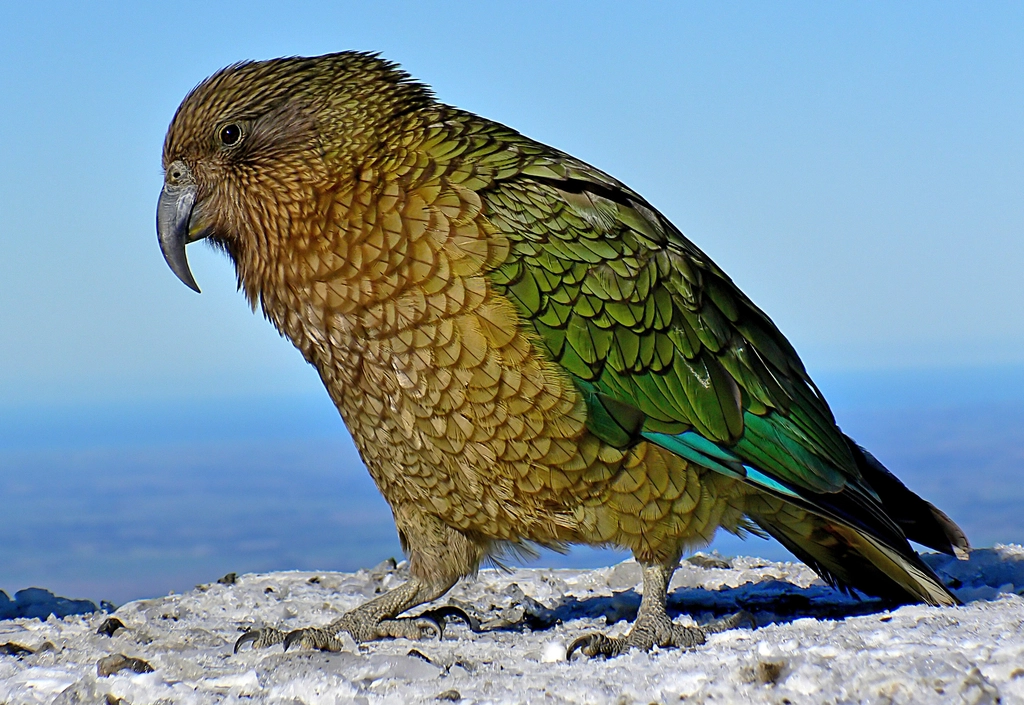 Photo Credit: Rawpixel
In the breathtaking mountains of New Zealand, the Kea, scientifically known as Nestor notabilis, flits through the air with a playful spirit that captivates all who encounter it. This medium-sized parrot, measuring about 18 inches long, is adorned with vibrant green and orange feathers that shimmer in the sunlight. With its long, curved beak, the Kea is not just a pretty face; it is a master of exploration and problem-solving, often seen investigating its surroundings with an insatiable curiosity. Scientists and nature enthusiasts alike are drawn to this bird not only for its striking appearance but also for its remarkable intelligence and social behavior.
Imagine standing on a rugged mountain trail, surrounded by lush forests and alpine meadows, as the Kea swoops down from the heights, its laughter echoing through the valleys. These clever parrots are known for their playful antics, often engaging in games and even stealing items from unsuspecting hikers. Their resourceful nature allows them to thrive in a challenging environment, where they forage for a varied diet that includes both plants and small animals. As we delve deeper into the world of the Kea, we will uncover the secrets of its behavior, its vital role in the ecosystem, and the conservation challenges it faces today. Join us on this adventure to learn more about one of nature’s most intriguing birds!
The Kea, a lively parrot native to New Zealand, occupies a distinctive place in the tree of life. It belongs to the family Nestoridae, which is known for its intelligence and playful behavior. What sets the Kea apart from other birds is its remarkable adaptability to harsh mountain environments and its curious nature, often leading it to explore and interact with its surroundings in ways that are both entertaining and insightful. This clever bird is not just a pretty face; it plays a vital role in its ecosystem, showcasing the intricate connections between species and their habitats.
| Taxonomic Rank | Scientific Name | Meaning & Significance |
|---|---|---|
| Kingdom | Animalia | This name signifies that the Kea is part of the vast group of multicellular organisms that are primarily heterotrophic, meaning they consume other organisms for energy. |
| Phylum | Chordata | Chordata refers to animals that have a notochord, a flexible rod that supports the body. In the case of the Kea, this means it has a backbone, which is a key feature of vertebrates. |
| Class | Aves | Aves is the class that includes all birds. The Kea, with its feathers and beak, fits perfectly into this category, showcasing the adaptations that allow birds to thrive in various environments. |
| Order | Psittaciformes | This order includes parrots, characterized by their strong, curved beaks and zygodactyl feet, which means they have two toes facing forward and two backward, perfect for gripping branches. |
| Family | Nestoridae | Nestoridae is a family of parrots that are known for their intelligence and social behavior. The Kea’s playful antics and problem-solving skills highlight the significance of this classification. |
| Genus | Nestor | The genus name Nestor is derived from Greek mythology, where Nestor was a wise king. This reflects the Kea’s reputation for intelligence and cleverness in the animal kingdom. |
The classification of the Kea reveals much about its evolutionary journey. As a member of the Nestoridae family, it shares a common ancestor with other unique parrots, indicating a lineage that has adapted to the specific challenges of New Zealand’s rugged landscapes. This evolutionary path has equipped the Kea with not only physical traits suited for survival but also cognitive abilities that allow it to thrive in a complex environment. Understanding where the Kea fits in the tree of life helps us appreciate the rich tapestry of biodiversity and the intricate relationships that define our natural world.
The evolutionary journey of the Kea, a vibrant parrot found in the rugged landscapes of New Zealand, stretches back millions of years. This fascinating bird is part of the Nestoridae family, which diverged from other parrots around 20 million years ago. As New Zealand’s environment changed, so did the ancestors of the Kea, adapting to the unique challenges and opportunities presented by their isolated habitat.
The Kea’s ancestors were likely small, tree-dwelling birds that thrived in the lush forests of ancient New Zealand. Over time, as the forests transformed into alpine regions, these birds underwent significant changes. They developed stronger, more robust bodies to navigate the rocky terrain and a keen intelligence that allowed them to solve problems and find food in challenging environments. This adaptability was crucial as they transitioned from a life in the trees to one that involved foraging on the ground and even scavenging from other animals.
The adaptations of the Kea have been vital for its survival in New Zealand’s diverse ecosystems. Their strong beaks and intelligence enable them to exploit various food sources, while their social nature fosters cooperation and learning among peers. As they navigate the challenges of their alpine home, these traits ensure that the Kea remains a vibrant part of New Zealand’s natural heritage, showcasing the wonders of evolution in action.
The Kea is a striking parrot that captures attention with its playful demeanor and vibrant appearance. This medium-sized bird boasts a sturdy body, measuring about 18 inches long, with a strong, curved beak that is perfectly designed for its adventurous lifestyle. Its wings are broad and powerful, allowing for agile flight through the mountainous terrain of its New Zealand home. The Kea’s overall form is a blend of strength and grace, making it a true marvel of nature.
| Feature | Description |
|---|---|
| Weight | 1.6 to 2.2 pounds |
| Size | Approximately 18 inches long |
| Color | Olive green with bright orange underwings |
| Beak | Long and curved, ideal for foraging |
| Skin Type | Feathered, with a soft texture |
The Kea’s vibrant olive green feathers blend seamlessly with the lush landscapes of New Zealand, providing excellent camouflage against predators. Its long, curved beak is not just a striking feature; it serves a vital purpose, allowing the bird to pry open tough seeds and access hidden food sources. The bright orange underwings flash like a warning sign when the Kea takes flight, adding to its charm and helping to communicate with other birds. Together, these features create a bird that is not only beautiful but also perfectly adapted to thrive in its rugged environment.
The Kea thrives in the breathtaking landscapes of New Zealand, where its home is a tapestry of rugged mountains, lush forests, and alpine meadows. These intelligent parrots are often found in the southern beech forests, where the trees create a rich canopy that provides shelter and food. The vibrant green foliage and the sound of rushing streams make this habitat a paradise for the Kea, allowing it to explore and play among the branches and rocky outcrops.
The climate in these regions is quite varied, with cool temperatures and plenty of rainfall throughout the year. The Kea enjoys a temperate climate, which means it experiences mild summers and chilly winters. This environment supports a diverse range of plant life, including the southern beech trees that are essential for the Kea’s diet and nesting. The combination of high altitudes and changing weather patterns creates a unique ecosystem that the Kea has come to call home.
To thrive in such a dynamic habitat, the Kea has developed several fascinating adaptations. Its strong, curved beak is perfect for cracking open tough seeds and nuts, while its keen intelligence allows it to solve problems and find food in creative ways. The Kea’s playful nature is not just for fun; it helps the bird learn about its environment and interact with other members of its species. These adaptations ensure that the Kea not only survives but flourishes in the stunning landscapes of New Zealand.
The Kea’s daily life is a whirlwind of activity, filled with exploration and play. As a diurnal bird, it rises with the sun, ready to take on the day. Mornings are often spent foraging for food, which includes fruits, seeds, and even insects. These clever parrots are known for their problem-solving skills, using their strong beaks to pry open tough nuts or dig into the ground for hidden treats. As the sun climbs higher, Keas engage in social interactions, flying from tree to tree, and often playing games that showcase their intelligence and agility.
Social behavior is at the heart of the Kea’s existence. These birds thrive in groups, often forming flocks that can range from a few individuals to over a dozen. Within these flocks, they establish a hierarchy, where each bird has its place. Communication is key; Keas use a variety of calls and body language to express themselves. From loud squawks to soft whistles, their vocalizations help maintain group cohesion and alert others to potential dangers. Playful antics, such as chasing each other or engaging in aerial displays, strengthen their bonds and keep the flock dynamic.
| Behavior Type | Description |
|---|---|
| Foraging | Kea search for food during the day, using their strong beaks to open nuts and dig for insects. |
| Social Structure | They live in flocks with a clear hierarchy, where each bird has a specific role. |
| Communication | Keas use a mix of vocalizations and body language to communicate with each other. |
| Play | Playful behaviors, such as chasing and aerial displays, help strengthen social bonds. |
The behaviors of the Kea are not just for fun; they play a crucial role in their survival. By foraging in groups, they can find food more efficiently and protect each other from predators. Their social interactions foster strong relationships, which are essential for raising young and maintaining a healthy flock. In the wild, where challenges abound, these intelligent and playful behaviors ensure that Keas thrive in their stunning New Zealand habitat.
The Kea is an omnivorous bird, meaning it enjoys a varied diet that includes both plants and animals. This clever parrot is known for its resourceful feeding behavior, often foraging in groups. With its strong beak, the Kea can easily crack open tough seeds and nuts, while its keen eyesight helps it spot insects and other small creatures. Whether it’s rummaging through the forest floor or exploring alpine meadows, the Kea’s playful nature often leads it to discover new food sources.
| Dietary Aspect | Details |
|---|---|
| Diet Type | Omnivore |
| Favorite Foods | Seeds, fruits, and tough plant materials |
| Prey Items | Beetle larvae, snails, chicks, and small mammals |
| Hunting/Foraging Strategies | Forages in groups, uses strong beak to crack open seeds, and explores various habitats |
The Kea’s diverse diet plays a crucial role in its ecology and daily routine. By consuming a wide range of foods, it helps control insect populations and contributes to seed dispersal, which is vital for plant growth. This adaptability not only supports the Kea’s survival but also enriches the ecosystems it inhabits, making it an important player in the natural world of New Zealand.
During the breeding season, which typically occurs from August to January, Keas engage in elaborate courtship displays. Males often perform aerial acrobatics, showcasing their agility and vibrant plumage to attract females. These playful interactions are not just for show; they help strengthen the bond between potential mates. Once a pair has formed, they will work together to find a suitable nesting site, often choosing secluded locations in tree hollows or rocky crevices.
| Reproductive Aspect | Details |
|---|---|
| Gestation Period | Approximately 28 days |
| Litter Size | 2 to 4 eggs |
| Age of Maturity | 3 to 5 years |
| Name of Young | Chicks |
After the eggs hatch, both parents take an active role in caring for their chicks. The young Keas are born helpless and rely on their parents for food and protection. As they grow, they begin to explore their surroundings, learning essential skills through play and imitation. This nurturing environment is crucial for their development, as it prepares them for the challenges of adult life. By the time they reach maturity, these once-vulnerable chicks are ready to take on the world, embodying the adventurous spirit of their parents.
The Kea, a lively parrot from New Zealand, plays a vital role in its ecosystem, often found at the top of its food web. While these intelligent birds are not typically preyed upon by many animals, they face significant dangers from introduced predators. These non-native species disrupt the natural balance, posing a serious threat to the Kea’s survival.
To defend themselves against these threats, Keas have developed several clever survival strategies. Their intelligence allows them to be highly adaptable, using their strong beaks to forage for food and even manipulate objects. When faced with danger, they often rely on their social nature, calling out to warn others in their flock. Additionally, their ability to blend into their mountainous surroundings helps them evade predators, showcasing their resourcefulness in the wild.
A keystone species is an organism that has a disproportionately large impact on its environment relative to its abundance. The Kea, a lively parrot from New Zealand, certainly qualifies as a keystone species. Its playful and intelligent nature allows it to influence the ecosystem in significant ways, shaping the environment and the lives of other species around it.
Kea are known for their omnivorous diet, which includes a variety of plants, insects, and even small animals. By foraging for food, they help to control insect populations and disperse seeds, promoting plant diversity. For example, when Keas eat fruits and nuts, they often drop seeds in different locations, allowing new plants to grow in areas where they might not have otherwise taken root. This behavior not only supports the growth of various plant species but also provides food and habitat for other animals.
In addition to their foraging habits, Keas are social birds that often interact with one another in playful ways. Their group behavior encourages cooperation, which can lead to more effective foraging strategies. When they work together, they can uncover food sources that might be hidden or difficult to access. This social dynamic not only benefits the Keas but also helps maintain the balance of their ecosystem by ensuring that resources are utilized efficiently.
If the Kea were to disappear from its ecosystem, the effects would ripple through the environment. Without these playful parrots, insect populations could surge, leading to overgrazing of plants and a decline in biodiversity. The loss of seed dispersal would hinder the growth of new plants, disrupting habitats for many other species. In essence, the absence of the Kea would create an imbalance, demonstrating just how crucial this vibrant parrot is to the health of its ecosystem.
The Kea, a vibrant parrot native to New Zealand, plays a crucial role in shaping its ecosystem. This intelligent bird thrives in southern beech forests, where it interacts with various plant and animal species. As an omnivore, the Kea’s diverse diet allows it to influence the growth and health of its habitat. By foraging for food, it helps maintain the balance of the ecosystem, ensuring that no single species dominates the landscape.
| Ecosystem Service | Impact |
|---|---|
| Seed Dispersal | Kea help spread seeds of various plants, promoting forest regeneration. |
| Soil Aeration | By digging for food, Keas aerate the soil, improving its quality. |
| Pest Control | They consume insects and small animals, helping to control pest populations. |
| Habitat Modification | Their foraging behavior can create openings in the forest, allowing new plants to grow. |
The Kea’s influence on its environment is evident in several ways. For instance, when they dig into the ground to find roots or insects, they not only satisfy their hunger but also aerate the soil. This process allows water and nutrients to penetrate deeper, benefiting the plants that grow there. Additionally, as they consume fruits and seeds, they inadvertently help in the dispersal of these plants, allowing forests to thrive and regenerate. Their playful nature also leads to the creation of small clearings in dense vegetation, which can encourage new growth and provide habitats for other species.
The broader ecological importance of the Kea cannot be overstated. As a keystone species, their activities have a ripple effect throughout the ecosystem. By maintaining the balance of plant and animal life, they contribute to the overall health of their environment. The presence of Keas indicates a thriving ecosystem, where biodiversity flourishes. Protecting these remarkable birds is essential not only for their survival but also for the well-being of the entire forest community they help sustain.
In the intricate web of life, symbiosis refers to the close and often long-term interactions between different species. These relationships can take many forms, including mutualism, where both species benefit, parasitism, where one benefits at the expense of the other, and commensalism, where one benefits while the other is neither helped nor harmed. The Kea, a lively parrot from New Zealand, engages in various ecological relationships that highlight the interconnectedness of nature.
| Species/Type | Relationship Type | Description |
|---|---|---|
| Southern Beech Trees | Mutualistic | Kea help disperse seeds from the fruits of southern beech trees, promoting forest growth while benefiting from the nutritious food source. |
| Insects (e.g., beetles) | Parasitic | Kea may feed on insects that can harm trees, but in doing so, they can also disrupt the insect population, which may lead to an imbalance in the ecosystem. |
| Other Birds (e.g., Tui) | Commensal | Kea often forage alongside other birds like Tui, benefiting from the food they stir up without affecting the Tui. |
These relationships have evolved over time, shaped by the needs and behaviors of the species involved. The Kea’s interactions with southern beech trees illustrate a beautiful example of mutualism, where both the trees and the birds thrive together. As Keas help spread seeds, they contribute to the health of their forest habitat, ensuring a continuous supply of food for themselves and other wildlife. Understanding these connections not only highlights the importance of the Kea in its ecosystem but also reminds us of the delicate balance that sustains life on our planet.
The Kea, a lively parrot from New Zealand, is not just known for its playful antics but also for its surprising behaviors and adaptations that make it truly special. Here are some intriguing facts that will captivate nature enthusiasts of all ages.
The Kea, a vibrant parrot native to New Zealand, has a long and storied relationship with humanity that dates back to the early encounters of European settlers. These intelligent birds quickly captured the attention of explorers and naturalists, who were both charmed and perplexed by their playful antics and curious nature. In Māori culture, the Kea is often seen as a symbol of cleverness and adaptability, reflecting the bird’s ability to thrive in the rugged landscapes of its home. This cultural significance has woven the Kea into the fabric of New Zealand’s identity, making it not just a bird, but a part of the nation’s heritage.
Today, the interactions between Keas and humans are complex and multifaceted. While conservation efforts aim to protect these remarkable birds, conflicts often arise due to their mischievous behavior. Keas are known for their knack for getting into trouble, whether it’s tearing apart car seals or raiding campsites for food. This has led to a mix of admiration and frustration among locals and tourists alike. Additionally, as human activities encroach on their habitats, the Kea faces new challenges, including habitat loss and the impacts of climate change. Efforts to domesticate or rehabilitate injured Keas have also sparked discussions about the best ways to coexist with these intelligent parrots.
Looking ahead, the future of the relationship between Keas and humanity will depend on our ability to balance admiration with responsibility. As we learn more about these clever parrots, we can foster a deeper understanding of their role in the ecosystem and the challenges they face. By promoting conservation and respectful coexistence, we can ensure that the Kea continues to thrive in its natural habitat, enriching our lives with its playful spirit for generations to come.
The Kea, a lively parrot native to New Zealand, currently faces significant challenges, leading to its classification as an endangered species. With an estimated population of around 4,000 individuals, the numbers have been declining in recent years. This decline is concerning, as it indicates that the Kea’s future hangs in the balance, prompting urgent conservation efforts to protect this intelligent bird.
| Conservation Factor | Status/Details |
|---|---|
| IUCN Status | Endangered |
| Estimated Population Size | Approximately 4,000 |
| Population Trend | Declining |
The main threats to the Kea include habitat loss, predation by introduced species, and human-related activities. As New Zealand’s landscapes change due to development and agriculture, the natural habitats that Keas rely on are shrinking. Additionally, invasive predators like stoats and rats pose a significant risk, as they prey on Kea eggs and chicks. Human interactions can also lead to dangerous situations, as these curious birds sometimes get into trouble with vehicles or human food.
Conservation efforts are underway to help the Kea bounce back from its precarious situation. Organizations are working to protect their habitats, control invasive species, and raise awareness about the importance of these playful parrots. With dedicated efforts and community involvement, there is hope that the Kea can thrive once again in the wild, ensuring that future generations can enjoy the sight of these vibrant birds soaring through New Zealand’s stunning landscapes.
| Question | Answer |
|---|---|
| What is the natural habitat of the Kea? | The Kea is primarily found in the southern beech forests of New Zealand. These forests provide the perfect environment for the Kea, offering plenty of trees for nesting and a rich variety of food sources. |
| What does a Kea eat? | Kea are omnivores, which means they eat both plants and animals. Their diet includes fruits, seeds, and flowers, as well as insects and small animals, making them quite adaptable in their food choices. |
| How do Kea behave in the wild? | Kea are known for their playful and curious nature. They often engage in social behaviors, such as playing with each other and exploring their surroundings, which helps them learn and adapt to their environment. |
| How do Kea reproduce? | Kea typically mate for life and build their nests in tree hollows or rocky crevices. The female usually lays 3 to 4 eggs, which she incubates for about 28 days before they hatch, with both parents helping to care for the chicks. |
| What are the main threats to Kea? | Kea are currently classified as endangered, facing threats from habitat loss, introduced predators like rats and stoats, and human activities. Conservation efforts are crucial to protect their populations and habitats. |
| What is a distinctive feature of the Kea? | One of the most distinctive features of the Kea is its long, curved beak. This beak is perfectly designed for foraging, allowing the Kea to reach into crevices and extract food from tough plants. |
| Are Kea social birds? | Yes, Kea are very social birds and often live in groups. Their social interactions are important for their survival, as they help each other find food and protect against predators. |