Taxonomy & Classification
- Kingdom
- Animalia
- Phylum
- Arthropoda
- Class
- Malacostraca
- Order
- Decapoda
- Family
- Lithodidae
- Genus
- Paralithodes

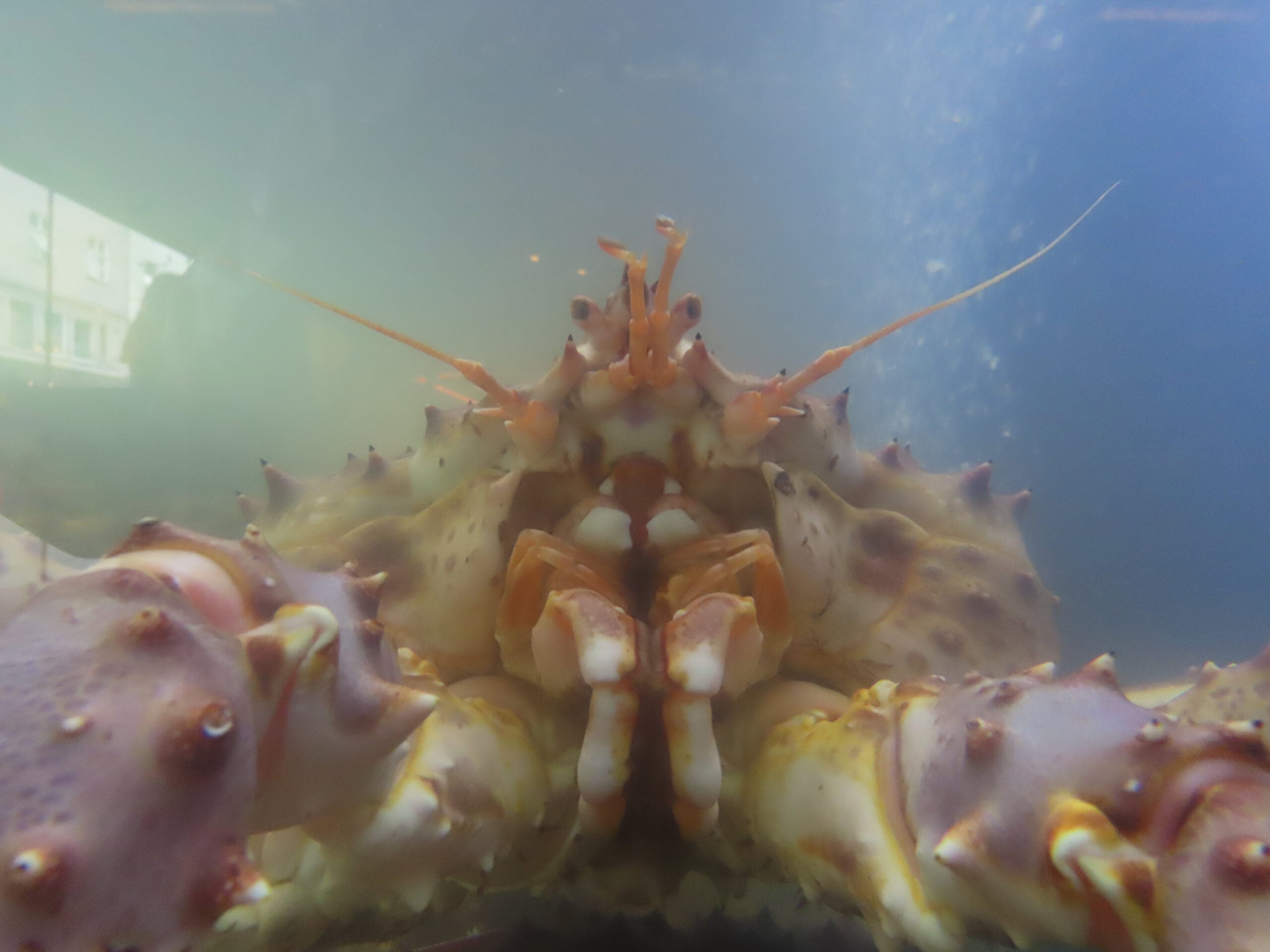 Photo Credit: Ad Meskens / Wikimedia Commons
In the icy depths of the North Pacific Ocean, the King Crab, known scientifically as Paralithodes camtschaticus, reigns as a true marvel of the marine world. With its impressive size and striking appearance, this crustacean captures the imagination of scientists and nature lovers alike. Its broad, rounded carapace can grow to over five feet across, adorned with spiky armor that not only provides protection but also adds to its regal presence. As it scuttles across the ocean floor, the King Crab’s powerful claws, designed for both hunting and defense, showcase its role as a formidable predator in its chilly habitat.
Imagine a world where the ocean floor is a bustling marketplace of life, filled with rocky outcrops and sandy patches. Here, the King Crab navigates its surroundings with a mix of grace and determination, foraging for mollusks, fish, and sea urchins. This fascinating creature plays a vital role in maintaining the balance of its ecosystem, acting as both predator and prey. As we dive deeper into the life of the King Crab, we will explore its unique adaptations, intriguing behaviors, and the challenges it faces in a rapidly changing world. Join us on this underwater adventure to uncover the secrets of one of the ocean’s most captivating inhabitants.
The King Crab is a captivating member of the animal kingdom, sitting proudly within the complex tree of life. It belongs to the phylum Arthropoda, which includes all animals with jointed limbs and exoskeletons, like insects and spiders. What sets King Crabs apart is their impressive size and unique adaptations for life in cold ocean waters. With their robust bodies and long, spindly legs, these crabs are not just a culinary delight; they are also a testament to the incredible diversity of life forms that have evolved in our oceans.
| Taxonomic Rank | Scientific Name | Meaning & Significance |
|---|---|---|
| Kingdom | Animalia | This name means “animals” in Latin, highlighting that King Crabs are multicellular organisms that consume organic material for energy. |
| Phylum | Arthropoda | Derived from Greek, meaning “jointed feet,” this term refers to the crabs’ segmented bodies and jointed appendages, which are essential for movement. |
| Class | Malacostraca | This name comes from Greek, meaning “soft-bodied,” which describes the crabs’ flexible exoskeletons that allow for growth and movement. |
| Order | Decapoda | Meaning “ten-footed” in Greek, this name refers to the ten limbs that King Crabs possess, which are crucial for walking and grasping food. |
| Family | Lithodidae | This family name means “stone crabs,” reflecting the hard, rock-like shells of these crabs that provide protection from predators. |
| Genus | Paralithodes | This name translates to “near stone,” indicating their close relationship to other stone crabs and their similar physical characteristics. |
Understanding the King Crab’s classification reveals much about its evolutionary journey. As a member of the Arthropoda phylum, it shares a common ancestry with a vast array of other species, showcasing the adaptability and resilience of life in various environments. The specific adaptations that define the King Crab, from its hard shell to its unique limb structure, illustrate how evolution has shaped it to thrive in the frigid depths of the ocean. This classification not only highlights its biological traits but also connects it to the broader narrative of life on Earth, where each species plays a vital role in the ecosystem.
The evolutionary journey of the King Crab stretches back millions of years, tracing its lineage through the depths of the ocean. These fascinating animals belong to the family Lithodidae and the genus Paralithodes. Their ancestors roamed the seas during the late Jurassic period, around 150 million years ago, when the world was a very different place. Over time, they adapted to various environmental changes, leading to the diverse forms we see today.
The King Crab’s ancestors were likely more similar to their relatives, the hermit crabs, which are known for their unique habit of living in discarded shells. As they evolved, they transitioned from this shell-dwelling lifestyle to a more robust, armored form. This shift allowed them to thrive in colder waters, where they developed a hard exoskeleton to protect against predators. Their body shape also changed, becoming more streamlined for efficient movement through the water.
These adaptations have been crucial for the King Crab’s survival in the ever-changing marine ecosystem. The hard exoskeleton shields them from threats, while their large claws enable them to hunt effectively. Their ability to thrive in cold waters opens up a vast range of habitats, ensuring they can find food and shelter. Together, these traits have allowed King Crabs to flourish in the ocean, making them a fascinating example of evolution in action.
The King Crab is a stunning marvel of the ocean, boasting a robust and formidable presence. Its body is a blend of strength and elegance, with a broad, rounded carapace that can reach impressive sizes. This crustacean’s long, spindly legs extend outward, giving it a striking silhouette as it scuttles across the seafloor. With its powerful pincers, the King Crab is not just a sight to behold but also a master of its underwater domain.
| Feature | Description |
|---|---|
| Weight | 2-8 kg (4.4-18 lbs) |
| Skin Type | Shell |
The King Crab’s impressive weight and sturdy shell serve multiple purposes in its survival. The shell acts as a protective armor, shielding it from predators lurking in the depths. Its weight allows it to anchor itself against strong currents, while its long legs provide agility and speed when navigating rocky terrains. Together, these features create a well-adapted creature, perfectly suited to thrive in the challenging environment of the ocean floor.
The King Crab thrives in the chilly embrace of cold coastal waters and the expansive continental shelves. Picture a world beneath the waves, where the ocean floor is a mix of rocky outcrops and sandy beds. Here, the water is crisp and clear, often teeming with life. The King Crab scuttles along the seafloor, navigating through its underwater kingdom, where it finds both shelter and sustenance among the nooks and crannies of its habitat.
To flourish in these environments, King Crabs require specific climate and environmental conditions. They prefer waters that are cold, typically ranging from 32 to 50 degrees Fahrenheit. This chilly habitat is essential for their survival, as it helps maintain their metabolism and supports the growth of the algae and small organisms they feed on. The ocean’s currents also play a vital role, bringing nutrients that sustain the diverse marine life in their ecosystem.
Adaptation is key for the King Crab in its frigid home. Over time, these crabs have developed a thick exoskeleton that protects them from predators and harsh conditions. Their ability to tolerate low temperatures allows them to thrive where many other species cannot. With strong legs and claws, they are adept at foraging for food and navigating the rocky terrain, making them well-suited to their cold, coastal habitats.
The daily life of a King Crab is a blend of solitary exploration and strategic foraging. As the sun rises over the ocean, these crustaceans begin their quest for food, scuttling across the seafloor in search of tasty morsels. Their diet mainly consists of mollusks, small fish, and even detritus, which is organic matter that has settled on the ocean floor. With their powerful claws, they can crack open shells and access the nutritious meat inside. Throughout the day, they navigate their underwater world, using their keen senses to detect changes in their environment, such as the movement of potential prey or the presence of predators.
While King Crabs are primarily solitary creatures, they do exhibit interesting social behaviors during certain times of the year, particularly during mating season. Males and females come together to mate, and this brief interaction is crucial for the continuation of their species. Outside of this period, they tend to keep to themselves, establishing territories that they defend from other crabs. Communication among King Crabs is subtle; they rely on chemical signals released into the water to convey information about their presence and readiness to mate. This method of communication helps them avoid confrontations and maintain their solitary lifestyle.
| Behavior Type | Description |
|---|---|
| Foraging | King Crabs search for food by scuttling along the ocean floor, using their claws to crack open shells and access prey. |
| Territoriality | Each crab establishes a territory that it defends against others, ensuring access to food and resources. |
| Mating | During mating season, males and females come together briefly to mate, which is essential for reproduction. |
| Communication | They use chemical signals in the water to communicate with each other, helping to avoid conflicts and find mates. |
The behaviors of King Crabs are finely tuned to ensure their survival in the challenging underwater environment. By foraging effectively and maintaining territories, they secure the resources necessary for their health and reproduction. Their ability to communicate through chemical signals allows them to navigate social interactions without unnecessary confrontations. This combination of solitary habits and strategic social behaviors helps King Crabs thrive in the vast and often harsh ocean landscape.
The King Crab is a carnivore, meaning it primarily eats other animals. Its diet consists mainly of mollusks, fish, and sea urchins. With its powerful claws, the King Crab is well-equipped to hunt and forage for food. It uses its keen sense of smell to locate prey hidden among rocks and sand on the ocean floor. This crustacean is not just a passive eater; it actively seeks out its meals, showcasing a blend of patience and strategy as it scuttles around its habitat.
| Dietary Aspect | Details |
|---|---|
| Diet Type | Carnivore |
| Favorite Foods | Mollusks, fish, sea urchins |
| Prey Items | Clams, snails, small fish |
| Hunting/Foraging Strategies | Using claws to capture prey, keen sense of smell to locate food |
The King Crab’s diet plays a crucial role in its ecology and daily routine. By preying on various marine organisms, it helps maintain the balance of the ocean ecosystem. Its foraging habits also influence the distribution of other species, as the King Crab scuttles across the seafloor, shaping the environment around it. This dynamic relationship with its food sources not only sustains the King Crab but also contributes to the vibrant tapestry of life beneath the waves.
When it comes to romance in the underwater world, King Crabs have a fascinating approach. During the breeding season, which typically occurs in late winter to early spring, male King Crabs engage in a courtship dance to attract females. This dance involves a series of movements and displays, showcasing their strength and vitality. Once a female is ready to mate, she will release pheromones, chemical signals that attract males. After a successful courtship, the male will fertilize the female’s eggs, setting the stage for a remarkable journey of reproduction.
| Reproductive Aspect | Details |
|---|---|
| Gestation Period | About 11 months |
| Litter Size | 50,000-500,000 eggs at once |
| Age of Maturity | 3-4 years |
| Name of Young | Larvae |
After the eggs are fertilized, the female carries them under her abdomen until they hatch. This protective behavior is crucial, as the young, known as larvae, are vulnerable to predators. Once the eggs hatch, the larvae are released into the water, where they begin their life as tiny, free-swimming creatures. Over the next several months, they undergo several stages of development, gradually transforming into juvenile crabs. As they grow, they will eventually settle on the ocean floor, where they continue to mature into the impressive adults we admire. The journey from egg to adult is a remarkable testament to the resilience and adaptability of King Crabs in their ocean habitat.
The King Crab plays a vital role in the marine food web, serving as both predator and prey. These impressive crustaceans feast on mollusks, fish, and sea urchins, helping to maintain the balance of their underwater ecosystem. However, they are not at the top of the food chain. Various predators and environmental threats loom, making survival a constant challenge.
To defend themselves against these dangers, King Crabs have developed several survival strategies. Their hard exoskeleton provides a tough barrier against predators, while their ability to blend into rocky environments helps them avoid detection. When threatened, they can quickly scuttle away, using their powerful legs to escape. Additionally, King Crabs can also use their strong claws to fend off attackers, showcasing their resilience in the face of danger.
A keystone species is an organism that has a disproportionately large impact on its environment relative to its abundance. In simpler terms, these species play a crucial role in maintaining the structure of an ecosystem. The King Crab, with its significant presence in cold coastal waters, qualifies as a keystone species due to its influence on the marine food web and the overall health of its habitat.
King Crabs are not just impressive predators; they also shape the communities around them. By feeding on mollusks, fish, and sea urchins, they help control these populations, preventing any one species from overwhelming the ecosystem. For example, when King Crabs hunt sea urchins, they help maintain kelp forests. Without King Crabs, sea urchin numbers could explode, leading to overgrazing of kelp, which provides habitat and food for many marine organisms. This balance is essential for the health of the entire marine ecosystem.
Moreover, King Crabs themselves are a vital food source for larger predators, such as seals and sea otters. Their presence supports these species, creating a web of life that connects various marine animals. When King Crabs are abundant, they contribute to a rich and diverse ecosystem, allowing many species to thrive. Their role as both predator and prey highlights their importance in the food web.
If King Crabs were to disappear, the consequences would ripple through the ecosystem. Without them, sea urchin populations could surge, leading to the destruction of kelp forests. This loss would not only affect the plants but also the countless species that rely on kelp for shelter and food. The balance of the marine environment would be disrupted, potentially leading to a decline in biodiversity and the collapse of local fisheries. The King Crab’s absence would be felt far and wide, illustrating just how vital these crustaceans are to their underwater world.
The King Crab occupies a vital ecological niche in its marine environment, acting as both a predator and prey. Found in the cold coastal waters and continental shelves, this impressive crustacean plays a significant role in shaping the ecosystem. By feeding on various organisms, it helps regulate populations of mollusks, fish, and sea urchins, ensuring a balanced underwater community. Its presence influences not just the species it consumes, but also the overall health of the ocean floor.
| Ecosystem Service | Impact |
|---|---|
| Predation | Controls populations of mollusks and sea urchins, preventing overgrazing of seagrass and algae. |
| Food Source | Serves as a key food source for larger predators, including fish and marine mammals. |
| Habitat Modification | Burrowing behavior can create habitats for other marine organisms, enhancing biodiversity. |
| Nutrient Cycling | Contributes to nutrient cycling through its feeding and excretion, enriching the seafloor ecosystem. |
The King Crab’s influence extends beyond its immediate diet. For instance, by preying on sea urchins, it helps maintain healthy kelp forests, which are crucial for many marine species. When King Crabs scavenge, they also break down organic matter, returning nutrients to the ecosystem. This process supports a variety of life forms, from tiny microorganisms to larger fish, creating a rich tapestry of life on the ocean floor. Their burrowing activities can even provide shelter for other creatures, showcasing their role as ecosystem engineers.
The broader ecological importance of the King Crab cannot be overstated. As a keystone species, its presence is essential for maintaining the balance of its marine environment. Without King Crabs, the populations of their prey could explode, leading to overgrazing and a decline in habitat quality. This delicate balance highlights the interconnectedness of life in the ocean, reminding us that every species, no matter how small or large, plays a crucial role in the health of our planet’s ecosystems.
In the intricate web of life beneath the ocean’s surface, symbiosis plays a crucial role in shaping the relationships between different species. Symbiosis refers to the close interactions between organisms, which can be beneficial, harmful, or neutral. These relationships can take many forms, such as mutualism, where both species benefit, parasitism, where one benefits at the other’s expense, and commensalism, where one benefits while the other is neither helped nor harmed. The King Crab, a fascinating inhabitant of cold coastal waters, engages in various ecological partnerships that highlight the complexity of marine life.
| Species/Type | Relationship Type | Description |
|---|---|---|
| Sea Anemones | Mutualistic | King Crabs may seek shelter among sea anemones, which provide protection from predators while benefiting from the crab’s movement, which helps circulate water and nutrients. |
| Barnacles | Commensal | Barnacles often attach themselves to the shells of King Crabs. The barnacles gain a free ride to food sources, while the crab is generally unaffected. |
| Parasitic Worms | Parasitic | Some species of parasitic worms can inhabit King Crabs, feeding on their tissues. This relationship can weaken the crab and make it more vulnerable to predators. |
These relationships have evolved over time, shaped by the needs and adaptations of the species involved. The mutualistic interactions, like those with sea anemones, showcase how cooperation can enhance survival for both parties. Meanwhile, the presence of barnacles illustrates how some species can thrive without harming their hosts. On the other hand, parasitic relationships remind us of the darker side of nature, where one species can exploit another. Understanding these connections not only enriches our knowledge of the King Crab but also highlights the delicate balance of marine ecosystems, where every interaction counts.
The King Crab is not just a culinary delight; it’s a fascinating creature with a rich history and unique adaptations that make it stand out in the ocean. Here are some surprising facts that will intrigue nature enthusiasts of all ages.
The relationship between King Crabs and humanity is steeped in history and cultural significance. For centuries, these majestic crustaceans have been a vital part of coastal communities, particularly in regions like Alaska and Japan. In many cultures, King Crabs symbolize abundance and prosperity, often featured in traditional feasts and celebrations. Their impressive size and delicious meat have made them a sought-after delicacy, leading to a rich tapestry of stories and folklore surrounding their capture and preparation. As people have ventured into the icy waters to harvest these creatures, they have forged a connection that intertwines respect for nature with the pursuit of sustenance.
Today, our interactions with King Crabs are more complex, balancing conservation efforts with the demands of the fishing industry. Overfishing has raised concerns about the sustainability of King Crab populations, prompting regulations to protect these important marine animals. Conflicts can arise between commercial fisheries and environmentalists, as both groups strive to ensure the future of the species. Additionally, some researchers are exploring the possibility of domestication, aiming to cultivate King Crabs in controlled environments to reduce pressure on wild populations. This delicate dance between human needs and ecological health highlights the importance of responsible stewardship of our oceans.
Looking ahead, the future of the relationship between King Crabs and humanity will depend on our ability to balance consumption with conservation. As we learn more about the ecological roles these crabs play, it becomes increasingly clear that protecting their habitats is essential for both their survival and our own. By embracing sustainable practices and fostering a deeper understanding of marine ecosystems, we can ensure that future generations will continue to enjoy the wonders of King Crabs while respecting the delicate balance of life beneath the waves.
The King Crab, a magnificent inhabitant of the ocean, currently holds a conservation status of Near Threatened according to the International Union for Conservation of Nature (IUCN). This means that while the species is not yet endangered, it faces significant risks that could lead to a decline in its population if not addressed. Recent population trends indicate fluctuations, with some areas experiencing declines due to various environmental pressures and human activities.
| Conservation Factor | Status/Details |
|---|---|
| IUCN Status | Near Threatened |
| Population Estimates | Variable; specific numbers are difficult to determine due to their wide distribution |
| Trend Direction | Fluctuating; some populations are declining |
The main threats to King Crabs stem from both natural and human-induced factors. Overfishing is a significant concern, as these crustaceans are highly sought after for their culinary value. Unsustainable fishing practices can lead to population declines, disrupting the delicate balance of marine ecosystems. Additionally, climate change poses a serious threat, altering ocean temperatures and habitats, which can affect breeding and survival rates. Pollution and habitat destruction further compound these challenges, making it crucial to address these issues for the species’ future.
Conservation efforts are underway to protect King Crabs and their habitats. Sustainable fishing practices are being promoted to ensure that populations remain stable and healthy. Marine protected areas are also being established to safeguard critical habitats from human activities. The outlook for King Crabs depends on the success of these initiatives and the commitment of communities and governments to work together. By raising awareness and taking action, we can help ensure that these remarkable creatures continue to thrive in our oceans for generations to come.
| Question | Answer |
|---|---|
| Where do King Crabs live? | King Crabs are found in cold coastal waters and on continental shelves, primarily in the North Pacific Ocean. They prefer deep waters where they can find plenty of food and shelter from predators. |
| What do King Crabs eat? | King Crabs are carnivores, meaning they primarily eat other animals. Their diet includes fish, mollusks, and even other crustaceans, which they hunt and scavenge from the ocean floor. |
| How do King Crabs behave? | King Crabs are known for their strong and aggressive behavior, especially during mating season. They are also quite social and can often be seen in groups, but they can become territorial when it comes to food. |
| How do King Crabs reproduce? | During mating season, male King Crabs attract females by performing a dance and displaying their size. After mating, females carry the fertilized eggs on their bodies until they hatch, which can take several months. |
| What threats do King Crabs face? | King Crabs are considered near threatened due to overfishing and habitat loss. Climate change also poses a risk, as rising ocean temperatures can affect their breeding and food sources. |
| What are some interesting characteristics of King Crabs? | King Crabs can grow to be quite large, with some species weighing over 20 pounds and having a leg span of up to 5 feet! They also have a hard exoskeleton that protects them from predators and helps them survive in their cold environments. |
| How long do King Crabs live? | King Crabs can live for quite a long time, often reaching ages of 20 to 30 years in the wild. Their longevity is one reason why they are so important to the ecosystems they inhabit. |