Taxonomy & Classification
- Kingdom
- Animalia
- Phylum
- Chordata
- Class
- Aves
- Order
- Struthioniformes
- Family
- Apterygidae
- Genus
- Apteryx

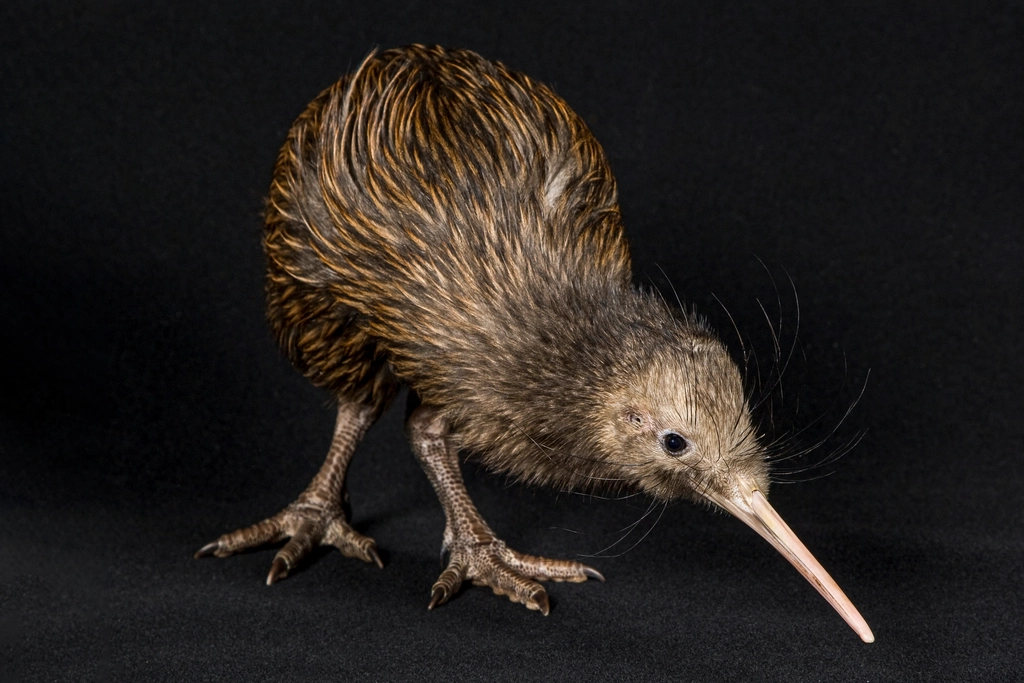 Photo Credit: Rawpixel
In the heart of New Zealand’s lush forests, the kiwi, known scientifically as Apteryx, emerges as a true marvel of nature. This small, flightless bird, standing between 25 to 45 centimeters tall, is easily recognized by its round body covered in shaggy brown feathers that resemble the earthy tones of the forest floor. With its long, slender beak, the kiwi is perfectly adapted for foraging in the underbrush, where it uses its exceptional sense of smell to uncover hidden treasures like insects and worms. As night falls, the kiwi comes alive, its curious nature leading it on nightly adventures through the dense ferns and shrubs that blanket its home.
What makes the kiwi particularly captivating to scientists and nature lovers alike is not just its quirky appearance but also its unique role in the ecosystem. As a nocturnal forager, the kiwi helps control insect populations and plays a vital part in seed dispersal, ensuring the health of its forest habitat. This flightless wonder is more than just a bird; it is a keystone species, meaning its presence is crucial for maintaining the balance of its environment. With its fascinating behaviors and significant ecological impact, the kiwi invites us to explore the wonders of the natural world and understand the delicate connections that sustain it.
The kiwi is a captivating bird that holds a special place in the tree of life. Classified within the Kingdom Animalia, the Phylum Chordata, and the Class Aves, kiwis are flightless birds that belong to the Order Struthioniformes, which includes large, flightless birds like ostriches and emus. What sets kiwis apart is their unique adaptations, such as their long beaks and sensitive nostrils, which help them forage for insects and worms in the ground. Their small size, brown, fuzzy feathers, and nocturnal habits make them truly one-of-a-kind in the avian world.
| Taxonomic Rank | Scientific Name | Meaning & Significance |
|---|---|---|
| Kingdom | Animalia | This name comes from the Latin word for “animal,” highlighting that kiwis are part of the vast group of living organisms that are multicellular and capable of movement. |
| Phylum | Chordata | Derived from the Greek word “chordē,” meaning “string,” this classification indicates that kiwis have a backbone, a key feature of all vertebrates. |
| Class | Aves | This term comes from the Latin word for “bird,” emphasizing that kiwis are part of the diverse group of feathered creatures that share common characteristics like laying eggs. |
| Order | Struthioniformes | From the Greek word “strouthion,” meaning “ostrich,” this name reflects the order’s members, which are large, flightless birds that have evolved in similar ways. |
| Family | Apterygidae | This name comes from the Greek word “apteryx,” meaning “wingless,” which perfectly describes kiwis, as they have small, underdeveloped wings that are not used for flight. |
| Genus | Apteryx | Similar to the family name, “Apteryx” emphasizes the bird’s lack of flight capabilities, showcasing its unique evolutionary path as a ground-dwelling bird. |
The classification of the kiwi reveals much about its evolutionary history. As a member of the Struthioniformes order, kiwis share a lineage with other large, flightless birds, suggesting that they adapted to life on the ground in their native New Zealand. Their unique features, such as their long beaks and nocturnal behavior, highlight how they have evolved to thrive in their specific environment. This fascinating journey through the tree of life showcases the incredible diversity and adaptability of birds, reminding us of the wonders of evolution.
The evolutionary journey of the kiwi is a tale that stretches back millions of years, rooted in the ancient landscapes of New Zealand. These flightless birds are part of a lineage that diverged from their flying relatives around 80 million years ago, during a time when New Zealand was isolated from other landmasses. This isolation allowed kiwis to evolve in unique ways, adapting to their environment without the pressures of predators that other birds faced elsewhere.
Kiwi ancestors were once part of a group of birds that could fly, similar to the ancestors of modern-day ostriches and emus. Over time, as they adapted to the lush forests and grasslands of New Zealand, they lost their ability to fly. This transition was not just about losing wings; it involved a series of significant changes. Their bodies became more robust and compact, and their wings shrank, making them better suited for life on the ground. As they evolved, kiwis developed specialized features that helped them thrive in their unique habitat.
These adaptations have been crucial for the kiwi’s survival in a world filled with challenges. By becoming flightless, they could focus on foraging and thriving in their specific environment without the need to escape into the sky. Their long beaks and nocturnal habits have allowed them to find food while avoiding many predators. As a result, kiwis have carved out a niche for themselves, showcasing the incredible power of evolution in shaping life on Earth.
The kiwi is a small, flightless bird that captures the imagination with its quirky appearance. Standing between 25 to 45 centimeters tall, it has a compact body that is both sturdy and round. Its long, slender neck leads to a small, pointed beak, perfectly designed for probing the ground in search of insects and worms. The kiwi’s legs are short but powerful, allowing it to navigate through dense underbrush with surprising agility. Its overall form is a delightful blend of functionality and charm, making it a true icon of New Zealand’s wildlife.
| Feature | Description |
|---|---|
| Height | 25cm – 45cm (9.8in – 17in) |
| Weight | 1.3kg – 3.3kg (2.6lbs – 7.3lbs) |
| Skin Type | Feathers |
The kiwi’s physical features are not just for show; they play vital roles in its survival. Its small size helps it hide from predators, while its long beak allows it to forage for food in the leaf litter of the forest floor. The feathers, although not designed for flight, provide insulation and camouflage, blending seamlessly with the earthy tones of its habitat. Together, these characteristics create a bird that is perfectly adapted to thrive in the lush, challenging environments of New Zealand.
The kiwi calls the lush, green landscapes of New Zealand its home. This enchanting bird thrives in forests and dense woodlands, where the undergrowth is rich with ferns and shrubs. The dappled sunlight filters through the canopy, creating a serene environment filled with the sounds of rustling leaves and chirping insects. Here, the kiwi forages for food, using its keen sense of smell to locate insects and worms hidden beneath the forest floor.
The climate in these regions is generally mild and temperate, with plenty of rainfall throughout the year. Kiwis prefer areas that are not too hot or too cold, as they thrive in environments that provide a stable temperature. The moisture in the air and soil supports the growth of the dense vegetation that is essential for their survival. These birds are also sensitive to changes in their habitat, making them indicators of the health of their ecosystem.
Over time, kiwis have developed fascinating adaptations to their woodland homes. Their long, slender beaks are perfectly designed for probing into the ground, allowing them to find food that other animals might miss. Their strong legs enable them to navigate through thick underbrush, while their brown, mottled feathers provide excellent camouflage against the forest floor. This clever blend of traits helps them stay safe from predators and thrive in their unique environment.
As night falls over the lush forests of New Zealand, the kiwi begins its daily activities. These nocturnal birds are most active after sunset, using their keen sense of smell to forage for food in the underbrush. With their long, slender beaks, kiwis probe the ground, searching for insects, worms, and other tasty treats hidden beneath the leaf litter. Their soft, brown feathers help them blend into the forest floor, making it easier to go about their business without drawing attention from predators.
While kiwis are primarily solitary creatures, they can sometimes be found in pairs, especially during the breeding season. These birds have a unique way of communicating with each other, using a series of soft calls and whistles that echo through the night. When they do come together, they engage in gentle interactions, often preening each other’s feathers. This social behavior is essential for maintaining bonds, especially when raising their young.
| Behavior Type | Description |
|---|---|
| Activity Patterns | Active at night, kiwis forage for food using their sense of smell and long beaks. |
| Social Structure | Primarily solitary, but can form pairs during breeding season. |
| Communication Methods | Use soft calls and whistles to communicate, especially during interactions with mates. |
The behaviors of kiwis are finely tuned to ensure their survival in the wild. By being nocturnal, they avoid many daytime predators, while their solitary nature allows them to be stealthy foragers. Their unique communication methods help them maintain connections with potential mates, ensuring the continuation of their species. In the enchanting world of New Zealand’s forests, every aspect of a kiwi’s life is a testament to the delicate balance of nature.
The kiwi’s diet is a delightful mix of both plant and animal matter, making it an omnivore. These intriguing birds primarily forage at night, using their exceptional sense of smell to locate food hidden beneath the forest floor. With their long, sensitive beaks, kiwis probe into the soil, searching for tasty treats like worms, insects, and spiders. They also enjoy snacking on fruits, adding a sweet touch to their otherwise protein-rich diet.
| Dietary Aspect | Details |
|---|---|
| Diet Type | Omnivore |
| Favorite Foods | Worms, spiders, insects, and fruit |
| Prey Items | Earthworms, various insects, and small invertebrates |
| Hunting/Foraging Strategies | Forages at night using smell and probing with beak |
This diverse diet plays a crucial role in the kiwi’s ecology and daily routine. By consuming a variety of foods, kiwis help control insect populations and contribute to the health of their forest habitat. Their nocturnal foraging habits not only allow them to avoid many predators but also ensure they find the nutrients they need to thrive in their unique environment. As they dig through the soil, kiwis also aerate it, promoting a healthy ecosystem for plants and other wildlife.
When it comes to mating, kiwis are quite the dedicated partners. Their breeding season typically occurs from July to January, coinciding with the warmer months in New Zealand. During this time, male kiwis perform a series of elaborate courtship displays to attract females. These displays can include vocalizations and physical movements, showcasing their strength and vitality. Once a pair has formed a bond, they will mate for life, returning to the same nesting sites year after year.
| Reproductive Aspect | Details |
|---|---|
| Gestation Period | Approximately 75 days |
| Litter Size | 1 to 2 eggs |
| Age of Maturity | About 1 year |
| Name of Young | Chick |
After the eggs are laid, the male kiwi takes on the crucial role of incubating them. This is quite unusual in the bird world, where females often do most of the nesting. The male will sit on the eggs for about 75 days, keeping them warm and safe. Once the chicks hatch, they are precocial, meaning they are relatively mature and mobile right from the start. They can leave the nest shortly after hatching and begin foraging for food with the guidance of their parents. As they grow, these young kiwis learn essential survival skills, eventually becoming independent adults ready to thrive in their lush, green habitat.
The kiwi occupies a unique position in the food web of New Zealand’s ecosystems. As a ground-dwelling bird, it plays a vital role in controlling insect populations and dispersing seeds. However, this flightless wonder faces numerous dangers that threaten its survival. With few natural predators in its native habitat, the introduction of non-native species has dramatically altered its safety.
To defend itself against these threats, the kiwi has developed several survival strategies. Its nocturnal lifestyle helps it avoid many predators that are active during the day. Additionally, kiwis rely on their excellent sense of smell to detect danger and find food. When threatened, they often freeze in place, using their brown, camouflaged feathers to blend into the forest floor. This clever behavior, combined with their elusive nature, helps them navigate the challenges of their environment and continue to thrive in the wild.
A keystone species is an organism that has a disproportionately large impact on its environment relative to its abundance. In other words, if it were removed, the ecosystem would change dramatically. The kiwi, a flightless bird native to New Zealand, qualifies as a keystone species due to its unique role in the forest ecosystems it inhabits.
Kiwis are essential for maintaining the health of their habitats. As omnivores, they consume a variety of foods, including insects, worms, and fruits. This foraging behavior helps control insect populations, preventing any one species from becoming too dominant. Additionally, as kiwis dig through the soil in search of food, they aerate the ground, which benefits plant growth. This process allows nutrients to circulate more freely, promoting a diverse array of plant life.
Moreover, kiwis play a crucial role in seed dispersal. When they eat fruits, they often travel some distance before excreting the seeds. This helps plants spread across the forest floor, ensuring genetic diversity and the continuation of various plant species. The presence of kiwis thus supports a rich tapestry of life, from the smallest insects to the tallest trees.
If kiwis were to disappear from their ecosystems, the consequences would be significant. Insect populations could surge, leading to imbalances that might harm other species. Without the aeration of the soil, plant growth could decline, affecting the entire forest structure. The loss of seed dispersal would hinder the regeneration of many plant species, ultimately altering the landscape and the wildlife that depends on it. The kiwi’s absence would echo throughout the ecosystem, demonstrating just how vital this small bird is to the health of New Zealand’s forests.
The kiwi plays a crucial role in shaping its ecosystem, particularly within the lush forests and dense woodlands of New Zealand. As a nocturnal bird, it forages for food at night, using its keen sense of smell to locate insects, worms, and fruits hidden beneath the forest floor. This unique behavior allows the kiwi to occupy an ecological niche where it helps maintain the balance of its environment. By feeding on a variety of organisms, the kiwi contributes to the health of its habitat, ensuring that no single species dominates the ecosystem.
| Ecosystem Service | Impact |
|---|---|
| Seed Dispersal | Kiwis help spread seeds from the fruits they eat, promoting plant diversity. |
| Soil Aeration | As they dig for food, kiwis aerate the soil, improving its quality and drainage. |
| Pest Control | By consuming insects and worms, kiwis help control pest populations. |
| Nutrient Cycling | The waste produced by kiwis enriches the soil, supporting plant growth. |
Kiwis influence their environment in several specific ways. For instance, when they eat fruits, they not only enjoy a tasty meal but also help disperse the seeds of those fruits throughout the forest. This process encourages the growth of new plants, which in turn provides food and shelter for other wildlife. Additionally, as kiwis dig into the ground to find insects, they aerate the soil, allowing water and nutrients to reach plant roots more effectively. This natural soil enhancement supports a vibrant ecosystem, benefiting countless other species.
The broader ecological importance of the kiwi cannot be overstated. As a keystone species, the kiwi’s presence is vital for maintaining the health and balance of its habitat. If kiwis were to disappear, the effects would ripple through the ecosystem, leading to overpopulation of certain insects and a decline in plant diversity. By fulfilling their role in seed dispersal, pest control, and soil health, kiwis help create a thriving environment that supports a rich tapestry of life in New Zealand’s forests. Their unique contributions remind us of the interconnectedness of all living things and the importance of protecting these remarkable birds.
In the intricate web of life, symbiosis refers to the close and often long-term interactions between different species. These relationships can take many forms, including mutualism, where both species benefit, parasitism, where one benefits at the expense of the other, and commensalism, where one benefits while the other is neither helped nor harmed. Understanding these ecological relationships helps us appreciate how species like the kiwi interact with their environment and other organisms, creating a balanced ecosystem.
| Species/Type | Relationship Type | Description |
|---|---|---|
| Earthworms | Mutualistic | Kiwi benefit from earthworms as a food source, while earthworms aerate the soil, improving the habitat for kiwis and other organisms. |
| Ticks | Parasitic | Ticks can attach to kiwis, feeding on their blood, which can weaken the birds and lead to health issues. |
| Fungi | Commensal | Fungi grow in the forest floor where kiwis forage, benefiting from the nutrients in the soil without affecting the kiwis. |
These relationships have evolved over time, shaped by the needs and behaviors of the species involved. The mutualistic bond between kiwis and earthworms highlights how interconnected life can be; as kiwis forage for food, they help maintain healthy soil, which in turn supports a variety of plant and animal life. On the other hand, parasitic relationships, like those with ticks, remind us that not all interactions are beneficial. Understanding these dynamics is crucial for conservation efforts, as protecting one species can have a ripple effect on the entire ecosystem.
Kiwis are truly extraordinary birds that capture the imagination with their unique traits and behaviors. Here are some surprising facts that showcase just how remarkable these flightless wonders are.
The kiwi, a flightless bird native to New Zealand, has long been intertwined with human culture and history. Indigenous Māori people regard the kiwi as a national symbol, representing the unique identity of New Zealand. Historically, encounters between humans and kiwis have been marked by reverence and respect, as these birds are often featured in Māori mythology and art. The kiwi’s nocturnal habits and distinctive appearance have sparked curiosity and admiration, making it a beloved icon in New Zealand’s natural heritage.
In contemporary times, the relationship between kiwis and humans has evolved, particularly in the face of conservation challenges. As urban development and introduced predators threaten kiwi populations, dedicated conservation efforts have emerged. Organizations and volunteers work tirelessly to protect these birds, creating sanctuaries and breeding programs to ensure their survival. However, conflicts can arise when human activities encroach on kiwi habitats, leading to a delicate balance between development and wildlife preservation. While kiwis are not domesticated, their interactions with humans are increasingly shaped by our efforts to coexist harmoniously.
Looking ahead, the future of the kiwi-human relationship hinges on our commitment to conservation and sustainable practices. As awareness grows about the importance of preserving New Zealand’s unique wildlife, there is hope for a thriving kiwi population. By fostering a deeper understanding of these remarkable birds and their role in the ecosystem, we can ensure that future generations will continue to cherish and protect the kiwi, celebrating its place in both nature and culture.
The kiwi, an iconic symbol of New Zealand, currently faces significant challenges in its survival. Classified as “Near Threatened” by the International Union for Conservation of Nature (IUCN), the kiwi population is experiencing a decline due to various environmental pressures. While exact population estimates can be tricky, it is believed that there are around 68,000 kiwis left in the wild. This number is concerning, as it indicates a downward trend in their population, highlighting the urgent need for conservation efforts.
| Conservation Factor | Status/Details |
|---|---|
| IUCN Status | Near Threatened |
| Population Estimates | Approximately 68,000 |
| Trend Direction | Declining |
The main threats to kiwis stem from habitat loss and predation. As New Zealand’s forests are cleared for agriculture and urban development, kiwis lose their natural homes. Additionally, introduced predators like rats, stoats, and cats pose a significant risk to these ground-dwelling birds. These animals hunt kiwi eggs and chicks, making it difficult for the population to recover. The combination of these threats creates a challenging environment for kiwis to thrive.
Despite these challenges, there is hope for the kiwi’s future. Conservation efforts are underway, focusing on habitat restoration and predator control. Organizations and volunteers are working tirelessly to protect kiwi nests and raise awareness about their plight. With continued support and dedication, there is a chance to stabilize and even increase kiwi populations. The future of this beloved bird depends on our collective efforts to ensure that it remains a vibrant part of New Zealand’s natural heritage.
| Question | Answer |
|---|---|
| What is the natural habitat of the Kiwi? | Kiwis are native to New Zealand and thrive in forests and dense woodlands. They prefer areas with plenty of underbrush, which provides them with cover and food sources. |
| What do Kiwis eat? | Kiwis are omnivores, meaning they eat both plants and animals. Their diet mainly consists of insects, worms, and fruits, which they find by foraging in the ground with their long beaks. |
| How do Kiwis behave in the wild? | Kiwis are mostly nocturnal, which means they are active at night. They are solitary creatures, preferring to roam alone as they search for food in the dark. |
| How do Kiwis reproduce? | Kiwis are unique in their reproductive habits. The female lays one to three large eggs, and the male takes on the responsibility of incubating them, which can take up to 80 days. |
| What threats do Kiwis face? | Kiwis are classified as Near Threatened due to habitat loss and predation by introduced species like rats, cats, and dogs. Conservation efforts are crucial to protect their populations. |
| What are some interesting characteristics of Kiwis? | Kiwis are flightless birds with a distinctive long beak and a round body covered in brown, hair-like feathers. They have a keen sense of smell, which is unusual for birds, helping them locate food underground. |
| Can Kiwis see well? | Kiwis have relatively poor eyesight, which is why they rely on their other senses, especially smell, to navigate and find food. Their eyes are small and adapted for low-light conditions. |