Taxonomy & Classification
- Kingdom
- Animalia
- Phylum
- Chordata
- Class
- Aves
- Order
- Otidiformes
- Family
- Otididae
- Genus
- Ardeotis
- Species
- Ardeotis kori

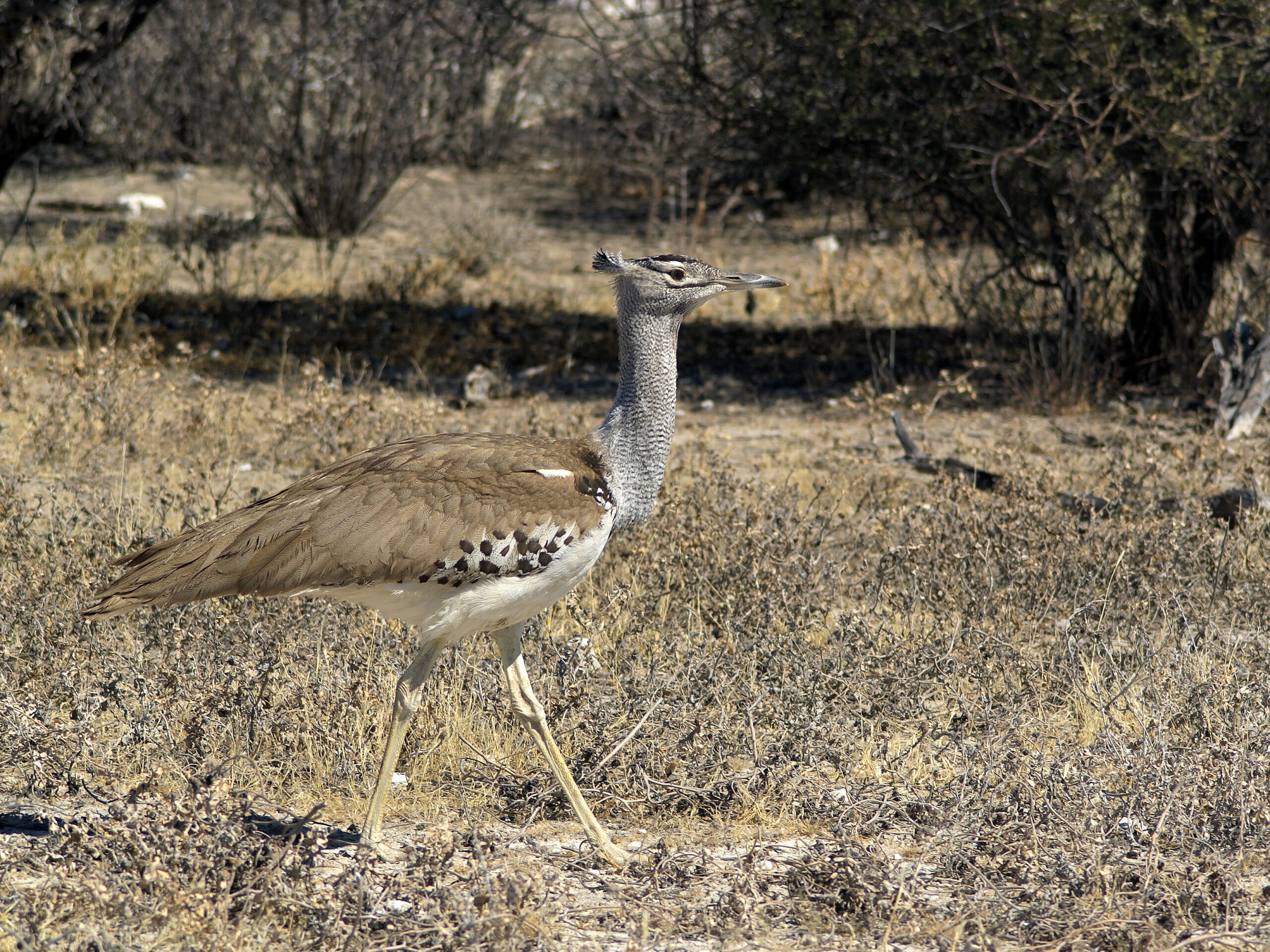 Photo Credit: Lycaon / Wikimedia Commons
In the sun-drenched savannas of Africa, the Kori Bustard, scientifically known as Ardeotis kori, stands as a regal figure against the golden grasses. This remarkable bird, one of the heaviest flying species in the world, can reach heights of up to 4.5 feet, making it a striking sight as it struts through its expansive territory. With its robust body, long neck, and impressive wingspan, the Kori Bustard captures the attention of anyone lucky enough to spot it. Its feathers, a blend of browns and grays, provide excellent camouflage among the dry grasses, allowing it to blend seamlessly into its environment while it forages for food.
What makes the Kori Bustard particularly intriguing to scientists and nature enthusiasts alike is not just its size but also its unique behaviors and ecological role. As an omnivore, it has a varied diet that includes everything from seeds and fruits to insects and small animals, showcasing its adaptability in the wild. During the breeding season, males perform elaborate courtship displays, puffing up their chests and spreading their wings to attract females. This fascinating ritual, along with its significant role in controlling insect populations and dispersing seeds, highlights the Kori Bustard’s importance in the ecosystem. As we delve deeper into the life of this extraordinary bird, we uncover the intricate connections it shares with its habitat and the challenges it faces in a changing world.
The Kori Bustard, a magnificent bird native to the savannas and grasslands of Africa, holds a special place in the tree of life. Taxonomically, it belongs to the Kingdom Animalia, which includes all animals, and is classified under the Phylum Chordata, meaning it has a backbone. As a member of the Class Aves, or birds, the Kori Bustard is part of the Order Otidiformes, which encompasses the bustards and their relatives. What sets the Kori Bustard apart is its impressive size; it is one of the heaviest flying birds in the world. This unique combination of traits makes it a fascinating subject for both scientists and bird enthusiasts alike.
| Taxonomic Rank | Scientific Name | Meaning & Significance |
|---|---|---|
| Kingdom | Animalia | From the Latin word “animalis,” meaning “having breath,” highlighting the living nature of all animals. |
| Phylum | Chordata | Derived from the Greek word “chordē,” meaning “string,” referring to the notochord, a flexible rod that supports the body in all vertebrates. |
| Class | Aves | From the Latin word for “bird,” emphasizing the characteristics that define all birds, such as feathers and beaks. |
| Order | Otidiformes | From the Latin “otidae,” which refers to the bustards, indicating their unique evolutionary lineage within the bird family. |
| Family | Otididae | Named after the genus Otidus, which is derived from the Greek word “otidos,” meaning “bustard,” linking the family directly to these large, ground-dwelling birds. |
| Genus | Ardeotis | From the Greek “ardea,” meaning “heron,” and “otis,” meaning “bustard,” reflecting the bird’s size and habitat preferences. |
The classification of the Kori Bustard reveals much about its evolutionary history. As a member of the Otidiformes order, it shares a lineage with other bustards, which have adapted to open habitats across the globe. This evolutionary path highlights the Kori Bustard’s adaptations for life on the ground, including its powerful legs for running and its ability to blend into the grasslands. Understanding its taxonomic position not only sheds light on its physical characteristics but also on the ecological roles it plays in its environment, making it a vital part of the African savanna ecosystem.
The Kori Bustard, a striking bird found in the open grasslands and savannas of Africa, has a rich evolutionary history that stretches back millions of years. This journey begins in the late Cretaceous period, around 100 million years ago, when the ancestors of modern birds began to diverge from their dinosaur relatives. Over time, these early avian forms adapted to various environments, leading to the diverse bird species we see today, including the Kori Bustard.
The Kori Bustard’s lineage can be traced back to the family Otididae, which includes other bustards and their relatives. These birds evolved from ground-dwelling ancestors that thrived in open habitats. One major transition occurred as they adapted to a life primarily on the ground, developing longer legs for running and a more robust body to support their weight. This shift allowed them to escape predators and forage more effectively in their expansive habitats.
These adaptations have been vital for the Kori Bustard’s survival in the wild. The combination of speed, size, and camouflage allows it to navigate the challenges of its environment effectively. By being able to run quickly and blend into its surroundings, the Kori Bustard can avoid predators while foraging for food. Its ability to communicate through vocalizations also enhances its chances of successful reproduction, ensuring that this magnificent bird continues to thrive in the African landscape.
The Kori Bustard is an impressive sight, standing tall and proud in its natural habitat. With a height that can reach up to 4.5 feet, this bird commands attention. Its body is robust and heavy, weighing anywhere from 6.6 to 39.7 pounds. The Kori Bustard’s long neck and sturdy legs give it a regal appearance, while its broad wings are designed for short bursts of flight rather than long-distance soaring. The most striking feature is its distinctive crest, which adds a touch of elegance to its already majestic form.
| Feature | Description |
|---|---|
| Height | 2.25 to 4.5 feet |
| Weight | 6.6 to 39.7 pounds |
| Skin Type | Feathers |
| Most Distinctive Feature | Crest |
The Kori Bustard’s impressive size and weight serve a purpose in its survival. Its height allows it to survey the vast grasslands for predators and prey alike, while its sturdy build helps it navigate through dense vegetation. The feathers provide insulation and protection, keeping the bird warm during cooler nights. The crest, beyond its aesthetic appeal, may play a role in communication and mating displays, helping to attract potential partners. Together, these features create a bird that is not only visually stunning but also perfectly adapted to thrive in its environment.
The Kori Bustard thrives in the sun-drenched expanses of open grasslands, where the golden grasses sway gently in the breeze. These vast landscapes are dotted with occasional shrubs and trees, providing just enough cover for this magnificent bird. The Kori Bustard is often seen strutting across the ground, its long legs and impressive wingspan making it a striking figure against the backdrop of the African savanna. Here, the bird can find ample food, including insects and small plants, which are essential for its diet.
The climate in these regions is typically warm and dry, with distinct wet and dry seasons. The Kori Bustard prefers areas where rainfall is moderate, as this supports the growth of grasses and other vegetation that provide food and shelter. During the dry season, the bird can often be seen foraging for insects and seeds, while the wet season brings a burst of life and color to its habitat. The temperature can vary widely, but the Kori Bustard is well-equipped to handle the heat of the day and the cooler nights.
Adaptation is key to the Kori Bustard’s survival in these open grasslands. Its long legs allow it to cover large distances in search of food, while its camouflaged plumage helps it blend into the environment, making it less visible to predators. The bird’s ability to fly, although it prefers to walk, provides an escape route when necessary. These adaptations enable the Kori Bustard to thrive in a habitat that can be both challenging and rewarding, showcasing the incredible resilience of wildlife in the African landscape.
The Kori Bustard begins its day with the rising sun, stretching its long neck and flapping its large wings to shake off the night’s rest. As a ground-dwelling bird, it spends much of its time walking through the grasslands, searching for food. Its diet mainly consists of insects, small mammals, and plants, which it finds by foraging through the underbrush. Throughout the day, the Kori Bustard can be seen strutting confidently, using its keen eyesight to spot potential meals while also keeping an eye out for predators. This bird is known for its ability to blend into its surroundings, making it a master of camouflage.
Socially, Kori Bustards are generally solitary or found in small groups, especially during the breeding season. Males are known for their elaborate courtship displays, which include puffing up their chests and performing a series of impressive dances to attract females. These displays are not just for show; they communicate the male’s health and vitality. While they may not form large flocks like some other birds, Kori Bustards do have a social structure that allows them to interact during mating season and share information about food sources. Their vocalizations, which range from low grunts to booming calls, play a crucial role in their social interactions.
| Behavior Type | Description |
|---|---|
| Foraging | Kori Bustards search for food by walking through grasslands, using their sharp eyesight to spot insects and small mammals. |
| Social Structure | Typically solitary, they come together in small groups during breeding season for courtship and mating. |
| Communication | They use a variety of vocalizations, including grunts and booming calls, to communicate with each other, especially during mating. |
| Courtship Displays | Males perform elaborate dances and puff up their feathers to attract females, showcasing their health and vitality. |
The behaviors of the Kori Bustard are finely tuned to ensure its survival in the wild. By foraging effectively and using their social interactions to find mates and share information, these birds navigate the challenges of their environment. Their ability to camouflage and their keen awareness of their surroundings help them avoid predators, while their unique courtship rituals ensure the continuation of their species. In the vast grasslands of Africa, the Kori Bustard thrives, embodying the delicate balance of nature’s intricate web of life.
The Kori Bustard is an omnivore, which means it enjoys a varied diet that includes both plants and animals. This bird is particularly skilled at foraging for food in its open grassland habitat. With its keen eyesight, the Kori Bustard can spot insects and small mammals scurrying across the ground. It uses its long legs to walk slowly and deliberately, allowing it to pounce on prey with surprising speed. This feeding behavior not only helps it find food but also keeps it alert to potential dangers in its environment.
| Dietary Aspect | Details |
|---|---|
| Diet Type | Omnivore |
| Favorite Foods | Insects, small mammals, mollusks, lizards, bird eggs, nestlings, carrion |
| Prey Items | Insects, small mammals, and bird eggs |
| Hunting/Foraging Strategies | Walks slowly to spot prey, pounces quickly, and forages in the grass |
The Kori Bustard’s diverse diet plays a crucial role in its ecology and daily routine. By consuming a wide range of foods, it helps control insect populations and contributes to the balance of its ecosystem. This adaptability allows the Kori Bustard to thrive in various conditions, ensuring it can find nourishment even when certain food sources are scarce. As it forages throughout the day, the bird not only sustains itself but also engages in a vital dance with nature, showcasing the interconnectedness of life in the savanna.
The mating behavior of the Kori Bustard is as captivating as the bird itself. During the breeding season, which typically occurs in the rainy months, males engage in elaborate courtship displays to attract females. These displays can include puffing up their chests, spreading their wings, and performing a series of impressive leaps and dances. The males are known for their vocalizations, which can be heard echoing across the savanna, adding to the spectacle of their courtship rituals. Once a female is attracted, she will choose a mate based on these displays, leading to a monogamous pairing for the breeding season.
| Reproductive Aspect | Details |
|---|---|
| Gestation Period | Approximately 24 to 30 days |
| Litter Size | 1 to 3 eggs |
| Age of Maturity | About 1 year |
| Name of Young | Chick |
After the eggs hatch, the Kori Bustard parents take on the important role of caregivers. The chicks are precocial, meaning they are relatively mature and mobile shortly after hatching. They can walk and forage for food almost immediately, but they still rely on their parents for protection and guidance. The mother often leads the chicks to food sources, teaching them what to eat and how to find it. As the young birds grow, they develop their distinctive features and learn to navigate their environment. By the time they reach maturity at about one year old, they are ready to take on the world, continuing the cycle of life in the vast African grasslands.
The Kori Bustard occupies a fascinating position in the food web of its African habitat. As one of the heaviest flying birds, it plays a crucial role in controlling insect populations and dispersing seeds through its varied diet. However, this impressive bird is not at the top of the food chain. It faces several dangers that threaten its survival, making it a target for both natural predators and human activities.
To defend itself against these threats, the Kori Bustard has developed several survival strategies. When faced with danger, it often relies on its excellent camouflage, blending seamlessly into the grasslands to avoid detection. Additionally, this bird can take to the skies when necessary, using its powerful wings to escape from predators. Its cautious nature and ability to remain still for long periods help it evade both hunters and natural enemies, allowing it to thrive in a world filled with challenges.
A keystone species is an organism that has a disproportionately large impact on its environment relative to its abundance. This means that if a keystone species were to disappear, the entire ecosystem could change dramatically. The Kori Bustard, with its unique behaviors and ecological roles, qualifies as a keystone species in its grassland habitat. By influencing the populations of other species and contributing to the health of its ecosystem, the Kori Bustard plays a vital role in maintaining the balance of life in its environment.
The Kori Bustard’s diet is diverse, consisting of both plants and animals, which allows it to interact with various components of its ecosystem. For instance, by foraging for insects and small animals, it helps control their populations. This is important because an overabundance of insects can lead to crop damage and affect other wildlife. Additionally, as the Kori Bustard moves through its habitat, it inadvertently helps disperse seeds from the plants it consumes. This seed dispersal is crucial for plant reproduction and maintaining the diversity of the grasslands.
Moreover, the Kori Bustard serves as a prey species for larger predators, such as eagles and jackals. By being part of the food web, it supports the survival of these predators, which in turn helps regulate the populations of other animals in the ecosystem. The presence of the Kori Bustard can indicate the overall health of the grassland environment, as it requires a balanced ecosystem to thrive.
If the Kori Bustard were to vanish from its habitat, the consequences could be significant. Without this bird, insect populations might surge, leading to increased crop damage and affecting other wildlife that relies on those plants. The loss of seed dispersal would hinder plant reproduction, potentially reducing the diversity of the grasslands. Additionally, predators that depend on the Kori Bustard for food would face challenges, which could lead to their decline as well. In essence, the disappearance of the Kori Bustard would ripple through the ecosystem, highlighting its crucial role in maintaining balance and health in the grasslands of Africa.
The Kori Bustard occupies a vital ecological niche in the open grasslands of Africa. As a large, ground-dwelling bird, it plays a significant role in shaping its environment. This bird is not just a passive inhabitant; it actively influences the ecosystem through its foraging habits and interactions with other species. By feeding on a diverse diet that includes both plants and small animals, the Kori Bustard helps maintain the balance of its habitat, ensuring that no single species dominates the landscape.
| Ecosystem Service | Impact |
|---|---|
| Seed Dispersal | Helps spread plant seeds, promoting plant diversity. |
| Insect Control | Reduces insect populations by feeding on them. |
| Soil Aeration | Disturbs the soil while foraging, improving nutrient cycling. |
| Food Source | Serves as prey for larger predators, supporting the food web. |
The Kori Bustard’s influence can be seen in various ways. For instance, as it forages for food, it inadvertently aerates the soil, which is essential for healthy plant growth. This soil disturbance allows nutrients to circulate more freely, benefiting the grasses and shrubs that provide shelter and food for countless other species. Additionally, by consuming insects, the Kori Bustard helps keep their populations in check, preventing outbreaks that could harm the delicate balance of the ecosystem. Its role as both predator and prey further underscores its importance in the food web, supporting larger carnivores that rely on it for sustenance.
The broader ecological importance of the Kori Bustard cannot be overstated. As a keystone species, its presence is crucial for maintaining the health and stability of the grassland ecosystem. If the Kori Bustard were to disappear, the effects would ripple through the environment, potentially leading to overpopulation of certain species and a decline in plant diversity. By understanding and appreciating the Kori Bustard’s role, we can better recognize the intricate connections that bind all living things in the natural world.
In the intricate web of life, symbiosis refers to the close and often long-term interactions between different species. These relationships can take many forms, including mutualism, where both species benefit, commensalism, where one benefits while the other is neither helped nor harmed, and parasitism, where one species benefits at the expense of the other. The Kori Bustard, a magnificent bird of the African savannas, engages in various ecological relationships that highlight the interconnectedness of life in its habitat.
| Species/Type | Relationship Type | Description |
|---|---|---|
| Oxpeckers | Mutualistic | Oxpeckers are small birds that often perch on the Kori Bustard, feeding on ticks and parasites found on its skin. This helps keep the bustard healthy while providing food for the oxpeckers. |
| Grassland Insects | Commensal | As the Kori Bustard forages for food, it disturbs the ground, causing insects to scurry. This provides an easy meal for the bustard without directly affecting the insects. |
| Predatory Birds | Parasitic | Some predatory birds may follow Kori Bustards to scavenge leftovers from their meals. While the bustard is not harmed, it can be seen as a nuisance when these birds take advantage of its foraging. |
These relationships have evolved over time, shaped by the needs and behaviors of the species involved. The Kori Bustard’s partnership with oxpeckers is a prime example of mutualism, where both species gain advantages that enhance their survival. Meanwhile, the interactions with insects and predatory birds illustrate the complex dynamics of commensalism and parasitism. Understanding these connections not only enriches our knowledge of the Kori Bustard but also highlights the delicate balance of ecosystems, where every species plays a role in the grand tapestry of life.
The Kori Bustard is a captivating bird that not only stands out for its impressive size but also for its intriguing behaviors and adaptations. Here are some surprising facts that showcase just how remarkable this bird truly is.
The Kori Bustard has long been a part of human history, woven into the cultural fabric of various African communities. Historically, these magnificent birds have been admired for their impressive size and unique behaviors. In some cultures, they symbolize strength and resilience, often appearing in folklore and traditional stories. Their striking appearance and fascinating courtship displays have captured the imagination of many, making them a subject of art and local legends. As people have encountered these birds in their natural habitats, they have developed a deep respect for their role in the ecosystem.
Today, the relationship between Kori Bustards and humans is complex and multifaceted. While many people appreciate these birds for their beauty and ecological importance, they also face challenges due to habitat loss and hunting. Conservation efforts are underway to protect their natural environments, as these birds rely on open grasslands to thrive. However, conflicts can arise when agricultural expansion encroaches on their habitats, leading to a struggle for space. Some communities have even explored the idea of domestication, although the Kori Bustard is best suited to life in the wild, where it can engage in its natural behaviors.
Looking ahead, the future of the Kori Bustard and its relationship with humanity will depend on our ability to balance development with conservation. As awareness grows about the ecological roles these birds play, more people are likely to advocate for their protection. By fostering a sense of stewardship and respect for wildlife, we can ensure that future generations will continue to marvel at the Kori Bustard in its natural habitat, celebrating both its beauty and its vital role in the ecosystem.
The Kori Bustard is currently classified as Near Threatened by the International Union for Conservation of Nature (IUCN). This status indicates that the species is facing a risk of extinction in the wild, although it is not yet at a critical level. While exact population numbers are difficult to determine, the overall trend suggests a decline in their numbers, primarily due to habitat loss and other human-related pressures.
| Conservation Factor | Status/Details |
|---|---|
| IUCN Status | Near Threatened |
| Estimated Population Size | Unknown |
| Population Trend | Declining |
The main threats to the Kori Bustard stem from habitat destruction, primarily due to agricultural expansion and urban development. As humans convert grasslands into farmland or build new structures, the natural habitats of these birds shrink. Additionally, hunting and poaching pose significant risks, as some people target these birds for food or sport. Climate change also plays a role, altering the ecosystems that Kori Bustards rely on for survival.
Conservation efforts are underway to help protect the Kori Bustard and its habitat. Organizations are working to raise awareness about the importance of preserving grasslands and implementing sustainable land-use practices. Protected areas are being established to provide safe havens for these birds, allowing them to thrive in their natural environment. With continued efforts and community involvement, there is hope that the Kori Bustard can stabilize its population and remain a vibrant part of Africa’s wildlife for generations to come.
| Question | Answer |
|---|---|
| What is the habitat of the Kori Bustard? | The Kori Bustard primarily inhabits open grasslands and savannas in Africa. These areas provide the space and food sources they need to thrive, allowing them to roam freely in search of food. |
| What does the Kori Bustard eat? | This bird is an omnivore, meaning it eats both plants and animals. Its diet includes seeds, fruits, insects, and small vertebrates, which it finds while foraging on the ground. |
| How does the Kori Bustard behave in the wild? | Kori Bustards are known for their unique courtship displays, where males puff up their chests and spread their wings to attract females. They are generally solitary or found in pairs, and they prefer to walk rather than fly. |
| How do Kori Bustards reproduce? | During the breeding season, males perform elaborate displays to attract females. After mating, the female lays a clutch of eggs, usually 1 to 3, in a simple nest on the ground, where she incubates them until they hatch. |
| What threats do Kori Bustards face? | Kori Bustards are classified as Near Threatened due to habitat loss and hunting. As grasslands are converted for agriculture and urban development, their living spaces shrink, making it harder for them to find food and mates. |
| What is a distinctive feature of the Kori Bustard? | One of the most distinctive features of the Kori Bustard is its impressive crest on the head. This crest can be raised or lowered, adding to their striking appearance, especially during courtship displays. |
| Are Kori Bustards good fliers? | While Kori Bustards can fly, they prefer to stay on the ground. Their large size and heavy bodies make flying less efficient, so they often rely on walking to move around and find food. |