Taxonomy & Classification
- Kingdom
- Animalia
- Phylum
- Arthropoda
- Class
- Malacostraca
- Order
- Euphausiacea
- Family
- Euphausiidae
- Genus
- Euphausia

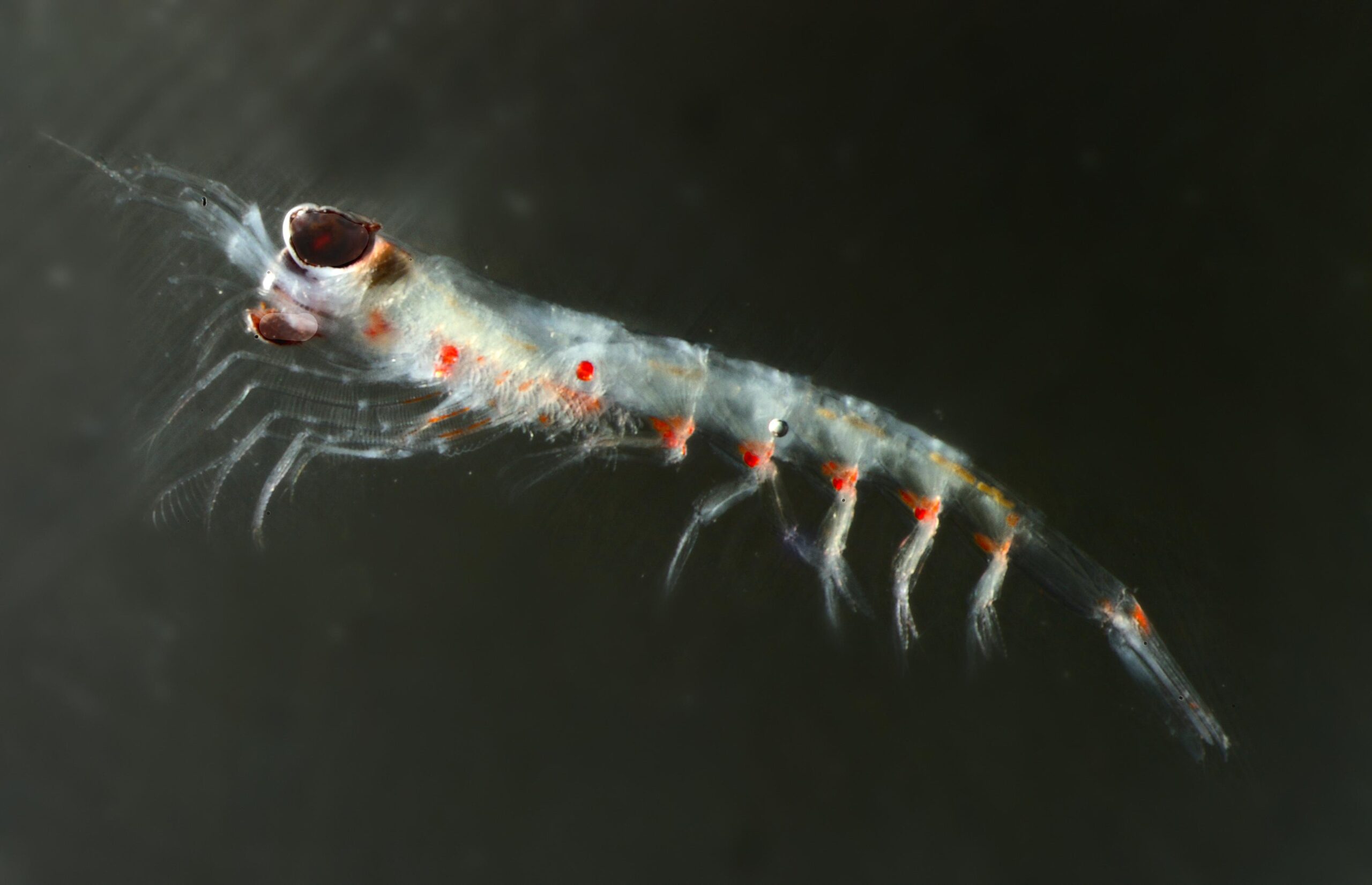 Photo Credit: OptimusPrimeBot / Wikimedia Commons
In the shimmering depths of the ocean, where sunlight dances on the waves, lives a tiny marvel known as krill, scientifically called Euphausia superba. These small, shrimp-like crustaceans are not just a feast for the eyes; they are vital players in the marine ecosystem. Picture a bustling underwater city, where thousands of these delicate creatures float gracefully, their bodies glistening like jewels in the water. With their streamlined forms and translucent shells, krill are perfectly adapted to their environment, allowing them to thrive in both coastal areas and the deep sea.
What makes krill particularly captivating to scientists and nature enthusiasts alike is their keystone role in the ocean’s food web. They serve as a primary food source for a variety of marine animals, from majestic whales to playful seals. As omnivores, krill feast on microscopic plants called phytoplankton, which bloom in the sunlit waters above. This connection between the smallest organisms and the largest animals highlights the intricate balance of life in the ocean. As we dive deeper into the world of krill, we will explore their fascinating behaviors, unique adaptations, and the critical role they play in maintaining the health of our planet’s oceans.
Krill are small, shrimp-like crustaceans that play a vital role in the ocean’s ecosystem. They belong to the kingdom Animalia, which includes all animals, and are classified under the phylum Arthropoda, known for creatures with jointed limbs and exoskeletons. What makes krill particularly interesting is their position in the food web; they are a primary food source for many marine animals, including whales, seals, and penguins. Their abundance and nutritional value highlight their importance in maintaining the health of oceanic environments.
| Taxonomic Rank | Scientific Name | Meaning & Significance |
|---|---|---|
| Kingdom | Animalia | The name “Animalia” comes from the Latin word “animalis,” meaning “having breath” or “living.” This classification signifies that krill are living organisms that breathe and move. |
| Phylum | Arthropoda | “Arthropoda” means “jointed feet” in Greek, referring to the jointed appendages that krill and their relatives possess, which help them swim and navigate through the water. |
| Class | Malacostraca | This class name comes from the Greek word “malakos,” meaning “soft,” and “ostrakon,” meaning “shell.” It highlights the soft-bodied nature of krill, which have a hard exoskeleton that protects them. |
| Order | Euphausiacea | The name “Euphausiacea” is derived from the Greek word “euphauos,” meaning “well-lighted” or “bright,” likely referring to the bioluminescent properties some species exhibit. |
| Family | Euphausiidae | This family name is closely related to the order, emphasizing the characteristics shared among these small, shrimp-like animals that thrive in marine environments. |
| Genus | Euphausia | The genus name “Euphausia” combines “eu,” meaning “good” or “true,” with “phausia,” which relates to brightness, reflecting the vibrant role krill play in their ecosystems. |
Understanding krill’s classification reveals much about their evolutionary journey. As members of the Arthropoda phylum, they share a common ancestry with insects and spiders, showcasing the incredible diversity of life forms that have adapted to various environments. Their unique adaptations, such as their jointed limbs and bioluminescence, not only help them survive but also highlight their significance in the marine food web. By studying krill, scientists can gain insights into the health of ocean ecosystems and the impacts of climate change on these vital organisms.
The evolutionary journey of krill stretches back millions of years, weaving through the tapestry of Earth’s history. These small, shrimp-like crustaceans belong to the family Euphausiidae and have adapted to life in the ocean since the late Jurassic period, around 150 million years ago. As the planet’s climate and ecosystems changed, krill evolved to thrive in diverse marine environments, becoming a crucial link in the food web.
The ancestors of modern krill were likely similar to other early crustaceans, which emerged from ancient marine environments. Over time, they developed key adaptations that allowed them to exploit various niches in the ocean. One major transition was the development of bioluminescence, a fascinating ability to produce light, which helped them evade predators and communicate with one another. Another significant change was the evolution of their specialized feeding mechanisms, allowing them to efficiently consume phytoplankton, the microscopic plants that form the base of the oceanic food chain. This adaptation not only provided them with a reliable food source but also positioned them as essential players in nutrient cycling within marine ecosystems.
These adaptations have been vital for krill’s survival in the ever-changing ocean. Their ability to produce light not only aids in predator evasion but also enhances their social interactions. Specialized feeding structures ensure they can access abundant food sources, while their swarming behavior provides safety in numbers. Furthermore, their adaptability to temperature fluctuations allows them to inhabit diverse marine environments, making krill a resilient and essential component of the ocean’s ecosystem. As they continue to thrive, krill remain a testament to the power of evolution in shaping life on Earth.
Krill are enchanting little beings that dance through the ocean’s depths, their bodies shimmering like tiny jewels in the water. These small, shrimp-like creatures have a streamlined form that allows them to glide gracefully through their aquatic home. With a hard outer shell that protects them from predators, krill are not just delicate; they are resilient survivors in the vast ocean. Their most captivating feature is their bioluminescent body, which can light up the dark waters, creating a mesmerizing display that is both beautiful and functional.
| Feature | Description |
|---|---|
| Weight | Less than an ounce |
| Skin Type | Hard Outer Shell |
| Most Distinctive Feature | Bioluminescent body |
The combination of a lightweight body and a tough exterior allows krill to thrive in their environment. Their small size makes them a perfect target for larger marine animals, but their hard shell offers protection against many threats. The bioluminescence serves a dual purpose: it can confuse predators and attract mates, ensuring that these tiny titans of the sea continue to flourish. Together, these features create a remarkable balance of beauty and survival in the underwater world.
Krill thrive in the vast, shimmering waters of the world’s oceans, where they inhabit both coastal areas and the deep sea. Picture a bustling underwater city, where these tiny crustaceans float gracefully, forming massive swarms that can number in the millions. Their habitat is often rich in nutrients, providing the perfect environment for them to feed and reproduce. The ocean’s currents carry plankton, their primary food source, creating a dynamic ecosystem that supports not just krill, but a multitude of marine life.
Krill prefer cold waters, typically found in temperatures ranging from just above freezing to about 10 degrees Celsius (50 degrees Fahrenheit). These chilly environments are crucial for their survival, as they help maintain the delicate balance of their bodies. The nutrient-rich waters, often stirred up by ocean currents, provide an abundance of phytoplankton, the microscopic plants that krill feed on. This combination of cold temperatures and plentiful food sources creates an ideal habitat for these small but mighty creatures.
To thrive in such specific conditions, krill have developed several fascinating adaptations. Their bodies are designed to efficiently filter food from the water, allowing them to consume large amounts of phytoplankton. Additionally, their ability to swarm in massive numbers not only helps them evade predators but also enhances their reproductive success. By synchronizing their breeding cycles with the availability of food, krill ensure that their populations remain robust, playing a crucial role in the marine food web.
As the sun rises over the ocean, krill begin their daily activities in a world filled with shimmering light and vibrant colors. These small, shrimp-like crustaceans are most active during the twilight hours, known as crepuscular periods, when they rise from the depths to feed. They filter tiny phytoplankton and other microscopic organisms from the water, using their specialized feeding appendages. This feeding frenzy is essential for their survival, as it provides the energy they need to thrive in their underwater habitat.
Krill are social animals that live in large groups called swarms. These swarms can contain thousands, or even millions, of individuals, creating a mesmerizing spectacle as they move together through the water. This group behavior not only helps them find food more efficiently but also offers protection from predators. When krill sense danger, they can quickly change direction as a unit, making it harder for hungry fish and other predators to catch them. Communication among krill is subtle but effective, relying on chemical signals and physical movements to convey information about food sources and threats.
| Behavior Type | Description |
|---|---|
| Feeding | Krill filter feed on phytoplankton and other tiny organisms, primarily during twilight hours. |
| Swarming | They gather in large groups, which helps them find food and evade predators. |
| Communication | Krill use chemical signals and movements to share information about food and threats. |
The behaviors of krill are finely tuned to ensure their survival in the vast ocean. By feeding in swarms, they maximize their chances of finding food while minimizing the risk of being eaten. Their ability to communicate and move as a cohesive unit allows them to adapt quickly to changes in their environment. In this way, krill not only sustain themselves but also play a crucial role in the marine food web, supporting larger animals like fish, seals, and even whales.
Krill are omnivores, meaning they eat both plant and animal matter. Their primary diet consists of tiny organisms like phytoplankton, which are microscopic plants that float in the ocean, and zooplankton, which are small animals. To obtain their food, krill use a fascinating feeding technique. They have specialized mouthparts that allow them to filter these tiny organisms from the water. As they swim, they create currents that draw in water, capturing their favorite foods in the process. This method not only provides them with nourishment but also plays a crucial role in the ocean’s food web.
| Dietary Aspect | Details |
|---|---|
| Diet Type | Omnivore |
| Favorite Foods | Phytoplankton and zooplankton |
| Prey Items | Microscopic plants and small animals |
| Hunting/Foraging Strategies | Filter feeding using specialized mouthparts |
This diet is essential for krill’s role in the marine ecosystem. By consuming phytoplankton, they help regulate its population, ensuring a balance in the ocean’s ecosystem. Additionally, krill serve as a vital food source for larger animals, such as whales, seals, and fish. Their daily routine revolves around foraging for food, which not only sustains them but also supports the diverse life forms that depend on them. In this way, krill are not just survivors; they are key players in the intricate web of ocean life.
When it comes to reproduction, krill have a fascinating mating ritual that takes place during specific breeding seasons. These tiny crustaceans often gather in large swarms, creating a lively atmosphere in the ocean. Males and females engage in a courtship dance, where they display their vibrant colors and perform synchronized movements. This behavior not only attracts potential mates but also helps ensure that they find the right partner for reproduction. The breeding season varies depending on the species and environmental conditions, but it typically occurs in the spring and summer months when food is abundant.
| Reproductive Aspect | Details |
|---|---|
| Gestation Period | A few days |
| Litter Size | Up to 10,000 eggs |
| Age of Maturity | 6 months to 1 year |
| Name of Young | Larvae |
After the eggs are fertilized, the female krill releases them into the water, where they float freely. These eggs hatch into tiny larvae, which are miniature versions of adult krill. The larvae go through several stages of development, known as molts, as they grow and mature. During this time, they rely on the rich supply of phytoplankton and other microscopic organisms for nourishment. While krill do not provide direct parental care, the sheer number of eggs laid increases the chances that some will survive to adulthood. As they grow, these young krill gradually adapt to their environment, eventually becoming vital members of the ocean ecosystem.
Krill are essential players in the ocean’s food web, serving as a primary food source for a variety of marine animals. These small, shrimp-like crustaceans are a vital link between the microscopic plants they consume, like phytoplankton, and the larger predators that rely on them for sustenance. Without krill, many species, including whales, seals, and fish, would struggle to survive, highlighting their importance in maintaining the balance of marine ecosystems.
To defend themselves against these numerous threats, krill have developed several survival strategies. One of their most effective tactics is their ability to form large swarms, which can confuse predators and make it harder for them to target individual krill. Additionally, krill can dive deeper into the ocean during the day to avoid being seen, returning to the surface at night when it is safer. These clever adaptations help krill navigate the challenges of their underwater world, ensuring they continue to play their crucial role in the marine ecosystem.
A keystone species is an organism that has a disproportionately large impact on its environment relative to its abundance. In simpler terms, if you remove a keystone species, the entire ecosystem can change dramatically. Krill, those tiny, shrimp-like crustaceans, certainly qualify as a keystone species in the ocean. Their presence is crucial for maintaining the balance of marine life, making them a vital part of the ecosystem.
Krill are at the heart of the oceanic food web. They consume phytoplankton, which are microscopic plants that float in the water, and in turn, they become a primary food source for larger animals. For example, many species of fish, seals, and even whales rely on krill for sustenance. The blue whale, the largest animal on Earth, can consume up to 4 tons of krill in a single day! This relationship highlights how krill support not just individual species but entire communities of marine life.
Moreover, krill play a significant role in nutrient cycling. As they feed on phytoplankton, they help regulate its population, preventing any one species from dominating the ecosystem. When krill excrete waste, they release nutrients back into the water, which supports the growth of more phytoplankton. This cycle is essential for maintaining the health of the ocean and ensuring that it can support a diverse range of life.
If krill were to disappear, the consequences would be dire. Without these tiny crustaceans, many marine species would struggle to find food, leading to declines in their populations. This would create a ripple effect throughout the food web, potentially causing the collapse of entire marine ecosystems. The ocean, which relies on the balance that krill help maintain, would face significant challenges, affecting not just marine life but also human communities that depend on the ocean for food and livelihood. The loss of krill would be a loss for the entire planet.
Krill occupy a crucial ecological niche in the ocean, acting as a bridge between the microscopic world of phytoplankton and the larger marine animals that depend on them. These small, shrimp-like crustaceans thrive in both coastal and deep ocean regions, where they form massive swarms that can number in the millions. By feeding on phytoplankton, which are tiny plant-like organisms, krill convert sunlight into energy, making them a vital source of nutrition for many marine species. Their presence helps maintain the balance of the ocean’s food web, showcasing their importance in sustaining marine life.
| Ecosystem Service | Impact |
|---|---|
| Food Source | Provides essential nutrition for fish, whales, seals, and seabirds. |
| Nutrient Cycling | Helps recycle nutrients in the ocean, promoting a healthy ecosystem. |
| Carbon Sequestration | Contributes to the ocean’s ability to absorb carbon dioxide, helping to regulate climate. |
| Habitat Formation | Creates habitats for other marine organisms by forming dense swarms. |
The influence of krill extends beyond just being a food source. For instance, when krill consume phytoplankton, they not only grow but also excrete waste that enriches the surrounding water with nutrients. This process supports the growth of more phytoplankton, creating a cycle that sustains the entire marine ecosystem. Additionally, large predators like blue whales rely heavily on krill during feeding seasons, showcasing how the health of krill populations directly affects the survival of these magnificent creatures. In this way, krill are not just a meal; they are a cornerstone of oceanic life.
The broader ecological importance of krill cannot be overstated. As a keystone species, their presence or absence can dramatically alter the structure of marine ecosystems. When krill populations thrive, they support a diverse array of marine life, from tiny fish to enormous whales. Conversely, if krill numbers decline, it can lead to a ripple effect, impacting everything from fish stocks to seabird populations. By understanding the role of krill, we gain insight into the health of our oceans and the intricate connections that sustain life beneath the waves.
In the intricate web of ocean life, krill engage in various partnerships with other species, showcasing the beauty of symbiosis and ecological relationships. Symbiosis refers to the close interactions between different species, which can be beneficial, harmful, or neutral. These relationships are essential for the survival and health of marine ecosystems, as they help maintain balance and promote biodiversity. Krill, with their small size and abundant presence, play a pivotal role in these interactions, influencing the lives of many marine organisms.
| Species/Type | Relationship Type | Description |
|---|---|---|
| Blue Whales | Mutualistic | Blue whales feed on krill, benefiting from a rich food source, while krill populations thrive in nutrient-rich waters stirred up by the whales’ movements. |
| Sea Birds | Mutualistic | Many sea birds rely on krill as a primary food source. In return, the birds help control krill populations, ensuring a balanced ecosystem. |
| Parasitic Worms | Parasitic | Some parasitic worms attach to krill, feeding on their nutrients. This relationship can weaken the krill but allows the worms to thrive. |
These relationships have evolved over time, shaped by the needs and adaptations of the species involved. Mutualistic partnerships, like those between krill and blue whales or sea birds, highlight how interconnected life in the ocean can be. By providing food for larger animals, krill ensure their own survival through population control and nutrient cycling. On the other hand, parasitic relationships, while harmful to krill, demonstrate the complex dynamics of survival in nature. Each interaction, whether beneficial or detrimental, contributes to the rich tapestry of life beneath the waves, reminding us of the delicate balance that sustains our planet’s ecosystems.
Krill are not just tiny shrimp-like creatures; they are fascinating animals that play a crucial role in the ocean’s ecosystem. Here are some surprising facts that showcase their incredible adaptations and behaviors.
Throughout history, krill have held a special place in human culture and understanding of the ocean. These small, shrimp-like crustaceans have been known to seafarers for centuries, often serving as a vital food source for both marine life and humans. In many coastal communities, krill have been celebrated in folklore and traditional dishes, symbolizing the bounty of the sea. Their cultural significance is not just limited to food; they also represent the interconnectedness of marine ecosystems, reminding us of the delicate balance that sustains life in our oceans.
In modern times, the relationship between krill and humanity has evolved significantly. As we become more aware of environmental issues, krill are at the center of discussions about ocean health and sustainability. They are harvested for various purposes, including aquaculture feed and dietary supplements, which has sparked debates about overfishing and conservation. Efforts are underway to ensure that krill populations remain stable, as they are crucial for the survival of many marine species, including whales and seals. However, conflicts arise when commercial interests clash with ecological needs, highlighting the importance of responsible management of these tiny creatures.
Looking ahead, the future of our relationship with krill will depend on our ability to balance human needs with the health of marine ecosystems. As we face challenges like climate change and overfishing, understanding the vital role krill play in the ocean’s food web becomes increasingly important. By fostering a sustainable approach to krill harvesting and protecting their habitats, we can ensure that these remarkable creatures continue to thrive, supporting not only marine life but also the communities that depend on them. Together, we can create a future where both humanity and krill coexist harmoniously in the vast blue expanse of our oceans.
The conservation status of krill is currently classified as “Not Evaluated” by the International Union for Conservation of Nature (IUCN). This means that there hasn’t been a formal assessment of their risk of extinction. However, estimates suggest that their population numbers are staggering, reaching into the trillions. Despite their vast numbers, understanding the trends in krill populations is crucial, as they are a keystone species in marine ecosystems, supporting a wide array of marine life.
| Conservation Factor | Status/Details |
|---|---|
| IUCN Status | Not Evaluated |
| Estimated Population Size | Trillions |
| Population Trend | Unknown |
Despite their abundance, krill face several significant threats that could impact their populations and the ecosystems they support. Climate change is a major concern, as rising ocean temperatures can affect the availability of phytoplankton, their primary food source. Additionally, ocean acidification, caused by increased carbon dioxide levels, can disrupt their development and survival. Overfishing, particularly for krill used in aquaculture and as fish feed, poses another risk, as it can lead to imbalances in the marine food web.
Conservation efforts for krill are still in the early stages, but awareness is growing about their importance in the ocean. Organizations are working to monitor krill populations and their habitats, aiming to understand better how to protect them. International agreements are also being discussed to manage krill fishing sustainably. The outlook for krill depends on our ability to address the challenges they face, ensuring that these tiny yet mighty creatures continue to thrive in our oceans for generations to come.
| Question | Answer |
|---|---|
| Where do krill live? | Krill are found in both coastal and deep ocean regions. They thrive in cold waters, especially in the Antarctic, where they play a crucial role in the marine ecosystem. |
| What do krill eat? | Krill are omnivores, meaning they eat both plant and animal matter. Their diet mainly consists of phytoplankton, tiny plants that float in the ocean, as well as small zooplankton and detritus, which is organic material that has broken down. |
| How do krill behave? | Krill are known for their swarming behavior, often forming large groups that can number in the millions. This behavior helps them avoid predators and makes it easier for them to find food. |
| How do krill reproduce? | Krill reproduce by laying eggs, which can be released into the water in large quantities. The eggs hatch into larvae, which then grow into adult krill, continuing the cycle of life in the ocean. |
| What threats do krill face? | Krill face several threats, including climate change, which affects their habitat and food sources. Additionally, overfishing and pollution can impact their populations, making it important to monitor their status in the ocean. |
| What is a unique characteristic of krill? | One of the most distinctive features of krill is their bioluminescent body, which means they can produce light. This ability helps them communicate and may also serve as a defense mechanism against predators. |
| Are krill important to the ecosystem? | Yes, krill are a vital part of the marine food web. They serve as a primary food source for many larger animals, including whales, seals, and penguins, making them essential for the health of ocean ecosystems. |