Taxonomy & Classification
- Kingdom
- Animalia
- Phylum
- Chordata
- Class
- Actinopterygii
- Order
- Acipenseriformes
- Family
- Acipenseridae
- Genus
- Acipenser
- Species
- Acipenser fulvescens

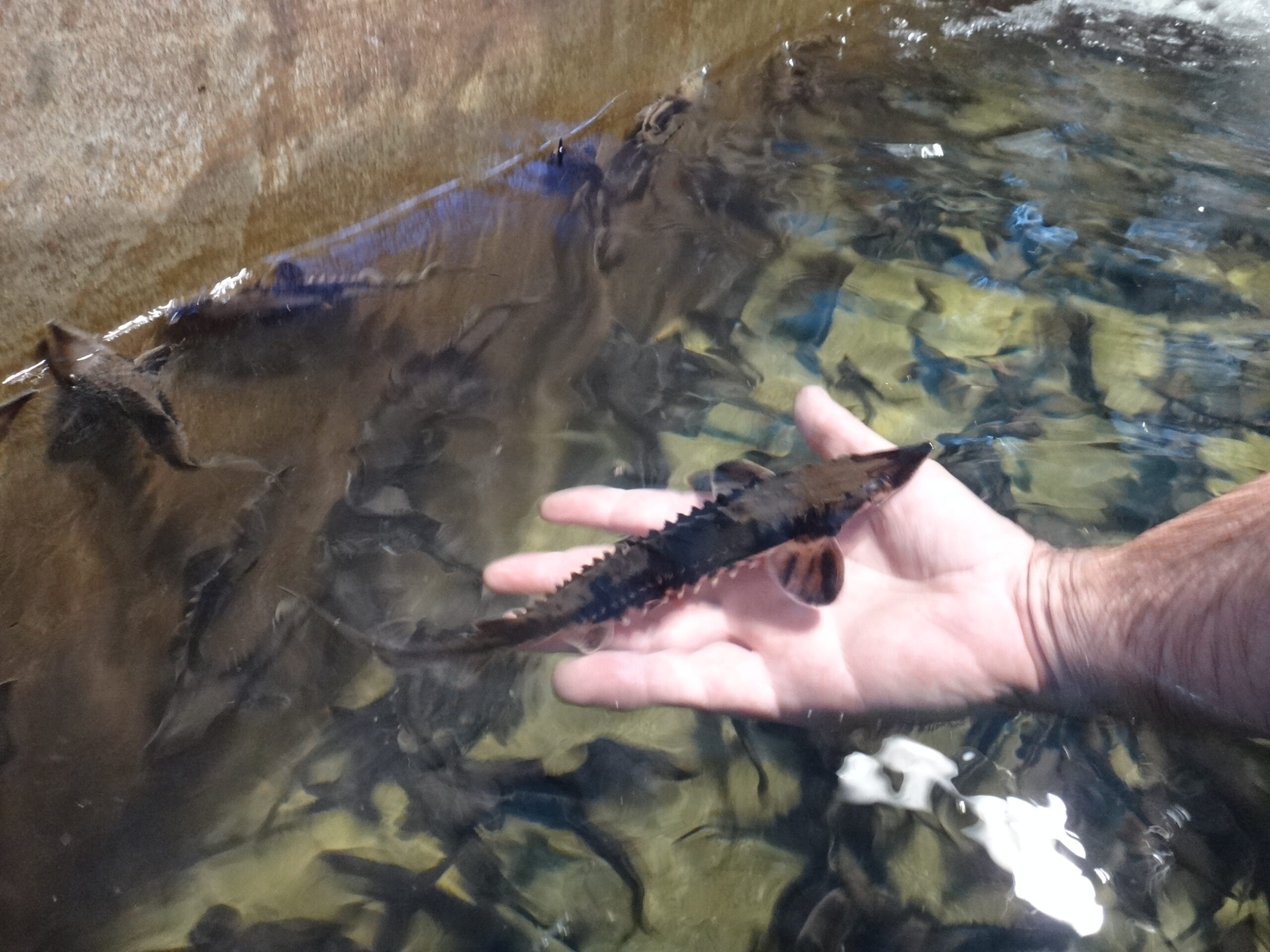 Photo Credit: Holly Cheng / Wikimedia Commons
In the shimmering waters of North America’s rivers and lakes, the Lake Sturgeon, scientifically known as Acipenser fulvescens, glides gracefully through its aquatic realm. With a body that stretches up to eight feet long and a distinctive, elongated shape, this ancient fish is a living testament to the Earth’s prehistoric past. Its skin, covered in bony plates called scutes, gives it a rugged appearance, while its pointed snout and long, whisker-like barbels help it sense food in the murky depths. This remarkable creature has captivated scientists and nature enthusiasts alike, not only for its striking looks but also for its fascinating life history that dates back over 200 million years.
Imagine standing on the banks of a tranquil river, where the gentle flow of water meets the soft pebbles below. As the sun rises, casting golden rays across the surface, you might catch a glimpse of the Lake Sturgeon as it swims silently, searching for its next meal of small fish and invertebrates. These fish are not just survivors; they play a crucial role in their ecosystem, helping to maintain the health of their watery home. As we dive deeper into the world of the Lake Sturgeon, we will explore its unique adaptations, its vital role in the environment, and the challenges it faces in a rapidly changing world. Join us on this adventure to uncover the secrets of one of nature’s most enduring species.
The Lake Sturgeon, a captivating inhabitant of North America’s freshwater systems, holds a special place in the animal kingdom. Taxonomically, it belongs to the Kingdom Animalia, which includes all animals, and the Phylum Chordata, characterized by having a backbone. This ancient fish is part of the Class Actinopterygii, known as ray-finned fishes, which are distinguished by their bony rays that support their fins. The Lake Sturgeon is particularly notable for its long lifespan, often living over 50 years, and its unique physical features, such as a cartilaginous skeleton and a snout that resembles a shovel. These traits not only make it a fascinating species but also a living link to the distant past of vertebrate evolution.
| Taxonomic Rank | Scientific Name | Meaning & Significance |
|---|---|---|
| Kingdom | Animalia | This name comes from the Latin word “animalis,” meaning “having breath” or “living.” It signifies all living organisms that are not plants or fungi. |
| Phylum | Chordata | Derived from the Greek word “chordē,” meaning “string,” this term refers to animals that possess a notochord, a flexible rod that supports the body during development. |
| Class | Actinopterygii | This name means “ray-finned fishes” in Greek, highlighting the bony rays that extend from the fins, a key feature of this diverse group of fish. |
| Order | Acipenseriformes | From the Latin “acipenser,” meaning “sturgeon,” this order includes sturgeons and paddlefish, emphasizing their ancient lineage and unique adaptations. |
| Family | Acipenseridae | This family name also comes from “acipenser,” indicating the sturgeon’s distinct characteristics, such as their elongated bodies and bony scutes instead of scales. |
| Genus | Acipenser | The genus name is derived from the Latin word for sturgeon, reflecting the long history and importance of these fish in various cultures and ecosystems. |
The classification of the Lake Sturgeon reveals much about its evolutionary journey. As a member of the Acipenseriformes order, it shares a lineage that dates back over 200 million years, making it one of the oldest fish groups still swimming today. This ancient heritage is reflected in its primitive features, such as a cartilaginous skeleton and a unique reproductive strategy that involves spawning in river systems. Understanding where the Lake Sturgeon fits in the tree of life not only highlights its biological significance but also underscores the importance of conserving this remarkable species and its habitat for future generations.
The Lake Sturgeon, a living link to the distant past, has a remarkable evolutionary story that stretches back over 200 million years. This ancient fish belongs to the family Acipenseridae, which includes sturgeons and paddlefish. These creatures have witnessed the rise and fall of dinosaurs, the shifting of continents, and the changing climates of Earth. Their lineage is one of the oldest among bony fish, showcasing a fascinating journey through time.
The ancestors of the Lake Sturgeon first appeared during the late Triassic period, a time when the world was dominated by reptiles. These early fish were quite different from their modern descendants, possessing a more streamlined body and a different arrangement of bony plates. Over millions of years, sturgeons adapted to their environments, developing features that would help them thrive in freshwater habitats. One major transition occurred during the Cretaceous period when sturgeons began to develop their characteristic elongated bodies and cartilaginous skeletons, which provided flexibility and strength. As they evolved, they also developed a unique feeding mechanism, using their sensitive barbels to detect food on the riverbed.
The adaptations of the Lake Sturgeon have been key to its survival in a world that has changed dramatically over millions of years. Their ability to sense their environment, coupled with a long lifespan and protective features, has allowed them to thrive in North America’s rivers and lakes. As they continue to navigate the waters of today, these ancient fish remind us of the resilience of life and the intricate connections that bind all living things to their evolutionary past.
The Lake Sturgeon is a striking fish that seems to have swum straight out of a prehistoric era. With its elongated body and a head that tapers to a pointed snout, it commands attention in the waters it inhabits. This ancient fish can grow quite large, reaching lengths of up to 10 feet, making it one of the largest freshwater fish in North America. Its skin, covered in bony plates, gives it a rugged appearance, while its long, whisker-like barbels help it sense food in the murky depths.
| Feature | Description |
|---|---|
| Size | Can grow up to 10 feet long |
| Color | Typically grayish to brown, with lighter underbellies |
| Skin Type | Covered in bony plates, providing protection |
| Distinctive Feature | Prehistoric appearance with a long, pointed snout |
The combination of these features not only makes the Lake Sturgeon visually captivating but also serves important survival functions. Its bony plates act as armor against predators, while its size and coloration help it blend into the riverbed, making it less visible to both hunters and prey. The barbels are essential for foraging, allowing the sturgeon to detect food in dark, murky waters. Together, these adaptations have helped the Lake Sturgeon thrive in its environment for millions of years, showcasing the wonders of evolution in action.
The Lake Sturgeon thrives in the serene embrace of freshwater rivers and lakes, where the gentle flow of water meets the soft caress of pebbly bottoms. These ancient fish prefer habitats that offer a mix of calm pools and swift currents, allowing them to navigate easily while searching for food. The clear waters of these environments provide a perfect backdrop for their unique, armored bodies, which glide gracefully through the depths.
Lake Sturgeons are quite particular about their environmental conditions. They thrive in waters that are cool and well-oxygenated, typically preferring temperatures between 50 to 70 degrees Fahrenheit. These fish are sensitive to pollution and habitat disruption, making clean, unpolluted waters essential for their survival. They also require areas with a stable substrate, like pebbles and gravel, where they can lay their eggs safely away from predators.
Adapted to their specific habitats, Lake Sturgeons have developed several fascinating traits. Their bodies are covered in bony plates called scutes, which protect them from potential threats in their environment. They are also excellent at sensing their surroundings, thanks to specialized organs that detect vibrations and changes in water pressure. This keen awareness helps them navigate their watery homes and find food, such as small fish and invertebrates, while avoiding danger.
The daily life of a Lake Sturgeon is a blend of calm and activity, shaped by the rhythms of its freshwater habitat. As dawn breaks, these ancient fish begin their day by gliding gracefully through the water, often near the riverbed where they forage for food. Their diet mainly consists of small invertebrates and fish, which they detect using their sensitive barbels—whisker-like structures on their snouts that help them feel around in the murky depths. Throughout the day, they alternate between resting and foraging, using their keen sense of smell to locate tasty morsels hidden in the substrate.
Lake Sturgeons are not solitary creatures; they often form pods, which are groups that provide social interaction and safety in numbers. Within these pods, sturgeons exhibit interesting social behaviors. They communicate through subtle movements and body language, which can include swimming close together or changing direction in unison. This group dynamic helps them navigate their environment more effectively and can also play a role in finding food. When they feel threatened, being part of a pod can increase their chances of survival, as there is strength in numbers.
| Behavior Type | Description |
|---|---|
| Foraging | Lake Sturgeons use their barbels to detect food on the riverbed, primarily feeding on small invertebrates and fish. |
| Social Structure | They often form pods, which are groups that enhance safety and social interaction. |
| Communication | Sturgeons communicate through body language and synchronized swimming, helping them coordinate movements and respond to threats. |
The behaviors of Lake Sturgeons are finely tuned to ensure their survival in the wild. By foraging in groups, they increase their efficiency in finding food, while their social structure provides protection against predators. Their ability to communicate and work together enhances their chances of thriving in their aquatic environment. In a world where every day brings new challenges, these ancient fish have adapted their daily routines to navigate the waters with grace and resilience.
The Lake Sturgeon is a carnivore, meaning it primarily eats other animals. This ancient fish has a diet that consists of a variety of tasty treats found in its freshwater habitat. With its keen sense of smell and specialized feeding behavior, the Lake Sturgeon forages along the river and lake bottoms, using its sensitive barbels—small, whisker-like structures on its snout—to detect food hidden in the substrate. This method allows it to uncover a smorgasbord of delectable prey, making it a skilled hunter in its aquatic world.
| Dietary Aspect | Details |
|---|---|
| Diet Type | Carnivore |
| Favorite Foods | Worms, insect larvae, leeches, mollusks, amphipods |
| Prey Items | Small invertebrates found on the riverbed |
| Hunting/Foraging Strategies | Uses barbels to sense food in the substrate and forages along the bottom |
The diet of the Lake Sturgeon plays a crucial role in its ecology and daily routine. By feeding on a variety of invertebrates, it helps maintain the balance of the ecosystem, ensuring that no single species becomes too dominant. This feeding behavior also influences its movements and interactions with other species, as it navigates through its habitat in search of food. The Lake Sturgeon’s role as a predator not only shapes its own life but also contributes to the health of the freshwater environments it calls home.
As spring arrives and the waters warm, Lake Sturgeons embark on a remarkable journey to reproduce. During the breeding season, which typically occurs from late April to early June, these fish engage in a fascinating courtship ritual. Males often chase females, displaying their strength and vigor. Once a female is ready to spawn, she will lay her eggs on gravel or rocky substrates, where the males fertilize them. This process is not just about reproduction; it’s a vital part of their life cycle that ensures the continuation of their species.
| Reproductive Aspect | Details |
|---|---|
| Gestation Period | Six days |
| Litter Size | Up to 200,000 eggs |
| Age of Maturity | 10 to 20 years |
| Name of Young | Fry |
After the eggs are fertilized, they adhere to the substrate and begin to develop. The young, known as fry, emerge after about six days, ready to face the world. Interestingly, Lake Sturgeons do not provide parental care after spawning. Instead, the fry must fend for themselves, finding food and shelter in their aquatic environment. As they grow, they gradually adapt to their surroundings, maturing into adults over a span of 10 to 20 years. This journey from tiny fry to majestic fish is a testament to the resilience and adaptability of Lake Sturgeons in the wild.
The Lake Sturgeon plays a vital role in its aquatic ecosystem, often found near the bottom of rivers and lakes where it helps maintain the health of the environment. As a carnivore, it feeds on a variety of smaller fish and invertebrates, contributing to the balance of the food web. However, this ancient fish faces numerous dangers that threaten its survival.
Despite these challenges, Lake Sturgeons have developed some clever survival strategies. They can remain hidden among the riverbed’s pebbles, using their natural camouflage to evade predators. Additionally, their tough, bony plates provide a layer of protection against potential threats. By adapting to their environment and utilizing their unique physical traits, these ancient fish continue to navigate the complexities of their world, showcasing resilience in the face of adversity.
A keystone species is an organism that has a disproportionately large impact on its environment relative to its abundance. In simpler terms, if you remove a keystone species, the entire ecosystem can change dramatically. The Lake Sturgeon qualifies as a keystone species in its freshwater habitat, playing a crucial role in maintaining the balance of its ecosystem.
Lake Sturgeons are not just fascinating fish; they are vital players in their aquatic environments. As bottom feeders, they help to stir up sediment while searching for food, which can enhance nutrient cycling in the water. This process supports the growth of aquatic plants and algae, which are essential for oxygen production and serve as food for other organisms. Additionally, their feeding habits can help control populations of smaller fish and invertebrates, ensuring that no single species dominates the ecosystem.
During their spawning season, Lake Sturgeons travel upstream to lay their eggs in gravel beds. This behavior not only contributes to their own population but also provides a food source for other animals. The eggs and young sturgeons are consumed by various fish and birds, creating a link in the food web. Furthermore, their presence indicates a healthy ecosystem, as they require clean, well-oxygenated water to thrive.
If Lake Sturgeons were to disappear, the consequences would ripple through the ecosystem. Without their sediment-stirring activities, nutrient cycling would slow down, potentially leading to decreased plant growth and oxygen levels. This decline could affect not only the sturgeons’ food sources but also the entire aquatic community, resulting in a less diverse and less resilient ecosystem. The loss of this ancient fish would mark a significant shift in the balance of life in freshwater habitats, highlighting just how interconnected all species truly are.
The Lake Sturgeon occupies a vital ecological niche in North America’s freshwater ecosystems. As a keystone species, it plays a crucial role in maintaining the health and balance of its environment. By feeding on various organisms and interacting with other species, the Lake Sturgeon helps shape the aquatic community. Its presence influences not just the immediate surroundings but also the broader ecosystem, making it an essential player in the intricate web of life.
| Ecosystem Service | Impact |
|---|---|
| Nutrient Cycling | Lake Sturgeons contribute to the breakdown of organic matter, returning nutrients to the water, which supports plant growth. |
| Habitat Modification | By foraging on the riverbed, they disturb sediments, creating habitats for other aquatic organisms. |
| Food Source | They serve as prey for larger predators, linking different levels of the food web. |
| Indicator Species | The health of Lake Sturgeon populations can indicate the overall health of freshwater ecosystems. |
The influence of Lake Sturgeon extends beyond their immediate feeding habits. For instance, as they forage along the riverbed, they stir up sediments, which can create new habitats for smaller fish and invertebrates. This activity not only benefits these organisms but also promotes biodiversity in the ecosystem. Additionally, their role as a food source for larger predators, such as eagles and large fish, helps maintain the balance of the food web. When Lake Sturgeon populations thrive, it often signals a healthy environment, showcasing their importance as an indicator species.
In a broader ecological context, the Lake Sturgeon exemplifies the interconnectedness of life in freshwater systems. Their presence supports a diverse array of species, from plants to other fish, and contributes to the overall health of aquatic ecosystems. Protecting Lake Sturgeon and their habitats is essential not just for their survival but for the well-being of the entire ecosystem. By understanding and valuing their role, we can work towards preserving these ancient fish and the rich biodiversity they help sustain.
In the intricate web of life, symbiosis refers to the close relationships between different species that can benefit one or both parties involved. These ecological partnerships can take various forms, including mutualism, where both species gain advantages, commensalism, where one benefits while the other is neither helped nor harmed, and parasitism, where one species benefits at the expense of another. The Lake Sturgeon, a fascinating inhabitant of North America’s freshwater ecosystems, engages in several of these relationships, showcasing the interconnectedness of life in its habitat.
| Species/Type | Relationship Type | Description |
|---|---|---|
| Remora Fish | Mutualistic | Remoras attach themselves to the Lake Sturgeon, gaining transportation and access to food scraps, while the sturgeon benefits from the cleaning of parasites and dead skin. |
| Leeches | Parasitic | Leeches attach to the sturgeon to feed on its blood, which can weaken the fish but is a common occurrence in aquatic environments. |
| Water Plants | Commensal | Water plants provide shelter and breeding grounds for various small fish and invertebrates, benefiting from the sturgeon’s presence without affecting it. |
These relationships have evolved over time, shaped by the needs and behaviors of the species involved. The Lake Sturgeon, with its ancient lineage, has adapted to thrive in a world where cooperation and competition coexist. Mutualistic relationships, like that with remora fish, enhance the health of the sturgeon while providing sustenance for the remoras. Meanwhile, parasitic interactions, such as those with leeches, remind us that not all relationships are beneficial. Understanding these dynamics helps us appreciate the delicate balance of ecosystems and the roles each species plays in maintaining that balance.
The Lake Sturgeon is a fascinating fish that has been swimming in North America’s waters for millions of years. With its ancient lineage and unique adaptations, this remarkable species offers a glimpse into the past and plays a vital role in its ecosystem.
The Lake Sturgeon has a rich history intertwined with human culture, dating back centuries. Indigenous peoples of North America revered this ancient fish, not only for its impressive size but also for its nutritional value. The sturgeon’s meat was a vital food source, while its roe, or eggs, were prized as caviar. This relationship fostered a deep respect for the fish, often celebrated in stories and traditions. As settlers arrived, the Lake Sturgeon continued to hold significance, becoming a symbol of the region’s natural bounty and a target for commercial fishing.
Today, the interactions between Lake Sturgeon and humanity are complex and multifaceted. While conservation efforts are underway to protect this species, which has faced significant threats from habitat loss and overfishing, conflicts still arise. Some communities rely on fishing for their livelihoods, leading to tensions between economic needs and ecological preservation. Additionally, there are initiatives aimed at domestication and aquaculture, where sturgeons are raised in controlled environments to reduce pressure on wild populations. These efforts highlight the ongoing struggle to balance human interests with the health of the sturgeon population.
Looking ahead, the future of the Lake Sturgeon and its relationship with humanity hinges on our ability to adapt and collaborate. As awareness grows about the ecological importance of this ancient fish, more people are advocating for sustainable practices that honor both the sturgeon and the communities that depend on it. By fostering a deeper understanding of this remarkable species, we can ensure that future generations will continue to appreciate and protect the Lake Sturgeon, allowing it to thrive in the waters it has called home for millions of years.
The Lake Sturgeon is currently classified as a species of least concern, which means it is not facing immediate extinction. However, its population is estimated to be around 30,000 individuals, with the largest group residing in Lake Michigan. While this number may seem stable, the overall trend for Lake Sturgeon populations can vary by region, and some local populations are experiencing declines due to various environmental pressures.
| Conservation Factor | Status/Details |
|---|---|
| IUCN Status | Least Concern |
| Estimated Population Size | About 30,000 |
| Trend Direction | Varies by region; some local declines |
Despite its current status, the Lake Sturgeon faces several significant threats that could impact its future. Habitat loss is a major concern, as rivers and lakes are altered by human activities like dam construction and pollution. These changes can disrupt the natural breeding and feeding grounds that are essential for the sturgeon’s survival. Additionally, overfishing and bycatch—when fish are unintentionally caught in nets—further threaten their populations.
Conservation efforts are underway to protect the Lake Sturgeon and its habitats. Organizations and researchers are working to restore river ecosystems and improve water quality, which are crucial for the sturgeon’s health. Public awareness campaigns also aim to educate communities about the importance of this ancient fish. With continued efforts and support, there is hope that the Lake Sturgeon will thrive in its natural environment for generations to come.
| Question | Answer |
|---|---|
| What is the habitat of Lake Sturgeon? | Lake Sturgeon thrive in freshwater rivers and lakes, particularly those with pebbly bottoms. They prefer areas with plenty of space to swim and find food, often in deeper waters. |
| What do Lake Sturgeon eat? | Lake Sturgeon are carnivores, meaning they primarily eat meat. Their diet consists of small fish, insects, and crustaceans, which they find by using their sensitive barbels to detect food on the river or lake bottom. |
| How do Lake Sturgeon behave? | Lake Sturgeon are known for their calm and slow-moving nature. They often spend their time resting on the bottom of lakes and rivers, but they can also be quite active during feeding times, swimming around to hunt for food. |
| How do Lake Sturgeon reproduce? | Lake Sturgeon reproduce by laying eggs in shallow, gravelly areas during the spring. The females can produce thousands of eggs, which are fertilized by males as they are released, ensuring a good chance for the young sturgeon to survive. |
| What threats do Lake Sturgeon face? | Lake Sturgeon are threatened by habitat loss, pollution, and overfishing. Dams and other human-made structures can block their migration routes, making it difficult for them to reach spawning grounds. |
| What are some interesting characteristics of Lake Sturgeon? | One of the most distinctive features of Lake Sturgeon is their prehistoric appearance, with bony plates called scutes covering their bodies. They can live for over 100 years, making them one of the longest-living fish species in North America. |
| Are Lake Sturgeon endangered? | Yes, Lake Sturgeon are considered a threatened species in many areas due to their declining populations. Conservation efforts are underway to protect their habitats and ensure their survival for future generations. |