Taxonomy & Classification
- Kingdom
- Animalia
- Phylum
- Chordata
- Class
- Reptilia
- Order
- Squamata
- Family
- Gekkonidae
- Genus
- Uroplatus

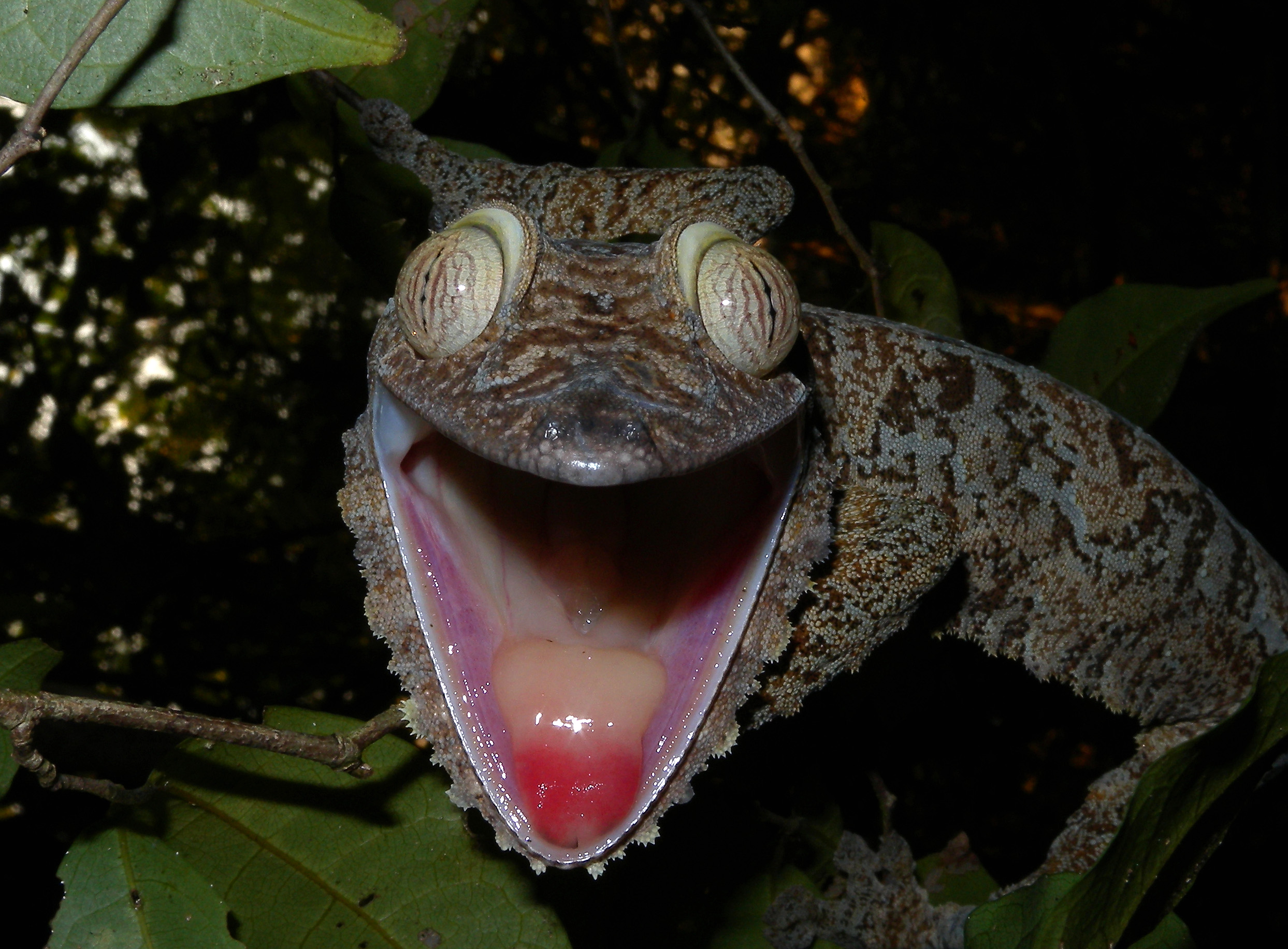 Photo Credit: Flickr upload bot / Wikimedia Commons
In the heart of Madagascar’s lush, green jungles, the Leaf-Tailed Gecko, scientifically known as Uroplatus, makes its home among the vibrant foliage. Imagine stepping into a world where the air is thick with the sounds of chirping insects and rustling leaves, and sunlight filters through the dense canopy above. Here, the Leaf-Tailed Gecko blends seamlessly into its surroundings, its body adorned with a tail that mimics the shape and color of a leaf. This incredible adaptation not only helps it evade predators but also makes it a master of disguise, captivating scientists and nature lovers alike.
What truly sets the Leaf-Tailed Gecko apart is its remarkable ability to camouflage itself, allowing it to remain hidden from both prey and potential threats. With a slender, agile body that weighs between 10 to 30 grams, this small reptile is a true marvel of evolution. Its unique appearance and behavior have sparked curiosity among researchers, who study its role in the ecosystem and the intricate relationships it forms within its habitat. As we delve deeper into the life of the Leaf-Tailed Gecko, we will explore its fascinating diet, nocturnal habits, and the vital role it plays in maintaining the balance of Madagascar’s rich biodiversity.
The Leaf-Tailed Gecko, belonging to the genus Uroplatus, is a captivating member of the animal kingdom that showcases the wonders of evolution. This extraordinary reptile is primarily found in Madagascar, where it has developed remarkable adaptations that allow it to blend seamlessly into its surroundings. Its unique flattened body and tail resemble leaves, providing excellent camouflage against predators and making it a master of disguise. This ability to hide in plain sight is just one of the many traits that make the Leaf-Tailed Gecko a standout in the diverse world of reptiles.
| Taxonomic Rank | Scientific Name | Meaning & Significance |
|---|---|---|
| Kingdom | Animalia | This name signifies that the Leaf-Tailed Gecko is part of the vast group of multicellular organisms known as animals, which are characterized by their ability to move and respond to their environment. |
| Phylum | Chordata | Chordata means “having a notochord,” a flexible rod that supports the body. This group includes all animals with a backbone, highlighting the gecko’s place among more complex life forms. |
| Class | Reptilia | Reptilia refers to reptiles, which are cold-blooded animals with scaly skin. This classification emphasizes the gecko’s adaptations for life on land, including its ability to regulate body temperature. |
| Order | Squamata | Squamata means “scaly,” a fitting name for this order that includes lizards and snakes. The Leaf-Tailed Gecko’s distinctive scales help it blend into its leafy habitat. |
| Family | Gekkonidae | This family includes geckos, known for their unique vocalizations and adhesive toe pads. The Leaf-Tailed Gecko’s family ties reveal its specialized adaptations for climbing and hunting. |
| Genus | Uroplatus | Uroplatus translates to “flat tail,” a direct reference to the gecko’s leaf-like tail that aids in camouflage, showcasing its evolutionary strategy for survival. |
The classification of the Leaf-Tailed Gecko provides a fascinating glimpse into its evolutionary history. As a member of the Gekkonidae family, it shares common traits with other geckos, yet its unique adaptations highlight the incredible diversity found within reptiles. The gecko’s ability to mimic its environment is a testament to the power of natural selection, where those best suited to survive in their habitats thrive. Understanding its taxonomic position not only reveals its biological relationships but also underscores the importance of Madagascar’s ecosystems, where such extraordinary species continue to evolve.
The evolutionary journey of the Leaf-Tailed Gecko, a member of the genus Uroplatus, unfolds in the lush forests of Madagascar, where it has thrived for millions of years. This island, separated from the mainland for about 88 million years, has allowed unique species to evolve in isolation. The Leaf-Tailed Gecko’s ancestors began their journey long before the first dinosaurs roamed the Earth, adapting to their environment in ways that would ensure their survival in a world filled with challenges.
The ancestors of the Leaf-Tailed Gecko were likely small, insect-eating reptiles that roamed the forests of Madagascar. Over time, these early geckos underwent significant changes, developing specialized features that helped them blend into their surroundings. One of the most notable transitions was the evolution of their incredible leaf-like tails, which serve as a perfect camouflage against the forest floor. This adaptation not only helps them avoid predators but also allows them to ambush prey more effectively. As they evolved, these geckos also developed the ability to climb and cling to various surfaces, thanks to their specialized toe pads, which are covered in tiny hair-like structures that create a strong grip.
These remarkable adaptations have played a crucial role in the survival of the Leaf-Tailed Gecko. By blending seamlessly into their environment, they can evade predators while also becoming stealthy hunters. Their ability to navigate the complex forest habitat has allowed them to thrive in Madagascar’s unique ecosystem, showcasing the incredible power of evolution in shaping life on Earth.
The Leaf-Tailed Gecko is a master of disguise, blending seamlessly into its surroundings. With a body that is both slender and agile, this small reptile typically weighs between 10 to 30 grams, which is about as light as a handful of coins. Its skin is covered in tiny, textured scales that help it camouflage against the bark of trees and the forest floor. The gecko’s most striking feature is its tail, which resembles a dried leaf, complete with intricate patterns and colors that mimic the natural foliage of its habitat. This clever adaptation not only makes it hard for predators to spot but also aids in ambushing unsuspecting prey.
| Feature | Description |
|---|---|
| Size | Typically weighs between 10g to 30g (0.35oz – 1oz) |
| Color | Varies from browns to greens, often with patterns that resemble leaves |
| Skin Type | Covered in small, textured scales |
| Tail | Flat and leaf-like, aiding in camouflage |
The Leaf-Tailed Gecko’s features work in harmony to ensure its survival in the dense forests of Madagascar. Its lightweight body allows for quick movements, while the scale-covered skin provides both protection and the ability to blend into the environment. The tail’s leaf-like appearance is a brilliant evolutionary strategy, allowing the gecko to evade predators and remain hidden from view. This combination of physical traits not only enhances its ability to survive but also showcases the incredible adaptability of life in the wild.
The Leaf-Tailed Gecko calls the dense tropical jungles of Madagascar its home. Picture a vibrant world filled with towering trees, thick underbrush, and a symphony of sounds from chirping insects and rustling leaves. This lush environment provides the perfect backdrop for the gecko’s incredible camouflage, allowing it to blend in with the foliage and remain hidden from predators. The interplay of sunlight filtering through the canopy creates a magical atmosphere, where every nook and cranny offers a potential hiding spot for this elusive reptile.
The climate in these regions is typically warm and humid, with temperatures often ranging from 20 to 30 degrees Celsius (68 to 86 degrees Fahrenheit). The Leaf-Tailed Gecko thrives in areas that receive ample rainfall, as the moisture supports the rich biodiversity of plants and insects that make up its diet. These jungles experience a wet season, which is crucial for the gecko’s survival, as it relies on the lush vegetation for both food and shelter.
Over time, the Leaf-Tailed Gecko has developed remarkable adaptations to its jungle habitat. Its flattened body and leaf-like tail not only help it blend into the environment but also provide excellent camouflage against predators. This clever disguise allows it to ambush unsuspecting prey, such as insects, while remaining virtually invisible. By evolving these traits, the Leaf-Tailed Gecko has become a true master of survival in the vibrant, yet challenging, world of Madagascar’s tropical jungles.
As the sun rises over the lush forests of Madagascar, the Leaf-Tailed Gecko begins its day. These fascinating reptiles are primarily nocturnal, meaning they are most active at night. During the day, they rest motionless on tree bark or among leaves, using their incredible camouflage to blend in with their surroundings. As dusk approaches, they emerge from their hiding spots, ready to hunt for insects and other small prey. Their keen eyesight helps them spot dinner, while their agile bodies allow them to navigate the branches with ease.
While Leaf-Tailed Geckos are mostly solitary creatures, they do have interesting social behaviors. They establish territories, which they defend from other geckos. When two males encounter each other, they may engage in a display of dominance, puffing up their bodies and making themselves appear larger. This behavior helps avoid physical confrontations, which can be risky. Communication among these geckos is subtle; they use body language and color changes to signal their mood or intentions, ensuring they maintain their space without unnecessary conflict.
| Behavior Type | Description |
|---|---|
| Activity Patterns | Nocturnal foraging for insects, resting during the day to avoid predators. |
| Social Structure | Primarily solitary, with established territories that are defended from intruders. |
| Communication Methods | Body language and color changes to convey mood and intentions, minimizing direct confrontations. |
The behaviors of the Leaf-Tailed Gecko are finely tuned to ensure their survival in the wild. By being active at night, they avoid many daytime predators while taking advantage of the abundance of insects. Their solitary nature allows them to maintain control over their territory, reducing competition for food. Through subtle communication, they can navigate social interactions without escalating to dangerous confrontations. All these strategies work together, helping the Leaf-Tailed Gecko thrive in its vibrant, yet challenging, forest home.
The Leaf-Tailed Gecko has a diet that primarily consists of small invertebrates, making it a carnivore. This clever little reptile is an expert at hunting its favorite foods, which include spiders, insects, and worms. With its keen eyesight and stealthy movements, the Leaf-Tailed Gecko is well-equipped to catch its prey, often waiting patiently for the perfect moment to strike. Its ability to blend into the forest floor allows it to ambush unsuspecting insects, making it a skilled predator in its lush habitat.
| Dietary Aspect | Details |
|---|---|
| Diet Type | Carnivore |
| Favorite Foods | Spiders, insects, worms |
| Prey Items | Various small invertebrates |
| Hunting/Foraging Strategies | Ambush predator, uses camouflage to blend in |
This diet plays a crucial role in the Leaf-Tailed Gecko’s ecology and daily routine. By feeding on a variety of small invertebrates, it helps control their populations, contributing to the balance of its ecosystem. Its nocturnal lifestyle means that it spends the night actively hunting, while during the day, it rests and remains hidden among the leaves and branches. This clever strategy not only keeps it safe from predators but also ensures that it is well-fed and ready for the next night’s adventures.
The Leaf-Tailed Gecko has a captivating mating ritual that takes place during Madagascar’s warm and humid breeding season, typically from late spring to early summer. Males engage in a series of displays to attract females, showcasing their vibrant colors and unique body shapes. These displays often include head bobbing and tail waving, which help to establish dominance and attract potential mates. Once a female is interested, she will choose a male based on his displays and the quality of his territory.
| Reproductive Aspect | Details |
|---|---|
| Gestation Period | Approximately 30 to 60 days |
| Litter Size | 1 to 2 eggs |
| Age of Maturity | About 6 to 12 months |
| Name of Young | Hatchlings |
After the eggs are laid, the Leaf-Tailed Gecko provides no parental care, leaving the hatchlings to fend for themselves. These tiny geckos emerge from their eggs fully formed and ready to explore their surroundings. As they grow, they develop the same incredible camouflage that their parents possess, allowing them to blend into the forest environment. Over the next several months, they learn to hunt and navigate their habitat, gradually maturing into adults. This fascinating journey from hatchling to adult showcases the resilience and adaptability of these remarkable reptiles in the wild.
The Leaf-Tailed Gecko plays a crucial role in the food web of Madagascar’s tropical forests. As a small carnivore, it helps control the population of insects and other invertebrates, maintaining a balance in its ecosystem. However, this gecko is not at the top of the food chain; it faces various threats from predators and environmental changes that can impact its survival.
To defend itself against these dangers, the Leaf-Tailed Gecko has developed impressive survival strategies. Its incredible camouflage allows it to blend into the leaves and branches of its environment, making it nearly invisible to predators. When threatened, it can remain perfectly still, relying on its natural disguise to avoid detection. Additionally, if caught, it may drop its tail, a tactic known as autotomy, which can distract predators and give the gecko a chance to escape. These clever adaptations help ensure that this remarkable reptile continues to thrive in its vibrant habitat.
A keystone species is an organism that has a disproportionately large impact on its environment relative to its abundance. These species play critical roles in maintaining the structure of an ecosystem. The Leaf-Tailed Gecko, with its unique adaptations and behaviors, qualifies as a keystone species in the tropical jungles of Madagascar. By influencing the populations of other species and contributing to the overall health of its habitat, this remarkable reptile helps sustain the delicate balance of its ecosystem.
The Leaf-Tailed Gecko primarily feeds on small invertebrates, such as insects and spiders. By preying on these creatures, it helps regulate their populations, preventing any one species from becoming too dominant. This predatory behavior is essential for maintaining biodiversity, as it allows various species to coexist. Additionally, the gecko’s camouflage—its ability to blend into the leaves and bark of trees—ensures that it can hunt effectively while also avoiding predators. This adaptation not only aids its survival but also influences the behavior of other animals in the forest, as they must navigate a landscape where the gecko is a silent, yet impactful, presence.
Furthermore, the Leaf-Tailed Gecko contributes to nutrient cycling within its ecosystem. As it consumes invertebrates, it helps break down organic matter, returning nutrients to the soil through its waste. This process supports plant growth, which in turn provides habitat and food for countless other species. The interconnectedness of these relationships highlights the gecko’s role in sustaining the health of its environment.
If the Leaf-Tailed Gecko were to disappear, the effects on its ecosystem would be profound. Without this small carnivore to keep insect populations in check, certain species could explode in numbers, leading to imbalances that might harm plant life and other animals. The loss of this gecko would ripple through the food web, affecting not only its direct predators but also the plants and animals that rely on a balanced ecosystem. In essence, the disappearance of the Leaf-Tailed Gecko would threaten the very fabric of life in Madagascar’s tropical jungles, showcasing just how vital this seemingly small creature truly is.
The Leaf-Tailed Gecko occupies a vital ecological niche in the dense tropical jungles of Madagascar. As a small carnivore, it plays a significant role in controlling insect populations, which helps maintain the balance of its ecosystem. By preying on various invertebrates, this gecko not only sustains its own life but also contributes to the health of the forest environment. Its unique adaptations, such as its incredible camouflage, allow it to thrive while influencing the dynamics of its habitat.
| Ecosystem Service | Impact |
|---|---|
| Insect Population Control | Helps maintain balance by reducing the number of pests that could harm plants. |
| Prey for Larger Animals | Serves as a food source for birds and other predators, supporting the food web. |
| Soil Health | Through its feeding habits, it contributes to nutrient cycling in the forest floor. |
The Leaf-Tailed Gecko’s influence extends beyond its immediate actions. For instance, by keeping insect populations in check, it prevents overgrazing of plants, which can lead to habitat degradation. This gecko’s presence ensures that the lush vegetation of Madagascar remains vibrant and healthy, providing shelter and food for countless other species. Additionally, as it becomes prey for larger animals, it helps sustain the broader food web, linking various species together in a complex web of life.
The ecological importance of the Leaf-Tailed Gecko cannot be overstated. As a keystone species, its role in the ecosystem is crucial for maintaining biodiversity. The health of Madagascar’s tropical jungles relies on the balance created by this small reptile and its interactions with other organisms. Protecting the Leaf-Tailed Gecko and its habitat is essential not only for its survival but also for the overall health of the ecosystem, ensuring that the rich tapestry of life in Madagascar continues to thrive for generations to come.
In the intricate web of life, symbiosis refers to the close interactions between different species, which can take on various forms. These relationships can be mutualistic, where both species benefit, parasitic, where one benefits at the expense of the other, or commensal, where one benefits while the other is neither helped nor harmed. The Leaf-Tailed Gecko, with its remarkable adaptations and camouflage, engages in several ecological partnerships that highlight the complexity of its environment in Madagascar’s dense tropical jungles.
| Species/Type | Relationship Type | Description |
|---|---|---|
| Ants | Mutualistic | Leaf-Tailed Geckos may benefit from the protection ants provide against predators, while ants can find shelter in the gecko’s habitat. |
| Fungi | Commensal | Fungi growing on decaying leaves can provide a microhabitat for insects that the gecko preys on, benefiting the gecko without affecting the fungi. |
| Birds | Parasitic | Some birds may prey on the gecko, taking advantage of its camouflage, which can be detrimental to the gecko’s survival. |
The evolution of these relationships showcases the dynamic interactions that shape ecosystems. Over time, the Leaf-Tailed Gecko has adapted to its environment, developing traits that enhance its survival and the survival of its partners. These partnerships not only provide essential benefits, such as protection and food sources, but they also illustrate the delicate balance of nature. By understanding these connections, we gain insight into the importance of biodiversity and the roles each species plays in maintaining the health of their ecosystem.
The Leaf-Tailed Gecko is a true marvel of nature, showcasing incredible adaptations that allow it to thrive in the lush forests of Madagascar. This small reptile is not just a master of camouflage; it has a range of surprising traits that make it a standout in the animal kingdom.
The Leaf-Tailed Gecko, a captivating inhabitant of Madagascar’s lush forests, has long intrigued humans with its remarkable ability to blend into its surroundings. Historically, these geckos have been part of local folklore and cultural narratives, often symbolizing the mysteries of nature. Their unique appearance, resembling dried leaves, has inspired stories and art, reflecting the deep connection between the people of Madagascar and their environment. As humans have explored these vibrant ecosystems, encounters with the Leaf-Tailed Gecko have sparked curiosity and admiration, highlighting the importance of biodiversity in cultural heritage.
In contemporary times, the relationship between humans and Leaf-Tailed Geckos has evolved, particularly in the context of conservation efforts. As habitat loss threatens these extraordinary reptiles, local communities and conservationists are working together to protect their natural habitats. This collaboration often involves educating the public about the ecological roles these geckos play, such as controlling insect populations. However, conflicts can arise when human activities encroach on their habitats, leading to a delicate balance between development and conservation. While domestication is not a common practice for these wild reptiles, their unique traits have made them popular among exotic pet enthusiasts, raising concerns about their welfare and the impact on wild populations.
As we look to the future, the relationship between humans and Leaf-Tailed Geckos holds both promise and challenges. With increased awareness of the importance of biodiversity, there is hope for stronger conservation efforts that benefit both the geckos and the communities that share their habitat. By fostering a sense of stewardship and respect for these remarkable reptiles, we can ensure that future generations will continue to marvel at their beauty and ecological significance. Together, we can create a world where humans and Leaf-Tailed Geckos thrive side by side, celebrating the wonders of nature.
The Leaf-Tailed Gecko, a stunning inhabitant of Madagascar, currently holds a conservation status of Near Threatened according to the International Union for Conservation of Nature (IUCN). This means that while the species is not yet endangered, it faces significant risks that could lead to a decline in its population if protective measures are not taken. The population trends indicate that these geckos are experiencing pressures that could affect their numbers, making it crucial to monitor their status closely.
| Conservation Factor | Status/Details |
|---|---|
| IUCN Status | Near Threatened |
| Population Estimates | Unknown, but declining |
| Trend Direction | Decreasing |
The main threats to the Leaf-Tailed Gecko stem from habitat loss and degradation. As Madagascar’s forests are cleared for agriculture and logging, these geckos lose their homes and the rich biodiversity they depend on. Additionally, climate change poses a growing risk, altering the delicate ecosystems where these reptiles thrive. Invasive species, such as rats and cats, also threaten their survival by preying on them or competing for food.
Conservation efforts are underway to protect the Leaf-Tailed Gecko and its habitat. Organizations are working to establish protected areas and promote sustainable land-use practices that benefit both wildlife and local communities. Education and awareness campaigns are also vital, helping people understand the importance of preserving Madagascar’s unique ecosystems. With continued efforts, there is hope that the Leaf-Tailed Gecko can maintain its place in the vibrant tapestry of life in Madagascar’s forests.
| Question | Answer |
|---|---|
| What is the natural habitat of the Leaf-Tailed Gecko? | The Leaf-Tailed Gecko thrives in dense tropical jungles. These lush environments provide plenty of cover and food, allowing them to blend in with their surroundings. |
| What do Leaf-Tailed Geckos eat? | Leaf-Tailed Geckos are carnivores, meaning they primarily eat other animals. Their diet consists mainly of insects, which they catch using their quick reflexes and sticky tongues. |
| How do Leaf-Tailed Geckos behave in the wild? | These geckos are mostly nocturnal, which means they are active at night. During the day, they often stay hidden among leaves and branches to avoid predators. |
| How do Leaf-Tailed Geckos reproduce? | Leaf-Tailed Geckos lay eggs, usually in small clutches. The eggs are often hidden in leaf litter or crevices to protect them from predators until they hatch. |
| What threats do Leaf-Tailed Geckos face? | These geckos are considered Near Threatened due to habitat loss from deforestation and human activities. Climate change also poses a risk by altering their natural environments. |
| What are some interesting characteristics of Leaf-Tailed Geckos? | One of the most fascinating features of Leaf-Tailed Geckos is their incredible camouflage. Their bodies resemble leaves, which helps them avoid detection by both predators and prey. |
| How do Leaf-Tailed Geckos defend themselves? | When threatened, Leaf-Tailed Geckos can remain perfectly still, blending into their surroundings. If necessary, they may also drop their tails to escape predators, as the tail can continue to move and distract the attacker. |