Taxonomy & Classification
- Kingdom
- Animalia
- Phylum
- Chordata
- Class
- Reptilia
- Order
- Testudines
- Family
- Dermochelyidae
- Genus
- Dermochelys
- Species
- Dermochelys coriacea

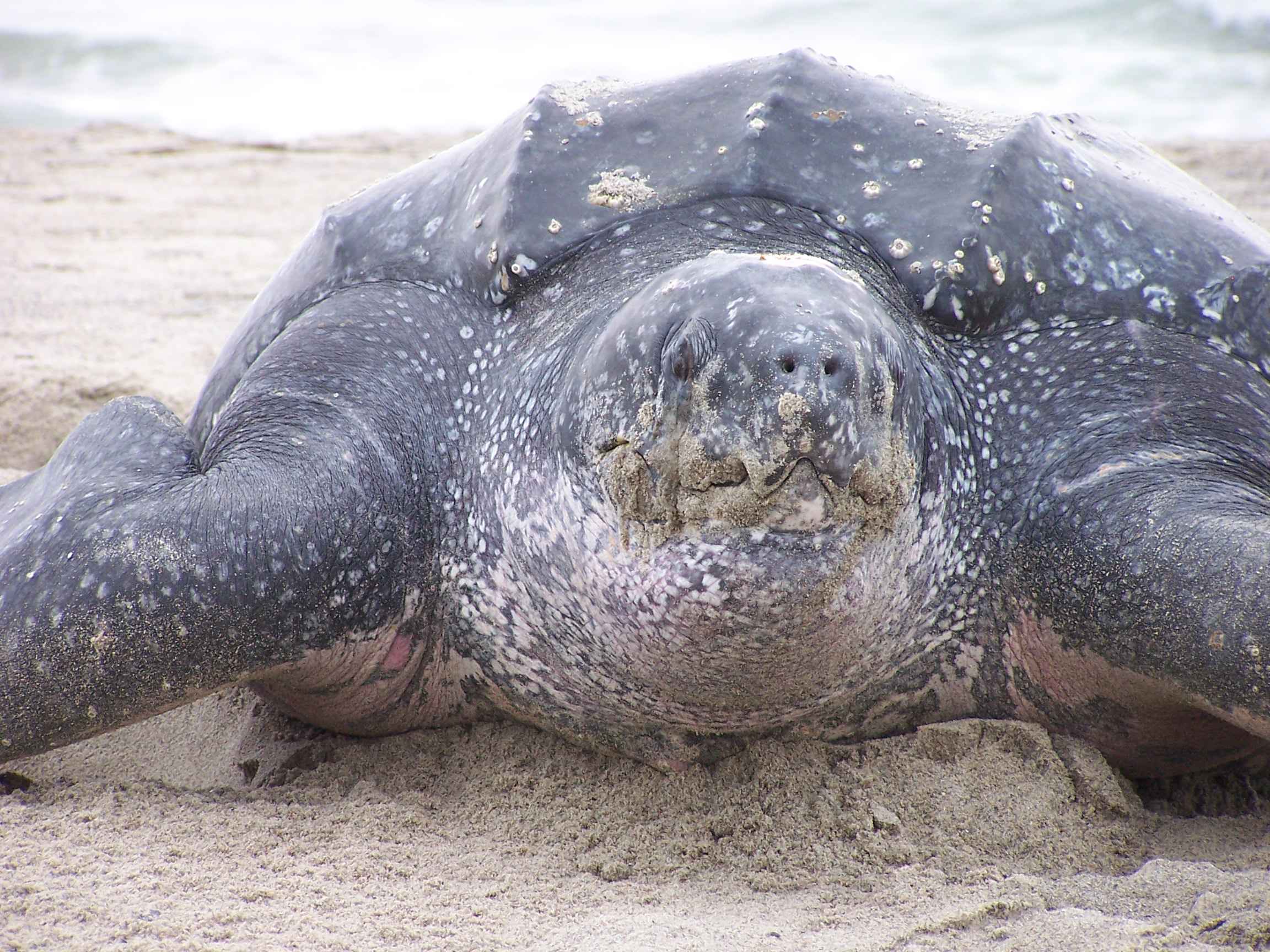 Photo Credit: Fæ / Wikimedia Commons
In the vast, shimmering expanse of the ocean, the Leatherback Sea Turtle, or Dermochelys coriacea, glides gracefully through the water. This magnificent creature, the largest of all turtles, can reach lengths of up to 6.5 feet, making it a true giant of the sea. Unlike other turtles, the Leatherback is distinguished by its unique, leathery shell, which feels more like a soft, flexible skin than a hard shell. This remarkable adaptation allows it to dive deeper and swim faster, captivating scientists and nature enthusiasts alike with its incredible abilities.
Imagine a sunlit day as the Leatherback swims through warm coastal waters, its streamlined body cutting through the waves with ease. As it searches for its favorite meal—jellyfish—it plays a vital role in the ocean’s ecosystem, helping to keep jellyfish populations in check. With a history that stretches back over 100 million years, this ancient reptile has witnessed the evolution of the oceans and the creatures within them. The Leatherback’s journey is not just a tale of survival; it is a story of resilience and adaptation, making it a fascinating subject for study and admiration. As we explore the life of the Leatherback Sea Turtle, we will uncover the secrets of its behavior, diet, and the challenges it faces in a changing world.
The Leatherback Sea Turtle, known scientifically as Dermochelys coriacea, holds a special place in the tree of life. As the largest species of turtle, it stands out not only for its impressive size but also for its unique characteristics. Unlike other turtles, the Leatherback lacks a hard shell; instead, it has a leathery, flexible carapace that allows it to dive deeper and swim faster. This remarkable adaptation helps it thrive in the chilly waters of the ocean, where it primarily feeds on jellyfish. The Leatherback’s evolutionary journey has made it a fascinating subject for scientists and nature enthusiasts alike.
| Taxonomic Rank | Scientific Name | Meaning & Significance |
|---|---|---|
| Kingdom | Animalia | This name signifies that Leatherbacks belong to the broad group of multicellular organisms that are heterotrophic, meaning they consume organic material for energy. |
| Phylum | Chordata | Chordata refers to animals that have a notochord, a flexible rod that supports the body. In Leatherbacks, this structure is present during their development, showcasing their connection to other vertebrates. |
| Class | Reptilia | Reptilia indicates that Leatherbacks are reptiles, a group characterized by their scaly skin and cold-blooded nature, meaning they rely on external sources to regulate their body temperature. |
| Order | Testudines | Testudines is the order that includes all turtles and tortoises. The name comes from the Latin word for “tortoise,” highlighting their shared traits, such as a protective shell or carapace. |
| Family | Dermochelyidae | This family name means “skin” (dermo) and “turtle” (chelys), reflecting the Leatherback’s distinctive leathery skin instead of a hard shell, which sets it apart from other turtles. |
| Genus | Dermochelys | Dermochelys combines the Greek words for “skin” and “turtle,” emphasizing the unique texture of the Leatherback’s body, which is crucial for its survival in the ocean. |
| Species | coriacea | This species name means “leathery” in Latin, a direct reference to the turtle’s soft, flexible carapace that distinguishes it from its hard-shelled relatives. |
Understanding the Leatherback Sea Turtle’s classification reveals much about its evolutionary history. This ancient species has existed for over 100 million years, making it a living link to the past. Its unique adaptations, such as the leathery skin and ability to dive to great depths, showcase how it has evolved to survive in a changing world. By studying its place in the animal kingdom, we gain insights into the resilience and diversity of life on Earth, reminding us of the intricate connections that bind all living beings.
The evolutionary journey of the Leatherback Sea Turtle stretches back over 100 million years, making it one of the oldest living species on Earth. These magnificent reptiles have witnessed the rise and fall of dinosaurs, the emergence of mammals, and the shifting of continents. Their lineage is a testament to resilience and adaptability, showcasing how life can thrive in diverse environments.
The ancestors of the Leatherback Sea Turtle were likely similar to other early turtles, which first appeared during the late Triassic period. These early turtles had hard shells, a feature that provided protection from predators. However, as time progressed, some species began to adapt to life in the open ocean. The Leatherback diverged from its relatives, evolving a unique, leathery shell instead of a hard one. This adaptation allowed it to dive deeper and swim more efficiently, navigating the vast oceans with grace. Over millions of years, the Leatherback developed specialized features, such as a streamlined body and powerful flippers, enabling it to cover great distances in search of food.
The adaptations of the Leatherback Sea Turtle have been crucial for its survival in a world that has changed dramatically over millions of years. Its flexible shell and powerful flippers allow it to navigate vast oceanic expanses, while its specialized diet and ability to dive deep give it access to food sources that many other marine animals cannot reach. These remarkable traits not only highlight the Leatherback’s evolutionary success but also underscore the importance of adaptability in the face of environmental challenges.
The Leatherback Sea Turtle is a true marvel of the ocean, captivating all who encounter it. With its streamlined body, this turtle can reach impressive lengths of up to 6.5 feet, making it the largest of all turtle species. Its most striking feature is its leathery skin, which gives it a unique appearance compared to other turtles that sport hard shells. The skin is dark gray to black, often adorned with lighter spots, allowing it to blend seamlessly into the deep blue waters of its habitat. This remarkable creature glides gracefully through the ocean, its powerful flippers propelling it with ease.
| Feature | Description |
|---|---|
| Weight | 500 pounds to over 1 ton |
| Skin Type | Leather-like, flexible skin |
| Color | Dark gray to black with lighter spots |
| Size | Up to 6.5 feet in length |
The combination of its size, skin type, and coloration plays a crucial role in the Leatherback’s survival. The leathery skin not only provides flexibility but also helps the turtle maintain its body temperature in cold waters, a trait known as endothermy. This ability allows it to dive deep into the ocean, where it can hunt for jellyfish, its favorite food. The dark coloration helps it camouflage against predators and the ocean depths, making it a stealthy swimmer. Together, these features create a perfect blend of form and function, enabling the Leatherback Sea Turtle to thrive in its vast marine environment.
The Leatherback Sea Turtle thrives in the warm embrace of moderate to tropical coastal ocean waters. Picture a vast expanse of shimmering blue, where sunlight dances on the surface and the gentle waves cradle this magnificent creature. These turtles are often found gliding gracefully through the open ocean, navigating between islands and coastlines, where they find both food and refuge. Their habitat is a blend of rich marine ecosystems, including coral reefs and sandy beaches, which provide essential resources for their survival.
To flourish in these environments, Leatherback Sea Turtles require specific climate and environmental conditions. They prefer warmer waters, typically ranging from 68 to 86 degrees Fahrenheit. This temperature range is crucial for their metabolism, which is the process that helps them convert food into energy. The turtles are also known to migrate long distances, sometimes traveling thousands of miles to find the perfect breeding and feeding grounds. These migrations are often influenced by ocean currents and seasonal changes, showcasing their incredible navigational skills.
Adaptation is key to the Leatherback’s survival in these diverse habitats. Unlike other turtles, they have a unique leathery shell instead of a hard carapace, which allows them to dive deeper and swim more efficiently. This adaptation helps them access jellyfish, their primary food source, which can be found in both shallow and deep waters. Additionally, their ability to maintain body heat, even in cooler waters, allows them to explore a wider range of habitats than many other sea turtles. This combination of physical traits and behavioral strategies makes the Leatherback a true ocean wanderer, perfectly suited to its dynamic marine world.
The daily life of a Leatherback Sea Turtle is a blend of solitary exploration and purposeful activity. These gentle giants spend most of their time gliding through the ocean, searching for food and navigating vast distances. A typical day might involve swimming for hours, diving deep to hunt for jellyfish, their favorite meal. With their unique leathery shells, they can dive to impressive depths, sometimes reaching over 4,000 feet! As they swim, they may bask in the sun at the surface, soaking up warmth before continuing their journey.
While Leatherbacks are primarily solitary creatures, they do come together during mating season. This is a time when males and females interact, often in the warm coastal waters where they gather. Outside of this period, they prefer to roam alone, each turtle following its own path. Their social behavior is minimal, but they are known to communicate through body language and subtle movements, signaling their presence to one another when necessary.
| Behavior Type | Description |
|---|---|
| Feeding | Leatherbacks primarily feed on jellyfish, using their specialized mouths to capture their slippery prey. They can consume large quantities, helping to maintain the balance of marine ecosystems. |
| Solitary Swimming | Most of the time, Leatherbacks swim alone, covering vast distances in search of food and suitable nesting sites. This solitary behavior allows them to adapt to changing ocean conditions. |
| Mating | During mating season, males and females come together in specific areas. Males may compete for females, showcasing their strength and agility. |
| Communication | Leatherbacks communicate through body movements and postures, especially during mating. They may also use subtle signals to indicate their presence to other turtles. |
The behaviors of Leatherback Sea Turtles are finely tuned to ensure their survival in the vast ocean. Their solitary nature allows them to be efficient hunters, while their ability to communicate during mating ensures the continuation of their species. By understanding their daily activities and social interactions, we can appreciate how these ancient mariners navigate the challenges of their environment, thriving in a world that has changed dramatically over millions of years.
The Leatherback Sea Turtle has a diet that primarily consists of jellyfish, making it a specialized feeder in the ocean. As an omnivore, it also consumes sea squirts, which are small marine animals that resemble blobs. These turtles are known for their unique feeding behavior; they often dive deep into the ocean to hunt for their favorite prey. With their large mouths and flexible throats, they can gulp down jellyfish whole, allowing them to take advantage of this abundant food source.
| Dietary Aspect | Details |
|---|---|
| Diet Type | Omnivore |
| Favorite Foods | Jellyfish, sea squirts |
| Prey Items | Primarily jellyfish, but also includes other soft-bodied marine organisms |
| Hunting/Foraging Strategies | Dives deep to locate jellyfish, uses its large mouth to gulp prey |
This diet plays a crucial role in the Leatherback’s ecology and daily routine. By primarily feeding on jellyfish, these turtles help control jellyfish populations in the ocean, which can sometimes explode in numbers. Their foraging habits also influence the distribution of other marine species, creating a ripple effect throughout the ecosystem. As they glide through the water, searching for food, they contribute to the health of their environment, showcasing the interconnectedness of life in our oceans.
When it comes to the mating rituals of Leatherback Sea Turtles, the ocean becomes a stage for a remarkable dance. Breeding season typically occurs between March and September, depending on the region. During this time, males seek out females, often engaging in a series of courtship behaviors that can include gentle nudging and swimming alongside one another. Once a female has chosen a mate, she will return to the beach where she was born to lay her eggs, a journey that can be both perilous and instinctual.
| Reproductive Aspect | Details |
|---|---|
| Gestation Period | 2 months |
| Average Litter Size | 100 |
| Name Of Young | Eggs, hatchlings |
| Age Of Maturity | 10-30 years |
After laying her eggs, the female covers them with sand and returns to the sea, leaving them to incubate in the warm sand. The hatchlings, once they break free from their eggs, face a daunting journey to the ocean. They are on their own from the moment they emerge, instinctively racing toward the water to escape predators. As they grow, these young turtles will spend years in the open ocean, gradually maturing into adults. It can take a decade or more for them to reach reproductive age, but once they do, they will continue the cycle, returning to the beaches of their birth to lay their own eggs, ensuring the survival of their species.
The Leatherback Sea Turtle plays a crucial role in the ocean’s food web, primarily as a consumer of jellyfish. By keeping jellyfish populations in check, these turtles help maintain the balance of marine ecosystems. However, despite their size and strength, Leatherbacks face numerous dangers that threaten their survival.
To defend themselves against these threats, Leatherback Sea Turtles have developed several survival strategies. They are strong swimmers, capable of diving deep into the ocean to escape predators. Additionally, their tough, leathery skin provides some protection against injuries. However, their greatest challenge comes from human activities, which they cannot evade. Awareness and conservation efforts are essential to ensure that these magnificent turtles continue to thrive in our oceans.
A keystone species is an organism that has a disproportionately large impact on its environment relative to its abundance. In simpler terms, if you remove a keystone species from an ecosystem, it can cause significant changes or even collapse. The Leatherback Sea Turtle, known scientifically as Dermochelys coriacea, qualifies as a keystone species due to its vital role in maintaining the health of marine ecosystems.
Leatherback Sea Turtles primarily feast on jellyfish, which makes them essential for controlling jellyfish populations. Without these turtles, jellyfish numbers could explode, leading to overgrazing of plankton and other marine life that depend on these tiny organisms for survival. This imbalance can ripple through the food web, affecting everything from small fish to larger predators. Additionally, as these turtles migrate across vast oceanic distances, they help distribute nutrients throughout the marine environment, promoting biodiversity.
Moreover, Leatherback Sea Turtles contribute to the health of seagrass beds and coral reefs. When they consume jellyfish, they inadvertently protect these habitats from being overrun by jellyfish blooms. Healthy seagrass beds and coral reefs are crucial for many marine species, providing shelter and breeding grounds. The presence of Leatherbacks thus supports a rich tapestry of life in the ocean.
If Leatherback Sea Turtles were to disappear, the consequences would be dire. Jellyfish populations would likely surge, leading to a decline in plankton and other marine organisms that rely on them. This could trigger a chain reaction, destabilizing entire ecosystems and threatening the survival of numerous species. The loss of these magnificent turtles would not only diminish the ocean’s biodiversity but also disrupt the delicate balance that sustains life beneath the waves.
The Leatherback Sea Turtle, known for its impressive size and unique diet, plays a vital role in shaping its marine ecosystem. As a keystone species, it influences the health and balance of ocean environments. By primarily feeding on jellyfish, these turtles help control jellyfish populations, preventing them from overwhelming marine habitats. This balance is crucial, as jellyfish can disrupt the food web if their numbers grow too large. The Leatherback’s presence in the ocean is not just about survival; it’s about maintaining the intricate web of life beneath the waves.
| Ecosystem Service | Impact |
|---|---|
| Population Control | Regulates jellyfish numbers, preventing overpopulation. |
| Nutrient Cycling | Contributes to nutrient distribution through waste, enriching marine environments. |
| Habitat Maintenance | Supports the health of seagrass beds and coral reefs by controlling prey species. |
| Food Source | Serves as prey for larger marine animals, contributing to the food web. |
The Leatherback Sea Turtle’s influence extends beyond just jellyfish control. For instance, when these turtles consume jellyfish, they also inadvertently help maintain the health of seagrass beds and coral reefs. Healthy seagrass beds provide shelter and breeding grounds for various marine species, while coral reefs are home to countless organisms. By keeping jellyfish populations in check, Leatherbacks ensure that these vital habitats remain balanced and thriving. Additionally, their waste products enrich the surrounding waters, promoting the growth of phytoplankton, which forms the base of the oceanic food web.
The broader ecological importance of the Leatherback Sea Turtle cannot be overstated. As a keystone species, its presence is essential for the stability of marine ecosystems. Without these magnificent turtles, the delicate balance of ocean life could be disrupted, leading to unforeseen consequences for countless species. By understanding and protecting the Leatherback, we not only safeguard a remarkable creature but also the intricate web of life that depends on it. The health of our oceans is intertwined with the fate of the Leatherback Sea Turtle, making its conservation a priority for future generations.
In the intricate web of life beneath the ocean’s surface, symbiosis plays a vital role in the survival and thriving of various species. Symbiosis refers to the close and often long-term interactions between different biological species. These relationships can take many forms, including mutualism, where both species benefit, parasitism, where one benefits at the expense of the other, and commensalism, where one benefits while the other is neither helped nor harmed. The Leatherback Sea Turtle, a magnificent creature of the sea, engages in several of these relationships, showcasing the interconnectedness of marine life.
| Species/Type | Relationship Type | Description |
|---|---|---|
| Remoras | Commensalism | Remoras, also known as suckerfish, attach themselves to the Leatherback Sea Turtle. They benefit by getting a free ride and access to leftover food, while the turtle is largely unaffected. |
| Sea Turtles and Algae | Commensalism | Algae can grow on the shell of the Leatherback Sea Turtle. While the algae gain a place to live, the turtle does not benefit or suffer from this relationship. |
| Jellyfish | Mutualism | While the Leatherback Sea Turtle feeds on jellyfish, it helps control their populations, which can benefit the overall health of the marine ecosystem. |
The evolution of these relationships is a testament to nature’s adaptability and resilience. Over time, species have developed ways to coexist, often leading to benefits that enhance their survival. For the Leatherback Sea Turtle, these partnerships not only provide opportunities for feeding and travel but also contribute to the balance of the marine ecosystem. By understanding these connections, we gain insight into the delicate dance of life in our oceans, reminding us of the importance of preserving these incredible habitats for future generations.
The Leatherback Sea Turtle is a true marvel of the ocean, captivating scientists and nature lovers alike with its incredible adaptations and behaviors. Here are some surprising facts that showcase just how extraordinary this ancient reptile really is.
The Leatherback Sea Turtle has long been intertwined with human history, capturing the imagination of coastal communities and cultures around the world. Ancient mariners often regarded these majestic creatures as symbols of strength and endurance, weaving them into myths and legends. In many cultures, the Leatherback has been celebrated in art and storytelling, representing the mysteries of the ocean. However, this relationship has not always been harmonious, as the turtles have faced threats from human activities throughout history, including hunting and habitat destruction.
Today, the interactions between Leatherback Sea Turtles and humans are complex and multifaceted. On one hand, conservation efforts are underway to protect these magnificent reptiles from extinction. Organizations and governments are working together to create marine protected areas and enforce laws against poaching. On the other hand, conflicts arise as human activities, such as fishing and coastal development, continue to threaten their habitats. While Leatherbacks are not domesticated animals, their presence in our oceans reminds us of the delicate balance we must maintain with nature.
Looking ahead, the future of the Leatherback Sea Turtle and humanity hinges on our ability to coexist sustainably. As we deepen our understanding of these ancient mariners, we must also commit to protecting their ocean habitats. By fostering a sense of stewardship and respect for the natural world, we can ensure that future generations will continue to marvel at the sight of Leatherbacks gliding gracefully through the waves. Together, we can create a world where both humans and Leatherbacks thrive in harmony.
The Leatherback Sea Turtle is currently classified as Vulnerable, a status that highlights the challenges this magnificent species faces in the wild. With an estimated population size of fewer than 50,000 individuals, their numbers are concerningly low. While some populations may show slight recovery in certain areas, overall trends indicate a decline, primarily due to human activities and environmental changes.
| Conservation Factor | Status/Details |
|---|---|
| IUCN Status | Vulnerable |
| Estimated Population Size | Less than 50,000 |
| Population Trend | Declining overall, with some local recoveries |
The main threats to Leatherback Sea Turtles are numerous and often interconnected. One of the most significant dangers comes from fishing practices, where turtles can become accidentally caught in nets or on fishing lines, a phenomenon known as bycatch. Additionally, habitat loss due to coastal development and pollution, particularly plastic waste in the ocean, poses a severe risk. These turtles are also vulnerable to climate change, which affects their nesting sites and the availability of their primary food source—jellyfish.
Conservation efforts are underway to protect Leatherback Sea Turtles and their habitats. Organizations around the world are working to reduce bycatch through better fishing practices and gear modifications. Nesting sites are being monitored and protected, and public awareness campaigns aim to educate communities about the importance of these turtles. While the outlook remains cautious, the combined efforts of scientists, conservationists, and local communities offer hope for the future of this ancient marine species. With continued dedication, we can help ensure that Leatherback Sea Turtles thrive in our oceans for generations to come.
| Question | Answer |
|---|---|
| Where do Leatherback Sea Turtles live? | Leatherback Sea Turtles are found in moderate to tropical coastal ocean waters around the world. They are known to travel long distances, sometimes crossing entire oceans, in search of food and nesting sites. |
| What do Leatherback Sea Turtles eat? | Leatherback Sea Turtles are omnivores, meaning they eat both plants and animals. Their diet mainly consists of jellyfish, but they also consume other soft-bodied marine creatures and some seaweed. |
| How do Leatherback Sea Turtles behave? | Leatherback Sea Turtles are known for their solitary nature, often swimming alone. They are strong swimmers and can dive to great depths, sometimes reaching over 4,000 feet in search of food. |
| How do Leatherback Sea Turtles reproduce? | Female Leatherback Sea Turtles return to the beaches where they were born to lay their eggs. They can lay up to 100 eggs in a single nest, and after about two months, the hatchlings emerge and make their way to the ocean. |
| What threats do Leatherback Sea Turtles face? | Leatherback Sea Turtles are classified as vulnerable due to various threats. These include habitat loss, pollution, climate change, and entanglement in fishing gear, which can lead to injury or death. |
| What is a unique characteristic of Leatherback Sea Turtles? | The most distinctive feature of Leatherback Sea Turtles is their leather-like skin, which is different from the hard shells of other turtles. This unique skin allows them to maintain body heat in colder waters, making them the largest of all sea turtles. |
| How long do Leatherback Sea Turtles live? | Leatherback Sea Turtles can live for several decades, with some estimates suggesting they can reach ages of 50 years or more. Their long lifespan allows them to contribute to the marine ecosystem over many years. |