Taxonomy & Classification
- Kingdom
- Animalia
- Phylum
- Chordata
- Class
- Reptilia
- Order
- Testudines
- Family
- Testudinidae
- Genus
- Stigmochelys
- Species
- Stigmochelys pardalis

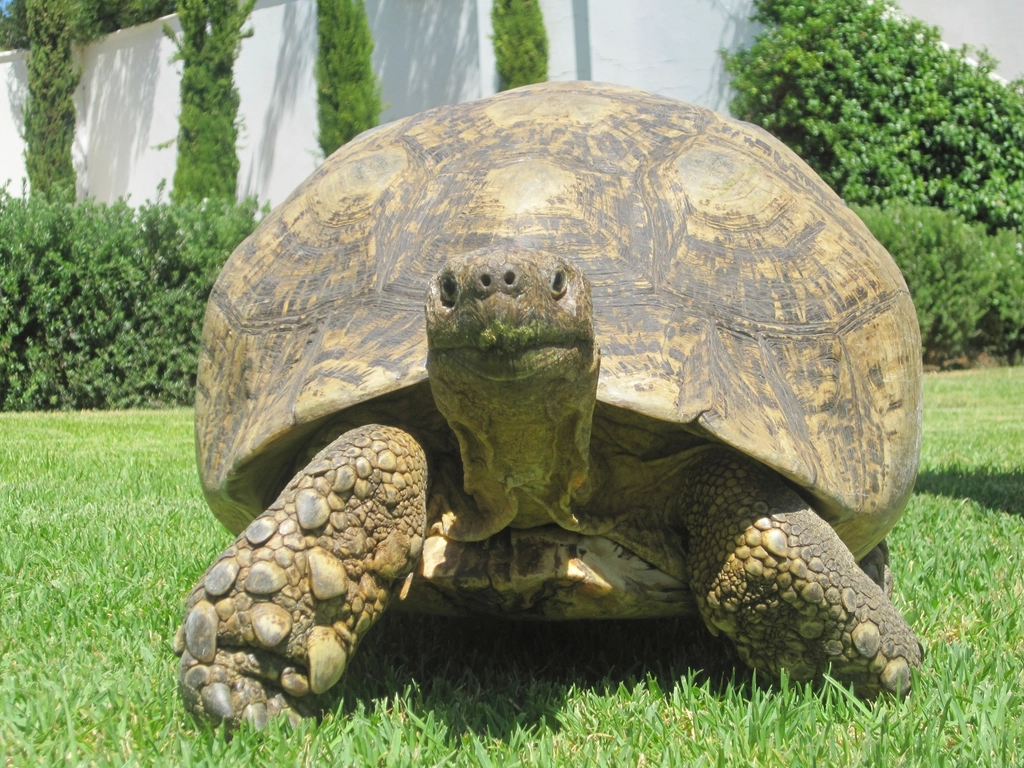 Photo Credit: Rawpixel
In the sun-drenched savannahs of Africa, the Leopard Tortoise, or Stigmochelys pardalis, ambles gracefully across the golden grasses, its striking shell a canvas of intricate patterns. Each tortoise showcases a unique design, resembling the spots of a leopard, which not only captivates the eye but also serves as a clever form of camouflage against predators. As it navigates its habitat, this remarkable reptile embodies the spirit of resilience and adaptation, fascinating scientists and nature enthusiasts alike with its ability to thrive in a world of shifting seasons and diverse landscapes.
The Leopard Tortoise is not just a pretty shell; it plays a vital role in its ecosystem. As a dedicated herbivore, it munches on grasses, weeds, and flowers, helping to maintain the balance of plant life in its environment. This gentle giant can weigh between 18 to 54 kilograms, or about 40 to 120 pounds, and its robust, rounded shell can grow impressively large. With a lifestyle that is both leisurely and purposeful, the Leopard Tortoise emerges each day to bask in the warm sun, reminding us of the simple joys of life in the wild. Join us as we explore the fascinating world of the Leopard Tortoise, uncovering its behaviors, diet, and the important role it plays in the vibrant tapestry of African ecosystems.
The Leopard Tortoise, scientifically known as Stigmochelys pardalis, holds a special place in the animal kingdom. It belongs to the class Reptilia, which includes all reptiles, and is part of the order Testudines, the group that encompasses all turtles and tortoises. What sets the Leopard Tortoise apart is its striking shell, adorned with beautiful, leopard-like spots that provide both camouflage and a unique identity. This tortoise is not just a pretty face; it plays a vital role in its ecosystem, helping to maintain the balance of its habitat in the savannas and grasslands of Africa.
| Taxonomic Rank | Scientific Name | Meaning & Significance |
|---|---|---|
| Kingdom | Animalia | This name signifies that the Leopard Tortoise is part of the vast group of multicellular organisms that are primarily heterotrophic, meaning they consume other organisms for energy. |
| Phylum | Chordata | Chordata refers to animals that have a notochord, a flexible rod that supports the body. In the case of the Leopard Tortoise, this structure is present during its development. |
| Class | Reptilia | This classification indicates that the Leopard Tortoise is a reptile, characterized by scaly skin and laying eggs. Reptiles are ectothermic, meaning they rely on external sources to regulate their body temperature. |
| Order | Testudines | Testudines is the order that includes all turtles and tortoises, known for their bony or cartilaginous shells that protect them from predators. |
| Family | Testudinidae | This family includes tortoises, which are distinguished by their terrestrial lifestyle and heavy, dome-shaped shells. |
| Genus | Stigmochelys | The genus name Stigmochelys comes from Greek roots meaning “spotted tortoise,” reflecting the Leopard Tortoise’s distinctive shell pattern. |
| Species | pardalis | This species name is derived from the Latin word for “leopard,” highlighting the tortoise’s unique and beautiful shell markings. |
The classification of the Leopard Tortoise reveals much about its evolutionary journey. As a member of the Testudinidae family, it shares a common ancestry with other tortoises, which have adapted to life on land over millions of years. Its unique shell pattern not only serves as a defense mechanism but also showcases the evolutionary pressures that have shaped its survival strategies. Understanding where the Leopard Tortoise fits in the tree of life helps us appreciate the intricate connections between species and the environments they inhabit.
The evolutionary journey of the Leopard Tortoise, or Stigmochelys pardalis, stretches back millions of years, tracing its roots to the ancient ancestors of modern tortoises. These reptiles first appeared during the late Triassic period, around 220 million years ago. Over time, they adapted to various environments, leading to the diverse species we see today. The Leopard Tortoise, specifically, emerged in the African savannas, where it developed traits that would help it thrive in this unique habitat.
Ancestral forms of tortoises were quite different from the Leopard Tortoise we recognize today. Early tortoises had flatter shells and were more aquatic, living in water-rich environments. As they transitioned to land, their shells became more domed, providing better protection against predators. The Leopard Tortoise’s distinctive pattern of dark spots on a lighter background evolved as a form of camouflage, helping it blend into the dappled light of its grassy surroundings. This adaptation was crucial for evading predators like lions and hyenas, which roam the African plains.
The adaptations of the Leopard Tortoise have been vital for its survival in the wild. Its sturdy shell not only provides physical protection but also helps regulate temperature, keeping it safe from the sun’s heat. The ability to store water is a lifesaver in dry conditions, allowing it to thrive where other animals might struggle. With a diet that can be found in abundance in its habitat, the Leopard Tortoise has become a master of its environment. Together, these traits have ensured that this tortoise continues to roam the African landscape, a testament to the power of evolution in shaping life on Earth.
The Leopard Tortoise is a stunning example of nature’s artistry, showcasing a robust and rounded shell that can reach impressive sizes. With a weight ranging from 18 to 54 kilograms, or about 40 to 120 pounds, this tortoise is no lightweight. Its shell, adorned with striking patterns reminiscent of a leopard’s spots, provides both beauty and protection. The tortoise’s sturdy limbs and small, pointed head give it a distinctive silhouette, making it easily recognizable in its native habitats of savannas and grasslands.
| Feature | Description |
|---|---|
| Size | Can weigh between 18 kg and 54 kg (40 lbs to 120 lbs) |
| Color | Shell features a pattern of dark brown and yellow, resembling leopard spots |
| Skin Type | Covered in tough, protective scales |
The Leopard Tortoise’s impressive size and striking coloration serve important survival functions. The heavy shell acts as a fortress against predators, while the unique patterns help it blend into the dappled light of its grassy surroundings. This camouflage is crucial, as it allows the tortoise to remain hidden from hungry eyes. Additionally, the scales covering its body provide a tough barrier against the harsh elements of its environment, ensuring that this magnificent tortoise can thrive in the wild.
The Leopard Tortoise thrives in the sun-drenched expanses of grasslands and savannahs, where golden grasses sway gently in the breeze. These habitats are often dotted with acacia trees and shrubs, providing both shelter and food. Picture a landscape where the horizon stretches endlessly, and the warm sun casts a golden glow over the earth. This is where the Leopard Tortoise feels most at home, roaming freely in search of tasty plants and basking in the sunlight.
To flourish in these environments, the Leopard Tortoise requires a warm climate with plenty of sunshine. It enjoys a dry season, which allows it to bask and absorb heat, as well as a wet season that brings fresh vegetation. The average temperature in its habitat can range from 20 to 30 degrees Celsius (68 to 86 degrees Fahrenheit), making it a perfect spot for this tortoise to thrive. The combination of open spaces and scattered vegetation provides the ideal setting for foraging and hiding from potential predators.
Over time, the Leopard Tortoise has developed several adaptations that help it survive in these specific habitats. Its strong, dome-shaped shell not only protects it from predators but also helps it retain moisture during the hotter months. Additionally, its ability to dig burrows allows it to escape the heat and stay cool. With a diet primarily consisting of grasses and leaves, this tortoise has evolved to efficiently process tough plant material, making the most of the resources available in its savannah home.
The Leopard Tortoise leads a life that is both leisurely and purposeful. Each day begins with the warm rays of the sun, which coax these tortoises out of their sheltered spots. They spend their mornings grazing on a variety of grasses, leaves, and flowers, using their strong jaws to munch through the vegetation. As the sun climbs higher, they often retreat to the shade to avoid overheating, since they are ectothermic, meaning they rely on external heat sources to regulate their body temperature. In the late afternoon, they may venture out again to continue foraging, taking their time to explore their surroundings.
While Leopard Tortoises are primarily solitary creatures, they do have interesting social interactions, especially during the mating season. Males may engage in head-bobbing displays to attract females, showcasing their strength and vitality. Although they prefer to roam alone, they can sometimes be seen in small groups, particularly in areas rich in food. These gatherings are usually temporary, as each tortoise has its own territory. Communication among them is subtle, often involving body language and scent marking, which helps them establish their presence in the environment.
| Behavior Type | Description |
|---|---|
| Activity Patterns | Leopard Tortoises are most active during the cooler parts of the day, foraging for food in the morning and late afternoon while resting in the shade during peak heat. |
| Social Structure | These tortoises are generally solitary, preferring to live alone but may gather in small groups when food is abundant or during mating season. |
| Communication Methods | They communicate through body language, such as head movements, and scent marking to establish territory and attract mates. |
The behaviors of the Leopard Tortoise are finely tuned to ensure their survival in the wild. By foraging during cooler times and seeking shade, they avoid the dangers of overheating. Their solitary nature allows them to maintain their own territories, reducing competition for food. Meanwhile, their subtle communication methods help them navigate social interactions without the need for loud displays. All these traits work together, allowing the Leopard Tortoise to thrive in its sunlit savannah home.
The Leopard Tortoise is a dedicated herbivore, meaning it primarily eats plants. This tortoise has a special fondness for grasses, weeds, and flowers, which it finds in its sunlit savannah and grassland habitats. With its strong, beak-like jaws, the Leopard Tortoise can easily munch through tough vegetation. It spends a good part of its day foraging for food, using its keen sense of smell to locate tasty plants.
| Dietary Aspect | Details |
|---|---|
| Diet Type | Herbivore |
| Favorite Foods | Grasses, weeds, and flowers |
| Prey Items | Primarily plant material |
| Hunting/Foraging Strategies | Uses keen sense of smell to locate food |
This plant-based diet plays a crucial role in the Leopard Tortoise’s ecology and daily routine. By grazing on various types of vegetation, these tortoises help maintain the health of their grassland ecosystems. Their foraging habits promote plant growth and contribute to the balance of their habitat. As they wander through the savannah, they not only satisfy their hunger but also shape the landscape around them, making them important players in their environment.
When it comes to reproduction, Leopard Tortoises have a fascinating courtship ritual. During the breeding season, which typically occurs in the warmer months, males engage in a series of displays to attract females. They may engage in head bobbing, vocalizations, and even gentle nudging. Once a female is receptive, mating can take place, and the pair may stay together for a short time. This process is crucial for ensuring the continuation of their species in the wild.
| Reproductive Aspect | Details |
|---|---|
| Gestation Period | Approximately 90 to 120 days |
| Litter Size | Usually 5 to 15 eggs |
| Age of Maturity | About 5 to 10 years |
| Name of Young | Hatchlings |
After laying their eggs, female Leopard Tortoises dig a nest in the ground, where they carefully deposit their eggs before covering them with soil. This nesting behavior helps protect the eggs from predators and environmental conditions. Once the hatchlings emerge, they are on their own, relying on their instincts to find food and shelter. As they grow, these young tortoises develop the skills they need to thrive in their savannah habitat, gradually maturing into the impressive adults they are destined to become. The journey from hatchling to adult is a remarkable transformation, showcasing the resilience and adaptability of these enchanting reptiles.
The Leopard Tortoise occupies a vital role in its ecosystem, primarily as a herbivore that helps maintain the balance of plant life in its habitat. However, like many animals, it faces various dangers that threaten its survival. Positioned in the food web, it is preyed upon by several predators, while also contending with environmental challenges that can impact its well-being.
To defend itself against these threats, the Leopard Tortoise has developed several clever survival strategies. Its hard, domed shell acts as a natural armor, providing protection from many predators. When danger approaches, the tortoise can retract its head and limbs into its shell, creating a nearly impenetrable fortress. Additionally, its slow and steady lifestyle allows it to blend into the environment, making it less noticeable to potential threats. By relying on these defensive behaviors, the Leopard Tortoise continues to thrive in the wild, navigating the challenges of its habitat with resilience.
A keystone species is an organism that plays a crucial role in maintaining the structure of its ecosystem. Its presence and activities significantly influence the environment and the other species that inhabit it. The Leopard Tortoise, known scientifically as Stigmochelys pardalis, qualifies as a keystone species due to its impact on the grassland and savannah ecosystems where it resides.
Leopard Tortoises are herbivores, meaning they primarily eat plants. By grazing on grasses, weeds, and flowers, they help control plant growth and promote biodiversity. This grazing behavior prevents any single plant species from dominating the landscape, allowing a variety of plants to thrive. In turn, this diversity supports a wide range of other animals, from insects to larger herbivores, creating a balanced ecosystem.
Moreover, the Leopard Tortoise contributes to soil health. As they move through their habitat, they help aerate the soil, which improves water infiltration and nutrient cycling. Their droppings also serve as a natural fertilizer, enriching the soil and promoting plant growth. This process is vital for maintaining the health of the grasslands and supporting the myriad of life forms that depend on these habitats.
The Leopard Tortoise also serves as a food source for various predators, including birds of prey and carnivorous mammals. By being part of the food web, they help sustain the populations of these predators, which in turn keeps the ecosystem in balance. Their presence ensures that energy flows through the ecosystem, supporting life at multiple levels.
If the Leopard Tortoise were to disappear, the consequences would ripple through the ecosystem. Without their grazing, certain plant species could overgrow, choking out others and reducing biodiversity. Soil health would decline without their natural fertilization and aeration, leading to poorer plant growth. Additionally, predators that rely on them for food would struggle to find alternative sources, potentially leading to declines in their populations. The loss of this tortoise would disrupt the delicate balance of the grassland and savannah ecosystems, highlighting just how vital they are to their environment.
The Leopard Tortoise, known scientifically as Stigmochelys pardalis, plays a vital role in shaping its ecosystem, particularly in the grasslands and savannahs of Africa. As a herbivore, it primarily feeds on grasses, weeds, and flowers, which helps control plant growth and maintain the balance of its habitat. By grazing on various vegetation, the Leopard Tortoise creates open spaces that allow sunlight to reach the ground, promoting the growth of new plants. This activity not only supports its own diet but also benefits other herbivores and the overall health of the ecosystem.
| Ecosystem Service | Impact |
|---|---|
| Grazing | Controls plant growth and promotes biodiversity |
| Soil Aeration | Helps improve soil quality through movement |
| Seed Dispersal | Facilitates the spread of various plant species |
| Habitat Creation | Creates open areas that benefit other wildlife |
The influence of the Leopard Tortoise extends beyond its own diet. As it moves through its habitat, it inadvertently aerates the soil, which is essential for healthy plant growth. This process allows water and nutrients to penetrate deeper into the ground, benefiting not just the tortoise but also the myriad of plants that rely on rich soil. Additionally, by consuming certain plants and then excreting their seeds, the tortoise aids in the dispersal of various species, helping to maintain a diverse plant community. This diversity is crucial for the many animals that depend on these plants for food and shelter.
The broader ecological importance of the Leopard Tortoise cannot be overstated. As a keystone species, its presence is essential for maintaining the structure of its ecosystem. The balance it helps create supports a wide range of life, from insects to larger mammals. By shaping the landscape and influencing plant communities, the Leopard Tortoise ensures that its habitat remains vibrant and resilient. In this way, it not only survives but thrives, contributing to the intricate web of life that defines the savannahs and grasslands of Africa.
In the intricate web of life, symbiosis refers to the close and often long-term interactions between different species. These relationships can take many forms, including mutualism, where both species benefit, commensalism, where one benefits while the other is neither helped nor harmed, and parasitism, where one species benefits at the expense of the other. The Leopard Tortoise, with its slow and steady lifestyle, engages in various ecological partnerships that highlight the beauty of nature’s interconnectedness.
| Species/Type | Relationship Type | Description |
|---|---|---|
| Oxpecker Birds | Mutualistic | Oxpeckers perch on the tortoise’s shell, eating ticks and parasites, which helps keep the tortoise healthy while providing the birds with a meal. |
| Acacia Trees | Commensal | The tortoise often seeks shade under acacia trees, benefiting from the cooler environment without affecting the trees. |
| Fungi in Soil | Mutualistic | Fungi help decompose organic matter in the soil, enriching it, which in turn supports the growth of grasses that the tortoise feeds on. |
These relationships have evolved over time, shaped by the needs and behaviors of the species involved. The Leopard Tortoise’s interactions with oxpecker birds exemplify mutualism, where both parties gain advantages that enhance their survival. Meanwhile, the tortoise’s use of acacia trees for shade illustrates a commensal relationship, showcasing how species can coexist without direct competition. Such partnerships not only benefit the Leopard Tortoise but also contribute to the overall health of its ecosystem, demonstrating the delicate balance of life in the savannahs and grasslands.
The Leopard Tortoise is a captivating reptile that showcases the wonders of evolution and adaptation. With its striking shell and unique behaviors, this tortoise is full of surprises that will intrigue nature lovers of all ages.
The Leopard Tortoise has long been a part of human history, weaving its way into the cultural fabric of various societies across Africa. Ancient civilizations revered these tortoises, often associating them with wisdom and longevity. In some cultures, their striking shells were used in art and decoration, symbolizing beauty and resilience. Historical encounters between humans and Leopard Tortoises have sparked curiosity and admiration, leading to stories and folklore that celebrate their unique characteristics. As a result, these tortoises have become more than just animals; they are cultural icons that reflect the deep connection between nature and humanity.
Today, the relationship between Leopard Tortoises and humans is complex and multifaceted. On one hand, conservation efforts are underway to protect these tortoises from habitat loss and poaching, as their populations face significant threats. On the other hand, conflicts arise when human activities encroach on their natural habitats, leading to challenges in coexistence. Some people have even attempted to domesticate Leopard Tortoises, keeping them as pets. While this can provide a safe environment for individual tortoises, it raises concerns about their well-being and the impact on wild populations. Balancing conservation with human interests is crucial for the future of these remarkable reptiles.
As we look to the future, the relationship between Leopard Tortoises and humanity holds both promise and challenges. With increased awareness and education, there is hope for a more harmonious coexistence. By prioritizing conservation and respecting their natural habitats, we can ensure that these tortoises continue to thrive in the wild. The journey ahead will require collaboration between communities, conservationists, and governments to protect these ancient reptiles and the ecosystems they inhabit. Together, we can foster a future where Leopard Tortoises are celebrated not just for their beauty, but for their vital role in our shared world.
The Leopard Tortoise, known scientifically as Stigmochelys pardalis, currently holds a conservation status of “Least Concern” according to the International Union for Conservation of Nature (IUCN). This means that, at present, the species is not facing an immediate threat of extinction. Population estimates suggest that these tortoises are relatively stable, although localized declines may occur in certain areas due to various pressures. Overall, the Leopard Tortoise remains a resilient species, continuing to thrive in its natural habitats across Africa.
| Conservation Factor | Status/Details |
|---|---|
| IUCN Status | Least Concern |
| Population Estimates | Stable, but localized declines in some areas |
| Trend Direction | Stable |
Despite its current stable status, the Leopard Tortoise faces several significant threats. Habitat loss is a major concern, primarily due to agricultural expansion and urban development that encroach on their natural grassland and savannah environments. Additionally, poaching for the pet trade and traditional medicine poses a risk to their populations. These pressures can lead to localized declines, making it crucial to monitor their habitats and implement protective measures.
Conservation efforts are underway to ensure the future of the Leopard Tortoise. Various organizations are working to protect their habitats and raise awareness about the importance of these tortoises in their ecosystems. Education programs aim to inform local communities about sustainable practices and the value of preserving wildlife. With continued efforts and community involvement, the outlook for the Leopard Tortoise remains hopeful, allowing this beautiful species to thrive for generations to come.
| Question | Answer |
|---|---|
| What is the natural habitat of the Leopard Tortoise? | The Leopard Tortoise thrives in grasslands and savannahs, which are open areas with scattered trees. These habitats provide plenty of sunlight and the right types of plants for them to eat. |
| What do Leopard Tortoises eat? | Leopard Tortoises are herbivores, meaning they primarily eat plants. Their diet consists of grasses, leaves, and flowers, which are rich in fiber and essential nutrients. |
| How do Leopard Tortoises behave in the wild? | Leopard Tortoises are generally solitary creatures, spending most of their time foraging for food. They are known for their slow and steady movements, and they can often be seen basking in the sun to regulate their body temperature. |
| How do Leopard Tortoises reproduce? | During the breeding season, male Leopard Tortoises will engage in courtship displays to attract females. After mating, the female lays eggs in a nest dug into the ground, usually containing 10 to 30 eggs, which she then buries. |
| What threats do Leopard Tortoises face? | While Leopard Tortoises are currently classified as Least Concern, they still face threats from habitat loss and poaching. Human activities, such as agriculture and urban development, can destroy their natural habitats. |
| What are some interesting characteristics of Leopard Tortoises? | Leopard Tortoises are known for their striking shell patterns, which resemble the spots of a leopard. They can also grow quite large, with some individuals reaching up to 18 inches in length! |
| How long do Leopard Tortoises live? | Leopard Tortoises have a long lifespan, often living for over 50 years in the wild. With proper care in captivity, they can live even longer, sometimes reaching up to 100 years! |