Taxonomy & Classification
- Kingdom
- Animalia
- Phylum
- Chordata
- Class
- Mammalia
- Order
- Artiodactyla
- Family
- Camelidae
- Genus
- Lama
- Species
- Lama Glama

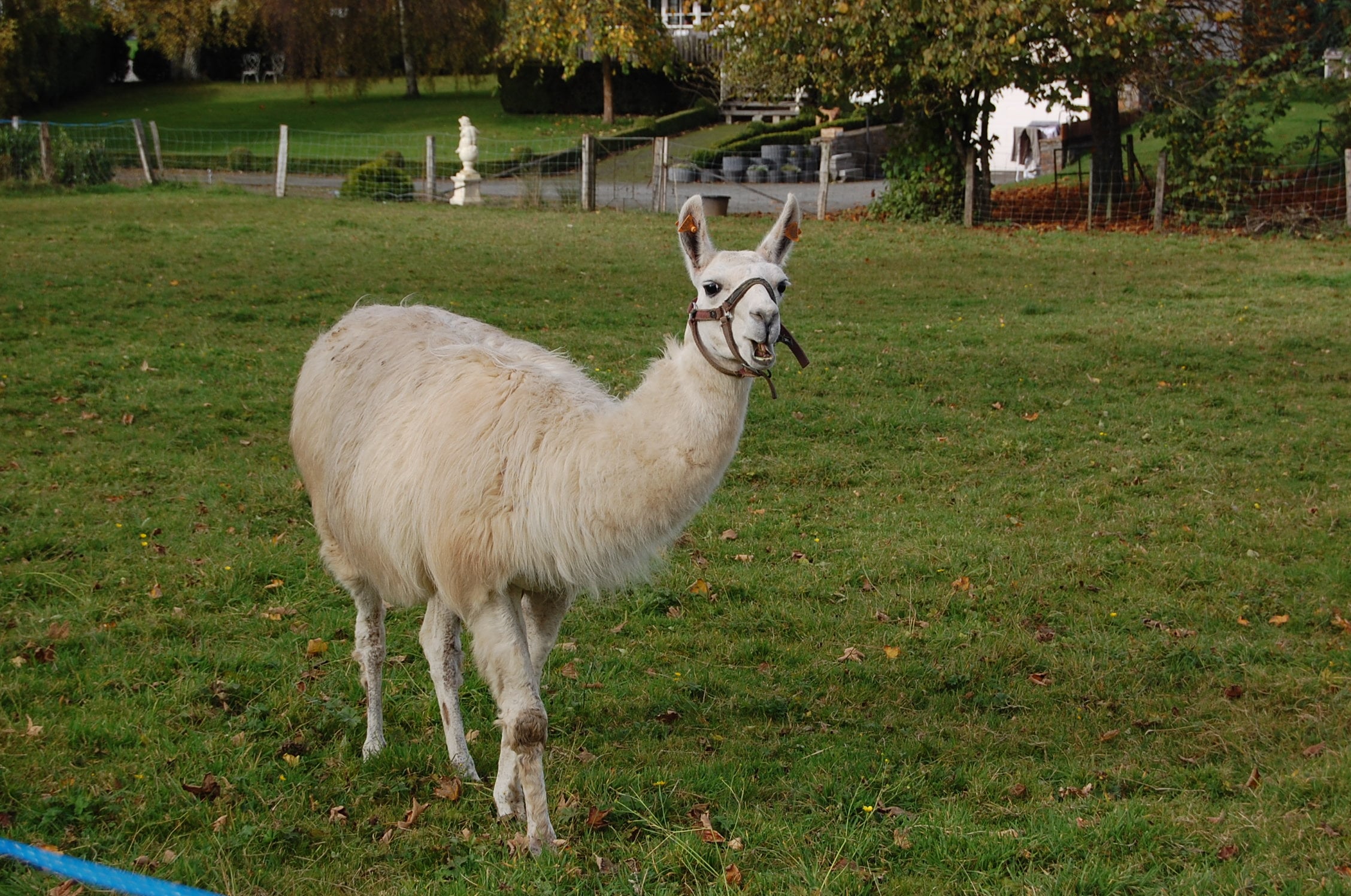 Photo Credit: Lucyin / Wikimedia Commons
In the breathtaking heights of the Andes Mountains, the llama, scientifically known as Lama glama, roams gracefully across the rugged terrain. With its long neck and sturdy legs, this gentle giant stands out against the backdrop of towering peaks and vast, open skies. Its thick, woolly coat, which can range from white to shades of brown and black, not only keeps it warm in the chilly mountain air but also adds to its charm. Llamas are social animals, often seen grazing in groups, their curious eyes sparkling with intelligence and playfulness.
What makes llamas particularly captivating to scientists and nature lovers alike is their unique role in the ecosystem. As herbivores, they help maintain the balance of plant life in their mountainous habitats by grazing on grasses, leaves, and shoots. This feeding behavior not only shapes the landscape but also supports a variety of other species that depend on the same vegetation. Llamas have been companions to humans for thousands of years, serving as pack animals and even providing wool for clothing. Their long history with people, combined with their fascinating adaptations to life in the Andes, makes the llama a remarkable subject of study and admiration. As we explore the world of llamas, we will uncover their behaviors, diet, and the vital role they play in their environment, revealing just how special these animals truly are.
The llama, a charming and sociable animal, occupies a special place in the tree of life. It belongs to the kingdom Animalia, which includes all animals, and is classified under the phylum Chordata, meaning it has a backbone. As a member of the class Mammalia, llamas are warm-blooded and nurse their young with milk. They are part of the order Artiodactyla, which includes even-toed ungulates like deer and pigs. What sets llamas apart is their family, Camelidae, which they share with camels. This connection highlights their adaptations to life in harsh environments, such as their ability to thrive in high altitudes and their unique digestive system that allows them to extract nutrients from tough vegetation.
| Taxonomic Rank | Scientific Name | Meaning & Significance |
|---|---|---|
| Kingdom | Animalia | This name comes from the Latin word for “animal,” emphasizing that llamas are part of the vast world of living creatures. |
| Phylum | Chordata | Derived from the Greek word “chordē,” meaning “string,” this refers to the notochord, a flexible rod that is a key feature in the development of vertebrates like llamas. |
| Class | Mammalia | This term comes from the Latin “mamma,” meaning “breast,” highlighting the defining characteristic of mammals: the ability to produce milk for their young. |
| Order | Artiodactyla | From the Greek words “artios,” meaning “even,” and “daktulos,” meaning “finger,” this order includes animals with an even number of toes, like llamas, which have two main weight-bearing toes. |
| Family | Camelidae | This name is derived from “camel,” reflecting the family’s adaptations to arid environments and their shared ancestry with camels. |
| Genus | Lama | The name “lama” is thought to come from the indigenous Andean word for these animals, connecting them to their native habitat in South America. |
Understanding the llama’s classification reveals much about its evolutionary journey. As a member of the Camelidae family, llamas share a common ancestor with camels, which adapted to life in deserts, while llamas evolved in the cooler, mountainous regions of the Andes. This lineage showcases how animals can adapt to diverse environments, developing unique traits that help them survive and thrive. The llama’s place in the tree of life not only highlights its biological connections but also tells a story of resilience and adaptation in the face of changing landscapes.
The evolutionary journey of the llama stretches back millions of years, weaving through the tapestry of time and adaptation. This fascinating animal is a member of the Camelidae family, which also includes camels and alpacas. The story begins in the late Eocene epoch, around 34 million years ago, when the ancestors of modern llamas roamed the earth. These early relatives were small, deer-like creatures that thrived in the lush forests of North America.
As the climate changed and the landscape transformed, these ancestors began to adapt to new environments. By the Miocene epoch, about 20 million years ago, they had evolved into larger, more robust forms. These adaptations were crucial for survival in the open grasslands that replaced the forests. Over time, some of these animals migrated to South America, where they continued to evolve into the llamas we know today.
These evolutionary adaptations have played a vital role in the llama’s survival. Their long necks and adaptable diets enable them to thrive in challenging environments, while their thick wool keeps them warm in cold climates. Living in social groups not only provides safety in numbers but also fosters strong bonds that help them navigate their world together. Through millions of years of evolution, llamas have become well-suited to their habitats, showcasing the incredible power of adaptation in the animal kingdom.
The llama stands tall and proud, a gentle giant of the Andes mountains. With a sturdy body and long legs, it exudes a sense of grace and strength. Its neck is elongated, allowing it to reach high vegetation, while its large, expressive eyes seem to reflect a curious and friendly nature. The llama’s ears are long and slightly curved, giving it an alert appearance, perfect for detecting sounds in its mountainous habitat. Overall, this animal presents a striking silhouette, combining both elegance and robustness.
| Feature | Description |
|---|---|
| Weight | 130-204 kg (280-450 lbs) |
| Skin Type | Fur |
| Color | Varies from white to brown, black, and gray, often with patches |
| Height | About 1.7 meters (5.5 feet) at the head |
The combination of these features not only makes the llama visually captivating but also serves important survival purposes. Its thick fur provides insulation against the cold mountain air, while its sturdy legs allow it to navigate rocky terrains with ease. The llama’s size and weight help it carry heavy loads, making it a valuable companion for Andean communities. Together, these characteristics create a well-adapted animal, perfectly suited to thrive in its high-altitude environment.
The llama calls the rugged Andes Mountains its home, a breathtaking landscape where towering peaks meet vast, open skies. These majestic animals thrive in the mountainous deserts and grasslands, where the air is crisp and the terrain is often rocky. Picture rolling hills dotted with patches of grass, interspersed with hardy shrubs and the occasional wildflower. This environment is not just beautiful; it’s a place where llamas can roam freely, grazing on the tough vegetation that grows in these high-altitude regions.
The climate in these areas can be quite extreme, with chilly temperatures and strong winds. Llamas are well-suited to this environment, as they can handle both the heat of the day and the cold of the night. The high altitude means that the air is thinner, which can be challenging for many animals, but llamas have adapted to thrive in these conditions. They prefer areas that receive moderate rainfall, allowing the grasslands to flourish while still being able to withstand dry spells.
Over time, llamas have developed several adaptations that help them survive in their mountainous habitats. Their thick woolly coats provide insulation against the cold, while their long legs allow them to navigate rocky terrain with ease. Llamas also have a unique digestive system that enables them to break down tough plant materials, making the most of the sparse vegetation available. These traits not only help them endure the challenges of their environment but also make them perfectly suited to life in the Andes.
Llamas lead a daily life that is both structured and relaxed, filled with activities that reflect their gentle nature. As dawn breaks over the Andes, these animals begin their day by grazing on the lush grasses and shrubs that dot their mountainous habitat. They spend several hours munching on their favorite plants, using their agile lips to pluck leaves and stems with precision. After a hearty breakfast, llamas often engage in social grooming, a behavior that helps strengthen bonds within the herd. As the sun rises higher, they may take a break to rest, lying down in the sun or standing quietly, keeping a watchful eye on their surroundings.
Social behavior is a cornerstone of llama life. These animals are highly social and thrive in herds, which can range from a few individuals to larger groups. Within these herds, llamas establish a clear social hierarchy, where each member knows its place. They communicate through a variety of sounds, including soft hums and alarm calls, which alert others to potential dangers. Llamas also express themselves through body language, such as ear positioning and tail movements, which convey their feelings and intentions. This social structure not only fosters companionship but also enhances their ability to detect threats and respond collectively.
| Behavior Type | Description |
|---|---|
| Activity Patterns | Llamas graze for several hours each day, alternating between eating, resting, and socializing. |
| Social Structure | Herds consist of a clear hierarchy, with dominant individuals leading and protecting the group. |
| Communication Methods | They use a range of sounds, including hums and alarm calls, along with body language to convey messages. |
The behaviors llamas exhibit are not just for social enjoyment; they play a crucial role in their survival. By living in herds, llamas benefit from the safety of numbers, making it harder for predators to target any single individual. Their communication skills ensure that all members are aware of potential threats, allowing them to react swiftly. Through grooming and social interactions, they build strong relationships that enhance cooperation and support within the group. In the rugged Andes, these behaviors are essential for thriving in a challenging environment, showcasing the beauty of their social lives and the wisdom of their instincts.
Llamas are herbivores, which means they primarily eat plants. Their diet mainly consists of leaves, grass, and shoots, making them well-suited for their mountainous habitats. Llamas are known for their efficient grazing behavior, using their long necks to reach high vegetation and their strong teeth to tear through tough plant material. They spend a significant part of their day foraging, which is essential for their health and energy.
| Dietary Aspect | Details |
|---|---|
| Diet Type | Herbivore |
| Favorite Foods | Leaves, grass, and shoots |
| Prey Items | None (as they do not eat meat) |
| Foraging Strategies | Grazing and browsing using their long necks |
This plant-based diet plays a crucial role in shaping the llama’s ecology and daily routine. By consuming a variety of vegetation, llamas help maintain the health of their grassland and mountainous ecosystems. Their grazing habits can promote new plant growth, ensuring a balanced environment. Additionally, their foraging activities are not just about finding food; they also encourage social interactions within their herds, making their daily lives rich and engaging.
Llamas have a fascinating mating behavior that is both social and strategic. Breeding season typically occurs in the spring and summer months when the weather is milder and food is abundant. During this time, males will often compete for the attention of females, displaying their strength and agility. Once a female is receptive, she will signal her interest, and mating can occur. This process is not just about reproduction; it also strengthens social bonds within the herd.
| Reproductive Aspect | Details |
|---|---|
| Gestation Period | Approximately 11.5 months |
| Litter Size | 1 |
| Age of Maturity | About 1 year |
| Name of Young | Criollo |
Once a llama gives birth, the young, known as criollos, are usually up and walking within a short time. This quick development is crucial for their survival in the wild. Llamas are attentive parents, providing care and protection to their young. The mother will nurse her criollo for several months, teaching it essential skills like grazing and socializing with other llamas. As the young grow, they learn to navigate their environment and develop the social skills needed to thrive in their herd. By the time they reach maturity at about one year old, they are well-prepared to take on the challenges of adult life in the Andes.
Llamas play an important role in their ecosystem, primarily as herbivores that help maintain the balance of plant life in their mountainous habitats. They are not at the top of the food web, which means they have to be cautious of various predators and threats that can impact their survival. Understanding these dangers is crucial for appreciating how llamas fit into the natural world.
To defend themselves against these threats, llamas have developed several clever survival strategies. They are known for their strong social bonds, often living in groups that provide safety in numbers. When faced with danger, llamas can kick with powerful legs, delivering a swift blow to potential predators. Additionally, they have a keen sense of awareness, allowing them to spot threats from a distance. By using their agility and alertness, llamas can navigate their rugged environment and evade danger, ensuring their place in the vibrant tapestry of life in the Andes.
A keystone species is an organism that has a disproportionately large impact on its environment relative to its abundance. This means that if it were removed, the ecosystem would change dramatically. Llamas, while not typically classified as a keystone species, do play an important role in their mountainous habitats. Their presence helps maintain the balance of plant life and supports the overall health of their ecosystem.
Llamas are herbivores, which means they primarily eat plants. By grazing on grasses and shrubs, they help control plant growth and promote biodiversity. This grazing behavior prevents any single plant species from dominating the landscape, allowing a variety of plants to thrive. In turn, this diversity supports other wildlife, including insects and birds that rely on different plants for food and shelter.
Additionally, llamas contribute to soil health through their droppings, which act as a natural fertilizer. Their waste enriches the soil with nutrients, promoting the growth of healthy vegetation. This is especially important in the harsh conditions of the Andes, where nutrient-rich soil can be scarce. The plants that flourish as a result provide food and habitat for many other species, creating a vibrant community.
If llamas were to disappear from their environment, the consequences could be significant. Without their grazing, certain plant species might overgrow, leading to a decline in plant diversity. This could disrupt the entire food web, affecting not only the plants but also the animals that depend on them for survival. The loss of llamas would create a ripple effect, potentially leading to a less resilient ecosystem that struggles to support its inhabitants.
The llama plays a vital role in shaping its ecosystem, particularly in the mountainous deserts and grasslands of the Andes. As a herbivore, it primarily feeds on grasses, leaves, and shoots, which helps maintain the balance of plant life in its habitat. By grazing, llamas prevent certain plant species from dominating the landscape, allowing a diverse range of flora to thrive. This diversity is crucial for the overall health of the ecosystem, as it supports various other species that depend on these plants for food and shelter.
| Ecosystem Service | Impact |
|---|---|
| Grazing | Controls plant growth and promotes biodiversity |
| Seed Dispersal | Helps spread plant seeds through droppings |
| Soil Aeration | Improves soil health through movement and trampling |
| Companion Animal | Supports local agriculture and tourism |
Llamas influence their environment in several specific ways. Their grazing habits not only keep certain plants in check but also encourage the growth of others, creating a balanced ecosystem. When llamas move through their habitat, they help aerate the soil, which is essential for healthy plant growth. Additionally, as they eat and digest plants, they disperse seeds through their droppings, promoting the spread of various plant species. This natural process contributes to the richness of the ecosystem, allowing different plants to flourish and providing food and shelter for other animals.
The broader ecological importance of llamas cannot be overstated. As a keystone species, their presence significantly impacts the health and stability of their environment. If llamas were to disappear, the balance of plant life would shift dramatically, leading to a decline in biodiversity. This ripple effect could harm other species that rely on the plants for survival, ultimately altering the entire ecosystem. By understanding the role of llamas, we gain insight into the intricate connections that sustain life in the Andes and the importance of preserving these remarkable animals and their habitats.
In the intricate web of life, animals often form partnerships that benefit them in various ways. These relationships can be classified into three main types: mutualism, where both species gain; commensalism, where one benefits while the other is neither helped nor harmed; and parasitism, where one species benefits at the expense of the other. Llamas, with their gentle demeanor and social nature, engage in several of these ecological relationships, showcasing the beauty of cooperation in the animal kingdom.
| Species/Type | Relationship Type | Description |
|---|---|---|
| Birds (e.g., oxpeckers) | Mutualistic | These birds perch on llamas, eating ticks and parasites from their skin. The llamas get rid of pests, while the birds enjoy a meal. |
| Plants (e.g., grasses) | Commensal | Llamas graze on grasses, which helps keep the plant population healthy by promoting new growth. The grasses benefit from being trimmed, but they do not gain anything directly from the llamas. |
| Fleas and ticks | Parasitic | These tiny pests live on llamas, feeding on their blood. While the fleas and ticks thrive, the llamas can suffer from irritation and potential disease. |
The evolution of these relationships is a testament to nature’s adaptability and resilience. Over time, llamas have developed partnerships that enhance their survival and well-being. Mutualistic relationships, like those with birds, not only help llamas stay healthy but also provide food for their feathered friends. Meanwhile, the balance of commensal and parasitic interactions illustrates the complexity of ecosystems, where every species plays a role. Understanding these connections helps us appreciate the delicate dance of life that sustains the natural world.
Llamas are not just adorable animals; they are full of surprises that make them truly special. Here are some intriguing facts that will delight nature enthusiasts of all ages.
Llamas have been companions to humans for thousands of years, particularly in the Andean regions of South America. These gentle animals were domesticated around 4,000 to 5,000 years ago, serving as pack animals and sources of wool, meat, and hides. Their cultural significance is profound; llamas are often featured in traditional festivals and are symbols of Andean heritage. In many communities, they are not just livestock but also part of the family, reflecting a deep bond that has evolved over generations.
Today, the relationship between llamas and humans continues to thrive, though it faces new challenges. As conservation efforts grow, people are increasingly aware of the need to protect these animals and their habitats. However, conflicts can arise, especially when llamas are used for farming or tourism, leading to competition for resources. Domestication has allowed llamas to adapt to various roles, from therapy animals that provide comfort to people, to eco-friendly pack animals that help reduce the environmental impact of hiking and trekking in sensitive areas.
The future of the llama-human relationship looks promising, as awareness of their ecological importance grows. With ongoing conservation efforts and a focus on sustainable practices, llamas can continue to thrive alongside humans. As we learn more about these remarkable animals, we can foster a deeper appreciation for their role in our lives and the ecosystems they inhabit. Together, we can ensure that this bond remains strong for generations to come.
The llama is currently classified as “Least Concern” on the IUCN Red List, which means that it is not facing immediate threats to its survival. This status reflects a stable population trend, with estimates suggesting that there are several million llamas in existence today. Their adaptability to various environments and their long history of domestication have contributed to their resilience and continued presence in the wild and among human communities.
| Conservation Factor | Status/Details |
|---|---|
| IUCN Status | Least Concern |
| Population Estimates | Several million |
| Population Trend | Stable |
Despite their stable status, llamas do face some challenges. Habitat loss is a significant concern, particularly as human activities expand into their natural environments. Additionally, competition for resources with livestock can impact their grazing areas. Climate change also poses a threat, as shifting weather patterns can alter the delicate ecosystems where llamas thrive. These factors can lead to localized declines, even if the overall population remains stable.
Conservation efforts for llamas focus on habitat preservation and sustainable farming practices. Organizations are working to educate local communities about the importance of maintaining healthy ecosystems that support both llamas and other wildlife. As long as these efforts continue, the outlook for llamas remains positive. Their adaptability and strong relationship with humans will likely help them navigate the challenges ahead, ensuring that these charming animals continue to roam the Andes for generations to come.
| Question | Answer |
|---|---|
| Where do Llamas live? | Llamas are native to the mountainous deserts and grasslands of South America, particularly in the Andes Mountains. They thrive in high altitudes, where the air is thin and the temperatures can vary greatly. |
| What do Llamas eat? | Llamas are herbivores, which means they primarily eat plants. Their diet consists of grasses, leaves, and other vegetation, making them well-suited for their natural habitats where such food is abundant. |
| How do Llamas behave in groups? | Llamas are social animals and often live in groups called herds. They communicate with each other through a variety of sounds and body language, and they establish a social hierarchy within their groups. |
| How do Llamas reproduce? | Llamas typically mate in the spring and summer months. After a gestation period of about 11 months, a single cria, or baby llama, is born, usually standing and walking within a few hours of birth. |
| What threats do Llamas face? | While Llamas are currently classified as Least Concern, they can face threats from habitat loss and competition with livestock. Additionally, climate change may impact their natural habitats, affecting their food sources. |
| What are some interesting characteristics of Llamas? | Llamas are known for their thick, soft wool, which is used to make clothing and blankets. They also have a unique way of spitting to show displeasure, which is a behavior they use to establish dominance or express annoyance. |
| Can Llamas be trained? | Yes, Llamas are intelligent and can be trained for various tasks, including carrying packs and participating in therapy programs. Their gentle nature makes them great companions and working animals. |