Taxonomy & Classification
- Kingdom
- Animalia
- Phylum
- Arthropoda
- Class
- Insecta
- Order
- Orthoptera
- Family
- Acrididae
- Genus
- Locusta

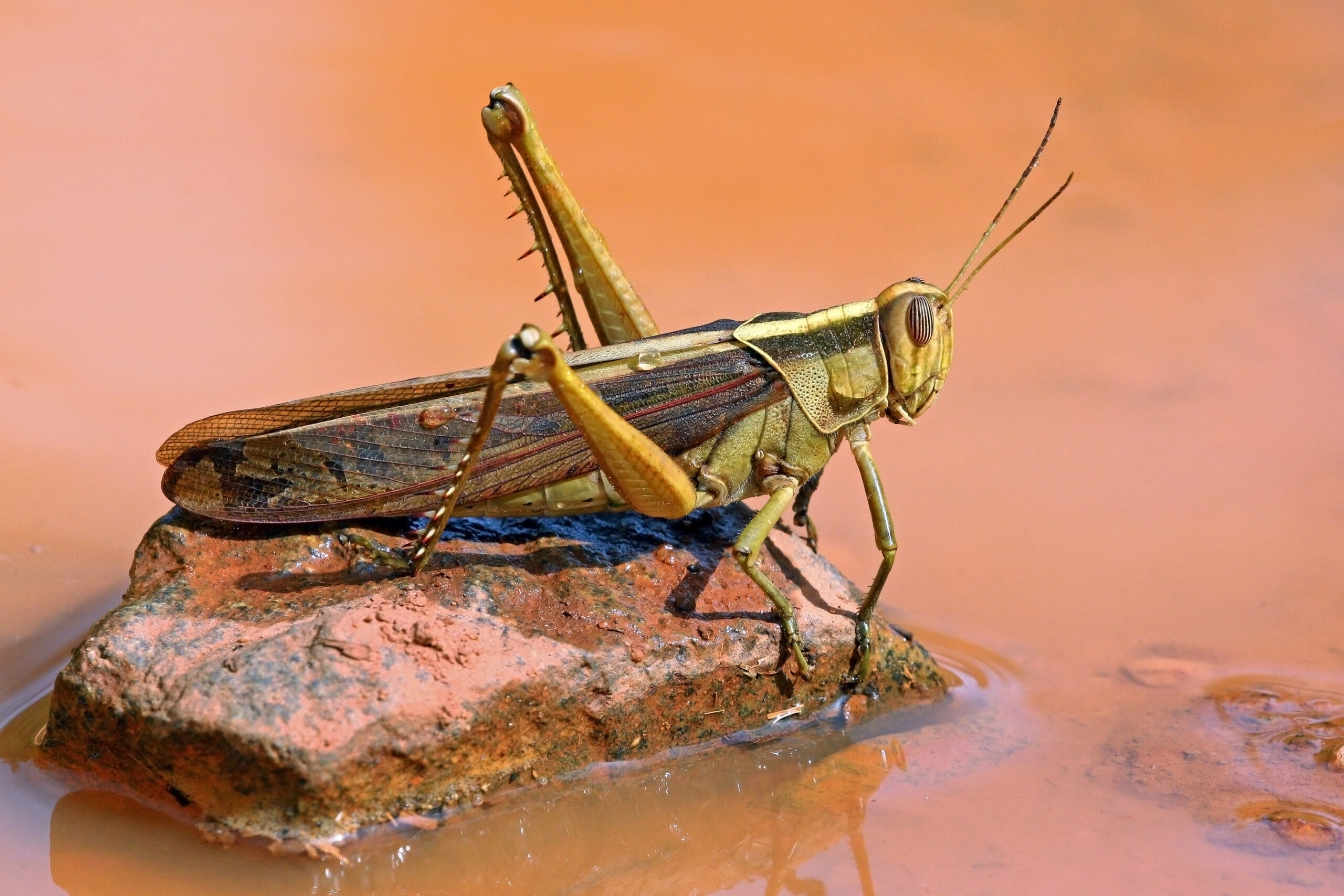 Photo Credit: Charlesjsharp / Wikimedia Commons
In the sun-drenched fields of Africa and the vast grasslands of Australia, the locust, scientifically known as Schistocerca gregaria, leaps into action. With its long, powerful hind legs, this remarkable insect can jump up to 20 times its body length, making it a master of movement. Its vibrant green and yellow body, adorned with intricate patterns, catches the eye as it flits from blade to blade, munching on grasses and leaves. But what truly sets locusts apart is their ability to transform from solitary creatures into massive swarms, a phenomenon that has fascinated scientists and nature enthusiasts alike for centuries.
As the sun rises, the locusts emerge from their hiding spots, ready to embark on a day filled with activity. In their swarming phase, they can gather in numbers so vast that they darken the sky, creating a breathtaking yet daunting sight. This behavior not only showcases their adaptability but also highlights their role as a keystone species in their ecosystems. By consuming vast amounts of vegetation, locusts help shape their environment, influencing plant growth and providing food for a variety of predators. Join us as we explore the captivating world of locusts, uncovering their life cycle, behaviors, and the impact they have on the natural world around them.
Locusts are intriguing insects that belong to the vast and diverse kingdom of Animalia. Within this kingdom, they are classified under the phylum Arthropoda, which includes all animals with jointed limbs and exoskeletons, like spiders and crabs. Locusts are part of the class Insecta, making them true insects, and they fall under the order Orthoptera, which is known for its jumping abilities and includes grasshoppers and crickets. What sets locusts apart is their unique behavior of swarming, which occurs when environmental conditions trigger a change in their social behavior, leading them to gather in large, migratory groups. This phenomenon can have significant impacts on agriculture and ecosystems, showcasing the locust’s dual role as both a marvel of nature and a challenge for human societies.
| Taxonomic Rank | Scientific Name | Meaning & Significance |
|---|---|---|
| Kingdom | Animalia | The name “Animalia” comes from the Latin word “animalis,” meaning “having breath” or “living.” This reflects the vital, breathing nature of all animals. |
| Phylum | Arthropoda | “Arthropoda” means “jointed feet” in Greek, highlighting the characteristic jointed limbs that define this diverse group, which includes insects, arachnids, and crustaceans. |
| Class | Insecta | The term “Insecta” is derived from the Latin word “insectum,” meaning “cut into sections.” This refers to the segmented body structure of insects, which is a key feature of their anatomy. |
| Order | Orthoptera | “Orthoptera” translates to “straight wings” in Greek, a nod to the straight, elongated wings of many members of this order, including locusts and grasshoppers. |
| Family | Acrididae | The name “Acrididae” comes from the Greek word “akris,” meaning “grasshopper.” This family includes many species known for their jumping abilities and herbivorous diets. |
| Genus | Locusta | “Locusta” is derived from the Latin word for “locust,” which has been used since ancient times to describe these swarming insects, emphasizing their historical significance in agriculture and culture. |
The classification of locusts reveals much about their evolutionary journey. As members of the Arthropoda phylum, they share a common ancestry with a wide array of other invertebrates, showcasing the incredible adaptability and diversity of life on Earth. Their position within the Orthoptera order highlights their specialized adaptations for jumping and swarming, which have evolved over millions of years. Understanding where locusts fit in the tree of life not only helps us appreciate their biological uniqueness but also underscores their ecological importance and the challenges they pose to human agriculture.
The evolutionary journey of locusts stretches back millions of years, tracing their lineage to ancient ancestors that roamed the Earth long before humans appeared. These insects belong to the family Acrididae, which emerged during the late Triassic period, around 200 million years ago. As they evolved, locusts adapted to various environments, showcasing their resilience and ability to thrive in changing conditions.
The earliest ancestors of locusts were likely small, wingless insects that lived in lush, green landscapes. Over time, they developed wings, allowing them to escape predators and explore new habitats. This transition to flight was crucial, as it opened up a world of opportunities for feeding and reproduction. As they continued to evolve, locusts began to exhibit a fascinating behavior known as swarming. This adaptation allowed them to gather in large groups, which not only provided safety in numbers but also made it easier to find food sources.
These evolutionary adaptations have played a vital role in the survival of locusts throughout history. Their ability to fly has allowed them to escape danger and explore new territories, while swarming behavior has provided safety and increased their chances of finding food. The capacity for rapid reproduction ensures that even in challenging environments, locust populations can rebound quickly. Together, these traits have made locusts not just survivors, but also a significant part of the ecosystems they inhabit.
When you first encounter a locust, you might be struck by its striking form and vibrant energy. These insects are built for movement, with long, powerful hind legs that allow them to leap great distances—sometimes up to 20 times their body length! Their bodies are elongated and cylindrical, giving them a streamlined appearance that aids in both flight and agility. With a head that features large, compound eyes, locusts have a wide field of vision, perfect for spotting predators or potential food sources.
| Feature | Description |
|---|---|
| Size | Typically ranges from 1 to 4 inches long, depending on the species. |
| Color | Often green or brown, providing excellent camouflage in their natural habitats. |
| Skin Type | Covered in a tough exoskeleton, which protects their body and helps prevent water loss. |
| Wings | Two pairs of wings; the front pair is thicker and serves as a protective cover for the delicate hind wings. |
| Antennas | Long, slender antennas that help them sense their environment and communicate with each other. |
These physical features work together in a remarkable way to enhance the locust’s survival. The exoskeleton not only shields them from predators but also helps them retain moisture in dry environments. Their coloration allows them to blend seamlessly into their surroundings, making it harder for birds and other hunters to spot them. The powerful legs and wings enable quick escapes and efficient travel, whether they are leaping away from danger or flying to new feeding grounds. Together, these adaptations make locusts not just survivors, but also masters of their environment.
Locusts thrive in a variety of habitats that paint a picture of life on the move. You can find them in open fields, grasslands, and even arid deserts. These environments provide the perfect backdrop for their life cycle, where they can munch on grasses and other vegetation. The sun shines brightly in these areas, and the landscape often stretches for miles, dotted with patches of green where locusts can feast and breed.
Locusts prefer warm climates, often found in regions where temperatures can soar. They thrive in areas with low to moderate rainfall, which helps keep their food sources plentiful. These insects are particularly sensitive to changes in their environment, so they flourish in places where the weather is stable and conducive to their growth. The combination of sun and occasional rain creates the ideal conditions for their swarming behavior, which can lead to massive populations.
To survive in these specific habitats, locusts have developed remarkable adaptations. Their ability to change color and behavior in response to environmental conditions is a key survival tactic. When food is abundant, they tend to be solitary and green, blending in with their surroundings. However, when resources become scarce, they can form large swarms, changing to a more yellow or brown hue. This transformation not only helps them find food more efficiently but also allows them to travel long distances in search of new habitats.
Locusts lead a life filled with activity and excitement, especially when they are in their swarming phase. Each day begins with the sun rising over their habitat, prompting these insects to emerge from their resting spots. They spend their mornings munching on grasses and other vegetation, using their strong mandibles to chew through tough plant material. As the day progresses, they engage in a variety of behaviors, including grooming their bodies to keep their wings and legs clean. This daily routine is essential for their health and mobility, allowing them to be ready for flight at a moment’s notice.
Socially, locusts are fascinating creatures that thrive in groups. When conditions are right, they form large swarms that can number in the millions. This swarm behavior is not just about numbers; it’s a complex social structure where individuals communicate through touch and chemical signals. When one locust senses danger, it can alert others, causing the entire group to take flight in unison. This collective movement not only confuses predators but also enhances their chances of finding food and suitable habitats. The bonds formed within these swarms are crucial for their survival, as they rely on each other for protection and resources.
| Behavior Type | Description |
|---|---|
| Feeding | Locusts spend their days consuming a variety of plants, which provides them with the energy needed for their active lifestyle. |
| Grooming | They regularly clean their bodies to maintain their agility and ensure their wings are in top condition for flying. |
| Swarming | During swarming, locusts gather in large groups, which helps them find food and evade predators more effectively. |
| Communication | Locusts communicate through physical contact and chemical signals, allowing them to coordinate movements and alert each other to danger. |
The behaviors of locusts are finely tuned to ensure their survival in a challenging world. By feeding in groups, they can quickly deplete food sources, but their swarming behavior allows them to move to new areas efficiently. Their grooming habits keep them healthy, while their communication skills help them stay safe from predators. Together, these activities create a dynamic lifestyle that not only supports individual locusts but also strengthens the entire swarm, making them a powerful force in nature.
Locusts are primarily herbivores, meaning they mainly eat plants. Their diet consists of a wide variety of vegetation, including grasses, leaves, and even some crops. Locusts have strong mandibles, or jaws, that allow them to chew through tough plant material. When they are in swarming phases, they can consume vast amounts of vegetation, which can significantly impact their environment. This feeding behavior not only sustains them but also plays a crucial role in shaping the ecosystems they inhabit.
| Dietary Aspect | Details |
|---|---|
| Diet Type | Herbivore |
| Favorite Foods | Grasses, leaves, and crops |
| Prey Items | None (strictly plant-based) |
| Hunting/Foraging Strategies | Chewing through vegetation with strong mandibles |
This plant-based diet not only fuels their energetic lifestyle but also influences their daily routines. Locusts spend a significant portion of their day foraging for food, which is essential for their growth and reproduction. When they swarm, their feeding habits can lead to rapid changes in the landscape, affecting other species and the overall health of their ecosystems. By consuming large amounts of vegetation, locusts play a dual role as both consumers and contributors to the cycle of life in their habitats.
When it comes to reproduction, locusts have some interesting behaviors that set them apart from many other insects. During the breeding season, which often coincides with warmer months, male locusts engage in a captivating courtship dance. They produce sounds by rubbing their wings together, a process known as stridulation. This musical display attracts females, who are selective in choosing their mates. Once a pair has formed, they will mate, and the female will begin the process of laying eggs.
| Reproductive Aspect | Details |
|---|---|
| Gestation Period | Approximately 2-3 weeks |
| Litter Size | Up to 100 eggs |
| Age of Maturity | About 4-6 weeks |
| Name of Young | Nymphs |
After the eggs are laid, they hatch into nymphs, which are miniature versions of adult locusts. These young locusts do not have wings at first and go through several molts, shedding their exoskeletons as they grow. During this time, they are quite independent and must fend for themselves, feeding on vegetation to gain strength. As they mature, nymphs develop wings and become fully grown adults, ready to join the cycle of life that includes mating and laying eggs of their own. This fascinating journey from egg to adult showcases the resilience and adaptability of locusts in their ever-changing environments.
Locusts play a significant role in the food web, serving as both herbivores and prey. As they munch on grasses and other vegetation, they help control plant growth, which in turn supports the ecosystems around them. However, their abundance also attracts a variety of predators, making them a crucial food source for many animals. This dual role highlights the delicate balance of nature, where locusts contribute to the health of their environment while also facing numerous threats.
To survive these dangers, locusts have developed several clever defensive behaviors. When threatened, they can change their color to blend in with their surroundings, a tactic known as camouflage. Additionally, their powerful legs allow them to leap away quickly from predators. In swarming phases, locusts can also create confusion among their attackers by moving in large, unpredictable groups. These strategies help them evade danger and continue their vital role in the ecosystem.
A keystone species is a vital part of an ecosystem, one whose presence and activities have a disproportionately large impact on its environment. Locusts, with their unique behaviors and feeding habits, can indeed be considered a keystone species. Their swarming behavior and herbivorous diet allow them to shape the landscapes they inhabit, influencing both plant life and the animals that rely on those plants for survival.
Locusts are known for their ability to form massive swarms that can travel long distances. When they swarm, they can consume vast amounts of vegetation in a short time. This feeding frenzy can drastically alter plant communities, promoting new growth by clearing out older, less vigorous plants. For example, after a locust swarm passes through, the landscape may see a burst of fresh plant life, which can benefit other herbivores that depend on these plants for food. Additionally, the nutrient-rich droppings of locusts contribute to soil fertility, enhancing the growth of plants in the area.
The impact of locusts extends beyond just their immediate feeding habits. They serve as a crucial food source for a variety of predators, including birds, reptiles, and small mammals. This connection helps maintain the balance of the food web, as these predators rely on locusts for sustenance. Furthermore, the presence of locusts can influence the behavior of other herbivores, as they may alter their grazing patterns to avoid competition or predation.
If locusts were to disappear from their ecosystems, the consequences could be significant. Without their herbivorous grazing, certain plant species might become overgrown, leading to a decline in biodiversity. This overgrowth could choke out other plants, disrupting the balance of the ecosystem. Additionally, predators that rely on locusts for food would face challenges, potentially leading to declines in their populations. The intricate web of life that depends on locusts would unravel, demonstrating just how crucial these small insects are to the health of their environments.
Locusts occupy a fascinating ecological niche as herbivores that can dramatically influence their environment. These insects are known for their ability to form large swarms, which can consume vast amounts of vegetation in a short time. This behavior not only affects the plants they eat but also has ripple effects throughout the ecosystem. By feeding on grasses and other plants, locusts play a crucial role in shaping the landscape and influencing the availability of resources for other species.
| Ecosystem Service | Impact |
|---|---|
| Vegetation Control | Locusts help regulate plant growth by consuming large quantities of vegetation, preventing any one species from dominating an area. |
| Soil Aeration | As locusts move through the soil while feeding, they help aerate it, which can improve water infiltration and nutrient availability for plants. |
| Food Source | Locusts serve as a vital food source for many predators, including birds, reptiles, and mammals, thus supporting the food web. |
| Nutrient Cycling | When locusts die, their bodies decompose and return nutrients to the soil, enriching it for future plant growth. |
The influence of locusts can be seen in various ecosystems around the world. For instance, in grasslands, their feeding habits can create patches of bare ground that allow new plant species to establish. This diversity can enhance the resilience of the ecosystem, making it better able to withstand changes like drought or disease. In agricultural areas, locust swarms can devastate crops, leading to significant economic impacts. However, their presence also encourages farmers to adopt more sustainable practices, such as crop rotation and integrated pest management, to mitigate damage.
Locusts are more than just pests; they are integral to the health of their ecosystems. By controlling vegetation, providing food for other animals, and contributing to nutrient cycling, they help maintain balance in their habitats. Their ability to swarm and consume large amounts of plant material can lead to both challenges and opportunities for ecosystems and human communities alike. Understanding the role of locusts helps us appreciate the complex web of life that sustains our planet.
In the intricate web of life, symbiosis plays a crucial role in shaping ecosystems. This term refers to the close interactions between different species, which can be beneficial, harmful, or neutral. These relationships can be mutualistic, where both species gain advantages; parasitic, where one benefits at the other’s expense; or commensal, where one species benefits while the other is neither helped nor harmed. Understanding these connections helps us appreciate the balance of nature and the diverse strategies organisms use to survive and thrive.
| Species/Type | Relationship Type | Description |
|---|---|---|
| Plants (e.g., grasses) | Mutualistic | Locusts feed on plants, helping to prune and stimulate new growth, while the plants benefit from nutrient cycling in the soil. |
| Birds (e.g., starlings) | Commensal | Birds often follow locust swarms, feeding on the insects that are disturbed, benefiting from the locusts without affecting them. |
| Fungi (e.g., mycorrhizae) | Mutualistic | Some locusts may interact with fungi in the soil, which help plants absorb nutrients, indirectly benefiting locusts by promoting healthy vegetation. |
These relationships have evolved over time, shaped by the needs and behaviors of the species involved. For locusts, their role as herbivores allows them to interact closely with plants, creating a cycle of growth and consumption that supports both their survival and the health of their environment. Meanwhile, the presence of birds and other animals that take advantage of locust swarms illustrates the interconnectedness of life. Each partnership highlights the delicate balance of ecosystems, where every species plays a part in the grand story of nature.
Locusts are more than just grasshoppers; they are fascinating insects with surprising behaviors and adaptations that can leave anyone in awe. Here are some intriguing facts that showcase their remarkable nature.
Throughout history, locusts have held a significant place in human culture and experience. These insects have been both revered and reviled, often appearing in ancient texts and folklore. In many cultures, locusts symbolize abundance and prosperity, as their swarming behavior can lead to a bountiful harvest. However, they are also notorious for their destructive swarms that can devastate crops and threaten food security. This duality has made locusts a subject of fascination and fear, shaping human perceptions and interactions with them over centuries.
In modern times, the relationship between locusts and humanity has evolved, reflecting both conflict and cooperation. On one hand, locust swarms can lead to agricultural disasters, prompting efforts to control their populations through pesticides and other methods. On the other hand, some communities have begun to explore the potential of locusts as a sustainable food source, recognizing their high protein content and nutritional value. Conservationists are also studying locusts to understand their role in ecosystems, aiming to balance their impact on agriculture with their ecological importance.
As we look to the future, the relationship between locusts and humanity is likely to continue evolving. With the growing challenges of climate change and food security, understanding locust behavior and ecology will be crucial. By finding ways to coexist with these remarkable insects, we can harness their potential while mitigating their destructive impacts. This balance will not only benefit agriculture but also enrich our understanding of the intricate connections within our ecosystems.
The conservation status of locusts is currently classified as “Least Concern” by the International Union for Conservation of Nature (IUCN). This means that, overall, locust populations are stable and not facing immediate threats of extinction. However, their numbers can fluctuate dramatically due to environmental factors and human activities. While some species may experience local declines, the general trend for locusts is one of resilience, allowing them to thrive in various habitats around the world.
| Conservation Factor | Status/Details |
|---|---|
| IUCN Status | Least Concern |
| Population Estimates | Stable, varies by species |
| Trend Direction | Generally stable, with local fluctuations |
Locusts face several threats that can impact their populations, particularly in specific regions. Habitat loss due to agricultural expansion and urban development can reduce the areas where locusts can thrive. Additionally, climate change is altering weather patterns, which can affect their breeding cycles and food availability. Pesticide use in farming can also pose a significant risk, as it may not only target locusts but also disrupt the delicate balance of their ecosystems.
Conservation efforts for locusts focus on understanding their behavior and ecology to manage their populations effectively. Researchers are studying their swarming patterns and life cycles to develop strategies that can mitigate the impact of swarms on agriculture while ensuring the insects remain a vital part of their ecosystems. With continued research and awareness, the outlook for locusts remains positive, as they adapt to changing environments and maintain their role in the natural world.
| Question | Answer |
|---|---|
| What is a locust's habitat? | Locusts are found in a variety of habitats, including grasslands, savannas, and even some agricultural areas. They thrive in warm climates where there is plenty of vegetation for them to eat. |
| What do locusts eat? | Locusts are herbivores, which means they primarily eat plants. Their diet mainly consists of grasses, leaves, and crops, making them important for the ecosystem but also potential pests for farmers. |
| How do locusts behave in swarms? | When conditions are right, locusts can form large swarms that can travel great distances. In these swarms, they exhibit a behavior called gregariousness, where they become more social and can change color and behavior to adapt to their environment. |
| How do locusts reproduce? | Locusts reproduce by laying eggs in the soil, where they develop into nymphs. These nymphs go through several molts, or stages of growth, before becoming adults, which can take a few weeks depending on the species and environmental conditions. |
| What are the threats to locust populations? | While locusts are currently classified as Least Concern, they face threats from habitat loss and climate change. Changes in weather patterns can affect their breeding and food availability, leading to population declines. |
| What is an interesting characteristic of locusts? | One fascinating feature of locusts is their ability to change color and behavior when they swarm. This transformation helps them adapt to living in large groups, making them more efficient at finding food and avoiding predators. |
| How do locusts impact agriculture? | Locusts can have a significant impact on agriculture, especially when they swarm. A large swarm can consume vast amounts of crops in a short time, leading to food shortages and economic challenges for farmers. |