Taxonomy & Classification
- Kingdom
- Animalia
- Phylum
- Chordata
- Class
- Aves
- Order
- Anseriformes
- Family
- Anatidae
- Genus
- Anas
- Species
- Anas platyrhynchos

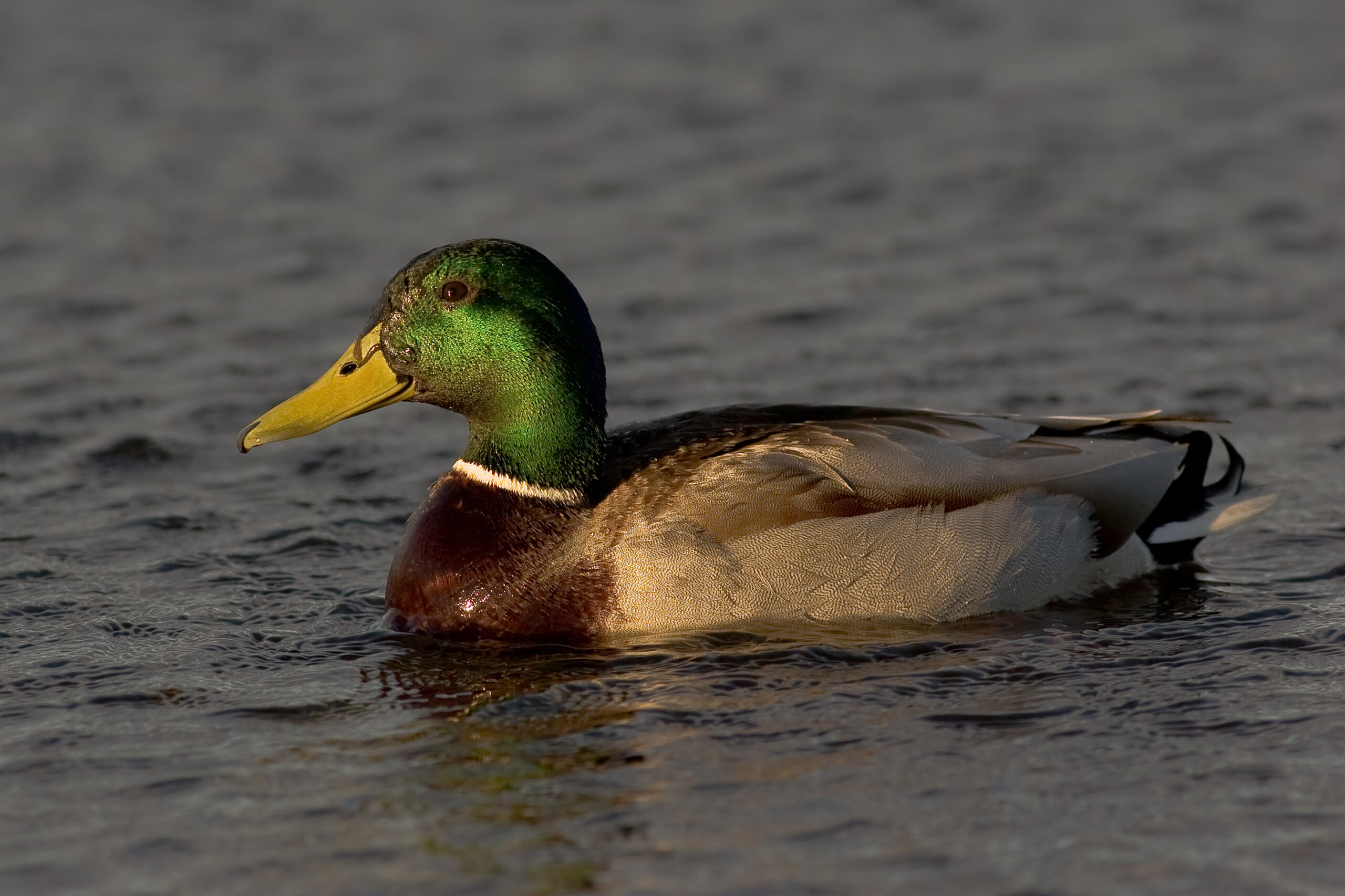 Photo Credit: Thermos / Wikimedia Commons
In the shimmering waters of ponds and lakes, the Mallard, scientifically known as Anas platyrhynchos, glides gracefully, captivating all who catch a glimpse. With its striking iridescent green head and a body adorned in a mix of browns and whites, this duck is a true marvel of nature. Males are particularly eye-catching, their vibrant plumage reflecting sunlight like a jewel, while females sport a more muted palette, perfect for blending into their surroundings. This beautiful contrast not only enchants birdwatchers but also serves a purpose in the wild, as it helps protect the females and their young from predators.
The Mallard is more than just a pretty face; it plays a vital role in its ecosystem. Found in a variety of habitats, from tranquil ponds to bustling wetlands, these ducks are omnivores, meaning they eat both plants and small animals. This adaptability allows them to thrive in diverse environments, making them a common sight in parks and natural areas around the world. Scientists and nature enthusiasts alike are drawn to the Mallard not only for its beauty but also for its fascinating behaviors, such as their elaborate courtship displays and social interactions. As we explore the world of the Mallard, we will uncover the secrets of its life cycle, diet, and the important role it plays in maintaining the balance of its ecosystem.
The Mallard, known scientifically as Anas platyrhynchos, holds a special place in the animal kingdom. This common duck is not just a familiar sight in parks and ponds; it represents a significant branch of the evolutionary tree. As a member of the class Aves, or birds, the Mallard showcases the incredible diversity of life on Earth. Its adaptability to various habitats and its striking plumage make it a standout among waterfowl. The Mallard’s ability to thrive in both wild and urban environments speaks to its resilience and versatility, traits that have allowed it to flourish across the globe.
| Taxonomic Rank | Scientific Name | Meaning & Significance |
|---|---|---|
| Kingdom | Animalia | This name signifies that Mallards belong to the broad group of multicellular organisms that are heterotrophic, meaning they consume organic material for energy. |
| Phylum | Chordata | Chordata refers to animals that have a notochord, a flexible rod that supports the body. In Mallards, this structure is present during early development. |
| Class | Aves | Aves is the class that includes all birds. The name comes from the Latin word for bird, highlighting the Mallard’s feathers, beak, and ability to fly. |
| Order | Anseriformes | This order includes ducks, geese, and swans. The name is derived from the Latin word “anser,” meaning goose, reflecting the Mallard’s close relatives. |
| Family | Anatidae | Anatidae is the family that encompasses all ducks and swans. The name comes from the Latin “anas,” meaning duck, which is fitting for the Mallard. |
| Genus | Anas | The genus name Anas is Latin for duck, emphasizing the Mallard’s characteristics as a typical waterfowl. |
| Species | platyrhynchos | This species name means “flat bill” in Greek, referring to the Mallard’s distinctive broad beak, which is perfect for dabbling in water. |
Understanding the Mallard’s taxonomic classification reveals much about its evolutionary journey. As a member of the Anatidae family, it shares a common ancestor with other waterfowl, showcasing adaptations that have allowed it to thrive in diverse environments. The Mallard’s flat bill and dabbling behavior are not just quirks; they are evolutionary traits that enhance its survival. This classification not only highlights the Mallard’s physical attributes but also connects it to a rich history of adaptation and resilience in the face of changing ecosystems.
The evolutionary journey of the Mallard, or Anas platyrhynchos, stretches back millions of years, weaving through a rich tapestry of change and adaptation. This duck belongs to the family Anatidae, which includes all waterfowl, and its ancestors can be traced to the late Eocene epoch, around 40 million years ago. Over time, these early birds evolved into various forms, leading to the diverse species we see today.
The Mallard’s lineage began with small, primitive waterfowl that inhabited ancient wetlands. These ancestral ducks gradually adapted to their environments, developing features that would help them thrive in diverse habitats. One major transition occurred as they evolved from land-dwelling birds to proficient swimmers and divers, enhancing their ability to forage for food in aquatic settings. This shift was crucial, as it allowed them to exploit a wider range of food sources, from aquatic plants to small fish and insects.
These adaptations have played a vital role in the Mallard’s success as a species. Their webbed feet and streamlined bodies allow them to navigate water with ease, while their colorful plumage aids in both attracting mates and blending into their surroundings. The ability to consume a wide range of foods means they can thrive in various habitats, from urban parks to remote wetlands. Finally, their migratory instincts ensure they can find the best conditions for breeding and feeding, allowing them to flourish across continents. Through these evolutionary changes, the Mallard has become one of the most recognizable and resilient birds in the world.
The Mallard is a striking bird that captures attention with its vibrant colors and graceful form. Males are particularly eye-catching, showcasing a brilliant iridescent green head that glimmers in the sunlight. Their bodies are robust and streamlined, designed for both swimming and flying. With a stout neck and a broad, flat bill, these ducks are perfectly adapted to their aquatic lifestyle. Females, while less flamboyant, possess a warm brown plumage that provides excellent camouflage among reeds and grasses, allowing them to blend seamlessly into their surroundings.
| Feature | Description |
|---|---|
| Weight | 38g on average (0.084 pounds) |
| Skin Type | Feathers |
| Most Distinctive Feature | Iridescent green or blue-headed plumage of the male |
These physical characteristics work together to enhance the Mallard’s survival in various environments. The male’s vibrant plumage is not just for show; it plays a crucial role in attracting mates during the breeding season. Meanwhile, the female’s muted colors help her stay hidden from predators while she nests. Their lightweight bodies and strong wings allow for agile flight, making it easier to escape danger or migrate to new habitats. Together, these features create a perfect balance of beauty and practicality, ensuring the Mallard thrives in both urban parks and wild wetlands.
The Mallard, a beloved waterfowl, thrives in a variety of habitats that paint a picturesque scene of nature’s beauty. Imagine serene wetlands, shimmering lakes, meandering streams, and tranquil ponds, all serving as the perfect backdrop for these ducks. With their graceful gliding and playful splashes, Mallards bring life to these watery environments, where they forage for food and socialize with their feathered friends.
These adaptable birds prefer climates that offer a mix of fresh water and lush vegetation. They thrive in areas where the temperature can vary, from the cool breezes of northern lakes to the warmer waters of southern ponds. Mallards are often found in regions with abundant food sources, such as aquatic plants, insects, and small fish, which are essential for their diet. They enjoy habitats that provide shelter from predators and harsh weather, making wetlands and marshes ideal homes.
Over time, Mallards have developed remarkable adaptations to their environments. Their webbed feet make them excellent swimmers, allowing them to navigate through water with ease. Their broad, flat bills are perfectly designed for dabbling, which means they can tip forward to reach underwater plants and insects. Additionally, their ability to thrive in diverse habitats has made them one of the most widespread duck species in the world, showcasing their resilience and versatility in the face of changing environments.
As the sun rises, the Mallard begins its day with a series of activities that are both routine and essential. These ducks are early risers, often seen gliding across the water’s surface or dabbling for food. They forage for aquatic plants, insects, and small crustaceans, using their broad bills to sift through mud and water. Throughout the day, they alternate between swimming, resting, and preening their feathers to keep them waterproof and in top condition. This daily rhythm helps them maintain their energy and stay healthy.
Socially, Mallards are highly interactive birds that thrive in groups, known as flocks. These flocks can vary in size, from just a few individuals to dozens or even hundreds. Within these groups, they communicate through a variety of quacks, whistles, and grunts, each sound serving a different purpose. For instance, a loud quack might signal alarm, while softer sounds can indicate comfort and companionship. The social structure is fluid, with individuals often changing positions within the flock, which helps strengthen bonds and ensures safety in numbers.
| Behavior Type | Description |
|---|---|
| Foraging | Mallards search for food by dabbling, using their bills to filter out plants and small creatures from the water. |
| Flocking | They gather in groups, which provides safety from predators and enhances social interactions. |
| Communication | Mallards use a range of vocalizations, including quacks and whistles, to convey messages to one another. |
| Preening | They spend time grooming their feathers to maintain waterproofing and insulation, which is vital for their survival. |
These behaviors are not just interesting; they are crucial for the Mallard’s survival. By foraging effectively, they ensure they have enough energy to thrive. Social interactions within flocks provide safety from predators, as there is strength in numbers. Communication helps them coordinate activities and alert each other to danger. Together, these daily habits create a well-rounded lifestyle that supports their health and well-being in the wild.
The Mallard is an omnivorous bird, meaning it enjoys a varied diet that includes both plant and animal matter. This adaptability in eating habits allows the Mallard to thrive in diverse environments. It often forages in shallow waters, dabbling to reach aquatic plants and small creatures. With its broad, flat bill, the Mallard can sift through mud and water to find tasty morsels, making it a skilled forager.
| Dietary Aspect | Details |
|---|---|
| Diet Type | Omnivore |
| Favorite Foods | Vegetation, insects, worms, and snails |
| Prey Items | Small aquatic animals and plant matter |
| Hunting/Foraging Strategies | Dabbling in water, sifting through mud, and grazing on land |
The Mallard’s diverse diet plays a crucial role in its ecology and daily routine. By consuming a mix of plants and small animals, it helps maintain the balance of its habitat, contributing to the health of wetland ecosystems. This adaptability not only supports the Mallard’s survival but also influences its behavior, as it must constantly search for food throughout the day, often leading to social interactions with other ducks.
As spring approaches, the Mallard duck engages in a lively courtship ritual that captivates onlookers. Males display their vibrant plumage and perform elaborate dances to attract females. This mating behavior is not just for show; it plays a crucial role in ensuring the continuation of their species. The breeding season typically begins in late winter and can extend into early summer, depending on the region. During this time, pairs form strong bonds, and the female prepares to lay her eggs.
| Reproductive Aspect | Details |
|---|---|
| Gestation Period | 28 to 30 days |
| Litter Size | 8 to 12 eggs |
| Age of Maturity | 6 to 7 months |
| Name of Young | Ducklings |
Once the eggs are laid, the female Mallard takes on the role of a dedicated mother. She incubates the eggs, keeping them warm and safe until they hatch. After about 28 to 30 days, the ducklings emerge, fluffy and ready to explore the world. These young birds are precocial, meaning they are relatively mature and mobile shortly after hatching. They quickly learn to swim and forage for food alongside their mother. Over the next few months, the ducklings grow rapidly, developing the skills they need to thrive in their environment. By the time they reach six to seven months of age, they are ready to take on the world as independent adults, continuing the cycle of life for the Mallard.
The Mallard, a common yet captivating waterfowl, occupies a vital role in the food web. As both a herbivore and a prey species, it helps maintain the balance of its ecosystem. While it grazes on aquatic plants and insects, it also finds itself on the menu for various predators. This dual role highlights the interconnectedness of life in wetlands and waterways, where every creature plays a part in the grand tapestry of nature.
To survive these threats, the Mallard has developed several clever defensive behaviors. When danger approaches, these ducks often rely on their ability to take flight quickly, using their strong wings to escape. They also have a knack for blending into their surroundings, thanks to their mottled brown feathers, which provide excellent camouflage against predators. Additionally, Mallards are known to be social birds, often gathering in groups, which can help them spot threats more easily. By staying alert and using their natural instincts, Mallards continue to thrive despite the challenges they face.
A keystone species is an organism that plays a crucial role in maintaining the structure of its ecosystem. Its presence or absence can significantly impact the environment and the other species that inhabit it. The Mallard, scientifically known as Anas platyrhynchos, qualifies as a keystone species due to its influence on both the aquatic and terrestrial ecosystems where it resides.
Mallards are omnivores, meaning they eat a variety of foods, including plants, insects, and small fish. This diverse diet allows them to thrive in various habitats, such as wetlands, lakes, streams, and ponds. By foraging for food, they help control aquatic plant growth, which can prevent overgrowth that might choke waterways. Additionally, their feeding habits stir up sediment, which can enhance nutrient cycling in the water, benefiting other organisms like fish and aquatic invertebrates.
Moreover, Mallards serve as a food source for numerous predators, including foxes, raccoons, and birds of prey. Their presence supports a complex food web, where the health of predator populations is linked to the availability of Mallards. Furthermore, as they migrate, they contribute to seed dispersal, helping to spread plant species across different regions. This movement not only aids in plant reproduction but also promotes biodiversity in various ecosystems.
If Mallards were to disappear from their ecosystems, the effects would ripple through the food web. Predators that rely on them for food would struggle to find sustenance, potentially leading to declines in their populations. Without Mallards to help manage plant growth, aquatic environments could become overrun with vegetation, disrupting habitats for fish and other wildlife. The loss of this adaptable duck would not only diminish the beauty of wetlands but also threaten the balance of life that depends on its presence.
The Mallard, or Anas platyrhynchos, occupies a vital ecological niche as a versatile waterfowl found in wetlands, lakes, streams, and ponds. This adaptable bird plays a significant role in its environment, influencing both the aquatic and terrestrial ecosystems around it. By foraging for food and interacting with other species, the Mallard helps maintain the balance of its habitat, making it an essential player in the intricate web of life.
| Ecosystem Service | Impact |
|---|---|
| Seed Dispersal | Mallards consume seeds from aquatic plants and later excrete them, helping to spread these plants across different areas. |
| Nutrient Cycling | As omnivores, Mallards contribute to nutrient cycling by breaking down organic matter and returning nutrients to the water. |
| Food Source | Mallards serve as prey for various predators, including foxes, hawks, and humans, supporting the food web. |
| Habitat Maintenance | By grazing on vegetation, they help control plant growth, which can prevent overgrowth and maintain open water areas. |
The influence of Mallards extends beyond their immediate surroundings. For instance, when they dabble in the water, they stir up sediment, which can help release nutrients that support the growth of algae and aquatic plants. This process not only benefits the Mallards by providing food but also supports other species that rely on these plants for shelter and sustenance. Additionally, their nesting habits can create microhabitats for insects and other small creatures, further enriching the ecosystem.
The broader ecological importance of the Mallard cannot be overstated. As a keystone species, their presence helps maintain the structure of their ecosystem, ensuring that various plant and animal communities thrive. By supporting nutrient cycling, seed dispersal, and serving as a food source, Mallards contribute to the health and stability of wetlands and other aquatic environments. Their adaptability and interactions with the ecosystem highlight the interconnectedness of life, reminding us of the delicate balance that sustains our natural world.
In the intricate web of nature, symbiosis refers to the close and often long-term interactions between different species. These relationships can take many forms, including mutualism, where both species benefit, parasitism, where one benefits at the other’s expense, and commensalism, where one benefits while the other is neither helped nor harmed. The Mallard, a familiar and adaptable waterfowl, engages in various ecological partnerships that highlight the interconnectedness of life in wetlands, lakes, and ponds.
| Species/Type | Relationship Type | Description |
|---|---|---|
| Water lilies | Mutualistic | Mallards help disperse the seeds of water lilies while feeding on their leaves, promoting plant growth. |
| Leeches | Parasitic | Leeches may attach to Mallards to feed on their blood, which can weaken the birds if the infestation is severe. |
| Small fish | Commensal | Small fish often benefit from the disturbances caused by Mallards foraging, as they can find food stirred up from the bottom. |
These relationships have evolved over time, shaped by the needs and behaviors of the species involved. The Mallard’s interactions with water lilies illustrate a beautiful example of mutualism, where both species thrive together. Meanwhile, the presence of leeches highlights the darker side of nature, where one organism can take advantage of another. The commensal relationship with small fish shows how interconnected ecosystems can be, with one species benefiting from the actions of another without causing harm. Understanding these dynamics helps us appreciate the delicate balance of life in our natural world.
The Mallard duck, a familiar sight in parks and ponds, is full of surprises that even seasoned nature enthusiasts might not know. This adaptable bird has a rich history and fascinating behaviors that make it truly special.
The Mallard duck, known scientifically as Anas platyrhynchos, has a long and storied relationship with humanity that dates back thousands of years. These ducks have been depicted in ancient art and literature, symbolizing everything from tranquility to abundance. In many cultures, they are celebrated for their beauty and grace, often appearing in folklore and traditional stories. As a common waterfowl, Mallards have been a source of food and inspiration for people around the world, making them a significant part of human history and culture.
Today, our interactions with Mallards are multifaceted, ranging from conservation efforts to conflicts over habitat. As urban areas expand, these adaptable ducks often find themselves living in parks and ponds, where they are both cherished and challenged. While many people enjoy feeding them and observing their antics, others may inadvertently disrupt their nesting sites or compete for resources. Additionally, domestication has led to various breeds of Mallards, which are raised for their meat and eggs. This relationship highlights the delicate balance between enjoying nature and protecting it.
As we look to the future, the relationship between Mallards and humanity will likely continue to evolve. With increasing awareness of environmental issues, more people are advocating for the protection of wetlands and the habitats that support these ducks. By fostering a deeper understanding of their role in ecosystems, we can ensure that Mallards thrive alongside us. This partnership can lead to a more harmonious coexistence, where both humans and Mallards benefit from a healthy, vibrant environment.
The Mallard, a beloved waterfowl found in parks and wetlands around the world, currently holds a conservation status of “Least Concern.” This means that, overall, the species is not facing immediate threats to its survival. While specific population estimates are difficult to pinpoint, the Mallard is known for its adaptability and resilience, which have contributed to stable population trends in many areas.
| Conservation Factor | Status/Details |
|---|---|
| IUCN Status | Least Concern |
| Estimated Population Size | Unknown |
| Population Trend | Stable |
Despite its current stable status, the Mallard faces several challenges that could impact its future. Habitat loss is a significant threat, as wetlands and natural water bodies are often drained for agriculture or urban development. Additionally, pollution from chemicals and plastics can harm their habitats and food sources. Climate change also poses risks, altering migration patterns and breeding seasons, which can disrupt their life cycle.
Conservation efforts are underway to protect the Mallard and its habitats. Organizations are working to restore wetlands and promote sustainable land use practices. Public awareness campaigns help educate communities about the importance of preserving natural spaces for wildlife. With these initiatives, the outlook for the Mallard remains positive, as its adaptability and the commitment of conservationists continue to support its thriving populations.
| Question | Answer |
|---|---|
| What is the habitat of the Mallard? | Mallards are commonly found in wetlands, lakes, streams, and ponds. They prefer areas with plenty of vegetation, which provides food and shelter. These habitats are essential for their survival, especially during breeding season. |
| What do Mallards eat? | Mallards are omnivores, meaning they eat both plants and animals. Their diet includes aquatic plants, seeds, insects, and small fish. This varied diet helps them thrive in different environments. |
| How do Mallards behave in the wild? | Mallards are social birds and often gather in groups called flocks. They are known for their quacking calls, especially the females. These ducks are also strong fliers and can travel long distances during migration. |
| How do Mallards reproduce? | Mallards typically mate in the spring. The female builds a nest near water, laying about 8 to 12 eggs. After about 28 days of incubation, the ducklings hatch and are able to swim and feed themselves shortly after. |
| What threats do Mallards face? | While Mallards are currently listed as Least Concern, they face threats from habitat loss and pollution. Human activities, such as urban development and agriculture, can reduce their natural habitats. Additionally, they are vulnerable to hunting and predation. |
| What is a distinctive feature of the Mallard? | The male Mallard is easily recognized by its iridescent green or blue-headed plumage. This striking coloration is not just for show; it plays a role in attracting females during mating season. The females, on the other hand, have mottled brown feathers for camouflage. |
| Are Mallards migratory birds? | Yes, many Mallards are migratory. They typically migrate south for the winter to find warmer climates and more abundant food sources. Their migration patterns can vary based on the region and environmental conditions. |