Taxonomy & Classification
- Kingdom
- Animalia
- Phylum
- Cnidaria
- Class
- Hydrozoa
- Order
- Siphonophorae
- Family
- Physaliidae
- Genus
- Physalia
- Species
- Physalia physalis

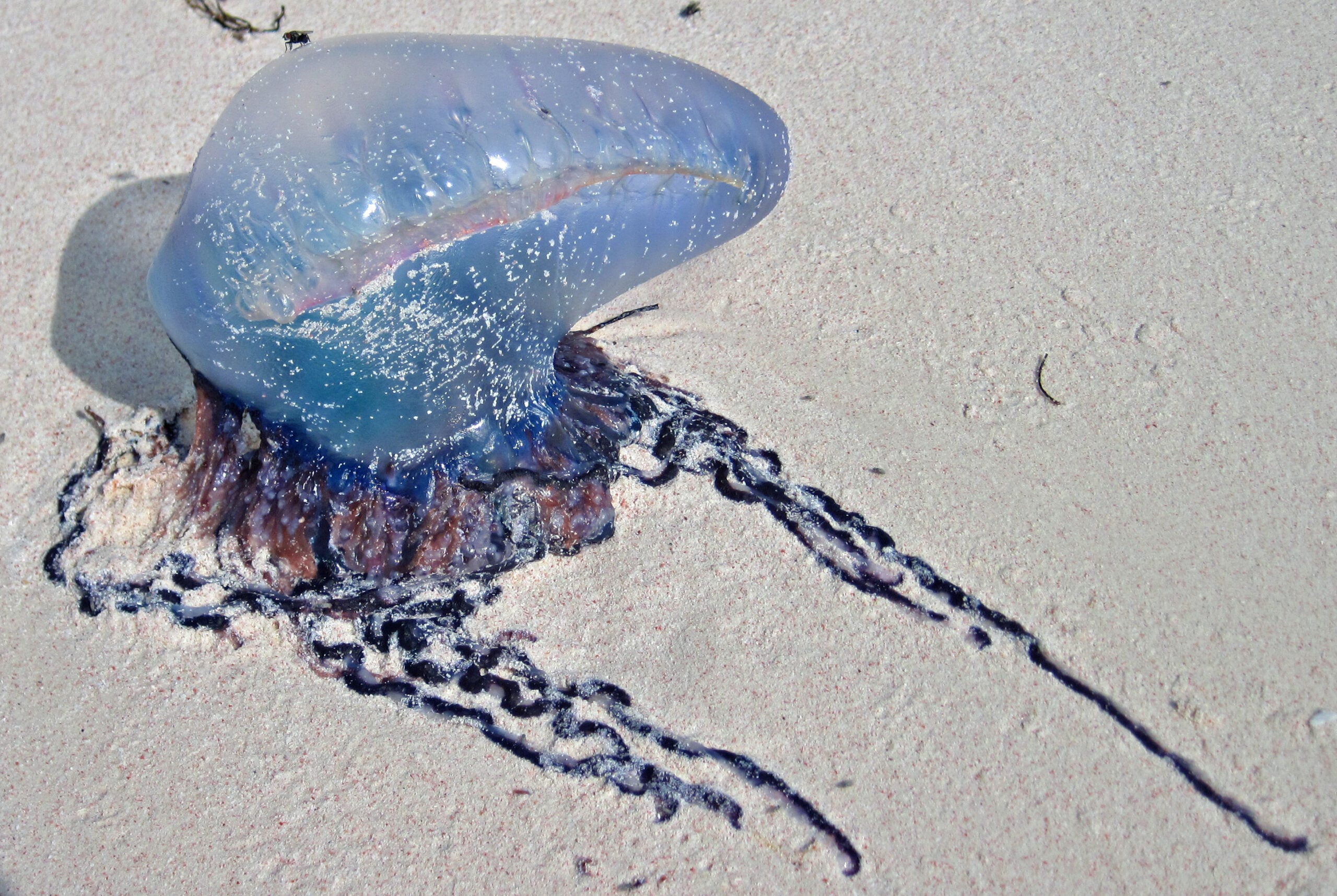 Photo Credit: Natuur12 / Wikimedia Commons
In the shimmering blue expanse of tropical and sub-tropical oceans, the Man of War jellyfish, scientifically known as Physalia, drifts gracefully through the waves. This mesmerizing marine organism is not a single creature but a colony of specialized polyps and medusoids, each playing a unique role in its survival. With its vibrant, balloon-like float and long, trailing tentacles that can stretch for meters, the Man of War is a stunning sight, captivating the attention of both scientists and nature enthusiasts alike. Its brilliant colors, ranging from deep blues to striking purples, make it look like a living piece of art, floating effortlessly in the sun-drenched waters.
What truly fascinates researchers about the Man of War is its complex lifestyle and the role it plays in the ocean’s ecosystem. As a carnivore, it captures small fish, shrimp, and plankton with its stinging tentacles, showcasing a remarkable adaptation for survival. The Man of War jellyfish is not just a beautiful spectacle; it is a vital part of the marine food web, influencing the populations of other sea creatures. With a history that stretches back hundreds of millions of years, Physalia offers a glimpse into the ancient past of our oceans, making it a subject of ongoing study and wonder. As we dive deeper into the world of the Man of War jellyfish, we uncover the secrets of its life cycle, its interactions with other marine species, and its importance in the delicate balance of ocean ecosystems.
The Man of War jellyfish, scientifically known as Physalia, occupies a fascinating position in the tree of life. It belongs to the kingdom Animalia, which includes all animals, and is classified under the phylum Cnidaria. This group is known for its stinging cells, called nematocysts, which help capture prey and defend against predators. What sets the Man of War apart is that it is not a true jellyfish but a colonial organism made up of specialized polyps and medusoids that work together as one. This unique structure allows it to float gracefully on the ocean’s surface, resembling a colorful sail, while its long tentacles trail below, ready to ensnare unsuspecting fish.
| Taxonomic Rank | Scientific Name | Meaning & Significance |
|---|---|---|
| Kingdom | Animalia | The kingdom of all animals, highlighting its status as a living organism. |
| Phylum | Cnidaria | Derived from the Greek word “knide,” meaning “nettle,” referring to the stinging cells that define this group. |
| Class | Hydrozoa | From the Greek “hydra,” meaning “water,” indicating its aquatic habitat and connection to other water-dwelling organisms. |
| Order | Siphonophorae | From the Greek “siphon,” meaning “tube,” and “phorein,” meaning “to bear,” describing the tubular structures that help it float and capture prey. |
| Family | Physaliidae | Named after the genus Physalia, which comes from the Greek “physa,” meaning “bladder,” referring to its gas-filled float. |
| Genus | Physalia | Reflects its unique buoyant structure, resembling a sail, which allows it to navigate the ocean’s surface. |
The classification of the Man of War jellyfish reveals much about its evolutionary journey. As a member of the Cnidaria phylum, it shares a lineage with other intriguing marine animals, such as corals and sea anemones. Its colonial nature showcases an advanced form of cooperation among individual organisms, hinting at the complex evolutionary strategies that have developed in the ocean. This remarkable adaptation not only allows the Man of War to thrive in diverse marine environments but also highlights the intricate relationships that exist within the animal kingdom.
The evolutionary journey of the Man of War jellyfish, or Physalia, stretches back hundreds of millions of years, placing it among some of the oldest living organisms on Earth. These intriguing marine animals are not true jellyfish but rather colonial organisms, meaning they are made up of specialized polyps that work together as one. Their story begins in the ancient oceans, where simple life forms gradually evolved into more complex structures.
The ancestors of the Man of War jellyfish were likely simple, free-swimming organisms resembling modern-day hydroids. Over time, these early creatures developed a unique adaptation: the ability to form colonies. This transition allowed them to combine their strengths, with different polyps taking on specific roles, such as capturing prey or aiding in reproduction. This cooperative lifestyle was a significant leap in evolution, enabling them to thrive in diverse marine environments.
The adaptations of the Man of War jellyfish have been crucial for its survival in the vast and often perilous ocean. By forming a colony, it maximizes its chances of capturing food and reproducing successfully. The gas-filled bladder allows it to float effortlessly, while its stinging tentacles provide both a means of hunting and a defense mechanism against larger threats. Together, these features have enabled the Man of War to thrive in a variety of marine habitats, showcasing the power of evolution in shaping life on our planet.
The Man of War jellyfish is a stunning spectacle of the ocean, often mistaken for a single organism but actually a colony of specialized polyps and medusoids working together. Its most striking feature is the large, floating, balloon-like structure that sits atop the water, filled with gas to keep it buoyant. This vibrant, translucent body can be a dazzling blue or purple, creating a mesmerizing sight as it drifts gracefully through the waves. Below this sail-like structure, long, trailing tentacles extend, swaying gently in the water, ready to capture unsuspecting prey.
| Feature | Description |
|---|---|
| Size | Can reach up to 12 inches (30 cm) in length, with tentacles extending much longer. |
| Color | Typically blue or purple, with a translucent appearance that glimmers in sunlight. |
| Skin Type | Soft, gelatinous skin that is both flexible and delicate. |
| Most Distinctive Feature | A large, air-filled bladder that resembles a floating balloon, allowing it to sail on the ocean surface. |
These features work together to create a highly effective survival strategy. The buoyant bladder allows the Man of War to float effortlessly, using ocean currents to travel long distances without expending much energy. Its vibrant colors can serve as a warning to potential predators, signaling that it is not a safe meal. Meanwhile, the long tentacles are equipped with stinging cells that can paralyze prey, ensuring that this fascinating organism can capture food while remaining a captivating sight in the ocean’s depths.
The Man of War jellyfish thrives in the warm, inviting waters of tropical and sub-tropical oceans. Picture a sun-drenched sea, where the waves gently lap against the shore, and the water sparkles like a million tiny diamonds. This vibrant habitat is rich in life, with colorful coral reefs and schools of fish darting about. The Man of War drifts gracefully through these waters, often found floating near the surface, where it can catch the sunlight and the attention of curious onlookers.
To flourish in its environment, the Man of War jellyfish requires warm waters, typically ranging from 20 to 30 degrees Celsius (68 to 86 degrees Fahrenheit). These temperatures are ideal for its survival and reproduction. The jellyfish is also sensitive to changes in salinity, which is the saltiness of the water. It prefers areas where the water is not too fresh and not too salty, allowing it to maintain its buoyancy and thrive in its oceanic home.
Over time, the Man of War has developed remarkable adaptations to suit its habitat. Its long, trailing tentacles are equipped with specialized cells that can sting and capture prey, providing it with food in the nutrient-rich waters. The gas-filled bladder, or float, allows it to stay near the surface, where sunlight is abundant. This clever design not only helps it to catch food but also makes it a striking sight for anyone lucky enough to spot it. By perfectly aligning its biology with its environment, the Man of War jellyfish continues to be a captivating part of the ocean’s ecosystem.
The Man of War jellyfish leads a life that is both captivating and complex. Each day, it drifts gracefully through the warm waters of the ocean, propelled by the wind and currents. This creature is not a true jellyfish but a colonial organism made up of specialized polyps and medusoids, each with its own role. The Man of War spends its time floating near the surface, where it can catch sunlight and hunt for food. Its long, trailing tentacles, which can extend up to 30 feet, are always ready to capture unsuspecting prey like small fish and plankton.
Socially, the Man of War jellyfish operates in groups known as legions. These legions can consist of hundreds of individuals, all working together to survive in the vast ocean. While they may seem like solitary drifters, they rely on one another for protection and hunting efficiency. Communication among these jellyfish is subtle, relying on the movement of their bodies and the currents around them. When one member of the legion senses danger, it can signal the others to retreat or change direction, showcasing a remarkable level of cooperation.
| Behavior Type | Description |
|---|---|
| Daily Activities | Drifting through warm waters, hunting for small fish and plankton using long tentacles. |
| Social Structure | Forms legions, consisting of many individuals that work together for hunting and protection. |
| Communication Methods | Uses body movements and currents to signal danger or changes in direction to other members. |
The behaviors of the Man of War jellyfish are essential for its survival in the ocean. By forming legions, these creatures enhance their chances of finding food and avoiding predators. Their ability to communicate through subtle movements allows them to respond quickly to threats, ensuring that they can navigate the challenges of their underwater world. In this way, the Man of War jellyfish exemplifies the beauty of cooperation in nature, thriving in a complex ecosystem where every member plays a vital role.
The Man of War jellyfish is a carnivore, meaning it primarily eats other animals. This fascinating marine organism has a diet that consists mainly of small fish, shrimp, and plankton. It captures its prey using long, stinging tentacles that can deliver a painful sting to unsuspecting creatures. When a small fish or shrimp swims too close, the Man of War uses its tentacles to ensnare the prey, injecting venom that paralyzes it. This clever hunting strategy allows the jellyfish to feed efficiently while drifting through the ocean.
| Dietary Aspect | Details |
|---|---|
| Diet Type | Carnivore |
| Favorite Foods | Small fish, shrimp, plankton |
| Prey Items | Small fish, shrimp, various types of plankton |
| Hunting/Foraging Strategies | Uses stinging tentacles to capture prey; relies on currents to drift into feeding areas |
The diet of the Man of War jellyfish plays a crucial role in its ecological niche. By preying on small fish and plankton, it helps maintain the balance of marine ecosystems. This jellyfish’s feeding habits also influence its daily routine, as it must constantly drift through the water to find food. The interplay between its diet and the surrounding environment showcases the delicate connections that exist in ocean life, reminding us of the intricate web of relationships that sustain our planet’s diverse ecosystems.
The mating behavior of the Man of War jellyfish is as intriguing as its appearance. During the breeding season, which typically occurs in warmer months, these jellyfish engage in a fascinating dance of reproduction. Male and female Man of War jellyfish release their gametes—sperm and eggs—into the water simultaneously. This synchronized release increases the chances of fertilization, as the currents help carry the gametes together. Once fertilization occurs, the next stage of life begins.
| Reproductive Aspect | Details |
|---|---|
| Gestation Period | Variable, typically a few days to weeks |
| Litter Size | Thousands of eggs |
| Age of Maturity | About 1 year |
| Name of Young | Larvae or planulae |
After the eggs hatch, the young Man of War jellyfish, known as planulae, begin their journey through life. These tiny larvae float in the ocean, eventually settling on the seafloor or other surfaces to develop into polyps. This stage is crucial, as the polyps will eventually bud off new medusoids, the adult form of the jellyfish. Interestingly, the Man of War does not provide parental care in the traditional sense. Instead, the young are left to fend for themselves, relying on their instincts and the ocean’s currents to guide them as they grow into the magnificent creatures they are destined to become.
The Man of War jellyfish, or Physalia, plays a crucial role in the ocean’s food web. As a carnivorous organism, it captures small fish, shrimp, and plankton, making it an important predator in its ecosystem. However, despite its impressive hunting skills and stunning appearance, the Man of War faces various dangers that threaten its survival.
To defend itself against these threats, the Man of War jellyfish relies on its powerful stinging tentacles, which can deliver a painful sting to potential predators. This serves as a warning to many animals that might consider it a meal. Additionally, its vibrant colors and floating structure help it blend into the ocean’s surface, making it less visible to larger predators. By using these survival strategies, the Man of War jellyfish continues to navigate the challenges of its underwater world.
A keystone species is an organism that has a disproportionately large impact on its environment relative to its abundance. This means that if it were removed, the ecosystem would change dramatically. The Man of War jellyfish, or Physalia, is often considered a keystone species in its tropical and sub-tropical ocean habitats. Its presence influences the population dynamics of various marine organisms, making it a vital player in the ocean’s intricate web of life.
The Man of War jellyfish plays a significant role in controlling the populations of smaller marine animals. As a carnivore, it primarily feeds on small fish, shrimp, and plankton. By preying on these species, it helps maintain a balance in the ecosystem. For example, if the Man of War jellyfish were to decline, the populations of its prey could explode, leading to overgrazing of phytoplankton. This could disrupt the entire food web, affecting everything from tiny fish to larger predators that rely on these smaller species for food.
Additionally, the Man of War jellyfish serves as a food source for certain animals, including sea turtles. These turtles have adapted to feed on the jellyfish, showcasing a fascinating predator-prey relationship. The jellyfish’s stinging tentacles can deter many potential predators, but for those that can handle the sting, it provides a rich meal. This relationship highlights the interconnectedness of marine life and how the Man of War jellyfish supports other species in its ecosystem.
If the Man of War jellyfish were to disappear, the consequences could be severe. The balance of marine life would be disrupted, leading to potential overpopulation of smaller fish and plankton. This could result in a decline in phytoplankton, which is crucial for oxygen production and serves as the foundation of the oceanic food web. The loss of this jellyfish would ripple through the ecosystem, affecting not only marine species but also the health of the oceans as a whole. The Man of War jellyfish is more than just a beautiful sight in the water; it is a key player in maintaining the delicate balance of marine ecosystems.
The Man of War jellyfish, known scientifically as Physalia, plays a vital role in its marine ecosystem. This fascinating organism is not just a beautiful sight in tropical and sub-tropical oceans; it serves as a keystone species, meaning its presence significantly influences the structure and health of its environment. By drifting through the water, it interacts with various marine life, shaping the dynamics of the oceanic food web.
| Ecosystem Service | Impact |
|---|---|
| Predation | Controls populations of small fish, shrimp, and plankton, maintaining balance in the ecosystem. |
| Habitat | Provides shelter for various marine organisms, including small fish and invertebrates. |
| Nutrient Cycling | Contributes to nutrient cycling when it decomposes, enriching the surrounding waters. |
| Food Source | Serves as a food source for larger predators, such as sea turtles and some fish species. |
The Man of War jellyfish influences its environment in several specific ways. For instance, by preying on small fish and plankton, it helps regulate their populations, preventing overpopulation that could lead to resource depletion. Additionally, its tentacles can provide a habitat for smaller marine creatures, offering them protection from predators. When the Man of War dies, its body decomposes, releasing nutrients back into the water, which supports the growth of phytoplankton and other marine plants, forming the base of the oceanic food web.
The broader ecological importance of the Man of War jellyfish cannot be overstated. As a keystone species, its presence helps maintain the balance of marine ecosystems. If this jellyfish were to disappear, the effects would ripple through the food web, potentially leading to overpopulation of certain species and a decline in others. By understanding the role of the Man of War jellyfish, we gain insight into the intricate connections that sustain life in our oceans, reminding us of the delicate balance that exists in nature.
In the intricate web of ocean life, the Man of War jellyfish, or Physalia, showcases a variety of fascinating partnerships with other species. These relationships can be classified into three main types: mutualism, parasitism, and commensalism. Symbiosis, a term that describes interactions between different species, plays a crucial role in the health and balance of marine ecosystems. Each type of relationship offers unique benefits or challenges, shaping the lives of the organisms involved.
| Species/Type | Relationship Type | Description |
|---|---|---|
| Clownfish | Mutualistic | Clownfish find shelter among the Man of War’s tentacles, gaining protection from predators while providing the jellyfish with nutrients from their waste. |
| Sea turtles | Commensal | Sea turtles often swim near Man of War jellyfish, feeding on the jellyfish without harming them, benefiting from a food source while the jellyfish remain unaffected. |
| Small fish | Parasitic | Some small fish may nibble on the Man of War’s tentacles, causing harm to the jellyfish while gaining a meal, illustrating a parasitic relationship. |
These relationships have evolved over time, driven by the need for survival and adaptation in the ever-changing ocean environment. The mutualistic bond between clownfish and Man of War jellyfish exemplifies how cooperation can enhance the chances of survival for both species. Meanwhile, the commensal relationship with sea turtles highlights how some species can benefit from others without causing harm. On the flip side, parasitic interactions remind us that not all relationships are beneficial, as some species exploit others for their own gain. Understanding these connections helps us appreciate the delicate balance of marine ecosystems and the roles each species plays within them.
The Man of War jellyfish, or Physalia, is a captivating marine organism that often leaves people in awe. With its vibrant colors and unique structure, it’s easy to see why this creature sparks curiosity. Here are some surprising facts that reveal just how extraordinary the Man of War truly is.
The Man of War jellyfish, known scientifically as Physalia, has long captured the imagination of humanity. Historical encounters with this mesmerizing marine organism date back centuries, with sailors often mistaking it for a mythical creature due to its striking appearance. In various cultures, the Man of War has been woven into folklore and art, symbolizing both beauty and danger. Its tentacles, which can deliver a painful sting, have made it a subject of caution and respect among coastal communities. This duality of allure and threat has shaped how people perceive and interact with this fascinating organism throughout history.
In modern times, the relationship between humans and the Man of War jellyfish has evolved, reflecting both conflict and conservation efforts. As climate change alters ocean temperatures and currents, sightings of these jellyfish have increased, leading to more encounters with beachgoers and fishermen. While some people admire their beauty, others face the consequences of their stings, prompting public awareness campaigns about safety. Conservationists are also working to protect marine ecosystems, recognizing the Man of War’s role as a keystone species that helps maintain the balance of ocean life. This delicate interplay between admiration and caution continues to shape our interactions with this remarkable organism.
As we look to the future, the relationship between humans and the Man of War jellyfish will likely continue to evolve. With ongoing research and a growing understanding of marine ecosystems, we can better appreciate the role of this organism in our oceans. By fostering a sense of respect and responsibility, we can ensure that future generations will not only admire the beauty of the Man of War but also recognize its importance in the delicate balance of marine life. Together, we can navigate the waters of coexistence, embracing both the wonder and the wisdom that this extraordinary jellyfish offers.
The conservation status of the Man of War jellyfish, or Physalia, is currently classified as “Not Evaluated” by the International Union for Conservation of Nature (IUCN). This means that there hasn’t been enough research to determine how many of these jellyfish are left in the wild or how their populations are changing. While they are not currently considered endangered, the lack of data leaves us with many questions about their future.
| Conservation Factor | Status/Details |
|---|---|
| IUCN Status | Not Evaluated |
| Population Estimates | Unknown |
| Trend Direction | Unknown |
One of the main threats to the Man of War jellyfish comes from human activities. Pollution in the oceans, such as plastic waste and chemicals, can harm their habitats and food sources. Additionally, climate change is altering ocean temperatures and currents, which can affect where these jellyfish can thrive. As the oceans warm, their distribution may shift, leading to potential challenges in finding food and suitable environments.
Conservation efforts for the Man of War jellyfish are still in their early stages, primarily because we need more information about their populations and habitats. Scientists are working to better understand their role in marine ecosystems and how they respond to environmental changes. By raising awareness about ocean health and the importance of jellyfish in the food web, we can help ensure that these fascinating organisms continue to thrive in our oceans for generations to come.
| Question | Answer |
|---|---|
| Where do Man of War Jellyfish live? | Man of War Jellyfish are found in tropical and sub-tropical oceans around the world. They often drift in warm waters, using ocean currents to travel long distances. |
| What do Man of War Jellyfish eat? | These fascinating creatures are carnivores, meaning they eat other animals. Their diet mainly consists of small fish and plankton, which they capture using their long, stinging tentacles. |
| How do Man of War Jellyfish behave? | Man of War Jellyfish are known for their unique floating behavior. They have a large, balloon-like structure that allows them to float on the surface of the water, and they can move by adjusting the gas in this structure. |
| How do Man of War Jellyfish reproduce? | Reproduction in Man of War Jellyfish is quite interesting. They reproduce sexually, with males and females releasing sperm and eggs into the water, where fertilization occurs. The fertilized eggs develop into larvae that eventually grow into adult jellyfish. |
| What threats do Man of War Jellyfish face? | While they are not currently evaluated for conservation status, Man of War Jellyfish can face threats from pollution and climate change. Changes in ocean temperature and acidity can affect their habitats and food sources. |
| What is the most distinctive feature of Man of War Jellyfish? | The most distinctive feature of the Man of War Jellyfish is its large, air-filled bladder that resembles a floating balloon. This structure not only helps it stay afloat but also gives it a unique appearance that sets it apart from other jellyfish. |
| Are Man of War Jellyfish dangerous? | Yes, Man of War Jellyfish can be dangerous to humans. Their tentacles contain stinging cells that can cause painful reactions, so it's important to be cautious if you encounter one while swimming in the ocean. |