Taxonomy & Classification
- Kingdom
- Animalia
- Phylum
- Chordata
- Class
- Mammalia
- Order
- Sirenia
- Family
- Trichechidae
- Genus
- Trichechus

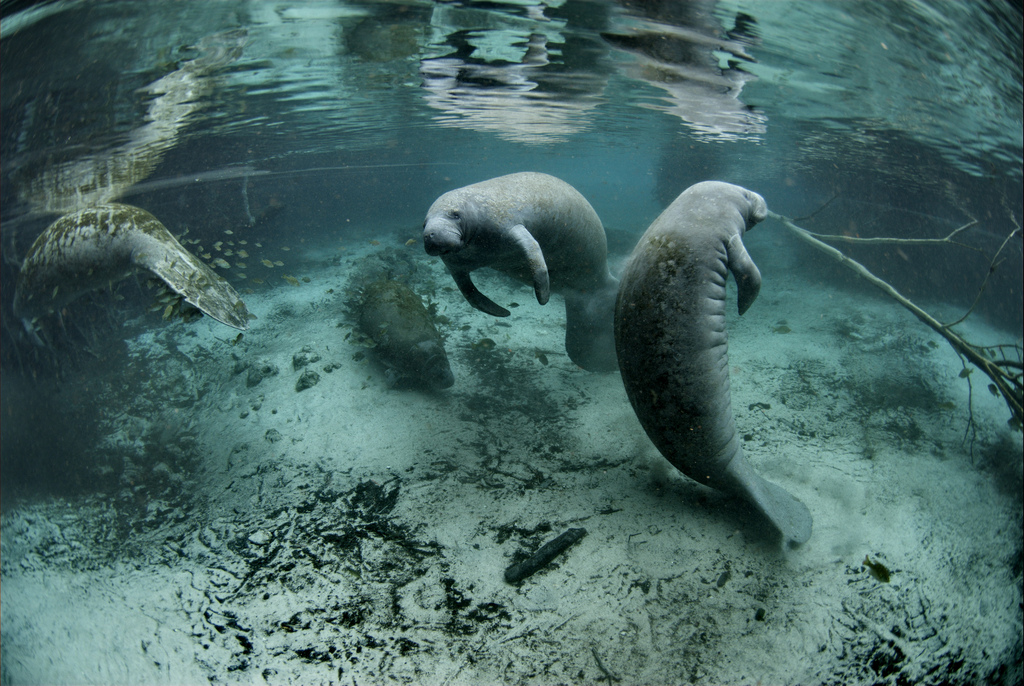 Photo Credit: File Upload Bot (Magnus Manske) / Wikimedia Commons
In the warm, sunlit waters of Florida’s coastal estuaries, the manatee, scientifically known as Trichechus manatus, glides gracefully through the gentle currents. Often referred to as the “sea cow,” this gentle giant captivates all who encounter it with its round, robust body and paddle-like flippers. With a face that seems to wear a perpetual smile, manatees are not just charming; they are vital players in their aquatic ecosystems. Their slow, deliberate movements and herbivorous diet of seagrass and aquatic plants make them a unique sight, embodying the tranquility of their watery world.
As they navigate through lush underwater gardens, manatees play an essential role in maintaining the health of their habitats. By munching on seagrass, they help to keep these vital plants thriving, which in turn supports a diverse array of marine life. Scientists and nature enthusiasts alike are drawn to these fascinating creatures, not only for their serene beauty but also for their intriguing behaviors and social interactions. From their gentle grazing to their playful interactions with one another, manatees invite us to explore the wonders of the natural world and remind us of the importance of protecting these magnificent marine mammals.
The manatee, often affectionately called the “sea cow,” holds a special place in the animal kingdom. Taxonomically, it belongs to the Kingdom Animalia, Phylum Chordata, Class Mammalia, Order Sirenia, Family Trichechidae, and Genus Trichechus. What makes manatees particularly intriguing is their adaptation to life in water, which has led them to develop a streamlined body and paddle-like flippers. These gentle giants are herbivores, primarily grazing on aquatic plants, and they play a crucial role in maintaining the health of their ecosystems. Their unique characteristics and behaviors set them apart from other mammals, showcasing the incredible diversity of life on Earth.
| Taxonomic Rank | Scientific Name | Meaning & Significance |
|---|---|---|
| Kingdom | Animalia | This name comes from the Latin word “animalis,” meaning “having breath” or “living being,” highlighting the essence of all living creatures. |
| Phylum | Chordata | Derived from the Greek word “chordē,” meaning “string,” this refers to animals that have a notochord, a flexible rod that supports the body, at some stage of development. |
| Class | Mammalia | This term comes from the Latin “mamma,” meaning “breast,” indicating that members of this class nurse their young with milk, a defining feature of mammals. |
| Order | Sirenia | Named after the Sirens of mythology, these gentle marine mammals are known for their serene nature and aquatic lifestyle. |
| Family | Trichechidae | This name is derived from the Greek word “trichos,” meaning “hair,” which refers to the sparse hair covering on manatees, distinguishing them from other marine animals. |
| Genus | Trichechus | The name comes from the Greek word “trichos” and the Latin “chus,” meaning “hairy,” again emphasizing the manatee’s unique physical traits. |
The classification of manatees reveals a fascinating evolutionary history that connects them to both land and marine environments. As members of the Order Sirenia, they share a common ancestor with elephants and hyraxes, showcasing how life can adapt to different habitats over millions of years. This lineage highlights the remarkable journey of these gentle giants from terrestrial origins to their current aquatic lifestyle, reminding us of the intricate web of life that binds all creatures together. Understanding their place in the tree of life not only deepens our appreciation for manatees but also emphasizes the importance of conserving their habitats for future generations.
The evolutionary journey of the manatee stretches back millions of years, weaving through a timeline that reveals its fascinating transformation from land-dwelling ancestors to the gentle giants we see today. These marine mammals belong to the order Sirenia, which first appeared around 50 million years ago. Over time, manatees adapted to life in the water, developing features that allowed them to thrive in their aquatic environments.
The story begins with the ancestors of manatees, which were terrestrial mammals resembling modern-day elephants. These early creatures, known as proboscideans, roamed the land and were closely related to the ancestors of modern elephants. As they ventured into shallow waters, they gradually adapted to their new surroundings. One major transition occurred around 40 million years ago when these animals began to develop a streamlined body shape, which helped them glide through water more efficiently. Their limbs transformed into flippers, allowing for better maneuverability in their aquatic habitat.
These adaptations have been crucial for the survival of manatees in their watery homes. Their streamlined bodies and flippers enable them to navigate through dense seagrass beds, while their herbivorous diet allows them to thrive in environments where food sources are often limited. With a slow metabolism, they can efficiently utilize the energy from the plants they consume. Additionally, their social behavior fosters connections that are vital for reproduction and maintaining healthy populations. Together, these traits illustrate how manatees have successfully carved out a niche in the diverse tapestry of marine life.
The manatee is a gentle giant of the waterways, exuding a serene presence as it glides through the water. With a robust, rounded body that can reach impressive lengths, these marine mammals are built for a life spent mostly in aquatic environments. Their large, paddle-like flippers help them navigate gracefully, while their broad, flat tails propel them forward with ease. The overall impression is one of calmness and strength, as they move slowly, often grazing on underwater vegetation.
| Feature | Description |
|---|---|
| Weight | 400-550 kg (800-1,212 lbs) |
| Skin Type | Smooth |
The manatee’s smooth skin is not just for looks; it helps reduce drag as they swim, making their movements more efficient in the water. Their substantial weight provides buoyancy, allowing them to float effortlessly while they munch on seagrass and other aquatic plants. Together, these features create a harmonious design that supports their peaceful lifestyle, enabling them to thrive in their watery habitats while evoking a sense of wonder in those lucky enough to encounter them.
The manatee calls warm coastal waters and slow-moving rivers its home, creating a peaceful sanctuary where it can thrive. Picture a sun-drenched estuary, where the gentle waves lap against lush seagrass beds. These gentle giants often float lazily in the shallow waters, munching on aquatic plants while basking in the sunlight. The soft murmur of the water and the rustling of leaves create a serene backdrop for these magnificent mammals.
Manatees prefer warm environments, typically found in waters that range from 68 to 86 degrees Fahrenheit. They are sensitive to cold temperatures, which can be harmful to their health. These gentle herbivores thrive in areas with abundant seagrass and other aquatic vegetation, as they rely on these plants for food. The shallow, slow-moving waters provide a perfect habitat for them to graze and navigate with ease.
Over time, manatees have adapted beautifully to their watery homes. Their large, paddle-like flippers allow them to steer gracefully through the water, while their robust bodies help them float effortlessly. Manatees have also developed a keen sense of hearing, which helps them communicate and navigate in their often murky environments. These adaptations ensure that they can find food, avoid dangers, and enjoy their tranquil lives in the warm waters they call home.
Manatees lead a tranquil life, often seen slowly grazing on aquatic plants in warm coastal waters and rivers. Their daily activities revolve around feeding, resting, and socializing, though they are primarily solitary creatures. These gentle giants spend a significant portion of their day munching on seagrass and other vegetation, which provides them with the nutrients they need. After a hearty meal, they often float lazily at the surface, taking time to rest and bask in the sun. This peaceful routine is essential for their well-being, allowing them to conserve energy and maintain their health.
While manatees are generally solitary, they do engage in social interactions, especially during mating season or when mothers are caring for their calves. These interactions can be quite playful, with manatees sometimes seen rolling and swimming together. They communicate through a variety of sounds, including squeaks, whistles, and chirps, which help them maintain connections with one another. Although they prefer their own company, these social behaviors are vital for their reproduction and the nurturing of young manatees.
| Behavior Type | Description |
|---|---|
| Feeding | Manatees spend about 6 to 8 hours a day grazing on seagrass and other aquatic plants, consuming up to 10% of their body weight in vegetation. |
| Resting | They often float at the surface to rest, allowing them to breathe easily while conserving energy. |
| Social Interactions | During mating season or when mothers are with calves, manatees engage in playful behaviors and communicate through various sounds. |
| Solitary Lifestyle | Manatees are primarily solitary, preferring to spend time alone, but they can form temporary groups when conditions are right. |
The behaviors of manatees are not just charming; they are crucial for their survival. By grazing on seagrass, they help maintain healthy underwater ecosystems, while their social interactions ensure the continuation of their species. Their ability to rest and conserve energy allows them to thrive in their warm, aquatic habitats. Understanding these daily activities and social dynamics helps us appreciate the delicate balance of life in our oceans and rivers, reminding us of the importance of protecting these gentle giants and their environments.
Manatees are herbivores, which means they primarily eat plants. These gentle giants have a diet that mainly consists of seagrass, algae, and various aquatic flowers. They are known for their slow and deliberate feeding behavior, often grazing on the lush underwater vegetation found in their warm coastal habitats. With their large, paddle-like flippers, manatees can maneuver through the water to reach their favorite food sources, spending several hours each day munching on the abundant plant life.
| Dietary Aspect | Details |
|---|---|
| Diet Type | Herbivore |
| Favorite Foods | Seagrass, algae, and aquatic flowers |
| Prey Items | Primarily plant-based, no animal prey |
| Hunting/Foraging Strategies | Grazing slowly on underwater vegetation |
The diet of manatees plays a crucial role in their ecology and daily routine. By consuming large amounts of seagrass and other aquatic plants, they help maintain healthy underwater ecosystems. Their grazing habits promote the growth of new plants, which in turn supports a variety of marine life. This gentle feeding behavior not only shapes their own lifestyle but also contributes to the overall health of their watery habitats, making them vital players in the balance of their environment.
When it comes to mating, manatees are quite social during the breeding season, which typically occurs from spring to early fall. During this time, males will often compete for the attention of females, engaging in playful displays and sometimes even forming groups called “mating herds.” These herds can consist of several males vying for the same female, showcasing their strength and agility in the water. Once a female chooses a mate, the pair will engage in a courtship that can last for several days before mating occurs.
| Reproductive Aspect | Details |
|---|---|
| Gestation Period | Approximately 12 months |
| Litter Size | 1 |
| Age of Maturity | 3 to 5 years |
| Name of Young | Calf |
After a long gestation period of about a year, a single calf is born, usually measuring around three feet long and weighing about 60 pounds. Manatee mothers are incredibly nurturing, often staying close to their young for protection and guidance. The calf will nurse for up to two years, learning essential skills like swimming and foraging for food. As they grow, these young manatees develop a strong bond with their mothers, who teach them how to navigate their watery world. By the time they reach maturity at around three to five years old, they are well-equipped to thrive in their aquatic environment, continuing the cycle of life for these gentle giants.
Manatees occupy a unique position in the food web as gentle herbivores, primarily feeding on seagrass and other aquatic plants. While they are not at the top of the food chain, they play a crucial role in maintaining the health of their ecosystems. By grazing on seagrass, they help to keep these underwater meadows healthy, which in turn supports a variety of marine life. However, despite their peaceful nature, manatees face several dangers that threaten their survival.
To defend themselves against these threats, manatees have developed some interesting survival strategies. They are known for their slow, deliberate movements, which can help them avoid fast-moving boats. When they sense danger, they often dive deeper or swim away to find safer waters. Additionally, their thick skin provides some protection against minor injuries. While manatees may not have the speed or agility of other marine animals, their calm demeanor and ability to navigate their environment play a vital role in their survival.
A keystone species is an organism that has a disproportionately large impact on its environment relative to its abundance. In simpler terms, if you remove a keystone species from an ecosystem, it can cause significant changes or even collapse. Manatees, often called “sea cows,” qualify as a keystone species in their habitats. Their role in maintaining the health of aquatic ecosystems is vital, making them essential players in the intricate web of life beneath the water’s surface.
Manatees primarily feed on seagrass and other aquatic plants, which they graze on in warm coastal waters and slow-moving rivers. By consuming these plants, they help control their growth, preventing overgrowth that can choke waterways. This grazing behavior promotes a healthy balance in the ecosystem, allowing light to penetrate the water and supporting the growth of other aquatic life. For example, when manatees munch on seagrass, they create open areas that benefit fish and invertebrates, which rely on these habitats for shelter and breeding.
Moreover, manatees contribute to nutrient cycling in their environment. As they feed, they produce waste that enriches the water with nutrients, which can stimulate the growth of phytoplankton and other microorganisms. This process is crucial for the overall health of the aquatic ecosystem, as it supports the food web that sustains various species, from tiny fish to larger predators. Additionally, manatees serve as a food source for some predators, linking them to the broader food web.
If manatees were to disappear from their ecosystems, the consequences would be profound. Without these gentle giants, seagrass beds could become overgrown, leading to reduced light penetration and harming the diverse life that depends on these habitats. Fish populations might decline due to the loss of breeding grounds, and the overall health of the aquatic ecosystem would suffer. The absence of manatees would disrupt the delicate balance of life in coastal waters and rivers, illustrating just how crucial they are to the environments they inhabit.
The manatee, often referred to as the “sea cow,” plays a vital role in shaping its ecosystem. As a gentle herbivore, it primarily feeds on seagrass and aquatic plants, which helps maintain the health of underwater habitats. By grazing on these plants, manatees prevent overgrowth, allowing light to penetrate the water and supporting a diverse range of marine life. This unique ecological niche makes them essential for the balance of their aquatic environments.
| Ecosystem Service | Impact |
|---|---|
| Seagrass Grazing | Controls plant growth and promotes biodiversity |
| Nutrient Cycling | Helps recycle nutrients in the water |
| Habitat Creation | Supports other species by maintaining healthy seagrass beds |
| Water Clarity Improvement | Enhances light penetration for photosynthesis |
Manatees influence their environment in several specific ways. For instance, their grazing habits not only keep seagrass beds healthy but also create a habitat for smaller fish and invertebrates. These creatures thrive in the areas where manatees feed, as the seagrass provides shelter and food. Additionally, by stirring up the sediment while foraging, manatees help release nutrients back into the water, which can boost the growth of phytoplankton—tiny plants that form the base of the aquatic food web.
The broader ecological importance of manatees cannot be overstated. As a keystone species, their presence is crucial for maintaining the health of coastal ecosystems. Without manatees, seagrass beds could become overgrown, leading to a decline in water quality and a loss of habitat for many marine organisms. By supporting biodiversity and promoting nutrient cycling, manatees help ensure that their aquatic environments remain vibrant and resilient, showcasing the interconnectedness of life in our oceans and rivers.
In the intricate web of life, symbiosis plays a crucial role in how different species interact and thrive together. Symbiosis refers to the close and often long-term interactions between two different biological species. These relationships can be mutualistic, where both species benefit; parasitic, where one benefits at the expense of the other; or commensal, where one benefits while the other is neither helped nor harmed. Manatees, the gentle giants of the waterways, engage in various symbiotic relationships that highlight the interconnectedness of marine ecosystems.
| Species/Type | Relationship Type | Description |
|---|---|---|
| Remora fish | Mutualistic | Remoras attach themselves to manatees, gaining protection and transportation while helping to keep the manatee’s skin clean by eating parasites. |
| Seagrass | Mutualistic | Manatees graze on seagrass, which helps maintain the health of the seagrass beds by preventing overgrowth, benefiting both the manatees and the ecosystem. |
| Barnacles | Commensal | Barnacles often cling to the skin of manatees. While they gain a free ride and access to food, manatees are generally unaffected by their presence. |
These relationships have evolved over time, showcasing the adaptability and resilience of species in their environments. The mutualistic partnerships, like that of the remora fish and manatees, illustrate how cooperation can enhance survival for both parties. Meanwhile, the presence of barnacles highlights the complexity of commensal relationships, where one species benefits without impacting the other. Understanding these connections not only enriches our knowledge of manatees but also emphasizes the importance of preserving their habitats, ensuring that these delicate relationships continue to flourish in the wild.
Manatees are enchanting marine mammals that glide gracefully through warm waters, captivating anyone lucky enough to encounter them. These gentle giants are full of surprises, showcasing behaviors and traits that many people may not know about.
Throughout history, manatees have captured the imagination of people around the world. These gentle giants, often mistaken for mermaids by sailors, have woven themselves into the cultural fabric of coastal communities. In many cultures, they symbolize tranquility and the beauty of nature. Ancient myths and stories often depicted them as mystical beings, reflecting humanity’s fascination with the natural world. This connection has led to a rich tapestry of folklore, art, and even conservation efforts aimed at protecting these magnificent creatures.
Today, the relationship between manatees and humans is complex and multifaceted. While many people admire and protect these marine mammals, others inadvertently pose threats to their survival. Boat collisions, habitat loss, and pollution are significant challenges that manatees face in their daily lives. Conservation groups work tirelessly to educate the public about the importance of protecting manatees and their habitats. Some communities have even embraced eco-tourism, allowing people to observe manatees in their natural environment while promoting awareness and conservation efforts. However, the balance between human activity and wildlife protection remains delicate, requiring ongoing dialogue and action.
As we look to the future, the relationship between manatees and humanity holds both promise and challenges. With increased awareness and education, there is hope for a more harmonious coexistence. By prioritizing conservation efforts and fostering a deeper understanding of these gentle giants, we can ensure that future generations will continue to marvel at the beauty of manatees. Together, we can create a world where both humans and manatees thrive, celebrating the wonders of nature and the connections that bind us all.
The manatee, often known as the “sea cow,” is currently classified as endangered. This status reflects a significant concern for their survival, as their populations have faced various challenges over the years. While some regions have seen slight increases in manatee numbers due to conservation efforts, overall, their population remains vulnerable. The gentle giants of the waterways are still at risk, and ongoing monitoring is essential to ensure their future.
| Conservation Factor | Status/Details |
|---|---|
| IUCN Status | Endangered |
| Population Estimates | Approximately 13,000 individuals |
| Trend Direction | Stable in some areas, but overall vulnerable |
The main threats to manatees stem from human activities. Collisions with boats are one of the most significant dangers they face, as their slow-moving nature makes them particularly vulnerable in busy waterways. Additionally, habitat loss due to coastal development and pollution can severely impact their feeding grounds. Watercraft traffic, along with harmful algal blooms that can poison their food sources, further complicates their survival. These challenges highlight the delicate balance between human activity and wildlife conservation.
Despite these threats, there is hope for the future of manatees. Conservation efforts are underway to protect their habitats and reduce boat collisions. Organizations are working to raise awareness about the importance of these gentle giants and the ecosystems they inhabit. With continued support and effective management, there is potential for manatee populations to recover. The journey ahead is challenging, but with collective action, we can help ensure that these magnificent creatures continue to grace our waters for generations to come.
| Question | Answer |
|---|---|
| Where do manatees live? | Manatees are found in warm coastal waters and slow-moving rivers. They prefer shallow areas where they can easily find food and surface for air. These gentle giants are often seen in places like Florida and the Caribbean. |
| What do manatees eat? | Manatees are herbivores, which means they primarily eat plants. Their diet consists mainly of seagrasses, algae, and other aquatic vegetation. They can consume up to 100 pounds of food each day! |
| How do manatees behave? | Manatees are known for their calm and gentle nature. They are social animals and often gather in groups, especially in warm waters. Despite their size, they are quite graceful swimmers, using their large tails to propel themselves through the water. |
| How do manatees reproduce? | Manatees typically mate in the spring and summer months. After a gestation period of about 12 months, a mother manatee gives birth to a single calf, which she nurses for up to two years. Calves are born weighing around 60 pounds! |
| What threats do manatees face? | Manatees are classified as endangered, facing threats from habitat loss, boat strikes, and pollution. Their slow-moving nature makes them vulnerable to collisions with boats. Conservation efforts are crucial to protect their habitats and ensure their survival. |
| What are some interesting characteristics of manatees? | Manatees have a unique appearance with their large, round bodies and paddle-like flippers. They can hold their breath for up to 20 minutes while diving but usually surface every 3 to 5 minutes for air. Their skin is thick and often covered in barnacles, which makes them look even more fascinating! |
| Can manatees communicate? | Yes, manatees communicate using a variety of sounds, including squeaks, whistles, and chirps. These vocalizations help them stay in touch with each other, especially in murky waters where visibility is low. They also use body language to express themselves. |