Taxonomy & Classification
- Kingdom
- Animalia
- Phylum
- Chordata
- Class
- Chondrichthyes
- Order
- Myliobatiformes
- Family
- Mobulidae
- Genus
- Manta

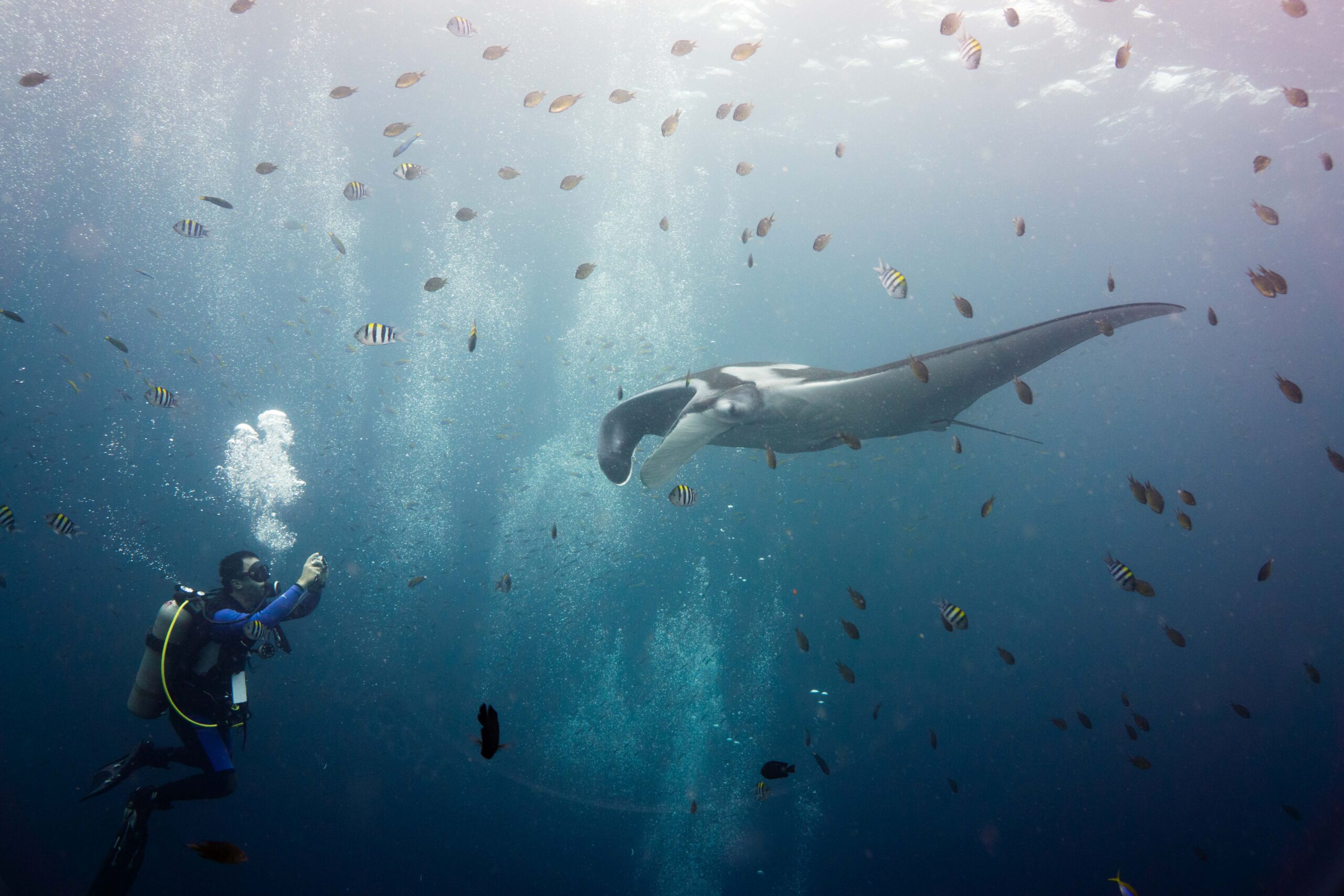 Photo Credit: Daniel Sasse / Wikimedia Commons
In the shimmering blue depths of the ocean, the manta ray, known scientifically as Manta birostris, glides gracefully through the water, captivating all who are lucky enough to witness its beauty. With its broad, flat body resembling a majestic bird in flight, this gentle giant can reach wingspans of up to 29 feet, making it one of the largest species of rays in the world. Its distinctive features, including large, expressive eyes and a mouth that stretches across its body, allow it to filter feed on tiny organisms like zooplankton, showcasing a unique feeding behavior that has fascinated scientists and nature lovers alike.
As the manta ray dances through the warm, tropical waters, often near vibrant coral reefs, it embodies the spirit of the ocean. These magnificent creatures are not just stunning to behold; they play a crucial role in their ecosystems, acting as both predators and prey. Their presence helps maintain the balance of marine life, making them a keystone species in their habitats. With their serene movements and social behaviors, manta rays invite us to explore the mysteries of the underwater world, sparking curiosity about their lives, their interactions, and the challenges they face in an ever-changing environment. Join us as we dive deeper into the enchanting world of the manta ray, uncovering the secrets of its life beneath the waves.
Manta rays are truly captivating members of the animal kingdom, sitting within the vast tree of life as part of the phylum Chordata. This means they share a common ancestry with all animals that have a backbone, including us! Manta rays belong to the class Chondrichthyes, which includes all cartilaginous fish like sharks and skates. What sets them apart is their impressive size and graceful swimming style, with wingspans that can reach up to 29 feet (about 8.8 meters). Their unique filter-feeding behavior, where they glide through the water with their mouths wide open to catch tiny plankton, adds to their charm and ecological importance.
| Taxonomic Rank | Scientific Name | Meaning & Significance |
|---|---|---|
| Kingdom | Animalia | This name signifies that manta rays are part of the animal kingdom, which includes all multicellular organisms that are not plants, fungi, or bacteria. |
| Phylum | Chordata | Chordata means “having a notochord,” a flexible rod that provides support. This is a key feature of all vertebrates, including manta rays. |
| Class | Chondrichthyes | This term translates to “cartilaginous fish,” highlighting that manta rays have skeletons made of cartilage instead of bone, making them lighter and more agile in the water. |
| Order | Myliobatiformes | This order includes rays and skates, and the name comes from Greek words meaning “to grind,” referring to their flattened bodies and feeding habits. |
| Family | Mobulidae | The name Mobulidae is derived from the Latin word “mola,” meaning “millstone,” which reflects the flat, disc-like shape of these rays. |
| Genus | Manta | This genus name is thought to come from the Spanish word for “mantle,” referring to the broad, wing-like pectoral fins that give manta rays their graceful appearance. |
The classification of manta rays reveals a fascinating evolutionary history that connects them to other cartilaginous fish, showcasing their adaptations to life in the ocean. Their unique features, such as their large size and filter-feeding behavior, have evolved over millions of years, allowing them to thrive in diverse marine environments. Understanding where they fit in the tree of life not only highlights their biological significance but also emphasizes the importance of conserving these magnificent creatures and their habitats for future generations.
The evolutionary journey of the manta ray stretches back millions of years, weaving through the tapestry of marine life. These graceful giants belong to the family Mobulidae and the genus Manta, with their ancestors tracing their roots to ancient fish that swam the oceans long before dinosaurs roamed the Earth. The story of the manta ray is one of adaptation and survival, showcasing how these magnificent creatures have evolved to thrive in diverse marine environments.
Manta rays are believed to have evolved from smaller, more primitive relatives that lived in the oceans around 200 million years ago. These early ancestors were likely similar to modern-day skates and rays, which are flat-bodied fish that glide through the water. Over time, as the oceans changed, so did the manta ray. One major transition was the development of their large, wing-like pectoral fins, which allow them to soar gracefully through the water, much like birds in the sky. This adaptation not only enhances their swimming efficiency but also helps them navigate through various ocean currents.
These adaptations have been crucial for the manta ray’s survival in the ever-changing ocean environment. Their ability to filter feed allows them to exploit a plentiful food source, while their impressive size and social behavior provide advantages against predators. As they continue to glide through the world’s oceans, manta rays remind us of the incredible power of evolution and the beauty of life beneath the waves.
Manta rays glide through the ocean with an elegance that captivates all who encounter them. Their broad, flat bodies resemble a graceful winged creature soaring through the water, giving them a majestic presence. With a wingspan that can reach up to 29 feet, these gentle giants are not just large; they are also incredibly streamlined, allowing them to navigate the ocean currents with ease. Their smooth skin glistens in the sunlight, reflecting shades of blue and gray, which helps them blend into the shimmering waters of their habitat.
| Feature | Description |
|---|---|
| Weight | 5,300 pounds |
| Skin Type | Smooth |
| Most Distinctive Feature | Broad, flat bodies |
The combination of their impressive size and smooth skin serves multiple purposes in the wild. The broad, flat bodies allow manta rays to glide effortlessly through the water, maximizing their ability to filter feed on plankton, tiny organisms that drift in the ocean. Their sleek form reduces drag, making it easier for them to swim long distances in search of food. Additionally, their coloration helps them camouflage against the ocean floor, protecting them from potential predators. Together, these features create a perfect blend of beauty and functionality, showcasing the incredible adaptations of manta rays in their underwater world.
Manta rays are ocean wanderers, calling the vast blue expanse of all world oceans their home. These gentle giants thrive in warm, tropical waters, often found near coral reefs and coastal areas where the sunlight dances on the surface. Picture a serene underwater world, where manta rays glide gracefully through the water, their large wingspan creating a mesmerizing sight as they navigate through the currents. They are often seen in areas rich with plankton, their favorite food, making these habitats bustling with life.
Manta rays prefer warm waters, typically found in temperatures ranging from 20 to 30 degrees Celsius (68 to 86 degrees Fahrenheit). They thrive in areas with plenty of sunlight, which helps support the growth of plankton, their primary food source. These rays are often spotted in regions with strong currents, as these currents bring in nutrient-rich waters that attract the tiny organisms they feed on. The clarity of the water is also important, as it allows them to see and filter their food more effectively.
To adapt to their oceanic homes, manta rays have developed several fascinating traits. Their large, flat bodies are perfectly designed for gliding through the water, allowing them to cover vast distances in search of food. They have specialized gill rakers, which are comb-like structures that help them filter plankton from the water as they swim. This unique feeding method allows them to thrive in environments where food can be abundant but scattered. Their ability to migrate long distances also helps them find the best feeding grounds, showcasing their remarkable adaptability to the ever-changing ocean landscape.
Manta rays lead a life that is both serene and dynamic, gliding gracefully through the ocean’s depths. Their daily activities revolve around feeding, socializing, and navigating their expansive underwater world. These magnificent creatures often spend their mornings and afternoons filtering plankton from the water, using their gill rakers—specialized structures that trap tiny food particles. As the sun sets, they may venture into deeper waters, where they continue their search for nourishment. This rhythm of feeding and exploring is essential for their survival, allowing them to maintain their energy levels and thrive in their marine environment.
While manta rays are primarily solitary animals, they do exhibit fascinating social behaviors, especially during feeding times. They can sometimes be seen gathering in small groups, known as “feeds,” where they take advantage of abundant food sources. These gatherings are not just about eating; they also provide opportunities for social interaction. Manta rays communicate through body language, using their movements and postures to convey messages to one another. This social aspect, though limited, plays a crucial role in their lives, allowing them to connect with others during key moments.
| Behavior Type | Description |
|---|---|
| Feeding | Manta rays filter plankton from the water using their gill rakers, often engaging in synchronized swimming during feeding frenzies. |
| Social Structure | Primarily solitary, but they gather in small groups during feeding, allowing for brief social interactions. |
| Communication | They communicate through body language, using movements and postures to express themselves to other manta rays. |
The behaviors of manta rays are finely tuned to ensure their survival in the vast ocean. Their feeding strategies allow them to efficiently gather the nutrients they need, while their occasional social interactions help them navigate the challenges of their environment. By understanding their daily activities and social dynamics, we gain insight into how these gentle giants thrive in the ever-changing underwater world.
Manta rays are carnivorous marvels of the ocean, primarily feasting on tiny creatures known as zooplankton. These gentle giants have developed a unique feeding behavior that allows them to efficiently gather their food while gliding through the water. By swimming with their mouths wide open, they filter vast amounts of water, trapping the zooplankton in their gill rakers—specialized structures that act like a sieve. This method of feeding is not only effective but also showcases their graceful movements as they navigate the underwater world.
| Dietary Aspect | Details |
|---|---|
| Diet Type | Carnivore |
| Favorite Foods | Zooplankton |
| Prey Items | Small crustaceans, larval fish, and other tiny marine organisms |
| Hunting/Foraging Strategies | Filter feeding by swimming with mouths open to capture zooplankton |
The diet of manta rays plays a crucial role in their ecology and daily routine. By consuming large quantities of zooplankton, they help regulate these populations, contributing to the balance of marine ecosystems. Their feeding habits also influence their migratory patterns, as they often follow the currents to areas rich in food. This connection between diet and behavior highlights the importance of manta rays in maintaining the health of ocean environments, making them vital players in the underwater world.
Manta rays have a fascinating mating ritual that showcases their grace and intelligence. During the breeding season, which varies by location, males often engage in elaborate courtship displays. These displays can include swimming in circles around a female, performing flips, and even engaging in synchronized swimming with other males. This competition for the attention of a female can be quite a spectacle, as the males showcase their strength and agility. Once a female selects a mate, the pair will engage in a brief mating process, after which the female will carry the fertilized eggs inside her body.
| Reproductive Aspect | Details |
|---|---|
| Gestation Period | 12 to 13 months |
| Litter Size | 1 |
| Age of Maturity | 4 to 6 years |
| Name of Young | Pups |
After a long gestation period, the female manta ray gives birth to a single pup, which is a tiny version of its parent. These pups are born fully formed and ready to swim away, showcasing their independence right from the start. While manta rays do not provide direct parental care, the young are equipped with the skills they need to survive in the ocean. As they grow, they learn to navigate their environment, feeding on small plankton and gradually maturing into the majestic adults they are destined to become. This journey from pup to adult is a remarkable transformation, highlighting the resilience and adaptability of these incredible marine animals.
Manta rays play a vital role in the ocean’s food web, primarily as filter feeders that consume tiny organisms like zooplankton. While they are not typically preyed upon by many animals, they do have a few natural predators. Their size and graceful swimming style help them navigate the waters, but they still face significant threats from human activities that can disrupt their populations.
To defend themselves against these dangers, manta rays rely on their impressive size and agility. When threatened, they can swiftly maneuver through the water, often using their speed to escape predators. Additionally, their large wingspan allows them to make quick turns and dives, helping them evade capture. While they do not have stingers or other physical defenses, their sheer size and graceful movements often keep them safe in the vast ocean.
A keystone species is a vital part of its ecosystem, meaning its presence has a significant impact on the environment and other organisms within it. Manta rays, with their unique feeding habits and role in the marine food web, can indeed be considered a keystone species. Their activities help maintain the balance of their ocean habitats, influencing the health of various marine communities.
Manta rays primarily feed on zooplankton, tiny drifting organisms that are crucial to the ocean’s food web. By consuming these small creatures, manta rays help regulate their populations, preventing any one species from overwhelming the ecosystem. This feeding behavior not only supports the health of zooplankton populations but also ensures that other marine animals, such as fish and larger predators, have a stable food source. In this way, manta rays contribute to the overall biodiversity of their habitats.
Moreover, manta rays are known to create nutrient-rich areas in the ocean. As they move through the water, they stir up sediments and promote the growth of phytoplankton, microscopic plants that form the base of the marine food chain. This process supports a wide range of marine life, from small fish to larger predators, highlighting the interconnectedness of ocean ecosystems.
In addition, manta rays often attract divers and marine enthusiasts, promoting ecotourism in coastal regions. This economic activity can lead to increased awareness and conservation efforts for marine environments, further enhancing the health of the ecosystems they inhabit.
If manta rays were to disappear from their ecosystems, the consequences could be severe. Without these gentle giants, zooplankton populations might explode, leading to imbalances that could harm other marine species. The decline in phytoplankton due to reduced nutrient cycling would affect the entire food web, potentially leading to a decrease in fish populations and disrupting the livelihoods of communities that depend on fishing. The loss of manta rays would not only diminish the beauty of our oceans but also threaten the delicate balance that sustains marine life.
Manta rays occupy a crucial ecological niche in the ocean, acting as both predators and prey within their marine environments. These gentle giants are filter feeders, primarily consuming tiny organisms like zooplankton. By doing so, they help regulate the populations of these small creatures, ensuring a balanced ecosystem. Their presence in the ocean contributes to the health of coral reefs and other marine habitats, making them an essential part of the underwater community.
| Ecosystem Service | Impact |
|---|---|
| Population Control | Manta rays help maintain the balance of zooplankton populations, preventing overgrowth that could disrupt marine ecosystems. |
| Nutrient Cycling | As they feed, manta rays contribute to nutrient cycling by excreting waste that enriches the surrounding water, promoting the growth of phytoplankton. |
| Habitat Support | By thriving near coral reefs, manta rays support the health of these ecosystems, which provide shelter and food for countless marine species. |
| Tourism and Education | Manta rays attract divers and marine enthusiasts, fostering awareness and conservation efforts for ocean health. |
Manta rays influence their environment in several specific ways. For instance, their feeding habits not only control zooplankton populations but also enhance nutrient availability in the water. This nutrient boost supports the growth of phytoplankton, the foundation of the marine food web. Additionally, their presence near coral reefs helps maintain the overall health of these vibrant ecosystems, which are home to a diverse array of marine life. The interaction between manta rays and their environment showcases the interconnectedness of ocean species.
The broader ecological importance of manta rays cannot be overstated. As a keystone species, their role extends beyond their immediate surroundings, influencing the health of entire marine ecosystems. By supporting biodiversity and promoting nutrient cycling, manta rays help sustain the delicate balance of life in the ocean. Protecting these magnificent creatures is vital not only for their survival but also for the well-being of the marine environments they inhabit. In this way, manta rays remind us of the intricate web of life that exists beneath the waves, urging us to cherish and protect our oceans.
In the intricate web of ocean life, symbiosis plays a vital role in shaping the relationships between different species. Symbiosis refers to the close interactions between two or more different organisms, which can be beneficial, harmful, or neutral. These relationships can be classified into three main types: mutualism, where both species benefit; parasitism, where one species benefits at the expense of the other; and commensalism, where one species benefits while the other is neither helped nor harmed. Manta rays, with their graceful presence in the ocean, engage in various partnerships that highlight the beauty and complexity of marine ecosystems.
| Species/Type | Relationship Type | Description |
|---|---|---|
| Cleaner Wrasse | Mutualistic | Cleaner wrasses are small fish that remove parasites and dead skin from manta rays. In return, the manta rays enjoy a healthier skin condition and the wrasses get a meal. |
| Remora Fish | Commensal | Remoras attach themselves to manta rays using a special suction disk. They benefit by getting free rides and leftover food scraps, while the manta rays are generally unaffected. |
| Sharks | Parasitic | Some species of sharks may feed on manta rays, especially juveniles. This relationship is harmful to the manta rays, as they can be injured or killed. |
These relationships have evolved over time, shaped by the needs and behaviors of the species involved. Mutualistic partnerships, like that of the cleaner wrasse and manta ray, demonstrate how cooperation can lead to healthier individuals and thriving ecosystems. Meanwhile, commensal relationships, such as those with remora fish, showcase the balance of benefits in nature, where one species finds a home without impacting the other. Even the more challenging parasitic relationships remind us of the harsh realities of survival in the ocean. Together, these interactions illustrate the dynamic and interconnected nature of marine life, highlighting the importance of every species in maintaining the health of our oceans.
Manta rays are truly enchanting creatures of the ocean, known for their graceful movements and gentle nature. But there’s so much more to these magnificent animals than meets the eye. Here are some surprising facts that will surely intrigue nature enthusiasts of all ages.
Manta rays have long captured the imagination of humans, weaving their way into the cultural fabric of coastal communities around the world. Historical encounters with these majestic creatures often evoke awe and reverence. In many cultures, manta rays symbolize grace and freedom, inspiring stories and artwork that celebrate their beauty. Ancient fishermen viewed them as guardians of the sea, while modern divers and snorkelers are enchanted by their gentle nature and elegant movements. These interactions have fostered a deep connection between humanity and manta rays, highlighting our shared existence in the ocean’s vast expanse.
Today, the relationship between manta rays and humans is complex, marked by both conservation efforts and challenges. As awareness of their ecological importance grows, many organizations are working tirelessly to protect these gentle giants from threats like overfishing and habitat destruction. However, conflicts still arise, particularly in regions where fishing practices endanger their populations. Some communities have even embraced eco-tourism, allowing people to interact with manta rays in a sustainable way, promoting both education and conservation. Yet, the delicate balance between human activity and the survival of these magnificent animals remains a pressing concern.
As we look to the future, the relationship between manta rays and humanity holds both promise and responsibility. With continued efforts in conservation and education, we can ensure that these magnificent creatures thrive in our oceans for generations to come. By fostering a deeper understanding of their role in marine ecosystems, we can create a harmonious coexistence that benefits both manta rays and the communities that cherish them. The journey ahead is one of collaboration, where respect for nature guides our actions and shapes a sustainable future.
Manta rays are currently classified as Vulnerable according to the International Union for Conservation of Nature (IUCN). This status indicates that their populations are facing significant threats, leading to a decline in numbers. While exact population estimates are challenging to determine due to their wide-ranging habitats, it is clear that these magnificent creatures are becoming increasingly rare in many regions of the world. Conservationists are working hard to monitor their populations and implement protective measures, but the outlook remains uncertain.
| Conservation Factor | Status/Details |
|---|---|
| IUCN Status | Vulnerable |
| Population Estimates | Exact numbers are unknown, but populations are declining in many areas |
| Trend Direction | Decreasing |
Manta rays face several significant threats that contribute to their vulnerable status. One of the primary dangers is overfishing, as they are often caught accidentally in fishing nets or targeted for their gill rakers, which are used in traditional medicine. Additionally, habitat degradation, particularly in coastal areas where they breed and feed, poses a serious risk. Pollution and climate change also impact their environment, affecting the availability of their food sources and the health of the ecosystems they inhabit.
Conservation efforts are underway to protect manta rays and their habitats. Many countries have established marine protected areas where fishing is restricted, allowing these gentle giants to thrive. Organizations are also working to raise awareness about the importance of manta rays in marine ecosystems and the need for sustainable fishing practices. With continued efforts and global cooperation, there is hope that manta ray populations can stabilize and even recover in the future, ensuring that these graceful creatures continue to glide through our oceans for generations to come.
| Question | Answer |
|---|---|
| Where do Manta Rays live? | Manta Rays can be found in all the world's oceans, from tropical waters to temperate seas. They prefer areas with plenty of food, like near coral reefs and upwelling zones where nutrients rise to the surface. |
| What do Manta Rays eat? | Manta Rays are carnivores, meaning they primarily eat meat. Their diet mainly consists of tiny creatures like plankton, small fish, and crustaceans, which they filter from the water using their gill rakers, specialized structures that trap food as they swim. |
| How do Manta Rays behave? | Manta Rays are known for their graceful swimming and playful behavior. They often leap out of the water, a behavior called breaching, which may help them shake off parasites or communicate with other rays. |
| How do Manta Rays reproduce? | Manta Rays have a unique reproductive strategy; they are ovoviviparous, meaning the eggs develop inside the female's body and she gives birth to live young. After a gestation period of about a year, a female can give birth to one or two pups at a time. |
| What threats do Manta Rays face? | Manta Rays are currently classified as vulnerable due to various threats. These include overfishing, habitat loss, and the demand for their gill plates in traditional medicine, which has led to significant declines in their populations. |
| What is a distinctive feature of Manta Rays? | The most distinctive feature of Manta Rays is their broad, flat bodies, which can span up to 29 feet across! This unique shape helps them glide gracefully through the water and makes them easily recognizable among other marine creatures. |
| Are Manta Rays social animals? | Yes, Manta Rays are often seen in groups, especially during feeding times. They can form loose aggregations, which may help them find food more efficiently and provide social interactions with other rays. |