Taxonomy & Classification
- Kingdom
- Animalia
- Phylum
- Chordata
- Class
- Aves
- Order
- Ciconiiformes
- Family
- Ciconiidae
- Genus
- Leptoptilos
- Species
- Leptoptilos crumenifer

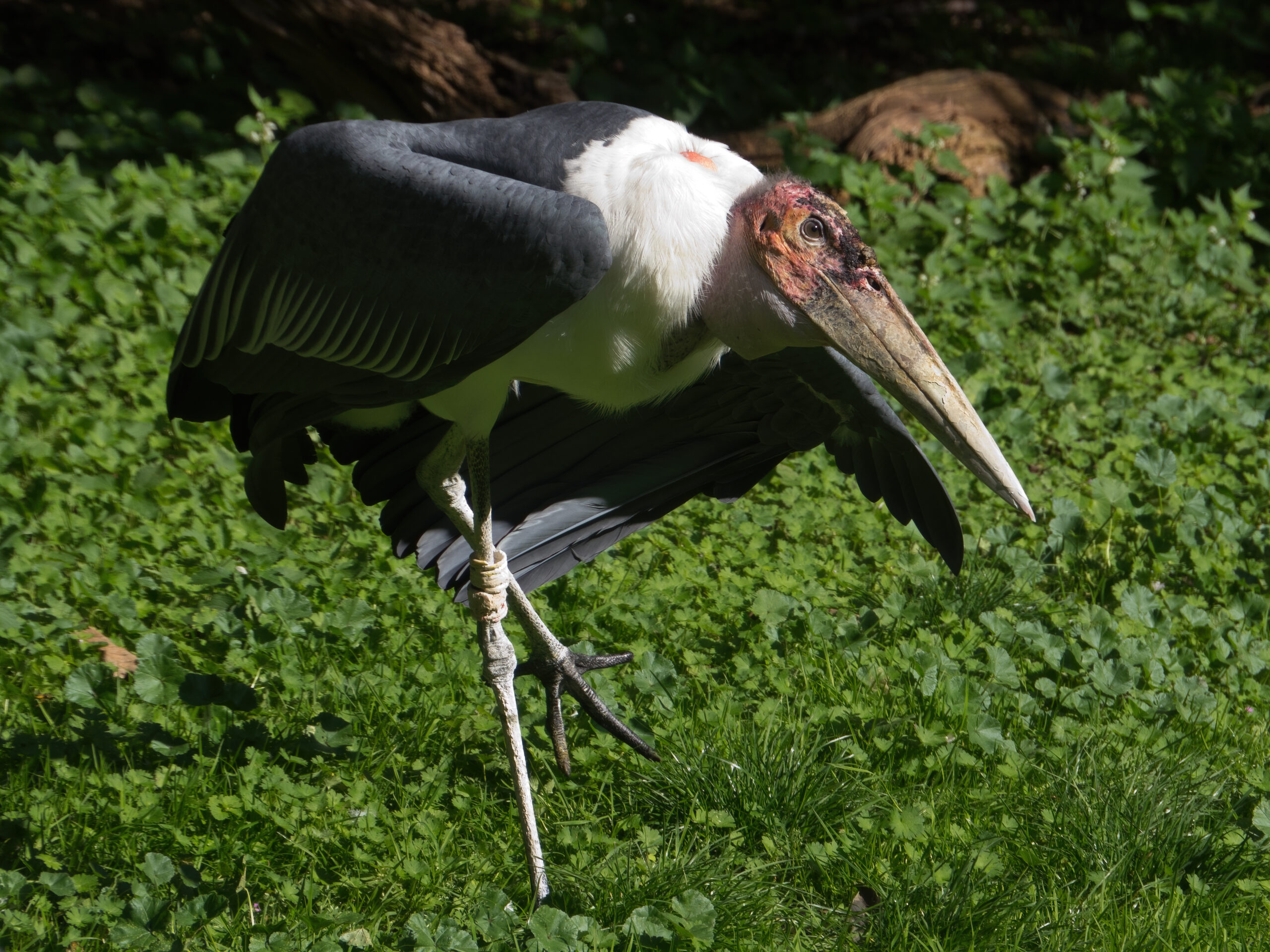 Photo Credit: Ermell / Wikimedia Commons
In the heart of Africa’s vast savannas and along the banks of its winding rivers, the Marabou Stork, scientifically known as Leptoptilos crumeniferus, stands as a remarkable figure against the golden landscape. With its towering height of up to 60 inches, this bird is hard to miss. Its long, spindly legs and massive wingspan create a striking silhouette, while its bald head and neck, adorned with a distinctive pouch, give it an appearance that many find both intriguing and, at times, a bit unsettling. This unique look is not just for show; it plays a vital role in the stork’s life, helping it stay cool in the hot sun and keeping its feathers clean while scavenging for food.
The Marabou Stork is a scavenger, meaning it thrives on a diet of carrion—dead animals that it finds in its environment. This behavior makes it an essential part of the ecosystem, helping to keep the landscape clean and balanced. Scientists and nature enthusiasts alike are captivated by the stork’s adaptability and its role as a keystone species, which means its presence is crucial for the health of its habitat. As we explore the life of the Marabou Stork, we will uncover its fascinating behaviors, its interactions with other species, and the challenges it faces in a changing world. Join us on this adventure to learn more about this extraordinary bird and the vital role it plays in the natural world.
The Marabou Stork, a striking bird found in parts of Africa and South Asia, holds a distinctive place in the animal kingdom. Taxonomically, it belongs to the Kingdom Animalia, Phylum Chordata, Class Aves, Order Ciconiiformes, Family Ciconiidae, and Genus Leptoptilos. What sets the Marabou Stork apart is its impressive size and unique adaptations. With a wingspan that can reach up to 10 feet, this bird is not just large; it also has a remarkable ability to soar gracefully on thermal updrafts. Its scavenging habits, often seen feasting on carrion, make it an essential part of its ecosystem, helping to keep the environment clean.
| Taxonomic Rank | Scientific Name | Meaning & Significance |
|---|---|---|
| Kingdom | Animalia | This term means “animals” in Latin, highlighting the Marabou Stork’s classification as a living organism that consumes organic material. |
| Phylum | Chordata | Derived from the Greek word “chordē,” meaning “string,” this classification indicates that Marabou Storks have a backbone, a key feature of vertebrates. |
| Class | Aves | This Latin word means “birds,” emphasizing the Marabou Stork’s feathers, beak, and ability to lay eggs, all characteristics of avian life. |
| Order | Ciconiiformes | From the Latin “ciconia,” meaning “stork,” this order includes wading birds known for their long legs and necks, which help them hunt in shallow waters. |
| Family | Ciconiidae | This family name also comes from “ciconia,” and it groups together storks, which are known for their large size and long migrations. |
| Genus | Leptoptilos | From the Greek words “leptos,” meaning “slender,” and “pilos,” meaning “feather,” this name reflects the Marabou Stork’s long, thin body and distinctive feathered appearance. |
The classification of the Marabou Stork reveals much about its evolutionary journey. As a member of the Ciconiiformes order, it shares ancestry with other wading birds, showcasing adaptations that have allowed it to thrive in diverse habitats. Its scavenging lifestyle and impressive physical traits, such as its long legs and large wingspan, highlight the evolutionary pressures that have shaped its existence. Understanding where the Marabou Stork fits in the tree of life not only deepens our appreciation for this remarkable bird but also illustrates the intricate connections among all living organisms.
The Marabou Stork, a fascinating bird of the Ciconiidae family, has a rich evolutionary history that stretches back millions of years. This large wading bird, known for its impressive wingspan and striking appearance, has adapted to thrive in the diverse ecosystems of Africa and parts of South Asia. Its evolutionary journey is a tale of survival, adaptation, and the relentless march of time.
The ancestors of the Marabou Stork can be traced back to the late Cretaceous period, around 70 million years ago, when early birds began to emerge. These ancestral forms were likely smaller and less specialized than today’s Marabou Stork. Over time, as the environment changed, these birds underwent significant evolutionary transitions. They developed longer legs and larger bodies, which allowed them to wade through shallow waters in search of food. The Marabou Stork’s scavenging habits also evolved, enabling it to thrive in habitats where food sources were scarce. This adaptability has been crucial for its survival in the face of changing climates and landscapes.
The adaptations of the Marabou Stork have played a vital role in its survival across various habitats. Its long legs and large wingspan allow it to traverse vast distances in search of food, while its scavenging behavior ensures it can find nourishment even in challenging environments. The unique throat pouch not only aids in feeding but also helps the bird cope with the heat of its surroundings. Together, these traits have enabled the Marabou Stork to thrive in the wild, showcasing the incredible power of evolution in shaping life on Earth.
The Marabou Stork is a striking figure, towering at an impressive height of 60 inches. With its long, spindly legs and massive wingspan, it commands attention wherever it roams. Its body is a mix of elegance and awkwardness, with a large, bald head that gives it a rather unusual appearance. This bird’s overall form is a blend of grace and ruggedness, making it a true spectacle in the skies and on the ground.
| Feature | Description |
|---|---|
| Height | 60 inches |
| Weight | 20 pounds |
| Skin Type | Feathers |
| Most Distinctive Feature | Its unique and often considered unattractive appearance |
The Marabou Stork’s features work together in fascinating ways that aid its survival. Its height allows it to spot potential food sources from afar, while its long legs help it wade through shallow waters in search of fish and carrion. The bald head, often seen as a mark of ugliness, is actually an adaptation that helps keep the bird clean while feeding. With feathers that are both functional and striking, the Marabou Stork is a master of its environment, showcasing how even the most unconventional appearances can serve a purpose in the wild.
The Marabou Stork thrives in a variety of habitats that paint a vivid picture of its life. Picture vast savannas dotted with acacia trees, where the golden grass sways gently in the breeze. Imagine wetlands teeming with life, where shallow waters provide a perfect hunting ground for fish and other small creatures. This bird is also known to wander into towns and cities, where it can often be seen scavenging for food. Its adaptability allows it to make a home in both wild and urban environments, showcasing its resourcefulness.
The Marabou Stork prefers warm climates, often found in areas where temperatures can soar. It thrives in regions that experience a mix of dry and wet seasons, as these conditions create the perfect environment for its food sources. Wetlands and shallow lakes are essential, as they attract fish and amphibians, which are key parts of its diet. The stork is also comfortable in arid areas, where it can find food scraps in human settlements. This flexibility in habitat choice is crucial for its survival.
To flourish in these diverse environments, the Marabou Stork has developed several fascinating adaptations. Its long legs allow it to wade through shallow waters with ease, while its impressive wingspan enables it to soar high in the sky, searching for food from above. The stork’s scavenging behavior is another key adaptation; it often feeds on carrion, or dead animals, which can be found in both natural and urban settings. This ability to thrive in various habitats, from the wild savanna to bustling cities, makes the Marabou Stork a true survivor in the animal kingdom.
The Marabou Stork leads a daily life that is as intriguing as it is varied. As the sun rises, these large birds begin their day by soaring gracefully through the skies, using their impressive wingspan to glide effortlessly on thermal currents. They often spend the morning searching for food, which can include carrion, fish, and even small mammals. With their keen eyesight, they scan the ground for potential meals, often congregating near water sources or in open fields. As the day progresses, they may engage in preening, a behavior where they clean their feathers to maintain their flight efficiency and overall health.
Socially, Marabou Storks are quite the characters. They are often seen in groups, especially when feeding or nesting. These gatherings can range from a few individuals to dozens, creating a lively scene. Within these groups, a hierarchy often emerges, with dominant birds asserting their status through displays of strength and vocalizations. Communication is key in these social interactions, and they use a variety of sounds, from hisses to grunts, to convey their feelings and intentions. This social structure helps them coordinate during feeding and nesting, ensuring that everyone knows their place in the group.
| Behavior Type | Description |
|---|---|
| Feeding | Marabou Storks primarily scavenge for food, often gathering in groups to locate carrion or hunt for fish. |
| Social Structure | They form loose colonies, where a hierarchy is established, allowing for organized feeding and nesting. |
| Communication | These birds use a range of vocalizations and body language to communicate with one another, signaling dominance or alerting others to danger. |
The behaviors of the Marabou Stork are essential for their survival in the wild. By working together in groups, they increase their chances of finding food and protecting themselves from predators. Their social interactions not only help them thrive but also create a dynamic community where each bird plays a role. This blend of individual skill and collective effort ensures that the Marabou Stork continues to soar through the skies of Africa and South Asia, a true testament to the power of cooperation in the animal kingdom.
The Marabou Stork is an omnivore, which means it enjoys a varied diet that includes both plants and animals. This adaptable bird is known for its opportunistic feeding behavior, often scavenging for food rather than actively hunting. With its keen eyesight, the Marabou Stork can spot potential meals from great heights, making it a master of foraging in its environment. Whether it’s snatching up insects or picking at carrion, this stork is always on the lookout for its next meal.
| Dietary Aspect | Details |
|---|---|
| Diet Type | Omnivore |
| Favorite Foods | Smaller birds, small reptiles, small mammals, and insects |
| Prey Items | Insects, carrion, and occasionally small vertebrates |
| Hunting/Foraging Strategies | Scavenging and opportunistic feeding, often seen near water sources |
The Marabou Stork’s diet plays a crucial role in its ecological niche. By feeding on carrion, it helps keep the environment clean, preventing the spread of disease. Its foraging habits also influence its daily routine, as it often travels to various locations in search of food. This adaptability not only ensures its survival but also highlights the interconnectedness of species within its habitat. As a scavenger, the Marabou Stork is a vital player in the ecosystem, showcasing the importance of every creature in maintaining the balance of nature.
The Marabou Stork’s mating behavior is as captivating as its appearance. During the breeding season, which typically occurs in the rainy months, these birds engage in elaborate courtship displays. Males perform a series of impressive aerial maneuvers, showcasing their strength and agility to attract potential mates. Once a pair forms, they work together to build a nest, often high in trees or on cliffs, using sticks and other materials. This teamwork is essential for creating a safe environment for their future offspring.
| Reproductive Aspect | Details |
|---|---|
| Gestation Period | Approximately 30 days |
| Litter Size | 1 to 3 eggs |
| Age of Maturity | About 3 to 4 years |
| Name of Young | Chick |
Once the eggs hatch, the Marabou Stork parents take on the important role of caregivers. They are attentive and protective, ensuring their chicks are fed and kept safe from predators. The young storks grow quickly, developing their feathers and learning to fly within a few months. As they mature, they begin to explore their surroundings, practicing their skills in the air. By the time they reach adulthood, they are ready to embark on their own journeys, continuing the cycle of life in the wild.
The Marabou Stork occupies a crucial role in the food web, acting as both a scavenger and a predator. This large bird helps maintain the balance of its ecosystem by consuming carrion, which are dead animals, and thus preventing the spread of disease. However, despite its impressive stature and adaptability, the Marabou Stork faces several dangers that threaten its survival.
To defend itself against these threats, the Marabou Stork employs a variety of survival strategies. It often relies on its size and intimidating appearance to deter potential predators. Additionally, these birds are known for their keen eyesight, allowing them to spot danger from afar. When threatened, they can also take to the skies, using their powerful wings to escape quickly. By adapting to their environment and being vigilant, Marabou Storks continue to thrive despite the challenges they face.
A keystone species is an organism that plays a critical role in maintaining the structure of its ecosystem. This means that its presence or absence can significantly impact the environment and the other species living there. The Marabou Stork, with its unique feeding habits and ecological interactions, qualifies as a keystone species in its habitat. By acting as both a scavenger and a predator, it helps to regulate populations of other animals and contributes to the overall health of its ecosystem.
The Marabou Stork is an omnivore, meaning it eats both plants and animals, but it is particularly known for its scavenging behavior. By consuming carrion—dead animals—it helps to clean up the environment, preventing the spread of disease. For example, when a large animal dies, the stork swoops in to feast on the remains, which not only provides it with nourishment but also reduces the risk of pathogens that could harm other wildlife and even humans. This scavenging role is vital in ecosystems where large herbivores roam, as it ensures that decomposing matter does not accumulate.
In addition to scavenging, the Marabou Stork also preys on smaller animals, including fish and amphibians. This predatory behavior helps to control the populations of these species, ensuring that no single group becomes too dominant. For instance, by keeping fish populations in check, the stork indirectly supports the health of aquatic plants and the overall balance of the wetland ecosystem. Its presence encourages a diverse range of species to thrive, creating a more resilient environment.
The Marabou Stork also interacts with other scavengers, such as vultures and hyenas. By sharing its food sources, it fosters a community of scavengers that rely on one another. This interconnectedness is crucial for the stability of the ecosystem, as it promotes biodiversity and ensures that various species can coexist and support each other.
If the Marabou Stork were to disappear, the effects would ripple through its ecosystem. Without this scavenger, dead animals would accumulate, leading to increased disease and decay. Smaller prey species might overpopulate, disrupting the balance of the food web. Other scavengers would struggle to find food, potentially leading to their decline as well. The loss of the Marabou Stork would not only affect its immediate environment but could also have far-reaching consequences for the entire ecosystem, highlighting just how vital this bird is to the health of its habitat.
The Marabou Stork occupies a vital ecological niche as a scavenger in its environment. Found in deserts, savannas, and even urban areas, this large bird plays a crucial role in maintaining the balance of its ecosystem. By feeding on carrion—dead animals—it helps to clean up the landscape, preventing the spread of disease and promoting a healthier habitat for other wildlife. Its adaptability to various environments allows it to thrive in both natural and human-altered landscapes, showcasing its importance in diverse ecosystems.
| Ecosystem Service | Impact |
|---|---|
| Scavenging | Reduces disease by consuming dead animals |
| Nutrient Cycling | Returns nutrients to the soil through waste |
| Habitat Maintenance | Helps control populations of other scavengers |
| Food Source | Provides food for predators and other scavengers |
The Marabou Stork’s influence extends beyond just scavenging. For instance, by consuming carrion, it helps to keep the environment clean, which is essential for the health of other species. In urban areas, these birds often scavenge from human waste, demonstrating their adaptability and resourcefulness. This behavior not only aids in waste management but also highlights the interconnectedness of urban wildlife and human activities. Additionally, their presence can deter other scavengers, such as smaller birds, from overpopulating an area, thus maintaining a balanced ecosystem.
The broader ecological importance of the Marabou Stork cannot be overstated. As a keystone species, its role in scavenging and nutrient cycling supports a variety of life forms, from plants to larger predators. By helping to control disease and manage waste, the Marabou Stork contributes to the overall health of its ecosystem. Its ability to thrive in diverse habitats also serves as a reminder of the resilience of nature and the intricate web of life that connects all organisms. Understanding the Marabou Stork’s role encourages us to appreciate and protect the delicate balance of our natural world.
In the intricate web of life, symbiosis refers to the close interactions between different species, which can take on various forms. These relationships can be mutualistic, where both species benefit, parasitic, where one benefits at the other’s expense, or commensal, where one benefits while the other is neither helped nor harmed. The Marabou Stork, with its impressive stature and scavenging habits, engages in several fascinating partnerships with other species, showcasing the diverse ways animals interact within their ecosystems.
| Species/Type | Relationship Type | Description |
|---|---|---|
| Oxpeckers | Mutualistic | These small birds often perch on the Marabou Stork, feeding on ticks and parasites found on its skin. In return, the stork enjoys a cleaner, healthier body. |
| Vultures | Commensal | Vultures often follow Marabou Storks to carrion. While the stork feeds, vultures benefit by scavenging leftovers, but the stork is unaffected by their presence. |
| Humans | Commensal | In urban areas, Marabou Storks scavenge from human waste. They benefit from easy food sources, while humans are largely indifferent to their presence. |
These relationships have evolved over time, shaped by the needs and behaviors of the species involved. The Marabou Stork’s partnerships highlight the importance of cooperation and adaptation in nature. By forming bonds with other animals, whether through mutual benefit or simple coexistence, the stork enhances its survival while contributing to the health of its ecosystem. Such interactions remind us of the delicate balance that sustains life in the wild, where every species plays a role in the grand tapestry of nature.
The Marabou Stork is a bird that often captures attention not just for its size, but for its unusual characteristics and behaviors. This fascinating creature, sometimes called the “ugliest bird in the world,” has a lot more going on than meets the eye.
The Marabou Stork has long been a part of human culture, often appearing in folklore and art across Africa and South Asia. Historically, these birds have been associated with various beliefs and traditions. In some cultures, they symbolize death and the afterlife, likely due to their scavenging habits and presence near carcasses. Their striking appearance, with a bald head and large wingspan, has made them subjects of fascination and reverence. As humans have encountered these birds throughout history, they have woven the Marabou Stork into the fabric of their stories, reflecting both admiration and fear.
In modern times, the relationship between Marabou Storks and humans has evolved, marked by both cooperation and conflict. As urban areas expand, these birds have adapted to city life, often seen scavenging in landfills or near markets. This adaptability can lead to clashes with people, especially when they are perceived as pests. However, conservation efforts are also underway to protect their habitats and ensure their survival. Organizations are working to educate communities about the ecological importance of these birds, highlighting their role in cleaning up the environment by consuming waste and carrion.
As we look to the future, the relationship between Marabou Storks and humanity will likely continue to change. With ongoing urban development and environmental challenges, these birds may face new threats. However, increased awareness and conservation efforts can foster a more harmonious coexistence. By understanding the vital role that Marabou Storks play in our ecosystems, we can appreciate their presence and work towards protecting both their habitats and our shared environment. Together, we can ensure that these fascinating birds remain a part of our world for generations to come.
The Marabou Stork, with its towering presence and striking features, currently holds a conservation status of “Least Concern” according to the International Union for Conservation of Nature (IUCN). This means that, while the species is not immediately threatened, its population is still monitored closely. Recent estimates suggest that there are at least 10,000 individuals in the wild. However, the population trend is not entirely clear, as some regions may experience declines due to various environmental pressures.
| Conservation Factor | Status/Details |
|---|---|
| IUCN Status | Least Concern |
| Estimated Population Size | At least 10,000 |
| Population Trend | Uncertain; some declines reported |
Despite its current status, the Marabou Stork faces several significant threats. Habitat loss is a major concern, as wetlands and open areas are increasingly converted for agriculture and urban development. Pollution, particularly from plastic waste, can also pose dangers, as these birds often scavenge in human-inhabited areas. Additionally, hunting and poaching in some regions further threaten their populations, disrupting their natural behaviors and breeding patterns.
Conservation efforts are underway to ensure the future of the Marabou Stork. Organizations are working to protect their habitats and raise awareness about the importance of these birds in the ecosystem. By promoting sustainable practices and reducing pollution, conservationists aim to create a safer environment for the Marabou Stork and its companions in the wild. With continued efforts, there is hope that this fascinating bird will thrive for generations to come.
| Question | Answer |
|---|---|
| What is the habitat of the Marabou Stork? | The Marabou Stork is quite adaptable and can be found in a variety of habitats. They thrive in deserts, savannas, and wet areas, but they are also known to inhabit towns and cities, often scavenging for food in urban environments. |
| What does the Marabou Stork eat? | This bird is an omnivore, meaning it eats a wide range of foods. Its diet includes carrion, which is dead animals, as well as fish, insects, and even some plant material, making it a versatile forager. |
| What are some interesting behaviors of the Marabou Stork? | Marabou Storks are known for their unique and sometimes comical behavior. They often scavenge in groups and can be seen using their long legs to wade through shallow waters in search of food, displaying a mix of grace and awkwardness. |
| How does the Marabou Stork reproduce? | During the breeding season, Marabou Storks build large nests in trees or on cliffs. The female typically lays two to three eggs, and both parents take turns incubating them until they hatch, showing a strong commitment to their young. |
| What threats do Marabou Storks face? | Marabou Storks face several threats, including habitat loss due to urbanization and pollution. Additionally, they can be affected by changes in food availability, especially as scavenging opportunities decline in some areas. |
| What is a distinctive feature of the Marabou Stork? | One of the most distinctive features of the Marabou Stork is its appearance, which many people find unattractive. With its large size, long legs, and bald head, it has a unique look that sets it apart from other birds. |
| Are Marabou Storks social birds? | Yes, Marabou Storks are quite social and often gather in large groups, especially when feeding. This social behavior helps them find food more efficiently and provides safety in numbers from potential predators. |