Taxonomy & Classification
- Kingdom
- Animalia
- Phylum
- Chordata
- Class
- Reptilia
- Order
- Squamata
- Family
- Iguanidae
- Genus
- Amblyrhynchus
- Species
- Amblyrhynchus cristatus

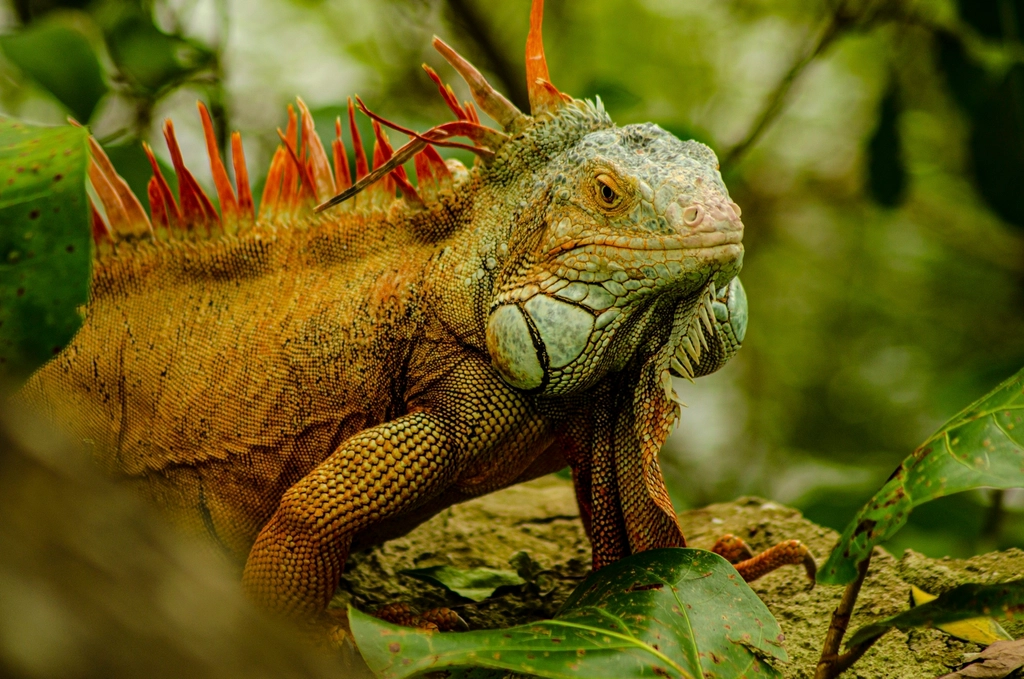 Photo Credit: Rawpixel
In the sun-drenched realm of the Galápagos Islands, the Marine Iguana, or Amblyrhynchus cristatus, stands out as a true marvel of nature. Picture a rugged coastline where black lava rocks jut out into the turquoise waves of the Pacific Ocean. Here, these remarkable reptiles bask in the warm sunlight, their dark, scaly bodies absorbing heat to prepare for their next dive into the chilly waters. With their flattened tails and long claws, Marine Iguanas are perfectly designed for life both on land and in the sea, making them the only lizards in the world that have adapted to a marine lifestyle.
What makes the Marine Iguana particularly captivating is not just its unusual habitat but also its diet and behavior. These iguanas primarily feast on algae, using their sharp teeth to scrape it off rocks beneath the waves. This herbivorous diet plays a vital role in maintaining the balance of the marine ecosystem, as they help control algae growth. Scientists and nature enthusiasts alike are drawn to these creatures, not only for their unique adaptations but also for their fascinating social behaviors, especially during the breeding season when males display vibrant colors to attract mates. As we explore the life of the Marine Iguana, we uncover the intricate connections between this extraordinary lizard and its environment, revealing the wonders of evolution and the delicate balance of nature.
The Marine Iguana, a truly extraordinary reptile, holds a special place in the tree of life. It belongs to the Kingdom Animalia, which includes all animals, and is classified under the Phylum Chordata, meaning it has a backbone. This unique lizard is the only one in the world that has adapted to life in the ocean, showcasing its remarkable ability to forage for food in the sea. With its flattened tail and sharp claws, the Marine Iguana is perfectly designed for swimming and climbing on rocky shores. This adaptation not only sets it apart from other iguanas but also highlights the incredible diversity of life on our planet.
| Taxonomic Rank | Scientific Name | Meaning & Significance |
|---|---|---|
| Kingdom | Animalia | This name signifies that Marine Iguanas are part of the vast group of multicellular organisms known as animals. |
| Phylum | Chordata | Chordata means “having a notochord,” which is a flexible rod that supports the body, a feature present in all vertebrates. |
| Class | Reptilia | Reptilia refers to reptiles, a class of cold-blooded animals that typically lay eggs and have scaly skin. |
| Order | Squamata | Squamata means “scaly,” which is fitting for this group that includes lizards and snakes, known for their scaly skin. |
| Family | Iguanidae | Iguanidae is the family of iguanas, named for their distinctive features, including their robust bodies and herbivorous diets. |
| Genus | Amblyrhynchus | Amblyrhynchus translates to “blunt snout,” describing the Marine Iguana’s unique head shape, which aids in feeding on algae. |
Understanding the Marine Iguana’s classification reveals much about its evolutionary journey. This lizard has adapted to a life that few reptiles can manage, showcasing how species can evolve in response to their environments. The Marine Iguana’s lineage traces back to land-dwelling ancestors, but over time, it has developed specialized traits that allow it to thrive in marine habitats. This fascinating evolutionary path not only highlights the resilience of life but also reminds us of the intricate connections that bind all living organisms together in the web of life.
The evolutionary journey of the Marine Iguana began millions of years ago, tracing back to the time when the ancestors of modern iguanas roamed the Earth. These ancestors likely emerged from land-dwelling reptiles that adapted to various environments. As the world changed, some of these reptiles found their way to the Galápagos Islands, where they faced new challenges and opportunities. Over time, these iguanas evolved into a species that could thrive in both marine and terrestrial habitats.
The transition from land to sea was a significant turning point for the Marine Iguana. Ancestral forms were primarily herbivorous, feeding on plants and vegetation. However, as they adapted to their new island home, they began to exploit the rich underwater resources. This shift led to the development of specialized features that allowed them to dive and forage for algae, their primary food source. Their bodies became streamlined, and their limbs transformed into powerful flippers, enabling them to swim efficiently in the ocean.
The adaptations of the Marine Iguana have been crucial for its survival in the harsh conditions of the Galápagos Islands. By developing the ability to excrete salt, they can thrive in a marine environment without suffering from dehydration. Their dark skin not only helps them absorb warmth but also provides camouflage against predators. With a flattened tail and strong claws, they navigate their rocky habitats with ease, allowing them to forage effectively. These evolutionary traits have made the Marine Iguana a true survivor, perfectly suited to its unique ecological niche.
The Marine Iguana is a striking figure, perfectly adapted to its rugged coastal habitat. With a body that can reach impressive lengths, these reptiles can weigh anywhere from 1 to 75 kilograms, or about 2.2 to 165 pounds. Their tough skin, a protective armor against the harsh elements of their environment, is often dark and mottled, allowing them to blend seamlessly with the rocky shores. The most eye-catching feature of the Marine Iguana is the long spines that run along its head, back, and tail, giving it a prehistoric appearance that seems to echo the ancient world.
| Feature | Description |
|---|---|
| Weight | 1 kg to 75 kg (2.2 lbs to 165 lbs) |
| Skin Type | Tough, providing protection from the elements |
| Most Distinctive Feature | Long spines on head, back, and tail |
These physical traits are not just for show; they serve vital purposes in the iguana’s survival. The tough skin helps shield them from the sun’s harsh rays and the abrasive surfaces of their rocky surroundings. The long spines not only enhance their intimidating look but also play a role in thermoregulation, helping them manage their body temperature after swimming in chilly ocean waters. Together, these features create a resilient and formidable creature, perfectly suited to thrive in the challenging environment of the Galápagos Islands.
The Marine Iguana calls the rocky shorelines of the Galápagos Islands its home. Picture a landscape where black lava rocks meet the crashing waves of the Pacific Ocean. Here, the sun shines brightly, and the salty breeze carries the sounds of seabirds and the gentle lapping of water. This unique environment is not just beautiful; it is essential for the survival of these fascinating reptiles. They bask on the sun-warmed rocks, soaking up heat to regulate their body temperature, and dive into the ocean to feed on algae that grow on underwater surfaces.
The climate of the Galápagos is quite special, characterized by warm temperatures and a mix of dry and wet seasons. The islands experience a subtropical climate, which means they can be sunny and dry for much of the year, but also have periods of rain. Marine Iguanas thrive in this environment, as they are well-suited to handle the fluctuations in temperature and humidity. The ocean waters around the islands are rich in nutrients, providing a plentiful food source for these reptiles.
Adaptation is key to the Marine Iguana’s survival in such a challenging habitat. Over time, they have developed several unique traits that help them thrive. For instance, their dark coloration absorbs sunlight, helping them warm up quickly after swimming in chilly waters. They also have specialized salt glands that allow them to excrete excess salt from the seawater they ingest while feeding. These adaptations enable them to live comfortably in a place where few other reptiles can survive, making them a true symbol of the Galápagos Islands.
The daily life of a Marine Iguana is a blend of sunbathing, swimming, and foraging, all set against the stunning backdrop of the Galápagos Islands. As the sun rises, these reptiles emerge from their rocky crevices to soak up the warmth, a crucial activity since they are ectothermic, meaning they rely on external heat sources to regulate their body temperature. After basking, they take to the ocean, diving into the cool waters to feed on algae, their primary diet. This unique feeding behavior allows them to thrive in a habitat where few other reptiles can survive.
Socially, Marine Iguanas are quite solitary creatures. While they may be seen basking in small groups, they do not form tight-knit communities like some other species. Instead, they maintain a loose social structure, often competing for prime basking spots on the rocks. Communication among them is subtle, involving body language and posturing rather than vocalizations. When threatened, they may puff up their bodies or display their colorful markings to assert dominance or ward off rivals.
| Behavior Type | Description |
|---|---|
| Basking | Emerging from rocky shelters to absorb sunlight, crucial for regulating body temperature. |
| Foraging | Diving into the ocean to feed on algae, their main source of nutrition. |
| Solitary Behavior | Generally prefer to be alone, with occasional gatherings for basking. |
| Body Language | Using postures and color displays to communicate dominance or deter threats. |
The behaviors of Marine Iguanas are finely tuned to their environment, ensuring their survival in a challenging habitat. By basking in the sun, they maintain the energy needed for their active lifestyle, while their solitary nature helps reduce competition for resources. Their unique feeding habits and communication methods allow them to thrive in the rocky shores of the Galápagos, showcasing the incredible adaptability of life on Earth.
The Marine Iguana primarily follows a herbivorous diet, which means it mainly eats plants. These fascinating reptiles have adapted to feast on algae, particularly the green and red varieties that grow on the rocks along the shore. To obtain their food, Marine Iguanas dive into the ocean, using their strong limbs to swim and forage for these underwater plants. They can hold their breath for up to an hour while searching for their favorite snacks, showcasing their impressive diving skills.
| Dietary Aspect | Details |
|---|---|
| Diet Type | Herbivore |
| Favorite Foods | Green and red algae |
| Prey Items | Primarily algae |
| Hunting/Foraging Strategies | Dives into the ocean, using strong limbs to swim and forage |
This diet not only shapes the Marine Iguana’s daily routine but also plays a crucial role in its ecological niche. By grazing on algae, these reptiles help maintain the health of their marine environment, preventing overgrowth and promoting biodiversity. Their unique feeding habits allow them to thrive in the harsh coastal conditions of the Galápagos Islands, making them an essential part of this vibrant ecosystem.
During the breeding season, which typically occurs from December to March, male Marine Iguanas engage in a captivating display of courtship. They become more vibrant in color, showcasing their bright hues to attract females. Males often engage in head-bobbing and push-up displays to assert dominance and signal their readiness to mate. Once a female chooses a mate, she will lay her eggs in a nest dug into the sandy ground, where they will remain until they hatch.
| Reproductive Aspect | Details |
|---|---|
| Gestation Period | 89 to 120 days |
| Litter Size | Typically 4 to 25 eggs |
| Age of Maturity | 3 to 8 years |
| Name of Young | Juveniles |
After the eggs hatch, the young, known as juveniles, emerge from their nests and begin their journey into the world. These tiny iguanas are independent from the moment they hatch, relying on their instincts to find food and avoid predators. As they grow, they will gradually develop the skills needed to thrive in their coastal habitat. Parental care is minimal, as the mother does not stay with her young after laying the eggs. Instead, the juveniles must navigate their environment, learning to swim and forage for algae, which will sustain them as they mature into adults.
The Marine Iguana plays a vital role in the food web of the Galápagos Islands. As a herbivore, it primarily feeds on algae, which helps maintain the balance of marine ecosystems. However, this fascinating reptile is not at the top of the food chain. It faces various predators and threats that can impact its survival.
To defend themselves against these dangers, Marine Iguanas have developed several survival strategies. They often bask on rocky shores, using their dark skin to absorb heat from the sun, which helps them stay alert and ready to escape if a predator approaches. When threatened, they can dive into the ocean, where they are agile swimmers, making it harder for predators to catch them. Additionally, their ability to blend into the rocky environment provides camouflage, allowing them to hide from both aerial and land-based threats. These adaptations are crucial for their survival in a world filled with challenges.
A keystone species is an organism that has a disproportionately large impact on its environment relative to its abundance. In the case of the Marine Iguana, this reptile does indeed play a keystone role in its ecosystem. By primarily feeding on algae, it helps regulate algal growth, which in turn supports the overall health of the marine environment in the Galápagos Islands.
The Marine Iguana’s diet consists mainly of algae, particularly the green and red varieties that thrive in the rocky coastal waters. By grazing on these algae, the iguanas prevent overgrowth, which can lead to a decline in water quality and habitat for other marine life. This grazing behavior not only keeps the ecosystem balanced but also allows for a diverse range of species to flourish in the area. Without the Marine Iguana, the unchecked growth of algae could smother coral reefs and disrupt the delicate balance of marine habitats.
Additionally, the Marine Iguana serves as a food source for various predators, including birds and sharks. This connection highlights its role in the food web, where its presence supports the survival of other species. The iguana’s unique adaptations, such as its ability to dive and forage underwater, further enhance its ecological significance. By maintaining the health of the algal populations, the Marine Iguana indirectly supports the entire marine ecosystem, from the smallest organisms to larger predators.
If the Marine Iguana were to disappear, the consequences would ripple through the ecosystem. Algal overgrowth could lead to a decline in water quality, affecting not only the iguanas’ habitat but also the health of coral reefs and other marine life. Predators that rely on the iguana as a food source would struggle to find alternative meals, potentially leading to their decline as well. The loss of this remarkable reptile would disrupt the balance of the entire marine ecosystem, showcasing just how vital the Marine Iguana is to the health of the Galápagos Islands.
The Marine Iguana occupies a crucial ecological niche in the rocky shorelines of the Galápagos Islands. As the only lizard in the world that has adapted to a marine lifestyle, it plays a significant role in its environment. By primarily feeding on algae, these iguanas help control algal growth, which is essential for maintaining the health of their coastal ecosystem. Their unique adaptations allow them to thrive in a habitat where few other reptiles can survive, making them a vital part of the marine food web.
| Ecosystem Service | Impact |
|---|---|
| Algal Grazing | Controls algal growth, preventing overgrowth that can suffocate other marine life. |
| Nutrient Cycling | Contributes to nutrient distribution in the ecosystem through waste, enriching the marine environment. |
| Food Source | Serves as prey for various predators, including birds and sharks, thus supporting the food web. |
| Habitat Modification | Influences the structure of the rocky shore habitat by creating spaces for other organisms. |
The Marine Iguana’s influence extends beyond just its diet. By grazing on algae, it helps maintain a balance in the ecosystem, ensuring that no single species dominates the underwater landscape. This grazing behavior not only supports the health of the algae but also benefits other marine organisms that rely on a diverse habitat. Additionally, the iguana’s waste products enrich the surrounding waters with nutrients, promoting the growth of various marine plants and supporting a vibrant community of sea life.
The broader ecological importance of the Marine Iguana cannot be overstated. As a keystone species, its presence is essential for the stability of the Galápagos marine ecosystem. By regulating algal populations and contributing to nutrient cycling, these iguanas help sustain a rich biodiversity that includes many other species. Their unique adaptations and behaviors highlight the intricate connections within ecosystems, reminding us of the delicate balance that sustains life in our oceans.
In the intricate web of life, symbiosis refers to the close and often long-term interactions between different species. These relationships can take many forms, including mutualism, where both species benefit, parasitism, where one benefits at the expense of the other, and commensalism, where one benefits while the other is neither helped nor harmed. The Marine Iguana, a unique inhabitant of the Galápagos Islands, engages in various ecological relationships that highlight the interconnectedness of life in its coastal habitat.
| Species/Type | Relationship Type | Description |
|---|---|---|
| Marine Algae | Mutualistic | The Marine Iguana feeds on algae, which helps control algal growth on the rocks, benefiting the ecosystem. |
| Sea Lions | Commensal | Marine Iguanas often bask near sea lions, gaining warmth without affecting the sea lions. |
| Ticks | Parasitic | Ticks can attach to Marine Iguanas, feeding on their blood, which can weaken the iguanas over time. |
These relationships have evolved over time, shaped by the unique environment of the Galápagos Islands. The Marine Iguana’s dependence on algae not only sustains its diet but also plays a crucial role in maintaining the health of its habitat. Meanwhile, interactions with sea lions provide warmth and safety, showcasing the delicate balance of nature. However, the presence of parasites like ticks reminds us that not all relationships are beneficial. Understanding these connections helps us appreciate the complexity of ecosystems and the importance of each species in maintaining ecological harmony.
The Marine Iguana is a captivating reptile that showcases the wonders of evolution and adaptation in the unique environment of the Galápagos Islands. Here are some surprising facts that highlight just how extraordinary this creature truly is.
The Marine Iguana has long captivated the imagination of humans, especially those who first encountered it in the Galápagos Islands. When Charles Darwin visited these islands in the 1830s, he was struck by the iguana’s unusual ability to swim and forage in the ocean. This unique adaptation made the Marine Iguana a symbol of evolution and natural selection, showcasing how species can change over time to thrive in their environments. In many cultures, these reptiles have come to represent the wild beauty of the Galápagos, inspiring stories and art that celebrate their distinctive presence.
Today, the relationship between Marine Iguanas and humans is complex and multifaceted. Conservation efforts are underway to protect these remarkable reptiles and their habitats, as they face threats from climate change, invasive species, and human activity. While many people visit the Galápagos to observe these creatures in their natural habitat, this tourism can sometimes lead to conflicts, such as habitat disturbance and pollution. Fortunately, local communities and conservation organizations are working together to promote sustainable practices that benefit both the iguanas and the people who share their environment.
As we look to the future, the relationship between Marine Iguanas and humanity holds both promise and challenges. With continued efforts in conservation and education, there is hope that these incredible reptiles will thrive alongside the people of the Galápagos. By fostering a deeper understanding of their ecological role and the importance of preserving their habitat, we can ensure that future generations will also marvel at the Marine Iguana’s unique adaptations and the vibrant ecosystems they inhabit. Together, we can create a world where humans and wildlife coexist harmoniously, celebrating the wonders of nature.
The Marine Iguana, a fascinating inhabitant of the Galápagos Islands, is currently classified as Vulnerable by the International Union for Conservation of Nature (IUCN). With an estimated population of around 250,000 individuals, these remarkable reptiles face challenges that could impact their future. While their numbers are relatively stable at the moment, ongoing threats could lead to declines if not addressed.
| Conservation Factor | Status/Details |
|---|---|
| IUCN Status | Vulnerable |
| Estimated Population Size | Approximately 250,000 |
| Population Trend | Stable, but under threat |
One of the main threats to the Marine Iguana is climate change, which can alter their habitat and food sources. Rising ocean temperatures can affect the growth of algae, their primary food, leading to food shortages. Additionally, human activities such as tourism and pollution pose risks to their environment. Invasive species, like rats and goats, can also disrupt their nesting sites and compete for resources, further endangering their survival.
Conservation efforts are underway to protect the Marine Iguana and its habitat. Organizations are working to monitor populations and restore their natural environments. Education programs aim to raise awareness about the importance of these reptiles and the ecosystems they inhabit. With continued support and effective management, there is hope that the Marine Iguana will thrive in the Galápagos Islands for generations to come.
| Question | Answer |
|---|---|
| Where do Marine Iguanas live? | Marine Iguanas are found exclusively on the rocky shorelines of the Galápagos Islands. These unique reptiles have adapted to life in a marine environment, making them the only lizards in the world that can swim in the ocean. |
| What do Marine Iguanas eat? | Marine Iguanas are herbivores, which means they primarily eat plants. Their diet mainly consists of algae, which they graze on while swimming underwater, using their sharp claws to cling to rocks. |
| How do Marine Iguanas behave? | Marine Iguanas are social creatures that often bask in the sun together on rocks. They are known for their unique ability to dive into the ocean to feed, and they can hold their breath for up to an hour while swimming. |
| How do Marine Iguanas reproduce? | Marine Iguanas mate on land, usually during the warmer months. After a gestation period of about two to three months, females lay eggs in sandy nests, which they cover to protect from predators. |
| What threats do Marine Iguanas face? | Marine Iguanas are classified as vulnerable due to threats like habitat loss, climate change, and introduced species that prey on their eggs. Human activities, such as tourism and pollution, also pose risks to their survival. |
| What is a unique characteristic of Marine Iguanas? | One of the most distinctive features of Marine Iguanas is their long spines that run along their head, back, and tail. These spines help them regulate their body temperature and are a key part of their unique appearance. |
| Can Marine Iguanas swim? | Yes, Marine Iguanas are excellent swimmers! They use their flattened tails to propel themselves through the water, allowing them to dive and forage for algae on the ocean floor. |