Taxonomy & Classification
- Kingdom
- Animalia
- Phylum
- Chordata
- Class
- Chondrichthyes
- Order
- Lamnifores
- Family
- Otodontidae
- Genus
- Otodus
- Species
- Otodus megalodon

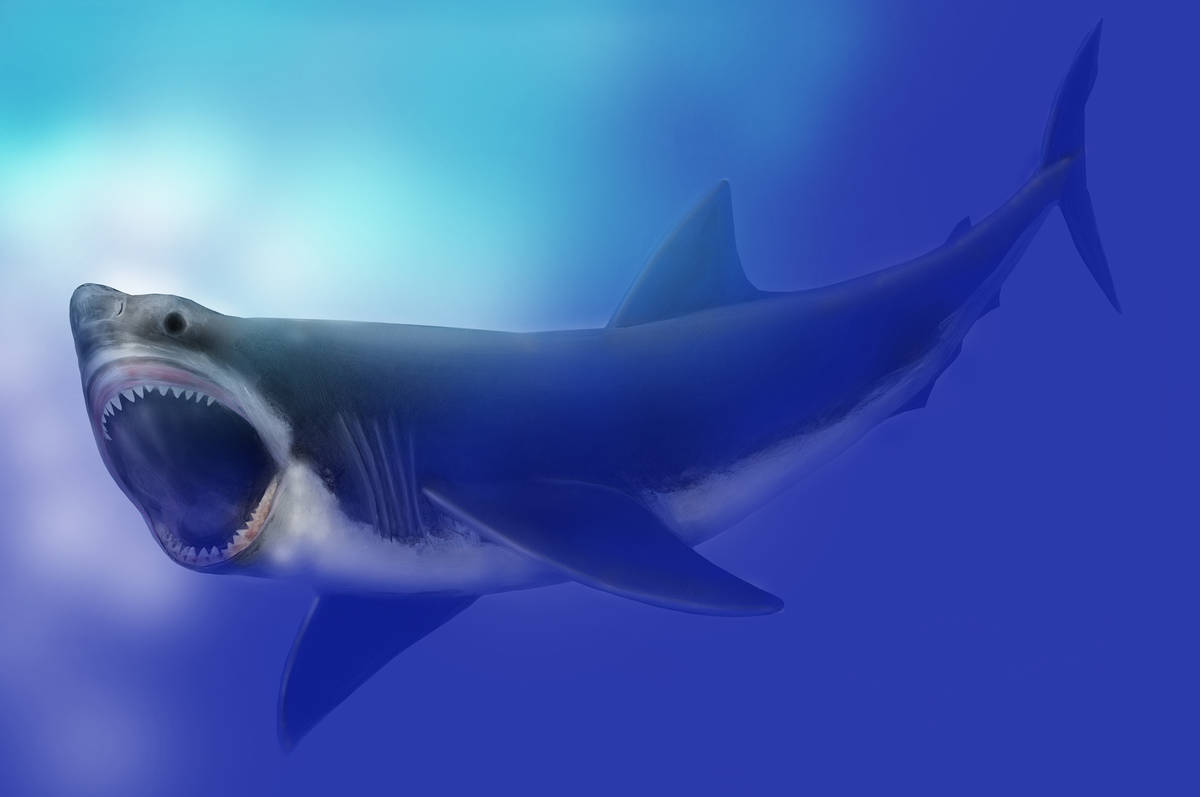 Photo Credit: Materialscientist / Wikimedia Commons
In the depths of ancient oceans, a titan ruled the waters: Megalodon, known scientifically as Otodus megalodon. This colossal shark, measuring up to 60 feet long—about the length of a school bus—was a true marvel of evolution. With its massive jaws lined with serrated teeth, each one the size of a human hand, Megalodon was not just a predator; it was the ultimate oceanic powerhouse. Imagine gliding through warm coastal waters, where schools of fish dart nervously, sensing the presence of this formidable hunter. The sheer size and strength of Megalodon make it a captivating subject for scientists and nature enthusiasts alike, sparking curiosity about its life and the ecosystems it once dominated.
Megalodon thrived during a time when the seas were rich with life, from giant whales to enormous sea turtles. Its streamlined body allowed it to swim with incredible speed, making it an efficient hunter. This ancient shark played a crucial role in its environment, helping to maintain the balance of marine life. As a keystone species, its presence influenced the populations of other marine animals, showcasing the interconnectedness of ocean ecosystems. Today, Megalodon remains a symbol of the ocean’s mysteries, inviting us to explore the depths of our planet’s history and the incredible creatures that once roamed its waters.
Megalodon, a colossal predator of the ancient seas, holds a significant place in the tree of life. This giant shark, scientifically known as Otodus megalodon, is a member of the class Chondrichthyes, which includes all cartilaginous fish like sharks and rays. What sets Megalodon apart is not just its size—growing up to 60 feet long—but also its powerful jaws filled with serrated teeth, designed for slicing through flesh. This apex predator ruled the oceans millions of years ago, showcasing the incredible diversity and adaptability of life on Earth.
| Taxonomic Rank | Scientific Name | Meaning & Significance |
|---|---|---|
| Kingdom | Animalia | This classification includes all animals, highlighting Megalodon as a complex, multicellular organism. |
| Phylum | Chordata | Chordates are animals with a backbone or spinal cord, indicating that Megalodon shares a common ancestry with other vertebrates. |
| Class | Chondrichthyes | This class is characterized by having a skeleton made of cartilage instead of bone, which is lighter and more flexible, aiding in swimming. |
| Order | Lamniformes | This order includes fast-swimming sharks, known for their streamlined bodies and sharp teeth, perfect for hunting. |
| Family | Otodontidae | The name means “tooth of Otodus,” referring to the distinctive teeth that are key to identifying this family of ancient sharks. |
| Genus | Otodus | This genus name translates to “tooth,” emphasizing the importance of its teeth in understanding its predatory nature. |
| Species | O. megalodon | The species name means “big tooth,” a fitting description for the massive teeth that have fascinated scientists and the public alike. |
Understanding Megalodon’s classification reveals much about its evolutionary history. As a member of the Chondrichthyes class, it shares traits with modern sharks, showcasing how these ancient creatures adapted to their environments over millions of years. The lineage of Megalodon illustrates the dynamic changes in marine ecosystems and highlights the evolutionary pressures that shaped one of the ocean’s most formidable predators. This classification not only connects Megalodon to its relatives but also provides insight into the vast tapestry of life that has existed on our planet.
The story of Megalodon unfolds over millions of years, tracing back to a time when the oceans were teeming with diverse marine life. This giant shark, known scientifically as Otodus megalodon, swam the seas from about 23 million years ago to around 3.6 million years ago, during the Cenozoic Era. As the Earth underwent dramatic changes, so too did the creatures that inhabited its waters, leading to the rise of this apex predator.
Megalodon’s ancestors can be found in the family Otodontidae, which includes several prehistoric sharks. These early sharks were smaller and less formidable than Megalodon, but they laid the groundwork for its evolution. Over time, adaptations began to emerge, allowing these sharks to thrive in their environments. One major transition was the development of larger body sizes, which provided advantages in hunting and competition. As the oceans filled with prey, the need for speed and power became essential, leading to the evolution of a more robust and streamlined body shape.
These adaptations were crucial for Megalodon’s survival in a competitive marine ecosystem. Its massive size allowed it to dominate other predators and prey alike, while powerful jaws and sharp teeth made it an efficient hunter. The keen sense of smell helped it locate food in vast oceans, and the ability to maintain body heat enabled it to thrive in different water temperatures. Together, these traits made Megalodon a formidable force in the ancient seas, ensuring its place as one of the most iconic predators in history.
Megalodon, the ancient giant of the oceans, presents an awe-inspiring sight that captures the imagination. Imagine a creature so massive that it could rival a school bus in length, with a streamlined body designed for speed and power. Its formidable jaws, lined with rows of serrated teeth, could crush bone with ease, making it the ultimate predator of its time. The sheer size and strength of Megalodon evoke a sense of both wonder and respect, as it ruled the seas millions of years ago.
| Feature | Description |
|---|---|
| Size | Estimated to reach lengths of up to 60 feet, making it one of the largest sharks ever. |
| Weight | Conservatively estimated at 100,000 pounds, showcasing its massive bulk. |
| Color | Likely a dark gray or blue on top, blending with the ocean depths, and lighter underneath for camouflage. |
| Skin Type | Tough and rough, covered in dermal denticles, which are tiny, tooth-like structures that reduce drag in the water. |
| Teeth | Large, serrated teeth that could grow over 7 inches long, perfect for gripping and tearing flesh. |
These impressive features worked together to make Megalodon a master of its environment. Its enormous size and weight allowed it to overpower prey, while its sleek body and tough skin enabled swift movement through the water. The coloration provided effective camouflage, helping it sneak up on unsuspecting fish and marine mammals. With its powerful jaws and razor-sharp teeth, Megalodon was not just a predator; it was a symbol of dominance in the ancient oceans, a true titan of the deep.
Megalodon, the legendary giant shark of the ancient seas, thrived in the warm, coastal ocean waters that hugged the shores of continents. Picture a vibrant underwater world filled with schools of fish, massive marine mammals, and the gentle sway of kelp forests. These habitats provided the perfect hunting grounds for Megalodon, where it could glide through the water with grace and power, always on the lookout for its next meal.
Megalodon preferred warmer waters, as it thrived in climates that ranged from temperate to tropical. These environments not only supported a rich diversity of prey but also offered the ideal conditions for this massive predator to maintain its body temperature. The coastal regions, with their shallow depths and abundant food sources, were particularly appealing, allowing Megalodon to hunt effectively while basking in the sun-warmed waters.
Over time, Megalodon adapted to its coastal habitats in remarkable ways. Its powerful jaws, lined with serrated teeth, were perfect for catching and consuming large prey, such as whales and other marine mammals. The shark’s size and speed allowed it to dominate its environment, while its keen sense of smell helped it detect food from great distances. These adaptations made Megalodon a formidable predator, perfectly suited to the rich and diverse ecosystems of the ancient oceans.
Megalodon, the ancient giant shark, led a life that revolved around the vast, blue oceans. Each day, it would glide through the warm waters, hunting for its favorite meals, which included large marine animals like whales and other fish. With its powerful jaws and sharp teeth, Megalodon was a masterful predator, using its keen sense of smell to detect prey from miles away. This enormous shark spent much of its time swimming, resting, and searching for food, always on the move in search of its next meal.
While Megalodon is often thought of as a solitary hunter, it likely had its own social dynamics. These massive sharks were not known to form groups like some other marine animals, but they may have interacted with one another during feeding frenzies or when competing for territory. Their interactions would have been brief and focused on survival rather than forming lasting bonds. Communication among Megalodons might have included body language and subtle movements, helping them navigate their environment and avoid potential threats.
| Behavior Type | Description |
|---|---|
| Activity Patterns | Megalodon spent its days swimming through warm coastal waters, hunting for large prey and resting in deeper areas when not actively feeding. |
| Social Structure | Primarily solitary, Megalodon did not form groups but may have interacted with others during feeding or territorial disputes. |
| Communication Methods | While not much is known, Megalodon likely used body language and movements to communicate with other sharks, especially during encounters. |
Megalodon’s behaviors were finely tuned for survival in the ancient oceans. By being a solitary hunter, it could cover vast distances in search of food without the competition that comes with group living. Its ability to detect prey from afar and its powerful hunting skills ensured that it remained at the top of the food chain. In a world filled with dangers, these behaviors allowed Megalodon to thrive in its environment, making it one of the most formidable predators of its time.
Megalodon was a fierce carnivore, meaning it primarily ate meat. This massive shark had a diet that revolved around some of the largest animals in the ocean. With its powerful jaws and sharp teeth, Megalodon was well-equipped to hunt and consume a variety of prey. It often targeted large marine mammals, such as baleen whales and toothed whales, as well as sea turtles and even other sharks. Its feeding behavior was not just about brute strength; it also involved strategic hunting techniques that allowed it to catch its meals effectively.
| Dietary Aspect | Details |
|---|---|
| Diet Type | Carnivore |
| Favorite Foods | Baleen whales, toothed whales, sea turtles |
| Prey Items | Large marine mammals and other sharks |
| Hunting/Foraging Strategies | Ambush tactics and powerful bites |
The diet of Megalodon played a crucial role in shaping its ecology and daily routine. By preying on large animals, it helped maintain the balance of marine ecosystems. This giant shark was not just a predator; it was a key player in the food web, influencing the populations of its prey. As it hunted, Megalodon would roam vast distances in search of food, showcasing its adaptability and dominance in the ancient oceans. Its impressive size and hunting skills made it one of the top predators of its time, leaving a lasting impact on the marine world.
Megalodon had a fascinating approach to reproduction, much like modern sharks. During the breeding season, which likely occurred in warmer months, these massive predators would engage in courtship behaviors. Males would display their strength and agility, showcasing their impressive size and speed to attract females. This mating ritual was essential for ensuring the continuation of their species, as Megalodon was a viviparous species, meaning that the young developed inside the mother rather than in eggs.
| Reproductive Aspect | Details |
|---|---|
| Gestation Period | Approximately 12 months |
| Litter Size | 2 to 14 pups |
| Age of Maturity | Around 15 years |
| Name of Young | Pups |
Once the pups were born, they faced a challenging world. Megalodon mothers likely provided some level of care, protecting their young from predators and teaching them essential survival skills. The pups were born relatively large, measuring about 6 feet long, which gave them a better chance of survival in the vast ocean. As they grew, these young sharks would gradually learn to hunt and navigate their environment, eventually maturing into the formidable giants that once ruled the seas. The journey from pup to adult was a critical phase, filled with challenges that shaped their development and ensured the legacy of this incredible species.
Megalodon, the ancient giant shark, was at the top of its food web, ruling the oceans with its immense size and power. As a super predator, it had few rivals, allowing it to dominate the marine ecosystem. However, even this colossal creature faced dangers that threatened its survival.
To defend itself against these threats, Megalodon likely relied on its size and speed. With its powerful body, it could swim quickly to escape danger or chase down prey. Additionally, its keen senses would help it detect changes in its environment, allowing it to adapt to shifting conditions. While Megalodon may have been a fearsome predator, the challenges it faced remind us that even the mightiest creatures must navigate a world full of dangers.
A keystone species is an organism that plays a critical role in maintaining the structure of its ecosystem. This means that its presence or absence can significantly impact the environment and the other species living there. Megalodon, the enormous shark that swam the oceans millions of years ago, is often considered a keystone species due to its position as a top predator. By controlling the populations of other marine animals, Megalodon helped maintain a balance in the oceanic food web.
Megalodon’s ecological impact was profound. As a carnivore, it primarily preyed on large marine animals, including whales and other sizable fish. This predation kept these populations in check, preventing any one species from becoming too dominant. For example, if Megalodon hunted large marine mammals, it would ensure that these animals did not overgraze on smaller fish populations, allowing for a diverse range of species to thrive. This balance is crucial for the health of marine ecosystems, as it promotes biodiversity, which is essential for resilience against environmental changes.
Additionally, Megalodon’s hunting behavior likely influenced the behavior of its prey. The presence of such a formidable predator would have forced other marine animals to adapt, leading to evolutionary changes over time. This dynamic interaction between predator and prey is a fundamental aspect of ecological systems, showcasing how one species can shape the lives of many others.
If Megalodon had disappeared from its ecosystem, the consequences would have been significant. Without this apex predator, populations of large marine mammals could have exploded, leading to overgrazing of smaller fish and other marine life. This imbalance could have triggered a cascade of changes throughout the ecosystem, potentially resulting in the decline of various species and a loss of biodiversity. The absence of Megalodon would have altered the very fabric of the marine environment, demonstrating just how vital keystone species are to the health of our planet’s ecosystems.
Megalodon, the ancient giant shark, occupied a crucial ecological niche in the marine environments of its time. As a top predator, it played a vital role in regulating the populations of other marine species. By preying on large marine animals, Megalodon helped maintain a balance in the ecosystem, ensuring that no single species dominated the waters. This balance is essential for the health of the entire oceanic community, as it allows for a diverse range of species to thrive.
| Ecosystem Service | Impact |
|---|---|
| Population Control | Regulates the numbers of large marine animals, preventing overpopulation. |
| Prey Selection | Encourages the evolution of prey species by selecting for the fastest and most agile individuals. |
| Nutrient Cycling | Contributes to nutrient cycling through its feeding habits, which supports the growth of other marine life. |
| Habitat Maintenance | Influences the structure of marine habitats by affecting the distribution of species. |
Megalodon’s influence on its ecosystem can be seen in various ways. For instance, by preying on large marine mammals, it kept their populations in check, which in turn allowed smaller fish and other marine organisms to flourish. This predator-prey relationship is a classic example of how top predators shape their environments. Additionally, as Megalodon hunted, it likely left behind remains that provided nutrients to scavengers and decomposers, further enriching the marine ecosystem.
The broader ecological importance of Megalodon cannot be overstated. As a keystone species, its presence was essential for maintaining the balance of marine life. The absence of such a powerful predator could lead to cascading effects throughout the ecosystem, resulting in overpopulation of certain species and the decline of others. This intricate web of life highlights the interconnectedness of all organisms in the ocean, reminding us of the delicate balance that sustains our planet’s biodiversity.
In the intricate web of life beneath the waves, symbiosis plays a vital role in shaping the relationships between species. Symbiosis refers to the close interactions between different organisms, which can be beneficial, harmful, or neutral. These ecological relationships can be classified into three main types: mutualism, where both species benefit; parasitism, where one species benefits at the expense of another; and commensalism, where one species benefits while the other is neither helped nor harmed. Understanding these connections helps us appreciate the balance of marine ecosystems, including the ancient world of Megalodon.
| Species/Type | Relationship Type | Description |
|---|---|---|
| Smaller fish (e.g., pilot fish) | Commensalism | These fish often swim alongside Megalodon, gaining protection from predators while feeding on scraps left from its meals. |
| Remoras | Mutualism | Remoras attach themselves to Megalodon, benefiting from transportation and leftover food, while providing the shark with a form of cleaning by removing parasites. |
| Marine scavengers (e.g., crabs, seagulls) | Commensalism | These scavengers benefit from the remains of Megalodon’s kills, finding an easy meal without affecting the shark. |
The relationships that Megalodon formed with other species likely evolved over time, shaped by the dynamics of survival and adaptation. As a top predator, Megalodon influenced the behavior and distribution of various marine organisms. The presence of smaller fish and remoras around this giant shark illustrates how species can coexist and thrive through mutual benefits or opportunistic feeding. These interactions not only highlight the complexity of ancient marine ecosystems but also remind us of the interconnectedness of life in the ocean, where every creature plays a part in the grand narrative of survival.
Megalodon, the giant shark that once ruled the oceans, continues to capture our imagination with its size and power. While many know it as a fearsome predator, there are some surprising facts that reveal just how extraordinary this ancient creature truly was.
Megalodon, the colossal shark that swam the oceans millions of years ago, has long fascinated humanity. Historical encounters with this giant predator have sparked countless stories and legends. Ancient cultures often depicted Megalodon as a fearsome creature, inspiring myths and tales of monstrous sea beasts. These stories reflect not only the awe and fear that Megalodon instilled but also humanity’s deep connection to the ocean and its mysteries. Even today, the idea of Megalodon captures our imagination, reminding us of the powerful forces that once ruled the seas.
In modern times, the relationship between Megalodon and humanity is more about curiosity than direct interaction, as this species went extinct around 3.6 million years ago. However, the legacy of Megalodon influences our understanding of marine conservation and the importance of protecting ocean ecosystems. While we cannot conserve Megalodon itself, studying its life and extinction helps scientists understand the impacts of climate change and human activity on current shark populations. This knowledge is crucial as we work to balance our needs with the health of marine environments, ensuring that future generations can enjoy the wonders of the ocean.
As we look to the future, the relationship between humanity and the legacy of Megalodon will continue to evolve. By learning from the past, we can better appreciate the delicate balance of marine life today. Understanding the reasons behind Megalodon’s extinction can guide us in protecting existing shark species and their habitats. This journey of discovery not only honors the memory of Megalodon but also fosters a deeper respect for the ocean and its inhabitants, ensuring that we remain stewards of the seas for generations to come.
Megalodon, the legendary giant shark of the ancient seas, is classified as extinct. This means that there are no living individuals of this species today. Once a dominant predator, Megalodon roamed the oceans millions of years ago, but its population has dwindled to zero. The reasons for its extinction are still a topic of research, but understanding its past can help us learn about the health of marine ecosystems.
| Conservation Factor | Status/Details |
|---|---|
| IUCN Status | Extinct |
| Population Estimates | None (extinct) |
| Trend Direction | Declining (led to extinction) |
The main threats that led to the extinction of Megalodon are still being studied, but several factors likely played a role. Changes in ocean temperatures and sea levels, along with the decline of prey species, may have made survival increasingly difficult. Additionally, competition with other marine predators, such as early whales, could have further strained their populations. These environmental shifts highlight how interconnected life in the oceans can be, where the loss of one species can ripple through the entire ecosystem.
While Megalodon itself is no longer around, its story serves as a powerful reminder of the importance of conservation efforts today. By studying the past, scientists can better understand how to protect existing marine species and their habitats. Efforts to preserve ocean ecosystems, such as reducing pollution and protecting critical habitats, are crucial for the survival of many marine animals. The lessons learned from Megalodon’s extinction can inspire us to take action and ensure that today’s ocean giants continue to thrive for generations to come.
| Question | Answer |
|---|---|
| What was the habitat of Megalodon? | Megalodon lived in coastal ocean waters, which are areas near the shore where the water is relatively shallow. These environments provided plenty of food and suitable conditions for this massive predator. |
| What did Megalodon eat? | Megalodon was a carnivore, meaning it primarily ate meat. Its diet likely included large marine animals such as whales, seals, and other fish, making it one of the top predators of its time. |
| How did Megalodon behave? | Megalodon is believed to have been an active hunter, using its size and speed to catch prey. It may have also exhibited social behaviors, possibly hunting in groups to take down larger animals. |
| How did Megalodon reproduce? | While we don't have direct evidence of Megalodon's reproduction, scientists think it was viviparous, meaning it gave birth to live young rather than laying eggs. This method would have allowed the young to develop in a safer environment inside the mother. |
| What were the threats to Megalodon? | Megalodon faced threats from changes in its environment, such as climate shifts that affected its food supply. Additionally, competition with other large predators and the decline of its prey species may have contributed to its extinction. |
| What are some interesting characteristics of Megalodon? | Megalodon was one of the largest sharks to ever exist, reaching lengths of up to 60 feet or more! Its teeth were massive, some measuring over 7 inches long, and were designed to crush the bones of its prey. |
| When did Megalodon go extinct? | Megalodon is believed to have gone extinct around 3.6 million years ago. This extinction coincided with significant changes in ocean temperatures and the rise of new predators, which may have outcompeted it. |