Taxonomy & Classification
- Kingdom
- Animalia
- Phylum
- Chordata
- Class
- Actinopterygii
- Order
- Tetraodontiformes
- Family
- Molidae
- Genus
- Mola
- Species
- Mola mola

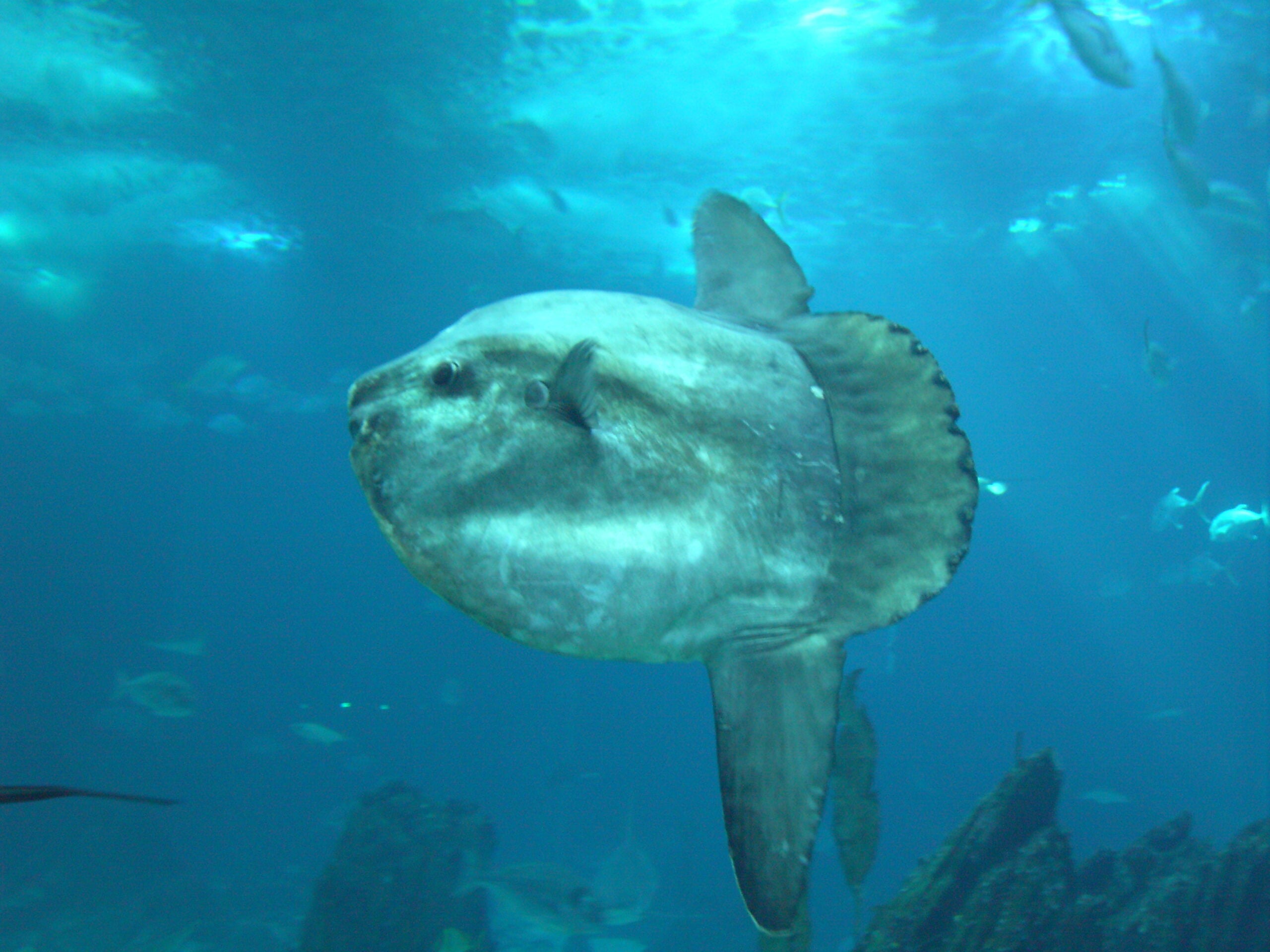 Photo Credit: Nol Aders / Wikimedia Commons
In the shimmering blue depths of the ocean, the Mola mola, better known as the ocean sunfish, glides gracefully through the water, captivating all who catch a glimpse of its unusual form. With its massive, flattened body resembling a giant floating pancake, this remarkable fish can weigh over 2,200 pounds and reach lengths of up to 10 feet. Its unique shape, with a head that seems to blend seamlessly into its body, allows it to bask in the sun’s warm rays near the surface, where it often floats lazily, soaking up the sunlight like a sunbather on a beach.
The ocean sunfish is not just a sight to behold; it plays a vital role in the marine ecosystem. As a carnivore, it primarily feasts on jellyfish, but it also munches on other soft-bodied creatures, making it an important predator in its watery world. Scientists and nature enthusiasts alike are drawn to the Mola mola for its intriguing behaviors and gentle nature. These gentle giants often engage in fascinating interactions with other marine life, including cleaning symbiosis, where smaller fish help remove parasites from their skin. As we dive deeper into the life of the ocean sunfish, we will explore its habitat, diet, and the unique relationships it forms in the vast ocean, revealing why this extraordinary fish continues to inspire wonder and curiosity.
The Mola mola, commonly known as the ocean sunfish, occupies a distinctive position in the tree of life. This extraordinary fish belongs to the kingdom Animalia, which includes all animals, and is classified under the phylum Chordata, meaning it has a backbone. What sets the ocean sunfish apart is its unique body shape; it has a flattened, oval form that resembles a giant pancake. This unusual morphology, along with its ability to bask in the sun at the ocean’s surface, gives it a name that reflects its behavior and appearance. The ocean sunfish is not just another fish; it is the heaviest bony fish in the world, weighing up to 2,200 pounds (1,000 kilograms) and reaching lengths of over 10 feet (3 meters).
| Taxonomic Rank | Scientific Name | Meaning & Significance |
|---|---|---|
| Kingdom | Animalia | This name signifies that the ocean sunfish is part of the vast group of multicellular organisms known as animals. |
| Phylum | Chordata | Chordata means “having a notochord,” which is a flexible rod that supports the body. This is a key feature of all vertebrates, including the ocean sunfish. |
| Class | Actinopterygii | Actinopterygii translates to “ray-finned fishes,” referring to the bony rays that support their fins, a characteristic of most fish. |
| Order | Tetraodontiformes | This order includes fish with a unique body structure, often characterized by their ability to inflate. The name comes from “tetra,” meaning four, and “odous,” meaning teeth, referring to their four fused teeth. |
| Family | Molidae | Molidae is derived from “mola,” which means millstone in Latin, reflecting the sunfish’s flat, round shape that resembles a grinding stone. |
| Genus | Mola | The genus name “Mola” also refers to the sunfish’s distinctive shape, emphasizing its unique profile in the ocean. |
Understanding the taxonomic classification of the Mola mola reveals much about its evolutionary journey. As a member of the Actinopterygii class, it shares a lineage with many other fish, but its placement in the Tetraodontiformes order highlights its specialized adaptations, such as its flattened body and unique feeding habits. The ocean sunfish’s evolutionary history is a testament to the diverse paths life can take in the vast ocean, showcasing how different environments can shape the anatomy and behavior of species over time. This remarkable fish not only captivates our imagination but also serves as a reminder of the intricate web of life that connects all living beings in the sea.
The evolutionary journey of the Mola mola, or ocean sunfish, stretches back millions of years, tracing its lineage through a fascinating tapestry of marine life. This remarkable fish is part of the family Molidae, which has adapted to the vast oceans since the late Cretaceous period, around 100 million years ago. As the oceans evolved, so too did the ancestors of the sunfish, leading to the unique adaptations we see today.
The early ancestors of the Mola mola were more streamlined and resembled typical fish, with elongated bodies and fins designed for swift swimming. Over time, these fish underwent significant changes, gradually flattening and evolving into the distinctive shape we recognize today. This transformation allowed them to thrive in open waters, where they could bask in the sun and feed on jellyfish, their primary diet. The transition from a traditional fish shape to a more disc-like form is a key evolutionary milestone, enabling the sunfish to utilize its buoyancy and surface area effectively.
These adaptations have been crucial for the survival of the Mola mola in the ever-changing marine environment. By evolving a flattened body and specialized fins, the sunfish can efficiently navigate the ocean’s depths while basking near the surface. Its ability to consume jellyfish not only provides a plentiful food source but also allows it to thrive in areas where other fish may struggle. The sunfish’s unique adaptations showcase the wonders of evolution, illustrating how life can take on extraordinary forms to meet the challenges of survival in the vast ocean.
The Mola mola, or ocean sunfish, presents an astonishing sight in the ocean’s depths. With its enormous, oval-shaped body, it looks almost like a giant floating pancake. This unique shape allows it to glide effortlessly through the water, using its large dorsal and anal fins to propel itself. The sunfish can grow to an impressive weight of up to 2,200 kilograms, or about 5,000 pounds, making it one of the heaviest bony fish in the world. Its skin, which is tough and leathery, adds to its striking appearance, giving it a somewhat rugged look that matches its oceanic habitat.
| Feature | Description |
|---|---|
| Size | Can weigh up to 2,200 kg (5,000 lbs) |
| Color | Typically grayish or bluish with a mottled pattern |
| Skin Type | Tough, leathery skin |
| Body Shape | Oval-shaped, resembling a large pancake |
| Fins | Large dorsal and anal fins for propulsion |
The ocean sunfish’s distinctive features are not just for show; they play vital roles in its survival. The oval shape helps it conserve energy while swimming, allowing it to float near the surface where sunlight penetrates the water. This positioning is crucial for basking in the sun, which helps regulate its body temperature. The tough skin protects it from predators and the harsh marine environment. Together, these adaptations make the Mola mola a true marvel of the ocean, perfectly suited to its unique lifestyle.
The ocean sunfish, or Mola mola, thrives in the vast, open waters of the world’s oceans. Picture a shimmering expanse of blue, where sunlight dances on the surface and the gentle waves cradle this extraordinary fish. Mola mola prefers the warm, temperate seas, often found drifting near the surface, basking in the sun’s rays. These waters are rich in nutrients, providing a perfect playground for the sunfish as it glides gracefully through its aquatic realm.
The ocean sunfish is quite adaptable when it comes to climate and environmental conditions. It favors warmer waters, typically ranging from 10 to 20 degrees Celsius (50 to 68 degrees Fahrenheit). These temperatures are often found in areas where ocean currents bring nutrient-rich waters to the surface, creating a buffet of jellyfish and other prey. The sunfish is also known to venture into cooler waters, especially during feeding times, showcasing its ability to thrive in various marine environments.
To survive in these diverse habitats, the Mola mola has developed some fascinating adaptations. Its flat, disc-like body allows it to float effortlessly, conserving energy as it basks in the sun. This unique shape also helps it maneuver through the water with ease, making it an efficient predator. Additionally, the sunfish’s skin is thick and covered in a layer of mucus, which protects it from parasites and helps it withstand the rigors of ocean life. These adaptations enable the ocean sunfish to not only survive but flourish in the ever-changing marine world.
The ocean sunfish, or Mola mola, leads a life that is both leisurely and intriguing. These gentle giants spend their days drifting through the warm waters of the ocean, often basking near the surface to soak up the sun’s rays. This behavior not only helps them regulate their body temperature but also allows them to absorb warmth after diving into cooler depths. As they float, they may occasionally engage in slow, graceful movements, using their large dorsal and anal fins to navigate the water. Their diet primarily consists of jellyfish, which they consume by gulping them down whole, making their feeding habits quite unique.
While Mola mola are generally solitary creatures, they do exhibit some interesting social behaviors. Occasionally, they can be seen swimming alongside other sunfish or even different species, like sea turtles. These interactions are often brief and seem to be more about sharing a sunbathing spot than forming lasting bonds. Communication among sunfish is subtle; they rely on body language and the positioning of their fins to convey their intentions. This solitary lifestyle allows them to roam vast distances in search of food and optimal basking locations, but it also means they must be vigilant against predators.
| Behavior Type | Description |
|---|---|
| Feeding | Mola mola primarily feed on jellyfish, using their large mouths to gulp them down whole. They often drift near the surface to find their food. |
| Sunbathing | These fish bask in the sun at the ocean’s surface, which helps them regulate their body temperature after diving into cooler waters. |
| Social Interactions | While mostly solitary, Mola mola may occasionally swim near other sunfish or sea turtles, sharing sunbathing spots without forming strong social bonds. |
| Communication | They communicate through body language, using their fins and body positioning to express their intentions to nearby fish. |
The behaviors of the ocean sunfish are finely tuned to ensure their survival in the vast ocean. By basking in the sun, they maintain their body temperature, which is crucial for their metabolism. Their solitary nature allows them to cover large areas in search of food, while their unique feeding habits enable them to thrive on a diet that many other fish cannot utilize. This combination of behaviors not only helps them find nourishment but also keeps them safe from potential threats in the ever-changing marine environment.
The Mola mola, or ocean sunfish, is a carnivore, meaning it primarily eats other animals. This fascinating fish has a diet that mainly consists of jellyfish, but it also enjoys a variety of other marine delicacies. Ocean sunfish are known for their unique feeding behavior, which involves drifting through the water and using their large mouths to gulp down prey. They often hunt in the open ocean, where they can find their favorite foods floating by in the currents.
| Dietary Aspect | Details |
|---|---|
| Diet Type | Carnivore |
| Favorite Foods | Jellyfish, crustaceans, squid, sponges, and small fish |
| Prey Items | Jellyfish, which are soft-bodied and abundant in the ocean |
| Hunting/Foraging Strategies | Drifting and gulping prey as it swims through the water |
The ocean sunfish’s diet plays a crucial role in its ecology and daily routine. By consuming large quantities of jellyfish and other soft-bodied animals, Mola mola helps regulate their populations in the ocean. This feeding behavior not only supports the sunfish’s massive size but also influences the health of marine ecosystems. As they drift through the water, these gentle giants contribute to the balance of life beneath the waves, showcasing the interconnectedness of oceanic food webs.
The mating behavior of the Mola mola, or ocean sunfish, is as intriguing as the fish itself. During the breeding season, which typically occurs in warmer waters, males and females engage in a unique courtship ritual. This often involves a series of acrobatic displays, where the sunfish swim in circles and leap out of the water. These spectacular performances not only attract potential mates but also help establish dominance among males. Once a pair has formed, they will mate, although the exact details of their reproductive process remain somewhat of a mystery.
| Reproductive Aspect | Details |
|---|---|
| Gestation Period | Unknown |
| Litter Size | Up to 300,000 eggs |
| Age of Maturity | 3 to 4 years |
| Name of Young | Fry |
After the eggs are laid, the young Mola mola, known as fry, begin their journey in the vast ocean. These tiny fish are left to fend for themselves right from the start, as ocean sunfish do not exhibit parental care. The fry are born with a remarkable ability to swim and find food, primarily feeding on plankton and small marine organisms. As they grow, they gradually shift to a diet that includes jellyfish and other larger prey. Over the next few years, these young sunfish will undergo significant growth, transforming from small fry into the massive adults that glide gracefully through the ocean’s depths.
The Mola mola, or ocean sunfish, plays a unique role in the marine food web. As a large, slow-moving fish, it primarily feeds on jellyfish and other soft-bodied creatures. While it may seem like a gentle giant, the ocean sunfish is not without its challenges. It faces various predators and threats that can impact its survival in the vast ocean.
Despite these dangers, the ocean sunfish has developed some clever survival strategies. When threatened, it often relies on its size and unique shape to deter predators. Its flat, broad body makes it difficult for many fish to attack. Additionally, sunfish can dive deep into the ocean, where they can find refuge from larger predators. By basking at the surface, they also attract smaller fish that help clean parasites off their skin, creating a symbiotic relationship that benefits both parties. These behaviors help the Mola mola navigate the challenges of its underwater world.
A keystone species is an organism that has a disproportionately large impact on its environment relative to its abundance. In other words, if it were removed, the ecosystem would change dramatically. The Mola mola, or ocean sunfish, is not typically classified as a keystone species, but it does play an important role in its marine ecosystem. Its presence influences the populations of other marine life, particularly jellyfish, which are a significant part of its diet.
The ocean sunfish primarily feeds on jellyfish, which can bloom in large numbers and disrupt marine ecosystems. By consuming these gelatinous creatures, the Mola mola helps to keep jellyfish populations in check. This is crucial because jellyfish can outcompete other marine species for food and space if their numbers grow unchecked. Additionally, the sunfish serves as a food source for larger predators, such as sharks and orcas, thus contributing to the balance of the food web.
Moreover, the Mola mola’s unique feeding habits can indirectly benefit other marine organisms. When it consumes jellyfish, it also helps to maintain the health of the ocean’s plankton populations. Plankton are tiny organisms that form the base of the marine food web, supporting a wide variety of sea life. By regulating jellyfish populations, the ocean sunfish indirectly supports the abundance of these essential organisms.
If the Mola mola were to disappear from its habitat, the consequences could be significant. Without this gentle giant to keep jellyfish numbers in check, we might see a surge in jellyfish populations. This could lead to a decline in other marine species that compete for the same resources, ultimately disrupting the entire marine ecosystem. The balance of life in the ocean is delicate, and the loss of even a single species can ripple through the food web, affecting countless others.
The Mola mola, or ocean sunfish, plays a vital role in its marine ecosystem, acting as both a predator and a prey. This fascinating fish is known for its unique shape and size, which allows it to thrive in open ocean environments. By feeding primarily on jellyfish and other soft-bodied creatures, the ocean sunfish helps regulate jellyfish populations, preventing them from overwhelming marine habitats. This balance is crucial for maintaining the health of the ocean ecosystem, as jellyfish can sometimes bloom in large numbers, disrupting the food web.
| Ecosystem Service | Impact |
|---|---|
| Population Control | Regulates jellyfish numbers, preventing overpopulation. |
| Nutrient Cycling | Contributes to nutrient distribution through its feeding habits. |
| Prey for Larger Species | Serves as a food source for predators like sharks and orcas. |
| Habitat for Other Organisms | Provides shelter for small marine life when it basks at the surface. |
The ocean sunfish’s influence extends beyond just its diet. For instance, when it consumes jellyfish, it not only keeps their populations in check but also helps recycle nutrients back into the water. This process supports the growth of phytoplankton, the tiny plants that form the base of the ocean food web. Additionally, when sunfish bask at the surface, they create a unique habitat for smaller fish and invertebrates, which can find refuge in the shade of their massive bodies. This interaction highlights the interconnectedness of marine life, where one species can significantly impact many others.
The broader ecological importance of the Mola mola cannot be overstated. As a keystone species, its presence helps maintain the balance of the marine ecosystem. If ocean sunfish were to disappear, the effects would ripple through the food web, potentially leading to an overabundance of jellyfish and a decline in other marine species. By understanding the role of the ocean sunfish, we gain insight into the delicate balance of ocean ecosystems and the importance of protecting these remarkable creatures for future generations.
In the vast and interconnected world of the ocean, the Mola mola, or ocean sunfish, engages in various ecological relationships with other species. These interactions can be classified into three main types: mutualism, parasitism, and commensalism. Each type of relationship plays a crucial role in the health of marine ecosystems, showcasing the intricate balance of life beneath the waves. Symbiosis, which means living together, highlights how different species can benefit from one another, sometimes in surprising ways.
| Species/Type | Relationship Type | Description |
|---|---|---|
| Remora fish | Mutualistic | Remoras attach themselves to the Mola mola, gaining protection and transportation while helping to keep the sunfish clean by eating parasites and dead skin. |
| Sea lice | Parasitic | These small crustaceans attach to the Mola mola, feeding on its skin and potentially causing irritation, which can be harmful to the fish. |
| Cleaner wrasse | Commensal | These small fish often clean the Mola mola by removing parasites. While the wrasse benefits from a meal, the sunfish is not significantly harmed or helped. |
The evolution of these relationships is a testament to nature’s adaptability and resilience. Over time, species like the remora have developed specialized adaptations to thrive alongside the Mola mola, while the sunfish has learned to tolerate certain parasites like sea lice. These interactions not only enhance the survival of individual species but also contribute to the overall health of the marine ecosystem. By understanding these connections, we gain insight into the delicate balance of life in our oceans and the importance of preserving these habitats for future generations.
The ocean sunfish, or Mola mola, is one of the most extraordinary fish in our oceans, captivating scientists and nature lovers alike with its unique characteristics and behaviors. Here are some surprising facts that showcase just how remarkable this giant really is.
The ocean sunfish, or Mola mola, has a long history of encounters with humans that stretches back centuries. In various cultures, this peculiar fish has been both revered and misunderstood. Ancient mariners often regarded the sunfish as a sign of good fortune, believing that spotting one meant a bountiful catch ahead. In some coastal communities, the sunfish has even found its way into folklore, symbolizing the mysteries of the deep sea. Its unusual shape and size have sparked curiosity and wonder, making it a subject of fascination in art and literature throughout history.
Today, the relationship between Mola mola and humanity is evolving, particularly as awareness of marine conservation grows. While these gentle giants are not typically targeted by fisheries, they can become entangled in fishing gear, leading to injury or death. Conservation efforts are underway to protect their habitats and reduce bycatch, which is the unintentional capture of non-target species. Additionally, researchers are studying the sunfish to better understand its role in the marine ecosystem, as well as the impacts of climate change on its population and behavior. This growing interest in the sunfish reflects a broader commitment to preserving ocean life and fostering a sustainable relationship with our marine environments.
As we look to the future, the relationship between Mola mola and humanity holds promise. With increased awareness and education about marine ecosystems, there is hope for a more harmonious coexistence. By prioritizing conservation efforts and respecting the delicate balance of ocean life, we can ensure that these magnificent fish continue to thrive in our waters. The ocean sunfish serves as a reminder of the wonders of the sea and the importance of protecting the natural world for generations to come.
The conservation status of the Mola mola, or ocean sunfish, is currently classified as Vulnerable. This means that while the species is not yet endangered, it faces significant threats that could lead to a decline in its population if not addressed. The exact number of ocean sunfish in the wild remains unknown, making it challenging to assess their population trends accurately. However, ongoing research and monitoring efforts are crucial to understanding their status better.
| Conservation Factor | Status/Details |
|---|---|
| IUCN Status | Vulnerable |
| Estimated Population Size | Unknown |
| Population Trend | Unknown |
The main threats to the ocean sunfish include bycatch in fishing gear, habitat degradation, and climate change. Bycatch refers to the unintentional capture of non-target species during fishing activities. Since ocean sunfish are often found near the surface, they can easily become entangled in nets or caught on fishing lines. Additionally, as ocean temperatures rise and habitats like coral reefs are damaged, the delicate balance of marine ecosystems is disrupted, further endangering this species.
Conservation efforts for the Mola mola are underway, focusing on raising awareness and implementing protective measures. Organizations are working to improve fishing practices to reduce bycatch and promote sustainable fishing methods. Additionally, researchers are studying the ocean sunfish’s behavior and habitat needs to inform conservation strategies. With continued efforts and public support, there is hope that the ocean sunfish can thrive in its natural habitat for generations to come.
| Question | Answer |
|---|---|
| What is the habitat of the Mola mola? | The Mola mola, or ocean sunfish, is typically found in warm and temperate oceans around the world. They prefer open waters, often near the surface, where they can bask in the sun and enjoy the warmth. |
| What does the Mola mola eat? | This fascinating fish is a carnivore, meaning it primarily eats other animals. Its diet mainly consists of jellyfish, but it also enjoys small fish and plankton, which are tiny organisms that drift in the ocean. |
| How does the Mola mola behave in the wild? | Mola molas are known for their unique behavior of basking in the sun, often seen floating on their sides. They are generally solitary creatures, but they can sometimes be spotted in small groups, especially when feeding. |
| How do Mola molas reproduce? | Ocean sunfish have a fascinating reproductive process. A female can release millions of eggs at once, which are fertilized by males in the water. This high number of eggs increases the chances of survival for the young fish. |
| What threats do Mola molas face? | Mola molas are classified as vulnerable, meaning they are at risk of extinction. They face threats from fishing nets, plastic pollution, and climate change, which can affect their food sources and habitats. |
| What is the most distinctive feature of the Mola mola? | The most striking characteristic of the Mola mola is its oval-shaped body, which can weigh over 2,000 pounds! This unique shape helps them float effortlessly in the water and makes them easily recognizable. |
| Are Mola molas social animals? | While Mola molas are mostly solitary, they can sometimes be seen interacting with other marine animals. They may swim near sea turtles or even allow birds to perch on them, creating a unique relationship in the ocean. |