Taxonomy & Classification
- Kingdom
- Animalia
- Phylum
- Cnidaria
- Class
- Scyphozoa
- Order
- Semaeostomeae
- Family
- Ulmaridae
- Genus
- Aurelia
- Species
- Aurelia aurita

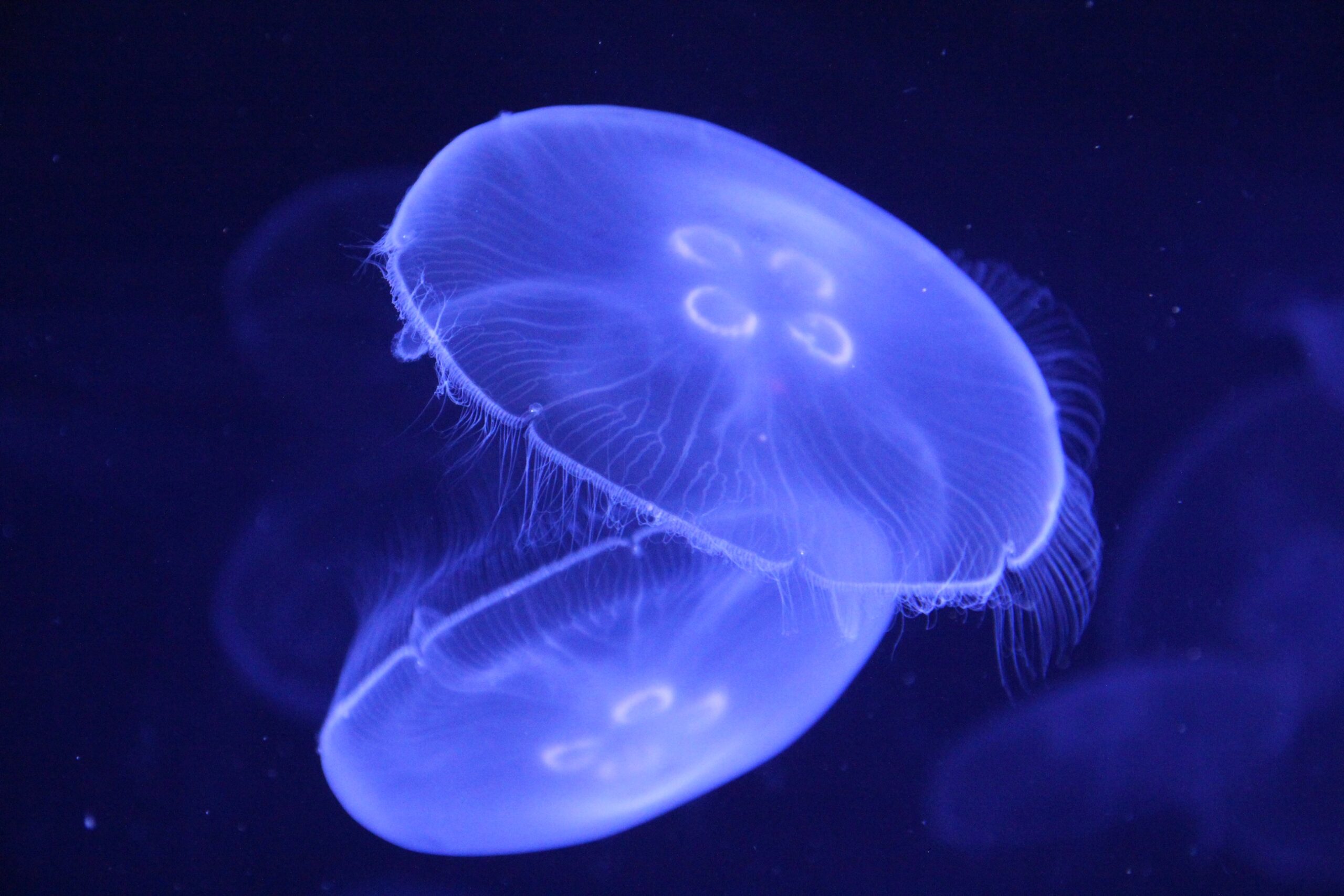 Photo Credit: Tupungato / Wikimedia Commons
In the shimmering waters of temperate oceans, the Moon Jellyfish, scientifically known as Aurelia, drifts gracefully, embodying the beauty of the sea. With its translucent, dome-shaped body resembling a delicate moon, it glides through the water, pulsating gently as it moves. This ethereal creature captivates both scientists and nature enthusiasts alike, not just for its stunning appearance but also for its intriguing role in the marine ecosystem. The Moon Jellyfish is a keystone species, meaning it plays a crucial part in maintaining the balance of life beneath the waves.
As you watch these jellyfish float, you might notice their long, trailing tentacles, which are equipped with tiny stinging cells called nematocysts. These cells help the Moon Jellyfish capture its food, primarily tiny plankton and small fish. The way they interact with their environment is a dance of survival, showcasing the delicate balance of predator and prey in the ocean. With a history that stretches back over 500 million years, Aurelia is not just a beautiful sight; it is a living link to the ancient past, reminding us of the wonders of evolution and the mysteries still hidden in our oceans. Join us as we dive deeper into the world of the Moon Jellyfish, exploring its life cycle, behaviors, and the vital role it plays in the underwater realm.
The Moon Jellyfish, scientifically known as Aurelia, occupies a fascinating niche in the tree of life. It belongs to the Kingdom Animalia, which includes all animals, and is classified under the Phylum Cnidaria. This group is known for its stinging cells, called cnidocytes, which help capture prey and defend against predators. What sets the Moon Jellyfish apart is its translucent, umbrella-shaped bell that can glow with a soft, ethereal light, making it a mesmerizing sight in the ocean. Its simple body structure, lacking a brain and heart, showcases the diversity of life forms and adaptations that have evolved over millions of years.
| Taxonomic Rank | Scientific Name | Meaning & Significance |
|---|---|---|
| Kingdom | Animalia | This name means “animals” in Latin, highlighting the Moon Jellyfish’s classification as a multicellular organism that consumes organic material. |
| Phylum | Cnidaria | Derived from the Greek word “knidos,” meaning “stinging nettle,” this name refers to the jellyfish’s specialized stinging cells used for capturing prey. |
| Class | Scyphozoa | This term comes from the Greek “skyphos,” meaning “cup,” which describes the jellyfish’s cup-like shape that is characteristic of this class. |
| Order | Semaeostomeae | The name means “with a mouth at the end,” referring to the jellyfish’s oral arms that hang down from the bell, aiding in feeding. |
| Family | Ulmaridae | This family name is derived from “ulma,” a term related to the shape of the jellyfish, emphasizing its rounded, umbrella-like form. |
| Genus | Aurelia | From the Latin word for “golden,” this name reflects the jellyfish’s often golden or yellowish hue, especially when illuminated in the water. |
Understanding the Moon Jellyfish’s classification reveals much about its evolutionary journey. As a member of the Cnidaria phylum, it shares a common ancestor with other jellyfish, corals, and sea anemones, dating back over 500 million years. This ancient lineage highlights the jellyfish’s resilience and adaptability in various marine environments. The simplicity of its body plan, combined with its unique adaptations, showcases the incredible diversity of life forms that have emerged through evolution, reminding us of the intricate connections that bind all living organisms in the vast tapestry of life.
The evolutionary journey of the Moon Jellyfish, or Aurelia, stretches back over 500 million years, making it one of the oldest living organisms on Earth. These gelatinous beings have floated through the oceans since the Cambrian period, a time when life was just beginning to diversify. As they drifted through ancient seas, they adapted to their environments, evolving into the graceful, translucent forms we see today.
The ancestors of Moon Jellyfish were simple, soft-bodied organisms that lived in the ocean. Over time, they developed a more complex body structure, including a bell-shaped umbrella and tentacles lined with specialized cells called cnidocytes. These cells contain tiny stinging structures called nematocysts, which help them capture prey and defend against predators. As they evolved, Moon Jellyfish also developed a unique life cycle that includes both a polyp stage, which is attached to the ocean floor, and a medusa stage, which is the free-swimming form we recognize today.
These evolutionary adaptations have been crucial for the survival of Moon Jellyfish in the ever-changing ocean. Their soft bodies help them blend into their surroundings, making it harder for predators to spot them. The stinging cells not only assist in hunting but also serve as a defense mechanism. With a life cycle that allows them to thrive in different habitats, Moon Jellyfish continue to be a resilient presence in our oceans, showcasing the wonders of evolution in action.
The Moon Jellyfish, known scientifically as Aurelia, presents a mesmerizing sight in the water. Its body is a translucent, gelatinous dome that resembles a delicate, floating moon. This ethereal form is not just beautiful; it is also functional. The jellyfish’s bell-shaped body can pulse rhythmically, propelling it through the water with a gentle grace. With a soft, almost ethereal glow, the Moon Jellyfish captivates anyone lucky enough to encounter it, creating a magical atmosphere in its aquatic realm.
| Feature | Description |
|---|---|
| Size | Typically ranges from 10 to 16 inches in diameter |
| Weight | Weighs between 0.005 and 0.07 pounds |
| Color | Translucent with a bluish or pinkish hue |
| Skin Type | Gelatinous and soft, allowing for flexibility |
| Distinctive Feature | Moon-shaped body that glows softly in the dark |
These features work together to create a creature perfectly adapted to its environment. The Moon Jellyfish’s gelatinous body allows it to drift effortlessly with ocean currents, conserving energy while searching for food. Its soft glow can attract prey or even confuse predators, providing a clever survival tactic. This combination of beauty and functionality makes the Moon Jellyfish not just a wonder to behold, but also a master of its watery world.
The Moon Jellyfish, or Aurelia, thrives in the serene embrace of temperate oceans, where the water is cool and inviting. Picture a vast expanse of blue, dotted with the gentle sway of seaweed and the soft lapping of waves against sandy shores. These jellyfish often drift near beaches, where sunlight filters through the water, creating a magical underwater world. Here, they float gracefully, their translucent bodies glimmering like ethereal moons in the ocean’s depths.
The Moon Jellyfish prefers environments that are not too extreme. They thrive in waters that are typically mild, with temperatures ranging from about 50 to 75 degrees Fahrenheit. This range allows them to maintain their delicate balance, as they are sensitive to changes in temperature and salinity, which is the saltiness of the water. They often inhabit areas with plenty of nutrients, which helps support the tiny plankton they feed on, making these regions rich in life.
Adaptation is key to the Moon Jellyfish’s success in its watery home. Their gelatinous bodies are not just beautiful; they are perfectly designed for life in the ocean. This soft, squishy form allows them to move with the currents, conserving energy as they drift along. Their ability to thrive in various coastal environments means they can find food and shelter in a range of habitats, from bustling bays to quiet lagoons. This adaptability helps them survive and flourish in the ever-changing marine world.
The daily life of a Moon Jellyfish, or Aurelia, is a gentle dance through the water, where it drifts with the currents and pulses rhythmically to propel itself. These creatures spend their days floating in the ocean, using their bell-shaped bodies to move gracefully. They are primarily active during the day, taking advantage of sunlight filtering through the water. As they drift, they feed on tiny plankton, which they capture with their stinging tentacles. This simple yet effective routine allows them to thrive in their aquatic environment.
Moon Jellyfish are social animals that often gather in groups known as “smacks.” These smacks can consist of dozens or even hundreds of individuals, creating a stunning spectacle as they move together in unison. Within these groups, they exhibit fascinating social behaviors, such as synchronized swimming and gentle interactions. While they do not communicate in the way humans do, they can sense each other through the water, responding to the movements and presence of their fellow jellyfish. This social structure helps them navigate their environment more effectively and increases their chances of finding food.
| Behavior Type | Description |
|---|---|
| Activity Patterns | Moon Jellyfish are primarily active during the day, using their bell-shaped bodies to drift and pulse through the water while feeding on plankton. |
| Social Structure | They gather in groups called smacks, which can include many individuals, allowing for synchronized movement and increased safety. |
| Communication Methods | While they lack vocal communication, they sense each other through the water, responding to movements and proximity to fellow jellyfish. |
The behaviors of Moon Jellyfish are not just beautiful to observe; they play a crucial role in their survival. By forming smacks, they enhance their ability to find food and protect themselves from predators. Their rhythmic movements and social interactions help them navigate the vast ocean, ensuring they remain a vital part of the marine ecosystem. In this way, the Moon Jellyfish exemplifies how even the simplest creatures can thrive through cooperation and adaptation.
The Moon Jellyfish, or Aurelia, is a carnivore, meaning it primarily eats other living organisms. Its diet mainly consists of tiny creatures that drift through the water, such as plankton, small fish, crustaceans, and even the eggs and larvae of various marine animals. This jellyfish has a fascinating way of feeding: it uses its long, stinging tentacles to capture prey. When a small fish or plankton comes too close, the tentacles release tiny stinging cells called nematocysts, which immobilize the prey. Once caught, the Moon Jellyfish brings the food to its mouth, located on the underside of its bell-shaped body.
| Dietary Aspect | Details |
|---|---|
| Diet Type | Carnivore |
| Favorite Foods | Plankton, small fish, crustaceans, larvae, eggs |
| Prey Items | Various marine organisms, including tiny fish and crustaceans |
| Hunting/Foraging Strategies | Uses stinging tentacles to capture prey and brings it to its mouth |
The diet of the Moon Jellyfish plays a crucial role in its ecological niche. By feeding on small marine organisms, it helps control their populations, contributing to the balance of the ocean ecosystem. This gentle predator drifts through the water, constantly foraging for food, which shapes its daily routine. The Moon Jellyfish’s feeding habits not only sustain its own life but also influence the lives of many other creatures in the ocean, making it an essential part of the marine food web.
The Moon Jellyfish, or Aurelia, has a captivating mating ritual that takes place during the warmer months when conditions are just right. As the water temperature rises, these jellyfish engage in a fascinating dance, releasing sperm and eggs into the water. This process, known as spawning, can create a beautiful spectacle as clouds of gametes swirl together. The timing of this event is crucial, as it ensures that the young have the best chance of survival in the ocean’s rich environment.
| Reproductive Aspect | Details |
|---|---|
| Gestation Period | Varies |
| Litter Size | Varies |
| Age of Sexual Maturity | Varies |
| Name of Young | Planula, polyp, ephyra |
Once the eggs are fertilized, they develop into tiny larvae called planulae. These planulae are free-swimming and will eventually settle on the ocean floor, where they transform into polyps. These polyps are like little factories, producing more jellyfish through a process called budding. After some time, the polyps release young jellyfish known as ephyrae, which are miniature versions of their adult counterparts. Interestingly, Moon Jellyfish do not provide parental care; instead, they rely on the ocean’s currents and abundant food sources to help their young grow into adults. As they mature, these jellyfish will join the dance of life in the ocean, continuing the cycle of reproduction and survival.
The Moon Jellyfish, or Aurelia, plays a vital role in the ocean’s food web. As a gelatinous creature, it serves as both predator and prey. It feasts on tiny plankton and small fish, while also being a meal for larger animals. This delicate balance keeps the marine ecosystem healthy and thriving. However, the Moon Jellyfish faces several dangers that threaten its survival.
To defend itself against these threats, the Moon Jellyfish has developed some clever survival strategies. Its soft, gelatinous body makes it difficult for predators to grasp, while its stinging tentacles can deliver a mild sting to deter smaller attackers. Additionally, Moon Jellyfish often rely on their sheer numbers, as swarming in large groups can confuse predators and increase their chances of survival. By floating gracefully through the water and using these tactics, they continue to thrive in their oceanic home.
A keystone species is an organism that has a disproportionately large impact on its environment relative to its abundance. In simpler terms, if you remove a keystone species, the entire ecosystem can change dramatically. The Moon Jellyfish, scientifically known as Aurelia, qualifies as a keystone species in its habitat. Its presence influences the population dynamics of various marine organisms, making it a crucial player in the ocean’s intricate web of life.
Moon Jellyfish have a significant ecological impact, particularly in temperate ocean waters. They are carnivores, primarily feeding on tiny plankton and small fish. By consuming these organisms, they help regulate their populations, preventing any one species from overwhelming the ecosystem. This balance is essential for maintaining healthy marine environments. Additionally, Moon Jellyfish serve as a food source for larger predators, such as sea turtles and certain fish species. Their role as both predator and prey creates a dynamic interaction that supports biodiversity.
Moreover, the Moon Jellyfish’s group behavior, known as a “smack,” can influence the distribution of nutrients in the water. When they gather in large numbers, their movement can stir up sediments and promote nutrient cycling, which benefits other marine life. This process helps sustain the overall health of the ecosystem, allowing various species to thrive.
If Moon Jellyfish were to disappear from their ecosystem, the consequences could be severe. Without them, the populations of plankton and small fish could explode, leading to overgrazing of phytoplankton and disrupting the entire food web. Larger predators that rely on Moon Jellyfish for sustenance would struggle to find food, potentially leading to their decline as well. The delicate balance of the marine ecosystem would be thrown into chaos, highlighting just how vital these gelatinous beings are to the health of our oceans.
The Moon Jellyfish, known scientifically as Aurelia, plays a crucial role in its marine ecosystem. As a keystone species, it helps maintain the balance of life in temperate oceans. These gelatinous beings are not just drifting through the water; they are actively shaping their environment. By feeding on plankton and small fish, they help control these populations, ensuring that no single species overwhelms the ecosystem. Their presence influences the dynamics of the food web, making them essential players in the ocean’s intricate dance of life.
| Ecosystem Service | Impact |
|---|---|
| Food Source | Serves as a meal for larger marine animals like sea turtles and certain fish. |
| Plankton Control | Regulates plankton populations, preventing overgrowth that can harm water quality. |
| Nutrient Cycling | Contributes to nutrient recycling when they die and decompose, enriching the ocean floor. |
| Habitat Structure | Provides a habitat for small organisms that seek shelter among their tentacles. |
The influence of Moon Jellyfish extends beyond their immediate feeding habits. For instance, when they bloom in large numbers, they can significantly impact local fish populations by consuming vast amounts of plankton. This can lead to a decrease in food availability for other marine species, creating a ripple effect throughout the ecosystem. Additionally, their presence can attract predators, such as sea turtles, which rely on jellyfish as a primary food source. This interaction highlights the interconnectedness of marine life, where the abundance of one species can shape the survival of others.
Understanding the broader ecological importance of Moon Jellyfish reveals their vital role in ocean health. By acting as both predator and prey, they help maintain the balance of marine ecosystems. Their ability to thrive in various conditions also makes them indicators of environmental changes, signaling shifts in ocean health. As we explore the wonders of the ocean, the Moon Jellyfish reminds us of the delicate web of life that exists beneath the waves, where every creature, no matter how small, plays a part in the grand story of our planet.
In the vast and intricate web of ocean life, symbiosis plays a vital role in shaping the relationships between different species. Symbiosis refers to the close interactions between organisms, which can be beneficial, harmful, or neutral. These relationships can take many forms, such as mutualism, where both species gain advantages, parasitism, where one benefits at the other’s expense, and commensalism, where one species benefits while the other is neither helped nor harmed. The Moon Jellyfish, or Aurelia, engages in various ecological partnerships that highlight the complexity of marine ecosystems.
| Species/Type | Relationship Type | Description |
|---|---|---|
| Zooplankton | Mutualistic | Moon Jellyfish provide a habitat for small zooplankton, which in turn help clean the jellyfish’s surface by feeding on algae and bacteria. |
| Small Fish | Commensal | Small fish often seek refuge among the tentacles of Moon Jellyfish, gaining protection from predators while the jellyfish remain unaffected. |
| Sea Turtles | Parasitic | Some species of sea turtles feed on Moon Jellyfish, benefiting from the jellyfish as a food source while the jellyfish are harmed. |
These relationships have evolved over millions of years, showcasing the adaptability and interconnectedness of marine life. The Moon Jellyfish’s partnerships illustrate how species can thrive together, whether through mutual benefits or simple coexistence. As the ocean environment changes, these relationships may also shift, highlighting the importance of understanding and protecting the delicate balance of marine ecosystems. By studying these interactions, we gain insight into the resilience of life in our oceans and the intricate dance of survival that defines it.
The Moon Jellyfish, or Aurelia, is a captivating inhabitant of our oceans, known for its ethereal beauty and intriguing behaviors. These gelatinous wonders have secrets that will amaze both young explorers and seasoned nature enthusiasts alike.
The Moon Jellyfish, or Aurelia, has long captivated human imagination and culture. Historical encounters with these ethereal creatures date back to ancient civilizations, where they were often seen as symbols of mystery and beauty. In some cultures, they were even thought to possess healing properties. Their delicate, translucent bodies have inspired artists and poets alike, evoking a sense of wonder about the natural world. As people gazed upon their graceful movements in the water, they began to weave stories and myths around these jellyfish, highlighting their significance in human culture.
Today, our interactions with Moon Jellyfish are more complex. While they continue to inspire awe, they also present challenges. In some coastal areas, jellyfish blooms—sudden increases in their population—can disrupt local fishing industries and tourism. However, conservation efforts are underway to better understand these creatures and their role in marine ecosystems. Scientists are studying their life cycles and behaviors to find ways to mitigate conflicts with human activities. Interestingly, some researchers are exploring the potential for domestication, looking at how these jellyfish could be kept in aquariums or used in educational programs to teach about marine life.
As we look to the future, the relationship between Moon Jellyfish and humanity is likely to evolve. With increasing awareness of ocean health and the impacts of climate change, we may find new ways to coexist with these fascinating creatures. By fostering a deeper understanding of their ecological roles, we can work towards solutions that benefit both jellyfish and human communities. The Moon Jellyfish, with its graceful presence, will continue to remind us of the delicate balance of life in our oceans and the importance of protecting it for generations to come.
The conservation status of the Moon Jellyfish, scientifically known as Aurelia, is currently assessed as “Least Concern” by the International Union for Conservation of Nature (IUCN). This means that, overall, they are not considered at risk of extinction. In fact, their populations are estimated to be in the millions, and they are often found in large blooms, which can sometimes lead to concerns about their impact on local ecosystems. However, their adaptability and resilience in various marine environments have allowed them to thrive.
| Conservation Factor | Status/Details |
|---|---|
| IUCN Status | Least Concern |
| Estimated Population Size | Millions |
| Population Trend | Stable |
Despite their stable status, Moon Jellyfish face several threats that could impact their populations in the future. One of the main challenges is climate change, which affects ocean temperatures and currents. Warmer waters can lead to increased jellyfish blooms, which may disrupt local marine ecosystems. Additionally, pollution, particularly plastic waste, poses a significant risk as it can entangle these delicate creatures or be ingested, leading to health issues. Overfishing can also impact their food sources, as they rely on small fish and plankton for sustenance.
Conservation efforts for Moon Jellyfish are not as pronounced as for more endangered species, but awareness of their ecological role is growing. Scientists and marine biologists are studying their populations to better understand their dynamics and the effects of environmental changes. By monitoring their habitats and promoting cleaner oceans, we can help ensure that these fascinating creatures continue to thrive in our seas. The outlook for Moon Jellyfish remains positive, as their adaptability and resilience suggest they will persist in the face of many challenges.
| Question | Answer |
|---|---|
| Where do Moon Jellyfish live? | Moon Jellyfish are found in temperate oceans around the world. They prefer coastal waters, where they can drift along with the currents and find food. |
| What do Moon Jellyfish eat? | Moon Jellyfish are carnivores, meaning they eat other animals. Their diet mainly consists of small fish, plankton, and tiny crustaceans, which they capture using their stinging tentacles. |
| How do Moon Jellyfish behave? | Moon Jellyfish are mostly passive creatures that drift with the ocean currents. They can pulse their bodies to move, but they are not strong swimmers and often rely on the water to carry them. |
| How do Moon Jellyfish reproduce? | Moon Jellyfish reproduce through a process called alternation of generations. They can produce both sexually and asexually, with adults releasing eggs and sperm into the water, where fertilization occurs. |
| What threats do Moon Jellyfish face? | Moon Jellyfish face threats from pollution and climate change, which can affect their habitats. Additionally, they can be impacted by overfishing, which disrupts the balance of marine ecosystems. |
| What is a unique characteristic of Moon Jellyfish? | One of the most distinctive features of Moon Jellyfish is their moon-shaped, gelatinous body that can glow in the dark. This bioluminescence helps them evade predators and attract prey. |
| Can Moon Jellyfish sting humans? | Yes, Moon Jellyfish can sting, but their sting is usually mild and not harmful to humans. Most people experience only a slight irritation if stung, making them less dangerous than other jellyfish species. |