Taxonomy & Classification
- Kingdom
- Animalia
- Phylum
- Chordata
- Class
- Actinopterygii
- Order
- Anguilliformes
- Family
- Muraenidae
- Genus
- Gymnothorax

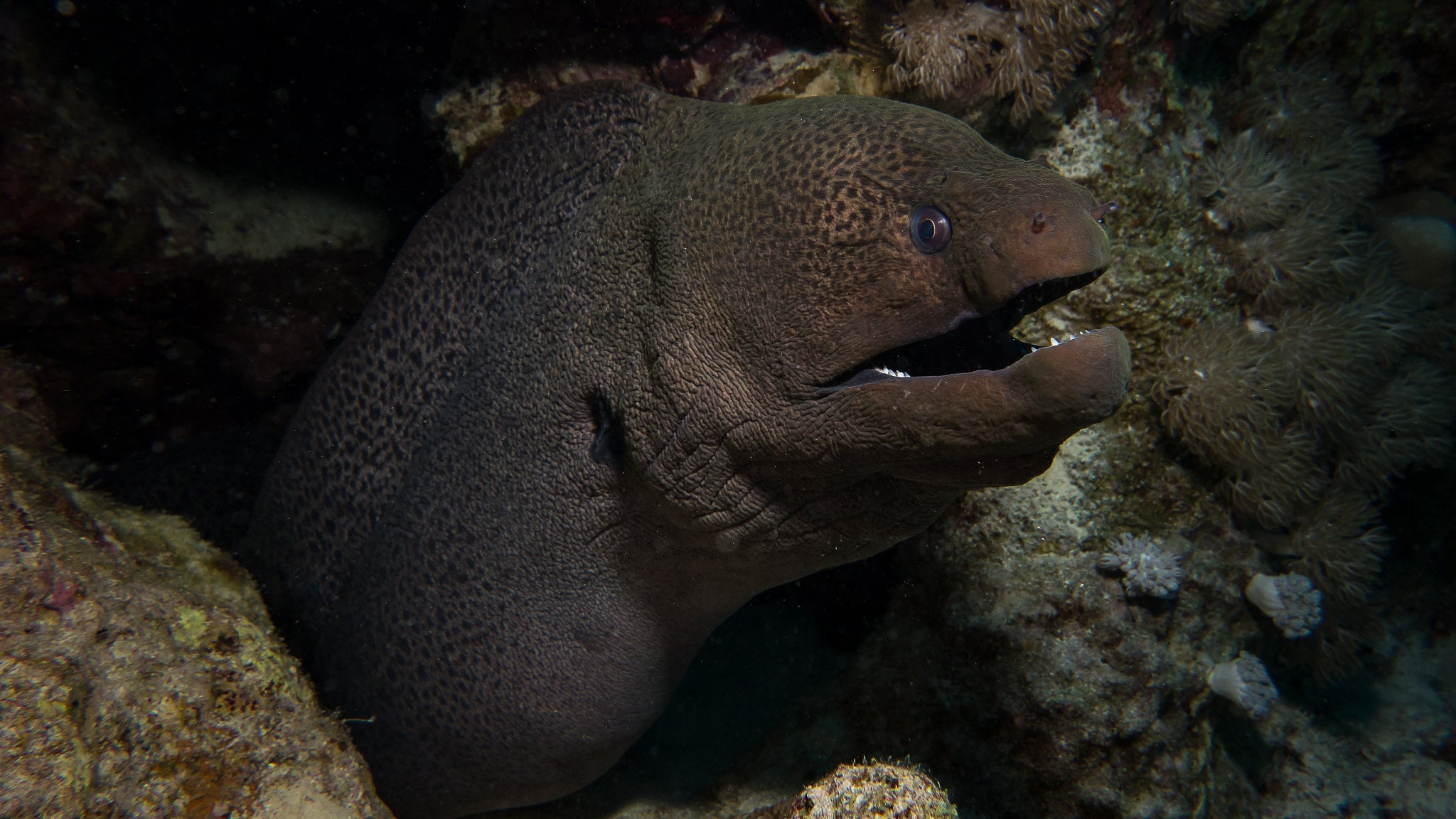 Photo Credit: Kris Mikael Krister / Wikimedia
In the shimmering depths of the ocean, the Moray Eel, known scientifically as Gymnothorax, weaves its way through vibrant coral reefs and rocky crevices. With its long, serpentine body and striking coloration, this fascinating fish captures the imagination of both scientists and nature lovers alike. Its smooth, scaled skin glistens as it glides effortlessly through the water, while its wide mouth, lined with sharp teeth, hints at its predatory prowess. Moray Eels are not just beautiful; they are also skilled hunters, using their keen sense of smell to track down prey like fish, squid, and crustaceans.
As night falls, the Moray Eel becomes more active, emerging from its hiding spots to explore the bustling underwater world. This solitary creature plays a vital role in its ecosystem, helping to maintain the balance of marine life. Scientists are particularly intrigued by the Moray Eel’s unique adaptations, such as its ability to breathe through its skin and its remarkable hunting techniques. With a life steeped in mystery and a vital role in the ocean’s food web, the Moray Eel invites us to dive deeper into its world, revealing the wonders of life beneath the waves.
The Moray Eel is a captivating member of the animal kingdom, nestled within the vast tree of life. It belongs to the phylum Chordata, which includes all animals with a backbone, and is classified under the class Actinopterygii, known for its bony fish. What sets Moray Eels apart is their elongated, snake-like bodies and the unique way they hunt. With their sharp teeth and keen sense of smell, they are expert ambush predators, often hiding in crevices and coral reefs, ready to strike at unsuspecting prey. Their fascinating adaptations make them a vital part of marine ecosystems.
| Taxonomic Rank | Scientific Name | Meaning & Significance |
|---|---|---|
| Kingdom | Animalia | This name signifies that Moray Eels are part of the animal kingdom, which includes all multicellular organisms that are heterotrophic, meaning they consume other organisms for energy. |
| Phylum | Chordata | Chordata comes from the Latin word “chorda,” meaning “string” or “cord,” referring to the notochord, a flexible rod that supports the body in the early stages of development, a feature all chordates share. |
| Class | Actinopterygii | This class name means “ray-finned fish,” highlighting the structure of their fins, which are supported by bony rays, allowing for agile movement in water. |
| Order | Anguilliformes | Derived from the Latin word “anguilla,” meaning “eel,” this order includes fish with elongated bodies that resemble eels, emphasizing their unique shape and swimming style. |
| Family | Muraenidae | This family name comes from the Latin “muraena,” which refers to eels, indicating their close relationship with other eel species and their shared characteristics. |
| Genus | Gymnothorax | This genus name means “naked throat,” referring to the lack of scales on their necks, which is a distinctive feature of Moray Eels. |
Understanding the Moray Eel’s classification reveals much about its evolutionary journey. As a member of the Actinopterygii class, it shares a common ancestry with other bony fish, showcasing the diverse adaptations that have evolved over millions of years. The unique features of Moray Eels, from their elongated bodies to their specialized hunting techniques, highlight the incredible ways life has adapted to thrive in underwater environments. This classification not only helps scientists understand their biology but also emphasizes the importance of preserving their habitats for future generations.
The evolutionary journey of the Moray Eel stretches back millions of years, tracing its lineage through the depths of the ocean. These intriguing fish belong to the family Muraenidae and the genus Gymnothorax, with their ancestors first appearing during the late Cretaceous period, around 100 million years ago. Over time, they have adapted to a variety of marine environments, showcasing a remarkable ability to thrive in the underwater world.
The early ancestors of Moray Eels were likely more similar to their relatives, the typical bony fish, with streamlined bodies and fins for swimming. As they evolved, they underwent significant changes, losing their pectoral fins and developing elongated, serpentine bodies. This transformation allowed them to navigate through rocky crevices and coral reefs with ease. Their skin also adapted, becoming covered in a protective layer of mucus, which helps prevent infections and parasites.
These evolutionary adaptations have been crucial for the survival of Moray Eels in their diverse marine environments. Their unique body shape and reduced fins allow them to hide effectively from both predators and prey, while their strong jaws and sharp teeth ensure they can capture a wide range of food. The protective mucus covering their skin further enhances their resilience, allowing them to thrive in the vibrant yet challenging ecosystems of the ocean. Through millions of years of evolution, Moray Eels have become masters of their underwater domain, showcasing the wonders of nature’s adaptability.
The Moray Eel is a striking inhabitant of the ocean, often evoking a sense of mystery and intrigue. With its elongated, serpentine body, it glides through the water with an elegance that belies its formidable presence. These eels can grow quite large, with some species reaching lengths of up to 13 feet! Their smooth skin, often adorned with vibrant colors and patterns, allows them to blend seamlessly into their coral reef homes. The most captivating aspect of their anatomy is their two sets of jaws, which give them a unique and somewhat fearsome appearance.
| Feature | Description |
|---|---|
| Size | Can grow up to 13 feet long, depending on the species |
| Color | Varies widely; can be bright green, yellow, or brown with intricate patterns |
| Skin Type | Smooth, allowing for easy movement through water |
| Distinctive Feature | Two sets of jaws—one at the front and a second pharyngeal jaw in the throat |
These features work together to enhance the Moray Eel’s survival in its underwater realm. The smooth skin not only aids in swift movement but also helps the eel navigate through tight crevices in reefs, where it often hides from predators and ambushes prey. The vibrant colors and patterns serve as both camouflage and a warning to potential threats, while the dual jaws allow for a powerful grip on slippery prey, making it an efficient hunter. Together, these adaptations make the Moray Eel a master of its aquatic environment, perfectly suited for life in the depths of the ocean.
The Moray Eel calls the vibrant underwater world its home, thriving in both coastal and deep waters. Picture a bustling coral reef, where colorful fish dart among the corals, and the sunlight filters down through the waves, creating a shimmering dance of light. Moray Eels often find refuge in the nooks and crannies of rocky crevices or coral formations, where they can hide from predators and ambush unsuspecting prey. Their habitats are not just beautiful; they are teeming with life, providing the perfect backdrop for these fascinating fish.
Moray Eels thrive in warm, tropical waters, where temperatures typically range from 70 to 85 degrees Fahrenheit. They prefer environments with plenty of structure, such as reefs and rocky outcrops, which offer both shelter and hunting grounds. The water quality is crucial, as they need clean, well-oxygenated waters to survive. These eels are often found at depths ranging from shallow lagoons to deeper oceanic regions, showcasing their adaptability to various underwater landscapes.
Over time, Moray Eels have developed remarkable adaptations to their specific habitats. Their elongated bodies allow them to navigate through tight spaces in reefs and rocks, while their keen sense of smell helps them locate prey even in murky waters. With their unique coloration and patterns, they can blend into their surroundings, making them less visible to both predators and prey. This combination of physical traits and behavioral strategies ensures that Moray Eels not only survive but thrive in the diverse marine environments they call home.
The Moray Eel leads a life that is both intriguing and solitary. As night falls, these eels emerge from their rocky crevices and coral homes, ready to hunt. Their daily activities revolve around searching for food, which primarily consists of fish, crustaceans, and octopuses. With their keen sense of smell and excellent vision, Moray Eels navigate the underwater landscape, using their long, flexible bodies to weave through tight spaces. They are primarily nocturnal, meaning they are most active at night, which helps them avoid larger predators and increases their chances of a successful hunt.
While Moray Eels are generally solitary creatures, they do exhibit some interesting social behaviors. They often stake out a territory, which they defend from other eels. However, during mating season, they may be seen together, engaging in a fascinating courtship dance. Communication among Moray Eels is subtle; they rely on body language and the position of their heads to signal their intentions. This means that while they prefer to live alone, they can still interact with others when the situation calls for it.
| Behavior Type | Description |
|---|---|
| Activity Patterns | Nocturnal hunters that emerge at night to search for food, primarily fish and crustaceans. |
| Social Structure | Generally solitary, with defined territories; may come together during mating season. |
| Communication Methods | Use body language and head positioning to convey intentions, rather than vocal sounds. |
The behaviors of Moray Eels are finely tuned to ensure their survival in the ocean’s depths. By being nocturnal, they reduce the risk of encountering larger predators while maximizing their hunting opportunities. Their solitary nature allows them to maintain control over their territory, ensuring they have access to food sources. These adaptations, combined with their unique communication methods, help Moray Eels thrive in their underwater world, showcasing the delicate balance of life beneath the waves.
The Moray Eel is a carnivore, which means it primarily eats meat. This fascinating fish has a diet that consists mainly of fish, squid, and crustaceans. Moray Eels are skilled hunters, using their keen sense of smell and excellent vision to locate prey in the dimly lit waters where they often reside. They are known for their ambush tactics, lurking in crevices and rocky outcrops, waiting patiently for the perfect moment to strike.
| Dietary Aspect | Details |
|---|---|
| Diet Type | Carnivore |
| Favorite Foods | Fish, squid, and crustaceans |
| Prey Items | Smaller fish, octopus, shrimp, and crabs |
| Hunting Strategies | Ambush predators, using stealth and surprise |
The Moray Eel’s diet plays a crucial role in its ecological niche. By preying on various marine animals, it helps maintain the balance of the underwater ecosystem. This feeding behavior not only influences the population dynamics of its prey but also shapes the daily routine of the Moray Eel, as it must constantly search for food while avoiding larger predators. The interplay between hunting and survival makes the Moray Eel an essential player in the vibrant tapestry of ocean life.
When it comes to reproduction, Moray Eels have a rather mysterious and intriguing process. They typically breed during warmer months, often coinciding with the rise in water temperature. During this time, males and females engage in a fascinating courtship dance, where they twist and turn around each other in a graceful display. This behavior not only strengthens their bond but also prepares them for the act of spawning, which usually occurs in deeper waters away from predators.
| Reproductive Aspect | Details |
|---|---|
| Gestation Period | Not well-defined; eggs hatch after a few weeks |
| Litter Size | Thousands of eggs |
| Age of Maturity | 3 to 5 years |
| Name of Young | Elver |
After the eggs are laid, they float in the ocean currents, where they hatch into tiny larvae known as elvers. These young eels are quite vulnerable at this stage, relying on the ocean’s currents to carry them to safer, shallower waters. As they grow, elvers undergo a transformation, gradually developing into the adult Moray Eels we recognize. Interestingly, Moray Eels do not provide parental care after spawning, leaving the young to fend for themselves. This independence is crucial for their survival, as they must learn to navigate their environment and hunt for food on their own. Over time, they mature into the skilled hunters that thrive in the vibrant underwater world.
The Moray Eel plays a vital role in the ocean’s food web, acting as both predator and prey. These fascinating fish are skilled hunters, often lurking in rocky crevices or coral reefs, where they ambush smaller fish and invertebrates. However, their position in the ecosystem also makes them vulnerable to various threats, as they are not at the top of the food chain.
To defend themselves against these dangers, Moray Eels rely on their natural camouflage and the nooks and crannies of their habitats. Their mottled skin helps them blend into the rocky seafloor, making it harder for predators to spot them. Additionally, they have sharp teeth and a fierce bite, which they use to deter attackers. When threatened, a Moray Eel may retreat into its hiding place, using its agility to escape danger. These survival strategies are essential for navigating the challenges of their underwater world.
A keystone species is an organism that has a disproportionately large impact on its environment relative to its abundance. In the case of the Moray Eel, this fascinating fish plays a significant role in its ecosystem, particularly in coral reefs and rocky habitats. By maintaining the balance of species in these environments, Moray Eels help ensure the health and diversity of marine life.
Moray Eels are skilled hunters, primarily feeding on fish, squid, and crustaceans. Their predatory behavior helps control the populations of these species, preventing any one group from becoming too dominant. For example, by preying on smaller fish, Moray Eels allow various species to coexist, promoting biodiversity. This balance is crucial because a diverse ecosystem is more resilient to changes, such as climate shifts or disease outbreaks.
Additionally, Moray Eels provide shelter for smaller fish and invertebrates. When they retreat into their rocky crevices, they create safe havens for other marine life. This behavior not only benefits the smaller creatures but also contributes to the overall complexity of the reef structure. The presence of Moray Eels can enhance the habitat, making it more suitable for a variety of organisms.
Moreover, Moray Eels are part of the food web, serving as prey for larger predators like sharks and barracudas. Their role as both predator and prey helps maintain the flow of energy through the ecosystem. This interconnectedness illustrates how the disappearance of one species can ripple through the entire community.
If Moray Eels were to vanish from their habitats, the consequences could be severe. Without these skilled hunters, populations of smaller fish could explode, leading to overgrazing of algae and other vital resources. This imbalance could result in a decline in coral health, as algae overgrowth smothers corals and disrupts the entire reef ecosystem. The loss of Moray Eels would not only affect the species they prey upon but also the myriad of life forms that depend on a balanced and thriving marine environment.
The Moray Eel occupies a vital ecological niche in marine environments, particularly in coastal and deep waters. As a carnivorous predator, it plays a crucial role in maintaining the balance of its ecosystem. By preying on various fish, squid, and crustaceans, the Moray Eel helps regulate the populations of these species, ensuring that no single group dominates the underwater landscape. This balance is essential for the health of coral reefs and other marine habitats, where diverse species coexist and thrive.
| Ecosystem Service | Impact |
|---|---|
| Population Control | Regulates the numbers of prey species, preventing overpopulation. |
| Habitat Maintenance | Promotes biodiversity by allowing various species to coexist. |
| Food Source | Serves as prey for larger predators, contributing to the food web. |
| Coral Reef Health | Supports the overall health of coral reefs by controlling herbivore populations. |
The influence of the Moray Eel extends beyond its immediate hunting habits. For instance, by keeping the populations of smaller fish in check, Moray Eels allow for a more diverse array of species to flourish in their habitats. This diversity is crucial for the resilience of coral reefs, which rely on a balanced ecosystem to thrive. Additionally, Moray Eels themselves become a food source for larger marine animals, such as sharks and larger fish, creating a dynamic food web that supports various life forms in the ocean.
The broader ecological importance of the Moray Eel cannot be overstated. As a keystone species, its presence significantly impacts the structure and function of marine ecosystems. By maintaining the balance of predator and prey, Moray Eels help ensure that coral reefs and other marine environments remain vibrant and healthy. This intricate web of life highlights the interconnectedness of species in the ocean, reminding us of the delicate balance that sustains our planet’s diverse ecosystems.
In the vibrant tapestry of ocean life, symbiosis plays a crucial role in shaping the relationships between different species. Symbiosis refers to the close interactions between two or more different organisms, which can be beneficial, harmful, or neutral. These ecological relationships can take many forms, such as mutualism, where both species benefit, commensalism, where one benefits while the other is unaffected, and parasitism, where one organism benefits at the expense of another. The Moray Eel, with its sleek body and keen hunting skills, engages in various partnerships that highlight the interconnectedness of marine ecosystems.
| Species/Type | Relationship Type | Description |
|---|---|---|
| Cleaner Wrasse | Mutualistic | Cleaner wrasses remove parasites and dead skin from the Moray Eel, providing a cleaning service while gaining food. |
| Grouper Fish | Mutualistic | Moray Eels and groupers often hunt together, with the eel using its agility to flush out prey while the grouper benefits from the eel’s hunting skills. |
| Sea Urchins | Commensal | Moray Eels may share habitats with sea urchins, where the urchins benefit from the protection of the eel’s crevice without affecting the eel. |
These relationships have evolved over time, showcasing the adaptability and resourcefulness of the species involved. The mutualistic partnerships, like those with cleaner wrasses and groupers, highlight how cooperation can enhance survival and efficiency in hunting. Meanwhile, the commensal relationship with sea urchins illustrates how different species can coexist in a shared environment, benefiting from each other’s presence without direct interaction. Such intricate connections not only enrich the lives of the Moray Eel and its partners but also contribute to the overall health of marine ecosystems, reminding us of the delicate balance that sustains life beneath the waves.
Moray eels are truly captivating creatures that dwell in the depths of our oceans, showcasing a blend of unique adaptations and behaviors that make them stand out. Here are some surprising facts that will surely intrigue nature enthusiasts of all ages.
The relationship between Moray Eels and humanity has a rich history that dates back to ancient times. In many coastal cultures, these eels have been revered and feared in equal measure. Ancient Egyptians depicted them in their art, symbolizing both danger and mystery. In some regions, they are considered a delicacy, while in others, they are seen as omens or symbols of the sea’s power. This duality reflects humanity’s complex feelings toward these enigmatic creatures, which have long captured the imagination of those who venture into their underwater realms.
Today, interactions between Moray Eels and humans are evolving, shaped by both conservation efforts and the challenges of marine life. As awareness of ocean health grows, many organizations are working to protect these eels and their habitats from overfishing and pollution. However, conflicts can arise, especially in areas where fishing practices threaten their populations. Some aquarists and marine enthusiasts have even attempted to domesticate Moray Eels, keeping them in home aquariums, which raises questions about their well-being and the ethics of keeping wild animals in captivity.
As we look to the future, the relationship between Moray Eels and humanity holds both promise and challenges. With increased awareness of marine conservation, there is hope that we can protect these fascinating creatures and their habitats. By fostering a deeper understanding of their ecological importance, we can ensure that future generations will continue to marvel at the beauty and mystery of Moray Eels. Balancing our interactions with them will be key to preserving the delicate ecosystems they inhabit, allowing both humans and Moray Eels to thrive in harmony.
The conservation status of the Moray Eel is currently classified as “Least Concern” by the International Union for Conservation of Nature (IUCN). This means that, overall, they are not facing immediate threats that could lead to extinction. However, specific population estimates remain unknown, making it difficult to assess their numbers accurately. While they are generally stable, ongoing monitoring is essential to ensure that their populations continue to thrive in the diverse marine environments they inhabit.
| Conservation Factor | Status/Details |
|---|---|
| IUCN Status | Least Concern |
| Estimated Population Size | Unknown |
| Population Trend | Stable |
One of the main threats to Moray Eels comes from habitat degradation, particularly due to human activities like coastal development and pollution. Coral reefs, where many Moray Eels reside, are under pressure from climate change, leading to coral bleaching and loss of habitat. Additionally, overfishing can impact their food sources, as well as the delicate balance of the ecosystems they inhabit. While Moray Eels are not directly targeted by fisheries, the decline of their prey can have a ripple effect on their populations.
Conservation efforts for Moray Eels focus on protecting their habitats and promoting sustainable fishing practices. Marine protected areas (MPAs) are crucial in safeguarding the ecosystems where these eels thrive. By limiting human impact in these regions, we can help ensure that Moray Eels continue to play their vital role in the ocean’s food web. With ongoing awareness and conservation initiatives, the outlook for Moray Eels remains positive, allowing future generations to appreciate these fascinating creatures in their natural habitats.
| Question | Answer |
|---|---|
| Where do Moray Eels live? | Moray Eels are found in both coastal and deep waters around the world. They prefer rocky crevices and coral reefs where they can hide and hunt for food. |
| What do Moray Eels eat? | Moray Eels are carnivores, meaning they primarily eat meat. Their diet consists of fish, octopuses, and crustaceans, which they catch using their sharp teeth. |
| How do Moray Eels behave? | Moray Eels are generally solitary creatures, often hiding in their rocky homes during the day. They are more active at night when they hunt for food, using their keen sense of smell to locate prey. |
| How do Moray Eels reproduce? | Moray Eels reproduce by laying eggs in the water, where fertilization occurs externally. The eggs hatch into larvae, which drift in the ocean before settling down and growing into adult eels. |
| What threats do Moray Eels face? | While Moray Eels are currently classified as Least Concern, they face threats from habitat destruction and pollution. Overfishing can also impact their populations, especially in areas where they are targeted for food. |
| What is a unique feature of Moray Eels? | One of the most distinctive features of Moray Eels is their two sets of jaws. They have a primary jaw at the front and a second set called pharyngeal jaws in their throats, which help them grasp and pull in prey. |
| Can Moray Eels be dangerous to humans? | Moray Eels can be aggressive if they feel threatened, and their bites can be painful. However, they are not typically a danger to humans unless provoked, as they prefer to retreat into their hiding spots. |