Taxonomy & Classification
- Kingdom
- Animalia
- Phylum
- Arthropoda
- Class
- Insecta
- Order
- Lepidoptera
- Family
- Nymphalidae
- Genus
- Morpho

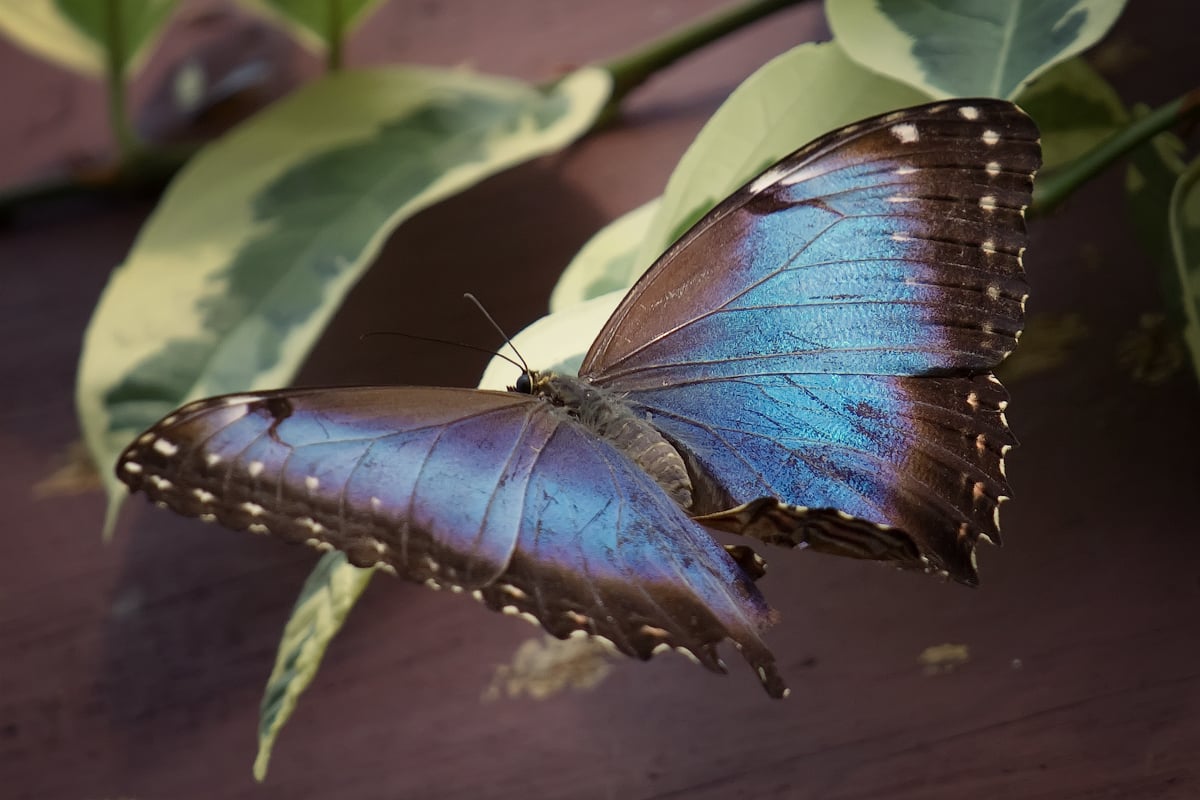 Photo Credit: Senapa / Wikimedia Commons
In the heart of Central and South America’s lush tropical forests, the Morpho butterfly, scientifically known as Morpho peleides, flutters gracefully through the vibrant greenery. With wings that can stretch up to six inches across, these butterflies are a breathtaking sight, shimmering in shades of electric blue and iridescent green. As sunlight filters through the dense canopy, it dances off their wings, creating a dazzling display that captivates anyone lucky enough to witness it. This striking coloration is not just for show; it plays a crucial role in their survival, helping them evade predators and attract mates.
Scientists and nature enthusiasts alike are drawn to the Morpho butterfly not only for its beauty but also for its fascinating behaviors and ecological importance. These butterflies are diurnal, meaning they are active during the day, and they can often be seen basking in the sun or engaging in elaborate courtship dances. Their role as pollinators is vital, as they sip nectar from a variety of flowering plants, contributing to the health of their ecosystem. As we explore the world of the Morpho butterfly, we will uncover the secrets of its life cycle, its interactions with other species, and the challenges it faces in a rapidly changing environment. Join us on this adventure to learn more about one of nature’s most enchanting wonders!
The Morpho butterfly, a dazzling inhabitant of tropical forests, occupies a special place in the tree of life. It belongs to the Kingdom Animalia, which includes all animals, and is classified under the Phylum Arthropoda, known for its jointed limbs and exoskeletons. Within the Class Insecta, the Morpho is part of the Order Lepidoptera, which encompasses all butterflies and moths. What sets the Morpho apart is its stunning iridescent wings, which shimmer in shades of blue and green, captivating anyone lucky enough to spot one. This vibrant coloration is not just for show; it plays a crucial role in attracting mates and warding off predators.
| Taxonomic Rank | Scientific Name | Meaning & Significance |
|---|---|---|
| Kingdom | Animalia | This name signifies the broad category of multicellular organisms that are heterotrophic, meaning they consume organic material for energy. |
| Phylum | Arthropoda | Derived from Greek, meaning “jointed feet,” this name highlights the characteristic jointed limbs of insects, including the Morpho. |
| Class | Insecta | This term comes from the Latin word for “cut into sections,” referring to the segmented body structure typical of insects. |
| Order | Lepidoptera | From the Greek words for “scale” and “wing,” this name reflects the tiny scales that cover the wings of butterflies and moths, giving them their beautiful colors. |
| Family | Nymphalidae | This name is derived from “nymph,” referring to the immature stages of insects, and indicates a family of butterflies known for their diverse forms and colors. |
| Genus | Morpho | From the Greek word for “form” or “shape,” this name emphasizes the striking appearance and unique morphology of these butterflies. |
Understanding the Morpho butterfly’s classification reveals much about its evolutionary journey. As a member of the Nymphalidae family, it shares a lineage with a variety of other butterflies, showcasing the incredible diversity of adaptations that have evolved over millions of years. The vibrant colors and patterns of the Morpho not only serve practical purposes in its environment but also tell a story of survival and reproduction. This classification helps scientists trace the butterfly’s ancestry and understand how it has adapted to thrive in its lush, tropical habitat.
The evolutionary journey of the Morpho butterfly stretches back millions of years, weaving through the lush landscapes of tropical forests in Central and South America. These butterflies belong to the family Nymphalidae, a diverse group that has adapted to various environments. The Morpho’s ancestors emerged during the late Eocene epoch, around 34 to 56 million years ago, when the world was a very different place, filled with ancient forests and shifting climates.
The early ancestors of the Morpho butterfly were likely smaller and less colorful than the vibrant species we see today. Over time, these butterflies underwent significant changes, adapting to their surroundings and the challenges of survival. One major transition was the development of their striking blue wings, which are not just beautiful but also serve important functions. This dazzling coloration is a result of microscopic structures that reflect light, creating a shimmering effect that can confuse predators and attract mates.
Morpho butterflies also evolved to have a unique life cycle, transitioning from egg to caterpillar, then to pupa, and finally to adult. This metamorphosis allows them to exploit different ecological niches at various life stages. The caterpillars often feed on specific host plants, while the adults are known for their rapid flight and ability to cover large distances in search of food and mates.
These adaptations have been crucial for the Morpho butterfly’s survival in the wild. The dazzling colors not only help them evade predators but also play a vital role in reproduction, ensuring that they can find mates and continue their lineage. Their ability to metamorphose allows them to thrive in various habitats, while their strong flight capabilities enable them to navigate the complex tapestry of the tropical forest. Together, these traits have helped the Morpho butterfly flourish in its vibrant ecosystem, showcasing the wonders of evolution in action.
The Morpho butterfly is a breathtaking spectacle of nature, captivating anyone lucky enough to catch a glimpse. With its large, expansive wings, this butterfly can span up to 6 inches across, creating a stunning display of color and light as it flits through the air. Its body is slender and delicate, covered in a hard outer layer known as an exoskeleton, which provides both protection and support. The vibrant blue of its wings, shimmering like precious gemstones, contrasts beautifully with the earthy tones of its surroundings, making it a true jewel of the rainforest.
| Feature | Description |
|---|---|
| Size | Wingspan of up to 6 inches |
| Color | Brilliant blue on the upper side, brown with eye spots on the underside |
| Skin Type | Exoskeleton, providing protection and support |
| Distinctive Feature | Brightly-colored wings that shimmer in sunlight |
The combination of the Morpho butterfly’s striking colors and its unique wing structure serves important survival purposes. The bright blue wings are not just for show; they help attract mates and can confuse predators. When the butterfly rests, the underside of its wings, which is brown and patterned with eye spots, camouflages it against tree bark and leaves, making it harder for hungry birds to spot. This clever blend of beauty and practicality ensures that the Morpho butterfly thrives in its vibrant, bustling habitat.
The Morpho butterfly flutters gracefully through the vibrant canopies of old-growth and secondary forests, where sunlight filters through the leaves, creating a kaleidoscope of colors. These lush habitats are alive with the sounds of chirping birds and rustling leaves, providing a perfect backdrop for the Morpho’s stunning blue wings. The air is warm and humid, filled with the sweet scent of blooming flowers, which attract not only the Morpho but also a variety of other wildlife.
This butterfly thrives in climates that are consistently warm and moist, typical of tropical regions. The temperatures in these areas usually range from 70 to 90 degrees Fahrenheit, creating an ideal environment for the Morpho to flourish. The humidity levels are often high, which helps sustain the lush vegetation that provides food and shelter. These conditions are crucial for the growth of the plants that the Morpho relies on for nectar and for laying its eggs.
To survive in these specific habitats, the Morpho butterfly has developed several clever adaptations. Its striking blue wings not only serve as a dazzling display but also help it blend into the dappled light of the forest, making it harder for predators to spot. Additionally, the Morpho’s life cycle is closely tied to the availability of host plants, ensuring that it can find the right places to lay its eggs and provide for its caterpillars. This connection to its environment allows the Morpho to thrive in the rich tapestry of life found in tropical forests.
The Morpho butterfly leads a vibrant and active life, primarily during the day, as it is diurnal. Each morning, these butterflies emerge from their resting spots, often nestled among the leaves, to bask in the warm sunlight. This helps them warm up their bodies, as they are ectothermic, meaning they rely on external heat sources to regulate their body temperature. Throughout the day, they flit from flower to flower, sipping nectar with their long, straw-like tongues. This feeding not only provides energy but also plays a crucial role in pollination, helping plants reproduce.
Socially, Morpho butterflies are generally solitary creatures, preferring to navigate their world alone. However, during the mating season, they become more social, engaging in elaborate courtship displays. Males often showcase their brilliant blue wings to attract females, creating a stunning visual spectacle in the forest. While they may not form lasting groups, their interactions during this time are essential for reproduction, ensuring the continuation of their species.
| Behavior Type | Description |
|---|---|
| Activity Patterns | Diurnal lifestyle; active during the day, feeding on nectar and basking in sunlight. |
| Social Structure | Primarily solitary, with increased social behavior during mating season. |
| Communication Methods | Visual displays, especially males showcasing their wings to attract females. |
The behaviors of the Morpho butterfly are finely tuned to ensure their survival in the wild. By being active during the day, they can take advantage of the warm sun and abundant food sources. Their solitary nature allows them to avoid predators, while their stunning displays during mating season help them find partners without the need for large groups. This combination of strategies not only enhances their chances of survival but also contributes to the rich tapestry of life in their tropical habitats.
The Morpho butterfly primarily feeds on nectar from a variety of flowering plants, making it a herbivore. With its long, slender proboscis—a tube-like mouthpart—this butterfly expertly reaches deep into blossoms to sip the sweet liquid. This feeding behavior not only provides essential energy for the butterfly but also plays a crucial role in pollination, as it transfers pollen from one flower to another while feeding. This delightful dance between the Morpho and the flowers helps maintain the health of the ecosystems in which they thrive.
| Dietary Aspect | Details |
|---|---|
| Diet Type | Herbivore |
| Favorite Foods | Nectar from various flowering plants |
| Prey Items | None, as they do not consume other animals |
| Hunting/Foraging Strategies | Using their proboscis to extract nectar from flowers |
The Morpho butterfly’s diet significantly influences its role in the ecosystem. By feeding on nectar, it not only sustains itself but also supports the growth of flowering plants through pollination. This relationship fosters biodiversity, allowing various plant species to flourish. Additionally, the Morpho’s daily routine revolves around seeking out flowers, which means it spends much of its time fluttering through the vibrant forest, contributing to the lively atmosphere of its tropical home.
The mating behavior of the Morpho butterfly is as colorful as its wings. During the breeding season, which typically occurs in the warm months, males engage in a captivating courtship dance. They flutter around potential mates, showcasing their brilliant blue wings to attract attention. This display is not just for show; it helps females choose the healthiest and most vibrant partners. Once a female selects a mate, they will mate multiple times to ensure a successful reproduction.
| Reproductive Aspect | Details |
|---|---|
| Gestation Period | Approximately 10 days |
| Litter Size | Up to 100 eggs |
| Age of Maturity | About 4 to 6 weeks |
| Name of Young | Caterpillar |
After the eggs are laid on the leaves of host plants, they hatch into caterpillars, which are the larval stage of the Morpho butterfly. These caterpillars are voracious eaters, munching on leaves to grow quickly. As they feed, they undergo several molts, shedding their skin to accommodate their growing bodies. This stage lasts about four to six weeks, during which they prepare for their transformation. Once they are ready, they enter the pupal stage, where they will eventually emerge as the stunning adult butterflies we admire. The journey from caterpillar to butterfly is a remarkable transformation, showcasing the wonders of nature and the intricate life cycle of the Morpho butterfly.
The Morpho butterfly plays a vital role in its ecosystem, serving as both a pollinator and a prey species. Positioned within the food web, it contributes to the health of flowering plants while also being a target for various predators. This delicate balance highlights the interconnectedness of life in tropical forests, where every species, including the Morpho, has a part to play.
To survive these threats, the Morpho butterfly has developed several clever strategies. One of its most fascinating defenses is its stunning coloration. The bright blue of its wings can startle predators, giving the butterfly a chance to escape. Additionally, when resting, the Morpho often folds its wings, revealing the brown underside that camouflages it against tree bark. This ability to blend into its surroundings helps it avoid detection. By combining these tactics with its swift flight, the Morpho butterfly continues to thrive in the face of danger.
A keystone species is a vital part of its ecosystem, meaning its presence and activities have a significant impact on the environment and other living things. The Morpho butterfly, with its stunning blue wings and essential ecological roles, can indeed be considered a keystone species. By influencing plant reproduction and serving as a food source for various predators, the Morpho butterfly helps maintain the balance of its tropical forest habitat.
One of the most important ways the Morpho butterfly impacts its ecosystem is through pollination. As it flits from flower to flower, sipping nectar with its long proboscis, it inadvertently transfers pollen, which is crucial for plant reproduction. This process helps flowering plants produce seeds and fruits, supporting a diverse range of wildlife that depends on these plants for food and shelter. Without the Morpho butterfly, many plants might struggle to reproduce, leading to a decline in plant diversity.
Additionally, the Morpho butterfly serves as a food source for various predators, including birds and small mammals. Its presence in the food web supports these animals, which rely on butterflies for nutrition. The vibrant colors of the Morpho butterfly also play a role in its survival; they can confuse predators or signal that the butterfly is toxic, thanks to its diet of certain plants that make it unpalatable. This relationship helps maintain the balance of predator and prey in the ecosystem.
If the Morpho butterfly were to disappear, the effects would ripple through its ecosystem. Many plants that rely on it for pollination could see a decline in their populations, leading to fewer fruits and seeds. This would not only affect the plants but also the animals that depend on them for food and shelter. The loss of the Morpho butterfly could disrupt the delicate balance of the tropical forest, highlighting just how interconnected all living things are. The vibrant dance of life in these forests would be less colorful and less diverse without this remarkable butterfly.
The Morpho butterfly plays a crucial role in its ecosystem, acting as both a pollinator and a food source for various animals. Found in the lush canopies of old-growth and secondary forests, these butterflies thrive in environments rich with flowering plants. Their vibrant colors and large wings not only attract attention but also help maintain the balance of their habitat. By feeding on nectar, they facilitate the reproduction of many plant species, ensuring that the forest remains a vibrant and diverse ecosystem.
| Ecosystem Service | Impact |
|---|---|
| Pollination | Helps flowering plants reproduce, supporting plant diversity. |
| Food Source | Serves as prey for birds and other predators, contributing to the food web. |
| Habitat Indicator | Indicates the health of forest ecosystems, as they thrive in biodiverse areas. |
| Soil Enrichment | Through their life cycle, they contribute organic matter to the soil. |
The Morpho butterfly’s influence extends beyond its immediate actions. For instance, as it flits from flower to flower, it not only gathers nectar but also transfers pollen, which is essential for plant reproduction. This process helps maintain the genetic diversity of plants, allowing them to adapt to changing environments. Additionally, the presence of Morpho butterflies can indicate a healthy ecosystem, as they thrive in areas with rich biodiversity. Their vibrant colors also attract other species, creating a lively community of organisms that depend on one another.
The broader ecological importance of the Morpho butterfly cannot be overstated. As a keystone species, its activities support the intricate web of life in tropical forests. By promoting plant growth and serving as a food source for various animals, the Morpho butterfly helps sustain the delicate balance of its ecosystem. Protecting these butterflies and their habitats is vital for preserving the rich biodiversity of our planet, reminding us of the interconnectedness of all living things.
In the intricate web of life, symbiosis refers to the close interactions between different species, which can take on various forms. These relationships can be mutualistic, where both species benefit; parasitic, where one benefits at the expense of the other; or commensal, where one benefits while the other is neither helped nor harmed. The Morpho butterfly, with its vibrant wings and essential role in the ecosystem, engages in several fascinating partnerships that highlight the interconnectedness of nature.
| Species/Type | Relationship Type | Description |
|---|---|---|
| Flowering Plants | Mutualistic | The Morpho butterfly feeds on nectar from various flowering plants, helping to pollinate them in return. This relationship benefits both the butterfly, which gains food, and the plants, which reproduce more effectively. |
| Ants | Mutualistic | Some species of ants protect Morpho butterfly larvae from predators. In exchange, the larvae produce a sugary substance that the ants consume, creating a win-win situation for both parties. |
| Predatory Birds | Parasitic | While not a direct relationship, predatory birds can negatively impact Morpho butterflies by preying on them. This relationship highlights the challenges the butterflies face in their quest for survival. |
These relationships have evolved over time, shaped by the needs and behaviors of the species involved. The mutualistic partnerships, like those with flowering plants and ants, showcase how cooperation can enhance survival and reproduction. Meanwhile, the parasitic interactions remind us that nature is a delicate balance of give and take. By understanding these connections, we can appreciate the complex dynamics that sustain the vibrant life of the Morpho butterfly and its ecosystem.
The Morpho butterfly is not just a pretty face in the world of insects; it’s a marvel of nature with some surprising traits that will leave you in awe.
The Morpho butterfly has long captivated the imagination of people across cultures. Historically, these stunning insects have been symbols of beauty and transformation, often appearing in art and folklore. Indigenous communities in Central and South America have revered the Morpho for its vibrant colors, associating it with spiritual significance and the natural world. The butterfly’s iridescent wings, which shimmer in shades of blue and green, have inspired countless stories and legends, making it a cherished part of cultural heritage.
In modern times, the relationship between humans and Morpho butterflies has evolved, reflecting both conservation efforts and challenges. As deforestation and habitat loss threaten their populations, many organizations are working to protect these butterflies and their habitats. Eco-tourism has also emerged as a way to promote awareness and appreciation for the Morpho, allowing people to observe these beautiful creatures in their natural environments. However, conflicts arise when agricultural practices encroach on their habitats, leading to a delicate balance between human development and wildlife preservation.
As we look to the future, the relationship between humans and Morpho butterflies holds both promise and responsibility. By fostering a deeper understanding of these remarkable insects and their ecosystems, we can work together to ensure their survival. Through conservation efforts, sustainable practices, and a commitment to protecting their habitats, we can create a world where both humans and Morpho butterflies can thrive. The journey ahead invites us to appreciate the beauty of nature while taking action to preserve it for generations to come.
The Morpho butterfly, known for its stunning iridescent wings, currently faces a conservation status that is not formally listed by the International Union for Conservation of Nature (IUCN). While this might sound reassuring, it is essential to understand that population trends can vary significantly across different regions. In some areas, these butterflies are thriving, while in others, their numbers are declining due to various environmental pressures.
| Conservation Factor | Status/Details |
|---|---|
| IUCN Status | Not Listed |
| Population Estimates | Varies by region; some populations are stable, while others are declining |
| Trend Direction | Mixed; some areas show stability, others face decline |
The main threats to the Morpho butterfly stem from habitat loss and degradation. As tropical forests are cleared for agriculture, logging, and urban development, the delicate ecosystems that support these butterflies are being destroyed. Additionally, climate change poses a significant risk, altering the habitats and food sources that Morpho butterflies rely on. Pesticides and pollution also contribute to their decline, affecting not only their populations but the overall health of their environments.
Conservation efforts are underway to protect the Morpho butterfly and its habitat. Organizations are working to promote sustainable land use practices that balance human needs with environmental preservation. Education and awareness campaigns help local communities understand the importance of these butterflies in their ecosystems. With continued efforts, there is hope that the Morpho butterfly can thrive in the wild, enchanting future generations with its beauty and ecological significance.
| Question | Answer |
|---|---|
| What is the habitat of the Morpho Butterfly? | The Morpho Butterfly thrives in old-growth or secondary forests, primarily found in Central and South America. These lush environments provide the perfect mix of sunlight and shelter, allowing the butterflies to flourish. |
| What do Morpho Butterflies eat? | As herbivores, Morpho Butterflies primarily feed on the nectar of various flowers. They are particularly attracted to plants in the legume family, which provide the sweet sustenance they need to fuel their vibrant flights. |
| How do Morpho Butterflies behave? | Morpho Butterflies are known for their strikingly beautiful and bright blue wings, which they often display when flying. They are generally solitary creatures, but you might see them congregating around food sources or basking in the sun. |
| How do Morpho Butterflies reproduce? | During mating, male Morpho Butterflies will often engage in elaborate courtship displays to attract females. After mating, the female lays her eggs on specific host plants, ensuring that the caterpillars have the right food when they hatch. |
| What threats do Morpho Butterflies face? | While Morpho Butterflies are not currently listed as endangered, they face threats from habitat loss due to deforestation and climate change. These factors can reduce their natural habitats and food sources, putting their populations at risk. |
| What is the most distinctive feature of the Morpho Butterfly? | The most distinctive feature of the Morpho Butterfly is its stunningly bright blue wings, which can span up to 6 inches across. This vibrant coloration not only makes them a favorite among butterfly watchers but also serves as a defense mechanism, confusing predators. |
| Are Morpho Butterflies social creatures? | Morpho Butterflies are generally solitary, preferring to fly alone rather than in groups. However, they may gather in small numbers around abundant food sources, especially during mating season. |